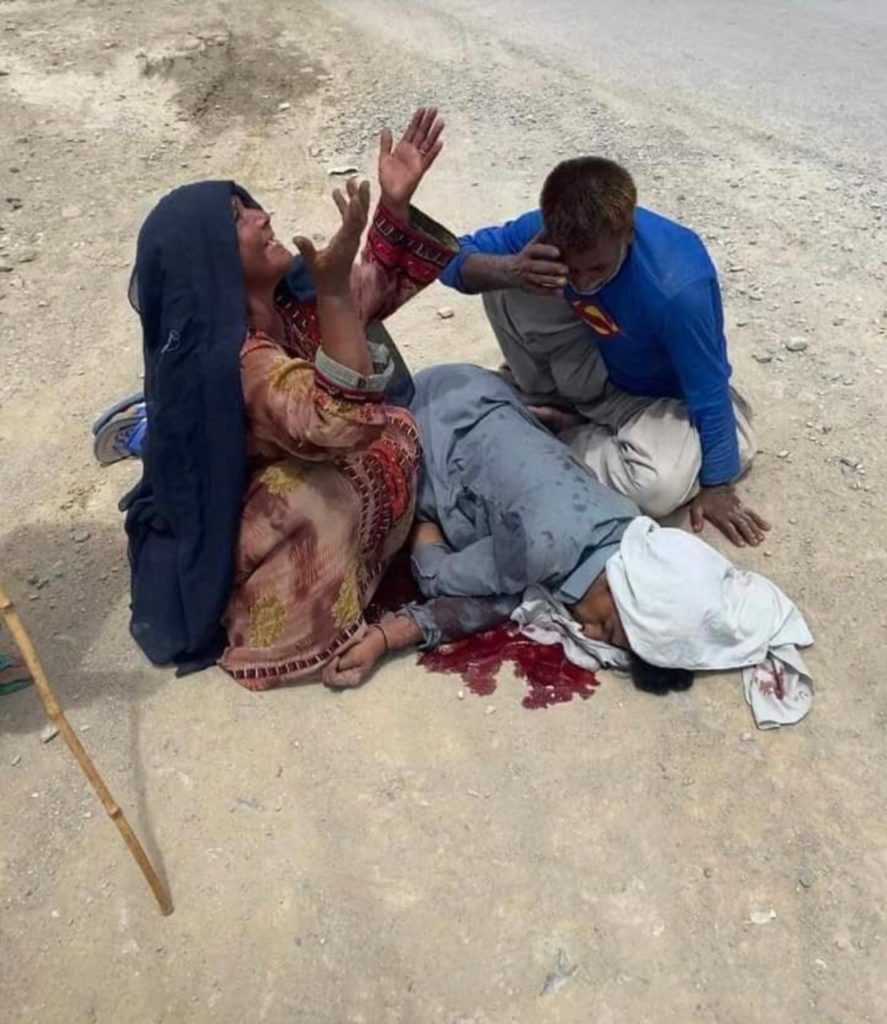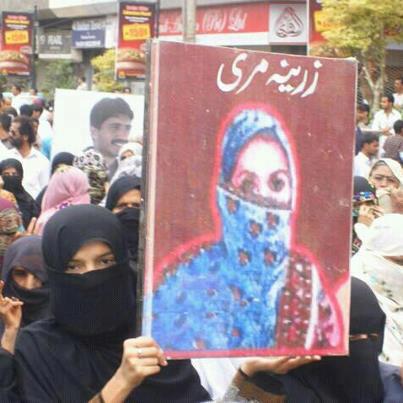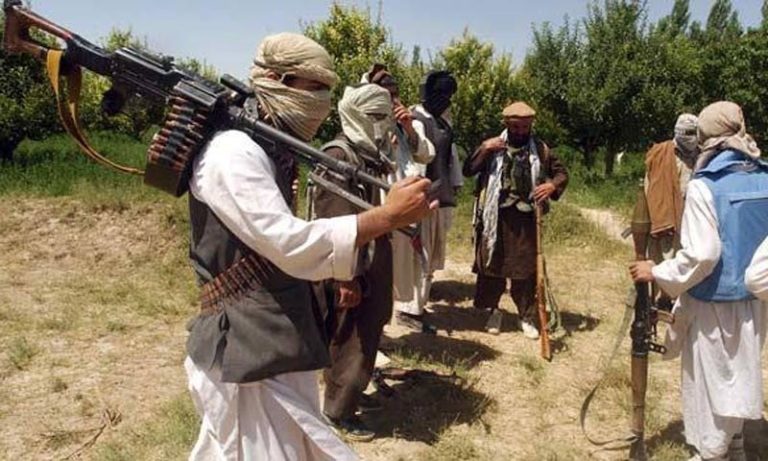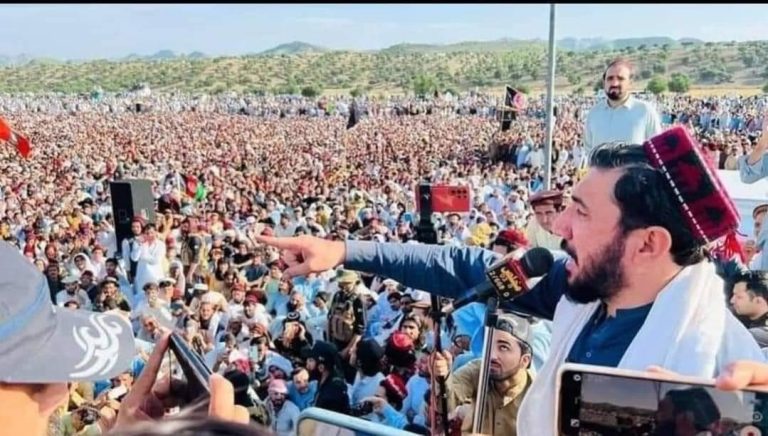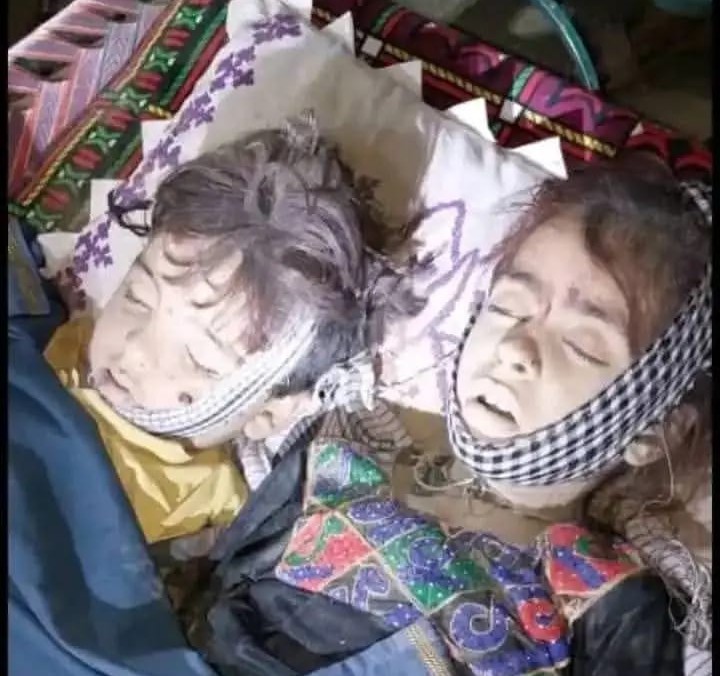
The Pakistan Army on Wednesday bombed unarmed civilian Pashtun houses in the Khost and Nangarhar provinces in Afghanistan killing Pashtun children and seriously injuring several others. The governor’s offices in Afghanistan’s Khost and Nangarhar provinces condemned the drone strikes and subsequent Pashtun deaths, saying both these drone strikes were unprovoked attacks on civilians.
An official at the Nangarhar governor said that Pakistani drones attacked the house of Shahswar, a civilian Pashtun, in the 28 Wyala area of Shinwari district injuring three children and a woman. Pakistani drones also bombed the house of Pashtun civilian Haji Naeem Khan in the Sur Kakh area of Spera district in Khost killing three children and injuring several women and men.
The Pakistani regime has been killing Pashtuns on both sides of the Durand Line in the name of fighting terrorism. However, the real aim of GHQ Rawalpindi is to “control” Pashtuns through these strikes such that Field Marshal Asim Munir can continue to use Pashtuns as cannon fodder like his predecessors. Over the last seven decades Pak Army generals have exploited Pashtuns in the name of Islamic jihad while keeping them poor, uneducated and backward. Of late, Pashtuns have understood the dirty games of Rawalpindi and Islamabad and refuse to dance to their tunes. This has infuriated the Pakistani regime, and it has waged an undeclared war against Pashtuns.
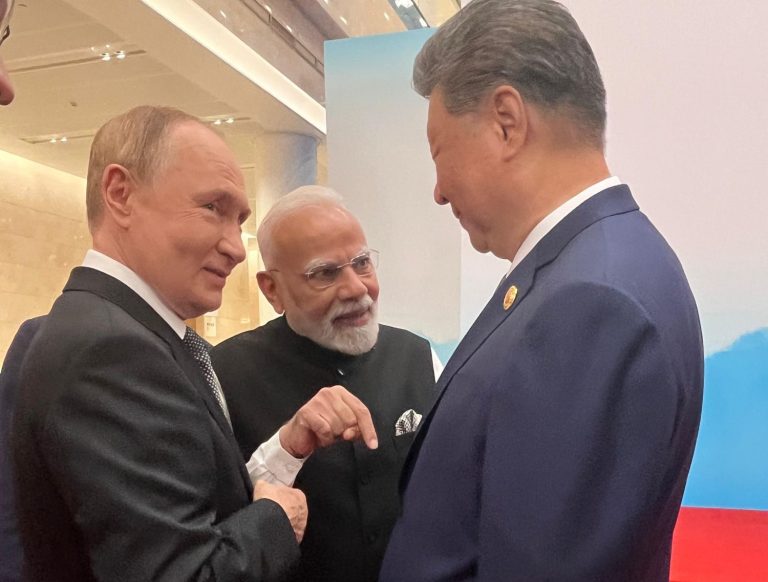
Unwarranted Sensationalism While the revelation that China had provided real-time military intelligence to Pakistan during Operation Sindoor, the issue of Sino-Pak collusiveness has taken centre stage. While this isn’t an overnight development, but just to score brownie points, some political interests have unfortunately tried to portray it thus, claiming that their warnings on this critical issue were ignored by the government.
This motivated allegation clearly suggests that clear indications of the conspicuous Sino-Pak nexus and consequent possibility of a two-front war was disregarded or downplayed by those concerned. It has expectedly created suspicions in the minds of many, with some even questioning the basic professional competence of those responsible for drawing up the country’s defence plans and foreign policy.
Friends and Interests Whereas the simple “There are no permanent friends or enemies in geopolitics, only permanent interests” adage explains why nations behave the way they do, “The enemy of my enemy is my friend” maxim accurately explicates how common interests can forge an alliance against an adversary. Since both Beijing and Islamabad have an axe to grind with New Delhi, the emergence of an anti-India Sino-Pak nexus is but natural.
So, while one can appreciate Leader of Opposition in the Lok Sabha Rahul Gandhi’s contention that “India’s biggest foreign policy challenge has been to keep Pakistan and China separated” and his emotional “But we failed, and they have destroyed the Indian foreign policy” lament, but isn’t assuming that diplomacy can prevent convergence of mutual interests of two countries a case of great expectations?
And with Indian National Congress [INC] Party member and the then Indian Defence Minister AK Antony himself admitting way back in November 2009 that “The nexus between China and Pakistan in the military sphere remains an area of great concern,” for the INC to now suggest that Sino-Pak collusivity is a sudden development and going about crying “foul” is both brazen and unwarranted politicisation of a national security issue.
For the Record Since armies the world over plan and prepare themselves to fight and win in the ‘worst case scenario’, it’s but natural that the Indian armed forces have always factored-in the inevitable likelihood of Sino-Pak military collusion in its war plans. Similarly, diplomats and analysts too have been labouring on this issue ad nauseam. A few illustrative examples: * One of the reasons why the then Indian army chief Gen [Later Field Marshal] SFHJ [Sam] Manekshaw delayed the 1971 war for the liberation of Bangladesh until December was to ensure that China could not come to Pakistan’s assistance by opening a new front as winter snow would have rendered mountain passes along the Sino-Indian border impassable. * As early as 1986, the then Indian army chief Gen K Sundarji released Indian army’s Perspective Plan 2000 – a 15 year military vision document that addressed the issue of Sino-Pak military collusivity and recommended “offensive deterrence” against Pakistan by making territorial gains and “dissuasive deterrence” against China by adopting a forward defensive posture by occupying dominant terrain to ensure India’s territorial integrity. * In a piece published in 2012, India’s former Foreign Secretary and Padma Shri awardee Kanwal Sibal had prognosed that “Pakistan is determined to confront India, and China is intent on giving Pakistan the means and the confidence to continue this confrontation,” adding that “We now have the problematic situation of having two nuclear powers on our borders, with both collaborating with each other to put constraints on India.” He had even drawn attention to the fact that “China has stepped up its presence in POK even as it has begun to question implicitly our sovereignty over J&K.” * In 2017, the then Indian army chief Gen Bipin Rawat spoke about the inevitability of India having to fight a two-and-a-half front war- China and Pakistan being the two main fronts with internal threats representing the half front.
Actions Not Rhetoric Needed In an interview with Hindustan Times editor-in-chief Shahi Shekar during the Kargil war, Indian army chief Gen VP Malik had said, “National security is the biggest issue. It is a matter of great sadness that our political parties are publicly raising their fingers on the issue of national security. Of course, raising questions is your right, but instead of doing it publicly, discuss it in the meeting, it would do more good.”
Isn’t the angst of a former army chief precipitated by petty politicking on national security matters justified? And doesn’t his simple suggestion to undertake meaningful discussions rather than engage in open-ended verbal slugfests make perfect sense? Hence, the ubiquitous threat of Sino-Pak military collusivity needs to be unitedly addressed by all political parties in a constructive way with the due diligence that it deserves.
Since China enjoys an overwhelming quantitative and qualitative superiority in terms of military assets vis a vis India, creating a credible deterrent capability is both an extremely capital intensive and time-consuming process. Many opine that China’s top leadership is mature enough not to engage in a direct confrontation with India, and this viewpoint definitely has merit. Unfortunately, the same can’t be said about Pakistan where the military never tires of flexing its muscles.
Yet, China would be more than delighted to see an Indo-Pak faceoff/confrontation for three reasons: * One, since China considers India a potential regional rival, forcing New Delhi to invest in expensive military hardware would significantly retard the pace of India’s economic growth. * Two, due to its precarious financial condition, Pakistan would be compelled to restrict its purchase of advanced weaponry only from Beijing, and that too on credit and at an exorbitant cost. This would push Islamabad deeper into Beijing’s debt trap facilitating further exploitation of Pakistan’s mineral resources. * Three, Beijing could easily pass-off munitions whose reliability is suspect due to vintage or under trial giving its armament industry a boost by testing new munitions as well as through sale of unwanted ordnance that otherwise were required to be destroyed.
As Rawalpindi has easy access to state-of-the-art Chinese weaponry as well as real time intelligence, New Delhi can neither afford to be complacent nor tardy in taking appropriate countermeasures against Sino-Pak military collusion. And with Pakistan’s de facto ruler Field Marshal Syed Asim Munir announcing that “God made me protector of the country,” declaring that his “greatest desire is martyrdom,” and declaring his solemn “duty to avenge the blood of every Pakistani,” not to forget the “we’ll take down half the world with us” threat, it’s better for India to be prepared. After all, how can a hallucinating Field Marshal ever be trusted?
Pakistani regime refused to release Baloch human rights leader Dr Mahrang Baloch and other Baloch Yakjehti Committee (BYC) activists Bebow Baloch and Gulzadi Baloch, and extended their custody by another fifteen days on frivolous charges. The Pakistani regime, through its puppet judiciary and armed forces, has falsely charged Mahrang Baloch and other BYC leaders of being a proxy to Baloch revolutionaries and of inciting violence and unrest. Defiant Mahrang Baloch dismissed all allegations as “baseless and state propaganda” and urged the common Baloch to fearlessly protest for their rights.
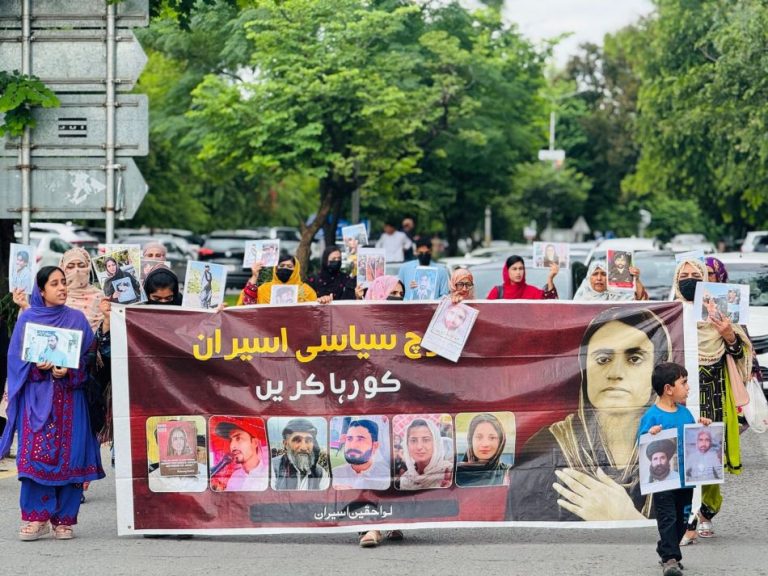
“These people (Pakistani regime) who want to suppress and weaken us are themselves weak. I urge all the Baloch to come out on the streets and demand their rights fearlessly,” Mahrang Baloch said at the sidelines during the judicial hearing. Dr Mahrang praised the Baloch women and children who have been sitting in protest at Islamabad for more than a month braving intense heat and rain demanding that all the “missing” and “disappeared” Baloch be immediately released.
The Baloch Yakjehti Committee (BYC) activists during their protest at Islamabad on August 22, 2025. Braving the intense heat, humidity and rains these Baloch women and children demand that Pakistani regime release their family members who have been forcibly arrested under fictitious and frivolous charges. (Photo: News Intervention)
“Today marks the 38th consecutive day of the Islamabad sit-in by the families of Baloch Yakjehti Committee (BYC) leaders and the forcibly disappeared. For over a month, these families have braved extreme weather, harassment, and restrictions, yet their call for justice remains steadfast. Pakistani authorities today once again extended the illegal detention of Dr. Mahrang Baloch and other BYC leaders for another 15 days. This extension, without due process, highlights the state’s ongoing attempt to silence voices demanding an end to enforced disappearances in Balochistan,” the Baloch Yakjehti Committee said in their statement. The Baloch Yakjehti Committee (BYC) is a conglomeration of activists and intellectuals who are fighting for the human rights violation of Baloch by the Pakistani regime. BYC’s leader and organiser Dr. Mahrang Baloch was arrested by the Pakistani regime on March 22, 2025 and remains under illegal detention since then.
During the last two decades more than 250,000 Baloch have gone “missing” or have been forcibly “disappeared” by the Pakistani armed forces. Another 15,000 Baloch have been killed under the “kill and dump” policy of Pakistan Army.
Balochistan continues to be under illegal occupation of the Pakistan Army so the entire administration, provincial government and even the courts are mere puppets at the hands of GHQ Rawalpindi. There being no rule of law, the judgements and orders are typed in Rawalpindi/Islamabad and stamped by the puppet judges installed in the courts of occupied Balochistan.
Donald Trump’s words are never just words. From the campaign trail of 2015 to his presidential comeback in 2025, his rhetoric has doubled as strategy—part theater, part threat, and part transaction. Behind the nicknames, public insults, and boasts lies a coherent method: Re-framing America’s global role as conditional, monetized, and un-apologetically self-serving. This is not diplomacy in the traditional sense. It is disruption as doctrine. And the world is still trying to decide whether Trump’s style is reckless improvisation—or controlled chaos.
The Timeline of Trump’s Tongue 2015–2016: The Insurgent ” Mexican government was not sending the best people across the U.S. border, but instead criminals, drug traffickers, and rapists”, “I alone can fix it.” “Mexico will pay for the wall.” The outsider demeans Mexico, paints elites as traitors, and himself as America’s lone saviour. Fear + populism = political insurgency.
2017: Institutional Shock “Enemy of the people.” “Travel ban to protect the Nation.” Trump pits himself against the press, the courts, and tradition. It is confrontation as a governing philosophy.
2018: Hardball Abroad “Trade wars are good and easy to win.” “Germany is totally controlled by Russia.” Allies mocked, adversaries threatened. Ridicule becomes a tool of leverage.
2019: Cornered and Combative “Perfect call.” “No collusion.” Trump stopped the aid to Kyiv and pressurized Zelensky to investigate Joe Biden and Hunter Biden. But it boomeranged and first call for impeachment was made. The impeachment era transforms Trump into victim, judge, and executioner—often in the same sentence.
2021–2024: Campaign Without Office “Stolen election.” “If NATO doesn’t pay, Russia can do whatever they want.” Defeat fuels grievance. His foreign policy fuses coercion with populist revenge politics.
2025: The Comeback “Universal baseline tariffs.” “Deep meditation after Operation Sindoor.” India, Pakistan, China, Russia—Trump talks of peace while wielding economic coercion. Transactional diplomacy dressed up as statesmanship.
Trump’s Country Playbook
China: From “China is raping our country” in 2016 during campaign to “Xi is a very good man…we have a great chemistry” to “China virus.” Charm flips to hostility when trade is involved. Russia: Alternates between threats of “large-scale sanctions” and warm praise for Putin. Affection as bargaining chip. North Korea: From “Little Rocket Man” to “We fell in love.” Oscillation as leverage. Iran: JCPOA “worst deal ever.” From “total obliteration” to “limited strike” in 48 hours. Flexibility paired with fury. Mexico: “They’re not sending their best.” Fear as border policy. The wall as symbol of sovereignty. NATO/EU: From “obsolete” to “pay their fair share.” Alliances reduced to financial contracts. India: From “America loves India” to “dead economy.” Praise, threats, and posturing over tariffs, Russia ties, and border crises. India cast as swing state in U.S. strategy. Pakistan: “Nothing but lies and deceit” (2018) to “We have never been closer” (2019). Praise shifts from Imran Khan to General Munir. Civilian governments dismissed; military flattered. Institutions: UN = “a club for people to have a good time.” WHO = “China-centric.” Multilateralism mocked as irrelevant.
The Pattern Behind the Chaos Strip away the noise and a set of patterns emerge. Transactional Nationalism: Alliances aren’t about values—they’re about money. Leverage by Shock: Outbursts rattle the room, forcing others onto the defensive. Strongman Affinity: Flattery for authoritarians, disdain for bureaucrats. Policy as Personal Theater: Successes are his alone; failures blamed on enemies. Perpetual Campaign: Every crisis folded into a running battle against betrayal. India as Swing State: Alternating praise, criticism, and pseudo-mediation reveal India’s central role in Trump’s triangular balancing act with China, Russia, and Pakistan.
Prognosis: What the World Should Expect Trump’s rhetoric is not accidental static—it is a strategy of disruption. It unsettles, resets baselines, and monetizes alliances. If 2016–2024 was a test run, 2025 is his full-scale rollout. Expect the following: Alliances Will Be Monetized: NATO and others must pay up—or face abandonment rhetoric. Trade as Weapon: Tariffs as tools of war, with India and China in his crosshairs. Middle Powers Rise: India, Gulf states, Turkey—opportunities to bypass Washington’s old multilateral structures and cut direct deals. South Asia on Edge: Trump will avoid entanglement but exploit India–Pakistan and India–China tensions to project himself as indispensable. Russia Question: He will mix praise for Putin with warnings to India, trying to drive a wedge between New Delhi and Moscow.
Trump’s rhetoric is not mere bluster. It is a calculated method of disruption—one that monetizes security, weaponizes trade, flatters strongmen, and unsettles institutions. For allies and adversaries alike, the message is clear: under Trump, diplomacy is not partnership. It is a deal—or a debt.
Pak Army Chief’s Delusion By admitting that “India is a shining Mercedes coming on a highway like Ferrari, but we are a dump truck full of gravel,” Pakistan Army chief Field Marshal Syed Asim Munir has finally accepted that Pakistan is the loser. And by adding that “If the [dump] truck hits the [Mercedes] car, who is going to be the loser,” he has unwittingly acknowledged that Pakistan is the unruly dump truck driver who being a bad loser is just thirsting for the chance to “hit” the ‘Mercedes car’ called India. Wouldn’t the Field Marshal have done much better by rewording his self-admitted “coarse analogy” saying what would happen if a Mercedes chose to ram against a gravel filled dump truck?
While the visualised outcome of a head-on collision between a Mercedes and dump truck may enthrall Pakistan’s newly promoted Field Marshal, isn’t he aware that on highways, cars and dump trucks ply on separate designated lanes? Or is it that after seeing the international community’s abject apathy towards Rawalpindi’s ongoing romance with globally proscribed terrorist groups, Field Marshal Munir is confident that no one will object when the dump truck driven on his orders violates traffic law by entering the car lane to specifically crash into a Mercedes?
While the puerile Mercedes and dump truck analogy continues, this raises two serious questions- one, who turned Pakistan into a dump truck and two, why is it full of gravel and not something much more valuable? The answer isn’t too hard to find as the same has been provided by Pakistan Army Generals themselves.
Reality While Pakistan continues to play the terrorism victim card, it conveniently forgets that the Pakistan Army is the one responsible for this sorry state of affairs. In the late seventies, didn’t Gen Zia ul Haq allow Washington to convert Pakistani territory bordering Afghanistan into a veritable breeding ground and a safe sanctuary for radicalised Islamist terrorists to fight America’s proxy war against the Soviet forces in Afghanistan?
Hasn’t Pakistan’s ex-President and former army chief Gen Pervez Musharraf himself admitted that “We poisoned Pakistani civil society for 10 years when we fought the Soviets in Afghanistan in the 1980s,” adding that “It was jihad and we brought in militants from all over the world, with the West and Pakistan together in the lead role.” When the Pakistan Army itself sowed the seed of religious fundamentalism on its own soil, why blame outsiders for the grim harvest it is still yielding?
In his 2015 TV interview to Dunya News, Gen Musharraf admitted that “In the 1990s … Lashkar-e-Taiba and 11 or 12 other organisations were formed. We supported them and trained them as they were fighting in Kashmir at the cost of their lives.” Similarly, in April, Pakistan’s Foreign Minister Ishaq Dar revealed that “We opposed the mention of TRF [The Resistance Front] at the UNSC statement condemning the Pahalgam terror attack,” boasting that “I got calls from global capitals, but Pakistan will not accept. [Mention of] TRF was deleted and Pakistan prevailed.” And yet Pakistan has the gall to deny waging proxy war in J&K.
‘Home Grown’ Terror Pakistan alleges that Tehreek-e-Taliban Pakistan [TTP] is an Indian proxy but hasn’t explained that if this was as indeed true, then why did it not only enter into a ceasefire with this terrorist group but also unconditionally release more than 100 TTP commanders and fighters held in Pakistan Army’s custody in 2021? If TTP is working at the behest of New Delhi, why did Pakistan Army’s media wing Inter Services Public Relations [ISPR] in August 2022 rubbish reports of large scale presence of armed TTP fighters in Pakistan’s Swat Valley as “exaggerated and misleading”?
First, Rawalpindi makes a Faustian deal with the perpetrators of the heinous 2014 Army Public School Peshawar attack in which nearly 150 students and teaching staff lost their lives and more than a hundred were injured, and then unashamedly blames India for helping TTP.
The Pakistan Army’s role in aggravating the Balochistan problem and provoking an armed separatist movement is no secret and that’s why no one takes its allegation of Indian support to armed Baloch groups fighting against the forceful occupation and indiscriminate exploitation of natural resources of this region seriously.
In May 2010, former speaker of Pakistan’s National Assembly Syed Fakhar Imam and former Ambassador to the US Syeda Abida Hussain organised a seminar on “Friends of the Baloch and Balochistan.” Speaking at this event, former Pakistan Army chief Gen Abdul Waheed Kakar opined that Gen Musharraf had “committed a big mistake” in launching the 2006 military operation in Balochistan and killing of the Baloch leader Nawab Akbar Bugti was “a crime against Pakistan.”
According to The Express Tribune, Lt Gen [retired] Salahuddin Tirmizi said that in other countries the intelligence agencies collect information and the governments make decisions. “But here the intelligence agencies make decisions.” Such a scathing attack on the Pakistan Army by one of its former General exposes Rawalpindi’s rot within.
Similarly, highlighting the fact that Baloch people have been deprived of their rights and their natural resources, Baloch Students’ Organisation [BSO] leader Aleem Baloch lamented that those who speak for their rights either get killed or abducted and disappear forever. Another BSO leader, Muhiuddin Baloch complained that the Pakistani military, the media, parliament and judiciary have no concern for the plight of Balochistan. Unfortunately, this sorry state of affairs expressed a decade-and-a-half ago still endures.
Despite strict media control, these views were endorsed by many newspapers. In its May 17, 2010 editorial, Dawn put forth a compelling argument by observing that “Is the trouble in Balochistan inspired by India or is India stirring a pot of the Pakistan state’s own making?” It goes on to mention that “To outside, non-army observers, it seems clear it is the latter. But so long as the army seems to cling to the former ‘India-centric’ explanation, peace in the province will never be had. A flawed diagnosis cannot lead to a successful solution and in the case of Balochistan it continues to poison any semblance of trust between the two sides.”
Crying Wolf Field Marshal Munir needs to understand that blaming foreign “inimical forces” for the rising wave of terrorism despite the inordinate overuse of force including air and artillery cannot conceal his army’s humongous failure to rein in home grown terrorism in Pakistan. He should also realise that it ill-behooves a Field Marshal to issue hollow threats or make unfounded allegations. And so, Munir needs to accept the reality that when it has failed to bring TTP terrorists and Baloch armed groups down on their knees, harbouring the belief that his gravel laden dump truck could pulverise the Indian ‘Mercedes’ is nothing more than a classic case of great expectations!
Tucked between the Karakoram and Himalayan ranges, Gilgit-Baltistan (GB) is once again reeling from a climate disaster. The floods this summer have laid bare not only the region’s acute environmental fragility but also the persistent governance vacuum that leaves its people defenceless. To Islamabad, Gilgit-Baltistan still appears less like a homeland and more like a frontier outpost — a place to exploit strategically, not to nurture. Sense of unsettled Gilgit-Baltistan (GB) can be seen prominently.
Flash Floods and Glacial Lake Outbursts As of 15 August 2025, torrential floods in Gilgit-Baltistan (GB) have killed at least 62 people, injured nearly 90 others, and displaced over 5,000 residents into makeshift relief shelters. The scale of destruction is staggering: 1,100 homes either damaged or destroyed, 96 bridges swept away, including vital links on the Karakoram Highway and Baltistan Highway. Many districts like Ghizer, Nagar, and Astore are completely cut off from assistance. Hydropower stations crippled, plunging Gilgit and surrounding areas into prolonged blackouts. To make matters worse, forecasts warn of continued heavy rainfall through 21 August, threatening an escalation of the humanitarian disaster.
Agriculture — the primary livelihood — has taken a direct hit: fields submerged in silt, orchards flattened, and livestock drowned. With transport arteries broken, even food and medical relief struggle to reach the stranded.
Flash floods and mudslides have destroyed farmlands and orchards in Gilgit-Baltistan. (Photo: News Intervention)
Why Gilgit-Baltistan is So Exposed ? Gilgit-Baltistan sits at the epicentre of South Asia’s climate crisis. Two phenomena converge in the region with lethal force. 1. Erratic Monsoons: Intensified cloudbursts that unleash flash floods and landslides. 2. Glacial Lake Outburst Floods (GLOFs) : Rapid glacial melting creates unstable lakes that burst without warning. The region hosts more than 3,000 glacial lakes, of which over 33 are deemed hazardous. Scientific warnings for decades have predicted this growing risk. The 2025 floods confirm what researchers have long feared — that Gilgit-Baltistan (GB) is sliding into a new normal of recurring disasters.
Human Stories of Survival Statistics conceal the human pain. Families across Gilgit-Baltistan displaced from valleys now live in relief tents with little medical care. Farmers watch lifetimes of work vanish under rubble. Tourism — a fragile lifeline of income — is paralyzed due to broken bridges and blocked passes.
What sustains survival is not state policy but the resilience of local communities, kinship networks, and ad-hoc rescue efforts. Rarely does structured recovery follow. For the people of Gilgit-Baltistan, relief arrives late, rehabilitation is partial, and prevention is non-existent.
Locals look at the bridge destroyed due to floods in Gilgit-Baltistan. (Photo: News Intervention)
A History of Predictable Disastersin Gilgit-Baltistan This tragedy is not new — it is part of a cycle. 2010: The Attabad landslide formed an artificial lake, displacing thousands and severing the Karakoram Highway for months. 2022: The Shisper Glacier outburst wiped out the Hassanabad bridge, destroyed hydropower plants, and ravaged Hunza villages.
Every monsoon since has brought repeat devastation, with Islamabad responding in the same pattern: reactive relief, no structural change. Reports of aid diversion, hoarding, and corruption further deepen local anger.
Governance Vacuum and Political Disenfranchisement At the root of Gilgit-Baltistan’s vulnerability lies its political limbo. It is neither a full province of Pakistan nor an autonomous region with legislative rights. Its people have no parliamentary voice in Islamabad, no representation in national budgeting, and little say in disaster management. This disenfranchisement converts climate hazards into human rights crises. Relief funds appear after tragedy, but there is no systemic planning for adaptation, no empowerment of local institutions, and no dedicated allocation of national resources. The silence of GB’s people in Pakistan’s corridors of power makes their cries easy to ignore.
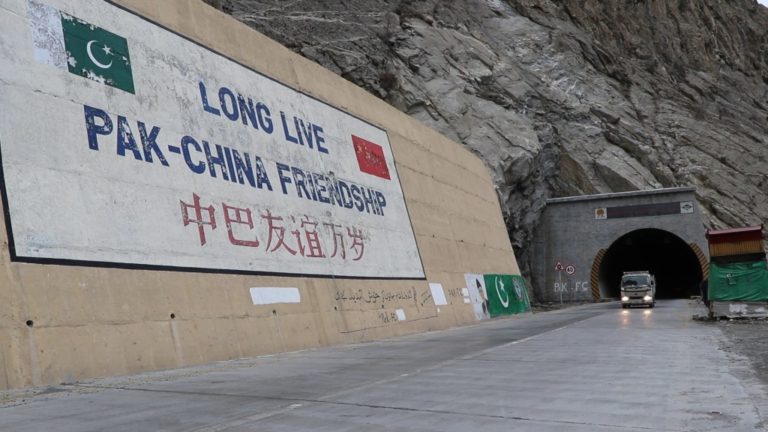
Regional and Global Stakes The floods in Gilgit-Baltistan are not an isolated misfortune. The region is critical for CPEC (China-Pakistan Economic Corridor): Roads and bridges here are vital to Beijing’s connectivity ambitions. Water Security: GB’s glaciers feed the Indus River, sustaining millions across Punjab, Sindh, and Balochistan. South Asian Climate Stability: Glacial melt in GB directly shapes the hydrological balance of the subcontinent. Failure to secure Gilgit Baltistan risks destabilizing both Pakistan’s economy and the wider regional water system.
Indus Waters Treaty: A Silent Factor The floods also highlight the fragile equilibrium of the Indus Waters Treaty (IWT). Any disruption risks a double disaster — drought in summer and floods in monsoon. While India has so far avoided weaponizing water against Pakistan, New Delhi’s restraint is strategic and humanitarian. Should that equation change, Pakistan’s vulnerabilities will multiply, striking twice a year with existential force.
The Way Forward To break this cycle, three urgent steps are non-negotiable. Climate-Resilient Infrastructure: Build durable bridges, protective embankments, and early warning systems instead of temporary fixes. Glacial Monitoring: Partner with international climate networks for satellite tracking, predictive modelling, and community-based alert systems. Political Empowerment: Without constitutional rights, representation, and budgetary allocation, Gilgit Baltistan will remain condemned to disaster cycles.
Conclusion The 2025 floods in Gilgit-Baltistan are not just a natural calamity; they are a mirror reflecting state neglect, political disenfranchisement, and climate injustice. Natural hazards only become human catastrophes when governance fails. For Pakistan, the message is clear: Climate resilience cannot be outsourced to charity and emergency relief. For the international community, the lesson is urgent: regions at the front line of the climate crisis also need justice, rights, and dignity.
Gilgit-Baltistan is more than a high-altitude battleground of glaciers and geopolitics — it is home to people who deserve protection, representation, and hope. Without decisive action, this fragile mountain frontier will remain a global case study in how states can abandon their own climate front lines.
Baloch Liberation Army (BLA) brushed-off US’ decision to designate Majeed Brigade — BLA’s fidayeen unit — as a “Foreign Terrorist Organization (FTO)”, saying that the American decision does not affect the authenticity of its struggle. BLA said that they will continue to fight for Balochistan’s independence from Pakistan and “do not require external validation or any international certification”. The US department of state had already designated BLA as a Specially Designated Global Terrorist (SDGT) in the year 2019 after BLA carried out several successful attacks against Pakistan which were inferred by the US as “terrorist attacks”. And on August 11, 2015 the US appended Majeed Brigade as an alias with BLA; naming the fidayeen (self-sacrificing) unit as a ‘foreign terrorist organization’.
“The recent decision by the United States to designate Majeed Brigade, a special unit of Baloch Liberation Army (BLA), as a foreign terrorist organization is a deviation from ground realities and an implicit endorsement of the colonial narrative by an international power. We view this decision without surprise and without any sense of added pressure. Baloch Liberation Army (BLA) is a resistance force, active solely against the military domination of the occupying state, and is committed to the liberation of its occupied motherland,” said Jeeyand Baloch, spokesperson of the Baloch Liberation Army.
Baloch freedom fighters (Photo: Social Media)
The BLA spokesperson explained that all of their operations are directed against the Pakistan Army, Frontier Corps, intelligence networks, death squads and their collaborator gangs within Balochistan. “Our struggle is for our motherland—the land of our ancestors—seized from us by force. We are not opposed to the people of Pakistan, nor to any world power. Our arms are raised solely against the occupier, whoever that may be and will remain so until the occupation ends. We operate under the rules of war as defined in international humanitarian law, specifically Common Article III of the Geneva Conventions.”
The press statement of US Secretary of State had termed BLA’s suicide attacks in 2024 on the Karachi and Gwadar ports and the March 2025 hijacking of Jaffar Express as “terrorist attacks”. BLA, in response, said that the allegations put forward by US echo the same narrative that Pakistan has used as propaganda for decades. “Targeting civilians is not part of our manifesto. At the same time, we make it clear that we are under no obligation to justify the nature of our struggle to anyone, nor will we conform to any narrative that serves state interests.”
BLA spokesperson explained that criminalizing a seventy five year old indigenous resistance waged on our own soil does not represent international justice. “Baloch Liberation Army (BLA) is an organized military force conducting operations in compliance with the laws of war. We are a non-state force defending our people against occupation.” The US decision comes at a time when Balochistan’s vast mineral wealth has become the focus of global capitalist interests. Pakistan is offering these resources to foreign corporations and plans are being advanced to turn Balochistan into a silent economic colony. When national resistance stands in the way of these projects, it is no surprise to see such resistance declared unlawful on a global stage. We understand this context and remain unwavering, added Jeeyand Baloch.
“The fact remains clear: Pakistan occupied Balochistan in 1948 by force of arms. BLA is a continuation of the resistance that began that very day. We are not a passing political reaction, but a historical, national and defensive reality. When a nation is stripped of its land, identity, language and resources, every individual becomes a fidayeen (self-sacrificer). Today, every conscious Baloch is a fidayeen. This war is not only fought with weapons, but also with awareness, sacrifice and collective dignity,” said Jeeyand Baloch with a defiant tone.
Baloch National Movement (BNM) made a strong case for Balochistan’s independence highlighting Pakistan’s barbaric atrocities and systemic genocide at the international conference organised in The Hague, Netherlands. The conference “The Case of Balochistan: Self-Determination and International Silence” brought together Baloch and Pashtun activists along with western journalists and human rights activists who slammed Pakistan’s genocide across Balochistan and Khyber-Pakhtunkhwa.
“Thousands of Baloch citizens have been forcibly disappeared many of whose mutilated bodies were later found in deserted areas, while dozens of villages have been flattened through ground and aerial attacks. Despite such large-scale atrocities the United Nations, the European Union and other international bodies remain mere spectators, which is contrary to the universal values of human rights,” said Dr Naseem Baloch, chairman Baloch National Movement (BNM) at the conference.
Dr Naseem Baloch, chairman Baloch National Movement (BNM) speaking at the BNM conference in The Hague, Netherlands. (Photo: News Intervention)
Empathizing with the Baloch pain, Pashtun Tahafuz Movement (PTM) activist Zali Wali said that state (Pakistani) oppression and brutality against the Baloch and Pashtuns has reached its peak. “While genocide is taking place on one hand, the state (Pakistan) is plundering our natural resources under an organized plan on the other,” said PTM activist Zali Wali. She further explained that in Waziristan, “…entire villages are being deserted, youths are being forcibly disappeared, and these areas are being turned into military cantonments to silence the voice of the people forever.”
Zali Wali, activist Pashtun Tahafuz Movement (PTM) highlighting the Pakistan’s atrocities at the BNM conference in The Hague, Netherlands. (Photo: News Intervention)
Charlotte Zehrer, human rights activist said that world has chosen to close its eyes to the atrocities being committed in Balochistan. She called on international bodies, human rights organizations and every individual with a conscience to stand in solidarity with Balochistan.
Journalist Andy Vermaut said that several Baloch journalists have been killed or subjected to severe harassment only for speaking the truth and bringing facts to light. “In Balochistan, the very idea of free journalism has become an act of resistance.” Andy called upon the global journalistic community, human rights bodies and conscientious individuals to speak out against the ongoing oppression in Balochistan and support those who are sacrificing their lives for truth and justice.
BNM’s vice president Waheed Baloch elaborated that Balochistan was once an independent state where people lived according to their own will, took pride in their language, culture, and identity, and every individual had full control over their way of life. However, after Pakistan’s forcible occupation Balochistan was stripped not only of its political freedom but also subjected to a systematic effort to erase its language, culture, and national identity. “Balochistan has always rejected oppression and slavery, and even today, we continue to struggle for freedom, identity, and sovereignty. We make it clear that our resistance will continue until the freedom of Balochistan is achieved,” said Waheed Baloch.
Pakistan Army chief Field Marshal Syed Asim Munir’s unabashed nuclear threat to India during his address to the Pakistani diaspora that had congregated for dinner at Tampa in Florida, USA on August 9 endorses Georges Clemenceau’s seminal observation that “war is too serious a business to be left to Generals.” However, by decreeing that “They say war is too serious to be left to the Generals, but politics is also too serious to be left to the politicians,” Pakistan’s newly Field Marshal has made it absolutely clear that he alone will oversee politics in Pakistan and decide when to wage war.
While he was never known for intellectual or professional brilliance, Field Marshal Munir relies heavily on intransigent religious beliefs that he acquired during his initial education at MarkaziMadrasah Dar-ul-Tajweed Islamic seminary in Rawalpindi. Resultantly, he invariably quotes Quranic verses to motivate the Pakistan Army’s rank and file as well as justify his own self-serving actions.
Invoking religion as a motivational tool has advantages but religious edicts are prone to misinterpretation and could well infuse the false belief amongst army men that certain excesses have divine sanction. The consequences of Munir resurrecting the two nation theory by highlighting a perceived inherent existential incompatibility Hindu-Muslim in his address during the Convention for Overseas Pakistan on April 16, is a case in point.
Less than a week after his “we were different from Hindus in every possible aspect of life” rant, a group of Pakistan Army sponsored terrorists killed 26 Hindu tourists in Pahalgam. While there’s no conclusive evidence to link Munir’s anti-Hindu rant with this cold blooded massacre of innocents, the timing of this attack and the perpetrators subjecting victims to religious profiling before shooting point blank range is certainly not mere coincidence.
What followed was New Delhi’s decision to hold the Indus Water Treaty [IWT] in abeyance and enforce trade restrictions, and these measures have hit Islamabad very hard. Though Munir may be putting up a brave face, he knows very well that Pakistan is staring at a major crisis sparked by his ill-considered decision to unnecessarily rake up the two-nation theory.
India launched Operation Sindoor to seek retribution for the Pahalgam massacre by targeting and annihilating nine high value terrorist infrastructural assets killing many top terrorist leaders. That the Pakistan Army and air force could neither detect nor destroy even a single Indian missile in-flight was a humongous embarrassment for Rawalpindi and greatly annoyed the terrorist hierarchy in Pakistan.
In order to conceal its patronage of terrorist groups, Rawalpindi avoids public interaction with them. However, after the May 7 strikes, the seething anger within the terrorist camp was so intense that Munir had no other option but to atone for failing to protect terrorist safe havens by sending high ranking army officers to offer funeral prayers for the deceased terrorist commanders and according them military honours.
Some uncouth utterances made by Field Marshal Munir during the Tampa dinner that merit attention as they reveal his palpably abnormal behaviour, are: * “We are a nuclear nation, if we think we are going down, we’ll take half the world down with us.” * “We will wait for India to build a dam, and when it does so, we will destroy it with 10 missiles…we have no shortage of missiles.” * “The next time, we’ll start [targeting assets] from India’s east where they have located their most valuable resources, and then move westwards.”
Two particularly bizarre statements made by the field marshal not only defy logical comprehension but also raise serious doubts regarding his mental health. These are: One, “I’m going to use a crude analogy to explain the situation. “India is a shining Mercedes coming on a highway like a Ferrari, but we are a dump truck full of gravel. If this truck hits the car, who is going to be the loser?” Two, “…had posted a tweet with a picture of [industrialist] Mukesh Ambani and Surah Al Fil to show them what we will do next time. [Surah Al Fil is a Quranic verse that describes how Allah dispatched birds to drop stones on an enemy’s battle elephants, reducing them to a state akin to “eaten straw”].
To say that things in Pakistan aren’t quite under Asim Munir’s control isn’t an understatement. While his ego-driven fight to politically emasculate former Prime Minister Imran Khan has pushed the country into an inextricable political morass, Tehreek-e-Taliban Pakistan [TTP] and armed Baloch groups are wreaking havoc in Khyber Pakhtunkhwa and Balochistan respectively, by openly challenging writ of the state.
Hemmed in from all sides, Field Marshal Munir’s belligerent outbursts, use of weird analogies and grandiose visions of divine intervention clearly indicate that he is suffering from a psychological condition commonly referred to as fear-induced aggression that occurs when an individual feels threatened or afraid and perceives a lack of options for escape.
Indian Prime Minister Narendra Modi’s clarification that Operation Sindoor has only been paused not terminated has further aggravated Field Marshal Munir’s psychological dilemma as he doesn’t know when, where and in what way will the Indian armed forces hit Pakistan.
His elevation to the rank of Field Marshal, a five years extension in service, lunching with US President Donald Trump and an invitation to attend the farewell of United States Central Command Commander [CENTCOM] General Michael Kurilla may sound impressive, but these don’t qualify as professional achievements.
Conversely, his inability to resolve the political impasse in Pakistan, abject failure to rein-in TTP and Baloch armed groups as well as the serious consequences of New Delhi holding Indus Water Treaty (IWT) in abeyance and imposing trade restrictions have pushed Field Marshal Munir into an irretrievable situation from which he cannot escape. This explains his grossly coarse arguments.
The barking dogs seldom bite adage does provide some solace. But with the Pakistani Field Marshal making it amply clear that “We are a nuclear nation, if we think we are going down, we’ll take half the world down with us,” it would definitely be dangerous to take things for granted especially when he’s suffering from fear-induced aggression that can make him hit Pakistan’s nuclear button anytime!
Pashtun leader Manzoor Pashteen expressed anguish at Pakistani regime’s relentless targeted killing of Pashtun children in Khyber Pakhtunkhwa. In a social media post the Pashtun Tahafuz Movement (PTM) leader lamented that blood of Pashtuns has become so cheap that Pakistani forces drop bombs, mortar shells and fire at innocent Pashtun children and yet none of Paki institution even bothers to take note of it.
“Their (Pashtun children’s) blood was not valuable that the Pakistani media did not even bother to know about it. Pashtun’s blood was not worth debating for the Pakistani Parliament that’s why they remained silent about it. Even the courts that have time to decide the price of samosas remain silent at the sight of Pashtun’s blood,” said Manzoor Pashteen in his social media post.
A day before, the Pakistan Army’s quadcopter drone had dropped bombs on residential areas at Tapi Ghondikhel village in North Waziristan that seriously injured a Pashtun girl, Afia. As the Pakistani forces had blocked all roads and had imposed strict curfew the helpless parents could not take Afia to a hospital, and she died.
Pashtun children killed during bomb blast at the Lakki Marwat Surband in Khyber Pakhtunkhwa. (Photo: News Intervention)
A week earlier a blast at the Lakki Marwat Surband in Khyber Pakhtunkhwa had killed five Pashtun children and women and twelve were seriously injured. Yet another bomb blast at Wana in South Waziristan had killed innocent Pashtuns.
Bilal Orakzai, PTM’s Peshawar coordinator has been arrested by the Khyber Pakhtunkhwa police and his whereabouts remain unknown. Bilal Orakzai has neither been presented in any court nor his family is being allowed to meet him.
Turban of Pashtun elders is drenched in their blood while Pakistanis are busy preparing for the Independence Day celebrations. (Photo: News Intervention)
In fact, the entire Pashtunistan is grappling with bomb blasts and targeted killings by the Pakistani forces. The Pashtun Tahafuz Movement (PTM) estimates that over 75,500 Pashtuns have been killed in violent attacks by the Pakistani regime across Pashtunistan and around 7,600 Pashtuns have been forcefully abducted who remain “missing” till date. “Pakistan’s policy has always been happiness and celebration for Lahore and Islamabad, while blood, tears and massacres are for Pakhtuns (Pashtuns), Baloch and other oppressed nations,” said Manzoor Pashteen.
We use cookies on our website to give you the most relevant experience by remembering your preferences and repeat visits. By clicking “Accept All”, you consent to the use of ALL the cookies. However, you may visit "Cookie Settings" to provide a controlled consent.
This website uses cookies to improve your experience while you navigate through the website. Out of these, the cookies that are categorized as necessary are stored on your browser as they are essential for the working of basic functionalities of the website. We also use third-party cookies that help us analyze and understand how you use this website. These cookies will be stored in your browser only with your consent. You also have the option to opt-out of these cookies. But opting out of some of these cookies may affect your browsing experience.
Functional cookies help to perform certain functionalities like sharing the content of the website on social media platforms, collect feedbacks, and other third-party features.
Performance cookies are used to understand and analyze the key performance indexes of the website which helps in delivering a better user experience for the visitors.
Analytical cookies are used to understand how visitors interact with the website. These cookies help provide information on metrics the number of visitors, bounce rate, traffic source, etc.
Advertisement cookies are used to provide visitors with relevant ads and marketing campaigns. These cookies track visitors across websites and collect information to provide customized ads.
Necessary cookies are absolutely essential for the website to function properly. These cookies ensure basic functionalities and security features of the website, anonymously.
Cookie
Duration
Description
cookielawinfo-checkbox-analytics
11 months
This cookie is set by GDPR Cookie Consent plugin. The cookie is used to store the user consent for the cookies in the category "Analytics".
cookielawinfo-checkbox-functional
11 months
The cookie is set by GDPR cookie consent to record the user consent for the cookies in the category "Functional".
cookielawinfo-checkbox-necessary
11 months
This cookie is set by GDPR Cookie Consent plugin. The cookies is used to store the user consent for the cookies in the category "Necessary".
cookielawinfo-checkbox-others
11 months
This cookie is set by GDPR Cookie Consent plugin. The cookie is used to store the user consent for the cookies in the category "Other.
cookielawinfo-checkbox-performance
11 months
This cookie is set by GDPR Cookie Consent plugin. The cookie is used to store the user consent for the cookies in the category "Performance".
viewed_cookie_policy
11 months
The cookie is set by the GDPR Cookie Consent plugin and is used to store whether or not user has consented to the use of cookies. It does not store any personal data.