Home Blog Page 439

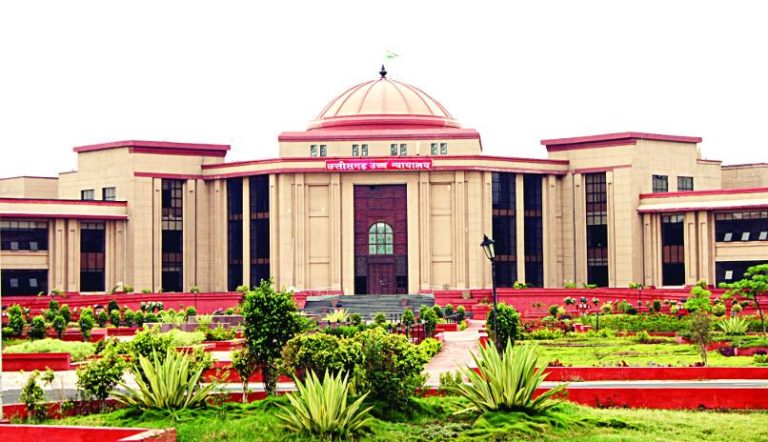
Rajasthan, Chhattisgarh and Karnataka High Courts get new CJs


High courts of Karnataka, Chhattisgarh and Rajasthan have got new Chief Justices on Tuesday, as informed by the Law Ministry.

Justice Shripathi Ravindra, a judge of the Delhi High Court was elevated as Chief Justice of the Rajasthan High Court.

Justice P Ramachandran Menon of the Kerala High Court has been elevated as chief justice of the Chhattisgarh High Court.

Justice Abhay S Oka, a judge of the Bombay High Court has been appointed as chief justice of the Karnataka High Court, the ministry said in separate notifications.

Jammu & Kashmir: Show the door to I, Me, Myself leadership of state

0

The parliamentary elections in Jammu and Kashmir are following a familiar, tried and tested script. There is no change in the scenario whatsoever. A select few who call themselves leaders of the masses have participated as candidates, as they have in all earlier elections. The only difference is their advancing years, which has not inhibited their thirst for power. They jump from one position to another without any reservation or remorse. Some leave a State Assembly seat to fight for Parliament, others do the opposite. There is no consideration whatsoever to the damage that the constant shifting does to the governance and the huge cost that is incurred to conduct multiple elections.

The thirst for power of these so-called leaders in Jammu and Kashmir is so great that they have made no attempt to create a young leadership pool in their parties; they wish to hold on to power to their last breath. Over the years they have created what they perceive to be a win-win formula so far as self-preservation is concerned and are not ready to change the same. They stall any forward movement and then put the blame on the central leadership.  It is “I”, “Me” and “Myself” all the way. This terrible situation has been going on for decades now.

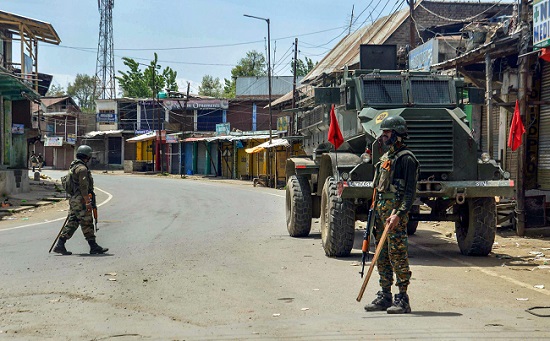
The security forces in the state have, on many occasions and after tremendous sacrifice in blood and sweat, created conditions suitable for the initiation of a political process. The people have also exhibited an intense desire to leave the shadow of the gun behind and move on to a normal and progressive life. They have made many sacrifices while assisting the security forces in elimination of the curse of terrorism in their land.

It is very sad to note that the political leadership has completely failed on each and every occasion, to live up to the expectations of the people and the nation. They have remained rigid and myopic, unwilling to remove the blinkers to set in a wider view. They have not done anything themselves and have not allowed others to take any new initiative to break the deadlock.

Some blame for this miserable state of affairs has to be taken by the people too. Take the recent instance of the conduction of Parliamentary elections. The security forces have put in a tremendous effort to provide a free and safe environment for the conduct of the same. The centre has also given all security reinforcements demanded by the state for smooth conduct of elections. This has happened despite there being a big shortage of manpower in view of the national commitment in the elections. Yet, the people of Kashmir have not come out to vote in the required numbers.

Under these circumstances, the political leaders feel that one or the other among them would be elected in any case, and they will get to enjoy all the perks of power, privilege and economic gains even if it is in turns.

The leadership of Kashmir is standing in the way of its people enjoying the fruits of democracy and freedom that the constitution of the country ensures to them. Look at the election speeches and statements that they make, all are based on negativity, divisiveness and disruption designed to raise passions. The distrust and insecurity in the minds of people leading to doubts with regard to the constitutional structure has been created by the same leadership. The end result is that the people are not getting to lead the kind of life that they should as a part of the largest and most vibrant democracy of the world. They have been reduced to being pawns in the hands of a select few. The situation cannot become more unfortunate than this.

The people of Jammu and Kashmir are educated, hardworking and dynamic, they are endowed with nature’s bounty and everything that is required to progress. If their governance is good they can make a contribution to the development and power of the nation rather than looking over their shoulder for support all the time. The centre and the rest of India would be only too glad to chip in if the single minded pursuit is towards peace and prosperity.

The endless debates on Article 370, Article 35A, AFSPA, et al are not something that will help the region and its people evolve. These are redundant subjects that are of interest to only a few who leverage them for political gains. What is going to help is a strong government that can root out the endemic corruption that is eating into the very fabric of the state; a government that can propel the state to its rightful place in the development index with modern forward looking economic policies; a government that can boast more about is own achievements than indulge in a blame game with the centre.

It is time for the people of Kashmir to stand up and be counted. They need to use their democratic rights and power to force the political leadership to deliver on their aspirations. They need to send out a clear message that they will not condone inefficiency and double speak from their leadership any more.

The harm done by not voting in the parliamentary elections cannot be undone. Now it is time to look forward towards the state assembly elections. The people can rest assured that the security forces will, once again, create a safe and conducive environment for the elections and that the election commission will guarantee free and fair polls. It is up to them to ensure that they select each candidate on merit and give their precious vote to those who can change the narrative from the existing pessimism to a state of high morale and optimism.

NOTA and money factor in Lok Sabha Elections 2019

Cash, drugs and liquor valued at over Rs. 2500 crore have been seized across the country since the beginning of the Lok Sabha poll process till April 15, 2019. It is stated to be double that of 2014 polls. During the late 2018 assembly, it was said, that some parties opened money bags to “help” voters and each vote cost Rs. 5,000 or more in cash. This shows how money continues to play a crucial role in luring the voters and making a mockery of the entire democratic system.

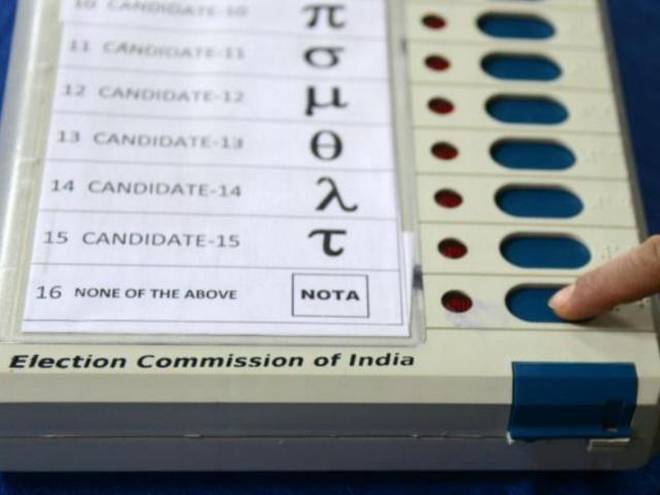
There is a growing discontentment among voters. As a result more and more voters are pressing the NOTA button. Infact, the ‘None of the Above’ (NOTA) ballot option has caused a new concern among political circles. Political parties have been telling voters not to press the button.

The Election Commission (EC) figures say that the highest 2.5 percent NOTA were registered in Chhattisgarh and 0.5 percent in Mizoram during 2018 state polls. It affected prospects in 22 constituencies in Madhya Pradesh; 15 each in Rajasthan and Chhattisgarh. Five states – Chhattisgarh, MP, Rajasthan, Mizoram and Telangana – registered 8.44 lakh NOTA votes in 2018. NOTA secured a total of 1.33 core votes in elections held between 2013 and 2017, according to an analysis of Association for Democratic Reforms (ADR). It is becoming a game changer much to the chagrin of political parties.

Despite demonetization, which was supposed to have eliminated black money, the seizure of cash during polls is on the rise. In Vellore alone over Rs 11.48 crore packed in plastic bags, with ward-wise details, was seized from a DMK functionary. The EC cancelled polling in Vellore LS seat in Tamilnadu after detecting “systematic design to influence voters through large-scale distribution of cash. It would severely jeopardize the conduct of free and fair election”. The EC wrote to the President on April 16. Gujarat recorded highest seizure valued at Rs 509 crore. A seizure of liquor off the state’s coast is estimated at Rs 500 crore.  The figures for Andhra Pradesh are Rs 158.61 crore, Punjab Rs 144.39 crore, Nagaland Rs 92.26 crore in cash 62000 litres of liquor – total of Rs 3.02 crore and UP Rs 135.13 crore. The figures from other states are trickling in. According to an estimate EC seizures are estimated at Rs 100 crore a day.

With seizure of so much cash during the elections, a pertinent question that comes to mind is how do the parties get their funding? According to National Election Watch, 8.9 percent of the income of parties is from unknown sources, 2.16 percent from the electoral bonds. The Congress earns 82 percent from unknown sources and the BJP 73 percent. They say these are through voluntary contributions or sale of coupons.

Data show that six electoral trusts donated about Rs 105 crore to national parties between 2005 and 2012 before transparency guidelines were introduced in 2014 mandating disclosure of donors. From 2014 and 2017, nine registered electoral trusts donated a total Rs 637.54 crore to political parties. The contribution to political parties rose from Rs 85 crore in 2014 to Rs 325.27 crore in 2017.

The BJP was the biggest beneficiary. About Rs. 10 crore went to the cash-strapped Congress and Rs.5 crore to Odisha’s Biju Janata Dal and other parties including Shiromani Akali Dal, Samajwadi, AAP and Rashtriya Lok Dal. Thus fund raising is a difficult issue. It helps the ruling or larger parties at the Centre and states. Congress had benefitted earlier and now the BJP is having an advantage.

Money plays crucial role. The corporate-type functioning of the parties, tight-fisted approach of the leaders, reminiscent of the Indira Gandhi era, raise many questions. If money flows in, external influence is natural. Are the parties really having a democratic functioning though all say they adhere to it? All parties love the autocratic structure. Smaller it is, more is the stranglehold. Lobbies penetrate these as one or the other has importance in different regions. This mocks internal democracy. So buying votes, as has been alleged in Supreme Court, now is the custom to save huge investments. A change in government can make or mar companies. Since all are beneficiaries, none raises the “political” issue.

Deep cleansing of the system is needed. NOTA is possibly exposing the unholy nexus. EC has taken the right step in Vellore, now it needs to popularise NOTA.

President of India releases Atal ranking of Institutions on innovation achievements

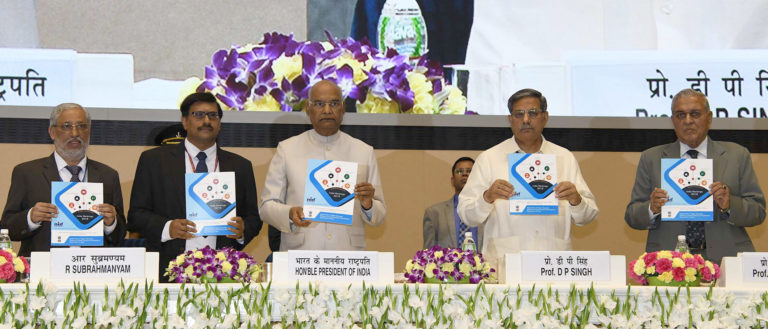
The President of India, Shri Ram Nath Kovind, released the India Rankings – 2019 and presented the India Rankings awards to the top eight institutions in different categories at a function held in New Delhi, earlier this month.. He also released the Atal Ranking of Institutions on Innovation Achievements (ARIIA) and presented the ARIIA awards to the top two institutions.

Speaking on the occasion, the President said that recent expansion of higher education in India has widened access and improved equity. Even so, quality remains a concern. While there are islands of excellence, both in the public and private sectors, overall standards are uneven. As our higher education infrastructure continues to grow, and as enrolment rises, it is important to lift the bar. A nuanced approach is essential to ensure that higher education not only fulfils individual aspirations, but also achieves national goals and priorities.

The President noted that besides overall rankings, category-specific rankings have been undertaken for colleges and universities, as well as subject-specific rankings for engineering, management, pharmacy, architecture, law and medicine. He said that a ranking system of such a nature fosters a spirit of healthy competition between institutions. This is vital because all institutions are today competing for talent – teaching talent, research talent, the most talented students, and even the most enlightened administrators. If an institution wants to attract the best, it too has to be among the best. It has to provide an encouraging atmosphere and suitable campus culture for students and members of the academic community.

The President said that it is critical that there be a significant Indian presence in global rankings of leading universities and higher educational institutions in the very near future. We live in the age of the Fourth Industrial Revolution, amid a knowledge society and an innovation economy. We cannot realise our potential without the requisite education infrastructure – measured both by numbers and standards. That is why the keen sense with which institutions participate in the India Rankings mechanism should persist and be escalated to striving for and achieving rankings among the global best.

Deepika Padukone clears doubt about her Indian citizenship

Amidst speculations that Deepika Padukone doesn’t have Indian citizenship and therefore she won’t be able to vote in the Lok Sabha elections, the actress has finally cleared the air. Since her birthplace is Denmark, rumours went around claiming that she holds a Danish Passport.

The actress, who is currently shooting for her upcoming movie ‘Chhapaak’, has rubbished all the rumours of being a Danish citizen. Deepika said that she holds an Indian passport and is a proud Indian citizen.

Philosophy of Economics Crash Course 8

Dr. Alexander Douglas specialises in the history of philosophy and the philosophy of economics. He is a faculty member at the University of St. Andrews in the School of Philosophical, Anthropological and Film Studies. In this series, we will discuss the philosophy of economics.

Scott Jacobsen: I want to shift the conversation into a brief foray in pseudoeconomics. Things purporting to be economics or some precise notion of international and national finance but, simply speaking, not connecting to the real world and, in fact, doing some time widespread damage. What defines pseudoeconomics?

Dr. Alexander Douglas: I don’t think ‘pseudoeconomics’ is a particularly useful category. To show why, let me say something about pseudoscience in general. Engaging in pseudoscience means aping the concepts and terminology of the sciences without taking on the critical methods that make them reliable. On this definition, to put it bluntly, much of economics is pseudoscience. These are fighting words, so let me try to explain carefully.

The concepts and terminology aped by economists consists mostly of mathematical notions. Since Stanley Jevons, economics has become increasingly mathematical; today it is probably the most heavily-mathematised applied subject with the possible exception of physics. But whereas certain areas of physics, quantum mechanics for example, can boast astonishing powers of predictive precision, economists don’t gain rewards in predictive power in proportion to their mathematical pains. The mathematics seems to be there only for show, or for intimidation. And this is a symptom of pseudoscience; one thinks of the intricate yet, in the end, irrelevant probability equations found in the work of Intelligent Design proponents like Michael Behe.

Alexander Rosenberg explained the lack of predictive precision in economics back in 1994, and I think the explanation holds. Physicists build complex mathematical models based on laws that have been rigorously tested empirically. Observation and experiment confirms that the crucial laws hold, and hold to very precise degrees. Something that really helps for testing a fundamental law is having distinct laws that concern the same properties. Take the Newtonian law, force equals mass times acceleration. To test this, you need to measure mass, but most ways of measuring mass – using scales for instance – presuppose the truth of the law. Happily there are other laws, e.g. Hooke’s spring law, that let you test mass without presupposing the truth of the Newtonian law. By measuring the mass of an object using the spring law – the way we measure it in outer space – you can then measure acceleration and force to see whether the Newtonian law bears out. In economics, however, you have laws that relate human behaviour to ‘utility functions’, yet there is no way to test a utility function except by observing behaviour. To infer a utility function from behaviour, you need a law connecting the two, yet you can’t test how well that law holds up unless you know some utility functions. Thus any alleged law-like connection between utility and behaviour – the assumption of maximisation – is something that we can’t test to any degree of precision. So why build incredibly complex mathematical models around functions representing causal relations that, for all we can scientifically know, might be quite wrong? This, to me, looks like pseudophysics: it copies the style but not the substance.

Economists often reply to me, when I make this point, that not all economists believe in utility-maximisation. There are models, they say, where this assumption is relaxed and replaced with more ‘realistic’ ideas about how people’s utility-functions govern their behaviour. What they don’t realise is that there is no empirical basis for saying that such assumptions are any more or less realistic. Assume that people don’t fully maximise their utility – say they use heuristics and ‘satisfice’. Now we can read a different utility function off their observed behaviour. How do we know that this assumption is ‘realistic’? Certainly not by seeing whether observed behaviour is what we would expect given the ‘satisficing’ assumption. For to know that, we need to know the utility function as well as the observed behaviour. And yet we just saw that we can only get to it by making the assumption we were trying to test.

Utility, said Joan Robinson, is a concept of impregnable circularity: there just isn’t any way for experiment and observation to break into the circle.

Naturally there is a great deal of mathematical interest in, say, decision theory and game theory. Interesting theorems can be proven in these branches of applied mathematics. To apply them to human behaviour in any predictively powerful way, we would need bridge-laws, formulating the degree to which real human behaviour implements the abstract mathematical model described in those sciences. But since human behaviour is the only observable thing, there just isn’t any scientifically respectable way to derive such bridge-laws.

Simply assuming that the results of a branch of applied mathematics have any relevance to the behaviour of a physical system – that’s pseudoscience rather than science. It has the outward elements of much modern science – mathematics and observation. But it fails to connect them together in the manner of a proper science. Since economics is, to this extent, pseudoscience, I don’t think it’s very useful to talk about pseudoeconomics; in a way I’d say that all economics is pseudoeconomics and a proper, mathematically-advanced science of human action lies in the future at best. But I’ll try to answer your further questions about pseudoeconomics by trying to imagine myself in the point of view of a working economist.

Jacobsen: What are some examples of pseudoeconomics in action? Examples of pseudoeconomics on the Left and on the Right, because this may be a non-partisan issue, but something of importance in the light of known damage from pseudoscience and pseudomedicine. How can pseudoeconomics be combatted?

Douglas: Again, I’m sceptical of the whole enterprise of economics, so the best I can do is report what economists say on this. Simon Wren-Lewis has written actively about what he would probably be happy to call ‘pseudoeconomics’; he’s collected this writing into a book called The Lies We Were Told. Some of his examples:

(1) The consensus among macroeconomists at top universities was that austerity was a damaging and unnecessary policy for the UK government to pursue, but the media reported this as a matter of contention among economic experts.

(2) The consensus among academic economists in general, as well as most experts with relevant knowledge, was that Brexit would have serious, harmful economic consequences. Again the media reported this as a balanced debate splitting the experts.

(3) Economic opinion on the economic effects of immigration does not bear out the alarmism that politicians such as Donald Trump exploit during their campaigns.

Note that these aren’t really cases of bogus economics; they are, rather, cases of misrepresentation. You’re not lying, nor even engaging in pseudoscience, if you go against the consensus opinion of academic economists. But you’re lying if you suggest that there is a consensus where there isn’t, or vice-versa. That seems to me to be the sort of thing Wren-Lewis is talking about. I’m happy to defer to his expertise on the question of what academic economists tend to believe.

Those are examples of pseudoeconomics on the Right, I suppose. I think Wren-Lewis could cite a similar example on the Left, in the case of Modern Monetary Theory (some of his posts on it are here). MMT is a school of economics that has a growing following on the blogosphere and is mentioned positively by Alexandria Ocasio-Cortez among others. Wren-Lewis is a critic of MMT, but his criticism is of what it says about mainstream economics. I think he’d agree with a statement something like this: MMT portrays mainstream macroeconomists, such as Wren-Lewis, as supporting policies that keep the unemployment rate higher than it needs to be, simply because they don’t understand the mechanisms of state spending. Wren-Lewis strenuously denies this, of course, though I don’t think he disagrees with any of the other factual claims made by MMT (he disagrees with MMT economists on policy recommendations, but it’s standard for economists to disagree over those).

Paul Krugman seems, for example in this blog post, to suggest that MMT is ‘pseudoeconomics’ in a stronger sense: it overlooks some crucial facts about how our economic institutions work. Krugman, however, doesn’t seem particularly well-informed about what MMT economists actually claim (one of them, Stephanie Kelton, took him to task on this). This, then, is a case of Krugman doing pseudoeconomics on my modified definition: representing economists as believing things they don’t actually believe.

Pseudoeconomics in this sense is only effective because of the prestige accorded to the opinions of economists. If the ratings agencies of the mind downgraded their opinions, nobody would bother with pseudoeconomics. Nobody bothers misrepresenting an unvalued opinion.

Jacobsen: Similar to the demarcation problem with science and non-science, how can we draw a line between economics and pseudoeconomics?

Douglas: I have no working theory on the demarcation problem. But I’ve tried to explain why I see economics as being on the ‘wrong’ side of the demarcation. To the extent that much successful modern science involves the application of mathematics to the natural world, the application itself is governed by a set of critical, empirical methods. Working on conic sections is amusing and edifying, but only a good track record of predicted observation justifies us in applying parabolas to the motion of projectiles.

Economics tries to skip to the end by working hard on the mathematics and then merely assuming its applicability to a portion of the natural world, namely the one made up by our bodies, our tools, and their various motions around the surface of the globe. This certainly forms a physical system of some sort, and we might one day hit upon a mathematical model that tracks its behaviour. But I see no reason to think that model will have anything to do with rational choice theory, which is really just a mathematical elaboration of our untested intuitions about human rationality, nor with the supposedly more realistic ‘behavioural models’, which are just mathematical elaborations of our untested intuitions about human irrationality.

Jacobsen: Thank you for the opportunity and your time, Alex.


Photo by NeONBRAND on Unsplash

Canadian actress Stefanie Sherk commits suicide

Canadian actress and model 43-year-old Stefanie Sherk has committed suicide, according to the Los Angeles County Medical Examiner-Coroner.

The cause of death includes anoxic encephalopathy — a condition caused by lack of oxygen to brain tissue — drowning and asphyxia.

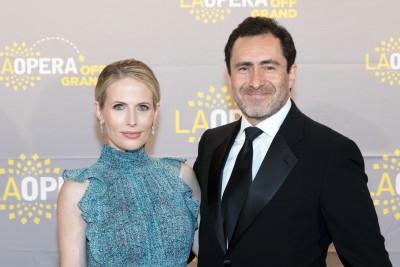
Sherk’s husband and actor Demian Bichir shared the news of his wife’s death, in a message to his followers on Instagram. Along with a photograph of Sherk, Bichir wrote: “Dear friends, On behalf of the Sherk and the Bichir Nájera families, it is with inconceivable pain that I announce that on April 20, 2019, our dearest Stefanie Sherk, my beloved and loving wife, passed away peacefully.

“It has been the saddest and toughest time of our lives and we don’t know how much time it will take for us to overcome this pain. Stefanie’s beautiful, angelical and talented presence will be immensely missed. We will hold Stefanie in our hearts forever.”

Cinema speaks universal language: Vice President writes in his fb post

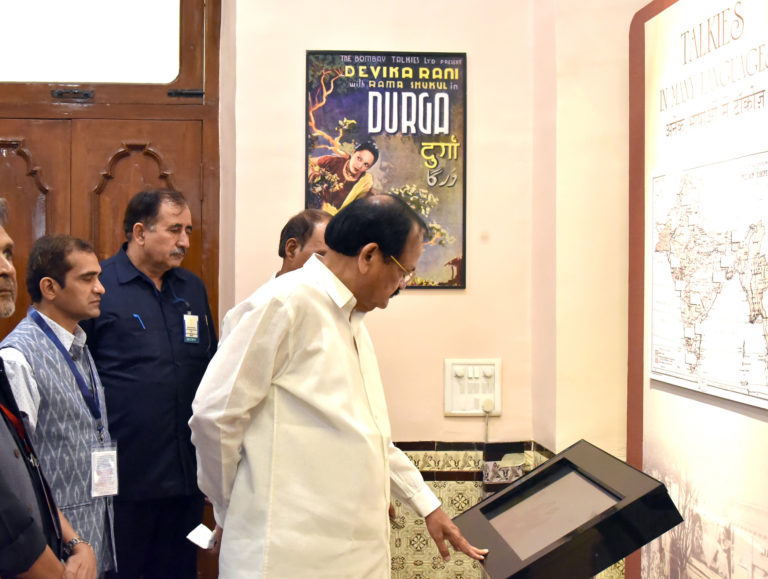
The Vice President of India, Shri M. Venkaiah Naidu visited the National Museum of Indian Cinema, in Mumbai, and said that Exhibits at the museum would take the visitors down the memory lane of their favorite movies, actors and the music.

Shri Naidu said that Cinema being the most loved and watched platform by the almost every Indian, can act as an instrument of social change. He observed that there was a need to inform, educate, empower and enlighten the lovers of cinema through good, moral and educative themes.

In a Facebook post  Shri Naidu penned his experiences after visiting the state of the art museum that celebrates and rejoices the legacy of the great mass media platform.

World Health Organization (WHO) launches world’s first malaria vaccine in Malawi

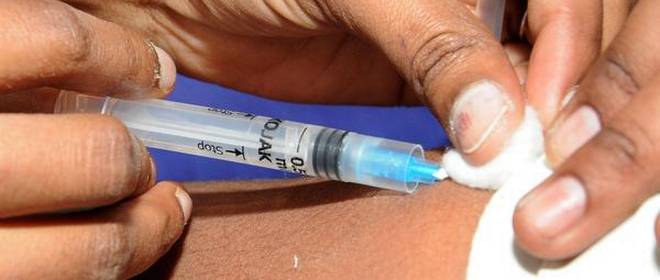
In a path-breaking development world’s first and only malaria vaccine was launched by the World Health Organization (WHO) in Malawi, earlier this week. This landmark pilot program of WHO aims to protect, in particular, hundreds of thousands of children under five against one of the world’s leading killers.

Malaria remains one of the world’s leading killers, claiming the life of one child every two minutes, according to WHO statistics. Most of these deaths are in Africa, where more than 250,000 children die from the disease every year. Children under five are at greatest risk of its life-threatening complications. Worldwide, malaria kills 4,35,000 people a year, most of them children.

Thirty years in the making, RTS,S is the first and to date the only vaccine that has demonstrated it can significantly reduce malaria in children, according to the WHO. In clinical trials, the vaccine was found to prevent about four in ten malaria cases, including three in ten cases of life-threatening severe malaria, reports Xinhua news agency.

Malawi is the first of three in Africa where RTS,S is to be made available to children up to two years of age. Ghana and Kenya will introduce the vaccine in the coming weeks.

Justice Ramana’s letter on recusing himself from SC’s in-house inquiry panel

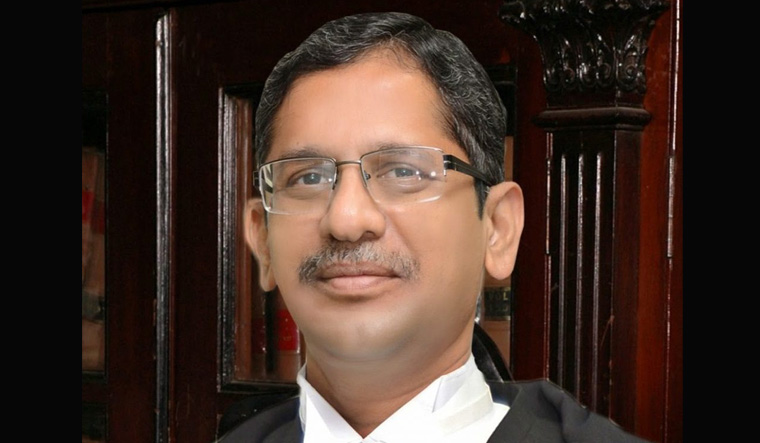
Supreme Court judge, Justice N.V. Ramana, has recused himself from the Supreme Court’s in-house inquiry panel, set up to examine the allegations of sexual harassment against Chief Justice of India Ranjan Gogoi. The recusal came a day after the apex court’s former woman employee wrote a letter to the panel expressing reservation over the inclusion of Justice Ramana. She objected to the presence of Justice Ramana in the panel on the ground that he is a close friend of the CJI and a regular visitor to his house.

However, Justice Ramana in his letter has said that he has not recused owing to the objections raised by the former woman employee who has levelled allegations of sexual harassment against the CJI, but it is done so that the whole exercise does not get vitiated. “My decision to recuse is only based on an intent to avoid any suspicion that this institution will not conduct itself in keeping with the highest standards of judicial propriety and wisdom,” he wrote in the letter.

Read the full text of Justice Ramana’s letter:

25th April, 2019

Sub: Recusal from the Committee constituted on 23rd April, 2019 “In the Matter of Complaint Dated 19th April 2019 Along with Affidavit Dated 18th April, 2019”.

Let me at the outset state that I recuse myself from the above referenced matter. I was asked to be a part of the said Committee by your Lordship which was duly approved by the Full Court. This involves an extraordinary obligation which ought not to be avoided unless there are extreme circumstances. I set forth, in brief, a broad outline of my reasons for recusing from this Committee.

The complainant, in the letter dated 24th April, 2019, has raised objections to my being a part of the Committee, on the grounds that, firstly, I may have pre- judged the matter based on a selective extract of my speech on the occasion of Centenary Celebrations of the High Court Building at Hyderabad, and, secondly, I am a close friend of the Chief Justice of India and like a family member to him. These grounds, according to the complainant, raise fears that her affidavit and evidence will not receive an objective and fair hearing.

I categorically reject these baseless and unfounded aspersions on my capacity to render impartial judgment in this matter, in-consonance with the best traditions of judicial propriety and the integrity of this Honourable Court. The grounds cited by the complainant ought not to be taken as evidence of a legitimate doubt for the following reasons:

(i)            The topic of the speech – “Judicial Journey – The Road Ahead” – delivered by me on the occasion of the Centenary Celebrations of the High Court Building in Hyderabad, was decided at least two weeks prior to the receipt of the complaint in the instant matter. As a part of a broad analytical and factual discussion of the topic, which included discussions about pendency of cases, use of technology and issues relating to the Bar, I also spoke about personal attacks against members of the judiciary seeking to  cast aspersions on their ability to render impartial judgements. If anything, the implicit assumption of that portion of my speech was that our conduct as judges ought to be exemplary so as to protect the dignity of the judicial institution from these frequent attacks. Judges, therefore, ought not to be cowed down in upholding the dignity of the judiciary. The dignity of the judiciary, first and foremost, flows from the capacity of judges to render impartial justice. The fact that this assertion, on the need to protect the dignity of the judiciary, is now being used to allege bias is a sad reflection of the state of affairs; and

(ii)           As regards to the second apprehension raised by the complainant, I am, like any other judge of the Honourable Supreme Court, required to attend  official meetings at the home office of the Chief Justice of India. We, the judges of Honourable Supreme Court, regularly meet each other – including socially – and also the Chief Justice of India. In fact, we call ourselves a “family” – to encapsulate that fraternity and collegiality. The same, inter alia, are essential for an honest appreciation of differences of opinions among fellow judges, which in turn, is vital for the intellectual growth of a judge. It helps us become wiser. The Chief Justice of India is primus inter pares, who allots a variety of administrative duties and responsibilities to the Judges. Thus, the judges often meet Chief Justice of India in connection with the same. My visits to the residence of Chief Justice of India cannot, therefore, suggest any proximity than what is absolutely normal under the circumstances. Thus, the apprehension expressed by  the  complainant in this regard is wholly misconceived.

In light of the above, I unequivocally reject the aspersions expressed by the complainant.

However, let us not be under any impression that the situation is not extraordinary – both in terms of the nature of the complaint and also the events that have transpired subsequently. The growth of every institution is necessarily based on iterative steps and a re-evaluation of the same with the courage to make changes based on our best sensibilities – intellectual and emotional. Wisdom does not flow from unbending assertion of authority, but recognition of frailty and the need to safeguard institutional integrity.

My decision to recuse is only based on an intent to avoid any suspicion that this institution will not conduct itself in keeping with the highest standards of judicial propriety and wisdom. It is the extraordinary nature of the complaint, and the evolving circumstances and discourse that underly my decision to recuse and not the grounds cited by the complainant per se. Let my recusal be a clear message to the nation that there should be no fears about probity in our institution, and that we will not refrain from going to any extent to protect the trust reposed in us. That is, after all, our final source of moral strength.

It is true that justice must not only be done, but also manifestly seem to be done. Let me also caution, at this stage, that it is also equally true that no one who approaches the Court should have the power to determine the forum and subvert the processes of justice. Let not my recusal in the instant matter be taken to mean, even in the slightest of measures, that we have transgressed either of these principles.

I wish to say nothing further.

Thanking all my Sister and Brother judges, who by reposing faith and confidence, unanimously chose me to be a Member of the Committee.