Today is April 20, 2019, and it was on this day in the year
1927 that the first formal definition of ‘State Subject’ was out in public
domain in Jammu and Kashmir during the reign of Maharaja Hari Singh.
Subsequently, a supplementary notification was issued five years and two months
later on June 27, 1932.
These two definitions are the basis of all controversies
that surround Article 370 as also Article 35-A today. Those defending the twin
articles of the Indian Constitution say that they are defending the special
laws made by the Maharaja.
Foremost among them are the leaders of National Conference
once led by Sheikh Abdullah who did everything possible to humiliate the
Maharaja. It was the combined machinations of Sheikh and his bosom friend
Jawaharlal Nehru, the first Prime Minister of India that ensured the exile of Maharaja
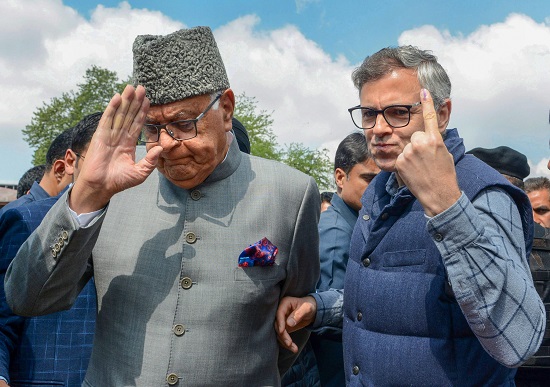
Hari Singh. It is the second and third generations of the Abdullahs (former
chief ministers Farooq Abdullah and Omar Abdullah), who are most vociferous defendants
of something that the Maharaja did.
Ironically, Abdullahs, virtually sworn enemies of the late
Maharaja, project themselves as the most ardent defenders of the State Subject
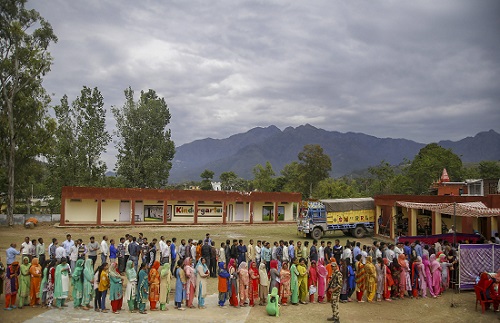
laws in 2019. The National Conference (NC), under them, decided to boycott the
elections of the panchayats and the urban local bodies (ULBs) held in late
2018, saying they were doing so to defend ”Article 35-A and Article 370″.
Mehbooba Mufti led her party, the Peoples Democratic Party
(PDP), to follow into arch-rival NC’s footsteps. Some may say that the NC and
the PDP showed a wonderful unanimity in defending the Maharaja’s laws. That is
a rather simplistic interpretation of their moves and amounts to falling into
their trap. Just as PDP did fall into the “poll boycott call” given
by the NC.
The NC is one party which gained by emerging once again as
the prime defender of the concerns of the Kashmiris regarding the articles of
the Indian Constitution facing scrutiny in the Supreme Court of the country. By
this deft move, it managed to push the PDP out of the central space of the
discourse in J&K and also throughout the country.
The NC is now clearly being talked of as the party that will
most likely bounce back to power whenever Legislative Assembly elections are
held in J&K.
Abdullahs’ and Muftis’ as apparent collective defenders of
the Maharaja’s laws have made the most devious and hilarious political move.
Almost throughout their history, these parties and their leaders have only
fanned contempt, and outright hatred for the Maharaja. In their narratives, Maharaja
Hari Singh was always portrayed as a ”communal Hindu Maharaja ruling innocent
Muslim Kashmiris” using his sword. As if the Mughals of Delhi durbar ruled
Kashmir by giving a rose flower a day to all Kashmiris!
The defence of Article 35-A as also of the Article 370 by
these parties is totally contrived. Maharaja’s laws on the issue of State
Subject were much more liberal and enabling then either or both of these
articles. In Maharaja Hari Singh’s reign, a 10-year period of residency in
Jammu and Kashmir enabled anyone to apply for grant of domicile and citizenship
of the state. And this is just one such example of enabling provision in the
State Subject laws of the Maharaja.
The present Article 35-A, which governs the definition of
Permanent Residents of J&K, has no such enabling provision. An arbitrary
date of ”those arriving 10 years prior to May 14, 1954″ has been set for
defining eligibility for the grant of PRCs (Permanent Resident Certificate).
Legal entrants to the state of Jammu and Kashmir, like the
West Pakistan refugees, Gorkhas who entered the state to defend and expand its
borders, Valmikis who were invited to the state by its government are not
eligible to be Permanent Residents of the state. The West Pakistan refugees
entered the state in 1947, the Valmikis in 1957 and the Gorkhas much earlier,
are all collectively persona non grata.
The disability thrust upon these people by Article 35-A
could not have been imagined or conceived in the Maharaja’s laws. The West
Pakistan refugees would have become naturalised State Subjects (or PRC holders
in today’s parlance) in 1957. The Valmikis would have become eligible for the
grant of the PRCs in 1967, similarly the Gorkhas would have become eligible for
PRCs.
It is a patent falsehood to say that Article 35-A or Article
370 are Maharaja’s laws.
The Maharaja’s laws for the protection of his ‘praja’
(people) were non-discriminatory and had enabling provisions. The 1927 law of
the Maharaja was more progressive than the modern Indian Constitution.
At a communal level, if the current provisions of Article
35-A and Article 370 are examined, the state government of J&K has
legislated some laws for enabling Muslims who fled J&K to neighbouring
Pakistan to return. Subject to fulfilment of certain terms and conditions,
these Muslims can become PRC holders again. However, when it comes to the Hindus
or Sikhs or Christians, who were living in the Maharaja’s territorial
jurisdiction and went out of J&K due to distress, or those who have been
living here for generations, there are no enabling provisions ever legislated
by any state government.
The West Pakistan refugees, who carry an odd nomenclature of
‘Pakistan’ defining them till date, a country they had fled to save their
lives, the Valmikis and the Gorkhas are all Indian citizens, living permanently
in Jammu and Kashmir. However, legally they are not Permanent Residents as
defined under Part III of the Jammu and Kashmir Constitution which comprises
five sections from Section 6 to Section 10.
Irony perhaps dies a hundred deaths every minute in J&K
as these are all Indian citizens but lesser and second class citizens condemned
to a third rate treatment than those Indian citizens living in J&K having
PRCs (Permanent Resident Certificates). These are domiciled in Jammu and
Kashmir and spent their entire lives and die here absolutely like others do.
But no. They are not legal domiciles of the state as the J&K Constitution
does not treat them as domiciles of the state.
Let us hope that the hearings on the petitions pertaining to
Article 35-A begin in the Supreme Court someday soon. The parties opposing
these provisions and those supporting them both present their points of views
and the court gives its verdict.