The
Supreme Court on Thursday asked former Ranbaxy promoters Malvinder Singh and
Shivinder Singh to apprise it how they propose to comply with the Rs 3500 crore
arbitral award passed against them by a Singapore tribunal.
The
apex court was hearing the plea of Japanese firm Daiichi Sankyo which is
seeking to recover Rs 3,500 crore, awarded to it by a Singapore tribunal in its
case against Malvinder and Shivinder Singh.
A
bench headed by Chief Justice Ranjan Googi asked the Singh brothers, who were
present in the court, to consult their financial and legal advisors and give a
concrete plan on how they will comply with the tribunal’s order. The bench
asked the Singh brothers to appear before it on March 28 and submit the plan,
saying “hopefully it will be the last time you are appearing in the court”.
Appearing
for Daiichi, senior advocate Fali S Nariman, told the bench that while
Malvinder Singh says he would honour the court’s order on the foreign
arbitration award, Shivinder says he has renounced the world and become a
saint. The bench said that “It is good for you to have renounced the world, but
there is a decree, so tell us how you propose to secure the amount.”
Daiichi
had bought Ranbaxy in 2008. Later, it had moved the Singapore arbitration
tribunal alleging that the Singh brothers had concealed information that
Ranbaxy was facing probe by the US Food and Drug Administration and the
Department of Justice, while selling its shares. Daiichi had to enter into a
settlement agreement with the US Department of Justice, agreeing to pay USD 500
million penalty to resolve potential, civil and criminal liability.
At
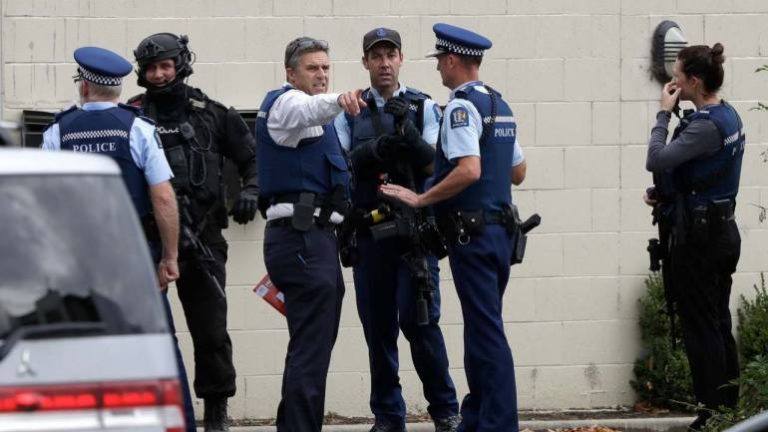
least 49 people have been killed, and 20 seriously injured, after mass
shootings at two mosques during Friday prayers in the New Zealand city of
Christchurch.
The
mosques were packed with worshippers gathering for Friday afternoon prayers,
and members of the Bangladesh cricket team were arriving when the shooter
opened fire.
The
prime minister, Jacinda Ardern, said this was “one of New Zealand’s darkest
days” as police uncovered explosive devices attached to cars and commissioner
Mike Bush urged all mosques across the country to close their doors for the
time being. “Police are responding with its full capability to manage the
situation, but the risk environment remains extremely high,” Bush said.
Four
people were taken into custody – three men and one woman. One person was later
released. A man in his late 20s has been charged with murder and will appear in
Christchurch court on Saturday. The police have not named him.
The
Australian prime minister, Scott Morrison, called the massacre a “rightwing
extremist attack” and said one suspect was Australian-born, without giving
further details.
Yousef bin Ahmad Al-Othaimeen, the Secretary General of the Organization of Islamic Cooperation (OIC), has condemned the attacks. The OIC represents 57 nations with large or majority-Muslim populations.”The brutal crime had shocked and hurt the feelings of all Muslims around the world, and served as a further warning on the obvious dangers of hate, intolerance, and Islamophobia,” he said.
Sadiq
Khan, the mayor of London, has tweeted his condolences to the victims of the
attack, and confirmed that there will be “highly visible” and armed
police around mosques in the UK capital on Friday. “I want to reassure the
Muslim communities in London. I have been in touch with the Met Police. There
will be highly visible policing around mosques today, as well as armed response
officers, as Londoners go to pray,” he said.
Amongst the noblest pursuits of the human species appears to be the education of the young, in which there is a proper and responsible passing onto the next generations the acquired knowledge of the prior ones.
One effort in the United States in the Next Generation Science Standard intended for school districts and accredited nonpublic schools. Iowa, for example, adopted the NGSS in 2015.
However, House File 61 is an interesting recent proposal that would prevent this from coming into full effect in Iowa, preventing NGSS from becoming the norm and expectation within the education system.
As reported, “The bill, introduced on January 23, 2019, and referred to the House Education Committee, is sponsored by Skyler Wheeler (R-District 4). In a 2016 interview with the Caffeinated Thoughts blog (April 19, 2016), Wheeler declared, ‘’I also oppose NGSS as it pushes climate change … NGSS also pushes evolution even more.’”
The denial of standard and mainstream scientific findings is an important issue. Denial of evolution simply leaves medical and biological sciences professionals less likely to come out of Iowa.
But also, there is the issue of anthropogenic climate change denial. This is an issue threatening species survival and requires immediate action as this is an urgent issue.
“In 2017, Wheeler cosponsored House File 140, which contained the same provision about the NGSS, as well as House File 480,” the NCSE stated, “which would have required teachers in Iowa’s public schools to include ‘opposing points of view or beliefs’ to accompany any instruction relating to evolution, the origins of life, global warming, or human cloning. Both bills died in committee.”
There is nothing new here. Indeed, the educators see through the ploy and the Iowa Association of School Boards has already made an open declaration of opposition to the House File 61.
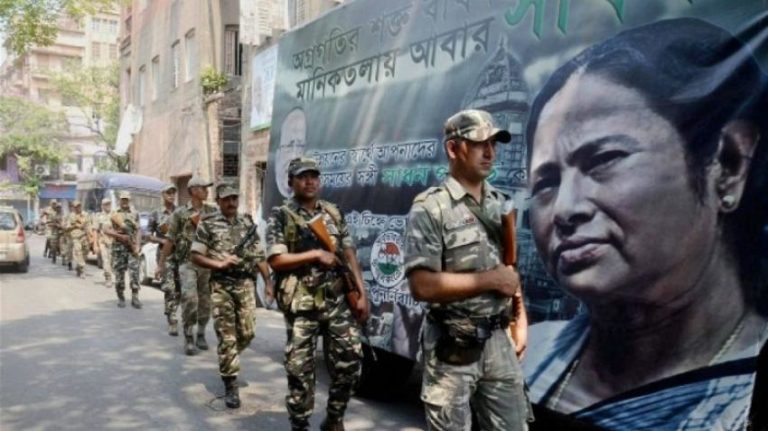
In a second incident within a week, huge amount of explosives has been captured by agencies in West Bengal. The Kolkata Police had last week seized nearly 1,000 kg of potassium nitrate — used in making explosives — from Chitpur area of the city.
In
the latest incident, the West Bengal CID has seized a huge cache of explosive
materials from a village in Bankura district during a raid, a senior officer
said on Thursday.
Acting
on a tip-off, a CID team raided the village under Saltora Police Station in the
district, and seized around 106 cartons of gelatin sticks weighing 2,650 kg,
6,650 kg of ammonium nitrate sacks and 52,500 pieces of electric detonators, on
Wednesday night, he said. A four-wheeler and a two-wheeler have also been
confiscated.
“The
seized items were procured from Odisha, Telangana and Jharkhand, and were meant
to be used in illegal stone quarry. We are conducting an investigation,”
the officer added.
Passion is always infectious and
when it’s about cooking, sharing and documenting food, it becomes aromatically
contagious too. But for someone, who has been tirelessly documenting and preserving
India’s rich and diverse food traditions, it’s just an unending quest to
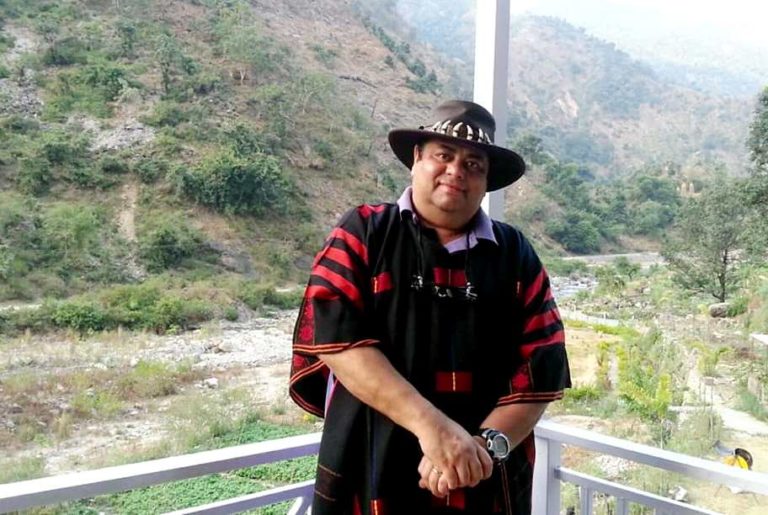
explore, understand and rediscover food. Renowned culinary historian Ashish
Chopra feels that he shares a childhood connect with food. “Food has always
excited me since my childhood. I can safely say that I am a born foodie. Being
the son of an anthropologist, I was always fascinated by stories about cultures
and their cuisines. As a young child, I would always accompany my father on his
various field trips to different parts of India and during field trips, dad
would love to cook,” he recalls.
Chopra, who is also a chef,
author, travel writer and TV show host, feels that it’s immensely important to
keep the diverse food cultures of India alive through documentation. “Wherever
I would travel I would document food and culture and that is how the culinary
historian was born in me. I have also had an opportunity to travel pan India
for various projects with the government, private Institutions as well as with
television channels as an expert and that further fuelled my quest about
exploring food cultures. There is so much to discover and share. I feel it is
my national duty to share the rich culinary heritage of India with the world,”
he says.
Sharing about his journey
documenting tribal cuisines of India, he feels this has been his one of the
most fascinating expeditions. “I have been studying tribal culture for over three
decades now and it has taught and given me so much. I have covered over 250
tribes pan India – how they live with nature, respect it, their myths, beliefs and
traditional wisdom is indeed wonderful. Food and festivity is an integral part
of their existence and their indigenous knowledge about various herbs and medicinal
plants teaches us a lot. With their lands being encroached upon now by various
agencies, it’s all the more important to document their cultures before it dies
due to rampant modernisation in the wrong way,” says Chopra, who has authored NE Belly: The Basic Northeast Cook Book
(2006) on the food culture of North East.
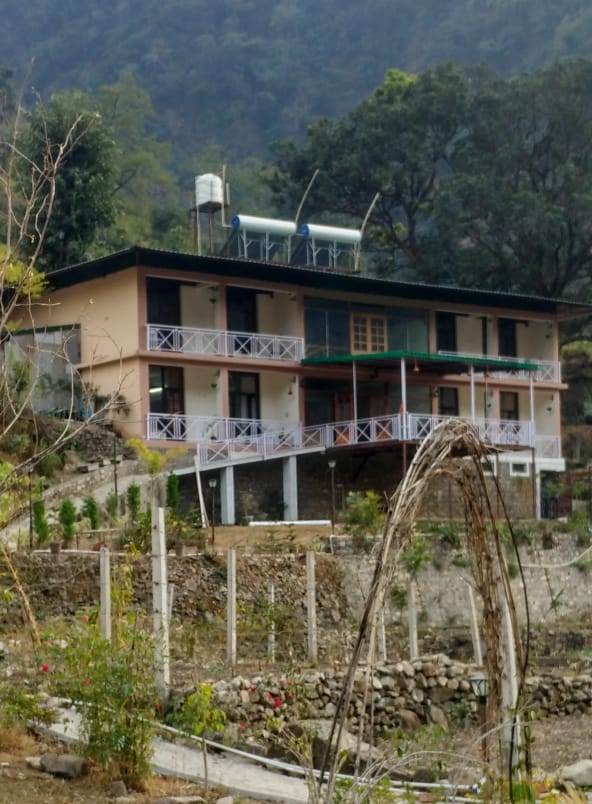
India’s first School of Ancient Culinary Arts (SACA) coming up near Rajaji National park in the foothills of Dehradun
Transforming his passion into a
more concrete idea and platform, he is currently putting his efforts towards
the setting up of India’s first School of Ancient Culinary Arts (SACA). Located
in the picturesque surroundings of Rajaji National park in the foothills of
Dehradun in Uttaranchal, the school will have chefs from villages and they will
impart their traditional knowledge to chefs from different parts of the world.
With food and history combining passionately
and the fusion of traditional & contemporary cuisines, we are sure to get some
fascinating stories of our rich and diverse food heritage on the table.
Islamabad
has now officially accepted that its fighter jets had violated Indian airspace
on February 27 in retaliation to the airstrikes carried out by Indian Air Force
(IAF) the previous night. Yet, it has vehemently denied New Delhi’s claim that during
this incursion an IAF MIG 21 fighter aircraft piloted by Wg Cdr Abhinandan
Varthaman had shot down an F-16 fighter jet of Pakistan Air Force (PAF).
But this
denial isn’t at all surprising because Pakistan has historically been very economical
with the truth. Remember how just two months after its creation, Pakistan claimed
that the invasion of Kashmir was the handiwork of tribals and its army was not
involved in any way even as foreign journalists were reporting of how Pakistan
army was actively participating in this action. Similarly, in 1965 and during the
1999 Kargil crisis it once again claimed that those who had intruded into
Kashmir weren’t army personnel but ‘razakars’ (volunteers) and Kashmiri
‘mujahideen’ (holy warriors) respectively.
It is
therefore but natural for the global community to take whatever Islamabad says
with much more than just a pinch of salt. That’s why when Prime Minister Imran Khan
promised to present the world with a “Naya (new) Pakistan” and followed it up
with the announcement last week that “..this government will not allow
Pakistan’s land to be used for any kind of outside terrorism,” the
international community wasn’t impressed. After all, didn’t President Pervez Musharraf
make a strikingly similar reassurance to Indian Prime Minister Atal Bihari
Vajpayee in 2002 that he will “not permit any
territory under Pakistan’s control to be used to support terrorism in any
manner”?
So let’s pragmatically try solving the mystery of whether or
not an F-16 of PAF was shot down last month. As per Indian claims, a MIG 21 Bison fighter
shot down one F-16 of PAF over Pakistan occupied Kashmir (PoK) airspace and two
parachutes were seen descending which confirms that the pilots had abandoned
the crippled aircraft and ejected. New Delhi also conceded that in this
encounter the IAF had lost one MIG 21 Bison fighter aircraft and its pilot Wg
Cdr Abhinandan Varthaman who bailed out had landed in PoK was taken into
custody by Pakistan army. It however refuted Pakistan’s claim of a second IAF
fighter aircraft being downed and that two pilots were missing.
Islamabad’s version was entirely different. Director General (DG)
of Inter Services Public Relations (ISPR) Maj Gen Asif Ghafoor tweeted that during
this aerial combat the PAF had shot down two Indian fighter jets out of which
one had crashed in PoK whereas the other aircraft fell in Kashmir. He also
confirmed that while one IAF pilot was in its custody, two others were “in the
area.” An hour later, while parading Wg Cdr Abhinandan before the media Maj Gen
Ghafoor said that the Pakistan Army had apprehended the second IAF pilot who was
being treated for his injuries in a Combined Military Hospital (CMH). Maj Gen
Ghafoor out rightly rejected India’s claim of the IAF shooting down an F-16 saying
that the PAF didn’t use F-16 fighters in this action.
Since the DG ISPR had initially spoken about two IAF pilots being
“in the area,” many assumed that one of them had been subsequently apprehended
and since Maj Gen Ghafoor specifically mentioned that this pilot was being
treated at a CMH, there was no reason to doubt the veracity of his claim.
However, by the evening DG ISPR made the unbelievingly embarrassing revelation
that “…there is only one (IAF) pilot under Pakistan Army’s custody.” While one
can understand that one IAF pilot who was reportedly “in the area” but had not
been apprehended may have been able to evade the Pakistan Army and reach Indian
lines safely, but how did the injured pilot being treated in CMH suddenly vanish
into thin air? It’s inconceivable that the Pakistan Army, which boasts
unmatchable professionalism, could go so badly wrong while making claims and in
the bargain commit such a humungous faux pas!
Though there may be a wide variation in the Indian and
Pakistani versions of the February 27 air duel, but there are certain
similarities and these give us pretty good clues about what actually would have
happened that day. The first issue is regarding the number of pilots who bailed
out; the DG ISPR claim that three IAF pilots did, (one who was in their
custody, the second who was admitted in hospital but inexplicably ‘disappeared’
and the third who was never apprehended and possibly was ‘the one who got
away’). On the other hand India maintains that while two of those who bailed
out were PAF pilots of the downed F-16 jet, the third was the MIG 21 pilot (Wg
Cdr Abhinandan) of IAF who had shot down the F-16.
The common factor in both these versions is that three pilots
had ejected on that day and landed in PoK. However, since the IAF hasn’t
notified that two of its pilots are missing and Pakistan denies that any of its
fighter jet was shot down, the question is: Who and where are these pilots? There
can be only two possibilities — one, they are IAF pilots of the second fighter
which Pakistan claims to have downed that day, or two, these are the pilots of
the downed F-16 as India asserts. If it’s the former, then it seems that just
like the Pakistan Army which disowned its dead during the Kargil War, India too
has decided to simply abandon its downed pilots and left them to their fate. In
case this deduction sounds implausible, and so the only possibility is that these
two pilots belonged to the PAF.
So was Maj Gen Ghafoor outrightly lying when he claimed that
one IAF pilot was being treated in an army hospital? Even though I have no soft
corner for Maj Gen Ghafoor or his ilk, but I still refuse to believe that a General
of the Pakistan Army would intentionally commit such a mammoth blunder. My
personal estimation is that DG ISPR was merely an unfortunate victim of his
subordinates’ overzealousness and his own exuberance which made him to accept inputs
without confirming the same. Therefore, since both sides agree that three
pilots ejected that day, there is no need for anyone to doubt this figure and this
reinforces reports of how mistaken identity led to a downed PAF pilot being so
badly beaten up by locals that he was hospitalised in an unconscious condition.
So in all probability Maj Gen Ghafoor wasn’t lying when he claimed
that one pilot had been hospitalised. The only mistake he made was to presume that
the unconscious PAF pilot who was found in an unconscious state and semi naked
condition as his flying suit had been ripped apart by the mob who lynched him belonged
to IAF! Maj Gen Ghafoor’s ‘josh’ seems to have overwhelmed his ‘hosh’!
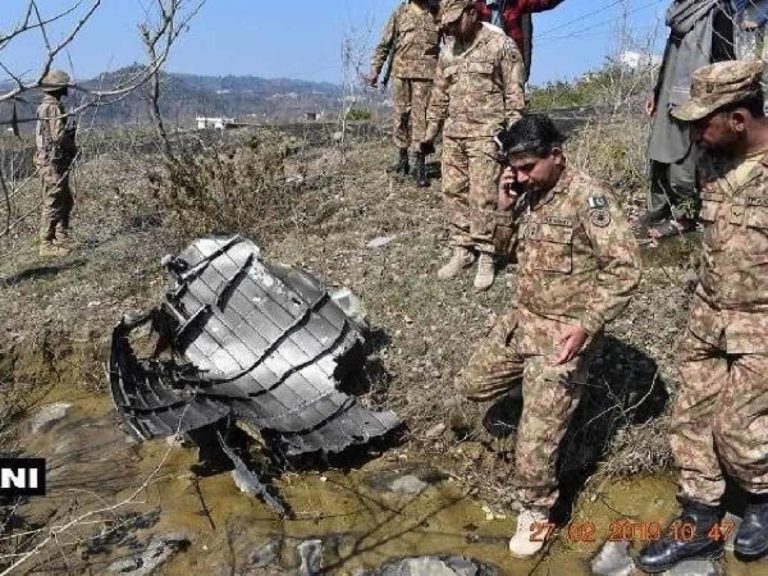
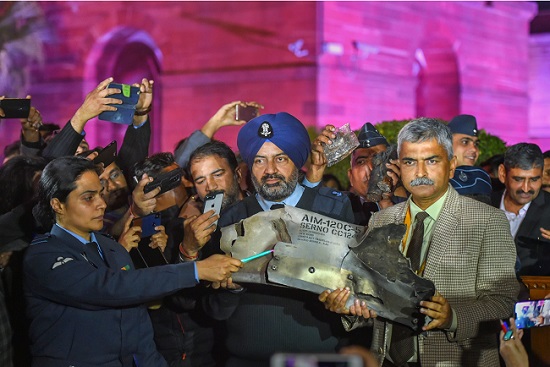
The next issue concerns about the participation of F-16s in this action. Pakistan has categorically denied this but remnants of an AIM-120 C-5 AMRAAM missile recovered from the area with clear markings casts serious doubts on Islamabad’s claim because this sophisticated armament can only be fired from an F-16. Some armchair detectives and computer geeks in Pakistan searched the internet and ‘discovered’ that the serial number on the missile fragment displayed by IAF matched that of a missile supplied by its makers to Taiwan. But since Taiwan has denied this and internet data lacks authenticity, Pakistan’s claim of not employing F-16 against India on February 27 remains questionable. Only Washington that supplied F-16s and AMRAAM missiles to Pakistan or its manufacturer Lockheed Martin can conclusively unravel this mystery, but this isn’t likely.
Indian Air Force officials show portions of the AMRAAM missile as evidence of Pakistan’s attack on India in Kashmir at their presser in New Delhi on February 28, 2019. (Photo: PTI)
Though Washington has announced that “We’ve seen those reports (on use of AMRAAM missile by Pakistan) and
we’re following that issue very closely,” it is unlikely to pursue this
issue for two main reasons. One, it doesn’t want to rake up a controversy by inviting
international and domestic attention to Washington’s incurable habit of selling
state-of-the-art armament to nations with a tainted history of honouring
‘end-user’ agreements. In the 1950s, Washington supplied Pakistan with M48
Patton tanks, F-86 Sabre jets and F-104 Star-fighters on the condition that
these would not be used against India.
But Islamabad embarrassed
Washington by fielding these against India during the Indo-Pak war of 1965. This
same thing happened in the 1980s when the Pakistan Army diverted a large number
of the lethal Stinger surface-to-air portable missiles supplied to it by CIA for
equipping ‘mujahideen’ fighting the Soviets in Afghanistan. Recovery of Stinger
missile casings from positions abandoned by retreating Pakistan Army personnel
in Kargil proves that this missile was used against the IAF during the Kargil
conflict.
Also, Lockheed Martin that produces
F-16 aircraft and its variants as well as several other state-of-the-art weapon
systems and defence equipment are the world’s biggest defence contractors and exercises
considerable influence over Washington. Since
the F-16 which is being used by several countries has the unique distinction of
never having been shot down in aerial combat, this achievement gives Lockheed
Martin the competitive edge in the arms market.
As such, it would never like to concede that the enviable record of the
F-16s’ invincibility has been shattered by an antiquated and ungainly MIG 21
armed with a ‘not so smart’ short range missile!
US State Department Deputy
Spokesperson Robert Palladino has already clarified that “as a matter of
policy, we don’t publicly comment on the contents of bilateral agreements that
we have in this regard involving US defence technologies nor the communications
that we have with other countries about that.” Therefore, it would be
unwise to expect either Washington or Lockheed Martin to clear the air on
whether Pakistan had pitted F-16s against the IAF on February 27. So, New Delhi has no choice but to work alone for
exposing Islamabad’s deceit and doublespeak. But with DG ISPR bungling up on a
simple thing like accounting for the number of IAF pilots taken into custody by
Pakistan Army, this shouldn’t be a very difficult task.
The Surf Excel advert is facing massive backlash for portraying Holi colours as ‘daag’ (stain). Hindustan Unilever tried to play to the gallery and had expected to impress Islamists across the Indian sub-continent with this Surf Excel advertisement. It has now ended up alienating billions of Hindus who have taken serious offence to the ad’s denigration of Holi — the blissful festival of colours.
Surf Excel, the detergent brand of Hindustan Unilever (HUL) has been caught in a controversy. Following the recent trend of capitalizing on festivals by corporate giants, HUL also tried to do the same but got off on the wrong foot. The advertisement has faced massive backlash for portraying Holi colours as ‘daag’ (stain)and for subconsciously promoting ‘love jihad’.
A large number of people across India took to Twitter to vent
their ire against HUL’s bigotry against Holi—the Hindu festival of colours.
#BoycottSurfExcel was one of the top Twitter trends in India as scores of
people objected to this advertisement.
In fact, HUL had tried to play to the gallery and expected to impress the Islamists across the Indian sub-continent with this Surf Excel advertisement. Apart from India, the main markets of Surf Excel are in Pakistan and Bangladesh, and it definitely had the large number of Muslim customers in mind by denigrating a “kafir” Hindu festival like Holi. Ironically, it’s only the ultra-conservatives such as the Wahhabis and Deobandis within Islam, who have objections with Holi colours and the Surf Excel advert chose to endorse their views. Other liberal Islamic schools have never objected to Hindu festivals, including Holi.
But then this is not the first instance when Hindustan Liver had tried to vilify Hindu beliefs and festivals. A few weeks earlier there was this advertisement about HUL’s brand of Red-label tea that showed Kumbh Mela in bad light.This advert was released at a time when world over the Kumbh Mela was being talked about as the most peaceful congregation of spiritual Hindus at Prayagraj (earlier Allahabad). When accolades were pouring in from the international media and research institutions, HUL chose to highlight a rather insulting example of the young abandoning their elderly at the Kumbh Mela. The Red Label advertisement was aimed at branding Kumbh Mela as the religious congregation where elderly parents were routinely being abandoned. If at all (and there’s a big “If”) these incidents happened, they would have been very few. Of course there is no basis to claim that abandoning elderly has been a routine practice amongst Hindus. HUL’s advertisement of its Red Label tea was not only absurd but also derogatory to Hindus across the world.
What enrages me and the billions of Hindus is that this same HUL takes extra care while portraying dubious Islamic prescriptions such as the Hijab. Even through its latest Surf Excel advertisement, it has tried to reinforce an erroneous belief held by radical Islamists that playing with Holi colours is non-Islamic and Muslim children should abstain playing with colours, while on their way to offer namaz.
Surprisingly, the coterie of self-proclaimed champions of
secularism in India have begun defending HUL’s derogatory ad. This same coterie
maintains a deafening silence whenever a progressive Muslim raises his/her
voice against the repressive practices in Islam.
It is this selective targeting
of Hindus by companies such as HUL that has incensed us. None of these big
brands will ever dare to make any advertisement that even remotely criticises the
practice of mass slaughter on Eid-al-Adha (Bakrid) or the practice of forcing
young Muslim girls to wear Hijab or a Burqa. This systematic bias and
skewed secularism being practiced by left-liberals, a section of media and
corporate houses is very dangerous as it creates undue rift in our society.
A couple of decades ago, people would have bought this nonsense of belittling Hindu faith and festivals in the name of harmony because media, text books and everything else was under the control of these self-proclaimed contractors of free speech. But thanks to Internet, their devious agenda now lies exposed. In this digital era such dubious and devious agenda cannot remain hidden for long.
Ten
people, including six college students, were arrested in Gujarat’s Rajkot city
in the last two days for allegedly playing the PUBG game on their mobile phones
despite the police banning it.
Police
Commissioner Manoj Agrawal had on March 6 issued a notification banning the
online games PlayerUnknown’s Battlegrounds (PUBG) and ‘Momo Challenge’ in the
city. Police stations were asked to implement the ban and arrest those who were
still playing these games.
“On
Tuesday, our teams arrested six college students playing PUBG game on their
mobile phones on Kalavad Road and in Jagannath Chowk area,” said an
official. The same day, Gandhigram police arrested a 25-year-old private firm employee
for playing the game on his phone. On Wednesday, three people were arrested by
Rajkot police’s special operations group while playing the game on their phones
in different areas of the city.
All
the 10 were booked under Indian Penal Code Section 188 (disobedience to order
duly promulgated by public servant) and later granted bail at the police
stations concerned, the police officer said.
As
per the police commissioner’s notification, the ban was necessary as these
games were leading to violent behaviour among children and youth. The games
were adversely affecting the studies and the overall behaviour, conduct and
language of children, the notification said.
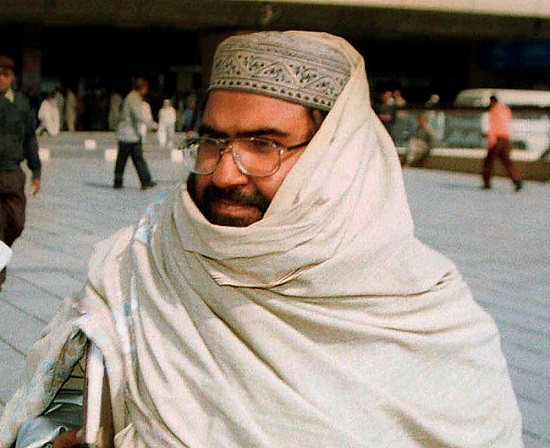
As
once again China blocked a move to designate JeM chief Masood Azhar a global
terrorist at the UNSC, India has expressed its strong disappointment over
China’s decision and has indicated to “pursue all available avenues”
to bring to justice terrorist leaders involved in attack on Indians.
Outraged
by China’s stand responsible UNSC members warned they “may be forced to
pursue other actions” at the Security Council if Beijing continued with
this policy. “If China continues to block this designation, responsible
member-states may be forced to pursue other actions at the Security Council. It
shouldn’t have to come to that,” a Security Council diplomat told PTI in
an unusual tough warning to China.
In
the aftermath of the Pulwama terrorist attack, three permanent members of
Security Council the US, France and the UK had moved a resolution to designate
Azhar a glocal terrorist. Except for China, which wields veto power in the
Security Council, all other UNSC members were on board with the move before the
al-Qaida (1267) Sanctions Committee.
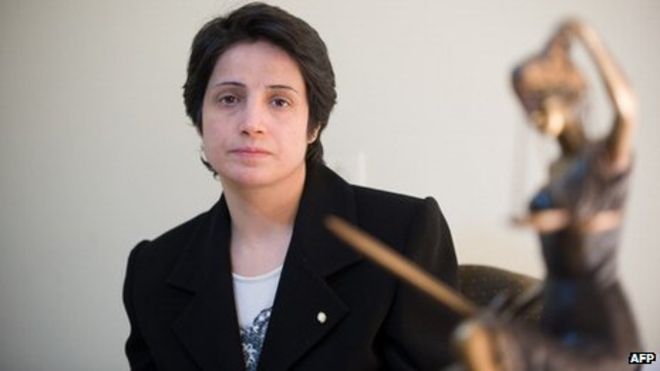
Nasrin Sotoudeh, an award-winning human rights lawyer has been sentenced to a total of 38 years in jail and 148 lashes in Tehran. She was quite vociferous in defending women protesting mandatory hijab. Sotoudeh was charged with several national security-related offences, all of which she denies. Her lawyer said she was charged with spreading information against the state, insulting Iran’s supreme leader and spying. She was arrested in June 2018.
Globally,
rights groups have strongly criticised the “shocking” sentence
against the prominent human rights activist, who has dedicated her life to
defending women’s rights and speaking out against the death penalty.
Ms. Sotoudeh’s husband confirmed her sentence on Facebook, after a brief phone conversation with her from prison, according to the Center for Human Rights in Iran.
We use cookies on our website to give you the most relevant experience by remembering your preferences and repeat visits. By clicking “Accept All”, you consent to the use of ALL the cookies. However, you may visit "Cookie Settings" to provide a controlled consent.
This website uses cookies to improve your experience while you navigate through the website. Out of these, the cookies that are categorized as necessary are stored on your browser as they are essential for the working of basic functionalities of the website. We also use third-party cookies that help us analyze and understand how you use this website. These cookies will be stored in your browser only with your consent. You also have the option to opt-out of these cookies. But opting out of some of these cookies may affect your browsing experience.
Functional cookies help to perform certain functionalities like sharing the content of the website on social media platforms, collect feedbacks, and other third-party features.
Performance cookies are used to understand and analyze the key performance indexes of the website which helps in delivering a better user experience for the visitors.
Analytical cookies are used to understand how visitors interact with the website. These cookies help provide information on metrics the number of visitors, bounce rate, traffic source, etc.
Advertisement cookies are used to provide visitors with relevant ads and marketing campaigns. These cookies track visitors across websites and collect information to provide customized ads.
Necessary cookies are absolutely essential for the website to function properly. These cookies ensure basic functionalities and security features of the website, anonymously.
Cookie
Duration
Description
cookielawinfo-checkbox-analytics
11 months
This cookie is set by GDPR Cookie Consent plugin. The cookie is used to store the user consent for the cookies in the category "Analytics".
cookielawinfo-checkbox-functional
11 months
The cookie is set by GDPR cookie consent to record the user consent for the cookies in the category "Functional".
cookielawinfo-checkbox-necessary
11 months
This cookie is set by GDPR Cookie Consent plugin. The cookies is used to store the user consent for the cookies in the category "Necessary".
cookielawinfo-checkbox-others
11 months
This cookie is set by GDPR Cookie Consent plugin. The cookie is used to store the user consent for the cookies in the category "Other.
cookielawinfo-checkbox-performance
11 months
This cookie is set by GDPR Cookie Consent plugin. The cookie is used to store the user consent for the cookies in the category "Performance".
viewed_cookie_policy
11 months
The cookie is set by the GDPR Cookie Consent plugin and is used to store whether or not user has consented to the use of cookies. It does not store any personal data.