Home Blog Page 467

28th Grammy for 85-year-old Quincy Jones

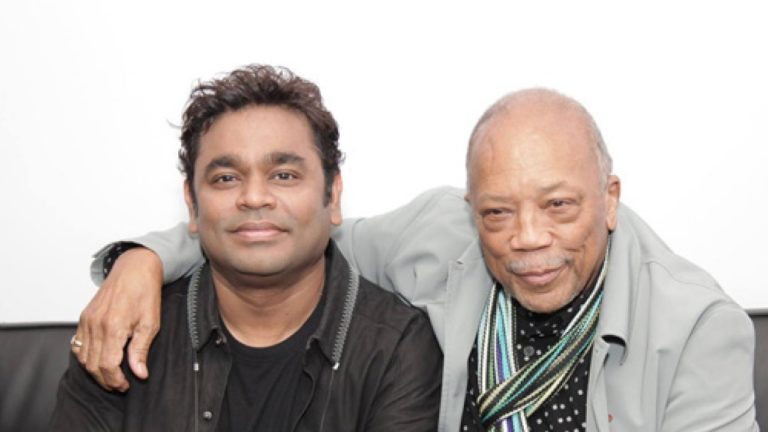
Legendary record producer Quincy Jones on Monday created history as he took home yet another Grammy with his documentary “Quincy” winning for best music film on the 2019 Grammy awards. He was last awarded in 2001 for best spoken word album, ‘Q – The Autobiography Of Quincy Jones’.

This is his 28th Grammy, making him the living artiste with the most trophies in Grammy history. 85-year-old Jones has won Grammys in more than 10 categories over his nearly seven decade long career but his win for “Quincy” is his first in the best music film category. “Quincy” released on Netflix in September, focusing on Jones’ extraordinary life and achievements in both the music and film industries.

PM Modi to launch a slew of projects in Haryana ahead of General Elections 2019

0

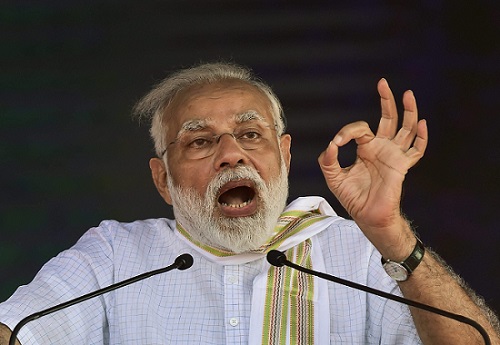
Prime Minister Narendra Modi is slated to launch a slew of projects at Kurukshetra, Haryana in an effort to woo the voters ahead of General Elections later this year.

On February 12, Modi will launch the Swachh Shakti-2019 programme, dedicated to women. About 7,500 women representatives from across the country and 15,000 women Panch and Sarpanch from across Haryana are participating in this programme.

Swachh Shakti-2017 programme was first launched from Gujarat, later on the Swachh Shakti-2018 from Lucknow in Uttar Pradesh was announced and now the third Swachh Shakti-2019 programme will be inaugurated from Kurukshetra in Haryana.

Under Swachh Shakti the central government and state government have, so far, released Rs. 122.69 crore and Rs. 169.75 crores, respectively to urban local bodies. In order to promote cleanliness in the state, the state government has implemented Swachhta Shehri Puraskaar Yojana, under which the best ward in municipal corporation areas would be awarded cash prize of Rs 2 lakh for its sanitation efforts, best ward in municipal committees with cash prize of Rs 1 lakh and best ward in municipalities with cash prize of Rs 50,000.

During his visit PM Modi will also lay the foundation stone of National Institute of Ayurveda at Shri Mata Mansa Devi Complex Panchkula. The estimated cost of this project is Rs 270.50 crore. This Institute will be a national level Institute for Ayurveda treatment, education and research with a 250 bed hospital. Spread across 19.87 acre the Institute will cater to over 500 medical students every year offering undergraduate, postgraduate and PHD degrees.

PM Narendra Modi will also inaugurate National Cancer Institute (NCI) at Badhsa, Jhajjar, from Kurukshetra through video conferencing during this visit.

The policies of paradox

0

What makes students dull and uncompetitive? Why is the Skill India mission an absolute failure for the urban educated youths? And why is the youth drifting away from active governance?

What does an enlightened mind of a graduate student contemplate? It focuses on understanding and decoding life’s most unconventional questions. No, it’s not what you’re thinking –nothing even roughly close to life on Mars, or time-travelling. It tends to justify questions like that of- What is a full-time work experience? Does it include valued internships? Or Research Projects that one invest himself in, besides academics? What is the necessity and valuation of a fulfilled biannual “internship break” or a Research Project submission mandated by premier Indian Institutes? Does it actually have some real tangible benefits and utility after graduation?

Recently, a report by Centre for Monitoring Indian Economy (CMIE) was discussed and cited in the last Lok Sabha session. It states that, “an estimated 10 million jobs were lost in both rural and urban India last year”. The reasons for which are the usual –  growing population, shortage of well-trained formal skilled workforce among others. However, what is interesting is the fact that the Central Government’s highlight and solution on the issue of unemployment has been the Skill India Mission (2015). The programme was launched on a “Mission Mode” to enhance prospects of the educated workforce which had little or no job skills, making them largely unemployable. However, the objective of the Mission itself is unconvincing and unsatisfying. It is astounding that the government did not consider analyzing the problem thoroughly. Instead, it called for a “Mission Mode” campaign spending close to 17,000 crore last year (Budget) when it could just solve the skill set enhancement problem for free, coupled by sheer willpower to resolve. 

How? The universities across India mandate “Internship breaks”, Research Projects and Field-trainings. The idea behind these kinds of work experiences and trainings is to enhance skills of students and ensure their practical transition into the profession. The students are at liberty to make decisions and grow in their choice of skill-enhancement. The universities encourage research projects and field trainings under a professor, or at a firm or a company or with a centre. If the greatest hiccup was lack of skill sets, why did the government not encourage institutionalizing the internship/ training culture? It instead opted for an alternative route that failed in its core objective — to provide skill sets to ensure jobs for the educated class. Neither did it create jobs nor did it boost the skills of the graduated students.

Why would a student toil interning, acquiring experiences and skills for all his college years; undertaking projects and working on fields instead of ‘Netflix and Chilling’ if at the end there is  nothing substantial in terms of the outcome. If and if at all the government is genuinely keen on enhancing skill sets and creating jobs for students, it must work on institutionalization of graduate-level trainings and opening up contract vacancies to candidates who are competent through their skill enhancement trainings at graduate-level. They must act on considering college-level experience for contractual jobs. What makes our Government insensitive and inconsiderate towards the hard work and enthusiasm of the young, capable and competent? The policies of paradox!

NGMA denies Amol Palekar’s allegations

The National Gallery of Modern Art (NGMA) has denied Amol Palekar’s allegation that the advisory panel of the gallery’s Mumbai and Bengaluru centres have been scrapped, as a controversy erupted over the veteran actor’s speech at a Mumbai event being repeatedly interrupted by some NGMA members.

A video available on social media showed Palekar criticising the Ministry of Culture for reportedly scrapping the advisory committees at the gallery’s Mumbai and Bengaluru centres. Palekar was repeatedly interrupted during his speech by some NGMA members.

The veteran actor-director on Sunday said he was only trying to seek reasons behind the cancellation of retrospectives of two senior artists.

However later, NGMA’s Director General Adwaita Gadanayak said, “Regarding recent reports in media pertaining to NGMA Mumbai, it is clarified as under – The Advisory Committees of NGMA Mumbai, Bangaluru and Delhi have not been dissolved. Their terms have ended recently and they are in the process of being reconstituted.”

“The recommendations of previous advisory committee will be honoured and exhibitions of artists will happen as proposed. The new advisory committee will take a decision relating to future exhibitions,” he said.

FGM: The Patriarchal Cut

Female genital mutilation is a procedure in which female genitals are cut, injured or changed in some way. The practice is often done with inadequate equipment, in inappropriate places, by people with no medical qualifications because it is an illegal practice. FGM has no evidence of providing health benefits; contrary to this it is extremely dangerous, is life-threatening and impacts on young girls carries through their entire life. There is not one religion that explicitly encourages the celebrated cut, yet it is a cross-faith practice. Culturally there are approximately thirty countries in the entire world that practice female genital mutilation routinely and yet their immediate neighbours do not. So why is this life-threatening practice still prevalent and continues to be perpetuated? The answer is: Patriarchy.

The World Health Organisation has distinguished four major types of female genital mutilation: Type 1: Clitoridectomy, this is the partial or total removal of the clitoris (a small, sensitive and erectile part of the female genitals), and in very rare cases, only the prepuce (the hold of skin surrounding the clitoris). Type 2: Excision, this is the partial or total removal of the clitoris and the labia minora (the inner folds of the vulva), with or without excision of the labia majora (the outer folds of skin of the vulva). Type 3: Infibulation, this is the narrowing of the vaginal opening through creation of a covering seal. The seal is formed by cutting and re-positioning the labia minora, or labia majora, sometimes through stitching, with or without removal of the clitoris (clitoridectomy). Type 4: This includes all other harmful procedures to the female genitalia for non- medical purposes, e.g. pricking, piercing, incising, scraping and cauterizing and genital area.

There are more than 200 million girls and women in the world that are victims of female genital mutilation and another 15 million girls are at risk of experiencing it by 2020 in high prevalence countries. It is practiced in Africa, the Middle East and Asia and among several immigrant communities in Europe, North America and Australia. It is mostly carried out on young girls sometime between infancy and age 15, safely before puberty. A ceremony is organised in private amongst women. The little girl is held down amid singing and shouting, to celebrate the transition from “girlhood” to “womanhood”. The girl need to stay with her legs tied together for several weeks, urination and (later) menstruation are challenging because of the pencil-pint opening left by the operation. The immediate complications can include severe pain, haemorrhage, sepsis, urine retention. The long-term consequences can include: cysts, infertility, an increased risk of childbirth complications, new-born deaths, and painful sexual intercourse.

The procedures are normally carried out by older female tribal leaders and midwives, they see it as their role to protect their children from all harm and ultimately responsible for their wellbeing. They view the circumcision as a path to be accepted in the society and an integral element of a women’s rite of passage from childhood to adulthood, which prepares them for their adult responsibilities as women. In this view, the social harm of not cutting outweighs any physical, psychological, or legal risk.

The Women’s Body and Patriarchy.

The underlying factor of female genital mutilation is not religion, rather an act of a dominant patriarchal culture, to control women’s bodies and sexuality. The practise is deeply rooted in a strong cultural and social framework. It is endorsed by the elders in the community and supported by parents with what is believed to be the best interest of their daughters.

Female genital mutilation can only be understood within its cultural context, a manifestation of unequal relations between women and men with roots in extremely entrenched social, economic and political conventions.  A practice born from patriarchal culture about curtailing a women’s sexual desire – to prevent her from being “oversexed”. Female genital mutilation is practiced in societies where virginity is an absolute pre-requisite for marriage, it enhances a woman’s chastity, honour and the necessary sexual sensitivity and thus a “virgin’s” parents collect more dowry. In the community it is believed that a girl should remain shy and virtuous: Uncircumcised are unclean and should be avoided and those who are not mutilated are un-marriageable and sexually loose. Female genital mutilation is also closely associated with family honour, which is of vital importance. If a woman loses her honour, the entire family is dishonoured. The most dishonourable experience for a man in these communities is the sexual impropriety of a female member of the family, to lose her virginity before marriage would disgrace the male family members. A disgrace that cannot be restored.

Societies that are considered more inclined toward patriarchy are usually lacking in substantial women’s rights. Africa and Asian countries and parts of the Middle East have higher instances of female genital mutilation. In many of these societies, men dictate what is considered the virtuous and acceptable female image, the control is accepted because women are solely dependent on men: their fathers and husbands, for safety and economic support. A woman’s virginity symbolises a high price for her dowry that means social and economic security for the woman.

There are no cultural attempts to mark the male body as virginal or not, this has no importance. It is as though there is no need for restrictions of the male sexuality. Men obtain their status by controlling women, in a society depriving them of their self-confidence, because the whole patriarchal system is based on controlling the women’s freedom.

It is also believed that female genital mutilation promotes fertility and a narrowed vaginal opening is believed to enhance a man’s sexual desire and the challenge of penetrating a tight opening is considered to be linked to a man’s virility.  A man will commonly refuse to marry an uncircumcised woman, and in some cultures, women may request to be re-infibulated after childbirth for fear that they will not sexually satisfy their husband, or that he may take another younger “tighter” wife.

Female genital mutilation is practiced to satisfy the desire of a patriarchal family structure, but in reality, the men distance themselves from the procedure of practice, maintaining a domination presence in the “background” and are not concerned enough with the consequences to stop inflicting this depravity onto their daughters. It allows women across the world to torture other women to accommodate and appease an ideology of distorted history of male supremacy.

Kapil Dev to train Ranveer Singh for Kabir Khan’s “83”

Kabir Khan’s film “83”, will chronicle India’s win under Kapil’s captainship, when the Men in Blue defeated West Indies in the final to clinch their first-ever World Cup trophy in 1983. Ranveer Singh, who will be playing Kapil Dev in Kabir Khan’s “83”, will soon begin training with the cricket legend for the sports drama. “I am looking forward to spending time with Kapil Sir. I feel like that time spent would be integral to my process of transforming myself into him,” Ranveer said in a statement.  “I want to absorb as much as I can from him. His story, his experiences, his thoughts, feelings, his expressions, his energy,” says Ranveer.

Ranveer will spend three weeks with Kapil to get the mannerisms and attitude of the character right. He will also learn the veteran cricketer’s unique bowling style.

The much-awaited film will release on April 10, 2020. “83” is produced by Madhu Mantena, Vishnu Induri and Khan, and presented by Reliance Entertainment.

“I will expose everyone in Bollywood,” says actor Kangana Ranaut

National Award winning actor Kangana Ranaut has said that people from the film industry have ganged up against her. At an event related to her latest film “Manikarnika”, she was asked about the lack of support to her during the film’s promotions. “How will it benefit me? I’ve already won 3-4 national awards. At the age of 31, I am a filmmaker. Khud ko he promote kar le bohot badi baat hai (it would be a big deal if they can promote themselves), she said. “Is Rani of Jhansi my aunt? She’s as much mine as she’s yours. Then why are these people scared? They are worried just because I spoke on nepotism? They have formed a gang: ‘Why did she speak on nepotism?”

“They have all gathered together, like a classroom where 59 have ganged up against one, trying to bully one. How will you feel if someone did that? Aren’t they ashamed? Some of them are my grandfather’s age.  “They are after me. Don’t they feel ashamed that it’s not about me. I don’t even want to work with them and I’ve said that often,” she said.

“What Bollywood is doing, the planning and plotting, one thing is for sure, earlier I used to call them out for sexism, nepotism or pay disparity, but now I’ll be after them. ‘Inki vaat laga dugi’. I’ll expose each and every one. They have asked for trouble by ganging up against me,” she added.

SC summons Nageswara Rao for contempt of court

Coming down heavily on CBI, the Supreme Court on Thursday summoned M Nageswara Rao , former interim director of CBI, and other officers over the transfer of A K Sharma, Joint Director, who was probing the Bihar shelter home cases, calling it a contempt of court. The court has asked Rao and others to be present on February 12 and directed the agency to identify officers who were involved in the transfer of Sharma. Sharma’s tenure in CBI was curtailed and he was moved out as ADGP CRPF on January 17 2019.

“We are going to take it very very seriously. You have played with order of Supreme Court of India. God help you. Never play with the Supreme Court’s order,” said the Chief Justice after the CBI counsel informed the court that two officials including M Nageswara Rao were involved in transferring Sharma.

The top court also blasted the Bihar government. “Enough is enough. Children cannot be treated like this. You cannot let your officers treat children this way. Spare the children.” The plight of the Bihar shelter homes was exposed in a report of the Tata Institute of Social Sciences (TISS). According to an FIR in the case, the TISS put 17 shelter homes in Bihar under the category of ‘Grave Concerns’.

FGM has adverse psychological impact on a woman’s male partner: Aissa Edon

Aissa Edon is an FGM (female genital mutilation) specialist midwife and former Community Midwife Team Leader at the Hillingdon Hospital Foundation NHS (National Health Service) Trust. She currently works for Medecins Sans Frontiers.  She is a Mary Seacole Scholar and founder and director of the FGM Hope Clinic, which grew out of her passion to end female genital mutilation. Here she is interviewed by Terri Murray.

Terri: Can you tell us a bit about the aims of the project you undertook as a Mary Seacole Scholar? 

Aissa Edon: It was to understand the needs of survivors of FGM and their partners in terms of psychological and pyschosexual support in Britain’s NHS system. So it was a service evaluation to hear the voices of the practicing community and people who have undergone female genital mutilation and to see how the NHS can improve their services and answer the needs of care.

Terri: It’s pretty cool that your project included partners. Is it an angle that has been looked at much before? 

Aissa Edon: No it wasn’t really looked at before because FGM is often seen as a women’s issue. I do believe that it is a community issue. That was why I wanted to look at the place of the partner.  Also, if you look at the origins of the practice, it was done for men, and most of the time it was by men, so I think we need to go back to the origin of the problem and make sure we include everybody impacted to eradicate the practice and find a solution. I also wanted to understand how FGM can impact [male partners] because in my studies, when I did the literature research, there was a little information about the impact on female survivors, but I haven’t seen anything on the how men and partners of FGM survivors are affected.   

Terri: A lot of FGM survivors I’ve met have said that this is actually a form of child abuse, even if it is culturally acceptable and conventional.  What is the psychological impact of that?

Aissa Edon:  If you look at the practicing communities, talking about the psychological needs or the psychosexual needs is not something very ‘usual’ in these communities, so obviously it is a long process. The impact is still there, and we in the practicing communities feel it, but it is difficult to talk about the impact of the trauma. So it is difficult even to just scratch the surface, but I think it is really important that we try because the healing should not only be physical; it should also be for the whole well-being of the person, mental and social as well.  

Terri: What recommendations did you make as a result of your research?

Aissa Edon: The recommendations are in different sectors, because they all came from what I was told in the ten focus groups: five with men and five with females. It was their experiences and their recommendations to be fair, not really mine.  First of all, they wanted education to be provided to the front-line caregivers, and that means to ensure that it is part of the teaching curriculum for doctors and health care providers. They also talked about the need for education about FGM, so that teachers in schools have this in the curriculum, as well as social services and police. So the first step was education. They were very keen on that. 

 In terms of care provision, they wanted to have holistic care. That meant that they wanted to have standardised care, to make sure that wherever they live, they will have the same quality of care and a global care. They also wanted to work in partnership with the healthcare provider to make sure it is individual care, so that they have a say in their treatment, a voice and a plan where they have a consultation for their care.  And they want to be seen not just as individuals but also as couples, with couple care so that partners of females who have undergone female genital mutilation could be included. 

They also wanted to look at FGM care in a ‘global view’. They understand that in the UK it is an illegal practice and there is a lot of education and prevention, but they feel like it should not stop at the UK border but should be a global thing. They felt there should be the same approach in their countries of origin, where FGM was originally practiced. They also expressed a desire for the healthcare professional to go there and not only stick to the UK and do things here.

Terri: You’ve worked in this area for a long time and gained lots of experience.  Were there any big surprises in your research findings?

Aissa Edon: For me it was really to have the voices of the partners of FGM survivors.  That’s not something I’m used to hearing. I’ve been very touched and shocked also how big the impact of FGM is on these men, and how devastating and harmful FGM is for them.  That’s something we need to understand because it may be the way we will stop the practice, if we have more men coming forward and fighting against female genital mutilation. It is affecting the women in terms of their physical well-being; it is affecting her obstetric history or sexual history and also her relationship. For men, who are not living the harm of FGM physically, they do feel a very huge impact emotionally and psychologically and that needs to be known. The relationship and sexual intimacy issues FGM causes with their wives was something male respondents talked about a lot. 

Terri: What insights or advice can you offer to health care professionals who want to be better equipped to handle FGM? 

Aissa Edon: It’s about having good training and also having a gentle, respectful approach, and a non-judgemental approach. It is also really important to make sure you are treating the patient and the family respectfully.  Knowing what you’re talking about and how to approach things in a sensitive manner, and sometimes we don’t always have the words or attitude to say things, but fortunately the Mary Seacole Awards allowed me to also meet others who are working on the issue. One of the other Mary Seacole Award Scholars, Joanne McEwen, developed an App called Let’s Talk FGM, which teaches healthcare professionals how to talk about FGM in a simple manner. This is a really helpful tool you can download for iPad. It allows patients and professionals to give and receive information about FGM.

Worldwide, 200 million girls undergo FGM, and one in three women experience sexual or physical violence.

Terri: During your many years working to eradicate FGM, what was your most proud moment or achievement?

Aissa Edon: That’s a difficult question.  I think when I will be the most proud is when FGM will be eradicated, so I’m not done yet.  Every milestone… uh, I’m not really a very proud person anyway, but I’m waiting for the end of FGM and I will make sure everything I’m doing until then is for this goal.

Terri: One of the big problems in combating female genital mutilation seems to be that Western Europeans feel it would be an imposition on other cultures to criticise practices that are non-Western. We can easily be perceived as ‘superior’ or engaged in ‘cultural imperialism’ if we criticise the practice.

Aissa Edon: I don’t think we need to look at it this way. I prefer to look at it as a human rights violation. We need to recognise it as the cause of health complications and mental health issues, as well as other problems.  It is not knocking on peoples’ doors and saying “you’ve done wrong”. It’s looking at the effects. For example, urinary problems or obstetric problems that exist because of female genital mutilation.  Some pregnant women with FGM can’t have a normal vaginal delivery. That’s because of female genital mutilation. The fact that when you have sex it is so painful that you scream your head off: that’s because you had female genital mutilation. That’s fact. That’s not judgemental. It’s not saying that you’ve done wrong. It’s just telling the facts, showing the facts, and nobody can deny facts. Facts are the way to move forward, and by this means people will understand why this practice should be stopped. There is nothing judgemental in facts.

Terri: What’s next for you in your personal journey?

Aissa Edon: For me it is about carrying on what I’m doing.  Then too, I still want to make sure that restorative surgery will be offered in the UK.  I would like FGM to end in one generation, and if it can be in my generation that will be great.  That’s the goal. 

Donald Trump’s Himalayan Blunder in Afghanistan and India’s options

Among the many disasters that have marked the presidency of Donald Trump, his Afghanistan policy will stand out in history as the most catastrophic. Trump has, right from his campaign for the presidency, rooted for total withdrawal from Afghanistan. No issues with this, since America has realised the blunder that it committed in 2001 by entering Afghanistan and has been trying, since long, to find an honourable way out. It is something that Barack Obama also desired but could not achieve. The problem lies in the manner in which Trump is trying to implement his policy.

Having already declared a massive troop reduction, he has opened talks with the Taliban without making the incumbent government of Afghanistan a party to the same. This act, by itself, has caused a serious dent to the credibility of the government of Afghanistan and made the situation in the trouble-torn region even more fractious. It also constitutes a serious breach of trust by the US government which was instrumental in putting the government in place after throwing out the Taliban.

The US-Taliban talks are poised to enter the third round and the US special envoy, Zalmay Khalilzad, is speaking of a forward movement as the two main agenda points of a structured withdrawal of US forces and a commitment from Taliban to not allow safe haven to extremists in territories under its control. The negotiating team claims to be pushing for intra-Afghan talks but, quite obviously, the Taliban will be unwilling to agree to the same. A ceasefire and direct talks between the Taliban and the Afghanistan government with an outside moderator (that can be the US) is imperative to proceed further. Further, a reasonable troop presence will need to be maintained to ensure that the accord is implemented in full.

Once again, the complete lack of understanding of the US with regards to Afghanistan is quite visible. Everybody except the US knows that the latter has no means to ensure that the Taliban will honour its agreement. The Taliban is quite aware that the window for the US to seal the deal is closing down; it cannot be later than early 2020 to give Trump enough time to leverage the “military and diplomatic victory” for his re-election bid in November 2020. Safely ensconced in a position of strength the Taliban are playing out a waiting game knowing fully well that US desperation will increase with each passing day and more concessions will be forthcoming. Taliban is also in direct talks with Russia, China and Iran to see what it can garner when the balloon goes up. Taliban may be talking of an “inclusive Afghan world” but their history does not refer to any such ideology. They have always believed in “all or nothing” with betrayal and violence being their forte.

Pakistan is playing the dual game that it is most adept at. It looks upon the development as an opportunity to regain the goodwill of the US and get the financial support that it so desperately wants. Ostensibly, it is pushing the Taliban toward talks but under wraps it will probably be advising the Taliban leaders to play the waiting game so that the US can be diplomatically bled by both entities. Once the US is out and the Taliban in control of Afghanistan, Pakistan will have the strategic partner against India that it so desperately needs.

The tragedy that is unfolding due to this inexcusable lack of strategic foresight of the US is that the unfortunate people of the region are staring at black days with imposition, once more, of the most medieval form of Sharia, replete with denial of any rights to the women, wanton killing, suppression and persecution. Those who supported the Afghanistan government will be systematically put to death and a reign of terror will be unleashed across the land. In short, Afghanistan will once again stare at regression into the stone-age, from where it was just about coming out.

It is time for India to leverage her position as a global power and stand up for the Afghanistan government and the people of Afghanistan who look upon the country as a friend in whom they have reposed faith and trust. On the diplomatic front, it is incumbent upon India to create awareness internationally and pressure the US into looking at the issue from a strategic position and not as an election promise made by Donald Trump which needs to be honoured to facilitate his re-election. India needs to clearly state its position of being fearful of a full-fledged civil war in case these parameters are not ensured.

At the regional level, India should fully support the legitimate Afghanistan government and expose the double-speak of Pakistan. Whatever help can be given to strengthen the Afghan Armed Forces should be forthcoming speedily and urgently. The Chabahar Port should be made functional soonest in order to boost the Afghan economy. Stability of Afghanistan should form part of bilateral dialogue with Russia, China, Iran and the Central Asian Republics.

If India fails to contain the US blunder in the making, she will have to gear up for an intensely radicalised neighbourhood and its immediate effect on Kashmir and to the rest of the country. Jihad in Kashmir is bound to gain momentum, infiltration attempts will rise, the success in Afghanistan will be leveraged and psychological operations restructured to enhance recruitment of locals into the terrorist fold, availability of arms and ammunition will increase. Attempts will also be made to impact the rest of the country with radicalised Islamist ideology.

The security forces in Kashmir need to remain sensitive and vigilant of the emerging situation that will have far reaching ramifications. The bid to eradicate terrorism from Kashmir needs to be intensified in order to stop, in its tracks, the terrorism push that will come, yet again, from Pakistan. Clearly there is much to be done and little time left for India to do the same. It is time to move decisively since procrastination will cause severe damage to both countries.