Home Blog Page 474

Steering the economy in a more confident way

Despite serious challenges, Indian economy is on an upward swing. However, the growth should minimize economic inequalities by creating more jobs and opening better opportunities to increase income.

The Indian economy is poised to grow to over 7% in 2019 – a momentum it has established during the past few years despite slowdown in 2016-17. The growth at macro level is not the country’s problem. Its micro-economic managements are creating inequality, stymieing job growth and crisis in the banking sector. Even people with good qualification have not been able to manage properly paid jobs.

The private sector, from education to industry, is sustaining by offering low-paid jobs to teachers, engineers, management experts or any other. While the problem is there in the major metros, where salaries are paid at 30% of the government stipulated norms, a little away even jobs in higher education or any level of private employment hovers around less than Rs 5,000 to Rs 30,000 (if so). The managements of private sector admit the fact. They also say that their earnings are also low. The enterprises are struggling to stay afloat by slashing their charges, fees or cut on expenses. In such a scenario, they find that provisions and penalties of the GST impact their activities.

The central and state governments operations are becoming expensive. They go on increasing taxes despite GST. Since new levies could not be called tax, they name it as cess. The latest to add to the list is the “cow cess” in UP. It was already there in Punjab and Rajasthan. While technically indirect tax after GST is coming down, with the highest slab being 28% various levies are adding to the problem. Even income tax has about 3% cess. On the part of the states, various cesses, profession tax and increasing tolls remain as unseen and less discussed taxes. Even municipal levies are rising. So the inequality is growing. The poor loses more of their income to such levies further impoverishing them.

Oxfam in its 2018 reports says, “In the context of the acceleration of growth rate of Indian economy, the rise in inequality raises issues of the distribution of gains from the growth.” The Oxfam report concludes that since 2010 till now more and more of the country’s income is going “to the top 10% and top 1% of the population.” The Credit Suisse’s Global Wealth Report Gini coefficient for wealth points to overall inequality. It has risen to 0.854 in 2018 from 0.804 in 2011 and 0.83 in 2017. The closer the Gini value gets to 1.0, the more unequally distributed is an economy.

It is a public perception that inequality is a political choice. It acts through the hold of powerful lobbies over government policy. They do no miss an opportunity to increase levies in any name and the latest is the environment. In the name of environment car lobbies, acting through government organisations, are forcing people to abandon their working vehicles and increasing various charges on industry and for parking as in Delhi. The citizen loses on their income and lobbies maximise profits.

Even the 2016 demonetisation for mopping up black money turned into a nightmare for the poor and small businesses. India remains even now a cash-based economy. Digital transfers are not accepted even at government-run highway toll booths. Apart the rationale of toll, leading to more corrupt practices, is being questioned as every Indian is paying a fuel cess for road construction amounting to Rs 1.13 lakh crore a year.

In an election year, when the government traditionally, not constitutionally, is supposed to present an interim budget, no new proposals should normally be there. But the government has the opportunity to avail of the window to reduce many levies and abolish atrocious cess and tolls. It would be a great relief to the people, increase their income and also pave the way for growth. Lower levies also could be an incentive for the enterprises to employ more.

The 2008 to 2010 loan bonanza to the industry, flight of defaulters like Vijay Mallya, Nirav Modi and Mehul Choksi, led to the severe NPA crisis over Rs 12 lakh crore. A mere Rs 50,000 crore has been realized. The recent mergers of five SBI subsidiaries and now Vijaya Bank and Dena Bank into Bank of Baroda (BoB) are not being seen as a solution. The SBI merger led to depressed operating performance and its bad loans surged. It is found that the mergers increase costs. The latest mergers into BoB has shaken the stock market. It saddles BoB with Dena Bank’s Rs 16,140 crore stock pile of bad loan.

The merger of Air India and Indian Airlines has led to the virtual collapse of the public sector entity. Though bank mergers were done for good, finally it may cause many hiccups for the economy in 2019. More job losses in the banking sector are also predicted. Dena Bank alone has 13,440 strong work-force. The mergers are now being touted as unwise. Saddling one’s losses on another is not wise.

One reason for high banking cost is stated to be over 30 crore Jandhan Accounts. Though conceptually they are fine, compulsion has added to the cost for the banking system and problems for those who were forced to open accounts.

Around 7.5 million youth join India’s job market each year. As government encompasses all activities, not providing jobs or remunerative prices to the farmers is seen as problem of the government. It is leading to the waning of business confidence. The October 2018 Global Business Outlok survey of 12,000 manufacturers and services by HIS Markit spells concerns of political issues, cost pressures and currency stability. In fact, business sentiment in the country was weaker than the average in emerging markets as well as globally.

Despite this India is poised to grow. Its exports increase over 20% to $221 billion till August 2018, PMI at 51.7 shows expansion, I-T collection touches Rs 10.03 lakh crore, companies raise Rs 21,000 crore IPOs, FDI equity inflows reach $389.6 billion, IIP output rises by 7.1%, primary goods production rise by 3.7% and capital goods by 16.4%.

But the country has to rethink on bringing all activities under government. This is against the concept of “less government”. It is adding to administrative, financial, economic and functional problems. If this is solved many inequities could be addressed.
NSEL Crisis: Top brokers holding government to ransom

There is an interesting story doing the rounds in the corridors of powers in the Indian Capital. And it revolves around how some top, Mumbai-based brokerages, which had routinely evaded all kinds of scrutiny and punitive action in the much-hyped, much-debated and till-unresolved NSEL (National Spot Exchange Limited) payment crisis, are suddenly triggering breaking headlines.

The movers and shakers of the financial markets in the country are, expectedly, perplexed. Is this happening because the brokerages are suddenly in limelight, and finding themselves in the list of the investigating agencies for their alleged misdeeds that perpetrated the crisis. The answers are almost out, like the case of the proverbial cat walking out of the bag.

The heat is on and high, the investigating agencies like EOW (Economic Offences Wing), SFIO (Serious Fraud Investigation Office) and the Securities and Exchange Board of India (SEBI), the market regulator, are increasingly putting their focus on five brokers accused of misdeeds in the Rs 5,600-crore payment crisis. The names are big, namely Motilal Oswal Commodities, Anand Rathi Commodities, Geojit Comtrade, India Infoline Commodities and Philips Commodities.

Hence, it is no wonder that the brokerages are frantically trying to make it an industry issue. They are trying their level best to shift the scales of the issue, they are explaining it to approximately 300 brokers, even illegitimately using brokers’ forums like ANMI (Association of National Exchanges Members of India) and BBF (BSE Brokers Forum) to bolster their case. 

The idea is simple — let the forums take up the case as an industry issue (even when it is not) and lay a trap to rope in other members, while culpability remains primarily on their side. It is, sadly, working. Over the last one week, ANMI and BBF have called for repeated meetings to collectively fight against NSEL, SEBI, EOW and SFIO in the ongoing investigations and legal actions. In short, they were trying to project themselves as above board, above law. Worse, little did ANMI and BBF realise that they have no business to step in a dispute involving regulatory and criminal action against the top five brokers for their non-compliance and other malpractices. The forums are hyping the case as if any action against them will trigger a big-bang market collapse and hence, SEBI should be very, very cautious. But that is just not the case. The truth is nearly 80% of NSEL’s default is caused by these top five brokerages only. And now, by hyping the case in favour of these handful of powerful brokerages, the industry bodies are doing disservice to other members whose interest, in fact, it should be protecting. 

In reality, the entire exercise is aimed at arm-twisting the government into not taking any punitive action against them, claim those in the know.

So what is the reality? Let’s check the facts. Based on the findings of the Economic Offences Wing of Mumbai Police, SEBI has repeated show cause notices (SCNs) to the top 5 erring brokers seeking why action should not be taken against them for their malpractices such as mis-selling of NSEL products as assured return products, manipulation of client KYCs and PAN details, Client Code Modifications, infusion of funds through benami accounts and even money laundering on the NSEL platform. Now, a punitive action that awaits these brokers, there are high chances that they could be declared “not-fit-and-proper”. And the charges levelled against the top guns are quite different from the show cause notices sent to the other lot of 300 brokers. That is for alleged FCRA (Foreign Contribution Regulation Act) violation, which – in normal circumstances – attracts minuscule penalty if proven guilty. 

But a closer look at the game plan will show who is playing ducks and drakes. The top, errant brokers want to club the rest, which almost sounds like mixing chalk and cheese to make it an industry issue and force the government in letting them scot-free. It may not work that way. It’s worth nothing here that the then head of EOW-Mumbai, Rajyavardhan Sinha had explained in detail the brokers’ criminalities in his report to the Forward Markets Commission (FMC). But the FMC, then headed by Ramesh Abhishek, a seasoned bureaucrat, did not talk about it for reasons known best to them. Expectedly, no action was taken.

Sinha last week walked into the studios of a top business channel and explained what all he detailed in the report. There was a deathly silence in Mumbai, and also in the corridors of power in Delhi, where Abhishek is the head of DIPP, an influential arm of the government. 

Then came the report of the Serious Fraud Investigation Office (SFIO) which also urged SEBI to take stern action against the top brokers by putting them through the market regulator’s “fit and proper” test and wind up their brokerage houses for conducting in a “fraudulent manner” their businesses’. Now, the top brokers — seen as the biggest perpetrators of the NSEL crisis — are crying wolf, some are crying Mamma, Mamma, Mamma, and trying to hide behind the larger group of brokers.

The case is nearly eight years old and very few remember how NSEL, its parent company FTIL (Financial Technologies India Ltd., now known as 63 moons) and its promoters were persecuted under the Maharashtra Protection of Interest of Depositors (MPID) Act despite the fact that the said act is not applicable to a markets dispute. But it was done, and both men and the organisation (NSEL) suffered due to the pressure mounted by these top brokerage houses. Very few will even remember how the assets of NSEL and its promoters were hastily attached under the provisions of MPID.

Now, the very same brokers are crying wolf when it is their time to face the music. 

NSEL has filed a writ petition before the Bombay High Court in December praying for directions to the state government to attach the properties of member-brokers as clearly liable under Section (1) of the MPID Act. The court had issued a notice to the state government asking it to seize the assets of the accused brokers.

The story is far from over, the twist and turns are still triggering breaking headlines. 

Facebook to push local news initiatives

To promote local news programs, partnerships and other initiatives Facebook will invest 300 million over the next three years.  The push to support local news comes as Facebook tries to shake off its reputation as a hotbed for misinformation and elections-meddling. The company says users have been asking to see more local content that is relevant to them, including news stories as well as community information such as road closings during a snowstorm.

The money will go towards reporting grants for local newsrooms, expanding Facebook’s program to help local newsrooms with subscription business models and investing in nonprofits aimed at supporting local news. The 300 million investment includes a 5 million grant to the nonprofit Pulitzer Center to launch “Bringing Stories Home,” a fund that will provide local U.S. newsrooms with reporting grants to support coverage of local issues. There’s also a 2 million investment in Report for America as part of a partnership aiming to place 1,000 journalists in local newsrooms across the country over the next five years.

Campbell Brown, Facebook’s head of global news partnerships said, “None of us have quite figured out ultimately what the future of journalism is going to look like but we want to be part of helping find a solution.”

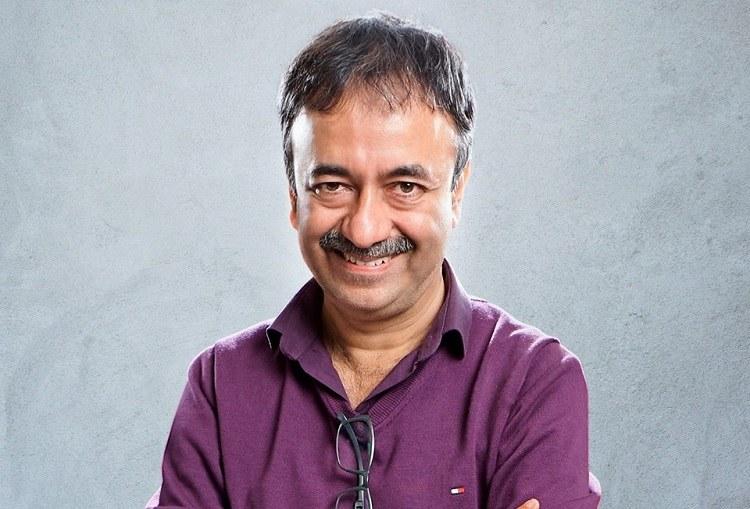
#MeToo knocks down Rajkumar Hirani

India’s Hindi Film Industry is stung by yet another #MeToo controversy. High profile Director, Rajkumar Hirani has been accused of sexually abusing a woman on more than one occasion over a six-month period between March and September 2018. “My mind, body and heart were grossly violated that night and for the next 6 months,” the girl wrote in a letter explaining her alleged ordeal which was published by Huff Post India.

According to the report, the girl had also sent an email detailing the harassment she faced to Hirani and his colleagues, including Vidhu Vinod Chopra and his wife Anupama Chopra, director Shelly Chopra and scriptwriter Abhijat Joshi. It is reported that due to this controversy, Vinod Chopra Films has dropped Rajkumar Hirani Films from their upcoming film ‘Ek Ladki Ko Dekha Toh Aisa Laga’. Also, it seems, the highly anticipated film ‘Munna Bhai 3’ has been put on hold.

Rajkumar Hirani has denied these allegations of sexual misconduct. In a statement issued to the media, he said, “I was completely shocked when these allegations were brought to my notice about two months back. I had suggested immediately that it is essential to take this matter to any committee or any legal body. The complainant has chosen to go to the media instead. I want to very strongly state that this is a false malicious and mischievous story being spread with the sole intention of destroying my reputation.”

Security forces remain steadfast in their objective to usher peace in Kashmir

0

Violence in Kashmir is the direct outcome of a reprehensible foreign agenda to strike at the fabric of the Indian nation, with the intention of breaking the country. The security forces in Kashmir are performing a most difficult, sensitive and challenging task. Indian soldiers have to balance between the need to break down the evil foreign sponsored agenda and at the same time ensure that the people do not suffer.

On both counts the security forces have acquitted themselves very well in the year gone by.

Counter terrorist operations in Kashmir met with exceptional success. With 258 terrorist killed, 58 apprehended and five surrenders the count far exceeded the previous years. Most importantly, as many as nine A-Plus category terrorists (the top strategic leadership of various terror groups) were killed during the year, leaving a huge leadership void. The operational success was achieved with minimum loss to civilian life and property which was yet another big achievement for the security forces.

Such success does not come by easily. It is the outcome of meticulous planning, synergetic effort, excellent intelligence gathering and a host of other coordination aspects. Good leadership definitely plays a big role in the smooth conduct of operations. The government gave a free hand to the security forces with a clear direction to rid the area of the curse of terrorism. Senior commanders, on their part, were not hesitant in delegating full authority at the junior leadership operating on ground. Having delegated the authority, the senior commanders remained firm and steadfast in application of the laid down policy. Cowardly attempts by the enemy to instigate civilians towards disruption of the operations did not make the forces relent from their objective; they, instead, formulated good operating procedures for crowd control that worked well.

The senior commanders also demonstrated, on more occasions than one, their intention to stand with their troops despite the massive propaganda campaign unleashed by the enemy and the pressure exerted by some vested political interests and a pliable media. Undeterred by the negative perceptions attempted to be created, the Army Commander of Indian Army’s Northern Command, Lt. Gen Ranbir Singh, during his interactions with media minced no words in warning Pakistan that his command would punish the country for any activities that are detrimental to the security interests of India. “The message is clear to all troops on the ground that should Pakistan not stop from carrying out any activity which is detrimental to our national interest, they should be punished accordingly,” he said in November 2018. In yet another statement directed at Pakistan has said that his command would constantly, “retain and refine its capabilities and be prepared for any contingency at any time.”  The statement by the Army Commander gave a big boost to the morale of the troops on ground and a sense of confidence to the nation that things are well in control. More importantly, it took the wind out of the sails of the enemy’s vituperative propaganda campaign.

The Army has also paid particular attention to the security of the Line of Control (LOC) by augmenting the fencing with smart technology and further strengthening it physically. The effort has accrued excellent results in neutralising of infiltrating terrorists. It is for this reason that the number of foreign terrorists operating in Kashmir is at an all time low and the local recruits do not have enough weapons, ammunition and other equipment. The Army, on its part, has improved on its weapon and equipment profile with state-of-the-art Sniper Rifles, Bullet Proof Jackets and other essential operational equipment. Provision of better administrative facilities has vastly improved living conditions leading to more operational efficiency. 

Lt. Gen Ranbir Singh has marked uplifting the youth of Kashmir as a Key Result Area (KRA) for Indian Army’s civilian welfare initiative–Operation Sadbhavna. Special attention was paid to this aspect all through the year gone by. The second edition of Hunar-e-Kashmir, an annual Youth Festival organised by the Srinagar based Chinar Corps held at Sher-i-Kashmir International Convention Centre in October, 2018. The scale was much larger than the previous edition and it also included a performance by noted Bollywood singer Javed Ali. Hon’ble Governor of Jammu & Kashmir Satya Pal Malik was invited as chief guest and he personally interacted with the talented Kashmiri participants.

Other initiatives like the Super-40 which is designed to prepare students for competitive examinations in the Engineering stream and the many sports competitions held across the valley witnessed path breaking results. The Super-40 batch last year saw a record nine students clearing the coveted IIT-JEE (Indian Institute of Technology Joint Entrance Examination) mains while a total of 24 have been selected for various other engineering colleges. The Army Commander makes it a point to interact with many young boys and girls of Kashmir. In particular, he meets those who achieve laurels after being trained by the Army and the children who are sent to the other states on educational tours by the Army.

The vastly improved security situation in Kashmir was quite visible last year in the peaceful and incident free conduct of the Amarnath Yatra, the Local Urban Bodies and Panchayat Elections, among others. There were less incidents of stone pelting, lockouts and strikes. The civilians went about their work in a relatively stress free and peaceful environment. A major credit for this situation goes to the good work done by the security forces.

While doing their job with utmost sincerity, the security forces, particularly the Indian Army, are being subjected to some harsh comments and criticism mainly by those who have no inkling of the very difficult conditions that they operate under. It is to the credit of the forces and their excellent leadership that they do not lose balance despite the environment of negativity and grave provocation that is attempted to be created. They are steadfast in their aim to rid the beautiful Valley of Kashmir from the debilitating shadow of terrorism. It can be said with a fair degree of confidence that the day is not far when they will achieve their objective. It would help a lot if their hard work and sacrifice is acknowledged.

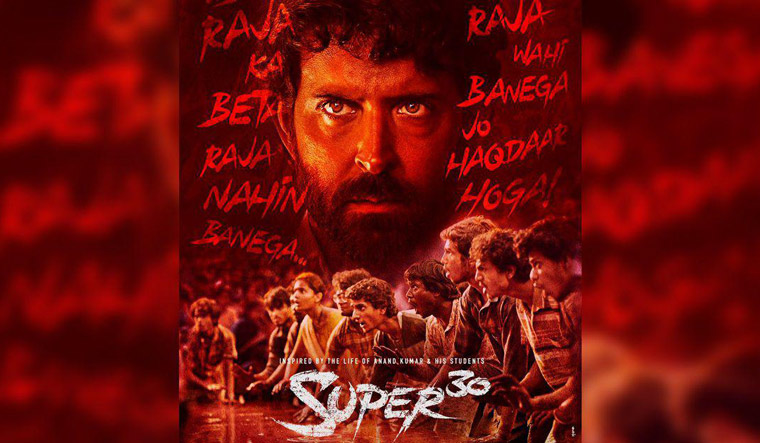
Six-months delay in the release of Hrithik Roshan-starrer ‘Super 30’

Hrithik Roshan-starrer “Super 30”, which was earlier set to hit the theatres on January 25 and clash with “Thackeray” and “Manikarnika: The Queen of Jhansi”, will now hit the theatres on July 26. The new date was announced by Roshan on his Twitter handle.  “Happy to announce that #Super30 is headed for release on July 26, 2019. Bahut jald samay badalne wala hai (The times are going to change soon),” Roshan wrote.

The film “Super 30” is based on the life of the Patna-based scholar Anand Kumar, who trains 30 deserving, economically-backward students for IIT-JEE entrance exams every year with commendable success rate. Produced by Reliance Entertainment and Nadiadwala Grandson Entertainment, the film also stars Mrunal Thakur, Amit Sadh and Nandish Sandhu. The film has been directed by Vikas Bahl, who has been accused of sexual harassment by a former employee of the now dissolved production company, Phantom Films, of which the director was a founding member. Phantom was also attached as co-producer.

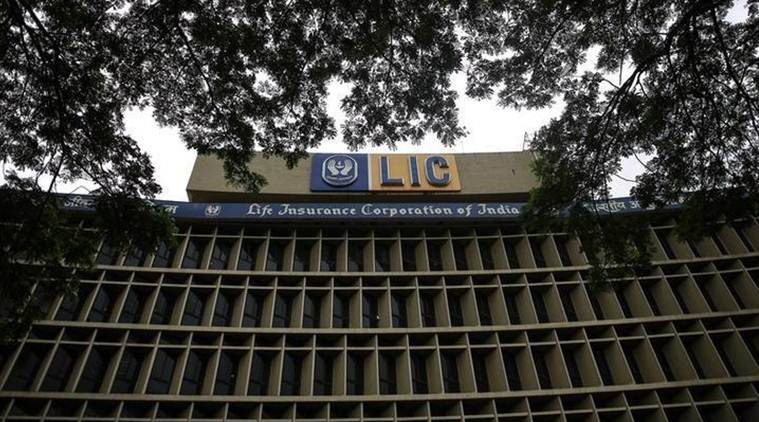
Sluggish growth for state-owned Life Insurance Corporation (LIC)

As per the annual report of Insurance Regulatory and Development Authority of India (IRDAI), LIC saw a decline in the number of new policies issued. While the private sector achieved a growth of 8.47 per cent in the number of new policies issued against the previous year, LIC achieved a growth of 5.99 per cent. During 2017-18, life insurers in India issued 281.97 lakh new individual policies, out of which LIC issued 213.38 lakh policies or 75.7 per cent of the total new policies issued and the private life insurers issued 68.59 lakh policies (24.3 per cent).

Also, Life Insurance Corporation’s (LIC) market share fell below 70 per cent in the financial year ended March 2018, while the market share of private insurers increased to 30.64 per cent in 2017-18, from 28.19 per cent in 2016-17. In the case of renewal premium, LIC had a share at 69.35 per cent (down from 72.31 per cent in the previous year). This compares with 30.65 per cent (27.69 per cent in the previous year) share of private insurers.

At the end of last financial year, there are 68 insurers operating in India, of which 24 are life insurers, 27 are general insurers, 6 are standalone health insurers exclusively doing health insurance business and 11 are re-insurers.

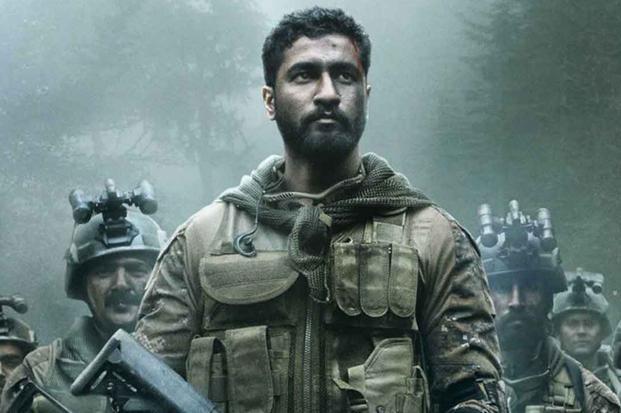
‘Uri: The Surgical Strike’ A war movie that’s a Must Watch

Uri: The Surgical Strike
Direction: Aditya Dhar
Cast: Vicky Kaushal, Paresh Rawal, Mohit Raina, Yami Gautam, Kirti Kulhari
Duration: 2 hours 18 minutes
Language: Hindi
Rating: 4 stars (****) out of 5

War movies serve an important purpose. Apart from giving an adrenaline rush to the audience and dramatic representation of the minute-by-minute account of action sequences leading into combat scenes, they also give a sneak preview into the politics and socio-economic scenario that led to the war in its first place.

When it was first revealed to the world that commandos of the Indian Army had conducted a successful surgical strike deep inside Pakistan occupied Kashmir (POK) and destroyed terrorist launch pads, there were a few politicians and self-proclaimed intellectuals who had demanded solid evidence of these “surgical strikes”. Well, “Uri: The Surgical Strike” the Vicky Kaushal starrer Hindi film provides them with this evidence.

Of course, the movie is just the dramatic representation of what transpired in the immediate days of fidayeen (suicide) attack on the Indian Army base camp at Uri on September 18, 2016. Film brings to fore the palpable tension in the nation when questions were asked in all quarters about how long can Indian soldiers remain sitting ducks at forward positions in Kashmir. Just ten days later on September 29, 2016 it was announced to the world about the successful conduct of surgical strikes across the LoC (Line of Control) inside the POK.

Such covert operations, by their very nature, remain shrouded in secrets leaving the public to believe what the government of the day decides to tell them. Shrewd politicians know that any incumbent government cannot reveal exact details of these covert operations and so these politicians continue to mislead the larger public in order to score brownie political points. Also, despite extensive reportage by the media, the public, by and large, remains unaware of the facts and the perspective.

It’s in this context that war movies play an important role by peeling off different layers of the events that led to the conduct of such covert operations.

“ISI tou Pakistan se upar hai (ISI—Inter Services Intelligence is above Pakistan),” says Govind (Paresh Rawal) who enacts India’s National Security Adviser Ajit Doval, in the film, at a high power meeting while discussing India’s response to a series of ISI-sponsored terrorist attacks. This innocuous comment in a film has the potential to explain to the common man how a section within Pakistan continues to use state’s machinery to continue proxy war with India. Similarly, there’s a scene in the movie when an Indian drone disguised as a bird hovers around terrorist hide-out within the POK to get clear visuals of terrorists holed up inside. A teenager sees that bird-drone, is enticed by it, surreptitiously sneaks out of the terror hide-out and picks up the drone thinking it to be an exotic toy. This scene subconsciously gives out a message about how a few vested interests within Pakistan have used children as cannon fodder to fuel their proxy war in Kashmir.

The release of ‘Uri: The Surgical Strike’ in an election year is bound to raise eyebrows and cynics have already begun to dismiss the film as Narendra Modi government’s election propaganda. Cynicism aside, that a film of such sensitive nature with much needed research has been released within two years of actual action is no mean feat.

Debutant Director Aditya Dhar has deftly incorporated bits of information and packaged it into a single story. The young daughter of a martyred Army officer shouting war cry in the film is actually based on a true story of Col MN Rai’s daughter’s final salute to her father, who was killed in a terrorist shoot out at Tral in Kashmir Valley. In the film Army officer Mohit Raina’s daughter shouts his battle cry while laying the wreath on her father’s decorated coffin who gets killed in the terrorist attack at Uri base camp on September 18, 2016. Vicky Kaushal (Major Vihaan Shergill) and other defence personnel repeat this battle cry.

Major Vihaan Shergill then leads his team of para commandos across the LoC (Line of Control) to destroy the terror modules and kill terrorist handlers with surgical precision aptly known as ‘surgical strikes’.

‘Uri: The Surgical Strike’ scores over several other war movies made by the Indian film industry in the past. Though there have been conscious effort to evoke emotions and show the personal lives of the protagonist (Vicky Kaushal), yet full marks must be given to screenplay writer and the director for resisting the temptation to make Major Vihaan lip sync the lyrics of songs that hitherto have been a permanent feature of war movies made in Hindi. The songs in the film play in the background and soldiers do indulge in lighter moments but that’s essentially to establish the situation and the characters. The action sequences replete with firings and gunshots, the war room being manned by Paresh Rawal, intelligence officers and Army Generals convey a sense of business and give a rush of adrenaline to the audience. The girls Yami Gautam and Kirti Kulhari do justice to their brief but important roles.

‘Uri: The surgical strike’ helps understand the dangers of a covert mission and the effort that goes on in their execution. The camera work and sound track in the movie are well executed and despite knowing the outcome about the mission that happened barely two years ago, one remains glued to the big screen for the sheer magnitude of this operation that took place within the frontiers of enemy lines.

There’s a sequence in the film when Major Shergill (Vicky Kaushal) is on hot pursuit of the terrorist handler and comes across that same teenager who had earlier (in the film) playfully held the drone-bird in his hands. The teenager’s hands are violently shaking while clinging on to the automatic assault rifle, his demeanour conveys to the audience how poor and young children in an impressionable age are thrust into this mindless war. Indian Major resists the temptation to shoot this innocent boy, lurks precariously towards him, locks him up in a room and lunges further towards the terrorist mastermind.

The film is a must watch for petty politicians who are ably supported by self-proclaimed intellectuals and five-star opportunists spread across India who had repeatedly asked for proof after the success of surgical strikes were announced. The point that no Indian soldier died or was captured alive speaks about the dexterity and strike capabilities of Indian Army commandos, but this was discomforting to these opportunists who tried to make personal gains by raising tangential issues.

‘Uri: The surgical strike’ reiterates a point well known in diplomatic circles. And the point is: “Every country has an Army, but Pakistan’s Army has a country”. This Pakistan Army and its sidekick intelligence outfit ISI (Inter-Services Intelligence) have always used Pakistan’s poor as canon-fodder. This has been clearly brought out in the film by showing the plight of a teenager who is forced to work in the terror launch pad in POK.

Cynics will continue to pour their diatribe and find faults with the technique, sound track, story line and everything else with the film. However, before drawing any conclusion it must be borne in mind that much of the information in covert military operations comes under the classified category and a filmmaker has to fill in the gaps with publicly available information to weave a believable story without losing sight of the larger picture. It’s here that the writer-director and his team has done a remarkable job with ‘Uri: The Surgical Strike’. The film may still fall short when compared with war movies produced by Hollywood, yet it comes very close to matching the very best war movies of our times.

Pandya, Rahul suspended, out of the ODI series against Australia

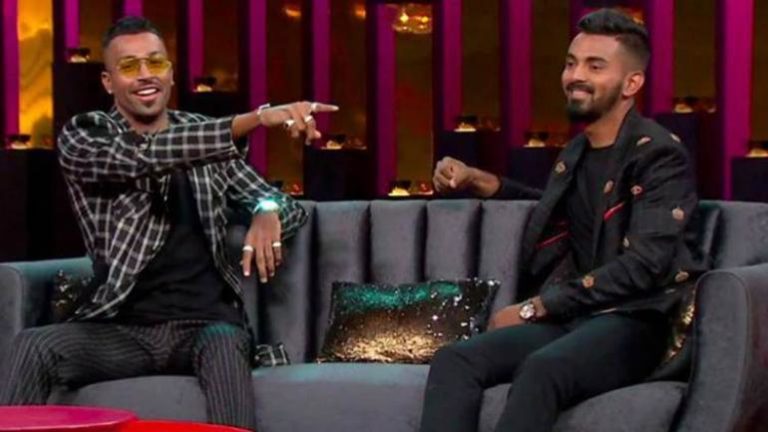
Hardik Pandya and K L Rahul have been suspended, by the Committee of Administrators (CoA), for their sexist comments on a TV show . The dec ision came hours after Virat Kohli expressed his strong disapproval about their remarks. Due to suspension, they will be out of the three-match ODI series against Australia beginning Saturday in Sydney.

The ‘Koffee with Karan’ episode featuring the cricketers has also been taken down by the channel’s online platform. On the show, Pandya had boasted about hooking up with multiple women and being open about it with his parents. However, later Pandya regretted his comments  on his official Twitter page and also in response to the BCCI show cause notice.

In the light of the current controversy, it is speculated that the BCCI might bar players from appearing on entertainment shows.

Indian soccer fans locked up by UAE man

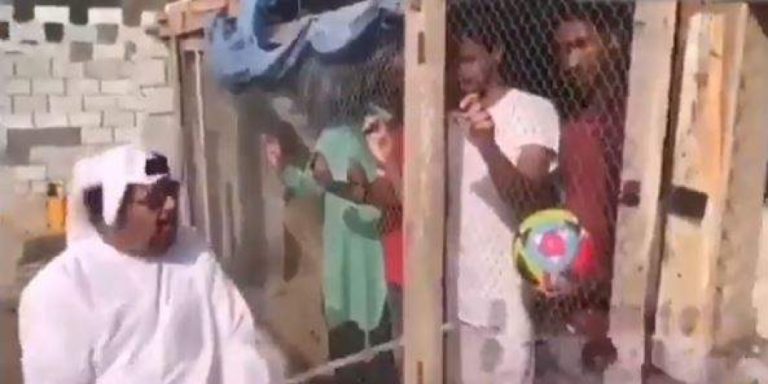
In a shocking incident, a man locked up supporters of the Indian football team in a bird cage ahead of the match on Thursday. A video, purportedly of the incident, has also gone viral, prompting the UAE authorities to arrest several persons. A statement has also been released from the UAE Attorney General’s office after the offensive video went viral on social media.

In the viral video, the man, brandishing a stick, is seen sitting and talking to several workers locked up in a bird cage. He asks them who do they support between the UAE and India, Upon replying that they support India, he tells them that’s not good, they live in the UAE and should support it. After knocking on the wiring, he asks them again and they reply they support the UAE and he lets them out of the cage.

India lost the match against the hosts United Arab Emirates (UAE) 2-0 in the AFC Asian Cup in Abu Dhabi Thursday.