The issue of climate change is often misreported. It should be reported consistently and affirmatively as anthropogenic climate change or human-induced global warming in which the human industrial activity is a major factor in the problem in climate change.
One major aspect of the work is climate science literacy in order to combat the problem here. Washington has two identical bills now, which are aimed at climate science literacy.
These are for the Washington state legislature. One is called House Bill 1496. Another is entitled Senate Bill 5576. These are intended to establish a comprehensive program for more learning opportunities and education on climate science. It is meant to increase knowledge about climate science.
One facet for the media would be the introduction of the terminology as “anthropogenic climate change or “human-induced global warming” as a start.
There is an affirmation, in the pair of bills, for the increase in the skills and knowledge about climate science. It is only within Washington but this is a start, especially in a huge advanced industrial economy such as the United States.
The point is to introduce a greater skill and knowledge base amongst the young there. It will have information and opportunities for climate literacy and environmental education.
There is a reference to environmental and sustainability standards in one section of the Washington state code listing that is required as areas of education through the public schools.
This, according to the NCSE reportage, is simply an introduction of a new emphasis on sustainability.
As reported, it affirmed, “…critical knowledge and innovative strategies for effectively teaching climate science can be strengthened by qualified community-based organizations.”
One intriguing proposal is the foundation of a grant program through a nonprofit of the community for educational purposes via the Next Generation Science Standards. It’s not indoctrination; it’s minimal standards of a modernized educational on the environment.
The reportage concluded, “House Bill 1496 was introduced on January 23, 2019, and referred to the House Committee on Education; Senate Bill 5576 was introduced on January 24, 2019, and referred to the Senate Committee on Early Learning & K-12 Education.”
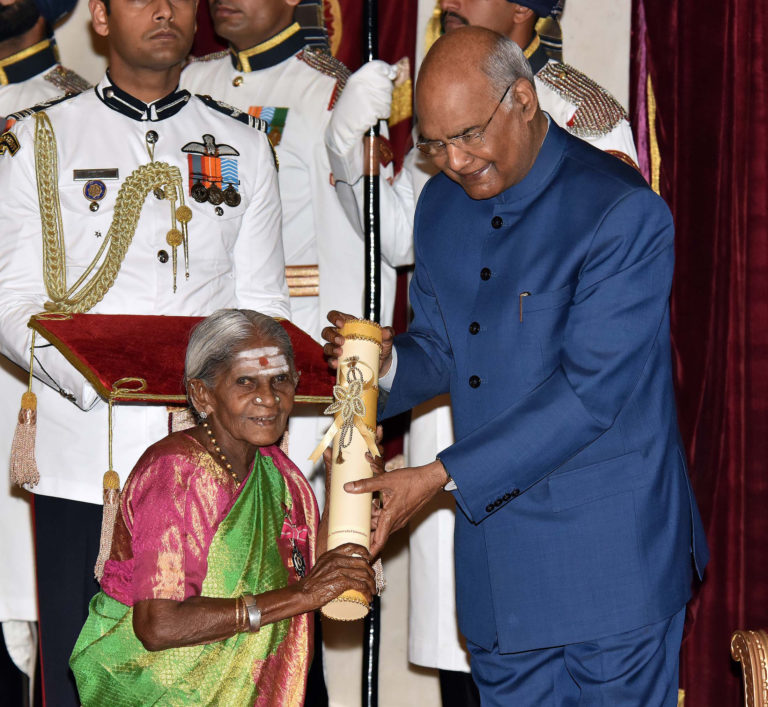
President Ram Nath Kovind today conferred Padma awards on prominent personalities at a civil investiture ceremony in Rashtrapati Bhawan.
Folk Singer from Chhattisgarh Teejan Bai was honoured with Padma Vibhushan and Scientist Nambi Narayan was given the Padma Bhusan. Actor Manoj Bajpayee, Cricketer Gautam Gambhir, Basketball player Prashanti Singh, Footballer Sunil Chhetri, mountaineer Bachendri Pal were among the Padma Shri Awardees.
This
year, 112 Padma awards, including four Padma Vibhushan, 14 Padma Bhushan and 94
Padma Shri, were announced on Republic Day. Twenty-one of the awardees are
women. Notable are, Saalumarada Thimmakka who was conferred the Padma shri for
Social Work. Aged 107, Thimmakka is an environmentalist from Karnataka and is
known for planting banyan trees along a 4 km stretch of highway from her
village Hulikal to Kudur. Kamala Pujari, a tribal woman from Koraput, who has
the distinction of presently being a member of the Odisha Planning Board, was
also conferred the Padma Shri for her commendable job in preserving indigenous
paddy variety.
A
part of the Padma Awards ceremony was earlier held last week on Monday in which
former foreign secretary S Jaishankar, Akali Dal leader Sukhdev Singh Dhindsa,
film personalities Mohanlal and Prabhu Deva received the honour among others.
The
awards are given in various disciplines — art, social work, public affairs,
science and engineering, trade and industry, medicine, literature and
education, sports, and civil service, among others.
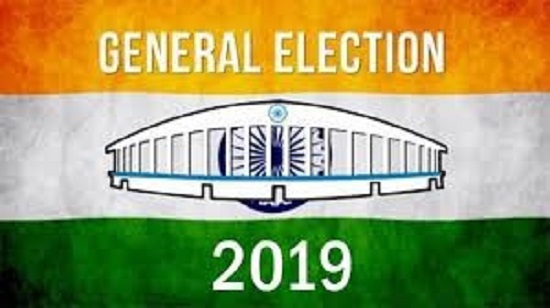
General Elections are around the corner in India and much has been written already on all the achievements of the incumbent Modi government. A lot has also been written about all that Mr. Narendra Modi has not been able to complete in his first five-year term.
The average Indian voter is primarily interested in getting:
A clean administration since we have been angered and frustrated
with the incredible amount of corruption that has been seen over the last 70
years in various non-BJP governments.
Strong economic growth of the country which will lead to wealth
creation and job creation.
A secure environment without constantly having to look for potential threats that could physically harm us and our families. We do not want to keep looking over our shoulders. Nor do we want to keep looking under tables and chairs for unidentified bags.
A clean environment with all the necessities of life so that
we can live normal lives with our families.
Let us explore and examine the reasons why I believe not only why Mr Narendra Modi should be voted back to power but why I believe he will be voted back to power.
Positive Report card: During the last elections in 2014 Mr Modi had promised that he would come back to the electorate in 2019 with his report card. A lot has been written about the significant achievements in the first five-year term. In overall terms, the electorate is satisfied with Mr Modi’s governance and the direction he has set for India. No one, barring some of the opposition leaders, expected miracles within one term.
Economy: India is now the sixth largest economy in the world and the second largest in terms of purchasing power parity. The more important fact is that Mr Modi has put India on the track for quick growth in the next decade. Here is a leader who has not hesitated to take the strongest possible decisions whether they relate to the economy or to make fundamental course corrections such as the bankruptcy code.
Clean Government: Mr Modi has clearly established even in the minds of his deterrents that he is squeaky clean. He has made every possible effort to make sure that there is no corruption in his government. There has been no major or minor scam in the past five years. Most of us have been used to paying for what is normally our right. These are simple necessities like getting our driving licence or getting a new passport where we used to look for touts. This has stopped completely.
Indian Passport: The Indian passport is clearly far more respected today than it was 30 years ago. I say this with considerable personal experience having travelled around the World over the last four decades. Never before, has the Indian passport been received so willingly and without so many questions by immigration officials around the world.
Foreign policy: India now stands tall in the comity of nations. India has managed to develop extremely good relationships with all neighbouring states barring Pakistan. At the same time India has managed to keep strong independent relationships with USA and Russia, Iran and Israel as well as a grudging economic relationship with China. While putting an embargo on Iran, the United States agreed to let India continue buying oil from them. Air India can now fly over Saudi Arabia to Israel and when Mr Modi flew from Jordan to Palestine, Israeli aircraft provided him security.
Mahagathbandhan: The mahagathbandhan clearly is not working. Certainly not in the manner that Rahul Gandhi had envisaged with him being crowned as the leader by one and all. None of the constituents of this motley group of regional leaders have any common minimum programme nor do they represent a similar set of values that they can present to the electorate. The warring mahagathbandhan leaders are showing their true colours as they keep talking with forked tongues. Criticising and praising their alliance partners in the same breath. All that they have is a single point agenda of removing Mr Modi. Opposition leaders openly state that an alliance maybe possible for the Lok Sabha elections but not for the State elections. The Indian electorate is much smarter than what these political parties would like to believe. Do they really think that we voters are so stupid?
Rahul Gandhi: Mr Gandhi has not been able to deliver anything of consequence and though he would like to believe that his victory in the states of Rajasthan, Madhya Pradesh and Chhattisgarh was only on account of him, if one looks at the electoral votes cast the numbers tell a different story. Mr Gandhi has not announced any clear vision or path for India. He has nothing positive to say except harp on the achievements of his predecessors. He simply raves and rants on the Rafale deal hoping that some corruption charges will stick to Mr Modi. No one believes him. He is becoming a laughing stock for not only the electorate but most of his party members as well.
Hindi Heartland: The Hindi heartland clearly still has its heart with Mr Modi. Yes, they voted the BJP out in three states but when it comes to national elections, they will go out and vote in very large numbers for Mr Modi who is clearly the tallest leader in the country today. The Ayodhya Ram Mandir is a big issue in the minds of a significant number of voters which is why Mr Gandhi’s loyal spokespersons have started to chant the slogan that only the Congress can build the temple. When it comes to the temple, everyone knows that only the BJP can see this through to its logical conclusion.
Infrastructure: There is visible improvement in India’s infrastructure. From building new roads to airports and from significantly improved power supply to super-fast trains, the path towards improved infrastructure is there for everyone to see. Prior to 2014, we had taken “load shedding” as a part of our daily lives. This has now stopped. The voter believes that much more needs to be done and is willing to give time to Mr Modi to complete what he started.
Tough on Terror: The Election Commission has estimated that there are over 80 million new voters who will exercise their franchise for the first time in 2019. They have no links to Ayodhya or the Ram Temple but in Mr Modi, these millennials see a leader who has the courage to hit back fast and hit back hard. They see an overall improvement in their lifestyle, and they can see the visible change in global attitude towards India. This is what will guide them to the “lotus” on election day.
Pulwama and Balakot: While no one should use National Security and the Armed Forces for meeting political ends, the reality of the Pulwama terrorist attack and the subsequent Balakot air strikes are there for everyone to see. If the opposition had not put their foot in their mouth talking of Mr Modi’s 56 inch chest after the Pulwama attack, they would not have had to grind their nose in dust after the air strikes. This will clearly be in the minds of the voter on polling day.
Rural Economy: Though the opposition parties would like us to believe otherwise, the figures of the fast-moving consumer goods companies and the automobile companies show a significant improvement in their sales in rural India. This could not have been possible if there was acute stress. If anything, Mr Modi has focussed his attention on the poor. Yes, more needs to be done for rural India and it is being done.
Over
the past few months there is a new wind that is filling the big sails of the
Bhartiya Janata Party and it is forging ahead with renewed confidence. Allies
are coming back to the party and leaders from opposition parties are joining
the BJP.
Even the most hardened opposition supporters know that the alternatives being presented by the multiple opposition parties are frightening, to say the least. They cannot visualize a musical-chairs like situation for the position of the Prime Minister with a new incumbent every few months when the music stops!
The
voters, who will take the final decision when they press the button of the
Electronic Voting Machine know that they cannot let Mr Modi lose the election.
Time Magazine reported on a man from Alabama who is, in fact, filing a lawsuit against a reproductive health center for an unborn fetus.
This is stated as, potentially, one of the first cases of this. A lawsuit based on the purported rights of an aborted fetus.
Obviously, the Alabaman has sincere beliefs as to the rights and privileges — legal and otherwise — of the fetus. The question is truly if this fits into a standard human rights framework or only in the minds of a minority of the American public aligning themselves within the perspective of the man from Alabama.
“Ryan Magers, who says his ex-girlfriend had an abortion against his wishes, filed a lawsuit against the Women’s Center for Reproductive Alternatives in Madison Country, local CBS affiliate WHNT News 19 reported Tuesday,” Time Magazine stated.
In the papers filed to the court for the lawsuit, Magers stated that the ex-girlfriend took a pill to terminate or end the pregnancy on February 12, 2017, in spite of the pleas of keeping the baby, by Magers.
Of course, this implies, if taking the testimony of Magers, a strong difference of opinion on the eventual birthing as a child after the fetus sufficiently developed or the actual termination of the fetus — not a baby.
Time Magazine said, “This week, an Alabama probate judge granted Magers’ petition to represent the estate of the fetus, which the suit calls “Baby Roe.” But according to WHNT, the court papers do not make it clear that “Baby Roe” was an aborted fetus.”
A jury trial is being sought, purportedly, by Magers, where Brent Helms will be the attorney for Magers. Helms is claiming the case breaks legal ground, as a Baby Roe case — so to speak. This appears as if an explicit attempt to build off the success of the Roe v Wade decision of 1973 in the United States.
This is, for a Canadian audience, akin to the Criminal Law Amendment Act, 1968–1969 superseded and expanded, in a sense, by the R v MorgentalerSupreme Court of Canada decision from 1988.
The name “Roe” is a reflection of “John Doe” for the everyman but for the everywoman, “Jane Roe.” It is intended as a general law. The current context is, in this sense, for the “Baby Roe” to mirror this. Ironically, the traditionalist strain wants to have the women and children take the man’s name.
But, in this case, the every-child, or, rather, the every-fetus, takes on the name of the mother, the everywoman Jane Roe.
Helms said, “This is the first estate that I’m aware of that has ever been opened for an aborted baby.”
Alabama stated that the unborn fetuses have identical rights as an individual born in an amendment from last November. It has been marked a victory by some.
It is part of the growing movement called the “Personhood Movement.” Their sole goal is the constitutional rights of personhood being granted to a fertilized egg — a single cell. In this, we can see the influence of traditional religious ideological stances about the moment of conception.
“The same legislation also says that the Alabama constitution does not protect a woman’s right to an abortion — language added in the event of Roe v. Wadegetting overturned,” Time Magazine described, “The Supreme Court’s landmark 1973 Roe v. Wade decision granted women in the U.S. the legal right to abortions. The addition of conservative justice Brett Kavanaugh on the bench has raised concerns among pro-choice activists that women’s right to abortion in the U.S. may come under threat.”
Pro-choice activists are beginning to talk more about this and view this as a scary development for some of them.
The
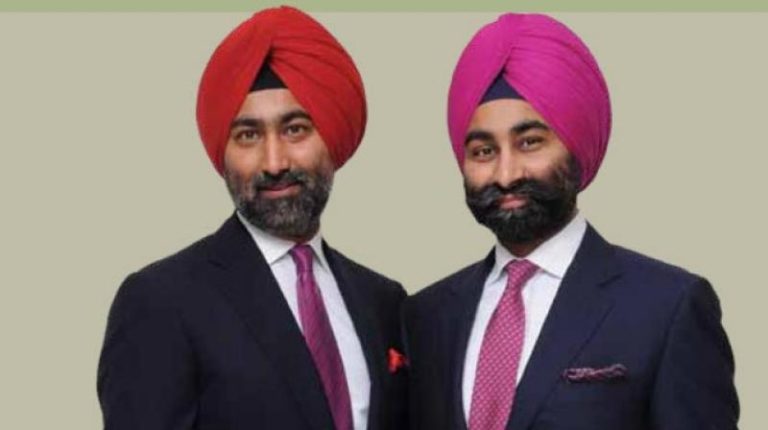
Supreme Court on Thursday asked former Ranbaxy promoters Malvinder Singh and
Shivinder Singh to apprise it how they propose to comply with the Rs 3500 crore
arbitral award passed against them by a Singapore tribunal.
The
apex court was hearing the plea of Japanese firm Daiichi Sankyo which is
seeking to recover Rs 3,500 crore, awarded to it by a Singapore tribunal in its
case against Malvinder and Shivinder Singh.
A
bench headed by Chief Justice Ranjan Googi asked the Singh brothers, who were
present in the court, to consult their financial and legal advisors and give a
concrete plan on how they will comply with the tribunal’s order. The bench
asked the Singh brothers to appear before it on March 28 and submit the plan,
saying “hopefully it will be the last time you are appearing in the court”.
Appearing
for Daiichi, senior advocate Fali S Nariman, told the bench that while
Malvinder Singh says he would honour the court’s order on the foreign
arbitration award, Shivinder says he has renounced the world and become a
saint. The bench said that “It is good for you to have renounced the world, but
there is a decree, so tell us how you propose to secure the amount.”
Daiichi
had bought Ranbaxy in 2008. Later, it had moved the Singapore arbitration
tribunal alleging that the Singh brothers had concealed information that
Ranbaxy was facing probe by the US Food and Drug Administration and the
Department of Justice, while selling its shares. Daiichi had to enter into a
settlement agreement with the US Department of Justice, agreeing to pay USD 500
million penalty to resolve potential, civil and criminal liability.
At
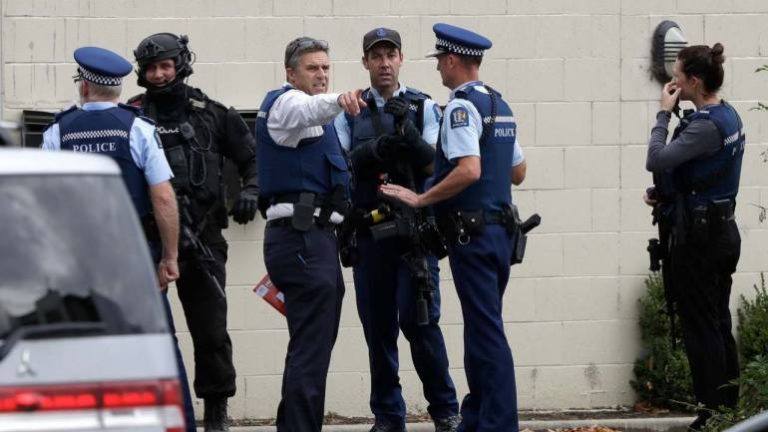
least 49 people have been killed, and 20 seriously injured, after mass
shootings at two mosques during Friday prayers in the New Zealand city of
Christchurch.
The
mosques were packed with worshippers gathering for Friday afternoon prayers,
and members of the Bangladesh cricket team were arriving when the shooter
opened fire.
The
prime minister, Jacinda Ardern, said this was “one of New Zealand’s darkest
days” as police uncovered explosive devices attached to cars and commissioner
Mike Bush urged all mosques across the country to close their doors for the
time being. “Police are responding with its full capability to manage the
situation, but the risk environment remains extremely high,” Bush said.
Four
people were taken into custody – three men and one woman. One person was later
released. A man in his late 20s has been charged with murder and will appear in
Christchurch court on Saturday. The police have not named him.
The
Australian prime minister, Scott Morrison, called the massacre a “rightwing
extremist attack” and said one suspect was Australian-born, without giving
further details.
Yousef bin Ahmad Al-Othaimeen, the Secretary General of the Organization of Islamic Cooperation (OIC), has condemned the attacks. The OIC represents 57 nations with large or majority-Muslim populations.”The brutal crime had shocked and hurt the feelings of all Muslims around the world, and served as a further warning on the obvious dangers of hate, intolerance, and Islamophobia,” he said.
Sadiq
Khan, the mayor of London, has tweeted his condolences to the victims of the
attack, and confirmed that there will be “highly visible” and armed
police around mosques in the UK capital on Friday. “I want to reassure the
Muslim communities in London. I have been in touch with the Met Police. There
will be highly visible policing around mosques today, as well as armed response
officers, as Londoners go to pray,” he said.
Amongst the noblest pursuits of the human species appears to be the education of the young, in which there is a proper and responsible passing onto the next generations the acquired knowledge of the prior ones.
One effort in the United States in the Next Generation Science Standard intended for school districts and accredited nonpublic schools. Iowa, for example, adopted the NGSS in 2015.
However, House File 61 is an interesting recent proposal that would prevent this from coming into full effect in Iowa, preventing NGSS from becoming the norm and expectation within the education system.
As reported, “The bill, introduced on January 23, 2019, and referred to the House Education Committee, is sponsored by Skyler Wheeler (R-District 4). In a 2016 interview with the Caffeinated Thoughts blog (April 19, 2016), Wheeler declared, ‘’I also oppose NGSS as it pushes climate change … NGSS also pushes evolution even more.’”
The denial of standard and mainstream scientific findings is an important issue. Denial of evolution simply leaves medical and biological sciences professionals less likely to come out of Iowa.
But also, there is the issue of anthropogenic climate change denial. This is an issue threatening species survival and requires immediate action as this is an urgent issue.
“In 2017, Wheeler cosponsored House File 140, which contained the same provision about the NGSS, as well as House File 480,” the NCSE stated, “which would have required teachers in Iowa’s public schools to include ‘opposing points of view or beliefs’ to accompany any instruction relating to evolution, the origins of life, global warming, or human cloning. Both bills died in committee.”
There is nothing new here. Indeed, the educators see through the ploy and the Iowa Association of School Boards has already made an open declaration of opposition to the House File 61.
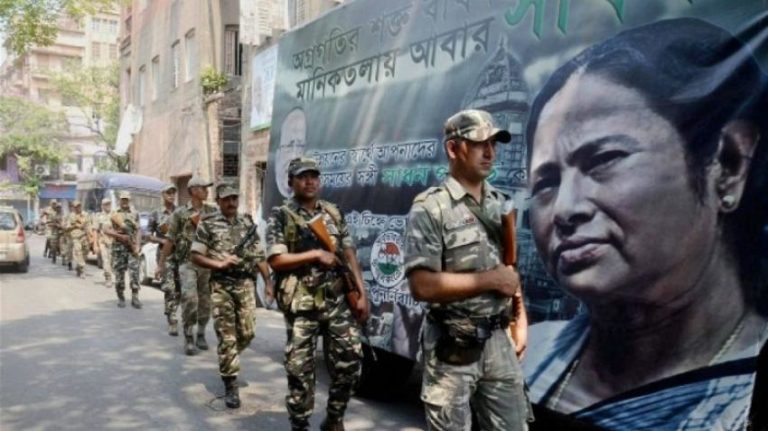
In a second incident within a week, huge amount of explosives has been captured by agencies in West Bengal. The Kolkata Police had last week seized nearly 1,000 kg of potassium nitrate — used in making explosives — from Chitpur area of the city.
In
the latest incident, the West Bengal CID has seized a huge cache of explosive
materials from a village in Bankura district during a raid, a senior officer
said on Thursday.
Acting
on a tip-off, a CID team raided the village under Saltora Police Station in the
district, and seized around 106 cartons of gelatin sticks weighing 2,650 kg,
6,650 kg of ammonium nitrate sacks and 52,500 pieces of electric detonators, on
Wednesday night, he said. A four-wheeler and a two-wheeler have also been
confiscated.
“The
seized items were procured from Odisha, Telangana and Jharkhand, and were meant
to be used in illegal stone quarry. We are conducting an investigation,”
the officer added.
Passion is always infectious and
when it’s about cooking, sharing and documenting food, it becomes aromatically
contagious too. But for someone, who has been tirelessly documenting and preserving
India’s rich and diverse food traditions, it’s just an unending quest to
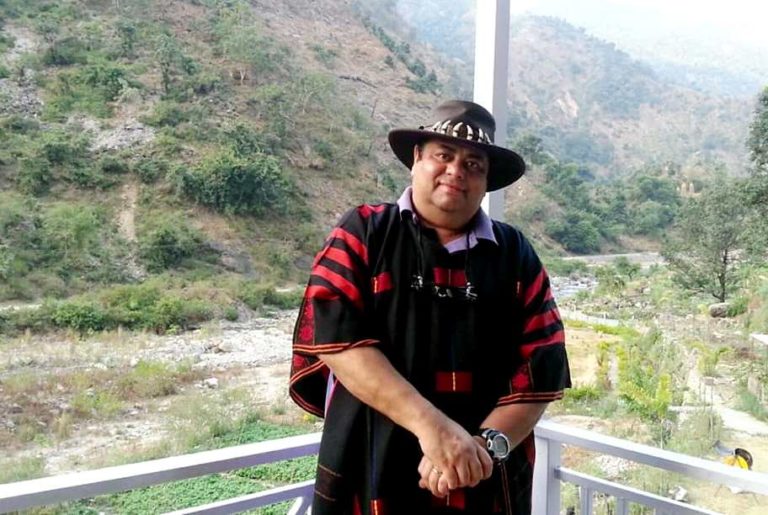
explore, understand and rediscover food. Renowned culinary historian Ashish
Chopra feels that he shares a childhood connect with food. “Food has always
excited me since my childhood. I can safely say that I am a born foodie. Being
the son of an anthropologist, I was always fascinated by stories about cultures
and their cuisines. As a young child, I would always accompany my father on his
various field trips to different parts of India and during field trips, dad
would love to cook,” he recalls.
Chopra, who is also a chef,
author, travel writer and TV show host, feels that it’s immensely important to
keep the diverse food cultures of India alive through documentation. “Wherever
I would travel I would document food and culture and that is how the culinary
historian was born in me. I have also had an opportunity to travel pan India
for various projects with the government, private Institutions as well as with
television channels as an expert and that further fuelled my quest about
exploring food cultures. There is so much to discover and share. I feel it is
my national duty to share the rich culinary heritage of India with the world,”
he says.
Sharing about his journey
documenting tribal cuisines of India, he feels this has been his one of the
most fascinating expeditions. “I have been studying tribal culture for over three
decades now and it has taught and given me so much. I have covered over 250
tribes pan India – how they live with nature, respect it, their myths, beliefs and
traditional wisdom is indeed wonderful. Food and festivity is an integral part
of their existence and their indigenous knowledge about various herbs and medicinal
plants teaches us a lot. With their lands being encroached upon now by various
agencies, it’s all the more important to document their cultures before it dies
due to rampant modernisation in the wrong way,” says Chopra, who has authored NE Belly: The Basic Northeast Cook Book
(2006) on the food culture of North East.
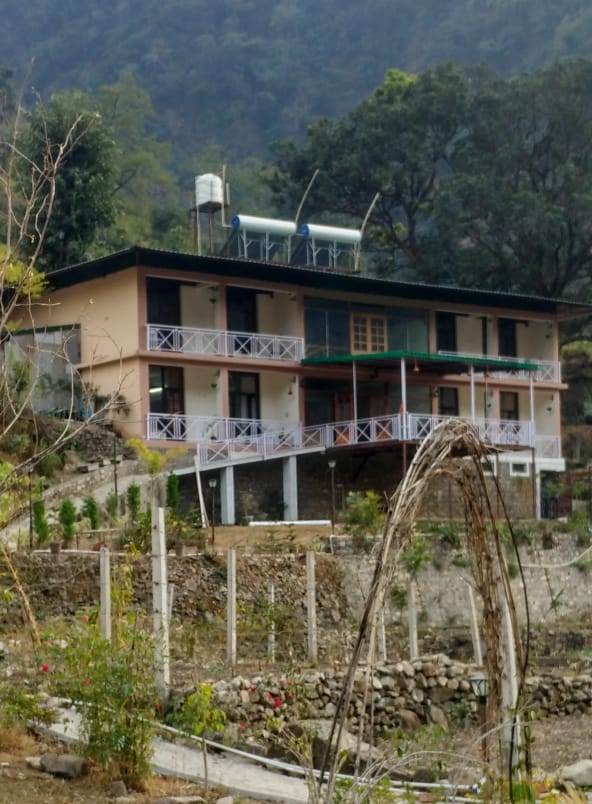
India’s first School of Ancient Culinary Arts (SACA) coming up near Rajaji National park in the foothills of Dehradun
Transforming his passion into a
more concrete idea and platform, he is currently putting his efforts towards
the setting up of India’s first School of Ancient Culinary Arts (SACA). Located
in the picturesque surroundings of Rajaji National park in the foothills of
Dehradun in Uttaranchal, the school will have chefs from villages and they will
impart their traditional knowledge to chefs from different parts of the world.
With food and history combining passionately
and the fusion of traditional & contemporary cuisines, we are sure to get some
fascinating stories of our rich and diverse food heritage on the table.
Islamabad
has now officially accepted that its fighter jets had violated Indian airspace
on February 27 in retaliation to the airstrikes carried out by Indian Air Force
(IAF) the previous night. Yet, it has vehemently denied New Delhi’s claim that during
this incursion an IAF MIG 21 fighter aircraft piloted by Wg Cdr Abhinandan
Varthaman had shot down an F-16 fighter jet of Pakistan Air Force (PAF).
But this
denial isn’t at all surprising because Pakistan has historically been very economical
with the truth. Remember how just two months after its creation, Pakistan claimed
that the invasion of Kashmir was the handiwork of tribals and its army was not
involved in any way even as foreign journalists were reporting of how Pakistan
army was actively participating in this action. Similarly, in 1965 and during the
1999 Kargil crisis it once again claimed that those who had intruded into
Kashmir weren’t army personnel but ‘razakars’ (volunteers) and Kashmiri
‘mujahideen’ (holy warriors) respectively.
It is
therefore but natural for the global community to take whatever Islamabad says
with much more than just a pinch of salt. That’s why when Prime Minister Imran Khan
promised to present the world with a “Naya (new) Pakistan” and followed it up
with the announcement last week that “..this government will not allow
Pakistan’s land to be used for any kind of outside terrorism,” the
international community wasn’t impressed. After all, didn’t President Pervez Musharraf
make a strikingly similar reassurance to Indian Prime Minister Atal Bihari
Vajpayee in 2002 that he will “not permit any
territory under Pakistan’s control to be used to support terrorism in any
manner”?
So let’s pragmatically try solving the mystery of whether or
not an F-16 of PAF was shot down last month. As per Indian claims, a MIG 21 Bison fighter
shot down one F-16 of PAF over Pakistan occupied Kashmir (PoK) airspace and two
parachutes were seen descending which confirms that the pilots had abandoned
the crippled aircraft and ejected. New Delhi also conceded that in this
encounter the IAF had lost one MIG 21 Bison fighter aircraft and its pilot Wg
Cdr Abhinandan Varthaman who bailed out had landed in PoK was taken into
custody by Pakistan army. It however refuted Pakistan’s claim of a second IAF
fighter aircraft being downed and that two pilots were missing.
Islamabad’s version was entirely different. Director General (DG)
of Inter Services Public Relations (ISPR) Maj Gen Asif Ghafoor tweeted that during
this aerial combat the PAF had shot down two Indian fighter jets out of which
one had crashed in PoK whereas the other aircraft fell in Kashmir. He also
confirmed that while one IAF pilot was in its custody, two others were “in the
area.” An hour later, while parading Wg Cdr Abhinandan before the media Maj Gen
Ghafoor said that the Pakistan Army had apprehended the second IAF pilot who was
being treated for his injuries in a Combined Military Hospital (CMH). Maj Gen
Ghafoor out rightly rejected India’s claim of the IAF shooting down an F-16 saying
that the PAF didn’t use F-16 fighters in this action.
Since the DG ISPR had initially spoken about two IAF pilots being
“in the area,” many assumed that one of them had been subsequently apprehended
and since Maj Gen Ghafoor specifically mentioned that this pilot was being
treated at a CMH, there was no reason to doubt the veracity of his claim.
However, by the evening DG ISPR made the unbelievingly embarrassing revelation
that “…there is only one (IAF) pilot under Pakistan Army’s custody.” While one
can understand that one IAF pilot who was reportedly “in the area” but had not
been apprehended may have been able to evade the Pakistan Army and reach Indian
lines safely, but how did the injured pilot being treated in CMH suddenly vanish
into thin air? It’s inconceivable that the Pakistan Army, which boasts
unmatchable professionalism, could go so badly wrong while making claims and in
the bargain commit such a humungous faux pas!
Though there may be a wide variation in the Indian and
Pakistani versions of the February 27 air duel, but there are certain
similarities and these give us pretty good clues about what actually would have
happened that day. The first issue is regarding the number of pilots who bailed
out; the DG ISPR claim that three IAF pilots did, (one who was in their
custody, the second who was admitted in hospital but inexplicably ‘disappeared’
and the third who was never apprehended and possibly was ‘the one who got
away’). On the other hand India maintains that while two of those who bailed
out were PAF pilots of the downed F-16 jet, the third was the MIG 21 pilot (Wg
Cdr Abhinandan) of IAF who had shot down the F-16.
The common factor in both these versions is that three pilots
had ejected on that day and landed in PoK. However, since the IAF hasn’t
notified that two of its pilots are missing and Pakistan denies that any of its
fighter jet was shot down, the question is: Who and where are these pilots? There
can be only two possibilities — one, they are IAF pilots of the second fighter
which Pakistan claims to have downed that day, or two, these are the pilots of
the downed F-16 as India asserts. If it’s the former, then it seems that just
like the Pakistan Army which disowned its dead during the Kargil War, India too
has decided to simply abandon its downed pilots and left them to their fate. In
case this deduction sounds implausible, and so the only possibility is that these
two pilots belonged to the PAF.
So was Maj Gen Ghafoor outrightly lying when he claimed that
one IAF pilot was being treated in an army hospital? Even though I have no soft
corner for Maj Gen Ghafoor or his ilk, but I still refuse to believe that a General
of the Pakistan Army would intentionally commit such a mammoth blunder. My
personal estimation is that DG ISPR was merely an unfortunate victim of his
subordinates’ overzealousness and his own exuberance which made him to accept inputs
without confirming the same. Therefore, since both sides agree that three
pilots ejected that day, there is no need for anyone to doubt this figure and this
reinforces reports of how mistaken identity led to a downed PAF pilot being so
badly beaten up by locals that he was hospitalised in an unconscious condition.
So in all probability Maj Gen Ghafoor wasn’t lying when he claimed
that one pilot had been hospitalised. The only mistake he made was to presume that
the unconscious PAF pilot who was found in an unconscious state and semi naked
condition as his flying suit had been ripped apart by the mob who lynched him belonged
to IAF! Maj Gen Ghafoor’s ‘josh’ seems to have overwhelmed his ‘hosh’!
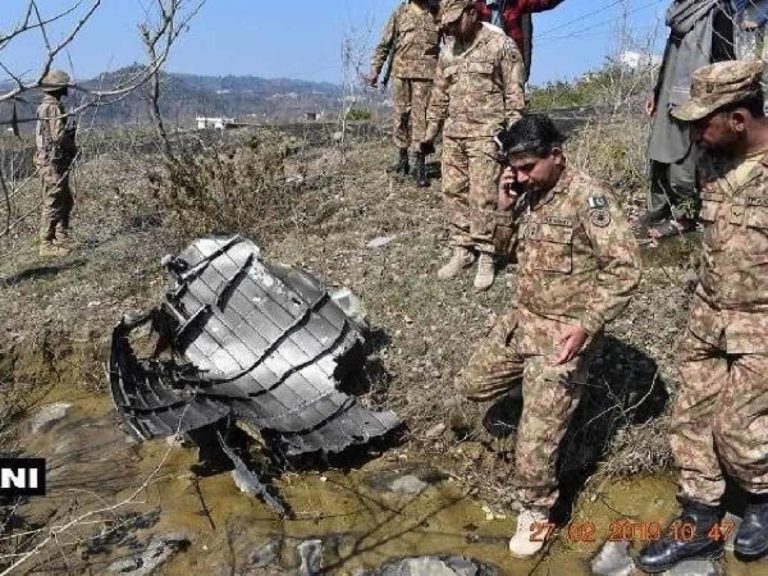
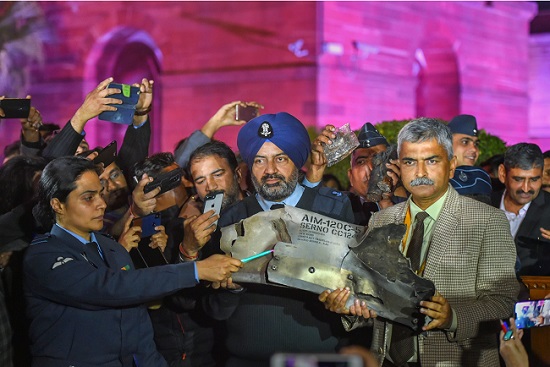
The next issue concerns about the participation of F-16s in this action. Pakistan has categorically denied this but remnants of an AIM-120 C-5 AMRAAM missile recovered from the area with clear markings casts serious doubts on Islamabad’s claim because this sophisticated armament can only be fired from an F-16. Some armchair detectives and computer geeks in Pakistan searched the internet and ‘discovered’ that the serial number on the missile fragment displayed by IAF matched that of a missile supplied by its makers to Taiwan. But since Taiwan has denied this and internet data lacks authenticity, Pakistan’s claim of not employing F-16 against India on February 27 remains questionable. Only Washington that supplied F-16s and AMRAAM missiles to Pakistan or its manufacturer Lockheed Martin can conclusively unravel this mystery, but this isn’t likely.
Indian Air Force officials show portions of the AMRAAM missile as evidence of Pakistan’s attack on India in Kashmir at their presser in New Delhi on February 28, 2019. (Photo: PTI)
Though Washington has announced that “We’ve seen those reports (on use of AMRAAM missile by Pakistan) and
we’re following that issue very closely,” it is unlikely to pursue this
issue for two main reasons. One, it doesn’t want to rake up a controversy by inviting
international and domestic attention to Washington’s incurable habit of selling
state-of-the-art armament to nations with a tainted history of honouring
‘end-user’ agreements. In the 1950s, Washington supplied Pakistan with M48
Patton tanks, F-86 Sabre jets and F-104 Star-fighters on the condition that
these would not be used against India.
But Islamabad embarrassed
Washington by fielding these against India during the Indo-Pak war of 1965. This
same thing happened in the 1980s when the Pakistan Army diverted a large number
of the lethal Stinger surface-to-air portable missiles supplied to it by CIA for
equipping ‘mujahideen’ fighting the Soviets in Afghanistan. Recovery of Stinger
missile casings from positions abandoned by retreating Pakistan Army personnel
in Kargil proves that this missile was used against the IAF during the Kargil
conflict.
Also, Lockheed Martin that produces
F-16 aircraft and its variants as well as several other state-of-the-art weapon
systems and defence equipment are the world’s biggest defence contractors and exercises
considerable influence over Washington. Since
the F-16 which is being used by several countries has the unique distinction of
never having been shot down in aerial combat, this achievement gives Lockheed
Martin the competitive edge in the arms market.
As such, it would never like to concede that the enviable record of the
F-16s’ invincibility has been shattered by an antiquated and ungainly MIG 21
armed with a ‘not so smart’ short range missile!
US State Department Deputy
Spokesperson Robert Palladino has already clarified that “as a matter of
policy, we don’t publicly comment on the contents of bilateral agreements that
we have in this regard involving US defence technologies nor the communications
that we have with other countries about that.” Therefore, it would be
unwise to expect either Washington or Lockheed Martin to clear the air on
whether Pakistan had pitted F-16s against the IAF on February 27. So, New Delhi has no choice but to work alone for
exposing Islamabad’s deceit and doublespeak. But with DG ISPR bungling up on a
simple thing like accounting for the number of IAF pilots taken into custody by
Pakistan Army, this shouldn’t be a very difficult task.
We use cookies on our website to give you the most relevant experience by remembering your preferences and repeat visits. By clicking “Accept All”, you consent to the use of ALL the cookies. However, you may visit "Cookie Settings" to provide a controlled consent.
This website uses cookies to improve your experience while you navigate through the website. Out of these, the cookies that are categorized as necessary are stored on your browser as they are essential for the working of basic functionalities of the website. We also use third-party cookies that help us analyze and understand how you use this website. These cookies will be stored in your browser only with your consent. You also have the option to opt-out of these cookies. But opting out of some of these cookies may affect your browsing experience.
Functional cookies help to perform certain functionalities like sharing the content of the website on social media platforms, collect feedbacks, and other third-party features.
Performance cookies are used to understand and analyze the key performance indexes of the website which helps in delivering a better user experience for the visitors.
Analytical cookies are used to understand how visitors interact with the website. These cookies help provide information on metrics the number of visitors, bounce rate, traffic source, etc.
Advertisement cookies are used to provide visitors with relevant ads and marketing campaigns. These cookies track visitors across websites and collect information to provide customized ads.
Necessary cookies are absolutely essential for the website to function properly. These cookies ensure basic functionalities and security features of the website, anonymously.
Cookie
Duration
Description
cookielawinfo-checkbox-analytics
11 months
This cookie is set by GDPR Cookie Consent plugin. The cookie is used to store the user consent for the cookies in the category "Analytics".
cookielawinfo-checkbox-functional
11 months
The cookie is set by GDPR cookie consent to record the user consent for the cookies in the category "Functional".
cookielawinfo-checkbox-necessary
11 months
This cookie is set by GDPR Cookie Consent plugin. The cookies is used to store the user consent for the cookies in the category "Necessary".
cookielawinfo-checkbox-others
11 months
This cookie is set by GDPR Cookie Consent plugin. The cookie is used to store the user consent for the cookies in the category "Other.
cookielawinfo-checkbox-performance
11 months
This cookie is set by GDPR Cookie Consent plugin. The cookie is used to store the user consent for the cookies in the category "Performance".
viewed_cookie_policy
11 months
The cookie is set by the GDPR Cookie Consent plugin and is used to store whether or not user has consented to the use of cookies. It does not store any personal data.