
India’s border villages occupy a unique and often paradoxical position in the national imagination. They are geographically peripheral yet strategically central; economically fragile yet symbolically powerful; vulnerable to cross-border hostilities yet remarkably resilient in everyday life. Stretching across Jammu & Kashmir, Ladakh, Punjab, Rajasthan, Gujarat, Uttarakhand, Himachal Pradesh, Sikkim, Arunachal Pradesh, Nagaland, Manipur, Mizoram, Tripura, and Meghalaya, these frontier settlements stand as the first line of both defense and democratic continuity.
At the heart of this endurance are the women of these regions. Their resilience is neither rhetorical nor episodic; it is deeply embedded in lived experience shaped by geography, conflict exposure, resource limitations, and evolving development frameworks. To understand the resilience of women in India’s border villages is to understand the intersection of security, development, identity, and democratic participation at the nation’s edges. Women in frontier districts often live under the recurring shadow of cross-border firing, infiltration attempts, and sudden escalations in tension.
In areas along the Line of Control and the International Border, episodes of shelling have historically disrupted schooling, agriculture, livestock rearing, and domestic stability. Families sometimes shift temporarily to safer zones during heightened tensions, and homes, crops, and community infrastructure have faced repeated damage.
In such circumstances, women carry disproportionate responsibility for sustaining normalcy. They ensure food security, safeguard children and elders, manage emergency relocations, and restore routine once calm returns. Their resilience extends beyond endurance it is adaptive leadership under uncertainty. Many women become de facto heads of households when male family members migrate for employment or serve in the armed forces and other security agencies.
This transition reshapes traditional gender roles, not necessarily through ideological transformation, but through necessity-driven responsibility and competence. Over the past decade, structural reforms in rural development policy have significantly influenced the socio-economic position of women in border regions. Financial inclusion initiatives have enabled women to access bank accounts, direct benefit transfers, and micro-credit systems, strengthening economic autonomy.
Self-Help Groups under rural livelihood missions have emerged as powerful instruments of collective enterprise. Across border districts, women-led groups engage in dairy production, mushroom cultivation, tailoring, handicrafts, food processing, organic farming, and small-scale agro-enterprises. What was once subsistence-based agriculture is increasingly complemented by value-added economic activity. These micro-enterprises enhance household incomes, expand decision-making power, and reduce vulnerability during periods of crisis. Economic participation reinforces dignity and fosters confidence in long-term stability.
Education has become a transformative force reshaping aspirations in frontier communities. Enrolment of girls in border blocks has steadily improved, supported by scholarships, transportation facilities, residential schooling options, and awareness initiatives promoting gender equity. Young women from remote villages are entering higher education, appearing in competitive examinations, and aspiring to careers in civil services, police, defence services, healthcare, education, and entrepreneurship.
The presence of female role models local teachers, elected representatives, health workers, and officers creates a multiplier effect within communities. Resilience thus becomes intergenerational; mothers who once lacked educational opportunities now prioritize schooling for their daughters as a strategic pathway to empowerment and mobility. Political participation through Panchayati Raj institutions has further deepened women’s leadership at the grassroots. Reservation of seats has resulted in visible female representation in local governance. Women sarpanches and panchayat members actively plan and monitor development projects related to roads, drinking water, sanitation, school infrastructure, health centers, and welfare implementation.
Their governance priorities are grounded in everyday needs, shifting focus from conflict narratives to development-centric agendas. In sensitive and conflict-prone regions, such participatory leadership strengthens trust between citizens and institutions, reinforcing democratic legitimacy and social stability. Healthcare access has improved through expanded insurance coverage, institutional delivery schemes, vaccination drives, and rural health missions. For women in border villages, maternal health services, mobile medical camps, and improved institutional outreach have reduced historical vulnerabilities.
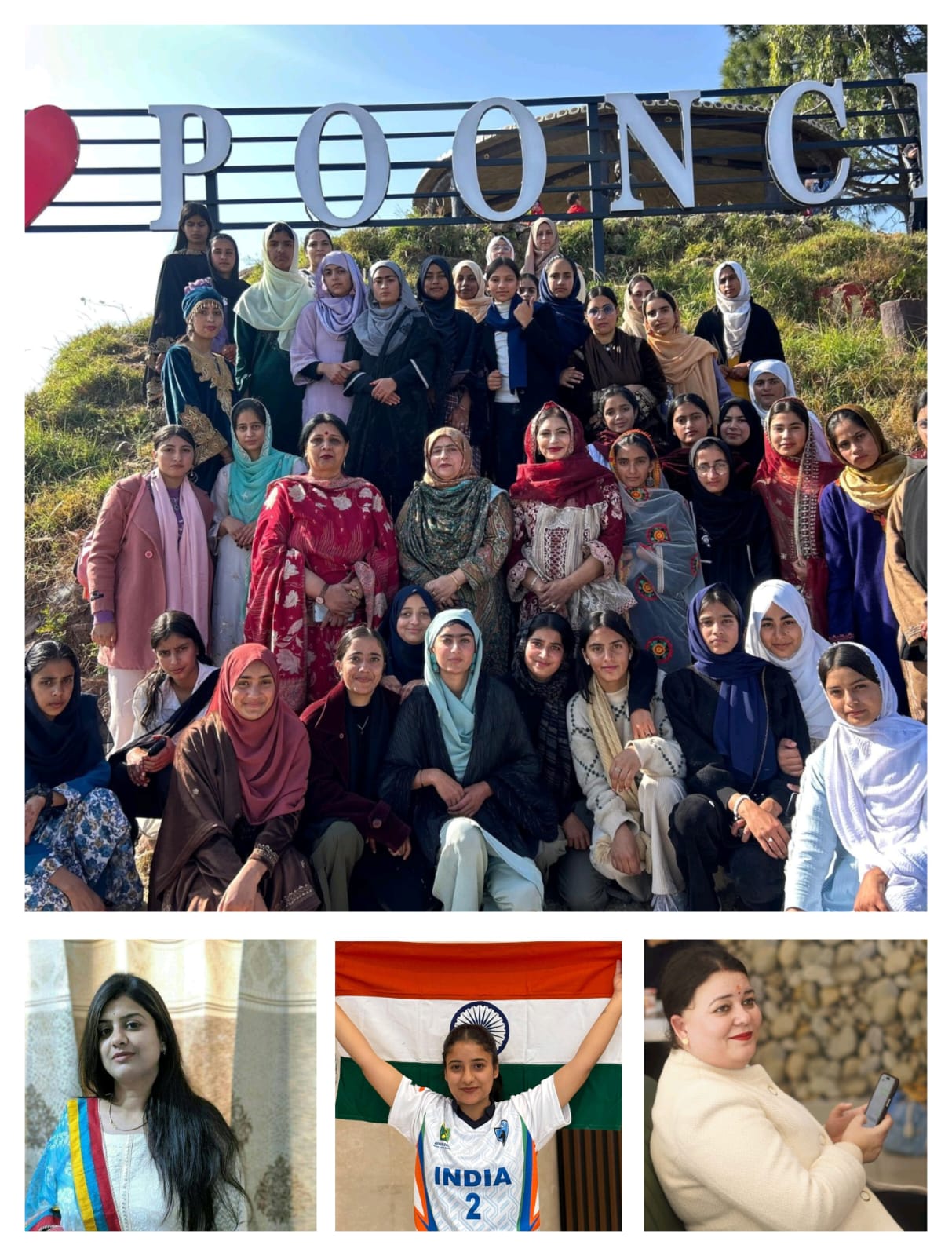
The construction of community bunkers in shelling-prone areas reflects a civilian-security interface designed to protect women and children during escalations. Simultaneously, infrastructure expansion roads, electrification, tap water connections, and LPG access has reduced physical drudgery and enhanced quality of life. Time saved from fuel and water collection can now be invested in education, entrepreneurship, and civic engagement. The inspiring journeys of Shagun Sharma and Manali Sharma exemplify how resilience in border districts translates into national achievement.
Shagun Sharma, from the border district of Poonch in Jammu & Kashmir, became the first girl from her area to join the Officers’ Training Academy of the Indian Army. Growing up amid recurring cross-border shelling and instability, she refused to let adversity define her aspirations. Through determination, perseverance, and disciplined preparation, she cleared the competitive examinations and stepped into the defense services transforming a narrative of vulnerability into one of leadership.
Similarly, Manali Sharma made history as the first female naval officer from a border village of Poonch district to serve in the Indian Navy. Her achievement signals expanding horizons for young women from frontier regions who are now entering elite national institutions with confidence and competence. The journeys of Abhilove Kour from Poonch, Preeti Sharma, Anjuman Shaheen, Dr. Pallavi Banotra, and Parvinder Kour (JKAS) further reflect the evolving landscape of women’s leadership in Jammu & Kashmir’s border villages.
Abhilove Kour symbolizes youthful determination and sporting excellence emerging from a district often viewed through the prism of conflict rather than talent. Preeti Sharma represents intellectual confidence and professional growth in educational and public spheres. Anjuman Shaheen embodies grassroots educational leadership and community strengthening. Dr. Pallavi Banotra reflects professional excellence in healthcare and public service.
Parvinder Kour, serving in the Jammu & Kashmir Administrative Service, exemplifies administrative leadership, demonstrating that women from border belts are not merely participants but policy implementers shaping development at the institutional level. Culturally, women remain custodians of linguistic and traditional heritage in frontier regions.
Whether preserving Pahari, Dogri, Ladakhi, Punjabi, Rajasthani, or tribal dialects and crafts, they transmit identity across generations. Cultural resilience strengthens psychological integration with the broader national framework while safeguarding regional distinctiveness. In areas vulnerable to misinformation and destabilizing narratives, this rooted cultural confidence acts as a stabilizing force. Women in border villages also serve as informal bridges between communities and security institutions.
Participation in civic outreach programs, medical camps, skill-development initiatives, and community dialogues fosters trust and cooperation. Stability in border regions cannot rely solely on physical security infrastructure; it requires social cohesion, and women play a central role in nurturing that cohesion.