
When most people think about the Indian Army, they imagine soldiers standing guard at the borders, protecting the nation from external threats. This image is both correct and deeply respected. The Army’s primary duty is national defence. However, in the districts of the Jammu region from the hinterland of Doda and Kishtwar to the border belts of Rajouri and Poonch the Army performs another equally important role. It acts as the first responder in times of crisis.
At the centre of this responsibility stands Indian Army’s XVI Corps. Headquartered in Nagrota, the White Knight Corps oversees a vast and sensitive area that includes Rajouri, Poonch, Doda, Kishtwar, Ramban, Reasi, and rural Jammu. These districts are not only strategically significant but also geographically challenging. High mountains, deep valleys, dense forests, fast-flowing rivers, and unpredictable weather define the region. Life here demands resilience.
Crisis is not rare; it is part of everyday reality.
Under initiatives such as #HumAapkeSaathHain, the White Knight Corps has strengthened humanitarian and security measures across the region. While the operation primarily focuses on countering threats and ensuring stability, it has also enhanced the Army’s preparedness to respond swiftly during emergencies. The same operational readiness that safeguards borders also enables rapid humanitarian response.
The Corps has left no stone unturned in not only protecting the nation’s frontiers but also acting as a lifeline for civilians living in hinterland and border villages. In a very recent development yesterday, alert troops of the White Knight Corps achieved two significant operational successes in the Rajouri sector along the Line of Control. A terror associate residing near the border was apprehended late Wednesday night by an Army patrol in the Raipura Bhatta area of Nowshera.
The individual, a resident of Sehar village close to the LoC, was found in possession of two foreign-made pistols one manufactured in Turkey and the other in China along with four magazines and fifteen rounds of ammunition.
In a separate but related development in the early hours, suspicious movement was detected in the Nathua Tibba area of the Sunderbani sector based on specific intelligence inputs and sustained surveillance.
Responding with swift and calibrated fire, Army troops successfully foiled the infiltration attempt. Following the operation, troops have been suitably repositioned and reoriented to ensure complete domination of the area through integrated ground and aerial surveillance, and a high level of operational alert continues to be maintained across the sector. In these areas, danger rarely comes in a single form.
A village may face cross-border shelling in one season and heavy snowfall in another. Landslides block roads during the monsoon. Flash floods wash away footbridges. Cloudbursts damage crops and homes. In winter, snow isolates entire communities. In such situations, time becomes critical. Quick action can save lives and reduce suffering. Civil administration and disaster management authorities play a central role in relief and rehabilitation. However, reaching remote areas in difficult terrain often takes time.
Roads may be damaged. Communication lines may fail. Weather conditions may delay rescue teams. The Army, already deployed and trained to operate in extreme conditions, is often able to respond immediately. During episodes of cross-border shelling in Rajouri and Poonch, the Army’s role extends beyond maintaining security. Soldiers assist in evacuating civilians from exposed villages, provide immediate medical support to the injured, and coordinate emergency care.
They offer reassurance and stability until civil agencies establish longer-term arrangements. In moments of panic, their calm and disciplined presence brings confidence to families living under constant uncertainty. Natural disasters present equally serious challenges. The Jammu–Srinagar highway, especially around Ramban, frequently faces landslides during heavy rainfall. Vehicles become stranded for hours or even days.
Army personnel often assist in clearing debris, distributing food and water to stranded travelers, and helping vulnerable passengers reach safety. In Doda and Kishtwar, where villages are connected by narrow mountain roads, heavy rains can cut off entire areas. In such crises, Army teams move on foot when vehicles cannot pass, carrying essential supplies and providing medical assistance. Flash floods in Rajouri and surrounding districts have seen soldiers form human chains to rescue trapped civilians. Children caught near swollen streams have been pulled to safety. Houses damaged by sudden flooding have been cleared with the help of Army engineers.
Temporary shelters are arranged until normal conditions are restored. Heavy snowfall creates another major challenge. In high-altitude areas such as Peer Gali and Sawjian, roads can be completely blocked. Ambulances cannot reach patients. In such situations, Army troops have carried sick and elderly people through deep snow for kilometers. There have been instances where pregnant women requiring urgent medical care were evacuated by soldiers because civilian transport was impossible. Helicopters are deployed when weather permits, ensuring critical patients receive timely treatment. These rescue operations are made possible by the Army’s strong logistics and training.
Military vehicles are built to operate in rough terrain and harsh weather. Engineering units can quickly construct temporary bridges if permanent ones collapse. Communication equipment ensures coordination even when mobile networks fail. Medical teams are trained to provide emergency care in remote and challenging conditions. The White Knight Corps’ commitment extends beyond responding to disasters. Through civic action programmes, it supports communities throughout the year.
Medical camps offer free check-ups and medicines in remote villages. Veterinary camps assist livestock owners whose animals are central to their livelihoods. Winter relief programmes distribute blankets and essential supplies. Youth engagement initiatives, including sports tournaments and motivational talks, encourage young people to pursue education and constructive careers.
In border and remote districts where opportunities can be limited, such initiatives help channel youth energy in positive directions. They reduce frustration, build confidence, and strengthen the bond between local communities and security forces. The psychological impact of the Army’s presence during crises is significant.In moments of fear and uncertainty, people look for stability.
The arrival of soldiers with organized relief efforts reduces panic. Families feel protected. Children feel reassured. The visible commitment of the Army sends a clear message: the nation stands with its border communities. However, while the Army often acts as the first responder, long-term resilience depends on effective governance.
The Army can provide immediate rescue and relief, but permanent solutions require strong infrastructure, careful planning, and transparent administration. Roads must be reinforced. Bridges must be built to withstand heavy rains. Drainage systems should reduce flood damage. Community bunkers are essential in shelling-prone areas. Healthcare and educational institutions must remain functional even during crises. Coordination is the key to effective crisis management.
The Army, civil administration, police, and disaster management authorities must work together seamlessly. Regular joint exercises, clear communication channels, and defined responsibilities ensure faster and more organized responses. When institutions cooperate, relief efforts become more efficient and impactful.
The White Knight Corps, through its operational readiness and humanitarian outreach, has demonstrated that the Indian Army’s service extends far beyond combat. Indian Army’s commitment symbolizes this dual commitment. While strengthening security and eliminating threats, it also enhances the Army’s ability to respond swiftly during emergencies.
The relationship between soldiers and civilians in the Jammu region is built on trust. Rescue operations during floods, snowstorms, and shelling deepen this bond. Every act of assistance strengthens national unity. The Army’s presence is not only about defence; it is also about compassion and responsibility.
The commitment of the Indian Army toward border communities goes far beyond military duty.
It is reflected in everyday acts of care, in the infrastructure it helps build, in the schools and outreach programmes it supports, in the medical aid it provides, and in the trust, it builds with local people.
In the Jammu region, the White Knight Corps particularly in the Poonch–Rajouri sector has set a powerful example of service delivered with both courage and heart.
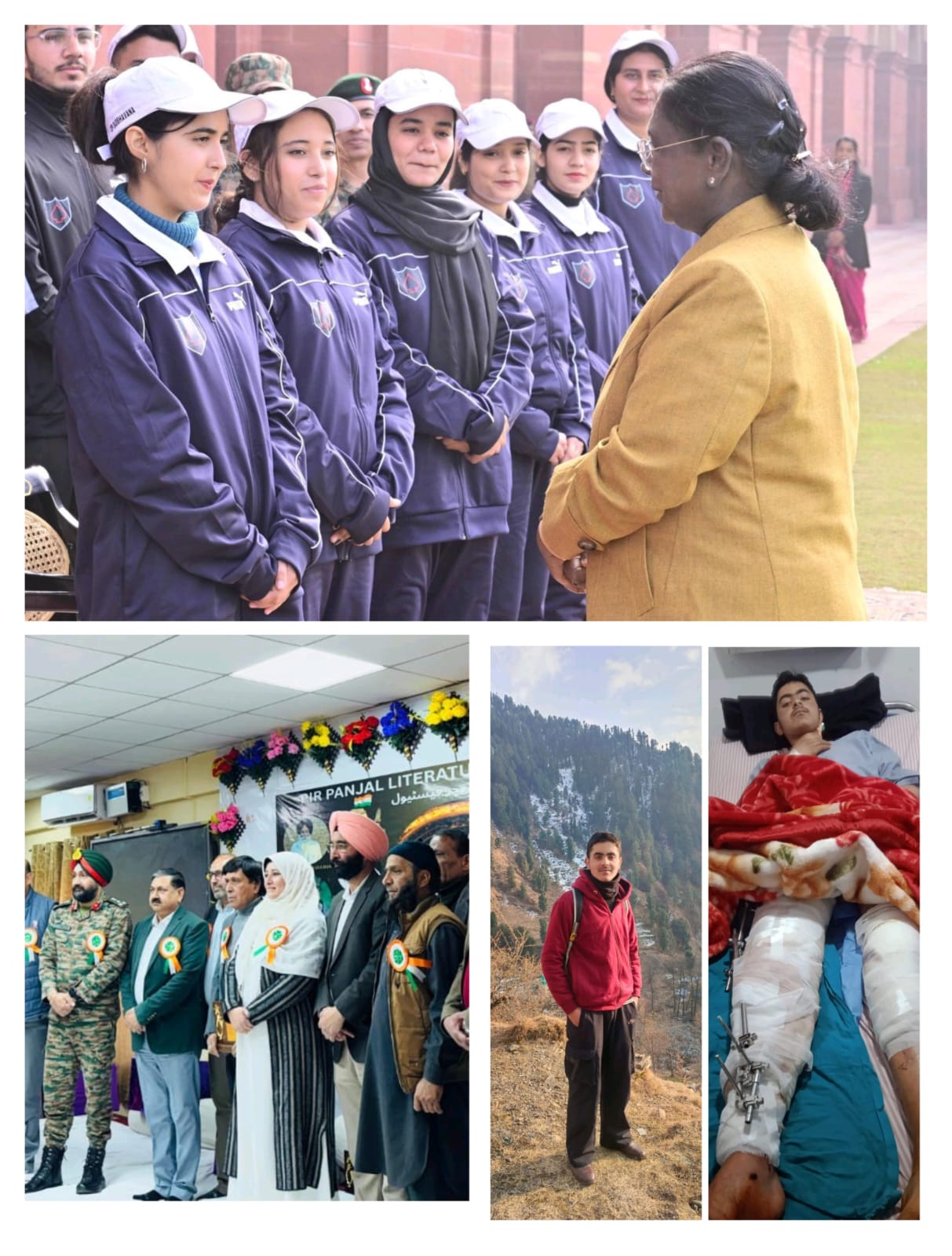
A strong illustration of this commitment was seen when a minor, Anayat Hussain from Arai, met with a serious accident involving an Army vehicle near Mandi in Poonch.
The soldiers immediately rushed him to Sub District Hospital Mandi for urgent treatment. As his condition worsened, he was referred to District Hospital Poonch and later shifted to GMC Rajouri.
Recognizing the need for advanced medical care, the Army swiftly coordinated his transfer to Amandeep Hospital in Amritsar, ensuring he received specialized treatment without delay. Senior officers personally monitored his condition, and the Army extended full financial support to the family, even arranging around ten units of blood to save the young boy’s life.
Upon his recovery and discharge, Anayat’s father publicly expressed heartfelt gratitude, stating that the Indian Army had stood by the family in their most difficult hour.This episode once again demonstrated that beyond safeguarding borders, the Army remains deeply committed to humanity. Beyond the battlefield, the Indian Army stands as a guardian of both territory and people.
The White Knight Corps has shown that protecting borders and serving civilians are not separate responsibilities but interconnected duties. From clearing landslides in Ramban to rescuing stranded families in Rajouri and carrying patients through snow in Peer Gali, the Army continues to act as a lifeline.
When crisis strikes and hope seems distant, it is often the soldier who arrives first steady, disciplined, and ready to help. In the hinterland and border villages of the Jammu region, the Indian Army is not only a shield against threats but also a symbol of support, strength, and reassurance.