
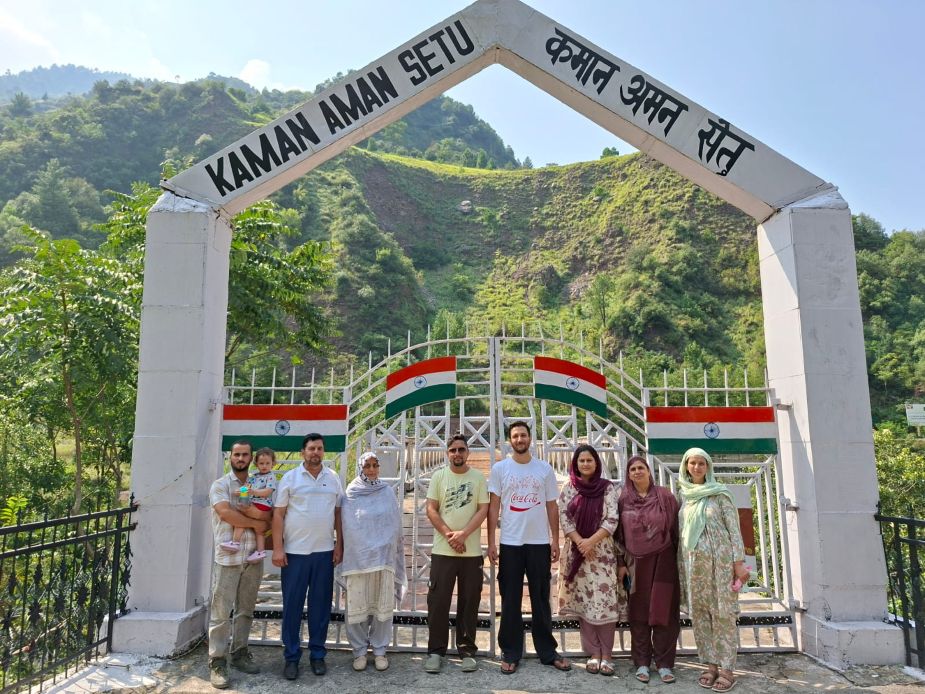
Border areas of Jammu and Kashmir have always been known for their courage, sacrifice, and strategic importance. But today, these regions are also becoming symbols of peace and development through border tourism. This idea is helping people see border villages not as conflict zones, but as places of heritage, culture, and pride. It is also creating jobs and opportunities for people who live near the Line of Control and International Border. A good example of this change is Kaman Post in Uri, located in North Kashmir’s Baramulla district. Once known only as a military post, it became famous when the Srinagar–Muzaffarabad Bus Service was launched on 7 April 2005, allowing divided families to meet for the first time in decades.
The then Indian Prime Minister Dr. Manmohan Singh and the then Jammu and Kashmir Chief Minister Mufti Mohammad Sayeed flagged off this historic bus from Srinagar. The route passed through Kaman Aman Setu, also known as the Bridge of Peace, turning the location into a symbol of hope and dialogue. After cross-border travel was suspended in 2018, Kaman Post was closed to the general public. However, in 2023, the Indian army reopened Kaman Post for tourists, transforming it into a place of patriotic tourism and local pride.
The Indian army developed a museum displaying historic weapons, photographs, and cultural artifacts. In June 2025, a mini auditorium named “Kaman Talkies” was inaugurated by senior army officers to host documentaries and cultural programs. By then, more than 50,000 tourists had already visited the site, bringing new life to Uri’s local markets, tea stalls, and handicraft shops. A 50-foot-high national flag now proudly stands at the post, symbolizing peace, resilience, and unity.
On the southern side of Jammu and Kashmir, another successful model of border tourism can be seen at Suchetgarh, located near RS Pura in Jammu district. This area was opened for border tourism in July 2016, when the Jammu and Kashmir Government developed the Octroi Post as a tourist site. Later, on 2 October 2021, the Lieutenant Governor of Jammu and Kashmir, Manoj Sinha, formally inaugurated the BSF Retreat Ceremony at Suchetgarh Border a patriotic event similar to the popular Wagah Attari ceremony. Since then, hundreds of people visit every weekend to witness the flag-lowering parade, patriotic performances, and explore nearby heritage structures.
The Tourism Department of Jammu has developed Suchetgarh with better roads, parking areas, viewing galleries, cafes, gardens, and sanitation facilities. Local self-help groups and youth have been encouraged to sell traditional food, crafts, and local products to visitors. These activities have helped border families earn additional income and created new jobs in guiding, transport, and hospitality. Suchetgarh has now become one of Jammu’s most loved tourist attractions, blending patriotism, culture, and rural charm.
Along with these initiatives, the Kargil War Memorial in Dras, Ladakh, stands as a powerful example of how military heritage sites contribute to tourism and national pride. Built by the Indian army after the 1999 Kargil War, the memorial honours the brave soldiers who laid down their lives during Operation Vijay. Set against the backdrop of the Tololing Heights and Tiger Hill where fierce battles were fought, the sandstone wall of the memorial bears the names of the Bravehearts. A towering national flag inspires deep emotion and respect among visitors. Every year, thousands of tourists and students visit this sacred site, especially on Kargil Vijay Diwas (26th July), to pay tribute to the heroes who secured our nation’s victory. The memorial serves as a living classroom of patriotism, reminding every Indian that freedom and peace come at a great cost.
Another inspiring example is Teetwal village, located in the Kupwara district of North Kashmir, on the banks of the Kishanganga River along the Line of Control. Once known mainly for cross-border tensions, Teetwal has now become a symbol of peace and hope. The Indian army and local administration have jointly worked to reopen it for tourists, making it a new stop on the border tourism map of Jammu and Kashmir. The Kishanganga Bridge connects both sides of the valley and serves as a reminder of shared heritage and divided families.
The recent restoration of the Sharda Temple and development of the Sharda Peeth Corridor have added religious and cultural importance to the area, attracting pilgrims and visitors from across India. With its serene landscape, river views, and the warm hospitality of locals, Teetwal stands as a model of how border villages can move from being conflict points to gateways of peace, culture, and development.
When tourists visit these areas, they spend on food, transport, souvenirs, and accommodation, which directly benefits local villagers. Tourism also leads to better infrastructure roads are repaired, electricity and internet services improve, and new community spaces are created. It provides young people with employment opportunities close to home, reducing migration to cities and encouraging them to become local entrepreneurs. This same model should now be extended to Rajouri and Poonch, two border districts with a rich history, natural beauty, and courageous people. The region has everything needed to attract visitors green valleys, rivers, waterfalls, forts,Shrines and temples.
If places like Poonch Fort, Chakan Da Bagh, Nangi Tekri, Krishna Ghati, Balakote, and Nowshera Sector are developed as safe tourism zones, they could draw both domestic and international tourists. The Indian army already enjoys great respect in Rajouri and Poonch for protecting borders and helping civilians during floods, snowstorms, and other emergencies. Developing border tourism here would strengthen this bond even more. The Army can set up viewing points, museums, and cafes managed by local youth. Cultural events, food festivals, and sports tournaments can also be organized to make these areas vibrant centres of peace tourism.
Border tourism not only strengthens the economy but also changes perceptions. It shows that border districts are not just frontlines of defence but gateways of peace, heritage, and opportunity. Visitors get to see the courage of soldiers and the resilience of local people, while the communities benefit from economic growth and recognition. If the successful models of Kaman Post and Suchetgarh are replicated in Rajouri and Poonch, thousands of families could benefit. Roads, hotels, homestays, handicraft shops, and restaurants will grow around such projects. Most importantly, it will give the youth of these border areas a new sense of pride, identity, and purpose.
The vision of border tourism is simple to turn lines of division into lines of connection. When people travel to these frontiers and witness the bravery of soldiers and the warmth of border communities, they return with stronger respect for both. Kaman Post, Suchetgarh, Teetwal, and the Kargil War Memorial have already shown what is possible. Now it is time for Rajouri and Poonch to become the next chapters in this inspiring story of peace, progress, and national pride.