Home Blog Page 137

Putin’s foe, Russian opposition leader, Navalny dies in prison

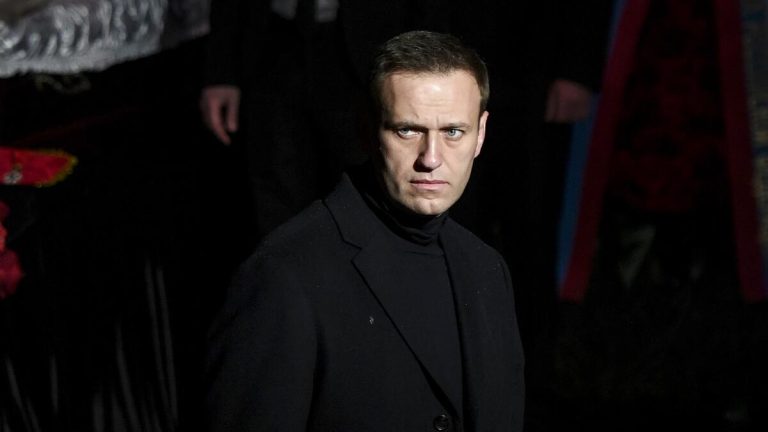
On friday (16 Feb), Russian opposition leader Alexei Navalny, who was imprisoned, passed away in the prison service of the Yamalo-Nenets region. The Federal Penitentiary Service of the Yamalo-Nenets Autonomous District reported on its website that Navalny experienced feeling unwell after a walk and almost immediately lost consciousness.

Despite medical staff’s efforts, they were unable to resuscitate him, and the cause of death is still under investigation. Navalny’s team, however, has not confirmed his death, as stated by his former deputy, Leonid Volkov, on X. It is said that Navalny’s lawyer is en route to Kharp, the location of Navalny’s penal colony, for further clarification.

Navalny has been in prison since January 2021, following his return to Moscow after recovering in Germany from nerve agent poisoning.

The Kremlin said President Putin had been informed of his death.

The 47-year-old opposition leader, a prominent figure among Russia’s fragmented opposition, gained international attention for his anti-corruption campaigns and critique of the Russian elite. He participated in Russian nationalist marches in the 2000s. Supporters saw him as a Russian counterpart to Nelson Mandela, anticipating his release to lead the country.

Poisoning

In August 2020, Navalny fell ill on a flight from Tomsk, in Siberia, to Moscow. The pilot made an emergency landing and Navalny was flown to Berlin, where he was treated for the effects of a neurotoxin that German military tests showed to be Novichok, a poison developed in the Soviet Union.

Putin dismissed a joint media investigation that said it had identified a team of assassins from Russia’s FSB security service. “If someone had wanted to poison him, they would have finished him off,” he said.

Navalny voluntarily returned to Russia in 2021 after undergoing treatment in Germany. He exposed corruption in the Russian elite and participated in protests against President Vladimir Putin. However, the Kremlin dismissed his allegations of corruption and Putin’s wealth.

The Kremlin

Russian officials cast Navalny as an extremist who was a puppet of the U.S. CIA intelligence agency which they say is intent on trying to sow the seeds of revolution to weaken Russia and make it a client state of the West.

Navalny was detained countless times for organising public rallies, and prosecuted repeatedly on charges including corruption, embezzlement and fraud. He said the accusations and convictions were politically motivated.

Navalny had an extra 19 years in a maximum security penal colony added to his jail term in 2023 in a criminal case that he said was designed to bully the Russian people into political submission.

International Reaction

International reactions poured in, with the U.S. Secretary of State Antony Blinken expressing condolences and emphasizing Russia’s responsibility. German Chancellor Olaf Scholz highlighted Navalny’s courage and called it a tragic loss for a free and democratic Russia.

Ukrainian President Volodymyr Zelenskiy accused Putin of being responsible for Navalny’s death, condemning Putin’s disregard for human lives. British Prime Minister Rishi Sunak and Foreign Minister David Cameron called for accountability, with Cameron insisting on holding Putin responsible.

French Foreign Minister Stephane Sejourne and European Commission President Ursula von der Leyen both mourned Navalny’s death, emphasizing the grim reality of Putin’s regime and the need to unite against autocracy.

NATO Secretary-General Jens Stoltenberg expressed deep sadness and called for a thorough investigation into the circumstances surrounding Navalny’s death. Navalny is survived by his wife Yulia, their daughter Darya, and their son Zakhar.

Yulia, addressed her husband’s demise at the Munich Security Conference, asserting that if the reported death by Russian state media proves true, Putin will not escape consequences for her husband’s demise.

“This regime and Vladimir Putin must be held personally responsible for all the terrible things that they have been doing to my country, to our country Russia, in recent years”, Navalnaya said.

Pakistan elections: Yet once again Rawalpindi wins

The Kingmakers

While Rawalpindi will outrightly reject the popular quip that while it has never won a war, the Pakistan Army has never ever lost an election, but Pakistan’s recent election results has univocally endorsed this unflattering observation yet once again. So, instead of dwelling on the Pakistan Army’s poor war record, it’s time to celebrate Rawalpindi’s innate ability to continuously ‘select’ prime ministers through the ballot-a feat that no other army in any democracy has been able to achieve.

The fact that none of the 22 Pakistani prime ministers in 75 years of the country’s existence have ever completed his/her stipulated five year tenure clearly indicates rampant manipulation of the legislature by Pakistan’s powerful Army. And the Pakistan Army chief’s unparalleled control over national affairs can be gauged by an unnamed “former top US diplomat in Islamabad” who recently told Time magazine that “When we had a [crisis], we didn’t call the prime minister—we called the Chief of Army Staff.”

Reinventing Democracy

Former army officer Maj Gen Iskander Mirza who replaced Ghulam Muhammad as Pakistan’s fourth Governor General in 1956 and later became the country’s first President, ushered-in the concept of ‘controlled democracy’. This was nothing but a hybrid system based on the perverse premise that governance is too important a matter to be left to politicians and as such they were required to work under the Army’s supervision.

Gen [later Field Marshal] Ayub Khan who ousted Mirza through a coup went on to legitimise his dictatorship, by introducing ‘Basic Democracies’. This entailed 80,000 elected ‘Basic Democrats’ participating in a referendum that [expectedly] allowed the dictator to “continue in office as President and to have the authority to frame the future constitution of Pakistan.”

And the Pakistan Army has never looked back since then!

Disrupting Democracy

That Rawalpindi is responsible for frequently disrupting democratic process in Pakistan is no secret. Besides direct intervention through coups, the Pakistan Army has also been actively involved in behind-the-scenes manipulations. In fact, since Rawalpindi practically runs the country, the two century old aphorism “Prussia is not a country with an army but an army with a country” accurately describes the state of affairs in Pakistan.

Besides coups by Gens Ayub Khan, Zia ul Haq and Pervez Musharraf that overthrew elected governments, Pakistan Army’s notorious spy agency Inter Services Intelligence [ISI] has also been actively involved in covert operations to sabotage democracy. Readers may recall that in 1990, the then Pakistan Army chief Gen Aslam Beg and ISI chief Lt Gen Asad Durrani surreptitiously withdrew a princely sum of at least USD 1 million from state owned Mehran Bank to overthrow the Benazir Bhutto government.

Lt Gen Durrani later testified that Gen Beg had asked him to distribute cash to politicians belonging to an anti-Bhutto alliance created by the military establishment. Senior Mehran Bank manager Yunus Habib also testified that he had doled out an equivalent of USD 1.5 million on orders of the Army chief and President Ghulam Ishaq Khan. The fact that neither Gen Beg nor his ISI chief have been taken to task for this serious criminal act indicates the power and authority that Rawalpindi wields!

Current Elections

The day PTI chief Imran Khan crossed swords with the Pakistan Army, had himself signed the death warrant of his own political career and it became absolutely clear that come what may, he would somehow be prevented from participating in the 2024 electoral process. Khan had probably thought that his immense popularity amongst the masses would provide him complete immunity against any rash move by the military was a humongous error of judgment, because Rawalpindi is law unto itself.

In a repeat performance that had precipitated the contentious dismissal of former Prime Minister Nawaz Sharif in 2018, orchestrated by Rawalpindi through court conviction, the cricketer turned politician too suffered a similar fate. As per Times magazine, more than 180 charges have been slapped on Khan, which indicates Rawalpindi’s heightened state of paranoia.

Not wanting to take any chances, the wily Pakistan Army chief Gen Syed Asim Munir has politically emasculated Khan with military precision. On the one hand, while thousands of PTI workers were arrested in the run up to elections, several of its leaders were either coerced or cajoled into quitting PTI. Khan’s own nomination papers were rejected and PTI’s signature bat logo has been frozen.

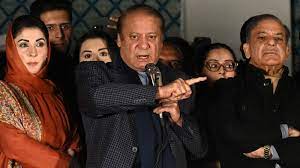
Simultaneously, by prodding the courts to quash the conviction of former Prime Minister Nawaz Sharif in corruption cases and withdrawing his life time ban from politics, Gen Munir facilitated the three-time prime minister’s return to Pakistan and by making him eligible to contest elections, provided the electorate an alternative to Khan.

The Winner

In its recently released 2023 Democracy Index, the Economic Intelligence Unit has downgraded Pakistan from ‘hybrid regime’ to ‘authoritarian regime’, which is the lowest category grading on its scale. However, despite being largely responsible for this sorry state of affairs, Rawalpindi remains unfazed as it knows that such negative assessments don’t have any material impact on foreign relations.

While international organisations, foreign observers, political parties and civil society members have all accused the establishment of using unfair means used during the February 8 elections in Pakistan, there’s no cause for concern as the results suit the military, and that’s what matters. While the hectic post poll political alignments may impress a novice but Pakistan watchers know that it’s just a charade for public consumption- the die has already been cast!

With Khan out of the way, it matters little whether it’s the Sharifs, Bhuttos, or for that matter anyone else who’s able to successfully cobble together the next government, because at the end of the day it’s Gen Munir who has won hands down. The nagging fear however is whether the next prime minister will be able to break the jinx of a truncated tenure and serve out his full term? The answer is simple- if the incumbent toes Rawalpindi’s line, it’s ‘Yes’ and if not then it’s definitely a big ‘No-no’!

Pakistan Army assassinates senior Sindhi leader Hidayat Lohar

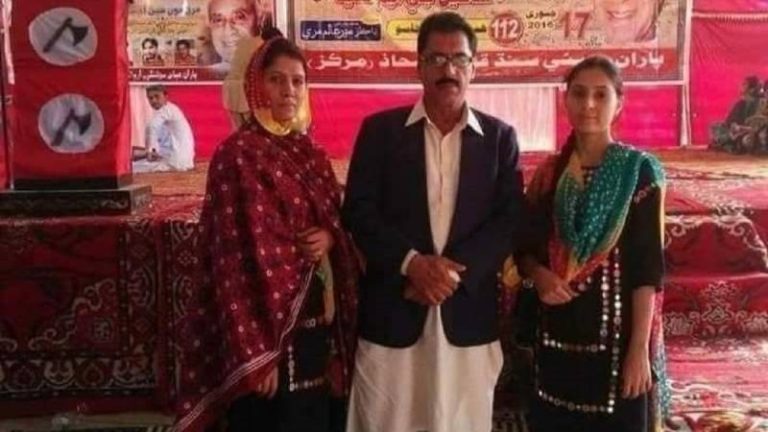
Sindhi nationalist and human rights activist Hidayat Lohar was brutally assassinated today in Naseerabad, in what appears to be a targeted attack. Hidayat Lohar, leader of the Voice for Missing Persons of Sindh (VMPS), had previously been a victim of enforced disappearance by the Pakistan Army from April 17, 2017, to July 2019.

The incident unfolded as Lohar was en route to the school where he served as a teacher. Two assailants on a motorcycle ambushed him, firing three fatal shots. The killing is met with widespread condemnation, with concerns raised over the apparent targeting of individuals advocating for human rights and Sindhi nationalism.

Hidayat Lohar’s daughters, Sorath Lohar and Sasai Lohar, both human rights activists and VMPS members, are now left mourning the loss of their father along with a dedication to defend human rights.

Meanwhile, human rights activists and Sindhi nationalists from across Pakistan have decried the assassination, labelling it a “state-sponsored murder.” Accordingly, the incident has reignited a call for unity among Sindhi and Baloch activists against what they perceive as systemic oppression by the Pakistani establishment.

Dr. Mahrang Baloch, a prominent Baloch rights activist, expressed shock and sadness over Lohar’s killing, emphasizing the need for collective action against Pakistani oppression. She called for those responsible for the crime to be held accountable.

The Jeay Sindh Freedom Movement (JSFM), a Sindhi nationalist organization, has condemned the brutal murder, extending support to Lohar’s family. JSFM has announced a 10-day mourning period to honour Hidayat Lohar’s memory.

Hindus face eviction and extortion threat by Islamists in Bangladesh

In a harrowing incident that is unfolding in the Patuakhali district of Bangladesh, Hindu families in Ghurchakathi village are living in fear as they face threats of eviction and extortion from Islamists identified as Muhammad Harun and Al Amin. The perpetrators are demanding money from the Hindu families and coercing them to vacate their homes and lands.

Disturbing visuals from Ghurchakathi highlight the anguish of women who recount their traumatic experiences. One woman bravely shared that the Islamist leaders approached them, demanding a hefty sum of 1.5 lakh takas or forcing them to abandon their homes and property. Shockingly, the victims also claim that the Islamists have resorted to threats of sexual assault if their demands are not met.

Moreover, an elderly lady, visibly distressed, also expressed concern over the lawlessness prevailing in the area, questioning how they could seize her ancestral property, passed down from her father-in-law and mother-in-law. Apparently, the incident exposes the vulnerability of the Hindu community in Bangladesh who are facing constant existential threats at the hands of radical Islamists.

The plight of these minority Hindus is further exacerbated by the fact that the perpetrators often come from influential backgrounds, leaving victims with little recourse for justice. Complaints and pleas for help are frequently ignored, leaving the affected families in a state of desperation. This disturbing episode underscores the broader challenges and existential threats faced by the Hindu minority in Bangladesh.

Radical Islamists vandalise Ahmadiyya mosque, injure worshippers including women in POJK

In a shocking incident that unfolded on Monday, a mob of over 50 individuals, armed with hammers, shovels, and sticks, forcibly stormed an Ahmadiyya mosque situated in the Kotli district of the Pakistan-occupied Jammu and Kashmir (POJK). The attackers inflicted injuries on eight Ahmadi worshippers, including five women, and ruthlessly demolished all four minarets of the mosque.

Ahmadiyyas, a sect of Islam, have long faced persecution in Pakistan, being constitutionally declared as non-Muslims in 1974. This declaration was followed by further restrictions in 1984, stripping them of the right to identify themselves as Muslims. Consequently, the community is prohibited from building mosques with minarets, which has often made them targets for violent attacks.

The assailants targeted the minarets of Ahmadiyya mosque, symbolizing a blatant violation of religious freedom. The incident highlights the ongoing challenges faced by the Ahmadiyya community, who continue to endure discrimination, both legally and socially, in Pakistan and its occupied territories.

Pakistan-occupied Gilgit-Baltistan protests against massive load shedding

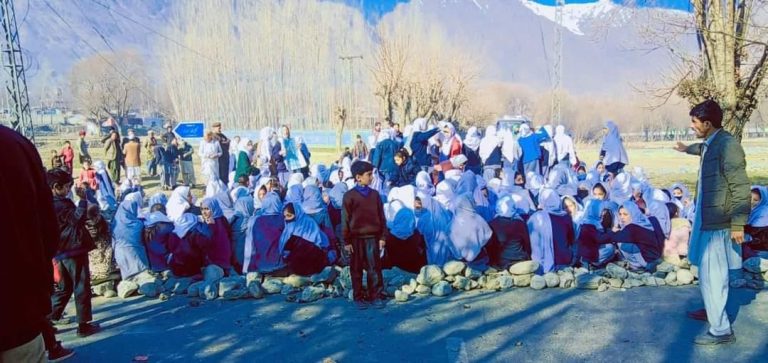
In less than a month of ending protest, people across Pakistan occupied Gilgit Baltistan (POGB) have again resorted to the streets in protest. This time regarding one of their demands around load shedding in the region. The protestors are enraged because of not only load shedding but also the nature of it being unannounced.

On Thursday February 15, people in Gahkuch city of Ghizer district blocked the Gilgit-Shandur highway in protest and thwarted the movement of traffic. Meanwhile, the most harrowing image comes from Gilgit, where children also joined the protestors and blocked the way to the occupying Chief Minister’s office.

For a long time POGB is grappling with the challenges of load shedding. The problem faced by people in POGB worsens in winter season. At the moment, there is about 20 hours of load shedding, which could be loosely referred to as the complete absence of electricity. Pakistan which controls and exploits the hydroelectric power generation capacity of the region, keeps people downtrodden.

And it is not that the entire region of Pakistan is facing the problem, people from POGB and POJK are being treated in the most inhumane way because Pakistan knows that the land is under its illegal occupation and that it is entitled to exploit its resources without giving the due attention to the people under its occupation.      

Protest erupts in Kharan & Pasni over road closure and 12-18 hours of load shedding

Recently in the Kharan and Pasni region of Pak-occupied Balochistan protests by the public have been sparked by the unexpected load shedding and road closures by the Pak Army.

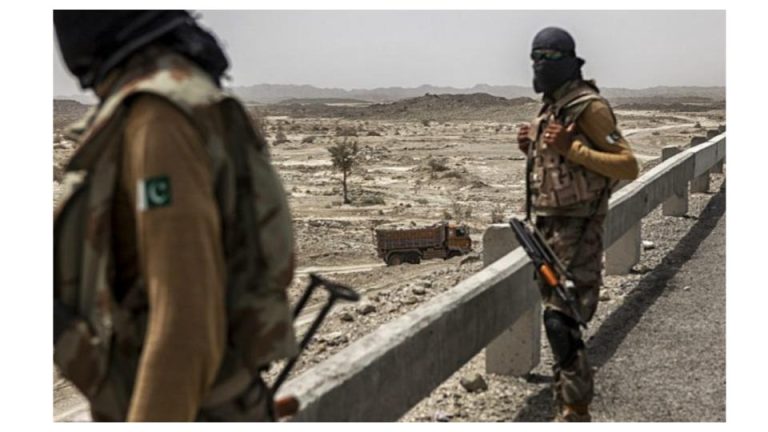
In a letter to Deputy Commissioner Munir Ahmad Soomro, the residents and students from the Jozhan area of Kharan have requested the reopening of a road that is close to the FC camp. Reportedly, the road was closed during the general elections stating security concerns.

“If the road is part of the FC camp, we understand its closure. However, if it’s a public road, we urge its immediate reopening,” they said emphasizing the serious inconvenience the closure had caused.

Such security-related closures are not uncommon in Pak-occupied Balochistan. They have been previously imposed in Turbat, Gwadar and Khuzdar regions. These closures often result in public discontent and protests against such restrictions and the treatment at checkpoints.

At the same time, an intense protest broke out against the QESCO over unexpected load shedding broke out in Pasni. Women protestors forced QESCO employees inside their workplace and demanded an end to the daily struggles caused by power cuts.

The citizens demonstrated their frustration with the daily 12 to 18 hours of load shedding. They expressed their annoyance and that they could no longer stand this situation as Ramadan drew near, which made it unbearable. They pay their bills on time and expect a reliable electric supply.

POB: Hub Chowki under Section 144 after election violence kills two

In a tragic turn of events, a deadly crossfire erupted between two rival election candidates and their supporters which led hundreds of people to take to the streets in Hub Chowki, which is the industrial city of Pak-occupied Balochistan.

The violence broke out near the Civic Center, which is the venue for the recounting of votes for the PB-12 constituency, following the general elections that were held on February 8. Ali Hassan Zehri, candidate of the Pakistan Peoples Party (PPP) and the Bhootani group, both of the sides claimed victory in the general elections. The situation turned violent and their supporters started exchanging fires, which led to the killing of two people and injuring eleven.

One of the victims is identified as Sikkandar Chatna, a member of the Bhootani group. The protestors blocked the traffic on the roads and demanded the arrest of the culprits. The protestors contended that the supporters of Ali Hassan Zehri are being supported by the city administration, as they openly flaunt their weapons and are not being arrested.

Reportedly, the police were negotiating with the Bhootani group over filing an FIR against the PPP supporters. Also, the Hub Chowki SP met with a delegation of the Bhootani group.

The Bhootani group stated that while they were protesting against election tampering in front of the Residing Officer’s office, the armed PPP supporters attacked their peaceful, nonviolent supporters.

As tensions continued to simmer, the city administration of Hub Chowki implemented Section 144, prohibiting weapon carrying, pillion rides, and political meetings for one month.

Worsening educational facilities in Pak-Occupied Jammu and Kashmir

0

Pakistan leaves no stone unturned to project illegally occupied Jammu and Kashmir [IoJK] as a free and prosperous land and has even named this region ‘Azad’ [Free] Kashmir. To keep up pretences and legitimise its illegal occupation, Islamabad also organises ‘all expenses paid’ trips for foreign influencers to IoJK. And while going gaga over when ‘sponsored’ guests parrot the lines fed to them by their hosts, Islamabad chooses to maintain a stoic silence when such guests subsequently reveal the reality.

One such recent guest was US Democratic Congresswoman Ilhan Omar who visited IoJK two years ago and repaid Islamabad for the free hospitality provided by making pro Pakistan and anti-Indian remarks. However, just a week ago, Omar upset the applecart by letting the cat out of the bag by admitting that Since my colleagues and I raised our concerns about human rights in Pakistan last November, things have only gotten worse.” 

Though Omar’s statement was made with reference to the recently conducted elections in Pakistan, it nevertheless reveals the abysmal state of affairs in Pakistan, and IoJK is no exception. No wonder Pakistan’s charade of observing Kashmir Solidarity Day on February 5 every year impresses no one. Au contraire, things couldn’t have been more ironical.

While Pakistan was perfunctorily going through with this sham, IoJK residents were themselves vociferously protesting against lack of basic amenities and rampant ill-treatment by both the government authorities and the Pakistan Army. With people in such large numbers taking to the streets, the yawning gulf between projection and reality in IoJK is apparent. 

So, while Islamabad wants the world to believe that people of IoJK are content and eat cakes, the widespread public protests in IoJK reveals that its people are not even getting sufficient bread. However, non-availability of essential commodities, skyrocketing prices and clampdown on freedom of expression aren’t the only woes of IoJK residents and comparing facilities in J&K and IoJK is a study in contrast.

While IoJK continues to face a step-motherly treatment at the hands of Islamabad and hence languishes due lack of financial assistance, J&K is receiving substantial funds from New Delhi. The very fact that J&K’s 2024-2025 interim budget fund allocation is more than four-and-a- a-half times more than the amount sought by Islamabad from the International Monetary Fund [IMF] for the whole of Pakistan, gives a fair idea of the stark difference between J&K and IoJK!

Besides other privations, lack of educational facilities continues to remain a major area of concern for the people of IOJK as it deprives children of their fundamental right to pursue academics and improve their employment prospects. To make matters worse, due to a steep hike in education and hostel fees students in the Gilgit-Baltistan [GB] area of IoJK have deprived many deserving students from financially weaker sections of society of continuing their education.

A November 2023 ANI report highlights the pathetic condition of educational facilities in GB. It quotes students complaining not only about the lack of basic facilities like class rooms, table and chairs, electricity and drinking water but also paucity of teachers in certain important subjects like physics. They also claim that despite the Higher Education Commission’s policy that permits a maximum annual increase of 10 percent fees, the same has been hiked by a whopping 135 percent within three years!  

However, it’s not only students of IoJK and their parents who are up in arms against government apathy. Lack of a streamlined funding process is forcing teachers and administrative staff employed in educational institutes to intermittently go on strike in demand of their salaries and increments. This is why the issue of poor educational facilities in IoJK is one of the main reasons behind public dissatisfaction.

 The inexplicable lack of concern being displayed by Islamabad towards the education sector in IoJK is so pronounced that there’s a general apprehension amongst the locals that this indifference is intentionally being orchestrated. Islamabad reluctantly recognises dissent in IoJK, but as is its wont, conveniently blames New Delhi for the same, but its claims convinces no one and there’s a good reason for this.

There can be no two views that Islamabad has only its abject apathy to blame for creating a hostile environment in IoJK. Nevertheless, it’s also true there’s an indirect India connection that arises out of the innate human tendency to compare things. Therefore it’s not at all surprising that the burgeoning growth and development of academic infrastructure and educational facilities in J&K has given people of IoJK a deep feeling of discrimination and deprivation amongst them.

If IoJK residents apprehend that educational institutes in this region have been turned into places of persecution by Islamabad as part of a sinister plan to keep them ignorant about their legal rights so that Pakistan’s illegal occupation of IoJK isn’t questioned, then why blame New Delhi?

Radical Islamists attack Christians soon after general elections in Pakistan

In the aftermath of the recently concluded elections in Pakistan, Sahiwal witnesses a disturbing surge in violence and persecution, particularly targeting the Christian community. Reports emanating from Chak 6-11-L, neighboring Sahiwal Harappa, suggest that the Christians have been attacked by local Islamists, marking a distressing turn of events following the election results.

Arshad Masih, a 55-year-old resident, recounts the troubling sequence of events that unfolded. What began as a confrontation against his son, Ansar Gill, 30, by supporters of the Pakistan Tehreek-e-Insaf for his PML-N vote, escalated into a violent episode as PML-N candidates Rana Riaz and Mian Ashraf celebrated their victory.

The situation took a drastic turn on February 12, around 2 am, when a group of assailants, comprising both local individuals and unidentified attackers, attacked Christian homes in retaliation for the election outcomes. Shockingly, the assailants employed petrol bombs and firearms, specifically targeting the residences of key community figures, including Pastor Hashmat Masih and Tahir Gill.

Attack on Pastor

The first target was Pastor Hashmat Masih’s residence, where he and his family narrowly escaped harm. The assailants then turned to Tahir Gill’s home, resulting in the destruction of his rickshaw through a petrol bomb. The third victim was Shoukat Gill, whose home sustained gunfire damage. Adding to the complexity of the situation, the attackers have further complicated matters by filing a First Information Report (FIR) against the Christian community.

In an area with approximately 100 Christian households amid 1400 Muslim residences, where many Christians work as laborers, concerns for the already vulnerable minority community in Pakistan have intensified. The election-related violence exacerbates anxieties about the security of the Christian community, echoing echoes of the Jaranwala incident a few months ago, where Christian churches and homes were targeted.

As authorities investigate this distressing episode, urgent calls for prompt action resonate to ensure the safety and protection of the Christian community in Sahiwal. The rising tensions within the region demand a swift response to address the alarming escalation of sectarian violence.