Home Blog Page 14

Afghan security forces arrest Pak Army backed ISKP terrorists

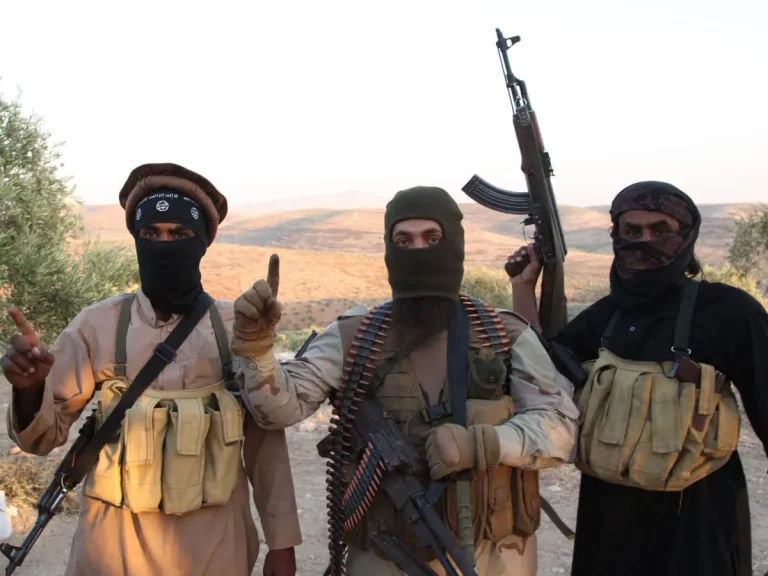
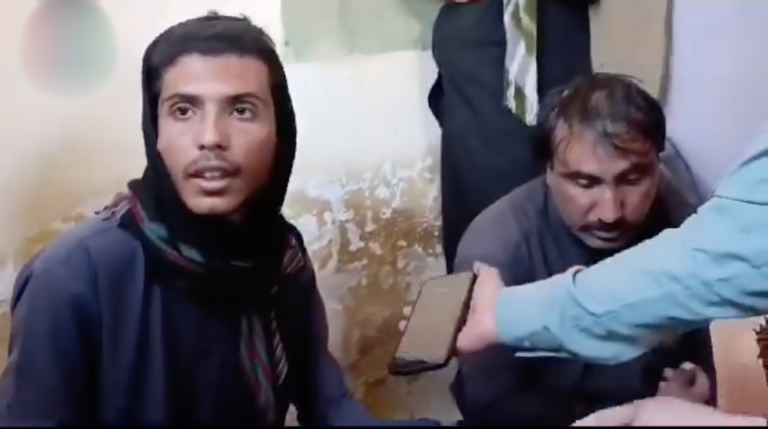
Afghan Security Forces successfully apprehended six alleged affiliates of the Islamic State Khorasan Province (ISKP) in a targeted operation in Sar-e-Pul province (Afghanistan), the Police Command reported. These individuals are suspected of involvement in recent attacks orchestrated by the terror outfit. While authorities refrained from disclosing names, the arrests underline ongoing efforts to combat the ISKP’s reign of terror in the region.

The ISKP, infamous for its extremist ideology, has openly branded Shias and even the Afghan Taliban as apostates, using religion as a guise for its violent agenda. This is a pattern evident across many terrorist groups that exploit Islam to justify their atrocities, labeling non-Islamist regimes as infidels and Islamist governments as apostates, thereby perpetuating their cycle of bloodshed.

While Afghanistan intensifies its counter-terrorism operations, Pakistan’s role as a breeding ground for such extremist factions cannot be overlooked. The Pakistan Army is not only fostering and shielding terror groups for its geopolitical agenda, but has also played a duplicitous role in the region. By allowing extremist organizations like ISKP to operate and flourish within its borders, the Paki establishment has not only destabilized its neighbors but also sowed chaos within its own society.

Despite publicly denouncing terrorism, the Pak Army has been repeatedly exposed for harboring extremist leaders and providing safe havens for militant outfits. This policy of supporting proxies for strategic depth has backfired, with terror networks like ISKP becoming uncontrollable monsters that now threaten regional and global security.

Pak Army maliciously stops Pashtun leader Ali Wazir’s court appearance

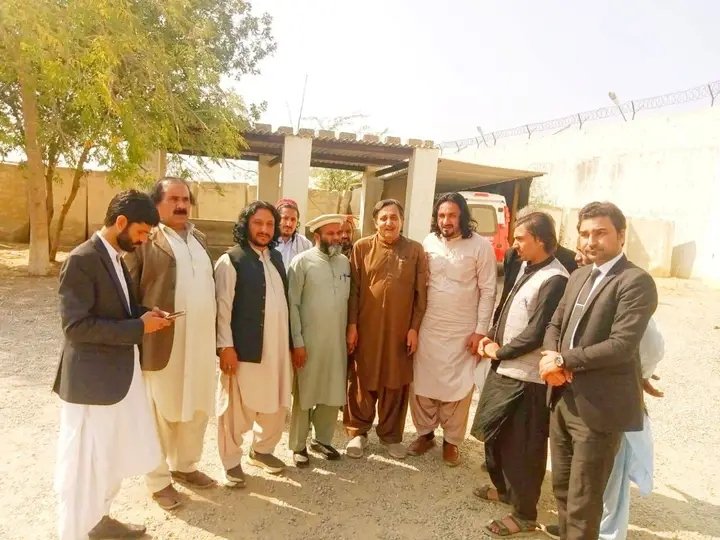
Once again, Pashtun leader Ali Wazir faces hurdles in his pursuit of justice. Wazir, who was scheduled to appear in court on Wednesday, failed to attend his hearing, with authorities citing the excuse that the prison vehicle transporting him had broken down. This excuse is the latest in a long line of delays and interruptions in the legal proceedings against Wazir, a prominent Pashtun rights activist and member of the Pashtun Tahafuz Movement (PTM).

Despite the continued efforts to disrupt his legal battles, the court acquitted Wazir in the first case, while the hearing for the second case was rescheduled for January 24. However, this ongoing game of legal cat-and-mouse is more than just an isolated incident. It is indicative of the systemic effort by the Paki establishment to suppress Pashtun voices and the broader Pashtun nationalist struggle.

Over the years, Pashtun activists have faced immense challenges in securing justice, with the Punjabi Pak Army using arbitrary arrests, fabricated charges, and delays in the judicial process as tools to silence dissent. This is part of a broader pattern of Army repression aimed at curbing the Pashtun rights movement, which has long sought justice for extrajudicial killings, enforced disappearances, and other human rights abuses committed by the military in the region.

The delays in Wazir’s case and the unjust tactics used against him are emblematic of the Pak Army’s broader strategy to maintain its stranglehold over Pashtun areas, particularly in Khyber Pakhtunkhwa, where the military has historically used violence and intimidation to suppress any form of resistance.

Pak Army arrests eight Baloch youth in Malir for holding rally on Baloch genocide memorial day

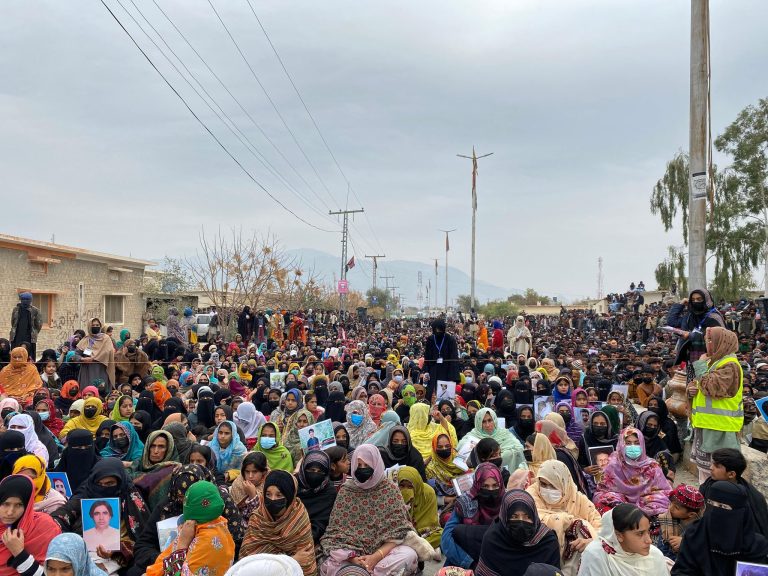
In an ongoing repression, eight individuals were arrested in Malir Sharafi Goth following a peaceful rally to raise awareness for Baloch Genocide Memorial Day. This marks another escalation in the Pakistan Army’s relentless efforts to suppress dissent, particularly voices calling attention to the Baloch genocide and the atrocities committed by the Paki establishment.

The arrested individuals, including two minors, Mujib son of Aslam and Imran son of Mola Bakhsh, were among the local protesters detained by police three hours after the rally. The ages of the detainees, both under 18, highlight the extent to which the Pakistan Army and its police forces target even the youngest members of the Baloch community for simply exercising their right to protest. Sammi Deen Baloch, leader of the Baloch Yakjehti Committee, condemned the arrests, stating that these actions were part of a systematic campaign to silence the Baloch struggle for justice and self-determination.

In an alarming development, an FIR was filed against Sammi Deen, Amina Baloch, Fouzia Baloch, and 16 others, including the detained protesters, under false and baseless charges. The registration of the FIR points to a troubling pattern where Pak authorities weaponize the legal system to target activists and silence any movement that dares to criticize the establishment’s actions in Pak-occupied-Balochistan.

The arrested individuals are just the latest victims of the Pakistan Army’s iron-fisted tactics, which have long sought to crush any form of Baloch resistance. Sami Deen further pointed out that those arrested in Lyari during a January 18 protest, including prominent Baloch Yakjehti Committee organizer Lala Wahab Baloch, elderly citizens, and youth, remain in police custody.

These actions are part of a wider pattern of suppression by the Pak military in POB, where enforced disappearances, extrajudicial killings, and the brutalization of dissenting voices have been ongoing since the forceful occupation of the region in 1948. The arrest of peaceful protesters in Malir is a direct reflection of the military’s ongoing disregard for the basic human rights of the Baloch people, who have been subjected to violence and oppression for decades.

Trump issues sweeping executive orders on first day as 47th president of America

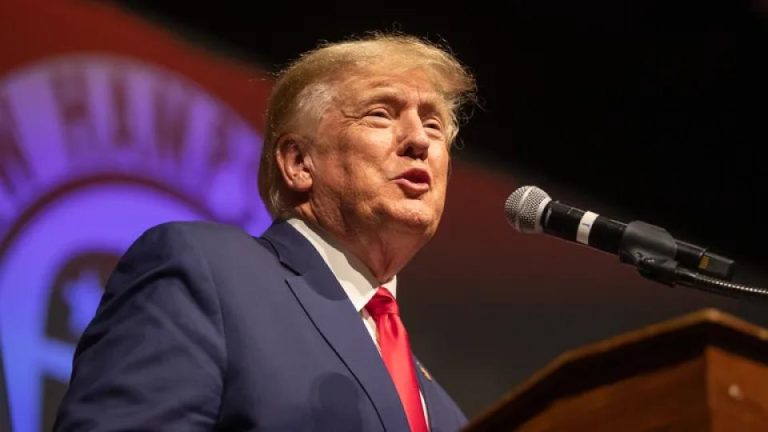
On his first day as the 47th President of the United States, Donald Trump wasted no time in asserting his authority, signing a slew of executive orders aimed at undoing many of the policies implemented by his predecessor, Joe Biden.

After taking the oath of office and delivering a stirring inaugural address, Trump signed his first executive order at Washington’s Capitol One Arena, mandating that all federal workers return to the office full-time. The new president quickly followed up by signing as many as 80 executive orders, marking a stark departure from Biden’s administration, with significant policy shifts that include withdrawing the United States from the Paris Climate Agreement and the World Health Organization (WHO), as well as implementing a temporary freeze on new federal regulations.

Key Orders Signed by President Trump:

  1. Crackdown on Birthright Citizenship and Immigration
    One of the most controversial orders issued by Trump on his first day in office was a crackdown on birthright citizenship for children born to illegal aliens in the U.S., a move that runs contrary to the 14th Amendment of the U.S. Constitution. The president also announced plans to enhance vetting and screening procedures for illegal immigrants. Trump stated, “The federal government will not recognize automatic birthright citizenship for children of illegal aliens born in the United States.”
  2. Withdrawal from Paris Agreement and WHO
    In a move that mirrored his actions during his first term, President Trump signed orders to declare a national energy emergency and withdraw the U.S. from the 2015 Paris Climate Agreement. Additionally, Trump ordered a halt to Biden’s efforts to protect Arctic lands and U.S. coastal waters from oil drilling, while promoting oil and gas development in Alaska. Trump also pulled the U.S. out of the WHO, citing the agency’s mishandling of the COVID-19 pandemic and alleged political influence from member states, particularly China.
  3. Delay on TikTok Ban
    Trump signed an executive order delaying the planned ban on the popular short-video app TikTok by 75 days, extending the deadline for review until April 2025. The ban had been scheduled for January 19, 2025. The order grants Trump the authority to either sell the app or close it, while the U.S. attorney general has been instructed not to enforce the ban during this period.
  4. Pardons for January 6 Rioters
    Sticking to one of his campaign promises, Trump signed an order dropping all charges against most of those involved in the January 6 Capitol riots. He expressed outrage over the treatment of those individuals, calling it “outrageous” and cutting short sentences for 14 members of far-right groups, including the Proud Boys and Oath Keepers, some of whom had been convicted of seditious conspiracy.
  5. Return to Office for Federal Workers and Freeze on Government Hiring
    In a move to reshape the federal workforce, Trump ordered all federal workers to return to the office immediately and imposed a freeze on hiring for all government agencies. “I will implement an immediate regulation freeze, which will stop Biden bureaucrats from continuing to regulate,” Trump declared. He also emphasized that only competent individuals, “faithful to the American public,” would be hired moving forward.
  6. Recognition of Only Two Genders
    In a bold executive order, Trump declared that the U.S. government would only recognize two genders – male and female – and that all government-issued identification documents, including passports and visas, would reflect an individual’s biological sex, as opposed to their gender identity. This order effectively reversed several of Biden’s policies promoting racial equity and protections for LGBTQ+ individuals.
  7. Creation of DOGE Advisory Group Led by Elon Musk
    Trump also signed an order establishing the Department of Government Efficiency (DOGE), an advisory group aimed at cutting back on the size of the U.S. government. Tesla CEO Elon Musk, who leads the group, has been tasked with eliminating entire federal agencies and cutting three-quarters of federal government jobs, a move that has already sparked multiple lawsuits challenging the new department’s operations.

Trump’s first day in office marked a decisive shift in U.S. policy, with the president taking swift action to implement his vision for the country.

Manzoor Pashteen slams Pak Army for failing Pashtuns & spreading instability

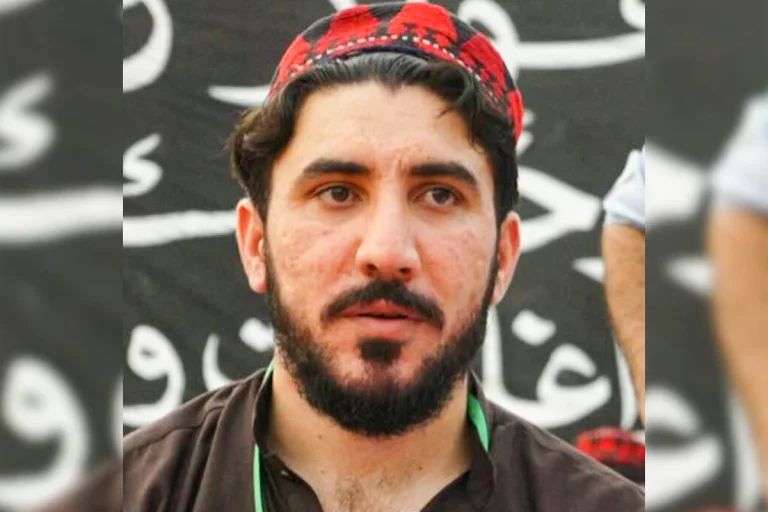
Pashtun Tahafuz Movement (PTM) leader, Manzoor Pashteen, has once again condemned the Punjabi Pakistan Army for its failure to protect Pashtun communities, accusing it of perpetuating violence and destabilizing the region. Speaking out about the dire situation in several tribal areas, Pashteen emphasized the lack of accountability and effective governance, particularly by the occupying government in Pakhtunkhwa.

Reflecting on the historic October 11 Jirga, Pashteen expressed optimism about its potential impact on the Pashtun struggle. However, he warned that the Jirga’s decisions could only bring real change if Pashtun political parties united to implement them. “We appeal to all Pashtun parties to follow the decisions of the Jirga and work together to solve the issues facing our people,” Pashteen said.

While he acknowledged the difficulties ahead, Pashteen reassured his followers that PTM was not silenced, nor was it backing down from its mission. “We are preparing ourselves for the next phase of struggle,” he said, highlighting the pressing need for resistance in the face of increasing oppression.

Addressing the critical situation in Pashtun-majority areas, particularly Bajaur, Swat, Waziristan, Bannu, and Kurram, Pashteen made it clear that the Paki establishment’s neglect and inability to address the growing violence were unacceptable. “The provincial government of Pakhtunkhwa is a government in name only,” he said. “Armed groups roam freely, and when violence erupts, it is the ordinary people who are pressured, not those responsible for the bloodshed.”

Pashteen Warns

Particularly harrowing was Pashteen’s description of the conditions in Kurram, where he highlighted the dire humanitarian crisis. “People in Kurram have no food to eat, but the establishment is indifferent. While civilians suffer, both fighting sides continue to receive ample supplies of weapons and ammunition to fuel their conflict,” he said.

Pashteen also turned his focus to the Pakistan Army’s brutal tactics, criticizing its actions in Waziristan and beyond. “The Army does not even leave the people of Waziristan alone across the Durand Line. While militants operate near Army bases, the Army bombs children in Khost,” he said, pointing to the Army’s destabilizing role in Afghanistan. “Pakistan continues to foster extremist groups to destabilize Afghanistan while neglecting the needs of its own people.”

In addition to these grave concerns, Pashteen condemned the use of drones by the Pak Army, which he claimed are being used for training purposes on civilians in Waziristan. “Drone attacks and target killings are now a regular feature of life in Waziristan. Areas like Mir Ali have become training grounds for Pakistan’s drone operations,” Pashteen said, underscoring the civilian toll these attacks have taken.

He also warned that the Army’s recent attempts to seize control of newly discovered mineral-rich areas in Malakand and other regions were causing further strife. “The Army has created problems to occupy the mines, and if they attempt to conduct operations in our areas, we will not allow ourselves to be displaced again,” he asserted, adding that PTM was planning a response in case of further forced displacements. “If they force us to leave again, we will march to Islamabad with millions of people to demand justice.”

Dominance of firepower in conflicts: Lessons from Kargil & beyond

Part I – Predominance of Firepower in Combined Arms Operations

“Pakistan Perspective: Role of Firepower specially Artillery during Kargil War – The artillery created the most disproportionate adverse impact on Pakistan positions, troops and logistics sustenance, for which artillery equipment specially the Bofors gun was pulled in from other formations, not involved in the limited scale of war being waged in Kargil. A fairly large no of guns was deployed in ‘direct firing’ role. Artillery, not only pounded the objectives being assaulted/attacked but contingency positions, Observer Posts, logistic nodes, and communication hubs. Sustenance of Pakistani forward troops became an existential challenge. It emboldened the brave Indian infantry soldier to close in and fight.

As per Zehra and her interactions with troops who were deployed, the ‘Gunners fire assaults’ became the principle battle-winning factor. Approximately 5000 arty shells and mortar bombs and rockets were fired daily from 300 guns, mortars and MBRLs, while 9000 shells were fired on the day Tiger Hill was recaptured by Indian troops. The guns were massed ranging from 100 to 120 guns for every attack. The fire was so accurate that Indian troops could move up to 40 metres short of the target with every artillery gun hitting the target. Guns in direct firing role had a devastating effect specially the Bofors, even on bunkers. Pakistani troops learnt to dread enemy artillery especially direct fire.

Physically and emotionally battered with no sleep or rest, isolated with minimal own fire support, the Pakistan troops incurred maximum casualties due to artillery fire. This impact was further buttressed with innovative use of IAF air strikes, which created a tremendous morale shattering impact on Pakistani troops, especially when their own air support was non-existent. The intensity of firepower devastated both men and mountains.”

​- Paraphrased from Nasim Zehra’ book (2018), ‘From Kargil to the Coup, Events that shook Pakistan’ and other Pakistan publications

Geo-Political and Security Overview dictates necessity of conducting Multi-Domain Operations (MDO).​ The global order which brought stability since World War II is changing, bringing geo-political and security turbulence. Currently as per Geneva Academy of International Humanitarian Law and Human Rights there are 110 conflicts/ confrontations ongoing globally! The most visible are the Ukraine and Gaza conflicts and confrontation in the China Seas. The nuclear balance which was being managed by international protocols between USA and Russia have been discarded.China is on a nuclear expansion and modernisation surge, leading to a race amongst NWS (nuclear weapon states), with ominous portents of the exclusive club expanding. Increased nuclear signalling by some nations (Russia, North Korea), promises to bring Armageddon closer to reality. Incidents and brinkmanship manoeuvres in conflict zones by adversaries and their allies: the ‘Western block led by USA’, emerging Russia-China-North Korea-Iran nexus; and regional players with own national agendas, exacerbate the delicate balance, as there are no incident resolution controls in place.

India needs to manoeuvre deftly, and keep its powder dry. ​Amidst this turbulence, the increasing China-Pakistan strategic and military collaboration (no longer just a collusion), unresolved boundaries, historical distrust and enmity, fragile regional relationships, and sympathetic instability further exacerbated by the global environment, makes the South Asia plus China region even more vulnerable/unstable. 

Given her regional power status, India must avoid any geo-political or military embarrassment or setback. India not only needs to keep her powder dry, but continuously upgrade and build her technological and multi-domain (both kinetic and cognitive especially military) capability and capacity to combat the ongoing 24X7 confrontations and probable conflicts. We are aware that while the situation along our borders with China and Pakistan are under control, it is unstable and dynamic. It just needs a spark, a miscalculation or misadventure to ignite.

We must remember that most wars have started despite all antagonists not wanting one. The ongoing wars/confrontations especially Azerbaijan-Armenia, Ukraine, Gaza, China Seas have provided India enough insights to plan, acquire, train, mobilise and prepare, and also wage multi-domain operations 24X7 (mainly non-kinetic in sphere of geo-political, economic, diplomatic, informational, legal) just as China, Pakistan and others are waging on us.  When the situation shows trends of turning ugly, credible hard power comes into play; the pivotal role of Firepower (close combat and deep fires) acts both as a deterrent and destroyer.

Firepower: an instrument of ‘Conventional Deterrence’.​ Current wars have placed firepower in the strategic realm, and artillery has turned into an instrument of ‘conventional deterrence’ made possible by increased ranges, warhead lethality and precision of conventional firepower (equally applicable against China and Pakistan). Conventional deterrence can focus on counterforce targets with option of engaging minimal counter value objectives, without retaliatory consequences of nuclear exchange. Most importantly it can be delivered at a standoff through multiple modes. Conventional deterrence is far more flexible in application. This article’s focus is on artillery (combat support and deep fires employing rockets and missiles) and unmanned aerial systems (UAS). Also read Lt Gen PR Shankar’s articles on ‘Artillery and Firepower Series’ in ‘gunnershot.com’.

Firepower and Manoeuvre.​ Firepower and manoeuvre are complementary and optimise and buttress the other. Manoeuvre needs space which could be restricted like urban areas and mountains, making firepower essential. MDO, technological breakthroughs and RMA has changed the ways wars are fought. The world over, military doctrines, force structures and weapon systems are under constant review. The current environment focusses on precise standoff strikes in a network-centric arena. Firepower presently is undertaken from land, sea, air and sub-surface. 

Artificial intelligence (AI)/automated weapon systems, UAS, military use of space are fast emerging firepower domains. Firepower entails the process of gathering intelligence, surveillance, reconnaissance (ISR), target acquisition, degradation followed by post-strike damage assessment (PSDA) and destruction. Victory in any future conflict in the 21st century will be generated through the asymmetries of firepower. An important function of firepower assets is counter bombardment.

Global scramble for Firepower Assets and Munitions.​Globally, nations at war and allies are scrambling to modernise, upscale production, and upgrade their firepower assets and munitions (especially smart) to gain an operational or decisive upper hand. The urgent and all-important acquisitions in firepower are artillery guns, rockets and munitions, and means for real time ISR (intelligence, surveillance and reconnaissance); both armed and unarmed UAS (unarmed aerial systems) and air defence (AD) systems. The traditional air power means (fighters and attack helicopters) are vulnerable in today’s battlefield and less effective.

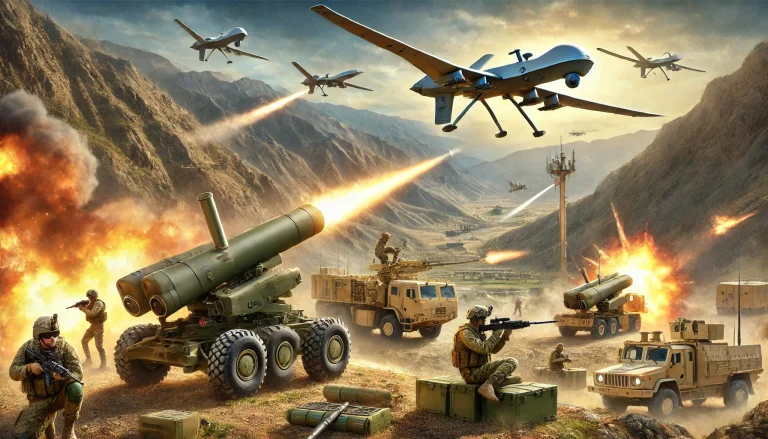
Artillery and UAS have become ubiquitous in any conflict zone. The Azerbaijan-Armenia and Ukraine wars have demonstrated that the nation with more guns and munitions, rockets and missiles and combat UAS; and real-time ISR capability will dominate the battlefield. Ukraine has matched Russia and defended herself for so long in the war, purely because of ‘firepower’ which has been substantially and constantly boosted by NATO. The recent bonhomie and visit of President Putin to North Korea is all about defence cooperation, with North Korea supplying critically needed one million artillery shells.

In the Russia-Ukraine war, artillery fire accounts for about 80 percent of the casualties on both sides. Following the US aid cut-off, Ukraine went from being outgunned five to one in artillery fire to ten to one. The resumption of US aid should reduce but not eliminate Ukraine’s disadvantage. According to NATO intelligence estimates, Russia is on track to produce nearly three times as many artillery shells this year, about 3 million, as the United States and Europe combined (about 1.2 million). At the Indo-Pacific Army Chiefs’ Conclave (IPACC) hosted by India and the US in New Delhi on 26-27 Sep 2023, US Army Chief General George spoke of many strategic and operational lessons and takeaways from recent wars specially Ukraine. He spoke of four focus areas; warfighting, delivering ready combat formations, transformations and strengthening our profession of arms specially between leaders and men, and warrior ethos. In the operational arena he emphasised on two aspects, “signature management and dominance of firepower with focus on long range fires”.

UAS is now Integral to Combined Arms Warfare and enhances Firepower 

UAS and Drones.​ The terms are used interchangeably; are also called UAV (unmanned aerial vehicles) or pilotless aircraft. A drone/UAV is simply the aircraft or drone itself, while a UAS includes the entire system that supports and controls the drone; encompasses ground control stations, data links, and any other components like weapons, radars, jammers, cameras, communication equipment, required for the mission.

UAS provides Global Reach and Multi-Mission Capabilities.​ Emergence of a multi-polar world brings with it the need to monitor multi-domain activities and threats regionally (a reality for India today), and globally for the big two (USA and China; already happening). This involves covering large continental and maritime geographical spaces as also air and space (entire borders and IOR in case of India). There will be ever increasing requirement to possess platforms and systems capable of collecting and processing intelligence, striking targets if necessary, and operating in a contested environment. 

Conclusion.​​ Artillery and UAS are now ubiquitous in combined arms operations. Strategically, firepower provides conventional deterrence, and are force multipliers for defensive and offensive operations. In Part II, we shall see how artillery and UAS have been integrated in ongoing wars. Since our adversaries would be analysing ongoing wars very closely (specially China which has the means), thoughts on how India and her armed forces must stay ahead of the warfighting loop, especially in the domain of firepower have been presented.

Pakistani MI agents caught in assassination plot targeting Baloch Yakjeti leaders

Two alleged ISI contract killers were apprehended on Sunday by Baloch protestors while attempting to assassinate the leadership of the Baloch Yakjehti Committee (BYC) during a rally in Hub. The two operatives, armed with loaded pistols and carrying military-issued ID cards, had infiltrated the peaceful rally disguised as journalists with the apparent intent of silencing those who speak out against the ongoing Baloch genocide.

BYC, a prominent non-violent Baloch political party, has been at the forefront of raising awareness about the systematic ethnic cleansing and human rights violations perpetrated by Pakistan Army. Their relentless advocacy for Baloch rights has drawn the ire of the Paki establishment, which has consistently resorted to covert, violent tactics to eliminate political dissent and stifle calls for self-determination.

In this latest incident, the perpetrators – identified as Nasir, son of Ghulam Muhammad, from Nokundi, and Muhammad Qoum Sasoli, from Dalbandin – were swiftly detained by BYC organizers who sensed something amiss in their behavior. Upon arrest, the operatives were found to be carrying a pistol and ammunition, a clear indication of their lethal intentions. Further investigation revealed that both individuals were working for Pakistan’s Military Intelligence (MI), a notorious agency known for its involvement in extrajudicial killings and forced disappearances of Baloch activists and leaders.

This attempted attack highlights the depths of the Paki establishment’s conspiracy to crush the Baloch struggle for justice and self-determination. The Baloch people continue to face brutal repression under the iron fist of the Pak Army, which is willing to go to any lengths, even assassination, to silence those who demand accountability for the atrocities committed against them. The world cannot turn a blind eye to the systemic murder, torture, and repression faced by the Baloch people under the Pak military’s oppressive rule.

Pak Army murders another innocent Pashtun youth in front of his family

The Pakistan Army has yet again martyred an innocent Pashtun youth, this time in Bara, Khyber. Khan Wali Afridi, an active participant in the October 11 Jirga, has reported that soldiers entered the home of the victim and ruthlessly killed the young man in front of his grieving family, particularly the women of the household. This brutal act serves as a stark reminder of the Pak military’s ongoing disregard for basic human, Pashtun, and Islamic norms.

The victim, whose name remains withheld, becomes yet another casualty in the long list of Pashtun youth targeted by the Punjabi Pak Army. This incident follows closely on the heels of a similar tragedy in Bajaur, where another young Pashtun was murdered by Pak Army. Such acts of violence have become commonplace in Pashtun regions.

The Pashtun Tahafuz Movement (PTM), a grassroots movement that fights for the rights of Pashtuns, has been at the forefront of calling out the Paki establishment’s systematic suppression of Pashtun demands. The PTM has consistently highlighted the ongoing human rights abuses, including extrajudicial killings, enforced disappearances, and military crackdowns in the Pashtun areas. These actions, aimed at silencing voices of dissent, have left thousands of Pashtun families in mourning, with entire communities displaced, marginalized, and living in constant fear.

For years, the Pashtun people have borne the brunt of military operations, drone strikes, and terrorist activities, all of which have contributed to widespread displacement, poverty, and grief. Yet, despite the overwhelming evidence of injustice, the Punjabi Pak Army remains unaccountable, continuing its reign of terror against innocent Pashtun civilians.

Pak Army launches operation in Khuzdar, escalating repression of Baloch

In yet another brutal show of force, the Pakistan Army has launched a large-scale military operation in the Khuzdar district of POB. Convoys of heavily armored vehicles, consisting of multiple military units, have entered the area, reportedly targeting the towns of Nechara and its surrounding villages.

Pak Army has intensified its operations, focusing on areas like Nechara, where the military has set up a camp inside a local school. Several personnel have been stationed there, and the school premises are now fortified, with soldiers maintaining strongholds around the building. The ruthless occupation of educational institutions and civilian spaces serves as a reminder of the Army’s disregard for the well-being of Baloch citizens, instead prioritizing their colonial tactics of suppression and control.

In the nearby Cheerdkhamb region, the Army is reportedly advancing further into local territories, tightening its grip on the area. These operations come as part of Pakistan’s long-standing campaign to quell Baloch community that have persistently resisted the illegal occupation and exploitation of their land since 1948.

The local population continues to face increasing military oppression, with forced disappearances, extrajudicial killings, and violence against unarmed civilians now a daily reality. Yet, the Pakistan Army and its officials remain silent, offering no clarity on the objectives or the scope of the operation. The ongoing communications blackout has further isolated the Baloch people, making it impossible for news to reach the outside world in a timely manner. This tactic is part of a broader strategy to prevent the global community from witnessing the atrocities being committed by the Pakistan Army in POB.

Unmasking Pakistan’s POJK plebiscite farce

0

Observed by Pakistan as right to self-determination day for the people of Kashmir, January 5 saw its president, prime minister and political leaders urging the international community to help implement UN resolutions on Kashmir by holding a plebiscite in J&K. Public demonstrations were also organised to draw global attention on this issue, but like always, this perfunctory annual ritual failed to impress the international community, which raises the pertinent question- why is it that despite invoking UN resolutions on Kashmir, no one takes Pakistan’s Kashmir narrative seriously?

From Islamabad’s perspective, being under India’s “illegal occupation” J&K is “disputed territory” and hence it wants a plebiscite as envisioned in UNSC Resolution 47 to be held to ascertain whether its people wish to remain with India or become part of Pakistan. Islamabad’s contention may appear convincing, but on closer scrutiny it becomes amply clear that its arguments are derived by distorting facts. Furthermore, by doing what it shouldn’t have done and not doing what needs to be done, Islamabad has scuttled its own Kashmir narrative.

Pakistan’s claim of India having illegally occupied J&K has no legal basis whatsoever. The instrument of accession is a legal document drawn from The Government of India Act 1935, through which rulers of princely states existing at the time of Independence and partition of India could accede to either the dominion of India or Pakistan. As these instruments of accession were signed by rulers in exercise of their “sovereignty in and over” their respective states, their decision was both legal and irrevocable.  

The ruler of J&K Maharaja Hari Singh signed the instrument of accession on October 26, 1947 and accession of the State to India was formally accepted by India’s Governor General Lord Mountbatten the next day. Hence, Pakistan’s assertion that India is in illegal occupation of J&K is mere rhetoric sans substance. Yet, purely for taking this argument forward and exposing Pakistan’s doublespeak, let’s momentarily assume that J&K is “disputed territory.” If this is the case, then Islamabad needs to answer two questions to justify its claim.

Plebiscite Myth

One, if India is indeed in “illegal occupation” of J&K, why hasn’t the UNSC declared J&K as such or made even a passing reference of the same? Two, if UNSC has not taken any action to remedy Pakistan’s perceived allegation, then why hasn’t Islamabad filed a case against India in the International Court of Justice [ICJ] for more than seven-and-a-half decades?  While Islamabad has never explained its failure to do so, the answer is nevertheless simple. Knowing very well that this ridiculous complaint will be outrightly rejected by ICJ, Islamabad has cunningly limited its Kashmir related protests to high decibel rhetoric!

After 370 abrogation, Islamabad leveled allegations on genocide in POJK and though then Foreign Minister Shah Mehmood Qureshi pompously declared that “An in-principle decision has been taken to take the issue of Kashmir to the ICJ,” but this never happened. While Islamabad didn’t disclose the reasons thereof, its ICJ lawyer Khawar Qureshi admitted that “In absence of these evidences [of genocide], it is extremely difficult for Pakistan to take this case to the ICJ.”

Furthermore, it’s common knowledge that those staking claim to any disputed asset have no ownership rights whatsoever over the same till the case is resolved by the competent legal authority. So the Islamabad needs to explain that if POJK is ‘disputed territory’, how did it unilaterally cede the 5,180 square kilometers Shaksgam Tract [which is part of J&K under the illegal occupation of Pakistan] to China in 1963 under the Sino-Pakistan Agreement? By doing so, hasn’t Pakistan demolished its own ‘disputed territory’ narrative?

Next is the incessant demand for holding plebiscite in J&K that Islamabad makes at every conceivable occasion. While UNSC resolution 47 does mention plebiscite, it also lays down the mandatory prerequisites that have to be implemented before any plebiscite can be held. As per this UNSC resolution, Pakistan has to “secure the withdrawal of all Pakistani nationals from the “State of J&K” as well as “provide full freedom to all subjects of the State, regardless of  creed, caste, or  party, to  express their views  and  to  vote  on  the  question  of  the  accession.” 

POJK and UNSC

However, Pakistan hasn’t yet withdrawn its nationals from the parts of Pakistan occupied J&K [PoJK] under its illegal control even though it’s the first obligatory requirement mandated by UNSC. Furthermore, Para 7[3] of [PoJK] constitution states that “No person or political party in Azad Jammu and Kashmir [PoJK] shall be permitted to propagate against, or take part in activities prejudicial or detrimental to, the ideology of the State’s accession to Pakistan.” Since PoJK residents are constitutionally debarred from expressing their free will, how can an impartial plebiscite as envisioned by the UNSC be conducted?

This was highlighted by India in September 2016, while exercising its right to reply in response to a statement by Pakistan under the Agenda Item 3 during the 33rd session of the UN Human Rights Council. Adeptly exposing Islamabad’s duplicity, India’s spokesperson highlighted that Pakistan keeps referring to UN Security Council Resolutions on Jammu & Kashmir. However, it very conveniently forgets its own obligation under these resolutions to first vacate the illegal occupation of Pakistan Occupied Kashmir. Unfortunately, New Delhi isn’t hammering-in this matter-of-fact argument that takes the wind out of Pakistan’s sails with the force it rightly deserves.

As its attempt to internationalise the Kashmir issue through its January 6 ‘right to self determination day’ has been a dismal failure, Islamabad may consider revisiting its terminally infirm Kashmir narrative and come up with something better before it observes what it refers to as ‘Kashmir solidarity day’ on February 6. And heeding to Abraham Lincoln’s astute observation that “you can fool some people all the time, and all the people some of the time, but you can’t fool all the people all the time” would do Islamabad a lot of good!