Home Blog Page 228

BLA freedom fighters attack Pak Army post in Noshki

The Baloch Liberation Army (BLA) attacked the Pakistan Army check post in Noshki. According to a statement issued by the BLA spokesperson, the attack by sarmaachars targeted the Pakistan Army post located near the main Highway in Zareen Forest using modern weapons.

During the attack, one enemy officer was killed on the spot, and the Pakistan Army reportedly suffered additional casualties. The BLA has claimed this operation, reaffirming their commitment to continue such actions until the complete withdrawal of the occupying forces from Balochistan.

The Baloch Liberation Army, fighting for the rights and independence of the Baloch people, has been engaged in a long-standing conflict with the Pakistan authorities. Their struggle centers around the perceived marginalization and human rights violations faced by the Baloch community.

The attack in Noshki is seen as part of the BLA’s ongoing efforts to resist an occupation of their homeland. The use of modern weapons highlights the group’s determination and capabilities to confront the Pakistan Army.

Balochs mark 14 yrs of Baloch student leader Zakir M Baloch’s abduction by Pak regime

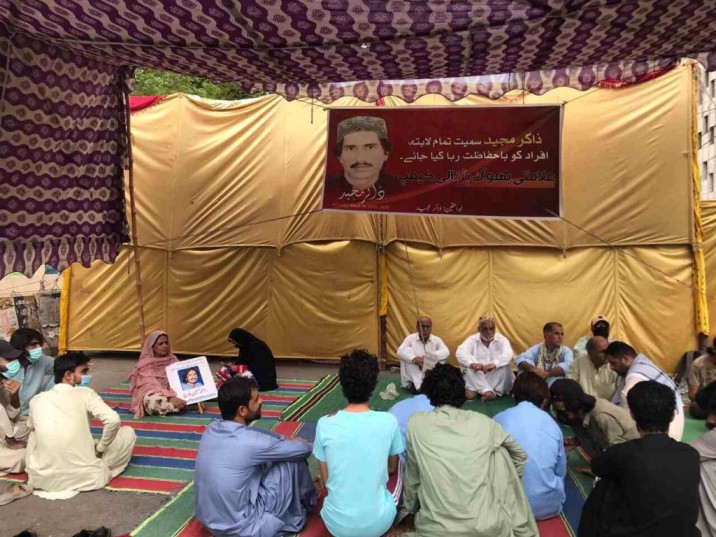
On the completion of 14 years of the enforced disappearance of Baloch student leader Zakir Majeed Baloch, a symbolic hunger strike camp was organized in front of the Karachi Press Club. Relatives of missing persons, along with political, social, and human rights activists, participated in the one-day token hunger strike camp.

The participants sitting at the Karachi protest expressed that the story of enforced disappearances in Balochistan is long, and every day more people are being made to disappear. Our aim is to make our voice reach influential circles so that we can tell them how our loved ones have been forcibly taken away through illegal and inhumane treatment. We will continue to raise our voice against it.

During the Karachi protest, the relatives of missing persons, including Dr. Deen Muhammad’s daughter and Vice Chairperson of Voice for Baloch Missing Persons (VBMP) Sammi Deen Baloch, Mahlab Deen Baloch, who was forcibly disappeared by Pakistani forces in 2016, Rashed Hussain Baloch, who was transferred from the United Arab Emirates after enforced disappearance, and Saeeda Hamid, daughter of abducted Abdul Hamid Zahri by Sindh Police and intelligence agencies in Karachi in 2021, participated.

During this time, members of various Baloch organizations, including the Baloch Unity Committee, activists of Voice for Baloch Missing Persons, and people from different ideological backgrounds, expressed solidarity with the relatives of enforced disappeared persons in the hunger strike camp and rally.

The participants at the camp condemned the series of enforced disappearances in Balochistan, which has been ongoing for more than two decades, and now security forces are also targeting Baloch women and children. They demanded that the government and institutions respect the law, present the missing persons in courts, and ensure the recovery of the missing persons within the ambit of law and constitution.

“They said the purpose of this day is to remember the captive leader Zakir Majeed and other missing persons who have been imprisoned in dark cells for years. We can feel the pain of the long wait by the relatives of missing persons, including Zakir Majeed’s mother. Our demand is to release Baloch political prisoners and end the series of enforced disappearances” they said.

Speaking on this occasion, the sister of missing Shabir Baloch, Samea Baloch, said that brothers are more than brothers for sisters, and if a sister is older, the brother is the first child who is more dear than life. Shabir’s abduction and arrest took place in 2016, and despite thousands of bad news, I know that he will return and come back alive.

She said, “My children, like Samea and Mahlab, are growing up in the camps of Missing Persons and in protest rallies. When Shabir was taken away in 2016, I was scared even in press conferences and protests, but today, me, my children, and other families can look fearlessly into the eyes of those criminals.”

Saeeda Hamid, the daughter of abducted Abdul Hamid Zahri, said, “My father is the sole guarantor of our house. All my brothers and sisters are younger, and often they ask about father’s return. Our demand is that we do not further harm the future of our children. The Sindh government, including the police, was involved in the enforced disappearance of my father Abdul Hamid. The Sindh government and the Chief Minister of Sindh should ensure the immediate recovery of my father Abdul Hamid.

The mother of Rashed Hussain, a missing Baloch activist, participated in the protests in Karachi, along with the United Arab Emirates (UAE) and later in Pakistan. She stated that her son was not allowed to live peacefully in Pakistan for the past five years, and when he managed to escape to another country to save his life, he was targeted there as well. She demanded that if her son is a criminal, he should be presented in court and his crime should be proven; otherwise, they should be saved from further agony.

The mother of Rashed Hussain also mentioned that the country’s Interior Minister had revealed that Rashed had been transferred to Pakistan. If her son has been brought to Pakistan, she questioned where he is and in what confinement he is being held. She demanded that her son be brought into the public eye.

Meanwhile, just like Karachi, a seminar against enforced disappearances was also held in Quetta by Voice for Baloch Missing Persons and Zakir Majid Baloch’s family.

In 2016, the Balochistan Student Organization-Azad had announced that every year on 8 June the day of enforced disappearances, protests would be held across Balochistan. On this day, families of forcibly disappeared individuals and human rights organizations protest in front of press clubs throughout Balochistan, demanding the recovery of their loved ones from powerful groups and the Pakistan Army.

On this day, various Baloch social media activists, including Twitter and other social platforms, ran a campaign against enforced disappearances, demanding the recovery of missing persons.

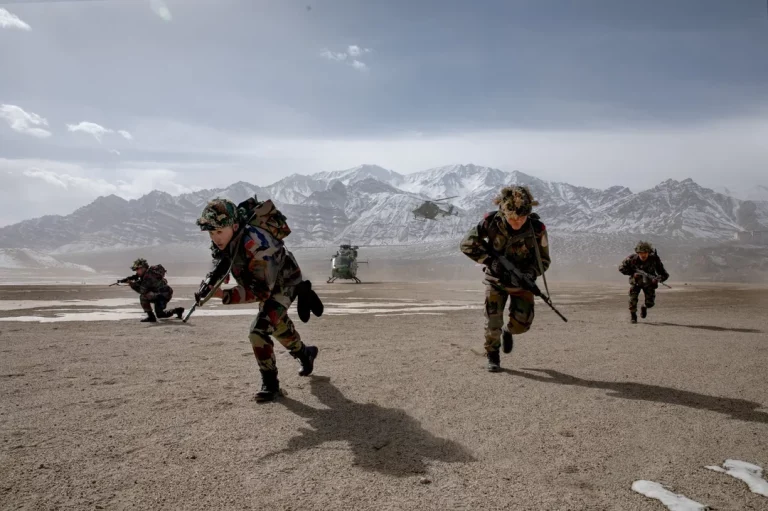
The ‘Snow Leopards’ of Ladakh

Though simple and peace loving, the people of Ladakh are extremely patriotic and fiercely committed when it comes to defending their homeland and this was evident in 1948, when a formidable Pak force of well-trained soldiers of Chitral and Gilgit Scouts alongwith deserters of the J&K state forces threatened Ladakh. Since there were no troops present in situ to defend this area, the situation became extremely perilous and all seemed lost.

Sensing the gravity of the situation, a small detachment of the Indian army under Capt Prithi Chand carrying a very limited stock of weapons and ammunition was despatched to create a volunteer force of locals to resist the invaders. Moving on foot, this group negotiated the foreboding snow-covered 11,575 feet high Zojila Pass in February 1948 and reached Leh on 8 March .

On arrival, Capt Chand sought volunteers for creating an armed group who, after being provided rudimentary training in basic military skills, would be prepared to defend Ladakh. The response was impressive and locals from Nubra, Shyok and Indus valleys willingly came forward in large numbers to protect their motherland.

Designated Nubra Guards, this local force underwent a short spell of intense military training before being deployed in La Chhurk and Chhangmar area [between present Thoise airfield and Turtuk].

Though pitted against a far superior, more experienced and much better equipped enemy, Nubra Guards offset these serious disadvantages through their tenacity and dogged determination to defend their motherland at all costs.

Consequently, Nubra Guards not only kept the marauders at bay for an astounding 53 days, but even undertook a series of offensive actions inflicting substantial casualties on the enemy through repeated attacks from unexpected directions. This imposed caution on the Paki attackers and this gave the Indian army the requisite time to induct troops and push back the intruders.

In September 1948, the Nubra Guards operated alongside the Indian army in the Nubra Valley and stoutly defended a critical position on the Kharu Nullah. During the same month, this group helped the capture of Lama House, a vital enemy stronghold by negotiating a 17,000 feet high snow-clad pass under most trying conditions.

On 15 December, Nubra Guards undertook a three day long forced march over high snowdrifts and captured an enemy position near Biagdangdo. Without taking time for much needed rest, the brave Ladakhis traversed snow clad mountains at an altitude of 21,000 feet. And even though half of the platoon was stricken by frostbite, they captured Tukkar Hill, which was the last enemy held position in Leh district.

In all these actions, Nubra Guards were led by a 17 year-old local school going boy named Chewang Rinchen, who was the first one to volunteer for service in Nubra Guards. He was awarded Maha Vir Chakra [MCV] in 1948, making him India’s youngest gallantry award winner. He went on to win a Sena Medal during the 1962 Sino-Indian conflict and another Maha Vir Chakra during the 1971 Indo-Pak War besides being a ‘Mention in Despatches’ and retired as a Colonel.

Having earned its spurs in the Indo-Pak War of 1947, Nubra Guards was reorganised into 7th J&K Militia. Impressed by the fighting spirit and soldierly qualities of the Ladakhis, another battalion named 14th J&K militia was raised in Srinagar on May 2, 1959.

These battalions acquitted themselves admirably during the 1962 Sino-Indian war and on June 1, 1963, both were amalgamated and thus Ladakh Scouts was born. This regiment has the singular honour of having participated in all post-independence wars and its performance in battle has been exemplary.

 During the 1965 Indo-Pak war, Ladakh Scouts successfully defended Nubra Valley. In the Indo-Pak war of 1971, it eliminated a serious threat by capturing enemy posts in the Kargil area that overlooked the Srinagar-Leh road. Located at heights ranging from 18,000 to 23,000 feet, these posts could effectively interdict the vital line of communication to Ladakh.

During the 1971 war, Ladakh Scouts once again did the incredible. Advancing 22 km into the enemy territory over rugged mountainous terrain in just 14 days, it recaptured more than 800 sq km of Indian Territory and the villages of Turtuk, Chalunkha, Thang and Takshi in the Kargil sector of J&K that Pakistan had illegally occupied in 1948. For this amazing achievement Ladakh Scouts was awarded Battle Honour ‘Turtuk’ and Theatre Honour ‘Kargil’.

This youngest infantry regiment of the Indian army, Ladakh Scouts is also one of the most decorated. It has the proud distinction of being awarded one Ashok Chakra, 10 Maha Vir Chakras, two Kirti Chakras, 26 Vir Chakras, six Shaurya Chakras and 79 Sena Medals.

In addition to its spectacular war time performance, the performance of Ladakh Scouts units during peacetime is par excellence.

All Ladakh Scouts units as well as its regimental centre are recipients of either Chief of Army Staff Unit Citation or General Officer Commanding in Chief Appreciation, which is an unparalleled achievement. Currently, a Ladakh Scouts battalion is serving as a member of United Nations Peace Keeping Force, an honour reserved for the elite units of the Indian Army. 

On May 31 and June 1, Ladakh Scouts celebrated the Diamond Jubilee of its raising in a befitting manner. The celebration of this momentous milestone was marked by a series of events highlighting the achievements of the regiment, felicitation of war heroes and the family members of those who made the supreme sacrifice as well programmes that provided an insight the cultural heritage of Ladakh and its people.

Wreath-laying at the Ladakh Scouts War Memorial was a solemn affair conduct with military precision and élan. A tree plantation ceremony at ‘spawo chas’ [Garden for the Braves] was also organised. In this touching event, the near and dear ones of those Ladakh Scouts brave-hearts who had made the supreme sacrifice in the line of duty planted saplings in memory of their departed loved ones.

The celebrations were well attended by a large number of veterans, which included two three-star Generals. Lt Gen Upendra Dwivedi, General Officer Commanding in Chief of Udhampur based Northern Command and Colonel of the Regiment of Ladakh Scouts also participated in the functions.

Hon’ble Lt Governor of UT, Ladakh Brig [Dr] BD Mishra gracing this historic occasion was indeed a befitting tribute to the humongous sacrifices made by the rank and file of Ladakh Scouts while safeguarding India’s territorial integrity.

The remarkable bonhomie and exceptionally strong Ladakh Scouts regimental bond was palpable during the informal interaction when cutting across generation barriers, veterans laughed and reminisced there ‘good old days’ with the serving rank and file.  

Serving in Ladakh Scouts entails deployment in some of the most inhospitable, hazardous and remote areas and is thus the exclusive preserve of only those possessing phenomenal physical strength, extraordinary mental robustness and above all the insatiable urge for raw adventure. 

No wonder the rank and file of Ladakh Scouts have the enviable moniker of ‘snow leopards’

Another minor Hindu girl abducted and forcefully converted to Islam in Sindh

Another minor Hindu girl has been abducted at gunpoint by three abductors in Sindh. An FIR has been registered, and the police have assured the rescue of the girl. However, the girl has now been converted to Islam and married to a Muslim man.

Two days ago, three abductors named Akhtar Gabol, Faizan Jat, and Sarang Khaskheli forcefully broke into the house of Dilip Kumar in Qazi Ahmed, Shaheed Benazirabad, Sindh. They abducted his daughter, Suhana Sharma Kumari, along with gold ornaments and cash worth one lakh rupees.

Fake documentation to prove her converted

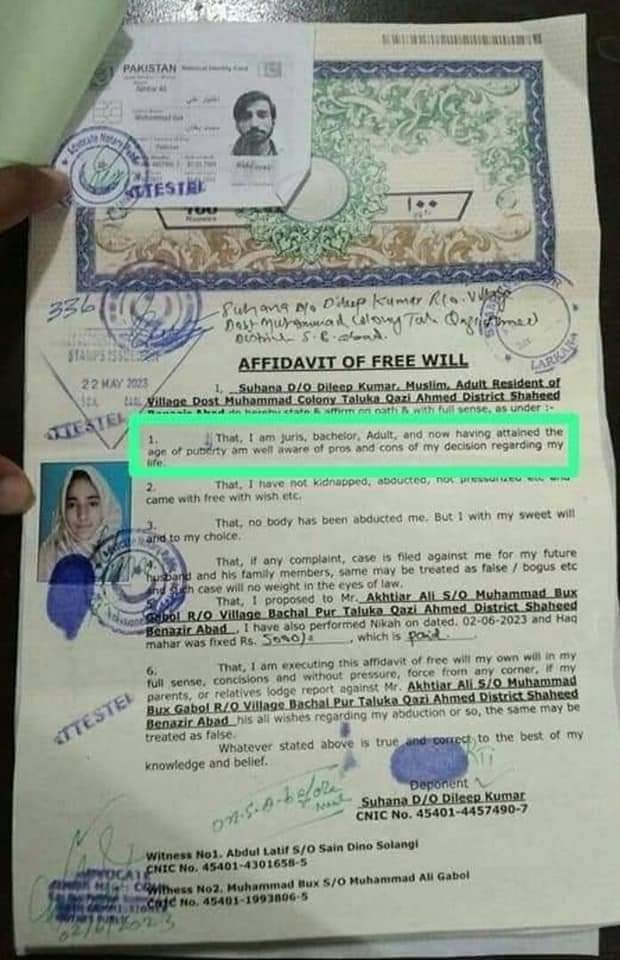
After the FIR was registered, the police assured the parents of the girl’s safe rescue. However, a document titled “Affidavit of Free Will” has emerged on social media, claiming that the girl is 18 years old and has been converted to Islam. The document bears a verification stamp dated May 22nd, 2023. The victim’s father has strongly denied these conversion claims, stating that his daughter is still below 18 years of age. He also mentioned that his own marriage has not yet completed 18 years.

The police informed the parents that the girl would be presented in Larkana Court today. Although the girl has been found, she has been forcefully converted to Islam and married to a Muslim man. A video has also been released in which the girl appears to be confessing under pressure that she converted her religion and married a Muslim man out of her own free will.

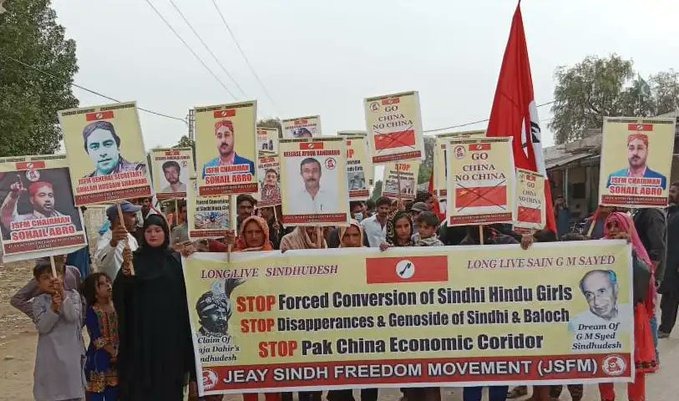
During this confession, the girl can be heard fumbling, indicating possible pressure. It is important to note that the abductors are reportedly backed by influential individuals. The cases of abduction and forced conversion of Hindu girls in Pakistan, especially in Sindh, are becoming more horrific day by day. Breaking into houses, abduction, and illicit conversion cannot be carried out without the support of a network involving Islamic clergy and the army. Unfortunately, Sindh is witnessing some of the worst violations of minority girls’ rights.

Mosque blast during the funeral of the deputy general of Afghanistan

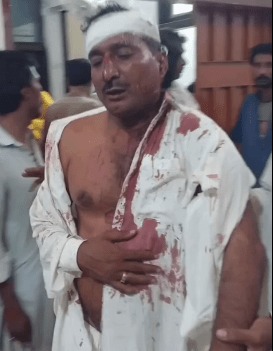
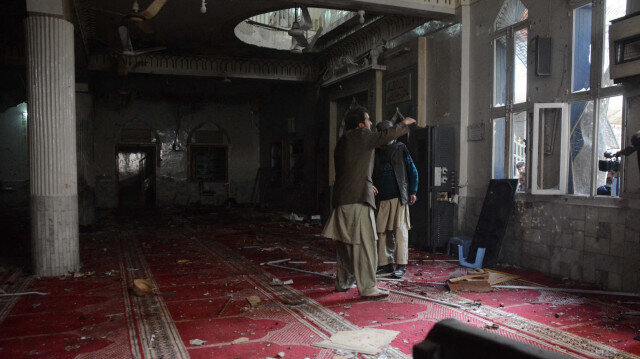
At least 15 people have been killed and 50 others injured in a mosque blast in the northern province of Afghanistan on Thursday.

The explosion occurred in Faizabad, the capital city of Badakhshan province, during Fatihah for the slain deputy governor, who had also died in a blast.

The casualty figures were confirmed by the local hospital administration, stating that the majority of the deceased and injured were brought to the medical facility. It is worth noting that the blast on Tuesday in Faizabad had resulted in the death of Maulawi Nisar Ahmad Ahmadi, the deputy governor of Badakhshan, along with six others.

A local Taliban official , Moazuddin Ahmadi  acknowledged the explosion but stated that it was unclear if there were any casualties. As of now no group has claimed responsibility for the attack. However, Daesh/ISIS has previously targeted Taliban leaders and Afghan clerics, claiming responsibility for multiple attacks in Afghanistan, including several on mosques.

UK ban on Chinese surveillance tools amidst security concerns

In an effort to address national security apprehensions associated with China, the United Kingdom has committed to removing Chinese-made surveillance equipment from sensitive government locations.

Under the leadership of Prime Minister Rishi Sunak, who considers China as the foremost challenge to security and prosperity worldwide, the government instructed its departments last year to cease the installation of Chinese-affiliated surveillance cameras at sensitive buildings. In a recent announcement outlining proposed enhancements to procurement regulations, the government stated:

“We will also pledge to publish a timeline for the elimination of surveillance equipment manufactured by companies subject to China’s National Intelligence Law from sensitive central government sites.”

By establishing this timeline, the government aims to provide reassurance and urgency regarding the removal plans. The statement did not explicitly mention any specific companies.

Concerns over privacy and the potential association of these companies’ products with human rights abuses in China have led British lawmakers to advocate for a ban on security cameras manufactured by Hikvision and Dahua, both of which are partially state-owned Chinese firms.

In response, Hikvision issued a statement asserting, “We believe that the possible action by the UK Government is a further step up of the mounting geopolitical tensions being expressed through technology bans, which by no means relates to the security of Hikvision’s products.”

Beijing has expressed firm opposition to the broadening of the national security concept to suppress Chinese enterprises. A spokesperson for the Chinese Embassy in Britain emphasized that the Chinese government consistently encourages Chinese companies to engage in international investment and cooperation in accordance with market principles, international rules, and local laws. The spokesperson urged the UK to refrain from political manipulation and to provide a fair, just, and non-discriminatory environment for the normal operations of Chinese companies in the country.

Previously, the UK barred TikTok from government phones in March of this year and announced its intention to ban Huawei from its 5G network in 2020. Similarly, certain U.S. states have implemented bans on vendors and products from various Chinese technology companies.

Pak Army abducts Baloch poet from Balochistan

Amidst the long-prevailing enforced disappearance in Balochistan by Pak Army, another young Baloch named Sakhi Baksh Baloch has been abducted from Turbat.

Sakhi Baloch, also known as Sakhi Sawar, hails from the Nal Grisha Siraj area of Khuzdar district in Balochistan. He relocated to Turbat with his family in search of better work opportunities. Sakhi, a Balochi language teacher and poet, was known to teach various students through online platforms before his disappearance.

On the evening of 5 June, he went missing after leaving his house. His family has filed a missing complaint with the police. However, it is important to note that bright and educated minds have long been victims of enforced disappearance in an effort to suppress the voice of Balochistan by the Paki Army.

Pak Army re-activates Jihadists in POJK, Kashmiri youths being abducted for Jihad

In a shocking revelation, it has come to light that a secret network of secret jihadist organizations is operating in Dhirkot, POJK (Pak occupied Jammu and Kashmir) under the nose of local authorities and agencies. Led by a commander from the jihadi outfit in Seri Bandi, this network is actively recruiting young individuals, including college and university students, for jihad and the establishment of a Sharia regime in Afghanistan. Alarming reports indicate that these individuals are being transferred to Afghanistan for training without the knowledge or consent of their parents, causing distress among families in the POJK region.

The recent incident involving the disappearance of seventeen youths from Kilis-Pachay and Chadala (POJK) has raised serious concerns. Out of the missing individuals, seven are from Kilis-Pachay, while the remaining are from Nadakot, Chadala, and Dhirkot (POJK). All of these young people are enrolled in educational institutions, highlighting the deep infiltration of the jihadist organization into academic circles.

Sources reveal that this jihadi organization has been in contact with the youths for the past two years, systematically subjecting them to blackmail. Reports suggest that a commander belonging to the jihadi organization in Union Council Chadala Seri Bandi has been persuading them to undergo training in Pakistan for the implementation of Sharia law in Afghanistan.

On 1 June under the cover of night, all the youths silently left their homes and gathered in Rawalpindi (Pakistan). Using a secret communication app and changing their mobile numbers, they departed in small groups of three and four, ultimately heading towards Balochistan. Today, it is unclear whether they have successfully crossed the border into Afghanistan or are still within Pakistani territory. Despite the efforts of local administrations in the tribal areas and Quetta, no trace of the missing youths has been found thus far.

This distressing situation raises questions about the efficiency of government institutions and law enforcement agencies in POJK and Pakistan. The failure to apprehend such a network indicates a potential support system within Pakistan for these extremist activities.

The parents are urged to pay close attention to their children’s activities, including the people they associate with, their relationships, and the environments they frequent. It is essential to identify those who may be misleading and exploiting vulnerable individuals, luring them into extremist ideologies by promising them seemingly alluring dreams.

The names of some of the missing youths include Ali Inam, Sami Tasadduq, Talha Liaqat, Waleed Sajid, Shayan Maruf, Izharul Haq, and Umar Jameel. It is crucial that the government of Azad Kashmir, the government of Pakistan, and the law enforcement agencies take immediate action to apprehend this network and ensure the safe return of the missing individuals.

The discovery of this secret jihadist network in Dhirkot serves as a grave reminder of the ongoing threat posed by extremist organizations and the pressing need for effective counterterrorism measures. Combating such networks is not only vital for the safety and security of the region but also for safeguarding the impressionable minds of the youth who may be targeted and exploited for destructive purposes.

This incident highlights the urgency with which authorities must address and dismantle such networks, while also emphasizing the importance of community vigilance and parental involvement in preventing the radicalization of vulnerable individuals.

MP school thrusts Radical Islamist practices on students

0

In a shocking revelation, it has been discovered that students in a school in Madhya Pradesh were coerced into studying Islam. Those who refused to offer namaz were subjected to brutal beatings.

A few days ago, Ganga Jamuna Higher Secondary School in Damoh district of Madhya Pradesh released a poster featuring the photos of the top-performing students. This poster sparked intense criticism on social media as it depicted Hindu and Jain topper girls wearing hijabs. The controversy escalated, leading to protests by various Hindu organizations in front of the Collector’s office, demanding strict action.

Following the public outcry, an investigation was initiated on the orders of Home Minister Narottam Mishra. During a public event, Chief Minister Shivraj Singh Chouhan himself assured the public that decisive action would be taken. Subsequent investigation revealed irregularities in the school, leading to its government recognition being revoked. While the legal proceedings are going on, again some disturbing details have emerged, pointing towards a conversion racket, as three female teachers of Ganga Jamuna H. S. School are identified as converted Muslims.

Apart from that, it is revealed that students were compelled to wear hijabs, which the school administration referred to as an optional scarf. Additionally, students were forced to offer Namaz, and those who refused were brutally beaten by the administration. In a radicalizing environment, even the National Anthem was banned and replaced with an Islamic religious poem.

Incidents like these are alarming manifestations of the philosophy of radicalization and Islamization that finds its roots in Gajhwa-e-Hind.

Taliban terrorists kill Afghanistan’s deputy governor

In a tragic incident on Tuesday, a car bomb explosion took the life of Nissar Ahmad Ahmadi, the deputy governor of Afghanistan’s northern Badakhshan province. The provincial spokesperson, Mahzudeen Ahmadi, confirmed that the deputy governor and his driver were killed, while six civilians sustained injuries. This attack marks the first known major blast or assault on a Taliban official in Afghanistan in recent weeks, leaving the authorities puzzled about the perpetrators.

The province of Badakhshan, located in the far north of Afghanistan and sharing borders with China and Tajikistan, has witnessed increasing violence in recent months. Islamic State (ISIL) has been conducting raids targeting Taliban members, retaliating against the Taliban administration’s ongoing efforts to dismantle their operations. Several major attacks orchestrated by ISIL have taken place in urban centers, including the assassination of the governor of northern Balkh province in March.

The latest incident involving the acting governor of Badakhshan comes in the wake of the region’s police chief falling victim to a similar attack claimed by an ISIL affiliate. According to officials, a suicide bomber drove a vehicle loaded with explosives into the car carrying Nisar Ahmad Ahmadi in the provincial capital of Faizabad. Muazuddin Ahmadi, the head of culture and information in the province, revealed that the governor was specifically targeted in the assault.

Although security in Afghanistan has seen some improvements since the Taliban’s return to power in August 2021, overthrowing the US-backed government after a two-decade-long conflict, ISIL continues to pose a significant threat. The group’s sectarian agenda presents a major challenge to the Taliban’s authority, and their attacks have resulted in the deaths and injuries of countless individuals, including foreign nationals and members of the Hazara minority.

While the Taliban administration has been conducting raids against ISIL members, their efforts have not completely mitigated the danger. The struggle for control and influence between the Taliban and ISIL persists, as both groups vie for power in Afghanistan. The international community remains concerned about the implications of this escalating violence, and efforts to address the situation have yielded limited progress, as highlighted in a recent international meeting on Afghanistan.

The tragic loss of the deputy governor of Badakhshan serves as a stark reminder of the ongoing security challenges faced by Afghanistan. The fight against terrorism and the establishment of stability in the country continue to be key priorities, requiring collective efforts and sustained international support.