Home Blog Page 241

Exiled Tibetans Commemorate 64th Tibetan National Uprising Day

On the 64th Tibetan National Uprising Day on Friday, members of the Tibetan Youth Congress staged a protest in front of the Chinese Embassy,New Delhi. The protestors demanded freedom of Tibet from the illegal occupation of China. The Delhi Police had put up barricades around 2 km from the embassy and imposed Section 144 of the CrPC, which prohibits the assembly of four or more people, in the area as a preventive measure. As the protestors tried to cross over the barricade to come closer to the embassy, they were arrested by the police and detained and later set free.

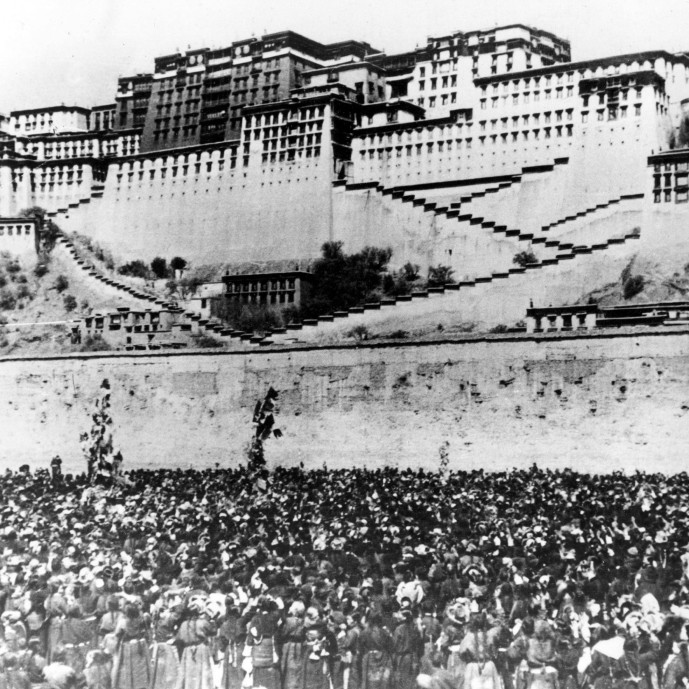
Correspondingly, a group of Tibetan refugees marched from Janpath to Jantar Mantar in New Delhi to mark the day. “Tibetans have been experiencing tumultuous challenges under China. Till now, 169 Tibetans have self-immolated themselves for the just cause of Tibet,” claimed TYC president Gonpo Dhondup. Tibetans in exile all over the world staged protests or commemorated the day in their various capacities and strongly sent a message that they want Tibet to be free at all cost and that they are longing for their homeland. These sparks of protests saw the support of many people in different countries who have been vociferous about the cause. 10 March 1959 is when thousands of Tibetans took to the streets of Lhasa, Tibet’s capital to protest against forceful Chinese occupation of Tibet. They also came together and surrounded the Potala Palace to protect the Dalai Lama as there were rumours of his assassination. The Chinese soldiers came down heavily on the protestors resulting in a clash between the two sides. The resilient protestors did not give in to Chinese brutality. Dalai Lama crossed over to India and has remained in exile since then, but several Tibetans lost their lives on this day. Since then, every year, Tibetans all over the world mark this day as the Tibetan National Uprising Day and mourn the sacrifices made by Tibetan martyrs.

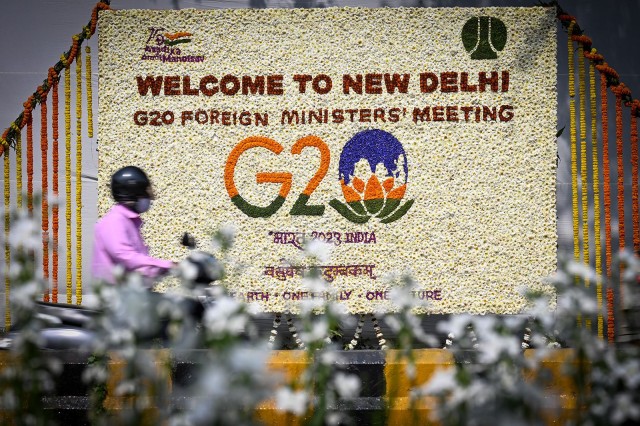
India’s Presidency of G-20  has given voice  to Global South

The Delhi G-20 FMM hosts experienced some disappointment following the failure of G-20 Finance Ministers and Central Bank Governors to come out with a joint communiqué.  Sharp differences between the Western powers and Russia-China combine had sprung over the Ukrainian conflict. They were supposedly to discuss ways to deal with falling economic growth, increasing inflation, lower demands for goods and services as well as increasing prices of food, fuel and fertilizers.

Hectic efforts of Indian diplomats did not yield a desired result at the Delhi FMM two days later to offset the fallout of the failure of Bangalore meeting.

However, notwithstanding the absence of a consensual resolution, it has to be noted that foreign ministers of the US, UK, Russia, China and France sat together face to face to present respective views on crucial issues facing the contemporary world like global warming, multilateralism, food and energy crisis, terrorism, and above all the chilling impact of the war in Ukraine. There were other high profile representatives from member countries whose views added value to the significance of the Delhi meet.

Normally, summits do not produce expeditious results because agreements have the plethora of accompanying technicalities which need to be processed in normal course. Things have to go through the mill.

 In recent years, India has been playing her cards carefully which has resulted in her enhanced visibility on international fora. Several leaders expect India to play a constructive role in reducing the severity of challenges with which the world is beset. Post-pandemic reconstruction is a formidable task before G-20.  In its capacity as the host, India had appealed for all members of the fractured Group of 20 to reach consensus on issues of particular concern to poorer countries even if the broader East-West split over Ukraine could not be resolved.  “The US Secretary of State tried to highlight the role of the US in addressing world crisis, the divide was palpable,” wrote the Mint of March 7. He demanded that Russia withdraw from Ukraine without delay.

The Indian External Affairs Minister, S Jaishankar was forthright in assessing the situation and said, “There were divergences on the issue of war in Ukraine which we could not reconcile as various parties held different views. If we had a perfect meeting of minds on all issues, it would have been a collective strengthening of multilateralism, promoting food and energy security, climate change, gender issues and counterterrorism.”

It has to be recalled that after the finance ministers’ inability to come out with a consensus resolution because China and Russia both objected to a joint communiqué that retained language on the war in Ukraine drawn directly from last year’s G-20 leaders summit declaration in Indonesia, the cloud of disappointment fell on the Delhi FMM.

AP reported that second day’s talks had begun with a video address to the audience by Prime Minister Modi. He had urged them not to allow current tensions to destroy agreements that might be reached on food and energy security, climate change and debts.  Modi said, “We all have our positions and our perspectives on how these tensions should be resolved. We should not allow issues that we cannot resolve together to come in the way of those we can. In a nod to fears that the increasingly bitter rift between the US and its allies on one side and Russian and China on the other appears likely to widen further, multilateralism is in crisis,” Prime Minister Modi said.

Before we evaluate India’s presidency of G-20, it is in fitness of things that we run through the press interview of the Indian Minister for External Affairs which he gave after the G-20 meeting. It has to be remembered that speaking at the G-20, Russian Foreign Minister Sergey Lavrov said, “It is high time to reform the UN Security Council. It is in the UN Charter that every state must adhere to the sovereignty and territorial integrity of any other state. This invasion (of Ukraine as per the West) reflects to the reaction to the war the west was preparing for many years and that is why it was arming the Ukrainian regime.”

Combining his assessment of the situation in the light of divergent opinions of two main groups, the Indian Minister for External Affairs expressed that the G-20 delegations came to an agreement on a very large number of issues including climate action, biodiversity, gender issues, new emerging technologies etc.  He said, “I want to put a percentage on how many issues there was a consensus. If we had had a perfect meeting of minds, we would have a joint communiqué. But there were divergences and these concerned the Ukraine conflict.”

Referring to foreign ministers unequivocally condemnation of terrorism, Jaishankar said, “20 Foreign Ministers urged developed countries to fulfill their financial commitments and were able to come to a consensus on the Russia-Ukraine conflict.” This is a subtle way of saying that the G-20 meeting has shown a clear divide in which the haves and have-nots have taken divergent position.

Secretary of State Blinken demanded that Moscow renew a deal to allow export of Ukrainian grain.“Russia has deliberately and systematically slowed its pace of inspections, creating a backlog of ships that could be delivering food to the world today,” Blinken said during his speech. He added that it was imperative the G-20 speak up on behalf of extending and expanding the grain initiative to strengthen food security for the most vulnerable.

It is amusing that Blinken is concerned about food difficulties of vulnerable (Europeans) but he ignores the suffering of ordinary Russians made to bear the brunt of sanctions imposed on Russia. Does Blinken think that the people he is caring for are humans and those who live in Russia are not?

 The significant take away from the FMM is that the Group of leading economies meeting in New Delhi expected the host (India) promote itself as a rising superpower while leveraging its position on the global stage to bridge the gap between the West and Russia. Experts expect India to be at the center of bitter global divisions, particularly over Russia’s war in Ukraine. But it is also an opportunity for the South Asian nation to position itself as the voice of the Global South and as a potential mediator between the West and Moscow.

In his remarks as the host of the meeting Prime Minister Modi infused the audience with a strong hope for the development and peace through the concerted efforts of G-20. His message was loud and clear. “No group can claim global leadership without listening to those most affected by its decisions. India’s G-20 Presidency has tried to give a voice to the Global South. We should not allow issues that we cannot resolve together to come in the way of those we can,” he concluded.

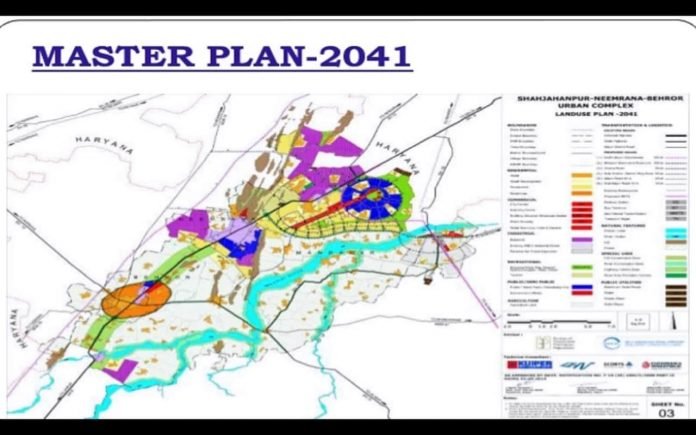
DDA Master Plan Delhi 2041 – What Changed?

Euphoria gripped the landowners and investors’ community when DDA issued the press release about the approval of the draft Delhi Master Plan 2041 on 28 Feb 2023. Finally, there seems to be a comprehensive document detailing out the vision and enabling policy framework for development of the capital of India.

Those who are keen watchers of Delhi Urbanization over the past 3 decades would heave a sigh of relief; the patchy framework and ill-coordinated efforts amongst the multiple hierarchy of governance in the city over benefitted a few unscrupulous elements. It’s no surprise that the capital of India has > 10,000 unauthorized settlements.

Let’s step back and understand what this whole document is about, it’s relevance and the reason for it being touted as a $100 billion investment opportunity.

  • Post-independence, the first master plan of Delhi was promulgated in 1962. Each master plan is drawn with a 20-year perspective and serves as the guiding document detailing specific areas of development.
  • Master plan 2021 was notified in 2007 (delayed by many years) and it continually underwent changes till 2018. Some changes were even notified / communicated in 2021. Sadly, the plan which was to end in 2021 hadn’t even started.
  • Wise sense prevailed and the current policy makers decided to create a new comprehensive document which detailed out the urbanization of the entire land parcel under NCT of Delhi; all of 1483 sq kms. Delhi would become the only state which would be 100% urbanized.
  • Delhi has different sets of challenges. In no particular order, it is the capital of the country, not bestowed full statehood, multiple hierarchies of governance, multiple interest groups of activists, courts and inept politics and administration. Master plan 2021 was a complete disaster which no single agency accountable for.
  • Since the LG-Delhi is the de facto Chairman of DDA and it does report directly to the Central Govt, the inept handling is a poor reflection of the urban development template for the capital.
  • MPD2041, the guidance document for all developmental activities till 2041, aims to course correct. The firm and brusque handling that I have seen, especially over the past year or so, dispels the notion that the Union Govt. doesn’t have ‘Intent & Ability’. The vision document is an august beginning.

What has changed?

  • To begin with, MPD2041 is a statutory document which provides a more holistic framework for planned development of large land mass. All stakeholders, including Govt. agencies would refer to the same guiding document for the common outcome of ‘planned urbanization.’
  • The policy makers admit the errors of the past and have overhauled the earlier MPD2021 to infuse some fresh thinking into the approach plan. More than cement and steel structures, the guiding document also incorporates the softer elements of urbanization, namely, health, environment, aesthetics, safety, mobility, culture etc.
  • Earlier, Delhi Development Authority (DDA) was the singular agency handling land acquisition, planning, redistribution, design, development, sales and all allied activities. To top it all, DDA also was the regulator.

In spite of the monopoly, it was neither able to meet demand nor make profits. Under this MPD2041, DDA would act as the facilitator and provider of trunk Infrastructure. The private sector would purchase the lands directly from the landowners to develop 05 sub cities and projects.

I have always advocated that the DDA policies of the past have been overtly democratic and  socialistic in approach, without accounting for the change in market dynamics and consumer preferences. DDA never raised the bar; kept applying ‘band-aid on a gunshot’. They just need to look at their peers from other ministries who have upped the benchmark of standards and delivery; be it housing, social and  physical infrastructure, business ecosystem or environment. The current team of officials lead by the Minister-MoHUA, LG-Delhi and VC-DDA have infused the sense of urgency and dynamism into MPD2041.

As the old adage goes, change happens only during the absence of (Delhi) government. That seems to have worked in this case too.

Large scale land development would primarily happen under 3 different policies, briefly detailed here below:

Land Pooling

DDA has published the zonal plans and sector plans of each zone on their website. The onus of aggregation of land, planning, submission and redistribution has been shifted to the landowners. DDA would only play the role of a facilitator. Effectively speaking, landowners would collectively appoint a consultant / consulting agencies and outsource the work. It’s very unlikely that a couple of hundred individuals can unanimously align. The valuation of monetizable land would depend on the depth of understanding and plans. Of course, the yield on investment would be healthy; only if the capital is patient and long term. Land pooling villages, numbering about 95, would evolve as high-density development. These are Greenfield projects.

Green Development Area Policy

Prima facie, this is the big-ticket opportunity for investors as many high yield projects / well-located land parcels are adjoining existing habitation of Delhi & Gurugram. GDA villages, numbering around 47, are the last peripheral village abutting the districts of Haryana. In an endeavour to create Delhi into a hub of ‘clean economies based on high-tech & service-based industries’, the plan envisages the requirement for physical and social infrastructure like IT Parks, R&D hubs, convention and exhibitions, higher education, recreational spaces, etc. Of course, high end living through farmhouses are permitted.

The GDA policy would provide an opportunity to create ‘integrated low density development’. Largely greenfield and brownfield developments would take place in the 70 villages of Delhi, including LDRA villages of South Delhi, which are already habited.

Urban Regeneration

Many areas existing in Delhi are old and require immediate attention; be it retro-fitting of services or redevelopment. The distribution of density isn’t equitable and many areas would have to be re-densified. Also important are the unplanned unauthorized colonies, urban villages and non-conforming industrial and godown clusters which needs to be integrated to the mainstream infrastructure. That’s a gargantuan task in itself.

All of the above need infusion of private sector expertise, capital and management bandwidth, since government and govt. agencies have limitations and that exactly is the opportunity too. Proof of the pudding is in the eating and let’s wait to watch DDA walk their talk!

Pulwama breaks out in protest as terrorists defile mosques to perpetrate terror activities

The saying that terrorists have no religion was once again proven right last Tuesday when two terrorists violated the sanctity of Jamia Masjid in Padgampora village of South Kashmir’s Pulwama district by not only hiding inside but even attacking security forces from within the mosque. While the news that the mosque suffered no structural damage in the exchange of fire between security forces and the holed-up terrorists is comforting, the fact that the terrorist duo intentionally defiled the sanctity of the mosque is extremely disconcerting for a number of reasons.

Firstly, armed terrorists using a mosque as a safe sanctuary just to save their lives goes against religious edicts and as such naturally offends the sensitivities of believers. Secondly, exploiting the fact that security forces would be restrained in returning fire or entering a mosque as it could cause damage to this holy place of worship is a despicable act without any religious sanction or moral justification. Lastly, and most importantly, using the inherent security of the mosque precincts to target security force personnel is an unpardonable act of extreme depravity.

From the information available, it emerges that two terrorists had taken refuge in the mosque to avoid apprehension by the security forces who had specific information regarding their presence. Having surrounded the area, the security forces asked the terrorists to surrender. But instead of doing so, they opened indiscriminate fire injuring two soldiers [one of whom subsequently succumbed to his injuries]. Displaying extraordinary courage and perseverance, the security forces managed to successfully extricate the worshippers before neutralising the terrorist.The slain terrorist was identified as the one who had murdered an unarmed 40-year-old local belonging to the minority community two days ago. 

While the encounter was raging, the second terrorist managed to jump out of the mosque window and hide himself in the toilet of an adjacent house, where he met his end. That the mosque didn’t suffer any damage and there were no injuries to civilians bears testimony to the consummate professionalism and genuine concern for civilian safety, which is the hallmark of the security forces.

The security forces deserve full credit for tracking down and neutralising the murderer of a minority community member within 48 hours of the grisly crime. At the same time the public’s rejection of terrorism too merits due appreciation, as it’s obvious that locals had provided information to the security forces regarding the exact whereabouts of the terrorist who had murdered the minority community member. The perceptible mutual trust that exists between the security forces and terrorism-weary people of Kashmir is a positive sign that will certainly go a long way in defeating the proxy war being waged by Pakistan!

This isn’t the first time that terrorists have tried to hide in a mosque. In March 2000, security forces neutralised three Lashkar-e-Taiba [LeT] terrorists who had taken refuge in Dodhipora mosque located in the outskirts of Handwara in North Kashmir’s Kupwara district. In April 2006, a Hizbul Mujahideen [HM] terrorist seized a mosque in Akoora village of South Kashmir’s Anantnag district for about four hours before he was slain by security forces.

Just a year later, two HM terrorists holed up in a mosque in Tujan village of Central Kashmir were neutralised by the security forces. In 2009, three LeT terrorists who were being chased by the security forces in the mountainous Keshwan area in Kishtwar district, barged into a mosque and battled the security forces from there till they were finally eliminated. Even though desecration of mosques by terrorists was never appreciated by locals, fear of retribution sealed their lips.

However, thanks to successful anti-terrorist operations being conducted jointly by the security forces alongwith J&K local police, and supplemented by active public participation, terrorists are now on the backfoot. The improved security situation has enabled the people of Kashmir to publicly give vent to their feelings against terrorist excesses and this is exactly what happened after the Potgampora mosque encounter.

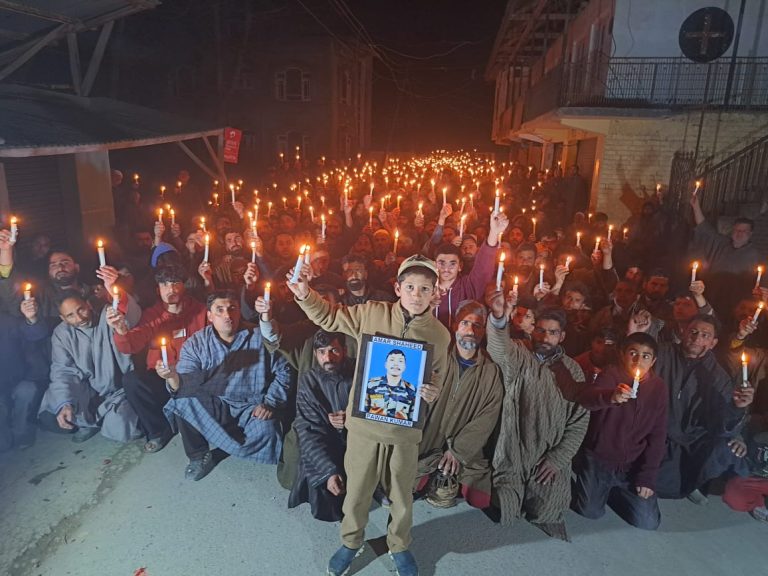
Hundreds of Pulwama residents took out a long candlelight march on Friday late night to protest the defiling of Potgampora mosque by terrorists. On the other hand, the All Parties Hurriyat Conference [APHC] has maintained a stoic silence on the sacrilegious act of terrorists barging into a mosque and turning its sacred precincts into a battle ground. Since APHC leader Umar Farook is also the Mirwaiz [chief priest] of Kashmir, his failure to condemn this blatantly sacrilegious incident is particularly disturbing.

However, this isn’t the first time that the Mirwaiz has failed to condemn violence occurring in and around places of worship. Readers would recall that in 2017, a mob lynched Deputy Superintendent of Police Mohammad Ayoub Pandit just outside Srinagar’s Jamia Masjid. This tragic incident occurred when Shab-e-Qadar [a holy night on which worshippers are blessed, their sins are forgiven and supplications accepted] was being celebrated even as Mirwaiz Umar Farook was giving a sermon inside the mosque.

While he may not have been involved in this dreadful incident, but since it was perpetrated by a group of people that had just exited from the Jamia Masjid where he was leading prayers, one had expected the Mirwaiz to have at least condemned the killing of a Kashmiri by Kashmiris on such a pious occasion when believers seek forgiveness. But leave alone condemnation, the Mirwaiz didn’t even consider it necessary to offer condolences to the deceased police officer’s bereaved family. 

So much so for one who heads APHC and professes to be a “true representative” [emphasis added] of Kashmiris!     

‘Census in POKJ is a plan to perpetuate occupation’, Jammu and Kashmir People’s National Party

People of POJK continue to protest against the census in Pakistan-occupied Kashmir. According to the spokesman of the Jammu and Kashmir People’s National Party, it is the duty of every citizen to reject the census as a son of the earth.

In a press conference, the organizing committee members of the Jammu and Kashmir People’s National Party, said that “the current census is a plan to perpetuate the occupation, which we reject.Being a child of the soil, it is the duty of every citizen to reject this census. The erasure of identity is a link in the chain of perpetuation of occupation. The Jammu and Kashmir People’s National Party condemns and rejects these tactics of occupation”.

Pak Army raids village in POB, abducts four Baloch

Pakistani Army has increased it’s enforced disappearances of Baloch people. Four more Baloch have become victims of state aggression. They have been forcibly disappeared during an offensive by the Pakistani Army in Kharan area of occupied Balochistan.

The operation was carried out in the village of Bengalzai of Kharan. According to local sources, at around two o’clock, the forces launched a military offensive in the area of ​​Kali Bengalzai of Kharan and started a search operation in the entire area. During the house-to-house search, four persons were arrested. They have been transferred to an unknown location.

The missing persons have been identified as Attaullah Banglazai son of Ali Mohammad Banglazai, Ghulam Mohammad Banglazai son of Ali Mohammad, Amir Hamza Banglazai son of Naseer Ahmed Banglazai and Amanullah Banglazai son of Naseer Ahmed Banglazai.The Pak Army time and again conduct military operations. Whenever, they conduct military operations human rights are brazenly flaunted, raiding houses, setting up random check posts in different areas and forcibly kidnapping the locals.

Another Hindu temple vandalised by Khalistani goons in Australia

Yet another Hindu temple in Australia has been targeted by Khalistani goons, just ahead of Australian Prime Minister Anthony Albanese’s visit to India next week.

The Shree Laxmi Narayan Mandir in Brisbane was targeted on Friday night with the vidoes and photographs of the temple vandalisation going viral on social media.Temple President Satinder Shukla told The Australia Today that priest and devotees called this morning and notified him about the vandalism on the boundary wall of the temple.

“I am aware of what has happened at Melbourne Hindu Temples, but facing this hate ourselves is a very distressing experience,” Ramesh Kumar, a resident of the area, told the leading Australian daily.“This latest hate crime is a pattern of Sikhs For Justice (SFJ) globally, clearly attempting to terrorise Australian Hindus. Coupled with a barrage of propaganda, illegal signs, and cyberbullying, the organisation intends to present all-pervasive threats, fear, and intimidation,” added Sarah Gates who is the Director of Hindu Human Rights.

Khalistani had attacked the Indian Consulate in Brisbane on February 21 and hoisted a so-called Khalistan flag on the premises.Honorary Consul of India in Brisbane Archana Singh immediately notified the Queensland Police, which on arrival confiscated the flag and swept the Honorary Consulate of India to clear of any immediate threat.Previously, Shri Shiva Vishnu Temple in Carrum Downs and BAPS Swaminarayan Mandir in Mill Park were smeared with hate messages against Hindus and India.

The spate of attacks on Hindu temples had triggered widespread concerns with no end to Hinduphobia in the country.

(This article was first published in India Narrative)

Mahal Baloch presented in court, handed over to CTD on further remand

Mahal Baloch, a Baloch woman who had disappeared from Quetta, the capital of Occupied Balochistan on 18 February and was later arrested by CTD, was presented in the Main Sessions Court.She was presented in an emaciated condition.On the request of Police CTD, the court ordered for additional 10 days of physical remand. In the meantime, the family can visit her every 3 days in police custody.It should be noted that last month Mahal Baloch was abducted by the Pakistani forces in a raid at her house from Quetta. Later, after a strong reaction from the public, the forces revealed the arrest of Mahal Baloch by CDT.
On the forced disappearance of Mahal Baloch, political activists living in other countries, including Balochistan, are expressing outrage over the incident. Demonstrations have also been held in Germany and the Netherlands, including Balochistan.

Pakistani regime abducts 3 Baloch from Quetta

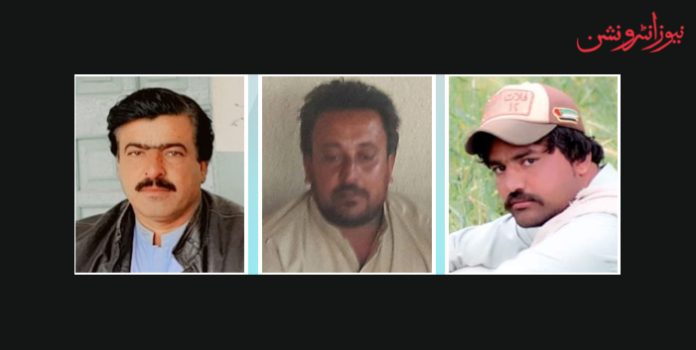
Three youths have been forcibly disappeared from Quetta, the capital of Occupied Balochistan and from Kech district.

On Wednesday, a resident student of Nawan village from Quetta did not return from home for school.His family and relatives along with the local residents, tribal leaders and elders Muhammad Naeem Khan Khalji, Noor Khan Khalji, Muhammad Sharif Khalji, Muhammad Yar Khalji under the leadership of Wazir Khan Khalji, protested by blocking the airport road.

The police and the administration assured the protestors that information will be given regarding the full details of the youth within 48 hours.SP Airport Adeel Akbar Gujjar and AC City held talks with the protestors.

On the other hand, Pakistani forces have forcibly disappeared two people from Kech district and transferred them to an unknown location.The missing youths have been identified as Waju son of Wahab and Hasim son of Shafi Muhammad. They have been detained by the forces while they were on their way to Guam.

According to the sources, the two mentioned youths are close relatives and associated with oil business and and they were detained when they were going to the owner to collect money.

‘You alone can kill an individual, but you cannot kill an ideology, you cannot kill great empires’, Mama Qadeer

In Karachi, the capital of Sindh, the protest hunger strike camp of the Baloch missing persons and the families of the martyrs has been going on for 13 years.Provincial convener of National Democrat Movement Karachi Sher Muhammad Baloch, organizer of Solidarity Committee Karachi Amina Baloch and others came to the camp and expressed their solidarity.

Mama Qadeer Baloch, Vice Chairman of VBMP, said that “the Baloch used to protest on behalf of the people, emphasizing on the historical truth that you alone can kill an individual, but you cannot kill an ideology, you cannot kill an ideal, you cannot kill great empires. Gone, but ideas, thoughts, ideas are alive”. He further said that these groups exploiting the people are armed with all kinds of weapons of bloodshed and destruction. They stifle the voice that challenges them. “It is our belief that the imperialist system is the name of an organized conspiracy designed to loot and plunder”, he said.

Mama Qadir said that imperialism is the exploitation of human beings by human beings. Imperial forces do not only kill and loot through the judiciary to fulfill their goals, but they also commit large-scale bloodless looting and war. As a series of heinous crimes, they have no qualms in firing on innocent and suspecting people who refuse to bow down to their goals of exploitation and looting. They are killing innocent people and committing all the crimes that are ghastly.Mama Qadeer Baloch has been protesting against the disappearance of innocent people Balochistan from the platform of Voice for Baloch Missing Persons (VBMP) for more than a decade.