Home Blog Page 251

We need to act according to changed scenario in the region: Dr Naseem Baloch

The situation in the region has changed, we have to make decisions according to the situation – Dr. Naseem Baloch

Baloch National Movement Chairman Dr. Naseem Baloch while addressing the second central committee meeting of the party for the running term said that after the Ziarat tragedy, public resistance against state atrocities has increased in tandem with an increase in Pakistan’s aggression.  He said, “There have been significant changes in the region’s situation and Pakistan’s economy is in a state of crisis. Under these conditions, we have to take decisions in line with the situation at the level of our organization and movement”. 

He opined that the economy of Pakistan is on the brink of collapse as one sees that there is a  decline in the value of rupees against dollars. This has resulted in a lack of dollars which is used to pay its dues and hence has badly impacted various sectors of the state of Pakistan. He further said that Pakistan in order to get out of this crisis aims to use Baloch resources and hence it was imperative that they take important decisions to avert the exploitation of national wealth.

In the latter of his address, Dr. Naseem Baloch expressed his concern over the increasing trend of suicide in Balochistan and said that people were committing suicide in large numbers due to the situation in Balochistan. Many people in Balochistan suffer mentally and that Balochistan lacks medical facilities. He said that according to international standards, having one psychiatrist for every thousand people is mandatory, while in Balochistan there is not even one available for hundred thousand people. There are three or four doctors in the whole of Balochistan, one of whom is sitting in Turbat and the rest are sitting in a Shaal, to which the public have no access. He added, “We should play a role by assessing our resources and capacity to conduct awareness campaigns. Youth should not end their lives to get rid of their temporary sorrows. Our sorrows and difficulties are transient and will surely pass away”.

He saiD, “Leaders of FBM and BRP have given us positive responses for the collaboration on which we will further improve our contacts. Similarly, we should work together with the Pashtun and Sindhi nationalist parties. So that the world can see that Baloch and other nations are victims of Pakistan’s state oppression”.

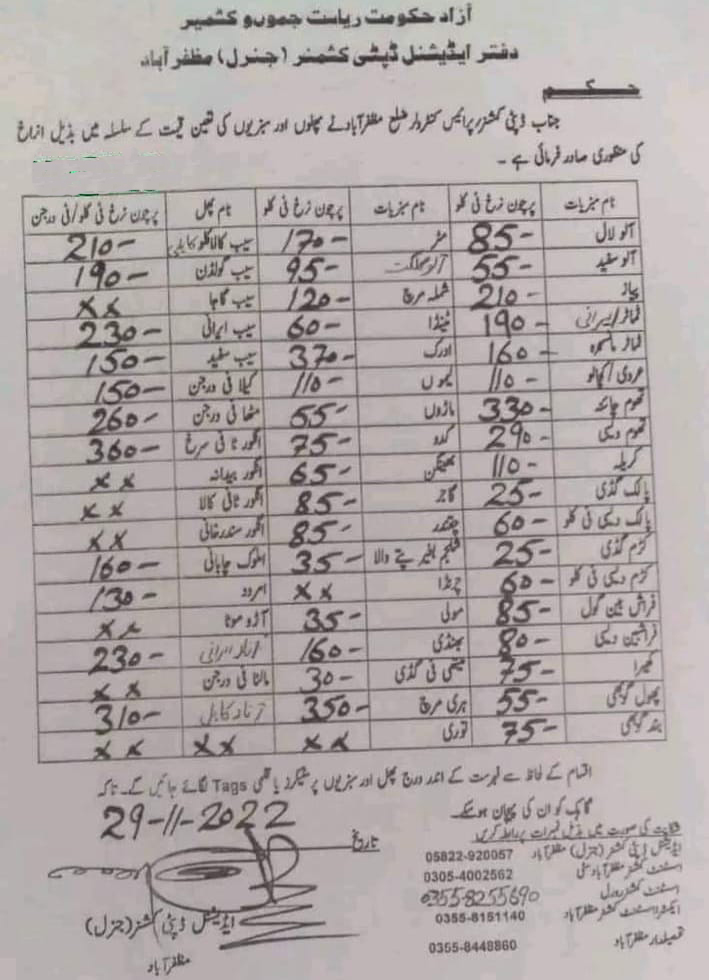
Food price much higher in POK than in Indian Kashmir

British created Pakistan after India’s independence as a proxy state for themselves in the subcontinent. Through the creation Islamic Pakistan the British intended to show the world that this Islamic extremist state has brought peace and tranquillity to the entire subcontinent and thus to the world. Alas, all this has proved to be a blatant lie.

The state of Jammu and Kashmir was invaded by the Pakistan Army and Kashmiris were mercilessly butchered. The Pakistan Army-backed tribal invaders slaughtered Muslim Kashmiris and turned Jammu & Kashmir into a graveyard forcing the then Maharaja Hari Singh to seek help from India to protect his subjects. India did come to protect Kashmir and the Kashmiris yet international powers stopped Indian forces to completely drive away Pakistan Army from Jammu & Kashmir. As a result Pakistan continues to illegally occupy vast tracts of the erstwhile princely state. Even as the development activities have been happening at a steady pace in Indian Kashmir the Pakistan-occupied Kashmir (POK) and Gilgit-Baltistan have continued to be exploited by the Pakistani regime.

Kashmiris in POK are still deprived of the basic necessities of life. Even though hydroelectricity is generated in POK yet the POK Kashmiris are deprived from electricity produced on their soil as the electricity is transmitted to Pakistani Panjab.

The price difference of essential food items in Pakistan-occupied Kashmir (POK) and Indian Kashmir is jaw dropping. For example, potatoes in POK is around Rs. 60 per kg whereas in the Indian Kashmir it is available at around Rs. 16. Even if the exchange rate is taken into account yet the price of all goods (on purchasing power parity basis) in this so-called “Azad Kashmir” (POK) is 200% higher than those available on the Indian side of Kashmir (see chart below).

Pakistan’s Islamic fanaticism has forced people to starve and commit suicide, while Pakistani politicians and military officers are getting richer and richer.

POK food prices

Today, the people of Jammu and Kashmir are unable to eat two square meals a day due to extremely high price of flour, sugar, electricity and other essential goods. Kashmiris are protesting across Pakistan-occupied Kashmir and in each demonstration they are asking that they be given the right to live.

Pak’s dream to have Taliban-controlled Afghanistan as its backyard is shattered

For disinterested political commentators, there is no surprise in Afghan Taliban turning their guns against the Pakistanis. Even during their battles against the Americans, the Taliban knew that Pakistan authorities were playing game. They never trusted them. Pakistani strategists always said they wanted space westward (towards Afghanistan border) because they feared India could at any time route them on their western front.

Seeking strategic space westward meant adopting one of the two options; either befriend the Afghans and make them collaborators against India or let Afghan Taliban win the war against the Americans and then impose hegemony on them.

India’s far-sighted policy in Afghanistan, essentially based on contributing robustly to the building of its vital infrastructure, has helped in building a strong pro-India constituency in that country. The Taliban did not forget it even when they were engaged in grim battles against the foreign forces.

Islamabad policy planners were gleeful when in the aftermath of re-capture of Kabul last year, India withdrew its embassy and halted work on many projects underway in various parts of Afghanistan.

Pakistan policy planners interpreted the political scenario as permanent departure of India from Afghanistan. They thought the expected vacuum had happened and now they had no hindrance in projecting their hegemony over the Afghan nation.

Lt Gen Faiz Hameed, the then ISI chief suddenly landed in Kabul one afternoon without announcing his mission. He played  the role of a mediator to bring about some understanding among the opposing factions of the Taliban over the issue of distribution of portfolios. He was able to make the Haqqani faction, a known protégé of ISI, accept the interior ministry portfolio.

In the days immediately following recapture of Kabul by the Taliban, Pakistan persistently implored the Taliban and even brought pressures via Haqqani group to efface all traces of Indian influence including putting a stop to all developmental works undertaken by Indian companies. They were gleeful about India’s total departure from Afghanistan.

But the Taliban Afghan knew what they had to do without giving any impression to the Pakistanis. The gleeful Pakistanis singing songs of religious fraternity with the Afghans, hardly knew how deep India’s influence was within the Afghan society. The Afghan Taliban leadership that had deep connections with India and had never broken these, was in constant contact with Indian friends.

When India declared she would send fifty thousand tons of wheat by way of gift to Afghanistan, Pakistan objected to overland transportation of the wheat. She was more inclined to perpetuate animosity with India than help overcome starvation of people in Afghanistan. The Afghan foreign minister Mulla Muttaqi had to come down to Pakistan to plead with Pakistani authorities to allow Indian wheat to be carried across Pakistan to Afghanistan. Pakistan delayed the decision and very reluctantly allowed the wheat trucks to move on. The Afghan Taliban could distinguish between a friend and a foe.

Kudos to the planners at India’s ministry of external affairs who decided to maintain normal relations with the Taliban despite bitter enmity from Pakistanis. India also sent about 15 tons of essential medicines which the Taliban government needed urgently. This was also a gift.

India opened the doors of her educational/professional institutes on Afghan students. India opened the doors of her hospitals with superior facilities for the needy Afghan migrants or refugees. India reopened negotiations with Tehran to restart work on Chabahar–Kabul road link. The Taliban government appealed to India to reopen her embassy in Kabul and committed full security to the Indian staff and only recently Kabul asked India to resume work on incomplete projects India had begun.

On the other side of the picture, Pakistani border security force obstructed the Taliban from conducting survey of the border line. They tried to fence the unfenced part of the Durand Line but the Taliban obstructed and said they never accepted the Durand Line. Pakistani Rangers tried to make a show of muscle power and when the Taliban retaliated, the Pakistanis ran for shelter.

Intermittent and unprovoked firing and shelling across the Pakistan-Afghanistan border has been the scenario for the last six months. Firing has resulted in casualties. Only three days back, there has been heavy firing by mortar and other arms across the Chaman border between the two sides. There was a attack on the Pakistani Consulate in Kabul. Islamabad summoned the Afghan envoy in Islamabad and handed him a note of protest.

The recent firing along Chaman border was of the level that Pakistan had to evacuate the civilian population living close to the border and declare border emergency. Chaman is an important border check post and a trading route across the border. It had to be closed for some time.

Pakistani leaders have been spitting fire on how the Taliban are treating Pakistan. They say that they made all the sacrifices for the Taliban because the Taliban are their co-religionists but the Taliban did not care a fig for it.

These developments will open the eyes of Pakistani leaders to the harsh but true reality that religion is not a binding force for the communities. The Islamic doctrine that there is only the Islamic ummah and no national territories has been disproved by the momentum of history. Bangladesh separated from Western Pakistan, Baloch are up in arms to separate from Pakistan and TTP has pledged not to rest till Pakistan is dismembered. Where is the Islamic ummah and fraternity?

Taliban are making recurrent attacks on the so-called Afghanistan-Pakistan border. Islamabad will never tell the people of Pakistan the real reason of Afghan aggression. Yes it is aggression, but a rightful aggression. The Afghans on both sides of the arbitrary boundary line never accepted the Durand Line drawn by the British Colonialists. They say the line divides thousands of Pashtun families and they will never allow it. This is also the stand of TTP. Islamabad wants to perpetuate the Durand Line for its political objectives.

Now that Pakistan’s perfidy against the Taliban has boomeranged and the Taliban have sent a clear signal to Islamabad that they will demolish the Durand Line, Pakistanis finding themselves against the wall have begun the old game of blaming India for everything that is happening on Afghan-Pakistan border. They are accusing India for supporting not only the TTP but also the Baloch freedom fighters.

Pakistan is not prepared to look inside and find out what they have done to their country by creating, sponsoring and abetting terrorism on their soil.

A new scenario is about to appear in Pakistan in near future. Like the Afghan Taliban, the extremist jihadi terrorist groups which Pakistan Army has raised on its soil will follow in the footsteps of Taliban and turn their guns against the Pak Army and the pro-military civilian government. This process has already begun in PoK and Gilgit-Baltistan. In a recent meeting of the Pakistani Prime Minister in Muzaffarabad, the PoK Prime Minister did not allow Shahbaz Sharif to complete his speech. He was forced to stop half way and leave the stage in disgust. Massive demonstration all over PoK including Gilgit-Baltistan have sent clear signals to the Chinese that their projects running through PoK territory are unsafe and will not be allowed to be completed. China is upset by the stiff warning of Indian Defence Minister Rajnath Singh that PoK is part of India and shall remain so. Indian army commanders say they are ready to implement the unanimous resolution of the Indian Parliament of taking back the part of J&K illegally occupied by Pakistan. Naturally, India will also take into account the support of Kabul in effacing the arbitrary Duran Line.

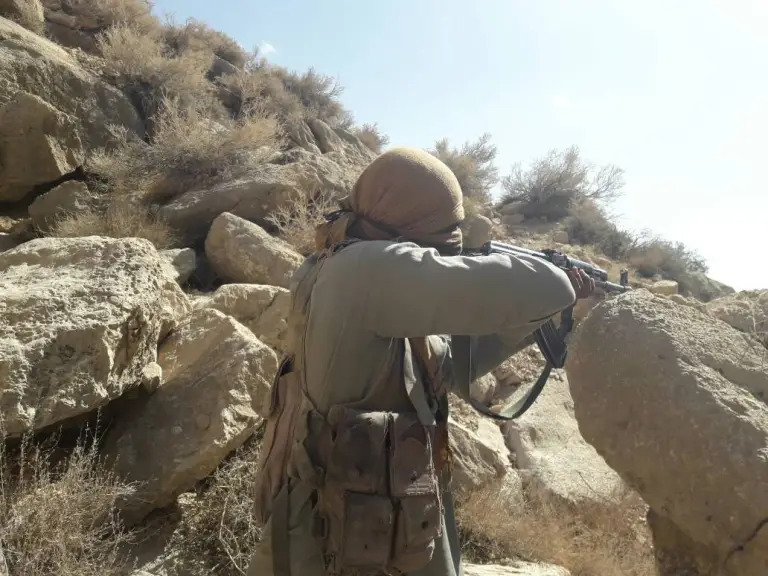
BLA kills ISI agents in Pak-occupied Balochistan

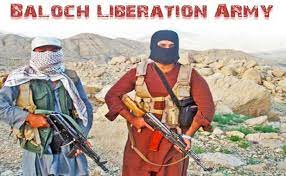
The Baloch Liberation Army targeted personnel of Pakistani secretive agencies in Noshki and Bulaida. An enemy personnel was killed and three were injured in these attacks.

In Noshki, BLA freedom fighters targeted and eliminated Agha Wali, a local agent of Pakistani occupying forces. Agha Wali was working for Pakisan’s ISI as an informant. He was using his shop as a secret base for ISI.

Agha Wali was involved in several crimes including coercing and blackmailing young girls and boys to recruit them for Pakistan’s secretive agencies. He was aiding Pakistani occupying forces in forcible disappearances of Baloch youth. He was also harassing the family members of Baloch martyrs.

For committing national treason, Agha Wali was on the hit list of Baloch Liberation Army. He was eliminated in Noshki for his heinous crimes.

In another attack, freedom fighters of BLA targeted a secret hideout of Pakistani secretive agents in Menaz, Bulaida. The attack was carried out on credible information regarding presence of Pakistani agents. Three enemy personnel were injured in this attack.

“BLA commits to continue to target Pakistani military and its secretive agents until the liberation of Balochistan”, said Jeeyand Baloch,spokesperson for the Baloch Liberation Army.

BLF kills 7 Pak Army soldiers in Pak-occupied Balochistan

The spokesperson of Balochistan Liberation Front, Major Gwahram Baloch, said that seven personnel of the Pakistani Army have been shot dead and their weapons confiscated.

BLF spokesman further confirmed that Sarmachaars attacked a convoy of trucks carrying rations of the Pakistani army in Kandasol area of Gwadar with heavy weapons, killing three army personnel in one of the trucks. After confiscating their weapons, the Sarmachaars set fire to the truck of the enemy army. Another vehicle in this convoy was also targeted in which three personnel were killed and the driver managed to escape with injuries. They said that the video of the attack would be published soon.

He further said that on 25 October, Sarmachaars had planted a landmine in Kandasol, Kumb area of Gwadar when the enemy forces were busy in barbarism in the area. The Sarmachaars went to inspect the area and found the shoes of a Pakistani army officer and traces of blood which confirmed the death of an army after being hit by it.

He said that the attacks on the occupying forces would continue until the independence of occupied Balochistan.

Corrupt Pakistan Army continues to loot Pakistan

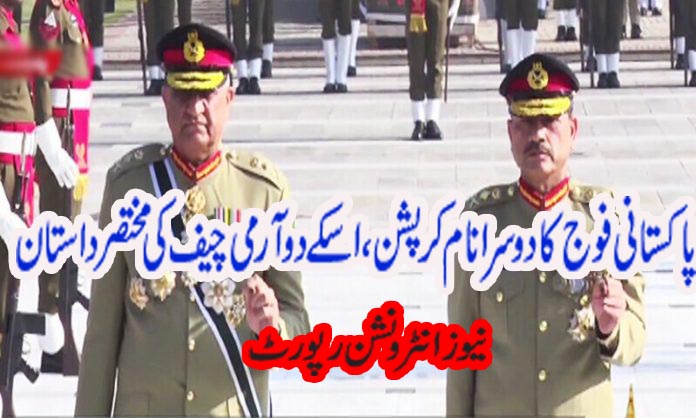
Corruption is the defining characteristic of Pakistan Army. From the lower ranked soldier to the star-studded general, everyone in the Pakistan Army is blatantly corrupt. Each uniformed man in the Pakistan Army mints money in proportion to his rank and position. A soldier or havaldar extorts a couple of hundred rupees at the check post, mid ranked soldiers make lakhs of rupees while the higher ranked officers extort crores of rupees.

So deep rooted and systematic is the corruption in the Pakistan Army that each and every chief and his coterie rakes in billions of dollars before retirement (read ousted from office). All Pakistan Army chiefs from Field Marshal Ayub Khan to the current chief General Asim Munir each have made billions of dollars. Apart from the money these generals also own multiple properties across the world. Gen Pervez Musharraf, General Kayani, General Raheel Sharif, General Qamar Javed Bajwa and General Asim Munir own several assets on the foreign land. 

Even before the current Chief of Army Staff General Asim Munir could take charge there were allegations on him that he was blatantly extorting money from the CEO of Master Tiles.

News Intervention broke this news June 10, 2021. Here is the full report published in News Intervention.

In yet another case of blatant corruption by a Pakistan Army officer the Core Commander of Gujranwala Lieutenant General Asim Munir demanded Rs. 90 crore extortion money from the chief executive officer of Master Tiles, one of the largest companies of Pakistan that employs several thousand people.

Lt. Gen. Asim Munir had earlier held the plum positions of DG ISI (Inter-Services Intelligence) and DG Military Intelligence.

Last year in February, the Supreme Court of Pakistan had castigated ISI for its the inept handling of the 2017 Faizabad sit-in that catapulted the hitherto unknown Tehreek-e-Labbaik Pakistan (TLP) to limelight across Pakistan. Lt Gen. Asim Munir was the director general of ISI at the time of this judgement. Ironically, Maj Gen. Faiz Hameed who was the deputy of Lt Gen Asim Munir at ISI and in charge of ISI’s internal security wing also faced heat in this judgement but was promoted as Lieutenant General and took over the reins of ISI from Asim Munir.

Lt. Gen Asim Munir was unceremoniously shunted out from the plum job of ISI’s director general and had to move on as the Corps Commander of Gujranwala, thereby earning the dubious distinction of being ISI chief for the shortest period of time. Asim Munir is now nearing his retirement and in order to make a quick buck like other Pak Army officers he contacted Sheikh Mahmood Iqbal, the chief executive officer of Master Tiles, and demanded ninety crore rupees.

Aghast at this blatant demand of extortion from the Corps Commander of Gujranwala, Sheikh Mahmood Iqbal, CEO Master Tiles wrote a letter to Prime Minister Imran Khan Niazi, dated June 5, 2021, describing all the details of his meeting with Lt Gen Asim Munir and his subsequent demand of Rs 90 crore extortion money.

“Lt Gen Asim Munir sent a message to me by a staff member Colonel Ehtesham last Thursday morning that he wanted to have lunch with me. I left a meeting with Japanese importers and went to the cantonment to meet him (Asim Munir). I was offered good food, salmon fish cooked with broccoli and olive oil, among other delicacies. As we sipped black coffee with luxurious Cuban cigars Lt Gen Asim Munir said that he had found out that the executive range of our bathroom tiles was being smuggled to the Central Asian nations of Tajikistan and Uzbekistan through the Wakhan corridor in Afghanistan. He then said that billions of rupees was being lost in the form of taxes to the national treasury. Of course, all of this was a conspiracy to trap me,” wrote Sheikh Mahmood Iqbal, CEO of Master Tiles in his letter letter to Prime Minister Imran Khan Niazi.

“… they seized two of our company trucks from Peshawar at the Afghan border… this seizure was carried out in a similar fashion like the anti-narcotics force grabbed fake 20 kg heroin from Rana Sanaullah’s car, who is a leader of the Pakistan Muslim League (Noon). Asim Munir told me that in politics, business and espionage operations, perception is more important than reality, and if a perception gets etched into people’s mind that Master Tiles is involved in smuggling then our share price would tumble at the stock markets. I asked Lt Gen Asim Munir in a trembling voice as to what did he want from me. It was then the vileness of the whole world came to his little dirty eyes,” said Sheikh Mahmood Iqbal in his letter to PM Imran Khan.

“Lt Gen Asim Munir said that he wanted five million seven hundred thousand dollars which is equivalent to ninety crore rupees in Pakistani currency. Asim said that if I transfer the money to his Macau bank account then he would help me smuggle tiles to Central Asia as the Core Commander Peshawar has been his batchmate and roommate…,” explained Sheikh Mahmood Iqbal in his letter.

“…if at all, in order to save my business, I agree to give this kind of money to Lt Gen Munir, yet how long can we feed these fauji snakeletsAsim. They trample the constitution every time. Sometimes they torture journalists Asad Ali and Matiullah Jan, at other times through Papa Jones they set up a business empire funded by smuggling on the Pak-Iran border. I request you to help me with this issue, otherwise I will shift my whole business setup to Dhaka. But then you will have to manage one crore five thousand jobless people in Pakistan. After this incident, I have understood that a man loves his self-esteem more than his homeland. The vile Satanism and arrogance of power in these ugly eyes is unbearable. Sometimes when I am asleep, this anger wakes me up at night and I have to take water with aspirin,” said Sheikh Mahmood Iqbal, CEO Master Tiles in his letter to Imran Khan Niazi.

History of the Pakistan Army is full of such corruption cases. Recently, many cases of enforced disappearances by the Pakistan Army came to light in occupied Balochistan in which the Pakistan Army officers demanded money from the Baloch family members whose sons and daughters were abducted by Pakistani security forces. Several Baloch were forced to offer their land to Paki officers while others gave exorbitant amounts of money, However, only a couple of Baloch were released while the mutilated bodies of the rest were found in different areas of Balochistan. 

A few days ago, the records of former army chief General Bajwa’s billions of corruption were revealed, in which how he and his family made these assets.

How General Bajwa suddenly became a billionaire during his tenure as Pakistan Army chief from November 2016 to November 2022. News Intervention has published several reports (English and Urdu) as to how General Bajwa, his wife, children and other relatives accumulated properties in foreign lands. 

Sindhis want freedom from Pakistan

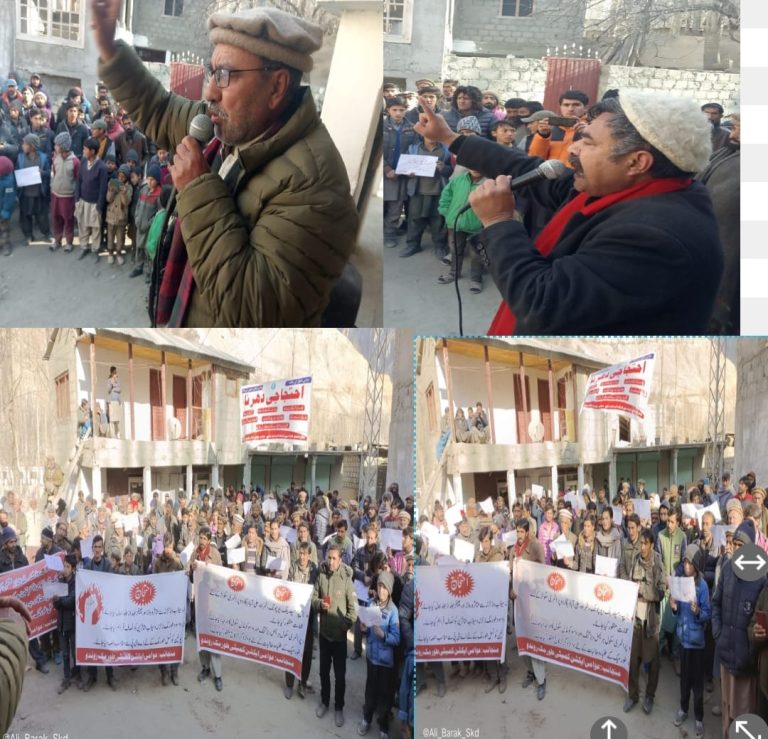
Sindhis celebrate the fourth day of December as their national cultural day. This year the Sindhis marked National Sindhi Cultural Day by demands of freedom from the oppressive Pakistani regime. Sindhis shouting slogans for a Free Sindh were seen in Karachi and in the interiors of Sindh.

Participants wore Sindhi cultural dresses with Sindhi Ajrak and cap. They carried banners with Sindh’s national symbol axe and the national flag of Sindhudesh was also hoisted at several places in these rallies. Slogans were raised for the removal of illegal refugees in Sindh and the recovery and freedom of Sindhi and Baloch national workers.

Jeay Sindh Freedom Movement (JSFM) and several other Sindhi organisations participated in the cultural rallies on December 4. A large number of JSFM workers participated in the rally taken out from Shahrah Faisal Karachi to Karachi Press Club. JSFM’s rally started from Shahrah-e-Faisal and reached the Karachi Press Club through Fuhara Chowk. The sea of Sindhi people could be seen everywhere in Sindh.

The central chairman of Jeay Sindh Freedom Movement (JSFM), Sohail Abro, vice chairman Zubair Sindhi, general secretary Ghulam Hussain Shabrani, Amar Azadi, Sodhu Sindhi, Hafeez Deshi and Parh Sindhu’s messages were read to the workers and to the Sindhi nation.

Sindhis protesting against Pakistani atrocities during the Sindhi National Cultural Day celebrations on December 4. (Photo: News Intervention)

“Sindhis follow the teachings of Sain GM Syed. We are peace loving people but the Sindhis who follow Halali are being ruthlessly and barbarically murdered by the Pakistani regime. The illegal immigrants from Afghanistan and Waziristan have started massacring Sindhis and capturing their home and lands. Sindhis are slowly being reduced to a minority in their own home,” said Sohail Abro, JSFM chairman in his message to the Sindhis on December 4.

Sohail Abro explained that the process of abducting Sindhi political workers by Pakistani forces and its secretive intelligence agencies is intensifying every day. “The Paki forces break into the houses and violate the sanctity of Sindhi homes.”

Sindhis vowed to intensify their protests and demonstrations in front of international human rights organizations and across all civilized countries of the world.

JSFM chairman Sohail Abro and other central leaders congratulated the Sindhi nation on National Unity and Cultural Day and said that the JSFM leadership is closely watching the whole situation of Sindh. “Pakis carry out extra-judicial murders, they loot our homes and are responsible for ‘enforced disappearance’ of Sindhi national workers. When Sindhi nation is liberated, the independent Sindh will surely take into account each and every cruelty and barbarism committed by the Pakistani state.”

Sohail Abro, Zubair Sindhi, Ghulam Hussain Shabrani, Amr Azadi, Sodhu Sindhi, Hafeez Desi and Parh Sindhu appealed to the international organizations and civilized countries to take notice of the illegal immigrants in Sindh who have come from Waziristan and Afghanistan. They urged that the peaceful land of Sindh is being illegally occupied with the help of Pakistani regime who is assisting the massacre of Sindhis and promoting terrorist activities across Sindh.

“The international community must come forward in protecting those who are lost due to these forced abductions and must take notice of Pakistani cruelty and brutality and help in ending the restlessness and fear that has been created in Pakistan-occupied Sindh.”

Achakzai’s proposal aimed at creating rift between Baloch and Pashtuns: BNM

The spokesperson of the Baloch National Movement said that Mehmood Khan Achakzai has tried to create sharp resentment between the Baloch and Pashtun brotherly nations by talking about the restoration of the so-called British Balochistan under the name of Afghaniya. This would only benefit the Punjabis, the occupying and the colonial power and would draw a gulf between the brotherly nations.

 “All those existing problems between Baloch and Pashtun are the creation of the British empire, including two major issues of the Durand line and the McMahon Line, both chalked out by the British”.The spokesperson continued, “Today Mahmood Khan Achakzai is talking about solving the problems between Baloch and Pashtun under the British formula of “divide and rule” instead of mutual efforts and dialogue, which will cause more problems and distance.

He stressed, that there is no hostile contradiction between Balochs and Pashtuns. Both nations are living on their own natural lands. Despite the efforts of the occupying and colonialist Punjabi, the Baloch and Pashtun nations have respected each other and avoided any level of violence.

The spokesman said that Balochs and Pashtuns are slaves of Punjabi and have been deprived of their freedom, but their natural land and boundaries are clear. “We have observed that efforts are made to create animosity and contradiction whenever the so-called Pakistani elections approach. Pashtun leaders are respectable to us, but trying to create rifts in brotherly nations for Pakistani elections will not benefit anyone; only Punjabi colonialism will take advantage of such aggressive behaviour”.

He said that instead of pleasing the Punjabi colonialists, the need of the hour and the national question of the fraternal nations required us to unite and fight for national freedom and eliminate Punjabi colonialism. Only in the form of independence can both brotherly nations, Pashtun and Baloch can live a happy life on their natural lands.

G-20 presidency is a big opportunity for India

The G-20 summit at Bali in Indonesia has come to an end. On December 1, 2022 India took the presidency of the prestigious organization for a period of one year according to the rules.

History
The G-20, at the summit level, came into being after the western financial crisis of 2008 when the advanced economies led by the Group of 7 (G-7) had to be bailed out of a potential bankruptcy by the developing countries, particularly India and China. That gave these two emerging economies and some other key developing countries (Indonesia, Turkey, Mexico, Argentina, Brazil, South Korea, and Saudi Arabia) a seat each in the decision-making councils on global economy and finance so far dominated by the advanced economies. It reflected the shift of a chunk of economic power and influence from the west and the north to the east and the south. It was an admission that developed countries by themselves were unable to resolve the global economic problems, and desperately needed the cooperation of countries such as India, China, Russia and Brazil among others, for this vital task.

This grouping has a rotating presidency and does not have a permanent secretariat. That role is played by the country which holds the presidency. It is assisted by the Troika, comprising the past, present, and future presidency countries, much like the Rotary Club. As a legacy of the era when the G7 ruled the roost, OECD continues to provide considerable intellectual and policy advisory support to the presidency, keeping the influence of the G7 intact.

India’s Presidency
G-20 summit at Bali has come to an end. India’s presidency of the G-20 comes at a critical time, both for India and the G-20 countries. Lasting for one year from 1 December 2022, it coincides with the 75th year of India’s Independence. The G-20 summit will be a major milestone for the country’s democracy and diplomacy, bestowing a key leadership role on India on the world stage. But the stage is strewn with thorns on both the economic and geopolitical fronts. The Bali summit, followed by the Delhi summit, will demonstrate if the world – and the two host countries – can tackle the immediate issues of war and conflict as well as focus attention on the need for financial stability, peace, and sustainable development.

Handling it with finesse and balance is particularly important as the G-20 has an unprecedented opportunity: It will be led by four developing countries in a row, starting with Indonesia in 2022, India in 2023, and Brazil and South Africa in 2024 and 2025 respectively. It is a chance to show whether the G-20, a forum of the North and the South, can do justice to the needs and expectations of the developed and developing countries both, as well as those outside the G20 family, in an equitable measure.

India will host the 18th summit of G-20 in New Delhi on 9 and 10 September 2023. Nine country guests have already been invited: Bangladesh, Egypt, Mauritius, Netherlands, Nigeria, Oman, Singapore, Spain, and the UAE. In addition, the International Solar Alliance (ISA), the Coalition for Disaster Resilient Infrastructure (CDRI), and the Asian Development Bank (ADB) are invited as Guest-International Organisations (IOs)

India is expected to host over 215 events at 55 different locations across the country. At most of these meetings, the G-20 world will be represented by 42 delegations of ministers and officials. The summit in September 2023 will bring nearly 12,000 international delegates, media, security, and associated personnel to Delhi.

The summit’s theme and priorities may be announced formally in December 2022. But the following media statement made by the Ministry of External Affairs on 13 September reflects the present official thinking.

Whilst our G-20 priorities are in the process of being firmed up, ongoing conversations inter alia revolve around inclusive, equitable and sustainable growth; LIFE (Lifestyle For Environment); women’s empowerment; digital public infrastructure and tech-enabled development in areas ranging from health, agriculture and education to commerce, skill-mapping, culture and tourism; climate financing; circular economy; global food security; energy security; green hydrogen; disaster risk reduction and resilience; developmental cooperation; fight against economic crime; and multilateral reforms.

While speaking at the UN General Assembly on 25 September, External Affairs Minister S. Jaishankar observed, “As we begin the G-20 presidency this December, we are sensitive to the challenges faced by developing countries. India will work with other G-20 members to address serious issues of debt, economic growth, food and energy security, and particularly, of the environment. The reform of the governance of multilateral financial institutions will continue to be one of our core priorities.”

India’s presidency will be stamped by its past contribution to the deliberations and decisions of the G-20. India’s leaders – finance ministers, Reserve Bank governors, former Prime Minister Dr. Manmohan Singh, and Prime Minister Narendra Modi – have been proactive and influential in shaping the outcomes of the meetings and summits in the previous years. India has used the G-20 forum to address its concerns on terrorism financing as well. PM Modi addressed all the summits from 2014–21 and articulated the country’s concerns on black money and tax avoidance; countering international terrorism; effective measures against fugitive economic offenders; the need to maximize digital technology for social benefit; and the imperative to make available ample climate finance for developing countries.

Guided by a mix of motivations – to promote its national interest, leave a mark on the G-20, maintain the forum’s primacy as an effective instrument of global governance, and insulate it from rising geopolitical tensions, India has four choices:

  • First, it can be content with a unique branding opportunity offered by the presidency i.e., to project India’s success as a democracy that delivers on development.
  • Second, as part of a four-country chain (Indonesia, India, Brazil, and South Africa) that holds the presidency during 2021–25, India can consolidate their synergy and solidarity to advance the interests of the Global South.
  • Third, the three IBSA countries (India, Brazil, and South Africa) will chair the forum from 1 December 2022 to 30 November 2025, thereby giving this trinity, somewhat somnolent at present, a chance to promote the interests of democracies moving on the development path and fulfil the G-20 promises made by the advanced economies to developing countries.
  • Four, as the chair of the G-20, India can (and should) take a broader view of its global responsibilities and attempt to coordinate and synthesize diverging perspectives of different constituencies within the G-20 family and beyond.

A sober and balanced view suggests that these four choices are not mutually exclusive. “It is possible to weld them together to create a holistic and comprehensive approach for the Indian presidency.” India’s performance and ability to lead the G-20 will be judged, above all, on this specific score.

Finally, India must invest in the G-20 by putting more of its best resources into it, so that developing countries and advanced economies stand at the same level, making equal contributions. As Dr. Raghuram Rajan, former governor of the Reserve Bank of India, told Gateway House in 2015, “We must, across the emerging world, realise that some of the reasons why global governance seems to be sort of against us are because we are not putting enough resources into this… It makes a big difference that has the pen. Because what you write is very different” [from what industrial country markets do].

Pak attacked Kashmir in Oct 1947, illegal occupation continues till today

After FATF removed Pakistan from its grey list, Islamabad immediately rekindled the Kashmir issue and went almost berserk on world forums and in the British House of Lords. It parrots the narrative without deviation and receives negligible attention from the audience. The US has sanctioned a hefty sum for the so-called services to F-16. As in the past, Washington neither cares to know where Pakistan spends that money nor does Pakistan feel any compulsion to show where the money is spent.

Pakistan and the US have many undisclosed secrets between them which, if probed by a serious researcher, will show why the US wants to keep Pakistan by its side despite the humiliation heaped on her by Imran Khan during the last days of his tenure as prime minister. The Pakistani public has been subjecting the US to abuses and provocations.

The real relationship is not between the civilian governments but between the armies or to be precise between the Pentagon and GHQ. Their camaraderie is strong and cannot be broken easily.

It was the Pakistan Army which disclosed the whereabouts of Osama bin Laden to the Pentagon. To throw the dust into the eyes of the world, the Islamabad regime accused a Pakistani doctor of having leaked the address of Osama to an American spy. Pakistan managed to make Pakistanis believe that it was not the army that had anything to do with the disclosure of Osama but that a private citizen was the source of leakage.

The truth is that the Pakistan Army was facing stiff resistance from the TTP and this organization was in direct contact with al-Qaeda through the instrumentality of the Taliban of Afghanistan. TTP had made the Pak Army’s movements in Waziristan almost impossible. That is why Pakistan had to work out the azab military plan to wipe out the TTP. The real reason for the conflict between the Pakistan regime and the TTP volunteers is the Durand Line. While the Taliban and the activists of TTP have a complete understanding of their counter plans of pinning down Pakistan ground forces, Islamabad has been insisting on the acceptance of the Durand Line drawn by the British rulers in 1893.

Several skirmishes along the line have taken place between the Pakistani and Taliban border guards. Pakistanis have found that they cannot handle the Taliban fighters; therefore they left the field and just let things go as they were.

The US is still thinking a wishful thing. It hopes to mend the fence with TTP by asking for a role of the Taliban of Afghanistan. Pakistan believes that its covert support to the Taliban in their struggle against the US and NATO forces entitles them to behave with the Taliban like a master behaving with his servant. Pakistan was under the impression that her long desire for strategic space westward had been granted and now she would handle the destiny of Afghans.

It will take Pakistanis a long time to understand that Afghans are a historical nation fiercely independent and capable of protecting their independence against even the superpowers. But Pakistan’s Punjabi rulers have developed a mindset of landlords, bureaucrats and army generals, and now having found space westward they started identically behaving with the Afghans. Sooner than later, the Taliban demonstrated that they were Afghans – Taliban or no Taliban.

The people of PoK (Pakistan-occupied Kashmir) have been demonstrating for quite some time demanding that they be liberated from the yoke of Pakistan. Anti-Pakistan movements are active in Gilgit and Baltistan. The people of those areas are demanding why and how Pakistan ceded more than five thousand kilometres of Gilgit to China and why China is retaining it while it claims that it does not covet the territories of its neighbours. Who gave the Pakistani rulers the right to give away a vast chunk of land in Aksai Chin to China?

Anti-Pakistan demonstrations by PoK diaspora in European countries and UK have been demonstrated massively at Geneva in front of the UN Office, in London, before Pakistani embassies in many European countries. How can the UN ignore these demonstrations, the visuals and videos of demonstrators and then listen to the canard and lies spread by Pakistani diplomats at the UN General Assembly and other international forums?

Yes, Kashmir is a dispute and it needs to be resolved. The dispute is that Pakistan attacked Kashmir in October 1947 through proxies viz, the tribesmen of NWFP, who were abetted, sponsored, armed and transported by Pakistan in an illegal adventure in Kashmir. Indian troops beat them back and under pressure from the international community a ceasefire was agreed upon by both sides pending the final settlement of Kashmir. Pakistan has not honoured the 1948 Security Council Resolution asking Pakistan to vacate aggression in Kashmir and prepare for a plebiscite. Pakistan never vacated PoK but rather reinforced her forces and thus rejected the plebiscite. India waited for implementation of the clauses of the 1948 Resolution and when Pakistan failed to do so, India proceeded with the democratic dispensation in its part of Kashmir and the Indian Parliament resolved in 1994 to take back the part of Kashmir still in illegal occupation of Pakistan plus the Gilgit-Baltistan and Aksai Chin areas ceded by Pakistan to China.

This is the dispute. Now that Pakistan has no will to decide the dispute, India reserves the right to retrieve its legal territories of PoK and Gilgit and Baltistan. That is why the Indian Defence Minister has warned several times that India will take it back. Even the Home Minister categorically stated the same thing when on 5 August he introduced the J&K Reorganization Bill.

Pakistan in tandem with China has become a party to the CPEC which passes through the portion of J&K State (Indian Territory) under illegal occupation of Pakistan. Pakistan cannot enjoy the benefits of CPEC by allowing connectivity through a disputed stretch of land. It is against international law. China must be fully aware that it was not no man’s land that has been passed over to them by Pakistan. China must also understand that as they are threatened by the Baloch nationalists for looting their natural resources, similarly, the day is not far away when the people of Gilgit Baltistan and also those in PoK will follow the example of the Baloch. India has an option and she will be justified in helping the Baloch to liberate their land from an oppressive regime controlled by the ethnic Punjabis of Pakistan. India must help forge a close connection between the disgruntled elements and nationalist aspirants in both regions of Pakistan.