Home Blog Page 260

Pakistan Army tortures critics to maintain ‘discipline’

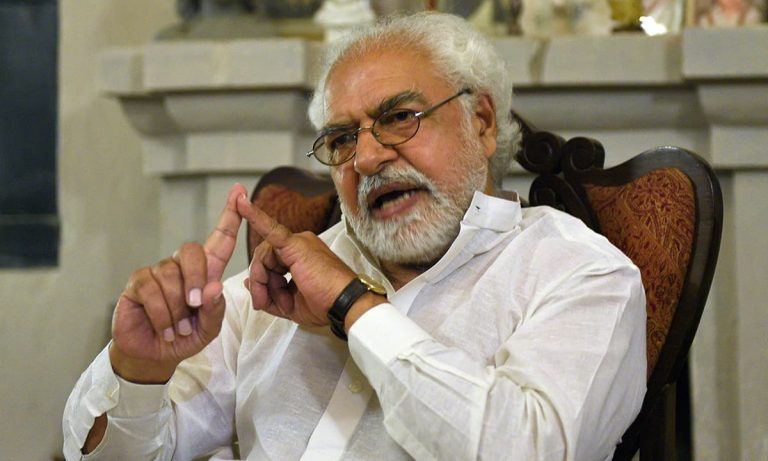
It’s again a bouquet of good and bad news as well as a set of amazing coincidences from Pakistan that border on the para-normal. The bad news is that the car in which senior Pakistani journalist Ayaz Amir was travelling was intercepted by some masked men in Lahore’s busy Abbot Road on Friday. Another related bad news is that two men who “unleashed blows” on Amir, decamped with his mobile phone and wallet. The first good news is that though badly battered and bruised, Amir is safe.The second good news  is that the Lahore police has assured the senior scribe that the culprits would be traced with the help of CCTV footage. 

However, if the past track record of Pakistan police in tracking down assailants with the help of CCTV footage is any indicator, then the sad news is that it’s quite unlikely that the culprits will ever be caught, and the  abduction of senior journalist Matiullah Jan is a case in point.

Readers may recall that on 21 July, 2020, Jan was abducted in broad daylight by a group of men wearing anti-terror squad uniforms from outside the school gate in Islamabad while he was waiting to pick up his wife, and this entire incident was captured on the school’s CCVT. However, even though nearly two years have elapsed, leave alone apprehending the abductors, the police haven’t even been able to establish the identity of the group that perpetrated this serious crime in the country’s capital!

While hearing the petition regarding Jan’s abduction and his subsequent release 12 hours later, Islamabad High Court [IHC] Chief Justice [CJ] Athar Minallah questioned as to “How did anyone, wearing a police uniform, dare to abduct a person?” and expressed surprise as to “How could this happen in the federal capital?” Maintaining that “the entire state is responsible” for this incident,” IHC CJ went on to say, “… the CCTV footage [of the abduction] is available. This is a test case for the police and the federal government.”

Unfortunately, both the federal government have failed this “test case”!

As public memory is short and since abductions, roughing up of journalists and even murdering them aren’t rare occurrences in Pakistan, Jan’s case was largely forgotten and would have continued to be so, had the IHC CJ not referred to it last month while hearing the case of former Federal Minister Shireen Mazari’s illegal arrest and confinement in Islamabad. During the hearing, while making it clear that “This court will not compromise on its jurisdiction,” CJ Minallah pulled up the deputy attorney general by reminding him that “The abduction of Matiullah Jan has not been probed till date.”

Coming to coincidences between the physical assault on Amir and the abduction of Jan, there are plenty. Firstly, both are senior journalists who are critical of the army’s interference in government and state institution functioning. Secondly, both the assault and abduction came just before, or immediately after these scribes had made/were scheduled to make remarks that were critical of the Pakistan army. Thirdly, both incidents took place in crowded areas which indicates that those involved weren’t afraid of being caught by the police or passerbys.

Jan was abducted just days before he was due to appear in court on contempt charges for having tweeted IHC judge Shaukat Aziz Siddiqui’s controversial speech delivered at the Rawalpindi District Bar Association. In this speech, Justice Siddiqui had openly accused ISI of complicity in manipulating the judicial process by ‘fixing benches’ and lamenting that independence of the judiciary had been compromised as it was “in control” of the army.

Amir was assaulted a day after delivering a speech on ‘Regime Change and its Fallout on Pakistan’ at an event organised by IHC Bar Association. During his address, Amir referred to the Generals of the Pakistan army as “property dealers”. Some may maintain that by equating Generals with property dealers, the senior journalist had hit the Pakistani military establishment below the belt and thus deserved what he got. However, with Lahore High Court Chief Justice Mohammad Qasim Khan calling Pakistan army “the biggest land grabber in the country,” what Amir said isn’t something really outrageous.

Amir and Jan aren’t the only journalists critical of the extra constitutional powers being wielded by the Pakistan army who have ended up being abducted by “unidentified men.” Infact, senior journalist Amir is the latest entry into the club of Pakistani journos who have been waylaid or even picked up from their homes and after being given a sound thrashing in situ or at an undisclosed location, set free. But despite the pain and indignity they have undergone, surprisingly none of them have given any worthwhile clue about their attackers or abductors. Many view this silence as a physical manifestation of the ‘discretion is the better part of valour’ adage!

Pakistan army denies any involvement in such cases, but then, the obvious question is that who else would take-on the risky job of breaking the law just to ‘discipline’ anti- army journalists by assaulting or abducting them? Rawalpindi may be trying to divert public attention from this burning issue by portraying itself as the victim of ‘fifth-generation’ warfare. However, the 2018 abduction of British-Pakistani journalist Gul Bukhari who is known for her criticism of Rawalpindi’s involvement in politics leaves no doubts in anybody’s mind of Pakistan army’s complicity in this abduction.

The car in which Bukhari was travelling was intercepted at 11 p.m.on 5 June 2018 in Sherpao Bridge area of Lahore cantonment, and she was whisked away in another car to an unknown location. Due to security imperatives, Lahore cantonment is a virtual fortress with meticulously monitored and strictly controlled entry/exit. In addition to an elaborate network of CCTV cameras that cover almost every road in the cantonment, vehicle based mobile ‘quick reactions teams’ continuously patrol the area to pre-empt any terrorist/ illegal activity.

Hence, security experts are sanguine that Bukhari’s abduction from Pakistan’s fortified Lahore Cantonment could not have succeeded without Pakistan army/ISI’s complicity. And even though her driver later confided to a colleague that while the men involved in flagging down the journalist’s car and abducting her were in civil clothes, soldiers in uniform were also present at the site and had cordoned off the area. However, the most credible proof of Pakistan army/ISI involvement in this abduction is Bukhari’s refusal to disclose the identity of her abductors, and instead give a cryptic hint that “everyone seems to know who my abductors were,” which unambiguously says it all!

Local Kashmiris play active role in terrorist’s capture

Coming on the heels of locals apprehending two armed Lashkar-e-Taiba [LeT] terrorists [including a self-styled commander’ responsible for many terror attacks and bomb blasts] in Tukson Dhok village in Reasi [J&K], surrender of two trapped terrorists in Hadigam area of South Kashmir’s Kulgam district are both indeed very positive developments for the terrorism weary people of J&K.

In the first case, realising that the time lag between informing security forces regarding the presence of two terrorists in their village, and then waiting for them to come and apprehend the duo would give the LeT terrorists adequate time to escape, residents of Tukson Dhok displayed extraordinary courage and overpowered both themselves.

While the fact that the terrorists were in possession of two assault rifles, seven grenades, a pistol and ammunition didn’t deter the plucky villagers is really commendable, what makes this act even more noteworthy is that it was the resolute and collective will of the locals not to let terrorists come and seek shelter in their village that motivated them to apprehend the two.

This is not the first or only such incident. In 2009, three LeT terrorists led by a self-styled ‘commander’ named Abu Osama, broke into the house of Noor Hussain in Bhatti village in Shadra-Sharief belt of Rajouri district in J&K. They ordered Hussain to hand over his 20-year-old daughter Rukhsana [who the LeT commander had taken a fancy to] and when her parents and brother tried to resist, the LeT trio started belabouring them with their rifle butts.

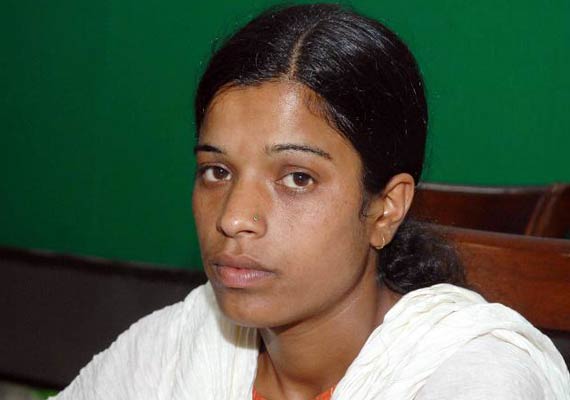
On seeing her parents and brother being ruthlessly beaten, Rukhsana, who had been hidden by her mother under a bed emerged from her hiding place and grabbing an axe, hit the LeT commander on his head. This prompted another terrorist to open indiscriminate fire in which a relative which her uncle [who had been forced to guide the terrorists to Rukhsana’s house] was injured.

Undeterred by the firing, the young girl picked up the LeT commander’s gun and shot him dead. Displaying remarkable courage and amazing presence of mind Rukhsana grabbed another AK 47 rifle from a terrorist and threw it to her brother. The brother-sister duo fired at the terrorists, forcing them to flee, leaving behind the dead body of their lecherous commander.

[For her conspicuous act of bravery Rukhsana has been awarded Kirti Chakra, India’s second highest peacetime gallantry award, and is now serving in J&K Police.]

The surrender of two local LeT terrorists in Kulgam district on Wednesday is a good sign which demolishes many myths being spread by Pakistan and its proxies in Kashmir Valley. But before discussing this issue any further, a brief account of this episode is needed.

On receiving specific inputs regarding the presence of two terrorists in Hadigam village of Kulgam district, a joint team of Army, paramilitary forces and J&K Police cordoned off the village. As a joint team approached the house where the two terrorists were holed up, they came under fire, and a gunbattle ensued. In the meantime, however, the security forces came to know the identity of the trapped terrorists and so they paused the operation till daybreak and contacted the parents of the terrorists, who quickly arrived at the encounter site.

On Wednesday morning, the parents were allowed to make an appeal to their sons to surrender, and luckily, both terrorists did so, bringing a happy ending to what would have otherwise ended up with the death of two young misled Kashmiris and brought lifelong sorrow to their parents. However, this is not the first time that the army and police forces tried to save the lives of trapped terrorists by getting their family members to motivate them to surrender.

The standard operating procedure [SOP] being followed by security forces and police in encounters mandates that under all circumstances, trapped terrorists would be given a chance to surrender-even when they have inflicted fatal casualties on security and police forces. The underlying aim is to preserve human life and so, the forces make all-out efforts to get the parents and family members of holed up terrorists and request them to appeal to their wards to save their lives by laying down arms and surrendering.  

The Indian army has one of the lowest incidents of collateral damage during anti-terrorist operations in the world, and that’s why Pakistan and its proxies in Kashmir are unsuccessful in their motivated attempts to portray the Indian army and central/J&K police forces as a trigger-happy lot with no regard for the lives of Kashmiris. So, it’s but natural that the international community doesn’t pay any attention to Islamabad’s fake narrative regarding human rights violations in Kashmir.

This incident has yet once again exposed the brazen lies that Islamabad and Kashmir’s pro-Pakistan lobby have been spreading. What’s pertinent to note here is that the moment the security forces came to know the identity of the trapped terrorists, they immediately paused their operation and brought the parents of the terrorists to the encounter site so that they could persuade their wards to surrender. Would this have happened if the security and police forces were trigger-happy?

Today, Kashmiri youth have to understand that they are being misled through misinterpreted Islamic tenets and false promises that taking human life is ‘jihad’ which will be rewarded by a place in paradise. The youth need to realise that paradise is only for those who truly follow Islamic teachings and faithfully follow the five pillars of Islam- profession of faith [shahada], prayer [salat], distributing alms [zakat], fasting [sawm] and pilgrimage [hajj].

Most importantly, Kashmiri youth have to realise that if picking up guns and killing people really earns one a place in paradise, then why aren’t those who preach this, do the same themselves? This question has often been asked and the stock reply of those who are misguiding and radicalising Kashmiri youth is that they would certainly have done so had they been younger. However, this reply isn’t convincing, because even though age may be an inhibiting factor for picking up guns, why don’t these elderly people ask their own sons to do so? After all, which parent in this world wouldn’t like his beloved son to go to paradise?

And thereby hangs a tale!

Amarnath flash flood and Indian Army’s rescue efforts

Last Friday’s flash flood of unprecedented magnitude near the Amarnath shrine in J&K that completely obliterated a camping site of devotees was so swift and substantial that it gave the hapless pilgrims virtually no chance to escape. Consequently, several injured devotees were trapped under a gigantic mound of rocks, boulders and earth that covered the campsite, while many more were buried underneath.

Rescue operations to extricate the unfortunate devotees presented a colossal challenge due to several reasons. One, the area affected by the flash flood was very large and with soil and rock debris spread all over, identifying the precise location of the tents housing pilgrims buried underneath, was extremely difficult. Two, since the flash flood hit the pilgrim camp late in the evening, darkness fell soon thereafter, which made search for survivors extremely difficult.

While those who were injured or trapped but conscious could be located by their cries for help, to find those unable to call for help in the vast sea of rubble was a herculean task as it entailed a physical search for survivors in complete darkness. Lastly, though the civil administration had  prepositioned route clearing detachments along the pilgrimage tracks, but these didn’t have any heavy earthmoving equipment as since the area near the shrine had a past history of only  minor land slips and rock slides, which could be cleared manually. 

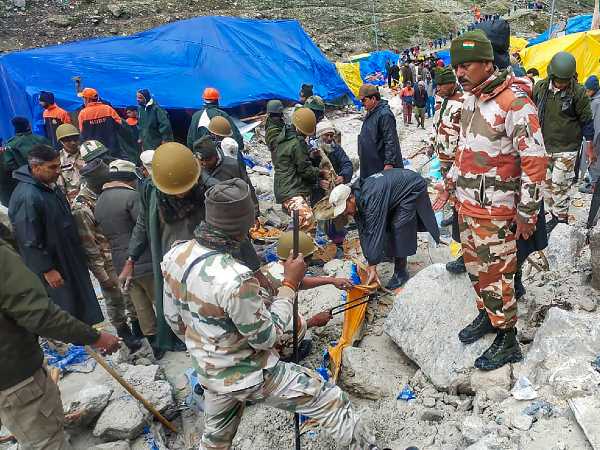
Indian Army digging the debris to rescue people trapped underneath (Photo: Social Media)

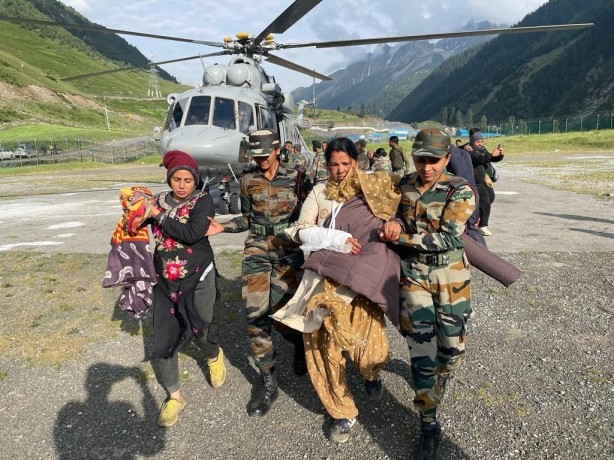
Notwithstanding these fearful odds, rescue efforts commenced immediately and the army, which was deployed for security duties, quickly became one of the first responders. While the civil administration took prompt action to augment rescue efforts, the army also pitched-in with full vigour. While soldiers at the incident site meticulously scoured the area searching for survivors, the army rushed in heavy earthmoving and specialised equipment like ground penetrating radars to expedite rescue efforts, which given the poor state of surface communication due to incessant rains, in itself was a herculean task.

In addition to round the clock rescue and relief work, and despite adverse climatic conditions, the army also undertook the construction of an alternate route towards the Amarnath cave that bypasses the water channel created by the July 8 flash floods so that the pilgrimage could continue. With the death of 16 pilgrims and another 40 devotees still missing, this incident is undoubtedly a big national tragedy, but as stated earlier, nothing could have been done to save these lives since the flash flood was so swift, sudden and enormous. 

However, while mourning the loss of so many human lives, all those involved in rescue operations deserve due appreciation for their consummate dedication that helped save many lives. While the army has been keeping us abreast with its rescue related activities through its spokesperson, this is being done with the army’s characteristic modesty and hence hasn’t received the attention that it rightly deserves. So, a few words about the army’s stellar role in rescue operations.

What’s most important that army resources in J&K are totally committed on manpower intensive tasks- from being deployed along Line of Control [LoC] to defend India’s territorial integrity as well as prevent infiltration of terrorists from Pakistan occupied Kashmir [PoK] to conducting anti-terrorist operations in the hinterland. Nevertheless, whenever required to provide assistance during manmade or natural calamities, the army leaves no stone unturned to save lives and assist the needy. Memories of the 2014 Kashmir floods are still ingrained in public memories when the army set a record of sorts by rescuing   2,98,514 civilians and setting up relief centers.

One is also reminded of the pivotal role played by the army during the massive Uttarakhand deluge of 2013 that wiped out entire habitations and washed away roads that left thousands of pilgrims stranded as well.  However, providing assistance during calamities isn’t the only field in which the Indian army has proved its mettle. Readers would recall that just before commencement of the 2010 Commonwealth Games in New Delhi, when an under construction overhanging footbridge outside the main venue came crashing down, it were the Indian army engineers who by constructing a bridge in a record time of four days helped prevent a national disaster.

Eight years later, the army was called-in to use its unmatched expertise in speedy and sturdy construction to provide three footbridges in Mumbai’s busy Elphinstone Road-Parel, Currey Road and Ambivli stations. After demonetisation in 2016, not only did the Indian army assist the central government in printing and transporting new currency notes but even provided assistance in the subsequent disposal of old currency. The Indian army has thus proved that it has unparalleled determination to efficiently undertake even those tasks for which it has no previous training whatsoever and produce the desired results. 

For the Indian army, offering a helping hand to their countrymen in distress is considered a sacred duty and as such executed with utmost dedication and determination. This remarkable ethos and outlook  of the Indian army has earned implicit public faith and that’s why it’s truly a ‘People’s Army’!

Pakistan spreading narcotic ‘ice’ in POK to fuel Islamic extremism

With the Taliban taking power in Afghanistan and the withdrawal of the United States, there has been an increase in the smuggling of dangerous drugs like heroin and crystal meth (ice) to neighboring countries, including Pakistan. However, Pakistan administered Jammu and Kashmir (POK) in general and particularly the Poonch district have become dangerous drug strongholds.

Interestingly, while Inflation is rising around the world yet the price of these dangerously addictive narcotic drugs is on a decline. That is why, in the Poonch region, considered as a symbol of resistance in Pakistan administered Jammu and Kashmir (POK), these drugs have become easily available to every section of the society. Drugs are readily available in higher educational institutions and even in the schools. As a fallout, large number of young people who are addicted to drugs are increasingly turning towards extremism and resort to criminal and violent activities. A special anti-drug campaign was launched by the administration and though there were reports of marijuana and heroin being seized in these operations, yet not a single operation has yet been conducted to seize the most rapidly spreading and dangerous narcotic drug ice (crystal meth).

What is ice (crystal meth) and where is it produced?

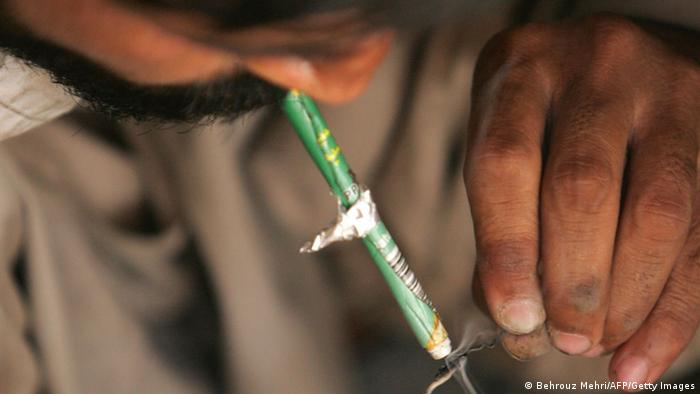
Ice is a crystal type white object equal to a large grain of sugar or salt, which is then heated by passing through a thin glass. Usually the drug addicts use thin glass pipes to smoke ice, however some drug addicts also inject it into their body. Ice or crystal meth is the common name of a chemical called ‘crystal methamphetamine’, which is made with ‘pseudoephedrine’. Ephedrine is an essential component of certain medicines, which is extracted to produce crystal meth (ice). Medicines with ephedrine are purchased in bulk from the market and ephedrine is extracted to produce ice.

However, the rapid increase in the use of ephedrine to produce narcotic drug crystal meth (ice) has been due to ephedra, a plant grown in Afghanistan. According to a BBC Urdu report, several small factories in Afghanistan convert ephedra into crystal meth. In the past, there were hundreds of factories in Taliban-dominated areas, which were an important source of income for the Taliban. However, these factories have increased manifold since the Taliban came to power. Heroin and ice are smuggled from Afghanistan to different regions via Pakistan and Iran. Until a few years ago, heroin was known as an expensive drug and ice (crystal meth) was relatively cheaper. Over last few months the demand for ice has increased tremendously. Heroin prices have fallen dramatically. Ice and heroin are considered as expensive narcotic drugs yet both are easily available.

Ice usage and effects

Jamil Hussain (name changed) from Titri Note border area of Poonch has been an active ‘jihadi’ in Afghanistan and Kashmir, in the past. “Ice was first produced from medicines”, he said. “I don’t know how to prepare, but it was used as a medicine by ‘militants’. It was such a powerful medicine that it would make it very easy for a person to go through anything after using it. Jamil said that this drug is also used for suicide attacks. “Now it has become very common and young children can be seen using it.”

According to narcotic experts, ice doubles the body’s energy for a short interval. A normal person can stay awake for 24 to 48 hours, but after ice intake the person becomes twice as active during which time sleep vanishes. Ice (crystal meth) over-activates the nervous system for some time and for a few hours the brain starts working very fast. But as soon as the intoxication descends one feels extremely tired and lazy.

Continuous use of ice adversely affects the nervous system. Gradually the memory fades and motor movements become awkward. Illusion, attention deficit, memory loss, waning of decision making ability, rapid weight loss and sleeplessness occur. Changes occur in the body, including infertility, which increase violent sexual orientation. People go the extent of self-immolation and indulge in violent activities.

How does ice reach Poonch?

“Now marijuana buyers are steadily declining,” said Salim (name changed), who is a marijuana vendor in the suburbs of Rawalakot. Young people prefer ice and heroin. When asked for the reason, Salim said, “The reason is clear, ice and heroin were extremely expensive drugs, they are no longer expensive now. But these drugs are much more dangerous than hashish. The more dangerous the intoxication, the greater its pleasure,” explained Salim. “Now heroin is available for as less as Rs. 50 to Rs. 100 which is not enough to buy even a cigarette of marijuana. Ice starts from Rs. 2,000 to Rs. 5,000 per gram. Until recently, one gram of ice was not available for Rs. 8,000, but now even for Rs. 1,000, one can get ice which is enough to give high to an individual.”

A local speaking on conditions of anonymity said, “Now, in Rawalakot, Hajira and other suburban villages and towns there is no marijuana dealer (youth selling marijuana at the village level commission) who is not selling ice. You may not get marijuana but ice and heroin are available at all times. Regarding the modus operandi of drug supply, the local said: “There are different ways, but every method and way goes through the government. I don’t know if these people are doing it deliberately, or a few people are in this business but the whole structure is connected.”

“Non-customs vehicles are also loaded with drugs when they are brought to Jammu and Kashmir from other border areas including Balochistan,” he explained. Those vehicles cannot pass through Pakistan legally, therefore, they are brought through ‘improvisation’ and weapons and drugs also become part of this improvisation.

“Besides, those who participated in ‘demonstration’ in Afghanistan are also involved in this work”, he said. Their transportation is also illegal and they also bring these drugs along with them coming from Afghanistan or border areas to Jammu and Kashmir. They are the first to bring this ice and heroin. Ice is considered as a ‘medicine of sacrifice’.

A local dealer from Khai Gala, Rawalakot explained on condition of anonymity that “…one of the simplest ways to bring ice here is to melt and bring it as packs of mineral water bottles. But to convert this ice from liquid to crystal form requires some expertise. Medicines such as Pynadol are bought from the market and used for this purpose.”

The Khai Gala dealer further explained: “Nowadays a certain type of energy saver bulb has disappeared from the market as they are bought by ice addicts. Some shopkeepers have even started making and selling glass like bulbs used for drinking ice.

Why aren’t the government campaigns effective against drugs?

Recently, the divisional administration of Rawalakot had launched an anti-drug campaign. Meanwhile, several persons were also arrested for marijuana trafficking. There have also been reports of drugs being recovered from some educational institutions. During raids at business spots in the city, a large number of flavoured tobacco, razla paper and electric cigarettes etc. were seized as intoxicants. The export of heroin has also been reported in a few incidents.

“However, no one involved in the sale and delivery process of crystal meth (ice) has been arrested so far. The police themselves provide us with drugs. How can the government campaigns eliminate the menace of drugs?” said a drug dealer from the neighbouring village of Tarar.

Continuing his point, the drug dealer explained, ”The ‘dealers’ in all the villages are selling marijuana, ice and heroin. So now everyone sells everything, and more than half of them are sold by the policemen. The policemen themselves are victims of ice. So if we stop selling ice, police will put us in prison and get us punished. But once a year some marijuana cases are made. They (police) get their job done and we also come out on bail. When drugs are recovered from the students of the University of Poonch they are blackmailed by policemen and huge money is extorted from them.”

The local police shrugged off all involvement. “I don’t know why ice dealers are not being caught,” said a policeman, speaking on condition of anonymity. However, allegations of police involvement in drug trafficking in an organized manner are baseless. There may be some elements, this society is such that no department can be cent per cent correct.”

Increase in extremism and violent activities due to proliferation of ice (crystal meth)

As the infiltration of ice is increasing, so is the attraction of young people towards extremism, as well as an increase in violent activities. There has been a marked increase in the incidents of violent attacks, murders, blackmails, kidnapping and torture of female students.

There is also an increase in the recruitment by extremist organisations. Further, in addition to social and economic problems, the use of ice (crystal meth) among young people affected by arms culture gives them a pseudo sense of bravado. ”This region is considered a symbol of resistance,” says Basharat Ali Khan, former union president of the Jammu and Kashmir National Students Federation, “…but it is now being drowned in drug addiction as part of an organized conspiracy. In the past, when a proxy war was launched in the name of ‘Kashmir Militancy’, the heroin culture was deliberately made public within the region.

“A large number of resistance youth who are aware of the policies of the state were made heroin victims in an organized manner,” said Basharat Ali. He further explained “…extremism and terrorism were promoted by ruining their lives as well as the politics of the region. Now, once again, the same method is being followed after the Taliban captured Afghanistan”.

“As this region is politically active, its youth cannot be easily used for state purposes. Therefore, a conspiracy has been planned to paralyse and cripple the younger generation. All these means of smuggling must be eliminated immediately. The state will not allow a needle here if it wants, but from stolen vehicles to non-customs paid vehicles, weapons and drugs all are available. It is well known how they are getting all these things here. No one wants to speak and raise their voice, because the business and interests of many powerful circles are all linked to this inhuman racket,” added Basharat Ali.

“We will not allow the younger generation to be ruined under any circumstances. We will stop this organized conspiracy. We warn that if the poison is not stopped from reaching and selling here, a full-fledged protest movement will be launched against it,” explained Basharat Ali.

Baloch National Court awards death sentence to Pak Army Colonel for war crimes in Balochistan

The Baloch National Court awarded death sentence to Lt. Colonel Laeeq Baig Mirza of the Pakistan Army after indicting him for grave war crimes committed against the innocent Baloch people in Pakistan-occupied Balochistan. Pak Army’s Lt Col. Laeeq Baig was found to be directly involved in the ongoing Baloch genocide, enforced disappearance of women and children and other grave human rights violation.

“He (Lt. Col. Laeeq Mirza) was given full opportunity to prove his innocence in the Baloch National Court. During the proceedings he (Lt. Col. Laeeq) confessed to all his crimes and was awarded death sentence,” Baloch Liberation Movement (BLA) said in its media statement.

On 12 July 2022, Baloch Liberation Army’s (BLA) special force, Special Tactical Operations Squad (STOS) carried out an intelligence based operation near Ziarat in occupied Balochistan, when Lt. Col. Laeeq Baig Mirza was arrested. Lt. Col. Laeeq of 96 L/C belonged to 12 Azad Kashmir Regiment of Pakistan Army. He previously held commanding positions in Pakistan Rangers. At present he was the commanding officer of Pakistan’s Military Intelligence (MI). He was working in DHA (Defence Housing Authority) Quetta as a cover for his secretive role for the Pakistan Army.

Lt. Colonel Laeeq Baig Mirza was a primary target and he was being tracked for days by BLA’s intelligence units. On 12 July his movements were followed throughout the day and he was finally arrested in an area where risk to members of public was at minimum.

“Colonel Laeeq was travelling with his family on the day, however, the family members were treated with utmost respect and they were not harmed in any way as they were not involved in any crime,” said BLA spokesperson Jeeyand Baloch.

BLA has compiled a list of all Pakistani military officers that are directly involved in Baloch genocide. The BLA warned that strict action will be taken against all such officers.

Pakistan murders Saqib Baloch in Azerbaijan

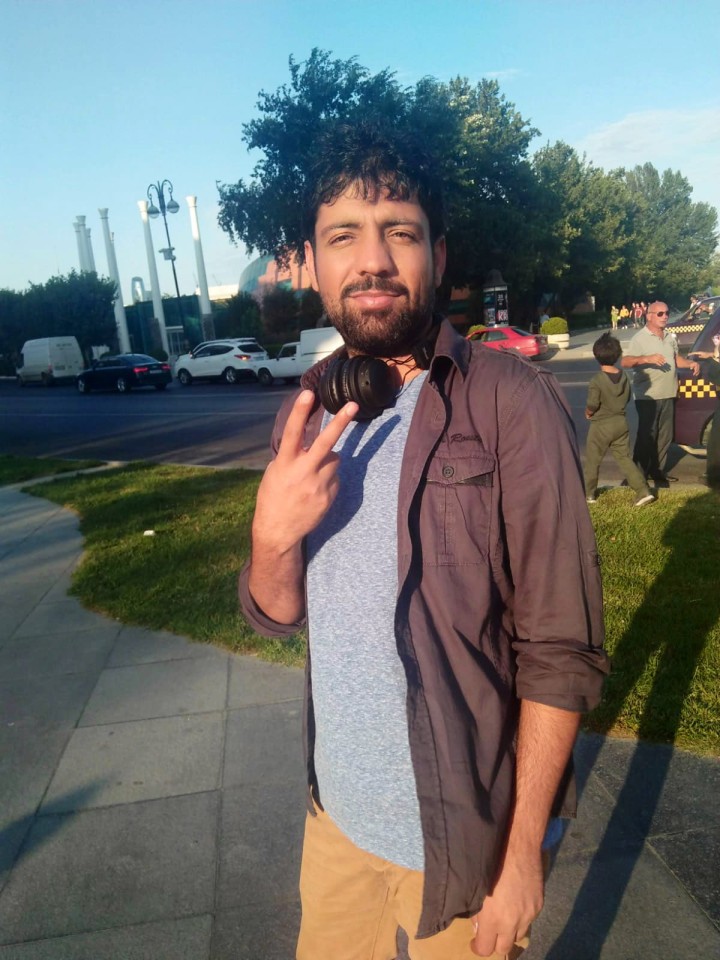
Saqib Kareem a 23 year old resident of Washq, Basima district of occupied Balochistan , who had taken asylum in Azerbaijan for the past several years, has been recovered from the sea of Baku city last evening.

According to local police sources, he reportedly died of drowning by falling into the sea.Sources say Saqib Kareem was living alone in Baku.The incident was reported to his younger brother last night through a text message.Saqib Kareem was the brother of martyrs Tariq Karim and Asim Karim. The Tariq brothers were forcibly abducted by Pak forces and were martyred during detention and their  mutilated bodies were later thrown.

In addition, other members of the same family have also been martyred by military operations and forced abduction by Pak forces.Saqib had left the country many years ago to avoid state repression.He had gone to Azerbaijan and had sought political asylum after spending the early years in the Gulf.This is not the first case of such death of a Baloch refugee abroad.Earlier also, the bodies of Baloch journalist Sajid Hussain and political leader Bank Karima Baloch have been recovered from the rivers.

Saqib Karim’s family doubt that he could have been killed.

BLF strikes at Pakistan Army, kills two soldiers

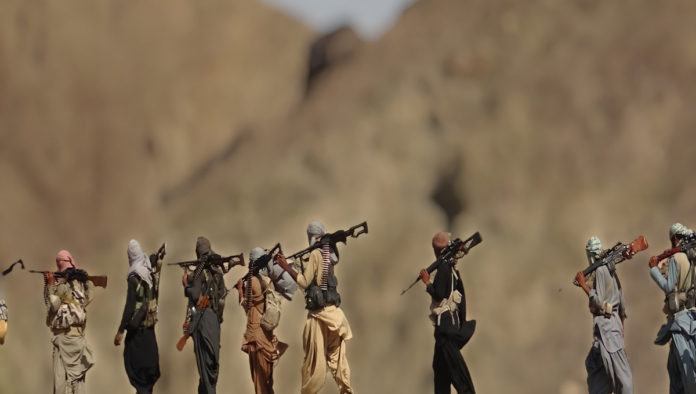
The Balochistan Liberation Front in the Ketch district of occupied Balochistan and the Baloch Liberation Army in Bolan have claimed responsibility for the attacks on Pakistani forces.The Balochistan Liberation Front has claimed responsibility for the attack on a Pakistani military convoy in Heronak area of Ketch district.While the BLA has accepted responsibility for killing two military personnel in Bolan.Talking to media from an undisclosed location, Balochistan Liberation Front spokesman Major Gharam Baloch confirmed.The militants attacked a Pakistani army convoy with rockets and heavy weapons at 12.30 p.m. in Heronak area of Ketch district on 2 July .Two land cruises and a Vigo vehicle in the enemy army convoy were hit by a severe attack, killing and injuring several officers.He said two children were injured in a passing passenger vehicle when the defeated army opened indiscriminate fire after the attack.The spokesman said that it was during this time that the enemy army gunship helicopters arrived.Gunship helicopters with air strikes in nearby areas tried to chase the freedom fighters but after the successful attack, they safely reached their safe places.Baloch Liberation Army spokesman Jayned Baloch said in a statement to the media that BLA freedom fighters targeted a Pakistani army post occupying the Talkari site in Nodaghar area of Bolan in an attack.He said that BLA fighters attacked the post with rockets and other heavy weapons from different sides, killing two enemy army personnel and injuring several others.

Another Baloch student ‘disappears’, protests continue at Karachi Press Club

Baloch student Shoaib Ahmed Wald Azam Khan from Gulistan Johar area of Karachi was detained and disappeared by Sindh Police and forces.Shoaib Ahmed belongs to Nal area of Khuzdar district.He was keen on getting admission in Karachi University.The relatives of the missing Shoaib attended a protest camp outside Karachi press club.On the other hand, protest against enforced disappearance outside Karachi Press Club entered its ninth day today which was attended by women and children.Speaking on the occasion, Amina Baloch, organizer of the Baloch Solidarity Committee Karachi, said “that it appears that the Sindh government is not serious about the negotiations on the issue of missing persons.Two days later, not a single missing person was recovered.However, the talks were initiated by the Sindh government itself through sindh police officials which we welcomed because we are democratic people and believe in dialogue.Amina Baloch said that the family members should not be forced to sit in front of the Sindh Assembly or the Chief Minister’s House again.Their peaceful movement should not be considered their weakness.The protest camp  by the relatives of the missing outside Karachi press club had the full support of Baloch Solidarity Committee Karachi and Voice for Baloch Missing Persons.Meanwhile, Baloch Solidarity Committee Karachi organizer Amna Baloch is the leader of the protest camp.The protest camp includes the relatives of those missing from Karachi.Among the missing are Abdul Hameed Zehri from Gulistan-e-Jauhar area of Karachi, Saeed Ahmed son of Muhammad Umar from Malir area of Karachi, Muhammad Imran from Maripur, Shaukat Baloch from Lyari and Gulistan-e-Jauhar from Karachi.