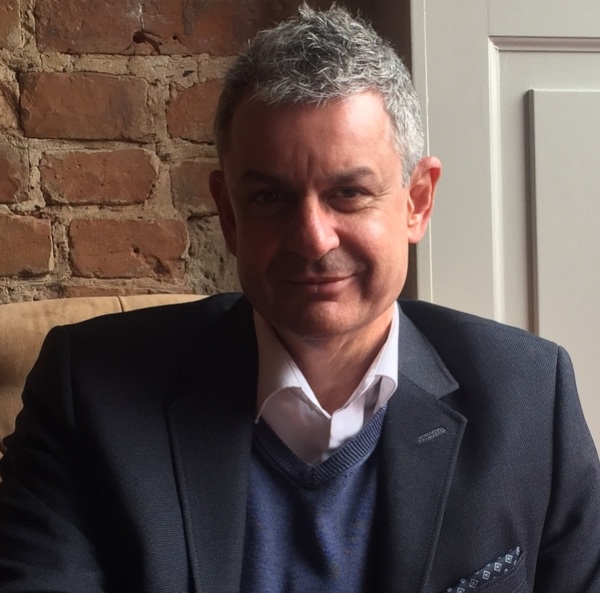
An important meeting of the locals was held in Bagh area of Pakistan Occupied Kashmir in which the issue of school building and upgradation was discussed. The people demanded from the Prime Minister Sardar Tanveer Ilyas Chief Secretary Kashmir and MLA Begum Amitaz Naseem that they should consider their two tasks which they had promised during the election campaign. They said, “You promised that I will give high status to this school and its building work will be completed soon”. The promise is yet to be fulfilled. Despite the unfulfilled promises, the staff of the school gave the best results. The other big demand is to give high status to this school. The institution is ancient and the foundation of this school was laid in 1928 when Pakistan was not even created . Since then the school has not been upgraded. They said that sit in the garden and make the children study. Hence, “it is important that the office bearers fulfilled their promises” is what they demanded in the meeting.
BLA kills Pakistan-backed Death Squad Gangster
Freedom fighters of Baloch Liberation Army eliminated Ali Akbar Sanari, a leader of death squad that was formed by Pakistani military and intelligence agencies in Khuzdar.
Ali Akbar Sanari was directly involved in an attack on freedom fighters of BLA in Kalat in December 2016. He and members of his death squad accompanied Pakistani military in the attack, which martyred senior BLA member Sulaiman Baloch alias Ali.
Ali Akbar Sanari was also involved in enforced disappearances of several Baloch youth from Khuzdar. His group also abducted several members of business community for ransom from Khuzdar and Kalat.
Due to his grave crimes, Ali Akbar Sanari was on BLA’s hit list and was eliminated near Jeeva Cross Khuzdar yesterday.
BLA is set to punish all individuals or groups, irrespective of their race or religion, if they are active against the Baloch national struggle. BLA once again has warned all such elements to refrain from committing national treason or they will be brought to justice.
Prof. Vaknin on Genius and Insanity
Prof. Shmuel “Sam” Vaknin (YouTube, Twitter, Instagram, Facebook, Amazon, LinkedIn, Google Scholar) is the author of Malignant Self-love: Narcissism Revisited (Amazon) and After the Rain: How the West Lost the East (Amazon) as well as many other books and ebooks about topics in psychology, relationships, philosophy, economics, international affairs, and award-winning short fiction. He was Senior Business Correspondent for United Press International (February, 2001 – April, 2003), CEO of Narcissus Publications (April, 1997 – April 2013), Editor-in-Chief of Global Politician (January, 2011 -), a columnist for PopMatters, eBookWeb, Bellaonline, and Central Europe Review, an editor for The Open Directory and Suite101 (Categories: Mental Health and Central East Europe), and a contributor to Middle East Times, a contributing writer to The American Chronicle Media Group, Columnist and Analyst for Nova Makedonija, Fokus, and Kapital, Founding Analyst of The Analyst Network, former president of the Israeli chapter of the Unification Church‘s Professors for World Peace Academy, and served in the Israeli Defense Forces (1979-1982). He has been awarded Israel’s Council of Culture and Art Prize for Maiden Prose (1997), The Rotary Club Award for Social Studies (1976), and the Bilateral Relations Studies Award of the American Embassy in Israel (1978), among other awards. He is Visiting Professor of Psychology, Southern Federal University, Rostov-on-Don, Russia (September, 2017 to present), Professor of Finance and Psychology in SIAS-CIAPS (Centre for International Advanced and Professional Studies) (April, 2012 to present), a Senior Correspondent for New York Daily Sun (January, 2015 – Present), and Columnist for Allied Newspapers Group (January, 2015 – Present). He lives in Skopje, North Macedonia with his wife, Lidija Rangelovska. Here we talk about genius and insanity.
*Previous interviews listed chronologically after interview.*
Scott Douglas Jacobsen: Delusions remain ubiquitous. Delusions in conspiracy theories found in 5G, backmasking, Big Pharma, chemtrails, free energy suppression, Holocaust denial, New World Order-ism, QAnon, and so on. Delusions formalized in cults. Delusions in religious discourse, organization, and practice. Delusions promoted in quack ‘medicine’ with acupuncture, alternative ‘medicine,’ anti-GMO movements, anti-vaccination activism, aromatherapy, chiropractory, conversion therapy, faith healing, homeopathy, naturopathy, psychic surgery, Reiki, reflexology, traditional Chinese medicine, and such. Delusions in anti-intellectualism with creation ‘science’ (e.g., the variants of Creationism and Intelligent Design), global warming denialism or even alarmism in some respects, God of the gaps-ism, ‘holy’ text literalism, homeschooling, paranormalism, quantum woo, und so weiter. Delusions in bigotries and prejudices including anti-Semitism, or racist ideologies bound to politics or religion (e.g., white supremacist KKK, black supremacist Nation of Islam, and the like). Delusions in social and political cure-alls for societies’ ills – panaceas, e.g., American commitments to the idea of every problem having a solution. Then there are those who took a permanent lift-off from terra firma and detached from reality altogether, e.g., or a case study, the person running the “Sam Vaknin Scum Antichrist” YouTube channel – an apparent idiotic crazy (read: demented screwball) person. You know the deal. We’re on the same page in the identical book here. There’s a thin line, as has been observed before, between true genius and real insanity. What factors set the distinctions between insanity, on the one hand, and genius, on the other?
Prof. Shmuel “Sam” Vaknin: The problem is that both madness and genius involve the ability to reframe reality in an unexpected way (i.e., provide insight) either by gaining a synoptic or interdisciplinary vantage point – or by radically departing from hidden underlying assumptions.
The scientific method is designed to tell the two apart by applying the test of falsifiable predictions. Both madness and genius are theories of the world and of the mind and, like every other type of theory, they yield predictions which can then be tested and falsified.
Most of the predictions yielded by insanity are easily and instantly falsifiable. Most of the predictions garnered by genius hold water for long stretches of time and, even when falsified, it is only in private cases or in extreme conditions. Thus, the theories of relativity falsify Newtonian prediction only on vast scales with incredible energies.
Jacobsen: What are the easiest means by which to distinguish a genius from an insane person?
Vaknin: Psychopathology is rigid. It is unyielding, not amenable to learning, nauseatingly repetitive, constricting, and divorced from reality (impaired reality testing). The genius is immersed in the world even if he is a recluse, he learns and evolves all the time, his mind is kaleidoscopic and vibrant, ever expanding. Insanity is mummified, genius is life reified.
Jacobsen: Is high intelligence required for true genius?
Vaknin: If by intelligence you mean IQ then the answer is a resounding no. The adage about perspiration and inspiration applies. But, more importantly, genius is the ability to see familiar things in a fresh, unprecedented way. Imagination, intuition, and the ability to tell apart the critical from the tangential are the core constituents of genius – not intelligence.
What intelligence does contribute to genius is alacrity. It is a catalyst. It speeds up both the processes of theorizing and of discovery.
Jacobsen: What happens to an insane person who happens to have high intelligence too?
Vaknin: He is likely to construct theories that will pass for genius, especially among laymen. The intelligence of the gifted madman serves to camouflage the lack of rigor and the delusional, counterfactual content of his creations. Rather than catalyze disruptive discoveries, his intellect works overtime at the service of aggressively defending a manifestly risible sleight of hand. It is not open to any modificatory feedback from the environment. The madman’s intellect is solipsistic and moribund.
Jacobsen: What happens in the mind of a genius who slowly deteriorates into an insane person?
Vaknin: He visibly transitions from cognitive flexibility to defensive and hypervigilant rigidity (confirmation bias). His work becomes way more easily falsifiable, sometimes even with mere Gedankenexperiments. He repeats himself ad nauseam. He becomes grandiose (cognitively distorts reality to buttress an inflated and fantastic self-image).
Jacobsen: How do fake geniuses cover for their lack of insight, ingenuity, intelligence, etc.?
Vaknin: They copy and plagiarize. They imitate a real genius’s structured thinking and work. They are good at promoting themselves and getting credit where none is due. Most of these frauds are actually intelligent, but dark personalities (subclinical narcissists, subclinical psychopaths).
Jacobsen: Is true genius more inborn, innate, native to the individual or more honed, refined, developed extrinsically?
Vaknin: We know that IQ is responsive to environmental stimuli. The analytic kind of genius (IQ above 140 or 160) is by far the most studied because it is the most facilely measurable. There are no studies that rigorously link it to heredity. On balance, anecdotal evidence clearly suggests that genius is acquired and can be inculcated at an early age if the child is subjected to rigorous training and a regime of positive and negative reinforcements.
It would behoove us to make a distinction between polymath or synoptic genius and “idiot savant” type of one-track mental acuity (think “Rain Man”). The latter form definitely is neurological and, probably, with a pronounced genetic contribution.
Jacobsen: Some mental disorders, including schizophrenia, appear mostly heritable. Is it the same for various states of insanity in general?
Vaknin: We don’t know enough, not by a long shot. Certain mental illnesses present with structural and functional abnormalities of the brain that are very likely to be genetically coded for: schizophrenia or Bipolar Disorder. Other mental health issues run in families, so a genetic component is indicated: Borderline Personality Disorder and psychopathy, for instance.
Jacobsen: Which five individuals seem like true geniuses in the modern world to you? I do not mean rich, famous, well-cited, and the like; even though, they may be rich, famous, or well-cited, etc., as a consequence of successful implementation of aspects of their genius.
Vaknin: Versatile polymaths included Einstein (of course), Richard Feynman (see my interview on Chronon Field Theory), Noam Chomsky, George Steiner (whom I had the pleasure of knowing), and Adolf Hitler (who regrettably turned his considerable gifts to the dark side).
Jacobsen: Do you consider yourself a genius?
Vaknin: Yes.
Shoshanim: Thank you, once again, for your time and the opportunity, Prof. Vaknin.
Vaknin: OK, Shoshanim!
Previous Electronic ‘Print’ Interviews (Hyperlinks Active for Titles)
“Prof. Sam Vaknin on Narcissism in General”
(News Intervention: January 28, 2022)
“Prof. Sam Vaknin on Cold Therapy (New Treatment Modality)”
(News Intervention: January 30, 2022)
“Prof. Sam Vaknin on Giftedness and IQ”
(News Intervention: February 2, 2022)
“Prof. Sam Vaknin on Religion”
(News Intervention: February 11, 2022)
“Prof. Sam Vaknin on Science and Reality”
(News Intervention: April 30, 2022)
“Prof. Sam Vaknin on the Gender Wars”
(News Intervention: May 21, 2022)
“Prof. Sam Vaknin on Psychological Growth”
(News Intervention: May 24, 2022)
“Prof. Sam Vaknin on Structure, Function, Society, and Survival”
(News Intervention: May 26, 2022)
“Prof. Vaknin on Chronon Field Theory and Time Asymmetry”
(News Intervention: May 28, 2022)
Previous Interviews Read by Prof. Vaknin (Hyperlinks Active for Titles)
“How to Become the REAL YOU (Interview, News Intervention)”
(Prof. Sam Vaknin: January 26, 2022)
“Insider View on Narcissism: What Makes Narcissist Tick (News Intervention)”
(Prof. Sam Vaknin: January 29, 2022)
“Curing Your Narcissist (News Intervention Interview)”
(Prof. Sam Vaknin: January 31, 2022)
“Genius or Gifted? IQ and Beyond (News Intervention Interview)”
(Prof. Sam Vaknin: February 3, 2022)
“Thrive: Your Future Path to Growth and Change (News Intervention Interview)”
Prof. Sam Vaknin: May 25, 2022)
Image Credit: Sam Vaknin.

Pakistan uses Judicial Commissions to cover up Enforced Disappearances
How acute is the chronic malaise of unchecked enforced disappearances afflicting Pakistan can be gauged from the fact that at least eight out of the top ten google search results for “land of enforced disappearances”, directly refers to it. Infact, this despicable phenomenon is so commonplace in Pakistan that ‘disappearing people’ is no longer considered a dirty word and doesn’t even seem to offend public sensitivities. A classic example of this is the 2014 discovery of three mass graves [which as per Asian Human Rights Commission [AHRC] contained the remains of 103 humans] by a shepherd near Tootak village of Khuzdar district in restive Balochistan.
That there was something seriously amiss is evident from AHRC’s official statement released two days after these mass graves were discovered. It reveals that “Pakistani military forces stopped the local people from unearthing the mass graves and took control of the area. Now, no one is allowed access to the location except military personnel.” However, save the kith and kin of disappeared Balochis, their community members and a handful of rights groups, there was no public outcry against Pakistan army’s unilateral [and legally untenable] decision to conceal the truth by denying media access to this site.
Subdued public reaction in Pakistan against enforced disappearances isn’t entirely due to apathy, but also because such incidents are summarily brushed under the carpet through the expeditious use of the impressive farce in the form of judicial commissions, as was unambiguously proved in the Khuzdar incident. The judicial commission expectedly gave a clean chit to Pakistan army and its spy agency simply on the grounds that in this case “No one recorded a statement against the army, secret agencies and the government, adding that “They [witnesses] did not accuse them [army and intelligence agencies] of being involved in this heinous crime.”
However, most intriguing is the commission’s finding that “On the contrary, there is enough evidence to suggest that the army, spy agencies and the government were not involved in this incident,” because in its report, there’s just no mention whatsoever of the so-called “enough evidence.” Furthermore, isn’t mentioning that the evidence on record went on to “suggest” and not “conclusively establish” that “the army, spy agencies and the government were not involved in this incident”, a clear admission that the findings of this judicial commission are based on mere assumptions rather than hard facts?
With judicial commissions brazenly concealing military brutality, people of Pakistan have reconciled and learnt to endure what can’t be cured, and this accounts for their silence on the issue of enforced disappearances. This isn’t an unsubstantiated observation but clearly mentioned in AHRC report [Document ID- AHRC-STM-023-2014], which had called for an impartial inquiry of this incident under UN aegis.
The AHRC supported this demand by stating that “It must be pointed out that the people of Pakistan do not expect any proper and transparent investigation from their government and the security agencies as they themselves are involved in the killings, enforced disappearances and the concealment of the crimes. The importance of a UN report therefore cannot be over emphasised.” Is any further evidence still necessary to establish that enforced disappearances is a state sponsored policy in Pakistan?
For those not convinced, here’s another example that illustrates how enforced disappearances are treated as a mundane issue by the Pakistan army. During a press conference on April 19, 2019, senior Pakistani journalist Hamid Mir asked a question regarding enforced disappearances. In reply, the then Director General [DG] of Pakistan’s media wing Inter Services Public Relations [ISPR] Maj Gen Asif Ghafoor on enforced disappearances, said, “We know you have a great attachment to missing persons [issue]. We too have [the same]. We don’t want any person to go missing but when there is a war, you have to do a number of [undesirable] things. It’s said that everything is fair in love and war. War occurs to be ruthless.” Isn’t this a menacing admission a clearcut acceptance of the fact that enforced disappearances have state sponsored sanction?
Pakistan’s main problem is that with the establishment equating indigenous armed struggles by marginalised groups with conventional war, its ‘deep state’ is shamelessly annihilating its own misguided citizens by treating them as ‘enemies’. Thus, it’s really heartening to know that Islamabad High Court [IHC] Chief Justice [CJ] Athar Minallah has taken due cognisance of this dangerous malady and set into motion the urgently required process of remedying this gross transgression.
The IHC CJ has ruled that “Retired Gen Pervez Musharraf and all other successor chief executives… including the incumbent holder of the office shall submit their respective affidavits explaining why the court may not order proceedings against them for alleged subversion of the Constitution in the context of undeclared tacit approval of the policy regarding enforced disappearances and thus putting national security at risk by allowing the involvement of law enforcement agencies, particularly the armed forces.” The hawks who believe that enforced disappearances are the only cure for ending home-grown secessionist activities may perceive this direction as judicial overreach, but it’s not so.
Noting that “Pervez Musharraf has candidly conceded in his autobiography In the Line of Fire that ‘enforced disappearances’ was an undeclared policy of the state,” Justice Minallah has rightly noted that “the involvement or even a perception of the involvement of the armed forces in acts amounting to violation of human rights and freedom of the citizens weakens and undermines the rule of law.” He has also reminded the fourth estate that it “has a pivotal role in highlighting the unimaginable ordeal and agony of the families of the missing persons, but it appears that they either prefer to ignore the worst form of abuse of state power and violation of fundamental rights, or they do not consider it a priority.
However, whether C.J. Minallah is able to curb or even curtail enforced disappearances remains to be seen, and if the past record of Pakistan’s armed forces as regards complying with court orders is any indication, then the chances of any meaningful improvements in this regard are extremely slim. Readers would recall that on Jan 7 this year, IHC had declared the Pakistan Navy Sailing Club built on the Rawal Lake embankment illegal and ordered its demolition in three weeks. Yet, even after four months, this illegal structure is still standing tall- a grim reminder of the fact that the armed forces of Pakistan were, are and will always remain above the law!
Tailpiece: In wake of the IHC directions on enforced disappearances, the Shebaz Sharif led government has announced that a seven-member committee would deliberate on a policy regarding enforced disappearances in Pakistan. On the face of it, this is a positive step that would help eradicate the despicable trend of enforced disappearances, but once again, if the past is any indication, then there are all the reasons to avoid over-optimism.
Readers would recall that, while addressing the Standing Committee on Human Rights in January this year, the then Human Rights Minister Shireen Mazari had revealed that though the missing persons bill had been passed by both the concerned standing committee and National Assembly, “but it went missing after it was sent to the Senate.” So, when a ‘missing persons’ bill can go missing, Islamabad’s grandiose announcement needs to be taken with a rather generous pinch of salt!
Kashmir’s ‘armed struggle’ is about Minority Murders
In the 90s, when Rawalpindi’s sponsored proxy war erupted in Kashmir, the domestic pro-Pakistan lobby on ISI’s payroll had assured locals that ‘azadi’ [freedom] was just “around the corner”. However, even after more than three decades of unprecedented violence and bloodshed that has claimed thousands of lives, and vitiated the peaceful environment of J&K, the promised ‘azadi’ is still elusive, and the reason for this is simple Pakistan Army’s intention of exporting terrorism in J&K had nothing to do with ‘azadi’ at all- au contraire, it was exclusively meant to bleed India through “a thousand cuts”.
However, what’s most shameful is that a group of Kashmiris who came together as All Parties Hurriyat Conference [APHC] and claimed to be the “true representatives” of the people, not only defended, but even openly encouraged the ongoing barbarity that Kashmiri terrorists inflicted on their own brethren. These leaders, who three decades ago were unknown entities, have today acquired considerable power and wealth by toeing the ISI’s line, and for the fear of losing favour with their handlers, apparently don’t suffer any pangs of conscience due to their Faustian deal. To make matters worse, the Pakistan-occupied Kashmir [PoK] chapter of APHC is riddled by glaring instances of misconduct, and lack of ‘commitment’.
In fact, one of the main reasons for senior separatist leader late SAS Geelani quitting APHC was his annoyance with APHC [PoK] for its absolute subservience to ISI. In his resignation letter, Geelani clearly mentioned that leadership of the PoK based APHC was “just a representative forum and has no power to take any decision”. He went on to add that “… for the past some time, there have been complaints against them of using their influence to get close to power corridors, of financial irregularity and internal bickering.” Coming from the most revered separatist leader, these damning observations cannot be dismissed as being motivated, and this is what Kashmir’s intelligentsia and civil society should take a serious note of!
With the ongoing ‘armed struggle’ in Kashmir degenerating into targeted killing of unarmed migrant civilians as well as members of minority Sikh and Hindu communities today, any attempt to justify this despicable trend is futile. So, the people of Kashmir need to question those perpetrating these ghastly acts of violence against humanity by asking for example, as to how exactly is the killing of a Sikh lady school principal, a Hindu teacher and migrant workers from Punjab, U.P. and Bihar furthering the objectives of the so called “armed freedom struggle”. They also need to ask as to why is APHC maintaining a stoic silence on such killings. Most importantly, Kashmiris need to realise that such senseless acts are undeniable proof that the aim of the so called ‘armed struggle’ isn’t gaining ‘azadi’ but only furthering Pakistan army’s ‘thousand cuts’ strategy.
For the last three decades, Kashmir has been held hostage to terrorism, which besides taking a heavy toll of human lives has severely retarded development and progress here. While the tourism industry has virtually been crippled by the ongoing violence, the ‘gun culture’ has ushered in negative attributes like arrogance and lack of respect for human lives. The end-result is that while Kashmir’s social fabric has been ruined, age-old cultural values are facing extinction. Kashmiri youth falling prey to vicious propaganda unleashed by fundamentalist groups through misinterpretation of Islamic tenets is a very serious threat, which if not nipped at the bud by the people of Kashmir themselves, will have disastrous consequences.
Here again, the people of Kashmir have to question the inexplicable silence of not only APHC but also Kashmiri terrorist groups. Readers would recall that in 2017, former Hizbul Mujahideen [HM] terrorist Zakir Musa who emerged as head of Al Qaida affiliate named Ansar Ghazwat-ul-Hind [AGuH] made two very unusual statements. He made it abundantly clear that “I am fighting for freedom for the sake of Islam. My blood will spill for Islam and not for a secular state.” He also said, “I’m warning all those hypocrite Hurriyat leaders. They must not interfere in our Islamic struggle. If they do, we will cut their heads and hang them in Lal Chowk.”
While APHC chose not to respond to this open challenge to its ‘self-determination’ campaign, the HM found it more expedient to distance itself from Musa’s controversial comments by contending that AGuH was “an Indian intelligence operation [to] “divide the Kashmiri nation.” However, HM supremo Syed Salahuddin ended up with egg on his face when Musa was gunned down by Indian security forces. His falsehood to conceal his inability to challenge Musa and utter servility to Rawalpindi were amply exposed when he ended up paying tribute to this so called ‘Indian agent’ by saying, “it is a fact that Zakir Musa sacrificed his life for the glory of Islam and the freedom of Kashmir.”
Strangely, APHC too seems to have accepted Musa’s fundamentalist agenda and senior separatist leader late SAS Geelani craftily overlooked his call for fighting in Kashmir, not for ‘azadi’ but imposition of Sharia by saying, “whosoever strives for implementation of divine law in his land, with his conviction and dedication are the real heroes and nation is indebted to hail their precious sacrifice. The best and only way to pay homage to them is to support the struggle in whatever possible way.” Frequent volte face of APHC and HM on the aim and objective of the so called ‘armed struggle’ bears testimony to their spineless conviction of what they vociferously refer to as the ‘Kashmir cause’.
The original aim of the so called ‘armed struggle’ spearheaded by Jammu and Kashmir Liberation Front [JKLF] was ‘independence’ and was touted as the collective wish of all Kashmiris. However, with HM wresting control from JKLF, the objective of ‘armed struggle’ abruptly changed from ‘azadi’ to “Kashmir Banega Pakistan” [Kashmir will become part of Pakistan]. What’s most intriguing is that while HM didn’t consider it necessary to seek public opinion before turning the aim of the ‘armed struggle’ on its head, APHC vociferously endorsed this radical change. Now we have both APHC and HM going a step further by accepting and even giving ‘space’ to fundamentalist ideology in Kashmir, which is indeed a sad exposition of the abysmal ethical integrity of the pro-Pakistan camp headed by APHC and United Jihad Council [UJC] terrorist conglomerate headed by HM chief Salahuddin.
The people of Kashmir should understand that those egging them on to pick up the gun are themselves leading safe and content lives on both sides of the Line of Control [LoC]. H.M. chief Salahauddin has himself admitted that “We are fighting Pakistan’s war in Kashmir,” while Pakistan’s former President and ex-army chief Gen Pervez Musharraf has proudly proclaimed that “[In Kashmir], We have source besides the [Pakistan] Army…People in Kashmir are fighting against (India). We just need to incite them.” With Salahuddin admitting that Kashmiris are acting as Rawalpindi’s proxies and Gen Musharraf referring to them as “a source,” is there need for any further evidence to establish the undeniable fact that for Pakistan army, the people of Kashmir are merely an expendable commodity?
Was Hazrat Aisha 6 or 19 year old at the time of Nikah with Prophet?
It is said that Hazrat Aisha was six years old when her Nikah was performed with Prophet Muhammad (PBUH) in Makkah, and nine years old when she moved in to live with her husband in Madina after Hijra. This piece of misinformation has led to the wrong view that child marriage has the sanction of Islam. It must be noted that establishing the authenticity of Hadiths, the narrators’ circumstances and the conditions at that time have to be correlated with historical facts.
There is only one hadith by Hisham which suggests the age of Hazrat Aisha as being nine when she came to live with her husband. Many authentic Hadiths also show that Hisham’s narration is incongruous with several historical facts about the Prophet’s life, on which there is consensus. With reference to scholars such as Umar Ahmed Usmani, Hakim Niaz Ahmed and Habibur Rehman Kandhulvi, I would like to present some arguments in favour of the fact that Hazrat Aisha was at least 18 years old when her Nikah was performed and at least 21 when she moved into the Prophet’s house to live with him.
According to Umar Ahmed Usmani, in Surah Al-Nisa, it is said that the guardian of the orphans should keep testing them, until they reach the age of marriage, before returning their property (4:6). From this scholars have concluded that the Quran sets a minimum age of marriage which is at least puberty. Since the approval of the girl has a legal standing, she cannot be a minor.
Hisham bin Urwah is the main narrator of this hadith. His life is divided into two periods: in 131A.H. the Madani period ended, and the Iraqi period started, when Hisham was 71 years old. Hafiz Zehbi has spoken about Hisham’s loss of memory in his later period. His students in Madina, Imam Malik and Imam Abu Hanifah, do not mention this hadith. Imam Malik and the people of Madina criticised him for his Iraqi Hadiths.
All the narrators of this hadith are Iraqis who had heard it from Hisham. Allama Kandhulvi says that the words spoken in connection with Hazrat Aisha’s age were tissa ashara, meaning 19, when Hisham only heard (or remembered), tissa, meaning nine. Maulana Usmani thinks this change was purposely and maliciously made later.
Historian Ibn Ishaq in his Sirat Rasul Allah has given a list of the people who accepted Islam in the first year of the proclamation of Islam, in which Hazrat Aisha’s name is mentioned as Abu Bakr’s “little daughter Aisha”. If we accept Hisham’s calculations, she was not even born at that time.
Sometime after the death of the Prophet’s first wife, Hazrat Khadija, Khawla suggested to the Prophet that he get married again, to a bikrun, referring to Hazrat Aisha (Musnad Ahmed). In Arabic bikrun is used for an unmarried girl who has crossed the age of puberty and is of marriageable age. The word cannot be used for a six-year-old girl.
Some scholars think that Hazrat Aisha was married off so early because in Arabia girls mature at an early age. But this was not a common custom of the Arabs at that time. According to Allama Kandhulvi, there is no such case on record either before or after Islam. Neither has this ever been promoted as a Sunnah of the Prophet. The Prophet married off his daughters Fatima at 21 and Ruquiyya at 23. Besides, Hazrat Abu Bakr, Aisha’s father, married off his eldest daughter Asma at the age of 26.
Hazrat Aisha narrates that she was present on the battlefield at the Battle of Badar (Muslim). This leads one to conclude that Hazrat Aisha moved into the Prophet’s house in 1 A.H. But a nine-year-old could not have been taken on a rough and risky military mission.
In 2 A.H, the Prophet refused to take boys of less than 15 years of age to the battle of Uhud. Would he have allowed a 10-year-old girl to accompany him? But Anas reported that he saw Aisha and Umme Sulaim carrying goatskins full of water and serving it to the soldiers (Bukhari). Umme Sulaim and Umme Ammara, the other women present at Uhud, were both strong, mature women whose duties were the lifting of the dead and injured, treating their wounds, carrying water in heavy goatskins, supplying ammunition and even taking up the sword.
Hazrat Aisha used the kunniat, the title derived from the name of a child, of Umme Abdullah after her nephew and adopted son.
If she was six when her Nikah was performed, she would have been only eight years his senior, hardly making him eligible for adoption. Also, a little girl could not have given up on ever having her own child and used an adopted child’s name for her kunniat.
Hazrat Aisha’s nephew Urwah once remarked that he was not surprised about her amazing knowledge of Islamic law, poetry and history because she was the wife of the Prophet and the daughter of Abu Bakr. If she was eight when her father migrated, when did she learn poetry and history from him?
There is consensus that Hazrat Aisha was 10 years younger than her elder sister Asma, whose age at the time of the Hijrah, or migration to Madina, was about 28. It can be concluded that Hazrat Aisha was about 18 years old at migration. On her moving to the Prophet’s house, she was a young woman at 21. Hisham is the single narrator of the hadith whose authenticity is challenged, for it does not correlate with the many historical facts of the time.
(This article was first published in New Age Islam)
It’s Islamabad Versus Rawalpindi in Pakistan
Things don’t seem to be going too well for Pakistan. While the country’s financial condition continues to worsen with each passing day, with former Prime Minister Imran Khan declaring ‘jihad’ [holy war] to save the country from the allegedly “imported” Shehbaz Sharif led government, the political situation has turned extremely volatile. While Federal Minister for Planning, Development and Special Initiatives Ahsan Iqbal is accusing Khan of “using tools of hybrid warfare against Pakistan”, Prime Minister Shebaz is sanguine that “Imran Niazi wants civil war”.
Declaring that “dropping an atomic bomb [on Pakistan] would have been better than handing over the helm to the thieves [the current government],” the former Prime Minister has even gone to the extent of openly blaming Pakistan Army for the country’s burgeoning financial crisis by tweeting- “Both myself and Shaukat Tarin had warned the ‘neutrals’ [a reference to Pakistan army] that if [the] conspiracy [to oust him] succeeded, our fragile economic recovery would go into a tailspin.”
Despite Rawalpindi’s brutal crackdown and unending scourge of targeted killings and enforced disappearances in Balochistan, the determined Baloch fighters are giving Pakistan Army no respite, and now even their women folk have joined the ongoing freedom struggle. To make matters worse, the mighty Pakistan has failed to rein-in Tehreek-e-Taliban Pakistan [TTP], and has been forced by this terrorist group to accept a ceasefire, release captured TTP fighters and negotiate. TTP is responsible for the ghastly 2014 Army Public School Peshawar carnage in which more than 130 students lost their lives. This terrorist group is also responsible for killing hundreds of Pakistani security force personnel, makes Rawalpindi’s abject capitulation to a terrorist group all the more nauseating.
With an unprecedented wave of criticism engulfing Rawalpindi, the Director General [DG] of Pakistan Army’s media wing Inter Services Public Relations [ISPR] has been working overtime in a damage control mode. DGISPR started on a high note, complete with Rawalpindi’s characteristic arrogance, by a veiled threat that “Unfounded misconduct against the Armed Forces of Pakistan and its leadership is by no means acceptable”. However, when the former Prime Minister exposed the army’s white of having “nothing to do with politics” by revealing that “the establishment [army] gave me three options,” DGISPR’s tone and tenor became more subdued and at times, even apologetic.
Trying to assuage public apprehensions, he not only announced that current army chief Gen Qamar Javed Bajwa would not seek further extension, but also clarified that “There will never be martial law in Pakistan” and ended with a meek “Do not drag the army into political matters” request! In a bid to gain public sympathy, DGISPR also unsuccessfully used Rawalpindi’s common stock excuse about “An organised malicious propaganda is being run against the Pakistan Army and its leadership”!
So, the former cricketer turned politician’s recent barb directed at Gen Bajwa reminding him that “you said you are neutral, so now remain neutral,” couldn’t have come at a more inappropriate time. With the way Khan has been spewing vitriol and inciting the youth, the probability of violence erupting during the impending long march planned by Pakistan Tehreek-e-Insaf [PTI] is very high. Should things go out of the hands of law enforcement agencies, the army may have to be requisitioned and, in this eventuality, Rawalpindi will need to tread very cautiously in order to ‘prove’ its avowed neutrality.
It’s strange how things change so soon. In September last year, Khan gave Rawalpindi a thumping report by saying, “We have an excellent relationship [Pakistan army]. I honestly think it is the most harmonious relationship. We have complete coordination, we work together, the military completely stands by all the democratic government’s policies whether it is with India, whether it is for [a] peaceful solution in Afghanistan…everywhere the military stands by us.” This bonhomie was evident as late as just five months ago when Khan boasted how “civil-military relations [in Pakistan] are unprecedented these days.”
So, if the Pakistan Army is today being pilloried by the public for meddling in domestic politics, then it has no one but itself to blame. The era of military coups may have ended, but Rawalpindi never loosened its grip on the country’s politics. In 2020, while addressing the first public rally of the Pakistan Democratic Movement (PDM), former Prime Minister Nawaz Sharif said, “General Qamar Javed Bajwa, you are the one who packed up our government when it was working well.” ISPR rejected this allegation and used ‘friendly’ media to project Sharif’s outburst as an attempt of a guilty politician to conceal his wrongdoings.
Sharif also accused Gen Bajwa “for record rigging in the 2018 elections”, and that Imran Khan is widely referred to as a Prime Minister who had not been elected by the people but “selected” by the army vindicates this fact. Though Khan has always denied this allegation, but after his own ouster, just like his predecessor, the PTI chief starting making surprisingly similar allegations and even launched a not-so-veiled attack on the Pakistan Army chief by saying, “… If one or two individuals do something wrong, the entire institution is not responsible. If one person [an obvious reference to Gen. Bajwa] makes a mistake, this does not mean that the whole institution is at fault”.
As I write, things are hotting up in Pakistan. While ordering release of PTI leader Shireen Mazari who had been arbitrarily arrested, Islamabad High Court [IHC] Chief Justice Athar Minallah noted that “These incidents happen when the Constitution is not respected”, and making it clear that “This court will not compromise on its jurisdiction”, reminded the Deputy Attorney General that “The abduction of Matiullah Jan [a journalist abducted by intelligence agencies] has not been probed till date”. Mazari herself has listed “intelligence agencies [implying ISI]” as one of her likely abductors!
Cases against three Pakistani journalists with leanings towards PTI have been registered and with them being booked under Pakistan Penal Code [PPC] for offences like ‘incitement to mutiny’ and ‘provoking to cause riot’ amongst other sections, it is clearly an attempt to terrorise and stifle opposition. Though Rawalpindi’s role in the abduction of Mazari and booking of journalists hasn’t been conclusively established, it has the characteristic hallmark of the army’s ISI.
In short, it’s amply clear that despite repeated assurances of DGISPR that Rawalpindi isn’t involved in politics, Rawalpindi continues to call the shots in Pakistan, and is an army at war with its own country!
Prof. Vaknin on Chronon Field Theory and Time Asymmetry
Prof. Shmuel “Sam” Vaknin (YouTube, Twitter, Instagram, Facebook, Amazon, LinkedIn, Google Scholar) is the author of Malignant Self-love: Narcissism Revisited (Amazon) and After the Rain: How the West Lost the East (Amazon) as well as many other books and ebooks about topics in psychology, relationships, philosophy, economics, international affairs, and award-winning short fiction. He was Senior Business Correspondent for United Press International (February, 2001 – April, 2003), CEO of Narcissus Publications (April, 1997 – April 2013), Editor-in-Chief of Global Politician (January, 2011 -), a columnist for PopMatters, eBookWeb, Bellaonline, and Central Europe Review, an editor for The Open Directory and Suite101 (Categories: Mental Health and Central East Europe), and a contributor to Middle East Times, a contributing writer to The American Chronicle Media Group, Columnist and Analyst for Nova Makedonija, Fokus, and Kapital, Founding Analyst of The Analyst Network, former president of the Israeli chapter of the Unification Church‘s Professors for World Peace Academy, and served in the Israeli Defense Forces (1979-1982). He has been awarded Israel’s Council of Culture and Art Prize for Maiden Prose (1997), The Rotary Club Award for Social Studies (1976), and the Bilateral Relations Studies Award of the American Embassy in Israel (1978), among other awards. He is Visiting Professor of Psychology, Southern Federal University, Rostov-on-Don, Russia (September, 2017 to present), Professor of Finance and Psychology in SIAS-CIAPS (Centre for International Advanced and Professional Studies) (April, 2012 to present), a Senior Correspondent for New York Daily Sun (January, 2015 – Present), and Columnist for Allied Newspapers Group (January, 2015 – Present). He lives in Skopje, North Macedonia with his wife, Lidija Rangelovska. Here we talk about the Field Theory of Time, time asymmetry, and chronons.
*Previous interviews listed chronologically after interview.*
Scott Douglas Jacobsen: You earned a Ph.D. based on a dissertation entitled “Time Asymmetry Revisited” from California Miramar University (previously “Pacific Western University”). “Revisited” is a recurring term, whether on the physics of time or the psychology of narcissism. So, let’s revisit the early 1980s, what was the inspiration or practical purpose of a doctorate in physics from 1982-83?
Prof. Shmuel “Sam” Vaknin: In the 1970s, the second law of thermodynamics has emerged as a major explanation for the Time arrow: entropy inexorably increases and its unidirectional growth determines Time’s exclusive trajectory, from past to future.
This tautology (after all: entropy increases in time!) dominated physics. It provided no insight into the nature of Time or reality (correlation is not causation or any other necessary linkage).
In 1982-3, I met Richard Feynman, the Nobel prize winning genius, in Geneva a few times for long evening reveries in a lakeside shed owned by a common friend (the late Dudley Wright).
One evening, Richard, tired of my diatribes, said: “You are insisting that Time is a nonreducible elementary theoretical entity. If it is so, surely you could derive all of physics from this one single underlying process or thing?”
And this is what I set out to do in my dissertation.
Recently, Eytan Suchard et al. took my work and ran with it and were able to derive every single theory and equation in all fields of physics from my original, way more primitive, thesis.
Jacobsen: Why study time in particular?
Vaknin: Time is the only bridge between physical reality and the human mind. Many scholars – Einstein included – went as far as suggesting that Time is nothing but a mental artefact, a reflection of our inability, as finite creatures, to perceive reality in its totality. Others, starting with Newton, regarded time as ontic.
In my work, Time is the field of all potentials. Only the mind (a sentient intelligence) can witness the becoming of these potentials. This harks back to the observer in some interpretations of Quantum Mechanics.
Jacobsen: What were other research possibilities, in physics, of interest at the time?
Vaknin: I did a lot of work in thermodynamics and quantum physics. But I became disenchanted with the latter as it began to resemble metaphysics.
Jacobsen: Why is time symmetric at one scale of existence and asymmetric at another one?
Vaknin: A directional time does not feature in Newtonian mechanics, in electromagnetic theory, in quantum mechanics, in the equations which describe the world of elementary particles (with the exception of the kaon decay), and in some border astrophysical conditions, where there is time symmetry.
Yet, we perceive the world of the macro as time asymmetric and our cosmology and thermodynamics explicitly incorporate a time arrow, albeit one which is superimposed on the equations and not derived from them. The introduction of stochastic processes has somewhat mitigated this conundrum.
Time is, therefore, an epiphenomenon: it does not characterize the parts – though it emerges as a main property of the whole, as an extensive parameter of macro systems.
Jacobsen: What is the point at which time divides between asymmetric and symmetric, even if artificial and not truly real?
Vaknin: No one knows. The emergence of time in macrosystems is one of the greatest mysteries of science.
Jacobsen: What are chronons?
Vaknin: In my doctoral dissertation (Ph.D. Thesis available from the Library of Congress), I postulate the existence of a particle (chronon). Time is the result of the interaction of chronons, very much as other forces in nature are “transferred” in such interactions.
The Chronon is a time “atom” (actually, an elementary particle, a time “quark”). We can postulate the existence of various time quarks (up, down, colors, etc.) whose properties cancel each other (in pairs, etc.) and thus derive the time arrow (time asymmetry).
My postulated particle (chronon) is not only an ideal clock, but also mediates time itself (same like the relationship between the Higgs boson and mass.) In other words: I propose that what we call “time” is the interaction between chronons in a field. The field is time itself. Chronons exchange a particle and thereby exert a force which we call time. Introducing time as a fifth force gives rise to a quasi-deterministic rendition of quantum theories and links inextricably time to other particle properties, such as mass.
“Events” are perturbations in the Time Field and they are distinct from chronon interactions. Chronon interactions (i.e. particle exchange) in the Time Field generate “time” (small t) and “time asymmetry” as we observe them.
My work is, therefore, a Field Theory of Time. The Universe is observing itself. It is the only privileged observer and frame of reference, which restores intuitive (Einsteinian) determinism to physics.
The idea of atomistic, discrete time has a long pedigree in physics (Descartes, Gassendi, Torricelli, among others). More recently, Boltzmann, Mach, and even Poincare all toyed with the concept. There was a brief flowering of various speculative and not very rigorous, almost metaphysical or numerological models immediately after the introduction of quantum mechanics in the 1920s and 1930s (Palacios, Thomson indirectly, Levi who coined the neologism “chronon”, Pokrowski, Gottfried Beck, Schames, Proca with his “granular” time, Ruark, Flint and Richardson, Glaser and Sitte).
Oddly, luminaries such as Pauli, de Broglie, and especially Schroedinger were drawn into the fray, together with lesser lights like Wataghin, Iwanenko, Ambarzumian, Silberstein, Landau, and Peierls. By now, everyone was talking about minimal durations (somehow derived from or correlated to the mass or some other property of each type of elementary particle), not about time “atoms” or a lattice. This subtle conceptual transition between mutually-contradictory notions caused an almighty and enduring confusion. Is time itself somehow discrete/quantized/atomized – or are our measurements discontinuous?
Ever since the early 1960s and especially during the 1990s, there have been several attempts to build on the work of the likes of H. S. Snyder (Physical Review 71, (1) 1947, 38) to suggest a quantized spacetime or a Quantum Field Theory, Tsung Dao Lee’s work being the most notable attempt. More recent work with relativistic stochastic models led inexorably to discrete time
P. Caldirola postulated the existence of a chronon (1955, 1980): “An elementary interval of time characterizing the variation of the particle’s state under the action of external forces”. He calculated chronons for several types of particles, most notably the electron, both classical and in (nonrelativistic) quantum mechanics.
In 1982-3, I proposed that chronons may be actual particles – more about my work HERE. A decade later, in 1992, Kenneth J. Hsu suggested the very same thing (though without reference to my work). He postulated sequencing cues delivered to particles by captured chronons. Like me, he hypothesized the existence of various types of chronons (“large” and small). Chronons, wrote Hsu are also involved in the catalysis of events. Finally, like me, Hsu also posited a field theory for the flow of chronons. In 1994, C. Wolf again suggested the existence of time atoms (Nuov. Cim. B 109 (3) 1994 213).
In 1993, Arthur Charlesby suggested that particles have an intrinsic discrete time property and that time (interval in the presence of relative motion) has a “quantized nature”. This dispenses with the need for a wave concept as a mere mathematical expedient in the case of individual events (though still useful in contemplating continuous relative motion). This notion of “proprietary” or “individual” system-specific time as distinct from a “systemic”, overall Time was further explored by Alexander R. Karimov in 2008.
In the same year (1993), Sidney Golden published a paper in which he claimed that “quantum time-lapses are … an essential feature of the changes undergone by the energy-eigenfunction-evaluated matrix elements of statistical operators that evolve in accordance with an intrinsic temporal discreteness characteristic of strictly irreversible behavior.”
A year later, in 1994, A. P. Balachandran and L. Chandar studied the quantized of time in discretized gravity models with multiple-valued Hamiltonians. Ruy H. A. Farias and Erasmo Recami (2010) applied a quantum of time to obtain startlingly impressive consequences regarding the treatment of electrons (and, more generally, leptons), the free particle, the harmonic oscillator, and the hydrogen atom in both classical and quantum physics, in effect proffering a discretized and surprisingly powerful and useful quantum mechanics. Strangely, their work had very little resonance.
Quantized time has been used to suggest solutions to a panoply of riddles in physics, including the K-meson decay, the Klein-Gordon equation, and the application of Kerr-Newman black holes to electron theory, q-deformations and stochastic subordination (“quantum subordination”), among others (R. Hakim, Journal of Mathematical Physics 9 1968, 1805; B. G. Sidharth, 2000, Alexander R. Karimov,2008; Claudio Albanese and Stephan Lawi).
Jacobsen: With the interactions between the chronons in a field creating perturbations for the creation of the idea of the Time Field, the argument implies the 4-dimensionality of space as space-time comes from the perturbations in the Time Field based on the interactions of the chronons in the field exerting a force. So, in a sense, chronons’ interactions in the Time Field produce the temporal dimension, where without the chronons’ interactions in the Time Field; time would not pass because time would not exist in the first place. What is the apparent time asymmetry in this context?
Vaknin: Timespace can be regarded as a wave function with observer-mediated collapse. All the chronons are entangled at the exact “moment” of the Big Bang. This yields a relativistic QFT with chronons as its Field Quanta (excited states.) The integration is achieved via the quantum superpositions.
Another way to look at it is that the metric expansion of time is implied if time is a fourth dimension of space.Time may even be described as a PHONON of the metric itself.
A more productive approach may involve Perturbative QFT. Time from the Big Bang is mediated by chronons and this leads to expansion (including in the number of chronons.) In this case, there are no bound states.
Chronons as excitation states (stochastic perturbations, vibrations) tie in nicely with superstring theories, but without the baggage of extra dimensions and without the metaphysical nonsense of “music of the spheres”. Perturbations also yield General Relativity: cumulative, “emerging” perturbations amount to a distortion (curvature) of time-space. Both superstring theories and GRT are, therefore, private cases of a Chronon Field Theory.
Jacobsen: Have there been other advancements on these ideas since 1983?
Vaknin: Eytan H. Suchard’s Work
Interacting particles with non-gravitational fields can be seen as clocks whose trajectory is not Minkowsky geodesic.
A field in which a small enough clock is not geodesic can be described by a scalar field of time whose gradient has non-zero curvature. The scalar field is either real which describes acceleration of neutral clocks made of charged matter or imaginary, which describes acceleration of clocks made of Majorana type matter.
This way the scalar field adds information to space-time, which is not anticipated by the metric tensor alone. The scalar field can’t be realized as a coordinate because it can be measured from a reference sub-manifold along different curves.
In a “Big Bang” manifold, the field is simply an upper limit on measurable time by interacting clocks, backwards from each event to the big bang singularity as a limit only.
In De Sitter / Anti De Sitter space-time, reference sub-manifolds from which such time is measured along integral curves are described as all the events in which the scalar field is zero. The solution need not be unique but the representation of the acceleration field by an anti-symmetric matrix is unique up to SU(2) x U(1) degrees of freedom.
Matter in Einstein-Grossmann equation is replaced by the action of the acceleration field, i.e. by a geometric action which is not anticipated by the metric alone. This idea leads to a new formalism of matter that replaces the conventional stress-energy-momentum-tensor. The formalism will be mainly developed for classical but also for quantum physics. The result is that a positive charge manifests small attracting gravity and a stronger but small repelling acceleration field that repels even uncharged particles that measure proper time, i.e. have rest mass.
The negative charge manifests a repelling anti-gravity but also a stronger acceleration field that attracts even uncharged particles that measure proper time, i.e. have rest mass.
The theory leads to causal sets. Spacetime exists only where a chronon wave-function collapses. Work still to be done is to replace particles by strings of collapse events. The theory in its quantum form is of events and not of particles.
The theory has technological repercussions and implications regarding “Dark Matter” and “Dark Energy”.
Jacobsen: Have there been any experimental results supporting the theoretical framework, even the basic claim of the existence of chronons?
Vaknin: None. The theoretical framework emerged less than 5 years ago. But there are some technological implications and even an application for a patent in the USA ( https://pdfaiw.uspto.gov/.aiw?PageNum=0&docid=20200130870&IDKey=58760C759BBB )
Jacobsen: As a Field Theory of Time, as the field itself is time or events in spacetime equate to perturbations in this field of time, if true, what does this leave – a la Feynman – for future paths of the development of time asymmetry, chronons, temporal field theoretic considerations, and integrations of the Field Theory of Time into a GUT (Grand Unified Theory) and a ToE (Theory of Everything, which you consider inevitable or have “no doubt” about its arrival – eventually)?
Vaknin: Chronon Field Theory is a GUT/TOE. It is parsimonious (Time is the only entity and also the only principle of action). Watch this: https://www.youtube.com/watch?v=8AEEwYcWUuc
Every potential in the field, once observed (“collapsed”), is an aspect of physics: mass, momentum, force, particles, symmetry, energy, field coefficients, fine structure constant, gravity, etc.
The theory predicts new particles (for example between muons and bottom quarks); a new, fifth force of nature; a natural connection between electromagnetism and gravity; and many other goodies which can be leveraged into futuristic technologies.
Jacobsen: Thank you for the opportunity and your time, Prof. Vaknin.
Vaknin: Much appreciated.
Previous Electronic ‘Print’ Interviews (Hyperlinks Active for Titles)
“An Interview with Professor Sam Vaknin on Narcissistic Personality Disorder”
(In-Sight: Independent Interview-Based Journal: June 22, 2020)
“Interview with Sam Vaknin and Christian Sorensen on Narcissism”
(News Intervention: June 23, 2020)
“Prof. Sam Vaknin on the Philosophy of Nothingness”
(News Intervention: January 26, 2022)
“Prof. Sam Vaknin on Narcissism in General”
(News Intervention: January 28, 2022)
“Prof. Sam Vaknin on Cold Therapy (New Treatment Modality)”
(News Intervention: January 30, 2022)
“Prof. Sam Vaknin on Giftedness and IQ”
(News Intervention: February 2, 2022)
“Prof. Sam Vaknin on Religion”
(News Intervention: February 11, 2022)
“Prof. Sam Vaknin on Science and Reality”
(News Intervention: April 30, 2022)
“Prof. Sam Vaknin on the Gender Wars”
(News Intervention: May 21, 2022)
“Prof. Sam Vaknin on Psychological Growth”
(News Intervention: May 24, 2022)
“Prof. Sam Vaknin on Structure, Function, Society, and Survival”
(News Intervention: May 26, 2022)
Previous Interviews Read by Prof. Vaknin (Hyperlinks Active for Titles)
“How to Become the REAL YOU (Interview, News Intervention)”
(Prof. Sam Vaknin: January 26, 2022)
“Insider View on Narcissism: What Makes Narcissist Tick (News Intervention)”
(Prof. Sam Vaknin: January 29, 2022)
“Curing Your Narcissist (News Intervention Interview)”
(Prof. Sam Vaknin: January 31, 2022)
“Genius or Gifted? IQ and Beyond (News Intervention Interview)”
(Prof. Sam Vaknin: February 3, 2022)
“Thrive: Your Future Path to Growth and Change (News Intervention Interview)”
Prof. Sam Vaknin: May 25, 2022)
Image Credit: Sam Vaknin.

Prof. Sam Vaknin on Structure, Function, Society, and Survival
Prof. Shmuel “Sam” Vaknin (YouTube, Twitter, Instagram, Facebook, Amazon, LinkedIn, Google Scholar) is the author of Malignant Self-love: Narcissism Revisited (Amazon) and After the Rain: How the West Lost the East (Amazon) as well as many other books and ebooks about topics in psychology, relationships, philosophy, economics, international affairs, and award-winning short fiction. He was Senior Business Correspondent for United Press International (February, 2001 – April, 2003), CEO of Narcissus Publications (April, 1997 – April 2013), Editor-in-Chief of Global Politician (January, 2011 -), a columnist for PopMatters, eBookWeb, Bellaonline, and Central Europe Review, an editor for The Open Directory and Suite101 (Categories: Mental Health and Central East Europe), and a contributor to Middle East Times, a contributing writer to The American Chronicle Media Group, Columnist and Analyst for Nova Makedonija, Fokus, and Kapital, Founding Analyst of The Analyst Network, former president of the Israeli chapter of the Unification Church‘s Professors for World Peace Academy, and served in the Israeli Defense Forces (1979-1982). He has been awarded Israel’s Council of Culture and Art Prize for Maiden Prose (1997), The Rotary Club Award for Social Studies (1976), and the Bilateral Relations Studies Award of the American Embassy in Israel (1978), among other awards. He is Visiting Professor of Psychology, Southern Federal University, Rostov-on-Don, Russia (September, 2017 to present), Professor of Finance and Psychology in SIAS-CIAPS (Centre for International Advanced and Professional Studies) (April, 2012 to present), a Senior Correspondent for New York Daily Sun (January, 2015 – Present), and Columnist for Allied Newspapers Group (January, 2015 – Present). He lives in Skopje, North Macedonia with his wife, Lidija Rangelovska. Here we talk about structure, function, society, and survival.
*Previous interviews listed chronologically after interview.*
Scott Douglas Jacobsen: Embedment seems like a fundamental of reality described in a prior session, by you. Embedment of the intersubjective agreement and in the agreement upon the collective experiences ascertained as external, objective. Structures interact, functions follow. Internal objects and relations, external processes and dynamics, the mind and the universe structured in particular ways and the physics of the mind bound by the physics of the universe, in which it’s embedded. What defines subjective experience, consciousness, the mind, and awareness?
Prof. Shmuel “Sam” Vaknin: The source of the confusion that permeates the discourse regarding consciousness is the recursive conflation of introspection (an element of self-awareness) and its subject: the mind. The mind observing the mind. This leads, of course, to a vertiginous infinite regression.
To escape this sempiternal, dizzying tunnel, humans posit an arbitrary “self”: the terminal station, where all phenomena converge and come to a halt. There is nothing beyond the self.
Introspection also objectifies the mind. It is as if the mind were an inert, immutable substrate (which, of course, it is not). This is why most people avoid true introspection: the experience is very much like death, like being pinned and mounted.
The physical world is founded on feedback loops very much like introspection. But presumably only humans are capable of meta-transcendence: being aware of their self-awareness. This leads to a feeling of a solipsistic, self-contained estrangement from the world, a kind of observer only mentality.
In a panicky attempt to reconnect, we institute the arbitrary and possibly counterfactual (non-falsifiable) intersubjective agreement. It is undergirded by two assumptions: (1) All human beings are the same; and (2) The physical world is only a part of human reality. The network of minds is the true Universe in which we operate and minds are somehow not fully physical (Cartesian dualism).
Such delusional defenses lead to the emergence of religion, culture, philosophy, and art. But they are counterfactual and brittle.
The truth is that humans and their minds are physical phenomena, subject to the laws of nature. Our complexity gives rise to emergent phenomena such as consciousness, mind, proprioception, and introspection. But we are still mere organisms. Monism is the only rigorous approach to reality.
Jacobsen: What is the relation of structure to function in the most general definition?
Vaknin: Structure is merely the visible reification of function. It is dictated by it. Functions drive the evolution of structures inexorably. More broadly: environments dictate which functions will survive (will prove adaptive) and which will perish. So, structures are reactive to environmental pressures and data mediated via functions and meanings.
We cannot conceive of any process of production without the dubious aid of the Watchmaker’s Metaphor: an artisan; a plan, or program, or procedure; raw materials, or inputs; and the finished product – all four elements distinct from one another. Yet, in nature, this division of labor is rarely true: in the vast majority of cases the raw materials and the program are one and the same and the artisan is missing altogether.
This discrepancy between our intuition and reality is so bothersome that even talented scientists, such as Rupert Sheldrake, were forced to resort to pseudoscience to reconcile it. His concept of “morphic fields” that dictate both the structure and functions of “morphic units” via a kind of “morphic resonance” and are formed by repetition of acts or thoughts is nothing short of mystic: it is unfalsifiable and, therefore, unscientific.
But dismissing Sheldrake’s fields and Jung’s “collective consciousness” leaves important questions unanswered: Why (not how) do stem cells and embryonic cells differentiate and grow into separate, highly-specific organs during the phases of embryogenesis or, later and in some animals, metamorphosis? How do animal colonies, flocks, and shoals form and function? Why and how do crystals “choose” to develop into specific forms rather than others, equally possible and “permissible” under the laws of physics? What is the organizing principle that guides the formation of neural networks and axon pathfinding (guidance)?
In other words: are Forms (and, by extension: functions) somehow predetermined, “out there”, hylomorphically (as Plato, Aristotle, and, to some extent Leibniz suggested)? Are there potentials or “fields” that attract matter and energy and mold them into objects and processes (including mental processes)? And, if so, what decides in favour of certain forms (or “ideals” or “ideas”) and not others? Discarding the religious response (“divine intervention”) and the mystic solutions (such as the “Akashic records”), we find to our consternation that we are left with no answer at all.
To say, as science does, that the Laws of Nature yield “self-organization”, or “self-assembly” is an embarrassing tautology (not to say teleology). To attribute pattern formation to regulatory or inhibitory molecular or chemical cues in the environment, to signalling, cell fates, or, in scientists’ favourite phrase, to a “developmental induction cascade” is to confuse the “how” with the “why” and the “how come”. Stating the obvious as did Adrian Bejan with his Constructal “Law” (which postulates that finite-size systems evolve to provide easier access to imposed currents that flow through them) does nothing to further our fundamental insight of the world.
Spontaneous order via stigmergy and sematectony, emergence (emergentism), connectionism, epiphenomenalism and, more generally, synergetics are even more circular and “magical” propositions: descriptive and phenomenological, they may well amount to mere language constructs. These approaches definitely add nothing to our understanding of the presumably causative chains underlying the sudden appearance of novel, coherent (or correlated), macro, dynamical, supervenient (the system supervenes its components), and ostensive patterns, behaviors, and properties.
We are supposed to believe that, somehow, the system – an abstract notion, wholly in the mind of its human promulgators – interacts with its environment and that context thus dictates the behavior at the micro level. Such models require a leap of faith and a suspension of scientific judgement. In defending them, Peter Corning was reduced to introducing a deus-ex-machina (the consciousness of chess players) through the back door to fully explicate emergence, for instance.
Clearly, to merely re-label and name the mystery does not make it go away. Nor can such fancy verbalizing disguise our fundamental ignorance regarding emergent order in phenomena as varied as bacteria cultures; swarm intelligence; the distribution of vegetation; foams, crystals, and flakes; and chemical and Turing patterns (e.g., the Belousov-Zhabotinsky reaction).
Instances of this propensity of modern thinkers to obscure rather than elucidate abound: Evolutionary Development’s resurrected concept of morphogenetic fields (or units), or the incorporation of lattices in partial differential equations that describe dynamical evolving systems (e.g. in the Swift-Hohenberg equation) are only marginally more rigorous than Sheldrake’s concept of morphic fields in that they fail to convincingly account for, respectively, why cells develop into specific organs even when they are mishandled and transplanted and why hysteresis arises in convection experiments.
What is it that tells cells to develop into a specific part of the organism and, equally important, to not develop into another? What is the source of their deterministic lack of “hesitation” and their directional “decisiveness”? And where does the path dependence spring from in certain physical systems?
Back to our initial question:
Is there anything external or extraneous involved in these mind-boggling processes of morphogenesis and differentiation (except the signalling biochemicals which constitute an integral part of the system?) Genes (DNA), morphogens, adhesion molecules, transcription proteins, the extracellular matrix, and hormones cannot by any stretch of the word be perceived as outside the largely autopoietic systems they control. Environmental chemicals and mechanical stresses are external, but it is difficult to understand why they trigger specific morphogenetic configurations and not others and, even so, they account for a minority of mutations and occurrences.
But isn’t this whole self-contained unfolding reminiscent of a computer? After all: computers do run programs which are resident (internal). But here the parallels break: programs are written by programmers; chips are designed, manufactured, and assembled by armies of humans and machines; and input is provided yet again either by users or by other computing platforms. All these are external and independent agents.
To further complicate matters, “morphic units” (for want of a better term) such as cells or crystals comport themselves variably in identical circumstances. Consider axons for instance: their growth cones (which sense and react to gradients of biochemicals in the extracellular environment) respond differently in different times to the same cues, depending on previous exposure and habituation, timing, and physiological context. So, if there is a guiding principle, a matrix, field, template, lattice or structure “out there”, it must be changing constantly to allow for these idiosyncratic reactions.
Why do we discern forms, patterns, and order everywhere? Because this ability to reorganize our perceptions of reality into predictable moulds and sequences bestows on us untold evolutionary advantages and has an immense survival value. Consequently, we compulsively read configurations and patterns even onto completely random sets of data. The way we perceive holes and other immaterial disruptions as structured entities attests to our “addiction to order and regularity” even where there is only nothing and nothingness.
Why do we all seem to spot essentially the same forms, patterns, and evolving order? Simply because we are possessed of largely identical hardware and software: wetware, our brains. We function well on the basis of these shared perceptions. Even so, the limitations of intersubjectivity mean that we can never prove that we experience the world in the same way: observers may perceive the colour red or the sensation of pain identically or differently. We simply don’t know.
Moreover: beings equipped with other types of processing units, or even different eyes (with a much faster or slower blink rate, or an extended exposure to light), or creatures which use other segments of the electromagnetic spectrum for information gathering are bound to descry the world entirely differently with none of the forms, patterns, and order that we impose on it.
Yet, surely we can construct dictionaries to translate the observations of such alien beings and creatures and to reduce their perceptions, mathematics and physics, geometry, and biology into our own? Maybe so. There is no way to prove that all experiences are reducible and translatable to one another and that all perceptions and concepts can be mapped regardless of the qualities and parameters of the sensory organs that give rise to them in the first place.
Even if they were, the way we experience the Universe would still be vastly different to the subjective, inner landscape of beings or creatures with an unfathomably disparate sensorium, brain, and conceptual space: different to the point of being incommunicable. Even within our species, certain people – the mystics – resort to hermetic and hermeneutically-inaccessible private languages to describe their experiences. With such barriers afoot, we will never be able to ascertain that any translation, reduction, or mapping that we engage in is valid: the subjective dimensions or components of any complete knowledge of the world are as important as the objective ones. Absent operational intersubjectivity, we can never be sure that our knowledge of reality is the same as someone else’s, let alone an extraterrestrial.
Churchfield commented astutely in 1994:
“Defining structure and detecting the emergence of complexity in nature are inherently subjective, though essential, scientific activities. Despite the difficulties, these problems can be analysed in terms of how model-building observers infer from measurements the computational capabilities embedded in non-linear processes. An observer’s notion of what is ordered, what is random, and what is complex in its environment depends directly on its computational resources: the amount of raw measurement data, of memory, and of time available for estimation and inference. The discovery of structure in an environment depends more critically and subtly, though, on how those resources are organized. The descriptive power of the observer’s chosen (or implicit) computational model class, for example, can be an overwhelming determinant in finding regularity in data.”
Still, regardless of what or how we perceive – is there some thing out there? Are we hallucinating when we refer to external entities, bodies, objects, events, and processes?
It is parsimonious to assume that there is an objective reality, independent of any and all observers. But, to account for all its manifestations and for our perceptions of it, such reality must be multifarious. We seem to select the forms and patterns that we see by collapsing a kind of superpositioned uber-wave function of all potential forms and patterns. Indeed, we choose the Universe, we do not observe it.
We do not create it, though (as the Copenhagen interpretation of Quantum Mechanics and some solipsistic epistemologies would have us believe): all the potential forms and patterns (one is almost tempted to say entelechies or monads had it not been for their teleological connotations) do really, independently, objectively and deterministically co-exist both spatially and temporally. The solutions to the wave function with the highest probabilities are the ones we encounter (select) most often. The less probable outcomes we call “mutations” (in biology) or “freak occurrences” (in statistics) or “exceptions” (to rules.)
It stands to reason that bifurcation (catastrophe), singularity, and chaos theories should be able to provide a precise account of the way that we dynamically affect our choices. Indeed, the entire Universe may be conceived as being in states of quenched, or (truer to reality) annealed order with the observers as its random variables. Alternatively, the Universe and the Observer can be viewed as states with differing topological orders and the collapse of the wave function as a phase transition from one to the other. It can be shown that this kind of description naturally gives rise to a Multiverse characterized by topological entropy.
Thus, we are back to where we started: there is no need for “morphic fields” or “morphic resonance” out there because forms and patterns are all “in our head”, mere conventions, akin to Time. All forms and patterns co-exist as potentials and the observer determines which ones are best suited to his needs and predilections, biases and sensory equipment, processor and language (or meta-language).
The observer imposes his choices and selections by ignoring certain potentials (options) and by using the selected forms and patterns as organizing and exegetic principles. The history of science is full of paradigm shifts: collective transitions from one set of forms and patterns to another, adopted as the new preferred frame of reference. Not idealism, therefore (“reality is heavily dependent on our mental activity, perhaps to the point of not having an independent, absolute existence”), but some kind of a theory of filtering: the world is out there and we slice and dice and order it to fit our limitations.
We often see faces where there are none (pareidolia), discern spurious patterns and rules, hear hidden messages in vinyl records played backwards (backmasking), and, since time immemorial encounter shadow persons, spirits, fairies, demons, and ghosts.
Why do we discern forms, patterns, and order everywhere? Because this ability to reorganize our perceptions of reality into predictable moulds and sequences bestows on us untold evolutionary advantages and has an immense survival value. Consequently, we compulsively read configurations and patterns even onto completely random sets of data. The way we perceive holes and other immaterial disruptions as structured entities attests to our “addiction to order and regularity” even where there is only nothing and nothingness.
Why do we all seem to spot essentially the same forms, patterns, and evolving order? Simply because we are possessed of largely identical hardware and software: wetware, our brains. We function well on the basis of these shared perceptions. Even so, the limitations of intersubjectivity mean that we can never prove that we experience the world in the same way: observers may perceive the colour red or the sensation of pain identically or differently. We simply don’t know.
Moreover: beings equipped with other types of processing units, or even different eyes (with a much faster or slower blink rate, or an extended exposure to light), or creatures which use other segments of the electromagnetic spectrum for information gathering are bound to descry the world entirely differently with none of the forms, patterns, and order that we impose on it.
Complexity arises spontaneously in nature through processes such as critical self-organization. Emergent phenomena are common as are emergent traits, not reducible to basic components, interactions, or properties.
Complexity does not, therefore, imply the existence of a designer or a design. Complexity does not imply the existence of intelligence and sentient beings. On the contrary, complexity usually points towards a natural source and a random origin. Complexity and artificiality are often incompatible.
Artificial designs and objects are found only in unexpected (“unnatural”) contexts and environments. Natural objects are totally predictable and expected. Artificial creations are efficient and, therefore, simple and parsimonious. Natural objects and processes are not.
As Seth Shostak notes in his excellent essay, titled “SETI and Intelligent Design”, evolution experiments with numerous dead ends before it yields a single adapted biological entity. DNA is far from optimized: it contains inordinate amounts of junk. Our bodies come replete with dysfunctional appendages and redundant organs. Lightning bolts emit energy all over the electromagnetic spectrum. Pulsars and interstellar gas clouds spew radiation over the entire radio spectrum. The energy of the Sun is ubiquitous over the entire optical and thermal range. No intelligent engineer – human or not – would be so wasteful.
Confusing artificiality with complexity is not the only terminological conundrum.
Complexity and simplicity are often, and intuitively, regarded as two extremes of the same continuum, or spectrum. Yet, this may be a simplistic view, indeed.
Simple procedures (codes, programs), in nature as well as in computing, often yield the most complex results. Where does the complexity reside, if not in the simple program that created it? A minimal number of primitive interactions occur in a primordial soup and, presto, life. Was life somehow embedded in the primordial soup all along? Or in the interactions? Or in the combination of substrate and interactions?
Complex processes yield simple products (think about products of thinking such as a newspaper article, or a poem, or manufactured goods such as a sewing thread). What happened to the complexity? Was it somehow reduced, “absorbed, digested, or assimilated”? Is it a general rule that, given sufficient time and resources, the simple can become complex and the complex reduced to the simple? Is it only a matter of computation?
We can resolve these apparent contradictions by closely examining the categories we use.
Perhaps simplicity and complexity are categorical illusions, the outcomes of limitations inherent in our system of symbols (in our language).
We label something “complex” when we use a great number of symbols to describe it. But, surely, the choices we make (regarding the number of symbols we use) teach us nothing about complexity, a real phenomenon!
A straight line can be described with three symbols (A, B, and the distance between them) – or with three billion symbols (a subset of the discrete points which make up the line and their inter-relatedness, their function). But whatever the number of symbols we choose to employ, however complex our level of description, it has nothing to do with the straight line or with its “real world” traits. The straight line is not rendered more (or less) complex or orderly by our choice of level of (meta) description and language elements.
The simple (and ordered) can be regarded as the tip of the complexity iceberg, or as part of a complex, interconnected whole, or hologramically, as encompassing the complex (the same way all particles are contained in all other particles). Still, these models merely reflect choices of descriptive language, with no bearing on reality.
Perhaps complexity and simplicity are not related at all, either quantitatively, or qualitatively. Perhaps complexity is not simply more simplicity. Perhaps there is no organizational principle tying them to one another. Complexity is often an emergent phenomenon, not reducible to simplicity.
The third possibility is that somehow, perhaps through human intervention, complexity yields simplicity and simplicity yields complexity (via pattern identification, the application of rules, classification, and other human pursuits). This dependence on human input would explain the convergence of the behaviors of all complex systems on to a tiny sliver of the state (or phase) space (sort of a mega attractor basin). According to this view, Man is the creator of simplicity and complexity alike but they do have a real and independent existence thereafter (the Copenhagen interpretation of a Quantum Mechanics).
Still, these twin notions of simplicity and complexity give rise to numerous theoretical and philosophical complications.
Consider life.
In human (artificial and intelligent) technology, every thing and every action has a function within a “scheme of things”. Goals are set, plans made, designs help to implement the plans.
Not so with life. Living things seem to be prone to disorientated thoughts, or the absorption and processing of absolutely irrelevant and inconsequential data. Moreover, these laboriously accumulated databases vanish instantaneously with death. The organism is akin to a computer which processes data using elaborate software and then turns itself off after 15-80 years, erasing all its work.
Most of us believe that what appears to be meaningless and functionless supports the meaningful and functional and leads to them. The complex and the meaningless (or at least the incomprehensible) always seem to resolve to the simple and the meaningful. Thus, if the complex is meaningless and disordered then order must somehow be connected to meaning and to simplicity (through the principles of organization and interaction).
Moreover, complex systems are inseparable from their environment whose feedback induces their self-organization. Our discrete, observer-observed, approach to the Universe is, thus, deeply inadequate when applied to complex systems. These systems cannot be defined, described, or understood in isolation from their environment. They are one with their surroundings.
Many complex systems display emergent properties. These cannot be predicted even with perfect knowledge about said systems. We can say that the complex systems are creative and intuitive, even when not sentient, or intelligent. Must intuition and creativity be predicated on intelligence, consciousness, or sentience?
Thus, ultimately, complexity touches upon very essential questions of who we are, what are we for, how we create, and how we evolve. It is not a simple matter, that…
Jacobsen: How do internal objects and relations of the mind integrate with subjective experience, consciousness, and awareness?
Vaknin: Our subjective experience consists of the interplay between internal objects. Some of the information regarding these interactions makes it into our consciousness or awareness. The rest remains occult.
The experience is not entirely smooth. We are all capable to discerning different “voices” inside our mind (introjects). These dynamics often engender dissonance, even dysfunction.
“Objective” reality intrudes on this inner theatre and modifies its content. But even so, it is distinct from it. We appropriate the world “out there” and immediately convert it into representations and models in our mind in order to be able to manipulate it self-efficaciously.
This ability, to generate an ever-shifting simulation of the world in our minds, has enormous adaptive value. It is far easier to manipulate a symbol space than bulky, unwieldy objects. And the results always conform to reality almost entirely.
Jacobsen: How do the processes and dynamics of the universe operate?
Vaknin: We know a lot about the language we use to describe the workings of the Universe: mathematics (and its implementations in physics and other disciplines). But we are barred from knowing the world itself fully and directly.
Everything is mediated – and therefore interpreted and transformed – via our senses and brain. Additionally, as both Godel and Heisdenberg have famously observed, there are limitations in principle to what we can “know” about reality.
But why is mathematics so successful?
In earlier epochs, people used myths and religious narratives to encode all knowledge, even of a scientific and technological character. Words and sentences are still widely deployed in many branches of the Humanities, the encroachment of mathematical modeling and statistics notwithstanding. Yet, mathematics reigns supreme and unchallenged in the natural sciences. Why is that? What has catapulted mathematics (as distinct from traditional logic) to this august position within three centuries?
Mathematics is a language like no other. Still, it suffers from the drawbacks that afflict other languages. The structure of our language, its inter-relatedness with the world, and its inherent limitations dictate our worldview and determine how we understand, describe and explain Nature and our place in it. Granted, languages are living things and develop constantly (consider slang, or the emergence of infinite numbers theories in mathematics). But, they evolve within a formal grammar and syntax, a logic, a straitjacket that inhibits thinking “outside the box” and renders impossible the faithful perception of “objective” reality.
So, what made mathematics so different and so triumphant?
1. It is a universal, portable, immediately accessible language that requires no translation. Idealists would say that it is intersubjectively shared. This may be because, as Kant and others have suggested, mathematics somehow relates to or is derived from a-priori structures embedded in the human mind.
2. It provides high information density, akin to stenography. Just a few symbols arranged in formulas and equations account for a wealth of experiences and encapsulate numerous observations. Mathematical concepts and symbols do not correspond to material objects or cause them, nor do they alter reality or affect it in any way, shape, or form. One cannot map a mathematical structure or construct or number or concept into the observed universe. This is because mathematics is not confined to describing what is, or what is necessarily so – it also limns what is possible, or provable.
3. Mathematics deals with patterns and laws. It can, therefore, yield predictions. Mathematics deals with forms and structures: some of these are in the material world, others merely in the mind of the mathematician.
4. Mathematics is a flexible, “open-source”, responsive, and expandable language. Consider, for instance, how the introduction of the concept of the infinite and of infinite numbers was accommodated with relative ease despite the controversy and the threat this posed to the very foundations of traditional mathematics – or how mathematics ably progressed to deal with fuzziness and uncertainty.
5. Despite its aforementioned transigence, mathematics is invariant. A mathematical advance, regardless of how arcane or revolutionary, is instantly recognizable as such and can be flawlessly incorporated in the extant body of knowledge. Thus, the fluidity of mathematics does not come at the expense of its coherence and nature.
6. There is a widespread intuition or perception that mathematics is certain because it deals with a-priori knowledge and necessary truths (either objective and “out there”, or mental, in the mind) and because it is aesthetic (like the mind of the Creator, the religious would add).
7. Finally, mathematics is useful: it works. It underlies modern science and technology unerringly and unfailingly. In time, all branches of mathematics, however obscure, prove to possess practical applications.
The octagonal Tower of the Winds in ancient Athens boasted eight sundials on its eight faces. From any given angle, only three of them were visible. Thus, the amount of information gleaned and its subsequent interpretation were determined by the physical limitations of the observer.
Imagine a being with the ability to “see” an infinite number of frames per second. Such a creature would lack the very concepts of motion and sequence. It would perceive both snapshots and video identically. The technology of motion pictures is adapted to our ocular restrictions.
But, would all observers, regardless of corporeal constraints, essentially come up with the same physics once subjected to mathematical transformations?
Imagine a being with an infinite mind (god-like.) Such an entity would never come up with the basic tenets of our perception of reality: time, space, motion, change, force, and identity. Lower down the hierarchy, a being able to perceive the entirety of creation bar one object would be forced to come up with the idea of time to account for his world: it is bound to relate to that one excluded object as new, set apart from the already-known rest of the universe. A being able to perceive only 90% of reality would likely introduce also space as an organizing principle. Finally, much more limited intelligences, such as ours, are bound to come up with a multiplicity of forces to describe their environment.
In my work in physics, I suggest that time and space as well as what we call “forces” (electromagnetic, weak, strong, and gravity) are really all emergent facets of the same underlying essence. While they can be formally described as mediated via particles (quantized) and interacting with each other, they do not exist in any objective sense of the word. They are completely interchangeable and convertible because, deep down, they are one and the same.
These conventions (spacetime and the forces) are mere witnesses to the structural and functional handicaps of our language, our sensory input, and our processing unit, the brain. After all, the Tower of Winds has facets because we can’t perceive it all at once: its facets are mere conveniences, an accommodation of our finiteness, a way of organizing our sense. They are not objective, observer-independent entities.
Jacobsen: How are the physics of the mind – the physical interactions and information exchange through time of the Central Nervous System (C.N.S.) – limited by the processes and dynamics of the universe?
Vaknin: The mind is a part and a manifestation of the Universe. It is subject to all its laws.
The tendency to posit Man as distinct from the world, a mere observer has its roots in religion.
The concept of “nature” is a romantic invention. It was spun by the likes of Jean-Jacques Rousseau in the 18th century as a confabulated utopian contrast to the dystopia of urbanization and Darwinian, ruthless materialism. The traces of this dewy-eyed conception of the “savage”, his alleged harmony and resonance with nature, and his unmolested, unadulterated surroundings can be found in the more malignant forms of fundamentalist environmentalism and in pop-culture (the most recent example of which is the propaganda-laden cinematic extravaganza, “Avatar”).
At the other extreme are religious literalists who regard Man as the crown of creation with complete dominion over nature and the right to exploit its resources unreservedly. Similar, veiled, sentiments can be found among scientists. The Anthropic Principle, for instance, promoted by many outstanding physicists, claims that the nature of the Universe is preordained to accommodate sentient beings – namely, us humans.
Industrialists, politicians and economists have only recently begun paying lip service to sustainable development and to the environmental costs of their policies. Thus, in a way, they bridge the abyss – at least verbally – between these two diametrically opposed forms of fundamentalism. Similarly, the denizens of the West continue to indulge in rampant consumption, but now it is suffused with environmental guilt rather than driven by unadulterated hedonism.
Still, essential dissimilarities between the schools notwithstanding, the dualism of Man vs. Nature is universally acknowledged.
Modern physics – notably the Copenhagen interpretation of quantum mechanics – has abandoned the classic split between (typically human) observer and (usually inanimate) observed. Environmentalists, in contrast, have embraced this discarded worldview wholeheartedly. To them, Man is the active agent operating upon a distinct reactive or passive substrate – i.e., Nature. But, though intuitively compelling, it is a false dichotomy.
Man is, by definition, a part of Nature. His tools are natural and so are his constructions, the built environment. Man interacts with the other elements of Nature and modifies it – but so do all other species. Arguably, bacteria and insects exert on Nature far more influence with farther reaching consequences than Man has ever done. Even an environmentalist like Bill McKibben of “End of Nature” fame, recognize this synergetic confluence. “To Think Like a Mountain” (Aldo Leopold) gradually came to be challenged by “To Think Like a Mall” (Steven Vogel). We should consider the entirety of our surroundings argues Vogel and seek to optimize our environment regardless of its origin: manmade or “natural”.
The mind is a physical phenomenon. Period. There are only physical phenomena in existence.
Jacobsen: Human collectives – e.g., tribes, city centres, nation-states, and such – are composed of these same minds, in interaction, limited by the processes and dynamics of the universe. (Some newer modulations based on developments in digital information processing, e.g., the Internet.) The aforementioned intersubjective agreement becomes an emergent property from human collective arrangements. The human mind reflects a psychological structure with associated functions. The intersubjective agreement, in turn, reflects structures inter-related with emergent functions in collective psychology, and the prior associated functions in individual psychology. This may imply an embedment, where these minds in human collectives represent phenomena statistically interpretable as a singular entity. Not a literal entity, an abstraction for ease of comprehension. If so, these singular entities (phenomena statistically interpretable as such) may be contextualized in a manner similar to the physics of the mind. Even in the reverse direction, the neuronal networks, and associated support cells and structures, neurons, and so on, of the nervous system – and their outputs – become interpreted, contextualized, as a person with a mind. Back to the point, given the variation of human minds and the variants of human collectives, is it reasonable to make the connection of the limitations of human collectives as reflective of the limits in human psychology bound by the universe? A means by which to demarcate boundaries and draw a thread from individual narrative to mass psychology in scientific terms and referents, as seems, among educated people, accepted from parts of the nervous system in interaction to individual narrative. Even though, as you have noted elsewhere, notions of individuality, personality, and the like, are “misleading and counterfactual.”
Vaknin: The newly discovered phenomenon of entraining has taught us that minds literally meld, fuse, merge, and become one in response to regular or rhythmic stimuli (music). Speech may carry the same function in human collectives: to synchronize minds and foster a “hive” consciousness.
Human collectives display all the hallmarks and attributes of individual psychology, but some of these features are taken to the extreme, amplified as it were. For example: in a mob, individuals are far less inhibited and considerably more aggressive and paranoid.
Still, the limitations that apply in individual psychology are equally applicable to mass psychology. Crowds are nothing but individuals writ large.
In collectives, the executive functions of the individual’s mind as well as the regulatory functions and ego boundary functions are relegated to the group. But this transfer does not alter them substantially.
Finally, individual pathologies clearly appear in masses of people. Collectives can be narcissistic or psychopathic, schizoid, paranoid, bipolar, or even borderline.
Jacobsen: How can a scientific approach to the arrangement of human collectives improve human flourishing, individually and collectively, with a fine understanding of human flaws?
Vaknin: Human collectives are, first and foremost human. All our attempts at social engineering failed miserably and many of them resulted in incalculable catastrophes. I am adamantly set against such endeavours. I even consider psychology to be a grandiose pseudo-science.
Jacobsen: What are valid and reliable indices of healthy human collectives akin to individual self-love (not narcissism)?
Vaknin: The secret of healthy, durable collectives is self-love. Not narcissism which is a compensation for self-loathing and an inferiority complex – but profound, all-pervasive self-love.
Self-love is a healthy self-regard and the pursuit of one’s happiness and favorable outcomes. It rests on four pillars:
1. Self-awareness: an intimate, detailed and compassionate knowledge of oneself, a SWOT analysis: strengths, weaknesses, others’ roles, and threats.
2. Self-acceptance: the unconditional embrace of one’s core identity, personality, character, temperament, relationships, experiences, and life circumstances.
3. Self-trust: the conviction that one has one’s best interests in mind, is watching one’s back, and has agency and autonomy: one is not controlled by or dependent upon others in a compromising fashion
4. Self-efficacy: the belief, gleaned from and honed by experience, that one is capable of setting rational, realistic, and beneficial goals and possesses the wherewithal to realize outcomes commensurate with one’s aims.
Self love is the only reliable compass in life. Experience usually comes too late, when its lessons can no longer be implemented because of old age, lost opportunities, and changed circumstances. It is also pretty useless: no two people or situations are the same. But self-love is a rock: a stable, reliable, immovable, and immutable guide and the truest of loyal friends whose only concern in your welfare and contentment.
Jacobsen: Even if ignoring old ideas of flourishing, eudaimonia, and keeping to persistence, what needs to be considered for the survival of the species, human collectives, and of the individual? What are the main threats to human collectives’ survival now?
Vaknin: Volitional Dissonance is when we act in ways which we perceive to be akratic, immoral, or antisocial, rather than phronetic. When we perceive our actions to have been the outcomes of akrasia (weak willed misbehavior contrary to our best judgment) and not of phronesis (good judgment, excellence of character, habits conducive to eudaimonia – a good life – and practical virtue).
So, we need to develop perseverance, determination, critical thinking, cooperation, and quest for excellence (but not superiority via relative positioning).
Regrettably, we are going in the opposite direction with blind alacrity. We are risk-averse to the point of effete timidity; we have microscopic attention spans; we are more gullible than ever (hence the pandemics of conspiracy theories and misinformation); we are atomized and self-sufficient; and we settle for alcohol-imbued entertainment-suffused mediocrity. This doesn’t bode well to the survival of the species.
Jacobsen: Thank you for the opportunity and your time, Prof. Vaknin.
Vaknin: Thank you for showcasing some of my work.
Previous Electronic ‘Print’ Interviews (Hyperlinks Active for Titles)
“An Interview with Professor Sam Vaknin on Narcissistic Personality Disorder”
(In-Sight: Independent Interview-Based Journal: June 22, 2020)
“Interview with Sam Vaknin and Christian Sorensen on Narcissism”
(News Intervention: June 23, 2020)
“Prof. Sam Vaknin on the Philosophy of Nothingness”
(News Intervention: January 26, 2022)
“Prof. Sam Vaknin on Narcissism in General”
(News Intervention: January 28, 2022)
“Prof. Sam Vaknin on Cold Therapy (New Treatment Modality)”
(News Intervention: January 30, 2022)
“Prof. Sam Vaknin on Giftedness and IQ”
(News Intervention: February 2, 2022)
“Prof. Sam Vaknin on Religion”
(News Intervention: February 11, 2022)
“Prof. Sam Vaknin on Science and Reality”
(News Intervention: April 30, 2022)
“Prof. Sam Vaknin on the Gender Wars”
(News Intervention: May 21, 2022)
“Prof. Sam Vaknin on Psychological Growth”
(News Intervention: May 24, 2022)
Previous Interviews Read by Prof. Vaknin (Hyperlinks Active for Titles)
“How to Become the REAL YOU (Interview, News Intervention)”
(Prof. Sam Vaknin: January 26, 2022)
“Insider View on Narcissism: What Makes Narcissist Tick (News Intervention)”
(Prof. Sam Vaknin: January 29, 2022)
“Curing Your Narcissist (News Intervention Interview)”
(Prof. Sam Vaknin: January 31, 2022)
“Genius or Gifted? IQ and Beyond (News Intervention Interview)”
(Prof. Sam Vaknin: February 3, 2022)
“Thrive: Your Future Path to Growth and Change (News Intervention Interview)”
(Prof. Sam Vaknin: May 25, 2022)
Image Credit: Sam Vaknin.

Prof. Sam Vaknin on Psychological Growth
Prof. Shmuel “Sam” Vaknin (YouTube, Twitter, Instagram, Facebook, Amazon, LinkedIn, Google Scholar) is the author of Malignant Self-love: Narcissism Revisited (Amazon) and After the Rain: How the West Lost the East (Amazon) as well as many other books and ebooks about topics in psychology, relationships, philosophy, economics, international affairs, and award-winning short fiction. He was Senior Business Correspondent for United Press International (February, 2001 – April, 2003), CEO of Narcissus Publications (April, 1997 – April 2013), Editor-in-Chief of Global Politician (January, 2011 -), a columnist for PopMatters, eBookWeb, Bellaonline, and Central Europe Review, an editor for The Open Directory and Suite101 (Categories: Mental Health and Central East Europe), and a contributor to Middle East Times, a contributing writer to The American Chronicle Media Group, Columnist and Analyst for Nova Makedonija, Fokus, and Kapital, Founding Analyst of The Analyst Network, former president of the Israeli chapter of the Unification Church‘s Professors for World Peace Academy, and served in the Israeli Defense Forces (1979-1982). He has been awarded Israel’s Council of Culture and Art Prize for Maiden Prose (1997), The Rotary Club Award for Social Studies (1976), and the Bilateral Relations Studies Award of the American Embassy in Israel (1978), among other awards. He is Visiting Professor of Psychology, Southern Federal University, Rostov-on-Don, Russia (September, 2017 to present), Professor of Finance and Psychology in SIAS-CIAPS (Centre for International Advanced and Professional Studies) (April, 2012 to present), a Senior Correspondent for New York Daily Sun (January, 2015 – Present), and Columnist for Allied Newspapers Group (January, 2015 – Present). He lives in Skopje, North Macedonia with his wife, Lidija Rangelovska. Here we talk about psychological growth.
*Previous interviews listed chronologically after interview.*
Scott Douglas Jacobsen: One fundamental aspect of life is change. All this begins with emotions and motivations. What are the basic emotions and motivations behind human action?
Prof. Shmuel “Sam” Vaknin: Emotions are a subspecies of cognitions. Watch this video to learn more: https://www.youtube.com/watch?v=XMqT56189Ag
All emotions are directional (goal-oriented) and induce action. All actions result in change. Therefore, all emotions lead to change and are transformative.
Jacobsen: Why are emotions primary for action?
Vaknin: Non-emotive cognitions are always subject to cognitive distortions and biases, are altered by the action of psychological defense mechanisms, and lead to a departure from reality (impaired reality testing). They are not helpful when it comes to survival. In a way, cognitions are a negative adaptation, from the point of view of evolution.
Emotions are more directly accessible to the mind in a non-intermediated way. They are less prone to mislabelling (in mentally healthy people). They are a more reliable guide and a trustworthy compass. Consequently, emotions are more intimately and immediately linked to action.
Jacobsen: What are the types of changes possible to the human nervous system now, whether introduced experientially, chemically, or otherwise?
Vaknin: The human CNS (Central Nervous System) is largely neuroplastic. It is responsive to repeated identical stimuli and learning. It is closely integrated with all the elements of its dual environments: the internal (for example : the gastrointestinal system) as well as the external. Every single dimension and manifestation of the human experience can be reprogrammed efficaciously using chemical substances, foods, light, sound, words, and other inputs.
Jacobsen: How far could functional reliable manipulation of the structure of the nervous system be taken in this century?
Vaknin: We are on the threshold of being able to create “designer CNS (nervous systems)” which will be responsive to idiosyncratic job descriptions and incorporate adaptations reactive to specific environments.
Simialry, soon we will learn to induce neural growth even in the brain and grow brains in a dish.
Finally, within a few decades, we will be routinely backing up our minds into external storage, the way we are doing with our smartphones today. Applications would be able to tap into these uploaded consciousnesses and data mining them both for commercial and medical purposes.
Jacobsen: There’s a phrase in North America. “You can’t change other people.” Can these changes internally be facilitated by external sources to a reasonable degree, or is the common sense wisdom truly more wisdom than folly?
Vaknin: After age 25, people rarely, if ever, change in fundamental ways. It is folly to try to transform your intimate partner, for example.
But, psychiatry and bioengineering are marching towards artificially engendered changes in personality, character, temperament, and mind. Neural implants, man-machine interfaces (cyborgs), tailored psychedelics and psychotropics, Immersive reality environments like the Metaverse – will all have irreversible impacts on the brains of willing (and unsuspecting) subjects.
Jacobsen: We’ve talked about religion and associated delusions. Some practices within religions induce real, lasting neurological change. If carving out the nonsense, and if keeping the practices, could these practices become part of robust, routine therapeutic techniques/modalities to create changes in patients’/clients’ lives – probably already being done?
Vaknin: Yes, it is already being done. Psychology is a brand of secular religion, of course, not a rigorous science by any stretch of the phrase. It makes use of many mind control and brainwashing techniques long deployed by institutional religions and sects. It leverages delusions and metaphors (ego, anyone ?) the same way the Church does.
Watch this : https://www.youtube.com/watch?v=IJqgR0VuUU8
Jacobsen: Even as a militant agnostic, you note the freethought movements more on the defensive now. What happens to the central nervous systems of true believers in religions throughout life – or in religious conversion experiences – to make religion overwhelmingly enchanting, and reason and science non-starters, in general?
Vaknin: Practice makes neural slaves. Religion, cunningly, insists on routines that consume the believers’s lives and rewire their brains. It becomes literally hardwired. It is not a question of enchantment – more a type of verbal surgery. Faith is an alien implant that snatches the systems of body and mind. It is an infestation with adherence to delusions replacing critical thinking.
Jacobsen: What are the most evidenced means by which to create lasting psychological growth and positive neurological change in one’s life for greater mental wellness in practices, in diets, in activities and hobbies, and the like?
Vaknin: The secret is self-love. Not narcissism which is a compensation for self-loathing and an inferiority complex – but profound, all-pervasive self-love.
Self-love is a healthy self-regard and the pursuit of one’s happiness and favorable outcomes. It rests on four pillars:
1. Self-awareness: an intimate, detailed and compassionate knowledge of oneself, a SWOT analysis: strengths, weaknesses, others’s roles, and threats
2. Self-acceptance: the unconditional embrace of one’s core identity, personality, character, temperament, relationships, experiences, and life circumstances.
3. Self-trust: the conviction that one has one’s best interests in mind, is watching one’s back, and has agency and autonomy: one is not controlled by or dependent upon others in a compromising fashion
4. Self-efficacy: the belief, gleaned from and honed by experience, that one is capable of setting rational, realistic, and beneficial goals and possesses the wherewithal to realize outcomes commensurate with one’s aims.
Self love is the only reliable compass in life. Experience usually comes too late, when its lessons can no longer be implemented because of old age, lost opportunities, and changed circumstances. It is also pretty useless: no two people or situations are the same. But self-love is a rock: a stable, reliable, immovable, and immutable guide and the truest of loyal friends whose only concern in your welfare and contentment.
Jacobsen: What happens to one’s capabilities to change one’s mind throughout the lifespan?
Vaknin: It diminishes dramatically and falls off a cliff after age 25 when the brain is fully formed. Confirmation bias sets in together with dozens of cognitive distortions (such as the Dunning-Kruger effect and the base rate fallacy). It is hopeless. The adult min dis an echo chamber, fortified behind the firewall of reality-reframing psychological defense mechanisms.
Jacobsen: When is it right or wrong to change one’s mind?
Vaknin: The only rational test is whether a change of mind enhances self-efficacy (is positively adaptive). It is all about survival. If altering your thinking enhances your chances to survive or thrive – you should, regardless of whether you find the transformation palatable or not.
Of course, many would disagree with such blatant utilitarianism. Parents sacrifice their lives for their children, for example. Soldiers and firemen and policemen do the same for the greater public good. On the face of it, these are irrational acts that beg for a seachange of mind.
Jacobsen: Thank you for the opportunity and your time, Professor Vaknin.
Vaknin: As usual, thank you for your thought-provoking questions.
Previous Electronic ‘Print’ Interviews (Hyperlinks Active for Titles)
“An Interview with Professor Sam Vaknin on Narcissistic Personality Disorder”
(In-Sight: Independent Interview-Based Journal: June 22, 2020)
“Interview with Sam Vaknin and Christian Sorensen on Narcissism”
(News Intervention: June 23, 2020)
“Prof. Sam Vaknin on the Philosophy of Nothingness”
(News Intervention: January 26, 2022)
“Prof. Sam Vaknin on Narcissism in General”
(News Intervention: January 28, 2022)
“Prof. Sam Vaknin on Cold Therapy (New Treatment Modality)”
(News Intervention: January 30, 2022)
“Prof. Sam Vaknin on Giftedness and IQ”
(News Intervention: February 2, 2022)
“Prof. Sam Vaknin on Religion”
(News Intervention: February 11, 2022)
“Prof. Sam Vaknin on Science and Reality”
(News Intervention: April 30, 2022)
“Prof. Sam Vaknin on the Gender Wars”
(News Intervention: May 21, 2022)
Previous Interviews Read by Prof. Vaknin (Hyperlinks Active for Titles)
“How to Become the REAL YOU (Interview, News Intervention)”
(Prof. Sam Vaknin: January 26, 2022)
“Insider View on Narcissism: What Makes Narcissist Tick (News Intervention)”
(Prof. Sam Vaknin: January 29, 2022)
“Curing Your Narcissist (News Intervention Interview)”
(Prof. Sam Vaknin: January 31, 2022)
“Genius or Gifted? IQ and Beyond (News Intervention Interview)”
(Prof. Sam Vaknin: February 3, 2022)
Image Credit: Sam Vaknin.