
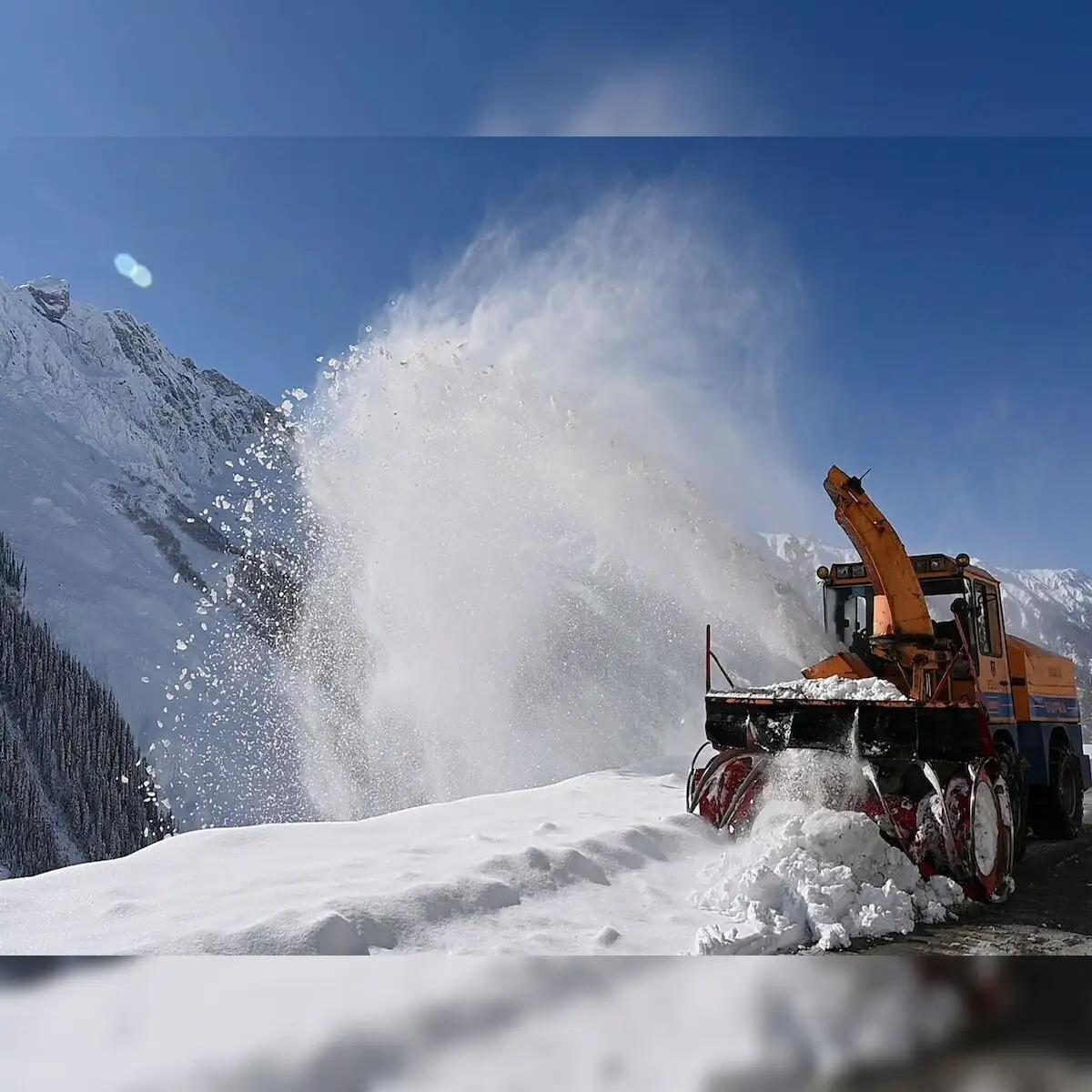
The Border Roads Organisation (BRO) stands as one of India’s greatest symbols of resilience, strategic vision, and national commitment.
In the harsh terrains of Jammu & Kashmir, Ladakh, Arunachal Pradesh, and other frontier regions, where nature itself becomes an obstacle, BRO has emerged as the force that transforms isolation into connectivity and uncertainty into confidence.
Every road laid across icy mountains, every bridge erected over dangerous rivers, and every tunnel carved through rocky passes reflects not merely engineering skill, but the spirit of India’s determination to safeguard and develop its border regions.
Established in 1960, the BRO was created with the objective of strengthening India’s border infrastructure in strategically sensitive regions.
Over the decades, the organisation evolved into a critical pillar of national security and regional development.
In Jammu Kashmir and Ladakh, BRO projects have significantly improved mobility for the armed forces while also bringing socio-economic transformation to remote civilian populations.
Roads that once remained inaccessible for months due to snow are now witnessing greater connectivity, tourism, healthcare access, educational opportunities, and economic activity.
The strategic role of BRO becomes especially significant in regions bordering Pakistan and China. Infrastructure in border areas is directly linked to defence preparedness, troop mobilization, logistics, and operational readiness.
Roads such as the Darbuk-Shyok-Daulat Beg Oldie (DSDBO) road in Ladakh have dramatically enhanced military access near the Line of Actual Control.
Similarly, rapid snow-clearance operations at passes like Zojila ensure uninterrupted connectivity between Kashmir and Ladakh, demonstrating the operational capability and commitment of BRO personnel working in extremely hostile conditions.
Beyond defense, the BRO has become a catalyst for economic growth and national integration. Improved roads encourage tourism, trade, transport, and local entrepreneurship. Remote villages that were once cut off from mainstream development are now connected to markets, hospitals, schools, and administrative centers.
The psychological impact of such connectivity is equally important because infrastructure development reinforces the feeling of inclusion among people living in distant border regions.
An important and often overlooked aspect of BRO’s functioning is the growing role of outsourcing and consultancy-based execution in infrastructure development.
Due to the technical complexity of modern highway and tunnel projects, BRO increasingly relies upon specialised consultancy firms for alignment studies, topographical surveys, geotechnical investigations, DPR preparation, tunnel designs, environmental clearances, structural engineering, and project management support.
Tender and consultancy documents related to BRO projects clearly show that private consultants are engaged for tasks such as highway alignment planning, detailed project reports, bridge designs, LiDAR surveys, land acquisition studies, environmental clearances, material testing, and software-based project management systems.
Official consultancy tenders associated with BRO projects reveal that consultants are entrusted with detailed alignment verification, tunnel design expertise, topographical surveys using advanced LiDAR technology, geotechnical investigations, environmental clearances, and preparation of technical schedules and contract documentation.
These consultancy arrangements enable BRO to combine military discipline and operational capability with specialised private-sector expertise and modern engineering practices.
The outsourcing of technical and consultancy works are becoming increasingly necessary because infrastructure projects in Himalayan regions require advanced technologies, specialised manpower, environmental compliance mechanisms, and sophisticated survey methods that demand multidisciplinary expertise.
BRO’s integration of consultancy services must reflect the modernisation of India’s border infrastructure ecosystem and demonstrate how strategic projects today involve collaboration between government agencies, engineers, consultants, technology providers, and field experts.
While such outsourcing may be intended to bring technical expertise and accelerate execution, it simultaneously raises serious concerns regarding the protection of sensitive strategic information.
The concern is not about development itself, but about the potential vulnerability created when highly sensitive geographical, military, and logistical information is shared across multiple private stakeholders.
Alignment maps, tunnel locations, alternative military routes, bridge load capacities, terrain vulnerabilities, soil stability reports, and strategic connectivity corridors are not ordinary engineering details.
In border regions, such information may reveal military movement capabilities, supply routes, operational access points, and emergency mobilization plans.
Infrastructure in frontier regions operates within a strategic security ecosystem. Roads constructed by BRO are often used for troop deployment, ammunition transport, heavy military logistics, evacuation operations, and surveillance mobility.
If sensitive technical data related to such projects is widely circulated among consultants, subcontractors, survey teams, software vendors, and outsourced agencies without stringent oversight mechanisms, the risk of information leakage increases significantly.
India today faces complex security challenges, including cross-border terrorism, cyber espionage, satellite surveillance, and intelligence gathering by hostile agencies.
In such an environment, unrestricted outsourcing in strategic infrastructure projects requires serious scrutiny. Even if no deliberate compromise occurs, excessive dependence on external entities may unintentionally expose critical vulnerabilities related to India’s border preparedness.
The issue becomes even more significant because modern infrastructure projects rely heavily on digital mapping technologies, GPS systems, drone surveys, cloud-based project management tools, and online tendering platforms.
Sensitive terrain data stored digitally may become vulnerable to cyber threats, unauthorized access, or external interception if robust security protocols are not enforced.
Strategic road alignments and tunnel designs in border areas should therefore be treated with the same level of confidentiality as defense-related operational information.
This does not mean that private expertise has no role in infrastructure development. Advanced engineering projects often require specialised technical knowledge, modern surveying technology, and scientific expertise that external consultants can provide. However, there is a growing need for strict institutional safeguards, classified data protocols, background verification systems, cybersecurity audits, and enhanced military oversight over all outsourced works connected to strategic infrastructure.
Several experts have argued that highly sensitive alignment planning, tunnel designs, alternate route mapping, and military logistics corridors should preferably remain under direct governmental and defense supervision instead of extensive private handling.
National security cannot be compromised in the pursuit of faster execution or administrative convenience.
The BRO has historically earned respect because of its discipline, operational secrecy, and strategic reliability.
Its personnel have worked under hostile conditions with dedication and patriotism for decades.
Therefore, preserving the strategic integrity of BRO projects is equally important as expanding infrastructure itself.
India’s border infrastructure development must continue at full speed, but the process should ensure that national security considerations remain paramount. Development and security must move together. The challenge before policymakers is to strike a balance between technological modernization and strategic confidentiality.
The mountains of Ladakh, Kashmir, and other frontier regions are not merely construction zones; they are national security frontiers. Every road, bridge, and tunnel in these regions carries strategic significance.
Protecting the confidentiality of infrastructure designs, alignments, and operational details is therefore not just an administrative necessity it is a national responsibility.