
The stunning mountains of Gulmarg, with snow-capped peaks touching the sky, attract thousands of tourists every year to witness the splendor of nature.
But a recent moment of uncertainty tested the mettle of visitors and rescuers alike. What started as a mechanical breakdown in one of the world’s highest cable car systems quickly turned into a huge rescue operation involving hundreds of people stuck at very high heights midair.
But what could have been a national catastrophe became a brilliant example of courage, readiness, leadership, and humanity.
A technical failure in the running of the Gulmarg Gondola suspended about 60 to 65 tourist-laden cabins in mid-air.
More than 300 passengers, including ladies (a few pregnant), children, and elderly individuals, were suddenly suspended above tough terrain, moreover, under bad weather conditions.
As each minute passed, the safety of those confined inside the cabins was becoming a concern as fear, uncertainty, and dread were beginning to grip those inside. It was a severe matter.
The ground under the gondola was rough. It was raining with a mild hailstorm, and night was falling. The risks would have been far worse if the response had been delayed.
But in this case, Bharat’s emergency response system rose to the occasion, proving its resilience, efficiency, and unshakable commitment to saving lives.
The Indian Army’s High Altitude Warfare School (HAWS), based in Gulmarg and famous across the world for its mountain warfare cum survival skills and rescue missions, sprang into action instantly under the able stewardship of its Commandant.
HAWS personnel, trained in some of the roughest weather and terrain conditions on earth, rushed to the scene without hesitation.
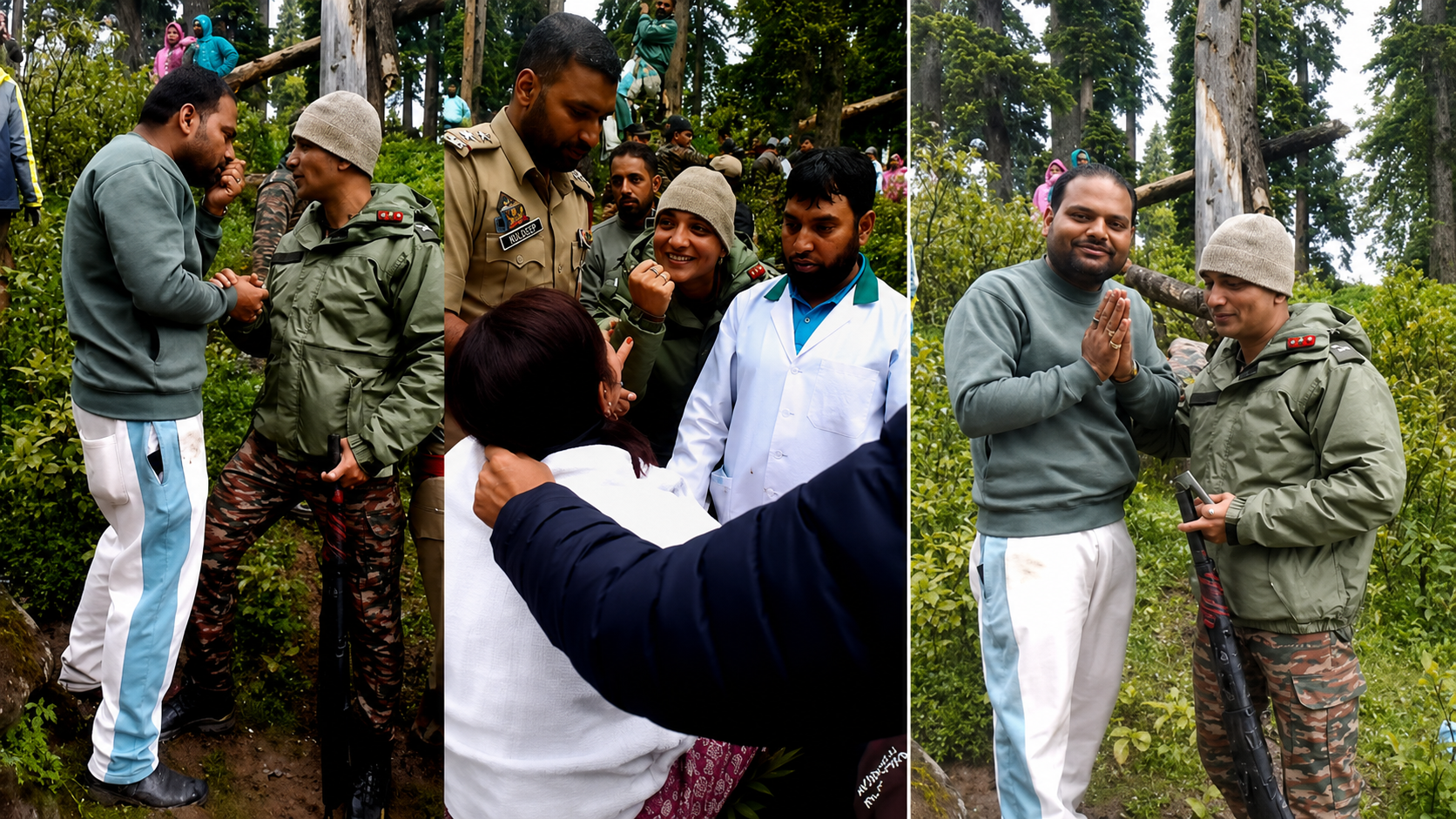
They were joined by the National Disaster Response Force (NDRF), State Disaster Response Force (SDRF), Jammu & Kashmir Police, civil administration, healthcare specialists, and local volunteers, all working towards one goal—getting each of the trapped tourists home safely.
The operation soon became a spectacular demonstration of teamwork and professionalism. Rescue teams developed communications networks and a coordinated command structure and sent trained individuals to the scene with superior mountain rescue equipment.
Teams were deliberately deployed from several directions, taking on steep gradients and harsh weather to reach trapped cottages to ensure multipoint and simultaneous rescue. Every step was measured, every movement thoughtful, every decision centered on saving human life.
Major General Puneet Doval, Commandant, High Altitude Warfare School, led this wonderful operation with total control and interagency synergy.
In an age of leadership that is generally linked with command posts and distant monitoring, Major General Doval personified the ageless military axiom of leading from the front.
He was on the ground during the operation, personally supervising the rescue and coordinating among authorities and comforting rescued tourists experiencing PTSD.
His assurance gave the rescuers confidence and calmed frightened tourists who were watching in person the resolve of those working relentlessly for their safety.
The success of the procedure was not a coincidence. This was years of training, readiness, and institutional greatness coming together.
The High Altitude Warfare School has long been considered one of the world’s preeminent military schools for mountain warfare and high-altitude operations.
Soldiers train at HAWS to survive, operate, and perform rescue operations in places where even basic movement is difficult.
The Gulmarg rescue has once again demonstrated that such skill is not just the domain of military operations; it is equally critical in safeguarding civilian lives in times of crises.
What made the operation even more important was the faultless execution of the operation, especially when compared to a similar catastrophe in Murree, Pakistan, in January 2022.
A strong snowstorm trapped thousands of tourists in cold conditions, blocked roads, and brought transportation to a halt. As situations worsened, people found themselves stuck in cars for hours and, in many cases, overnight.
The accident killed at least 23, including women and children.
Later inquiries identified strategic, tactical, and operational failures that contributed to the loss of life.
Gulmarg faced a similar challenge. The combination of severe weather, stranded visitors, and possible risk to escalate could have easily turned into a catastrophe.
But it was an entirely unique outcome. Whereas Murree proved to be a terrible lesson in the price of lack of preparedness and delayed response, Gulmarg became a compelling example of how planning, coordination, and decisive leadership can save lives.
Each agency engaged had an important role to fulfill.
The Indian Army brought in unmatched skill and operational leadership.
HAWS workers used specific mountain rescue abilities gained over years of training.
The NDRF and SDRF teams offered crucial disaster response capabilities. The Jammu & Kashmir Police coordinated and provided safety for the public.
The civil administration provided logistical support and assistance.
Medical personnel were on standby to help the rescued individuals, while local volunteers were prepared to offer all necessary assistance.
Together they wove a seamless net of service and dedication.
Maybe the most astonishing feat of the mission was that it resulted in zero casualties, wherein
Rescue teams saved all the stuck tourists safely without a scratch. And every family went home.
All lives were secure. In disaster response work, the numbers often tell a clear story, and here the most significant figure was simple yet profound: not one life was lost.
There is a deeper story of humanity behind the technical success.
The rescue effort served as a reminder to the country that the men in uniform are so much more than border guards. They are guardians of human life, protectors of communities, and signs of confidence in times of distress.
Serving the nation is not limited to the battlefield, as Indian soldiers demonstrate time and again when responding to avalanches, floods, earthquakes, medical emergencies, or rescue operations in distant places.
Furthermore, the events at Gulmarg teach a significant lesson for modern disaster management. Natural disasters and emergencies may be inescapable, but tragedy need not be.
Effective leadership, ready institutions, coordination, and swift response between agencies can be the difference between calamity and survival.
The Gulmarg rescue effort shows how we should utilize these ideas in emergency situations. Today, the rescued tourists are telling their stories and are safely back in their homes.
The nation is deeply indebted to all the people who participated in this expedition.
To the brave soldiers of the Indian Army and the High Altitude Warfare School, to the personnel of NDRF and SDRF, to the officials of Jammu & Kashmir Police, to the civil administration, medical teams, and local volunteers—your dedication converted dread into hope and uncertainty into safety.
Major General Puneet Doval and the personnel of HAWS, Gulmarg, deserve special commendation for their leadership, knowledge, and commitment, which reflected the greatest traditions of military service.
They showed that real leadership is not about rank but about taking the lead when lives are at stake.
The Gulmarg Gondola rescue will not just be remembered as an emergency response operation but as a narrative of courage under duress, leadership in action, and humanity at its best.
It’s a monument to what can be done when institutions are prepared, leaders are bold, and rescuers put the safety of others ahead of their own comfort.
When danger came to the mountains of Kashmir, India’s rescuers didn’t question who needed aid, where they were from or what the challenges ahead were. They just kept going on. And their actions are why they will always be recognized as the real heroes of Gulmarg.