Home Blog Page 103

Media’s crucial role in reporting terrorist incidents needs responsibility

0

A lot has been spoken and written about the recent ambush of an Indian Air Force [IAF] convoy in the Poonch district of J&K that left one air warrior dead and four others injured. Given the seriousness of the incident, the interest generated is a positive sign as it indicates the high degree of public concern on Pakistan’s continuing proxy war against India. Moreover, despite heightened emotions, discussions and debates on this incident have largely been constructive in nature, which is a positive.

 Almost all news channels and media houses initially reported one fatal and five non-fatal casualties but after release of the official press statement, they amended the casualty figures to one dead and four injured and such a minor variation in casualty figures is understandable.

However, a news report claimed that 12 soldiers had been injured in this attack and that the terrorists had managed to take away an unspecified number of weapons. Despite being completely at variance with other reports on the incidents, it nevertheless gained traction because it was posted on the website of a leading India business and financial media house. It was even quoted by some very reputed analysts to project a pessimistic outlook.

While the concerned media house quietly removed this news report from its website without issuing any corrigendum, incorrect reporting created an impression in the minds of many that the security forces were trying to conceal casualty figures. It also painted a distorted picture of the incident by implying that just 4 to 5 terrorists were able to completely overawe more than a dozen armed IAF soldiers and after injuring them, successfully decamped with their weapons without suffering any casualties.

It has since emerged that the air warriors suffered one fatal and four non-fatal casualties and that no weapons were taken away by the terrorists, and these inputs completely change the perceived complexion of the incident.

The fact that despite having successfully ambushed the IAF convey at a place and time of their own choosing, as well as being armed with sophisticated weapons including state-of-art American M4 rifles, the terrorists were still not able to inflict extensive casualties on the IAF soldiers, and nor were they able to snatch any weapons clearly indicates that it was the fierce and effective response of the air warriors that compelled the terrorists to beat a hasty retreat.

Regrettably, the inaccurate news report of a dozen casualties and weapon snatching made terrorists appear to be ‘supermen’ and portrayed the IAF soldiers as easy pushovers who allowed their weapons to be snatched. However, it’s abundantly clear that there was no malafide intention on anyone’s part and it was only the inclusion of inaccurate details in the news report that gave critics a stick to beat the government and defence forces.  

The media is often accused of falling prey to ‘breaking news syndrome’ and end up showing undue haste in publishing news on incidents of terrorism. Highlighting the right of people to know what’s happening in real time, the media stoutly justifies the publication of uncorroborated reports by citing official tardiness in announcing details of casualties. However, blaming security forces for undue delay in furnishing details about casualties for factual inaccuracies in a news report is being rather unfair.

It needs to be appreciated that when there’s a terrorist attack that results in casualties, sensitivity demands that the tragic news to the near and dear ones of those who have made the supreme sacrifice comes as a personal message from the commanding officer of the unit to which the deceased belonged and not through a perfunctory media announcement. As the next of kin [NoK] of those martyred rightly want to know more details of the incident, facts have to be ascertained which though a time consuming exercise cannot be dispensed with.

It is neither intended to target the media house that published the news report being discussed as this isn’t the first time that an inaccurate report on terrorism related incident has been published. In fact there have been numerous such cases and why go far? The writer can quote his own example- though only injured during an anti-terrorist operation in J&K, he was promptly declared ‘dead’ by the local print media. This happened in the mid 90s when there was no social media, yet the speed with which this ‘news’ reached home was amazing and he alone knows what his family went through due to this untrue report!

Since misreporting of terrorism related incidents has become a common occurrence, there’s a crying need for the media to introspect and institute appropriate measures to avoid inaccurate reporting. 

The first thing the media needs to do is to overcome the temptation to get into the ‘breaking news’ rat-race and curb its craving for proudly announcing for using the  “you heard it first on this channel”catch-phrase. Accordingly, reporters covering any terrorist related incident need to be more cautious and beware of blindly accepting patently questionable inputs coming from officials and sources “speaking on the condition of anonymity”.

Furthermore, even though the initial news report about an incident may have been compiled by local scribe having considerable experience of reporting on terrorist related incidents, there’s a definite need for media houses to analytically peruse the contents of the news report before its publication.

Any unprecedented input definitely needs corroboration. In the instant case, the news report mentioned terrorists snatching weapons from injured soldiers and this is something that has  never ever happened before in more than three decade old ongoing proxy war in J&K.

Terrorists have never ever been able to snatch a weapon from any soldier who’s alive because for an Indian soldier, allowing an adversary to take away his personal weapon while he has life still left in him is not only unthinkable and most disgraceful but also sacrilegious. This explains why the dead bodies of so many Indian soldiers killed in combat are found tightly clutching their weapons!

Most importantly, the media in India needs to realise that unlike Rawalpindi which conceals its military casualties to the extent of even refusing to accept the mortal remains of its dead soldiers, the Indian defence forces proudly honour its fallen rank and file by publicly accepting and saluting their supreme sacrifice.

As explained earlier, the perceived ‘delay’ in disseminating casualty data isn’t an attempt at concealment by the defence forces but out of sheer respect for human sensitivities. However, it’s also a fact that this does create a paradoxical situation- while the defence forces need time to confirm facts and intimate the NoK of the deceased before releasing information of casualties to the press, the media needs to keep its subscribers updated on the incident.

Hence there’s definitely a need for better coordination and mutual understanding between the defence forces and a media so that both can fulfil their onerous responsibilities.
Centre issues first Indian citizenship certificates under CAA to 14 individuals

Over two months after notifying rules for the Citizenship Amendment Act (CAA), the Ministry of Home Affairs on Wednesday issued the first set of citizenship certificates under the law to 14 individuals.

Union Home Secretary Ajay Kumar Bhalla personally handed over the certificates to the applicants in New Delhi.

“The Empowered Committee, Delhi headed by Director (Census Operation), Delhi, after due scrutiny, have decided to grant citizenship to 14 applicants. Accordingly, Director (Census operation) granted certificates to these applicants,” MHA spokesperson said.

“Bhalla handed over citizenship certificates to some applicants and also congratulated them, highlighting salient features of the Citizenship (Amendment) Rules, 2024,” the spokesperson added.

The Centre had notified the rules for the CAA on March 11, paving the way for implementation of the law over four years after it was passed by Parliament in December 2019.

Over the past two months, the Ministry of Home Affairs (MHA) has received several applications from individuals belonging to Hindu, Sikh, Jain, Buddhist, Parsi, and Christian communities who entered India from Pakistan, Bangladesh, and Afghanistan on or before December 31, 2014, due to religious persecution or fear of such persecution.

Citizenship Amendment Act (CAA)

The Citizenship Amendment Act (CAA) was enacted in December 2019, but the implementation rules were not framed until recently. The law’s passage sparked protests, which subsided only with the onset of the COVID-19 pandemic and a series of petitions that remain pending before the Supreme Court.

West Bengal Chief Minister Mamata Banerjee has stated her opposition to the CAA if it curtails existing rights of Indian citizens in any manner.

The CAA rules include a provision that refugees from the six minority communities from the three countries applying for citizenship by registration or naturalization must submit an application, an affidavit verifying the statements made, another affidavit from an Indian citizen testifying to their character, and a declaration of familiarity with one of the languages specified in the Eighth Schedule of the Constitution of India.

The application must be submitted electronically to an empowered committee through a district-level committee notified by the central government and supported by documents such as a copy of a passport issued by the government of Pakistan, Afghanistan, or Bangladesh, birth certificate, any other identity document, land or tenancy records, or any document showing that either of the applicant’s parents, grandparents, or great-grandparents were citizens of one of the three countries.

The rules state that these documents will be admissible even beyond their validity period.

Applicants must also provide proof of entry into India before December 31, 2014, which can be in the form of a visa and immigration stamp, registration certificate from the Foreigners Regional Registration Officer (FRRO), a slip issued by Census enumerators in India, a government-issued license, certificate, permit in India (including a driving license, Aadhaar number, ration card, or marriage certificate issued in India, etc.).

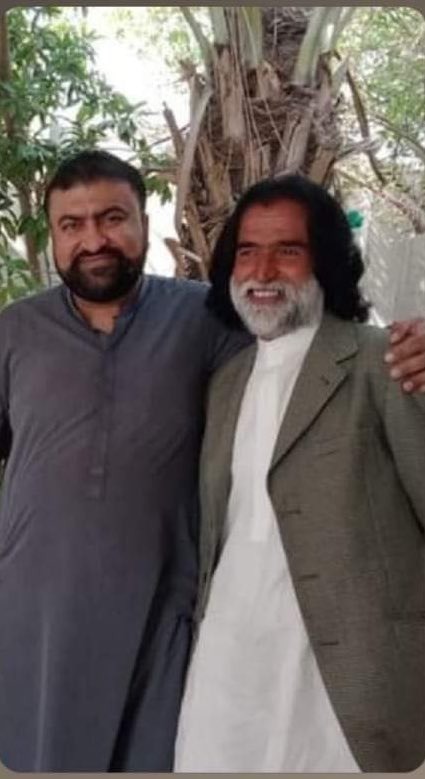
Sarfaraz Bugti’s close ally fatally shot in Dera Bugti

Recently, Rakhia Bugti, a close friend and ally of Sarfaraz Bugti, the puppet chief minister of Pak-occupied Balochistan, was shot and killed by an unidentified assailant in the Sui area of Dera Bugti district of Pak-occupied Balochistan.

Sarfaraz Bugti confirmed the news on his social media platform “X” that his close friend Rakhia Bugti had been killed by unidentified armed men.

It’s important to note that the Pak Army’s puppet Sarfraz Bugti is the notorious founder and leader of the brutal private armed group, infamously known as the “death squad”, operating in Girdonhwa and Dera Bugti areas. This group is involved in committing brutality and applying oppressive tactics on the innocent Baloch society. Death Squad is involved in enforced disappearances, extrajudicial killings, and other nefarious activities.

The purpose of these ‘death squads’ is to spy on the Baloch nationalist and pro-independence groups along with their supporters, with the squads being financially incentivized and given full authority in exchange for such services. Puppets like Sarfaraz Bugti and others consolidated their power by demonstrating allegiance to the Pak establishment through the formation and command of these ‘death squads’.

Therefore, it is safe to conclude that the close ally was also a culprit and must have committed atrocities on the Baloch community, and must have been taken down by the nationalists who are working for the liberation of Balochistan.

POJK: Muzaffarabad rights protest halts as Pak yields to demands

The complete shutdown protest called by the Joint Awami Action Committee in Pakistani-Occupied Kashmir (POJK) has ended on the fifth day. The committee called off the strike after demanding the immediate release of all arrested individuals and the formation of a judicial commission to investigate the brutal killings during the protests and to punish those responsible.

During the end of the strike, solidarity was expressed with the families of the martyrs, and prayers were offered for the departed souls.

Five days of intense protests

For the past five days, businesses and transportation across POJK had come to a standstill in response to the strike against high electricity and flour prices. The situation turned tense when protest caravans from different areas converged on Muzaffarabad, leading to clashes between protesters and police as well as Rangers.

Following these events, the Pakistani establishment, convinced of its defeat, approved a relief package of 23 billion Pakistani rupees for POJK to address the issues, resulting in reduced electricity and wheat flour prices.

A high-level meeting chaired by Imperial Prime Minister Shehbaz Sharif was held at the Prime Minister’s House to address the situation in POJK. The meeting, attended by representatives of the occupying POJK government and its Ministry of Interior, along with other key officials, approved the 23 billion Pakistani rupee relief package.

Following the approval of their demands, the Joint Action Committee officially announced the end of the protest. Over the past five days, the strike for affordable electricity and flour led to intense clashes between protesters and police. The use of tear gas, batons, and live fire by the police resulted in at least five deaths and 90 severe injuries among the protesters.

Rights protests across POJK

The strike was initially announced by the Jammu Kashmir Joint Action Committee following the arrest of at least 70 individuals during raids last Thursday. As a result of the protests and strikes, all businesses, offices, and educational institutions across POJK were closed.

The latest development comes after almost an year of protests and civilians raising demands. At first, the protest were completely ignored and the tariffs on electricity were increased unprecedentedly. But after the Awami Action Committee announced mass movement towards Muzaffarabad and their demands escalated to ‘either rights or no rule’, Islamabad took cognisance of the matter, only to conduct a merciless suppression of the protest, killing five individuals. But due to unwavering courage and determination of the enslaved Kashmiris, Islamabad eventually succumbed to their demands.

Pakistan gas a record of making false promises

Nonetheless, approval of the package doesn’t means that the problems of Kashmiris have been solved as the control of the fund would be directly in the hand of occupying government, which is a puppet at the hands lf Pakistan Army.

Moreover, similar protests in Pakistan-occupied Gilgit Baltistan which resulted into the occupying government’s assurance clearly show that these announcement are only made to diffuse the intensity and fervour of protests and they never fructify in favour of native population.

Pak Army continues forced disappearances of several persons in Dera Bugti

The Pak Army has taken several individuals into custody and transferred them to undisclosed locations. 

Reportedly, during a search operation conducted by the Pak Army in various areas of Sui in Dera Bugti district Pak-occupied Balochistan, the oppressive Pak Army detained several individuals and transferred them to an unknown location, after which they were unreachable.  

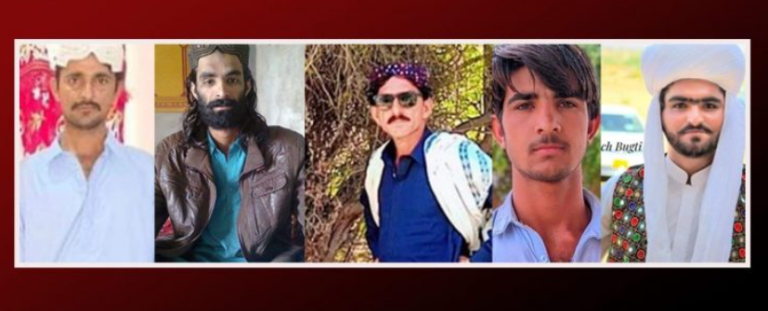
The victims of enforced disappearances are identified as Dost Ali son of Dosteen Bugti, Balach son of Shah Mur Bugti, Dilshad son of Abid Hussain, Yaseen son of Ghulam Mustafa Bugti, Saleh son of Hazar Khan Bugti, Yousuf son of Zahoor and Pupal son of Lal Bakhsh Bugti.

During this so-called search operation, the Pak Army broke into their houses and subjected the residents to violence.

In addition to the above list of victims of enforced disappearance, there are several other individuals whose identities have not been ascertained yet but have fallen victim to enforced disappearance.

For the past five days, Surbandhar an area of Gwadar has also been under military siege. Reportedly, every night at 11 p.m., forces encircle the entire area and conduct search operations, intimidate and torture the residents. Around 25 Surbandhar residents have been forcibly disappeared, with some subjected to torture and later released, while the whereabouts of seven locals—Sameer Hamza, Dur Mohammad, Umair Aslam, Mohsin Raheem Baksh, Niaz, Nizam Mohammad Jan, Bilal Raza Mohammad remain unknown.

This incident is not uncommon, since Pakistan’s forceful occupation of Balochistan in 1948 the region has been subjected to exploitation of its resources and systematic oppression of its people by the Pak Army. The enforced disappearances, perpetrated by the Pak Army, have become alarmingly frequent, with reports emerging regularly of individuals vanishing without a trace. The discovery of bodies, often bearing signs of torture, further underscores the severity of the situation. Balochistan remains embroiled in a struggle for justice and recognition of its people’s rights, as enforced disappearances continue to plague the region.

Abduction and conversion of another Hindu minor girl to Islam in Sindh

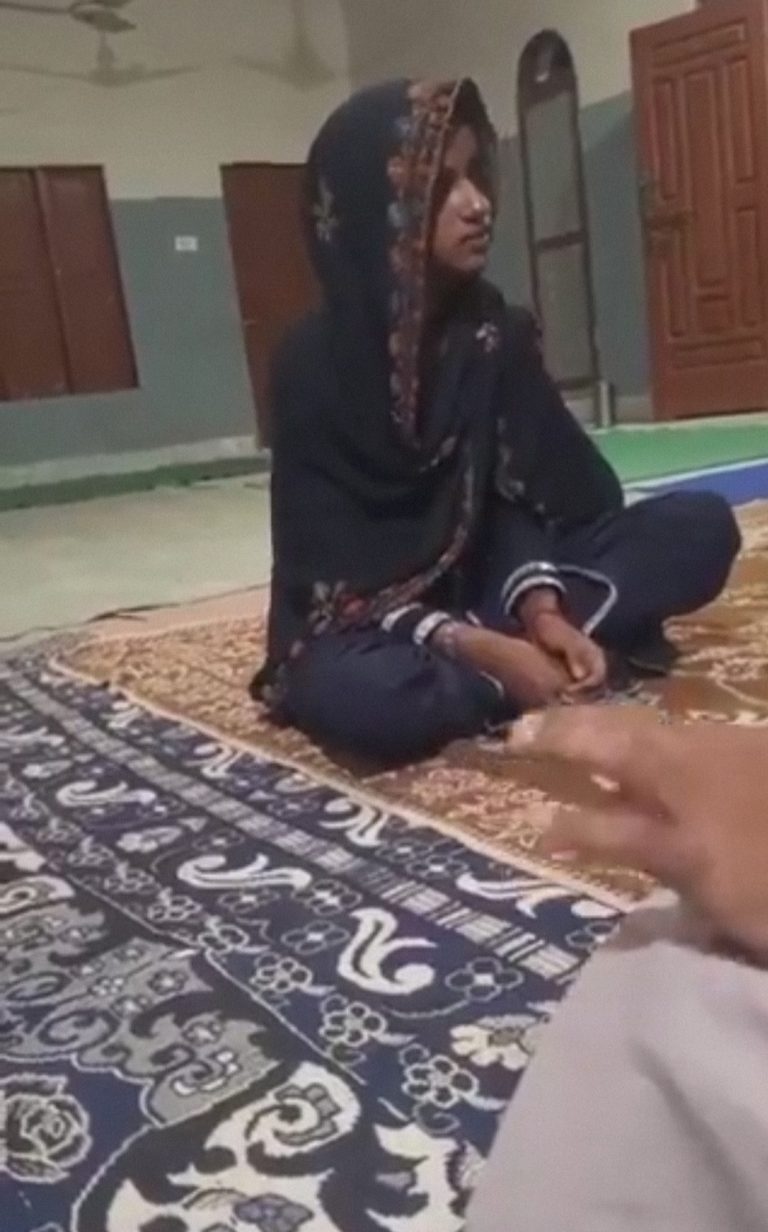
In a disturbing incident, a minor Hindu girl named Maya, a resident of Bagho Kohli, Sindh, has been abducted and forcibly converted to Islam.

The conversion took place at the hands of Peer Agha Jaan Sarhandi at the Dargah Gulzar-e-Khalil in Samaro.Following her conversion, Maya was married off to a Muslim man named Muhammad Ramzan. The incident has sparked outrage among the local Hindu community and human rights activists, who are demanding immediate action and justice for the victim.

Notably, Sindh has the highest population of Hindus in Pakistan and therefore witnesses most cases of forced conversion. The forced Islamisation of religious minorities has led to the steep decline in their population in the Islamic Republic.

Pak Army continues enforced disappearances in Pak-occupied-Balochistan

The grim practice of enforced disappearances continues unabated in Pak-occupied-Balochistan. Two more young men reportedly went missing from the Kech and Gwadar districts over the weekend amid raids and detentions by security forces. 

Nizam Baloch, who was detained on May 9 from Gwadar district, was freed on Monday after four days in custody. However, this respite was overshadowed by fresh reports of enforced disappearances in the region.

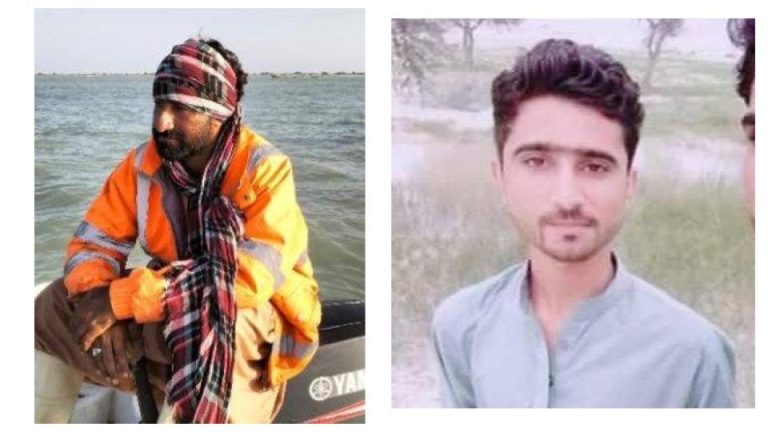
Pak forces conducted a raid in the Surbandan area of Gwadar district and forcibly arrested a young man identified as Mohsin Baloch, son of Raheem Baksh, a young fisherman from Surbandan. His whereabouts remain unknown after being moved to an undisclosed location.

Another Baloch student Niyaz Abdul was forcibly disappeared by Pak forces on Monday.

Gwadar has witnessed an intense search operation by Pak Army over the past week, resulting in several detentions. Five of the missing persons from this operation have been identified as Sameer, son of Hamza; Bilal, son of Raza Muhammad; Dur Muhammad, son of Kareem Baksh; Ameer, son of Aslam; and Amaan, son of Jamadar.

Moreover, on Sunday around 7 p.m. in Kech district, forces forcibly arrested Adam, son of Soomar, a resident of Balgatar Lop area. Adam was the sole breadwinner for his family engaged in the oil import business from Iran. The day before his abduction, upon returning from the border, he was detained by Army-sponsored armed groups, commonly referred to as “Death Squads.”  

Pak Army and intelligence agencies are forming these “Death Squads” and granting them impunity to perpetrate crimes like enforced disappearances across the region.

Pakistan’s military and intelligence agencies are solely complicit in the enforced disappearances of Baloch citizens. Families have led numerous protests demanding the recovery of their missing loved ones. However, since Pakistan has forcefully occupied Balochistan since 1948, it is exploiting its resources while oppressing Baloch community.

BLF leader Dr Allah Nazar urges international support for Baloch freedom from Pakistan

In a recent statement released by Dr. Allah Nazar Baloch, a prominent leader of the Balochistan Liberation Front (BLF), reiterated the urgent call of the Baloch nation for support in their decades-long struggle for self-determination against the forcible and oppressive Pakistan occupation.

He emphasized the grave human rights abuses and systematic oppression suffered by the Baloch people at the hands of the Pak establishment. He urged nations and organizations worldwide, including neighbouring countries like Afghanistan, India, Iran, and the wider Middle East, as well as the European Union, United States, United Nations, and international human rights groups, to acknowledge the ongoing atrocities against the Baloch community committed by the Pak Army and aid the Baloch cause.

He further underscores the Baloch people’s rich cultural and historical heritage and their longstanding ties with the Arab world. He points out that although the Baloch have preserved their unique culture for millennia, they have been the victims of systematic violence and oppression due to Pakistan’s over 76-year occupation of Balochistan.

He highlighted the historical links between the Baloch and Arab countries in his significant speech to UAE President Mohammed Bin Zayed al Nahyan and Saudi Crown Prince Mohammed Bin Salman, urging recognition of the Baloch struggle against Pakistan.

“We condemn the recent killings of innocent Baloch civilians in Mashkay, Awaran and Gwadar by Pak Army-sponsored death squads. These atrocities are a continuation of the Pak Army’s brutal campaign to suppress the Baloch freedom movement, which is increasingly gaining popular support.” He stated in his statement.

He said that the Baloch struggle is secular, and they are fighting for liberation from an occupying power rather than against any specific ethnicity or religion.

Drawing parallel to China’s struggle for independence, Dr Baloch called on China to reconsider its economic and military support for Pakistan, arguing that such support comes at the expense of the lives of Balochs.

Following that, Dr. Baloch called on the international community to support the Baloch nation’s cause by highlighting their desire for justice, peace, and the basic right to self-determination.

Pak-occupied J&K: Angry Kashmiris destroy mobile towers as Pak establishment suspends internet

Amid escalating tensions in Pakistan-Occupied Jammu and Kashmir (POJK), service of internet have been suspended. Reports from Mirpur indicate that the occupying Pak government has halted internet services across the entire region.

In response to the suspension, protesters have begun dismantling various mobile network towers in cities like Mirpur and Muzaffarabad. The protesters assert that POJK is experiencing its worst period, with Pakistan forces using excessive force. They claim that the suspension of internet services is a failed attempt to silence the voices of the region’s residents, providing cover for Pakistan to deploy its forces throughout Kashmir.

Sources report that both Rangers and Pakistan Army units have already entered POJK. There are also concerns about Pakistan forces establishing regular positions in nearby forests, a development deemed alarming by local observers.

The situation remains highly volatile, with the internet blackout contributing to the unrest. The protesters’ actions and the increased military presence underline the severe and deteriorating conditions in the region.

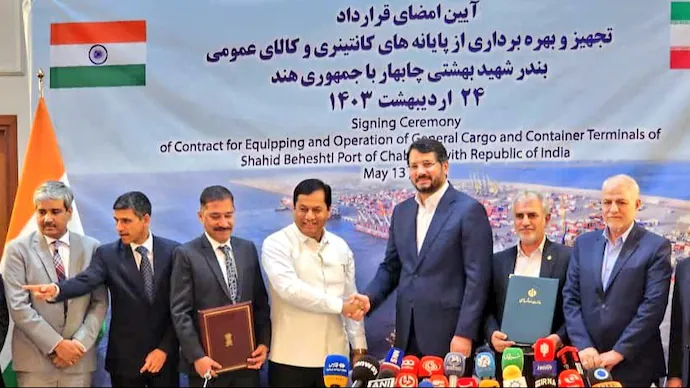
India, Iran sign 10-year pact for operation of Indain company at Chabahar port terminal

India and Iran on Monday signed a key 10-year contract that will allow an Indian company to take over operations at Shahid Beheshti terminal of the strategic Chabahar port in Iran, in a move aimed at boosting regional maritime trade connectivity. 

The agreement was signed between India Ports Global Limited (IPGL) and Iran’s Ports and Maritime Organization (PMO) in the presence of India’s Ports, Shipping and Waterways Minister Sarbananda Sonowal, who is on a visit to Tehran.

As per the pact, IPGL’s subsidiary India Ports Global Chabahar Free Zone (IPGCFZ) will operate the Chabahar terminal for 10 years. India plans to invest $120 million in equipping the terminal, while also offering a $250 million credit line for developing associated infrastructure.

This marks the first time an Indian company will operate a terminal at an overseas port, a strategic move that will boost trade ties between India, Iran and Afghanistan while allowing greater access to landlocked Central Asian nations.

“This agreement aims to enhance regional connectivity and facilitate trade, particularly between India, Iran and Afghanistan”, an official statement said.

Sonowal termed it a foundation for “India’s long-term involvement at Chabahar” with a “multiplier effect” on the port’s viability. He highlighted Chabahar’s potential as a hub for the International North-South Transport Corridor for linking India with Central Asia.

The U.S. had previously granted a sanctions exemption for Chabahar to facilitate Afghanistan’s trade and development. However, the State Department indicated the latest deal may not have a similar carve-out.

While calling sanctions on Iran “in place”, a spokesperson said any entity doing business with Iran risked potential sanctions exposure, without directly commenting on the Chabahar pact.

Iran has termed Chabahar a key maritime enabler for boosting trade connectivity to Central Asia, bypassing Pakistan. The port has handled over 8 million tons of cargo since India began operations there in 2019.