Home Blog Page 118

Unknown assailants kill two Shias in Parachinar amid rising insecurity in the region

In a tragic incident in the tribal area of Kurram Agency, two Shia individuals were fatally shot dead. The incident happened at Tangi in Parachinar tehsil of Khurram Agency. The attack, carried out by unknown assailants, resulted in the deaths of two individuals and left two others injured.

According to reports, the firing occurred on the late night of April 3, targeting members of the Shia community. The victims, who have not been identified yet, were part of the marginalized Shia minority in the region.

Authorities have initiated an investigation into the incident to ascertain the motives behind the attack and identify the perpetrators. However, public sentiment reflects a widespread lack of confidence in the forces and security agencies, with many expressing concerns over the persistent lack of security for Shia communities in Kurram Agency and Parachinar.

Shia residents have long endured a sense of vulnerability and insecurity due to the failure of security agencies to effectively address the ongoing threats posed by extremist elements. The recurring attacks and blasts have claimed numerous innocent lives, leading to growing frustration and disillusionment among the minority Shia population.

Critics argue that the establishment’s inability to provide adequate protection to its citizens, particularly vulnerable minorities like the Shia community, reflects a significant failure in governance and security measures. As a result, many feel that the regime has faltered in fulfilling its fundamental duty to safeguard the lives and rights of all its citizens, leaving minorities like the Shias at the mercy of ruthless terrorists.

Rights activist in POJK to stage protest on May 11 against power cuts in Muzaffarabad

POJK is once again going to witness a ‘Rights Movement’ protest as the problem of load shedding persists in the POJK. Toqeer Gilani, a political rights activist and member of the Awami Action Committee, announced plans to organize a protest against the extensive load shedding in PoJK. The protest will happen at Muzaffarabad on May 11.

The demonstration on May 11 is anticipated to be stronger than earlier protests as, the Joint Awami Action Committee had already announced a long march from Bhimber to Muzaffarabad on May 11 for the fulfilment of their Charter of Demands. In line with that, Shaukat Nawaz Mir, who is at the helm of protests, warned the Pakistani establishment not to pose resistance to the long march as it would be reciprocated with complete shutdown across POJK.

It is worth mentioning that POJK has resisted the Pakistani establishment’s coercive measure that devoid them of their rights and basic amenities. In past 6 months there have been a number of protests from all sections of the society but no recourse has been taken by the Pakistani establishment and its puppet regime in POJK.

From carrying out funeral procession of the electricity bills to observing civil disobedience, POJK populace has taken every step to make its voice heard in Islamabad but their righteous voice of demands never falls on the deaf ears of Pakistani establishment.

The distressful condition of POJK and subversive condition of its people are clearly outlined recently by another Joint Awami Action Committee member Arif Chaudhary.

POJK not part of Pakistan by constitution

A couple of days ago, prominent leader of the Mirpur chapter of the Joint Awami Action Committee Arif Chaudhary, convened a press conference at the Mirpur Press Club on Tuesday, addressing what he perceives as the Pakistani administration’s neglect of the people residing in Pakistan-occupied Jammu Kashmir (POJK).

Chaudhry underscored the failure to uphold promised rights and resources for PoJK residents, highlighting Mirpur’s enduring sacrifices for Pakistan despite enduring neglect and oppression.

“We, the people of Mirpur, are civilized but have been suppressed, looted, forcefully dislocated and suppressed, and the same destruction continues even today,” Chaudhry asserted during the conference.

He pointed out that PoJK is not constitutionally part of Pakistan, citing Article 257 of the Pakistan Constitution and United Nations resolutions from the late 1940s, which established PoJK’s distinct status and Pakistan’s obligations towards its people.

Chaudhry criticized the persistent issue of severe load shedding in PoJK despite its significant contribution to Pakistan’s electricity production. He demanded fair treatment in accordance with Pakistan’s constitution, particularly highlighting the disparity in electricity rates and the lack of compensation for resources utilized by Pakistan.

“Our hands are now forced to bring these issues to the UN, citing articles of the Pakistani constitution. This will be shameful for Pakistan on the international stage,” Chaudhry concluded, emphasizing the need for the government to take PoJK’s concerns seriously and address them promptly.

The upcoming protest and long march in Muzaffarabad are poised to underscore the assertion that POJK is not part of Pakistan. This event will highlight the growing sentiment that the entire J&K region is an integral part of India, especially as Kashmiris in India enjoy rights without petitioning.

Pak officials arrest Baloch youth for requesting water amid scarcity in Pak-occupied Balochistan

In the Pera Koh area of ​​the Dera Bugti constituency in Pak-occupied-Balochistan, local residents are grappling with a severe shortage of water. Sadly, this region is also the puppet Chief Minister’s jurisdiction. The scarcity has reached a point where a young boy, desperate for water at home, stopped a water tanker belonging to the OGDCL company. He pleaded for some drums of water, but he was arrested by individuals in plain clothes.

Over the past two decades, Pak-occupied-Balochistan’s once lush green pastures have transformed into deserts due to the relentless water shortage. Last December, residents of Pasni, a tehsil in the Gwadar district, took to the streets to protest the perpetual water crisis. Led primarily by women, the protesters disrupted traffic temporarily as they gathered outside the Assistant Commissioner’s office in Pasni. Their demands were: an immediate restoration of the water supply to address the ongoing crisis.

The water level continues to plummet rapidly in Quetta, Pishin, Killa Abdullah, Kalat, Mastung, Khuzdar, Loralai, and other districts across the province. Pak-occupied-Balochistan relies heavily on underground water for both drinking and agriculture.

Water crisis

With tube wells serving as the primary source of water, the excessive extraction has led to a significant decline in the underground water table. Instead of being around 200 to 300 feet deep like they used to be, many wells now reach depths of over 1,000 feet.

This scarcity has forced farmers to abandon their fruit orchards, resulting in a noticeable decrease in orchard numbers, particularly in northern and central Balochistan, renowned for apple, grape, and other fruit production. Moreover, the water shortage has left thousands unemployed, making matters worse for an already challenging situation.

Since the forceful and brutal occupation by the Pak Army in 1948, Balochistan has endured a painful environment. Not only is the Pak Army exploiting the resources along with the Chinese, but also the innocent Baloch population has suffered countless atrocities.

Indian army foils Pakistan backed infiltration attempt in Uri; 2 terrorists dead

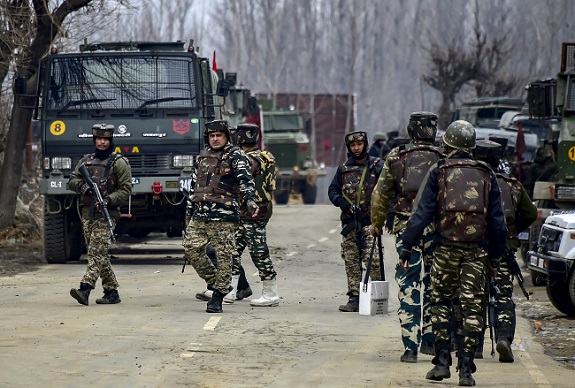
In a swift and decisive operation, the Indian Army successfully foiled an infiltration attempt by terrorists in the Uri sector of Jammu and Kashmir’s Baramulla district. Acting on intelligence regarding suspicious movements, security forces engaged the terrorists in a gunfight, resulting in the neutralization of two. The operation, conducted in Uri sector in the early hours of Friday, March 5, showcased the Army’s commitment to countering insurgency in the region.

Meanwhile, tragedy struck the police force in a separate incident in Kathua. Sub-Inspector Deepak Sharma, injured during a shootout with gangsters at the Government Medical College premises, succumbed to his wounds. The exchange of fire also resulted in the death of one gangster.

The incident of infiltration have significantly reduced in past decade, especially after the abrogation of Article 370. Consequently, the valley has embarked towards a peaceful climate. The infiltration attempt are orchestrated by Pakistan with a purpose to radicalise the youth of valley and carry out disruptive terror activities. As elections are on the verge, Pakistan is desperately trying to pierce the terrorists through because after the abrogation of Article 370, the elections are happening for the first time and the peaceful and democratic election reinforced with huge participation would prove to be the last nail in the coffin of Pakistan’s separatism instigating policy towards the Jammu and Kashmir.

Beijing’s silence on CPEC citizen security: How long will it last?

Targeting Chinese Nationals

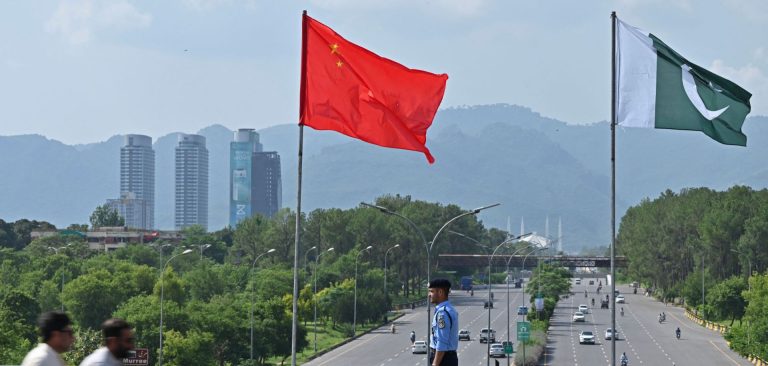
Plagued by recurring security issues, Beijing’s more than a decade old ambitious China-Pakistan Economic Corridor [CPEC] project suffered yet another setback last week when a suicide bomber rammed his explosive laden vehicle into a convoy carrying Chinese engineers working on the Dasu Hydro electric project near Besham city in Pakistan’s Khyber Pakhtunkhwa [KP] province. In this attack, five Chinese nationals and one Pakistani lost their lives.

Coming hard on heels of suicide attacks on the Turbat air base and Gwadar port, this incident has once exposed the woeful inadequacy of the security arrangements that increases vulnerability of Chinese nationals working on CPEC projects. This is because the latest attack isn’t the first time that Chinese nationals working on the Dasu Dam project have been targeted; in 2021, an explosion in a bus carrying Chinese nationals left nine of them dead.

CPEC Security

Overall responsibility for ensuring security of those working on CPEC as well as the assets of this project is that of the Pak Army for which it also has a host of paramilitaries as well as intelligence and law enforcement agencies under its command.

In September 2016, Rawalpindi created an additional force [34th Light Infantry Division] exclusively for providing protection to Chinese nationals working on CEPC. However, when this 15,000 strong mammoth force [commonly referred to as Special Security Division or SSD] was unable to provide the requisite degree of security, the Army created yet another similar sized SSD in 2019.

Surprisingly, despite putting a whopping 30,000 soldiers [along with several others] on the job of ensuring safety of Chinese nationals working on CPEC projects, instead of showing discernable decline, there’s been a phenomenal spike in both the intensity and frequency of attacks. This clearly indicates that independence fighters are giving the Army more than a run for their money.

Passing the Buck

Islamabad has tried every trick in the book to water down its own security lapses by blaming foreign “hostile agencies” and at times has even gone to the extent of trying to cover up terrorist attacks by denying their occurrence and the 2021 Dasu Dam project bus attack is one such classic example. Readers may recall that after this incident, Pakistan’s Foreign Office [FO] had announced that the bus went off the road “after a mechanical failure resulting in leakage of gas that caused a blast.” [Emphasis added].

However, when Beijing called Islamabad’s bluff and outrightly rejected this outrageous claim, Pakistan’s then Information Minister Fawad Chaudhary immediately changed track by admitting that “Initial investigations… have now confirmed traces of explosives [and] terrorism cannot be ruled out.” [Emphasis added]. Having established the terror angle, one awaited Islamabad’s next predictable move of passing the buck and it didn’t disappoint.

A month later, Pakistan’s Foreign Minister Shah Mehmood Qureshi announced that “According to our investigation, Afghanistan’s soil was used for this attack, for its planning, its execution and the making of the plans, we see them clearly connected to an NDS [National Directorate of Security, Kabul’s spy agency before Taliban takeover] and RAW [Research and Analysis Wing, Indian intelligence agency] nexus.” [Emphasis added]. Like all other unsubstantiated allegations, this one too fell on deaf years!

Rawalpindi’s Skewed Counter-Terrorism Strategy

Pak Army’s counter-terrorism strategy is a study in contrast. On the one hand, it had [till very recently] been treating TTP, which killed and injured thousands of Pakistanis soldiers and civilians with kid gloves. It unsuccessfully tried  to buy peace through negotiations and making unwarranted concessions like unconditional release of TTP terrorists with blood of Pakistani security force personnel and civilians on their hands, it has been extraordinarily harsh while dealing with BNGs.

On the other hand, Rawalpindi has been using disproportionate force against the Baloch people with scant regards for safety of innocents, the old, infirm, womenfolk and children. It liberally uses the air force to bomb inhabited areas on mere suspicion, employs attack helicopters equipped with rockets and machine guns as well as heavy calibre artillery to wreak death and destruction on the hapless residents of Pak-occupied-Balochistan which have even horrified PTI chief Imran Khan.

In an old and undated video [available at https://www.youtube.com/watch?v=GCTTMdwsIZ4] before he became prime minister, Khan can be heard saying, “Our Army bombing people in Balochistan, how can we bomb our own people, is there any Army you are bombing? It is our own people with their children, but it is important to understand [that] are we just bombing our people, just think about the sin of bombing villages with the women and children. [Emphasis added].

The Army has consistently tried to play down Baloch nationalist sentiments by trying to portray its fighters as greedy opportunists who are being paid lavishly by New Delhi to indulge in violence acts to disrupt the CPEC project. What Rawalpindi conveniently avoids mentioning is that it’s the Pakistan Army’s abhorrent practice of orchestrating enforced disappearances, taking punitive actions and its barbaric ‘kill and dump’ policy that is forcing locals to pick up the gun.

Even Human Rights Watch [HRW] has been repeatedly taking note of and exposing Rawalpindi’s inhuman practices during counter-terrorism operations in Balochistan.

HRW’s 2011 annual report quotes Secretary-General of Baloch Republican Party Bashir Azeem [who was then 76 years old] revealing that in April 2010 when he was in “unacknowledged detention” of the security forces, a Pakistani official had boastfully told him that “Even if the president or chief justice tells us to release you, we won’t. We can torture you, or kill you, or keep you for years at our will. It is only the Army chief and the [intelligence or ISI] chief that we obey.”

Prognosis

The latest string of attacks conclusively proves that the Pak Army is incapable of providing adequate security to Chinese nationals working on the CPEC project. Pakistan’s puppet Prime Minister Shehebaz Sharif’s personal visit to the Chinese Embassy in Islamabad to condole the death of Chinese nationals killed in Besham suicide car bomb attack followed by assurances of bringing the perpetrators to justice and ensuring “fool-proof” security indicates that Islamabad apprehends that the recent attacks could well prove to be the proverbial straw that breaks Beijing’s back.

Beijing has on a number of occasions in the past proposed use of Chinese security agencies for ensuring CPEC security but Islamabad has resisted this move since it would reflect poorly on the Pak Army’s professional abilities and raise questions on the country’s sovereignty. Its patience with Islamabad on the CPEC security issue has worn thin, and so, it won’t be long before China decides to push its way by deciding to use its own assets for ensuring the safety of its nationals working on CPEC. 

“Ironclad friendship” apart, it’s unlikely that Beijing will remain a mute spectator while its nationals working on CPEC continue to be attacked with impunity. While a few Chinese companies may have closed shop after the Besham suicide car-bomb attack, but having already spent a good part of its estimated USD 6.6 billion budget, Beijing will ensure that come what may, this project sees the light of day.

It’s no secret that despite the all the talk about CPEC being a “game changer” for Pakistan, this mega project is primarily meant to serve Beijing’s strategic and commercial interests. Accordingly, Beijing would be loath to continue making compromises on security related issues associated with this project just to humour Islamabad. 

And with Article 71 of China’s 2015 Counter Terrorism Law having been suitably amended to read, “The Chinese People’s Liberation Army and Chinese People’s armed police forces may assign people to leave the country on counter-terrorism missions,” it’s only a matter of time before CPEC resonates with the thumping of Chinese boots!


Pak Army backed terrorist group Jaish-al-Adal attacks Sistan-Balochistan in Iran

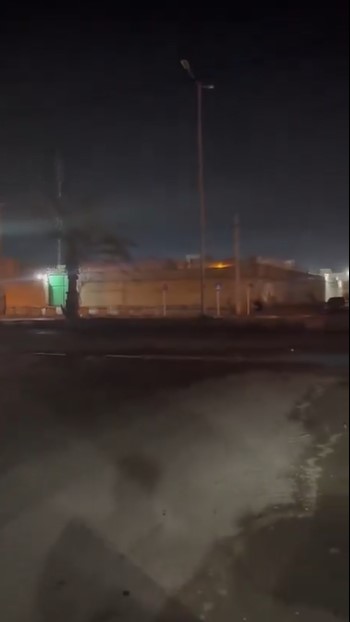
Terrorist group Jaish-al-Adal, blacklisted by Iran, has carried out three simultaneous attacks in Rask, Chabahar, and Sarbaz of Sistan-Balochistan in Iran. After the attack was launched on Wednesday night, clashes ensued between the terrorists and Iranian security forces.

Preliminary reports indicate that the attack happened at multiple locations leading to the killings of about 10 security personnel, while over 2 terrorists have been neutralized.

Accordingly, in their brief statement, Jaish-al-Adal has named 6 locations that were attacked across Chabahar, Rask and Sarbaz:-

  1. Faraja naval headquarters in Chabahar.
  2. Police station 11 in Chabahar.
  3. Faraja Awareness Center in Chabahar.
  4. Headquarters of Chabahar Army Corps.
  5. Rusk District Corps at Rask-Chabahar road in Rask city, Golkand district,
  6. The local base of the Revolutionary Guards at Sarbaz-Rask two-way Parud road.

Also the terorrist group has highlighted the Police station 11 in Chabahar as the location of Colonel Ebrahim Khouchakzai, the police commander who raped a 15-year-old Baloch girl in September 2022 which led to widespread protests that culminated into a brutal massacre of about 96 protestors on September 30, which came to be known as “Black Friday”.

Nonetheless, Jaish-al-Adl, the anti-Iran terror outfit, claimed responsibility for the attack in Sistan-Balochistan, and asserted that they managed to gain control of the road between Sarbaz and Rask, warning residents to avoid traveling on the roads of Rask, Chabahar, and Sarbaz City. The group also claimed to have taken control of one base and a police station.

Pakistan, patron of Jaish-al-Adal

Additionally, the attack comes in the aftermath of Iran’s airstrike targeting Jaish-al-Adal operatives, including senior commander Ismail Shahbakhsh, within Pakistani territory. The group has a history of launching attacks on Iranian security forces, with a notable incident in December targeting a police station and claiming the lives of 11 police personnel.

Considerably, Jaish-al-Adal mostly operates from the occupied Balochistan’s Parom, Zamuran, Panjgur, Mashkel and Washuk under the patronage of Pakistan Army. In fact, Jaish-ul-Adal have set up checkpoints on the road in these regions wherein they stop vehicles of Baloch people engaged in border trade and extort thousands of rupees per vehicle as forced tax.

The relation between Pakistan Army and Jaish is based on Quid-pro-Quo. Jaish works as an informant of Pak Army against Baloch sarmachaars (freedom fighters) while it gets patronage and safe haven from Pak Army against Iran.

Pakistan Army illegally encroaches mosque property in Khyber-Pakhtunkhwa

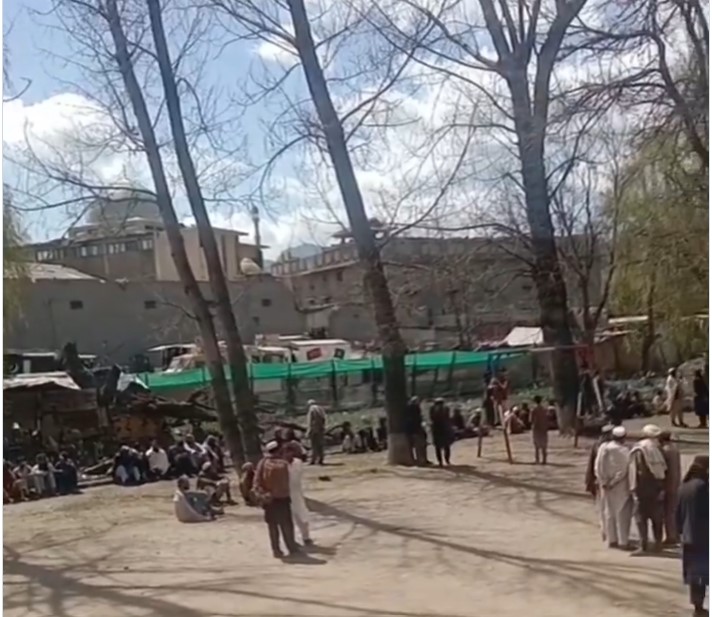
Tensions have escalated as Pakistan Army have occupied the largest mosque in Tirah Lar Bagh during an operation, leading to ongoing protests from local residents. The Pak Army personnel have reportedly been residing in the mosque since then, establishing a military camp within its premises and allegedly desecrating the sacred site.

Furthermore, the situation has worsened as Pak Army personnel are now constructing a wall to encroach upon the adjacent flat land and markets, implementing various land-grabbing policies in the process.

In response to these actions, local residents have staged a sit-in protest for the past six days, demanding the vacation of the mosque and the cessation of illegal land occupation. The protest reflects growing discontent among the community over the infringement upon their religious and property rights.

Notably, Pak Army is known for land grabbing but encroachment on the mosque’s property exposes their real character. Pakistan was formed on the basis of Islamic religion and the act of the Pakistan Army clearly shows that religious basis has been deeply compromised over the greed of radicalised army generals. Apart from the greed, Pakistani establishment also wants to increase the profiling of civilians in the region as its terror promoting policies have backfired vehemently. As a result, there is a distrust between the establishment and the people of Pakhtunkhwa, who are the real victims of two sided terrorism of Pak Army and terrorists.

Islamabad: Threatening letters with suspicious powder sent to 8 judges, including Chief Justice

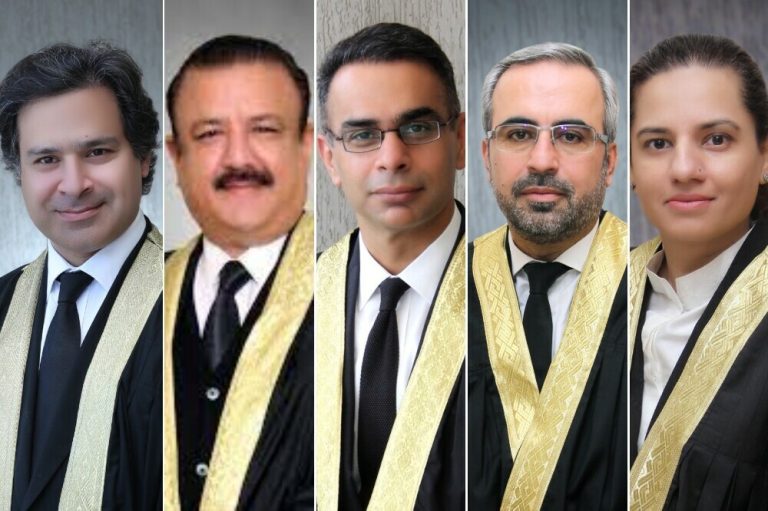
Eight judges of the Islamabad High Court, including Chief Justice Aamer Farooq, received threatening letters filled with a suspicious substance, sparking concerns about the security of the judiciary amidst allegations of interference by Pakistan’s intelligence agencies.

The development follows a recent letter addressed by six judges of the IHC to Supreme Court Chief Justice Qazi Faes Isa, complaining of meddling in judicial affairs by the country’s intelligence agency ISI.

Confirming the receipt of the letters, IHC Chief Justice Farooq mentioned during a court hearing that the incident caused delays in the day’s proceedings. When the staff of two judges opened the letters, they discovered powder inside, resulting in burning sensations in their eyes.

Immediate action was taken, with affected individuals using sanitizer and washing their hands as a precautionary measure. A team of experts from the Islamabad Police swiftly arrived at the Islamabad High Court to examine the suspicious powder.

Powder mostly used by intelligence agencies

The letters, purportedly written by a woman named Resham, wife of Waqar Hussain, did not disclose her address. However, reports suggest that ISI Sector Commander Islamabad, Brigadier Fahim Raza sent threatening letters to the judges of Islamabad High Court in the name of Tehrik Namus Pakistan. In this work, cosmetic powder was converted into anthrax and poured into the line. This method is commonly used by global intelligence agencies to threaten targets and ISI also tried to use it. Now the samples are being sent to Punjab French Laboratory, Lahore for analysis and desired results.

Concerned authorities, including the Inspector General of Islamabad Police and the Deputy Inspector General of Security, were summoned to address the matter urgently.

The letters, addressed to multiple judges, raised concerns about the safety of the judiciary and have been handed over to the Counter-Terrorism Department (CTD) for further investigation.

This incident comes on the heels of Chief Justice Isa’s announcement of suo motu proceedings into the letter by the IHC judges regarding interference by intelligence agencies, underscoring the gravity of the situation and the need for swift action to ensure the security and integrity of the judicial system in Pakistan.

Iran-backed armed group hits Israel’s Ramat David airbase in a drone attack

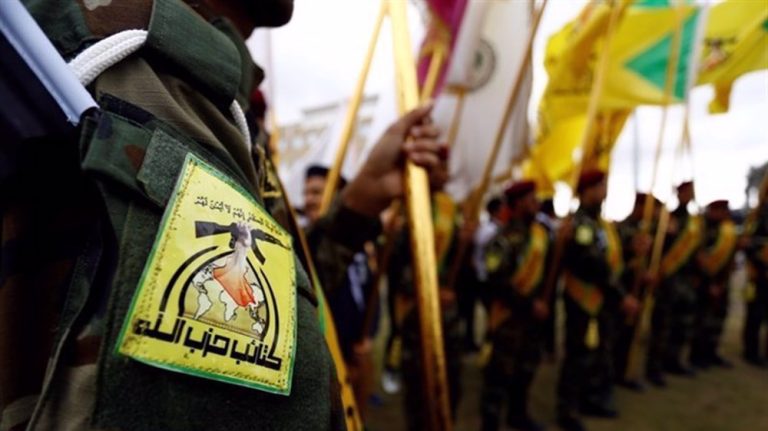
The Islamic Resistance in Iraq, a group associated with Iran-backed militias, claimed responsibility for a drone attack targeting the Ramat David airbase in Haifa, Israel. The assault occurred at dawn on Thursday, marking a significant escalation in tensions in the region.

In their statement, the Islamic Resistance emphasized their commitment to continuing attacks against what they term as “enemy strongholds.” They framed the Ramat David airbase operation as part of their ongoing resistance against the ‘Israeli occupation’, citing support for the people of Gaza and retaliation for alleged Israeli atrocities against Palestinian civilians.

The statement said, “part of the second phase of operations against the occupation, aimed at supporting our people in Gaza and retaliation for the Zionist massacres perpetrated against defenseless Palestinian civilians.”

This attack follows closely on the heels of an Israeli airstrike on an Iranian embassy in Syria, which resulted in the deaths of high-ranking officials from Iran’s Islamic Revolutionary Guard Corps (IRGC). That incident has heightened the possibility of further assaults on Israeli facilities by Iran-backed proxy groups, such as the Islamic Resistance in Iraq.

The escalation underscores the volatile situation in the region and raises concerns about the potential for further violence and retaliation between Iran-backed groups and Israel. Israeli authorities have yet to issue an official response to the attack on the air base, but it is likely to prompt heightened security measures and potential retaliatory actions.

Pak Army abducts three more Baloch youths; families protest

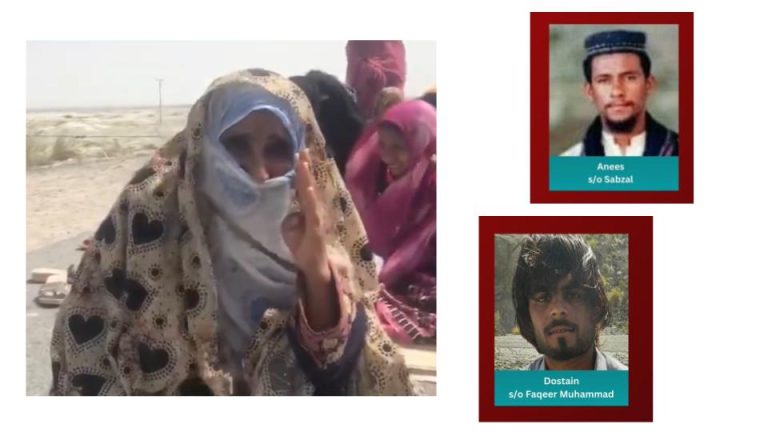
In a distressing turn of events, Dostain Baloch and Anees Sabzal have been taken. Dostain, summoned to a Pak Army camp, and Anees, abducted from a mosque, have tragically disappeared at the hands of the Army, leaving their whereabouts unknown.

The nightmare of Pak-occupied Balochistan runs deep, as it has endured decades of suffering under the heavy hand of the Pak Army since the forcible annexation of this resource-rich region in 1948. Enforced disappearances have become a grim reality, with innocent Baloch youths and children being snatched away by the Pak ‘establishment’, their fate often remaining unknown or tragically discovered as lifeless bodies, victims of the infamous “Kill and Dump Policy”.

Despite the overwhelming odds, families of the victims demand justice and the safe return of their loved ones. One such courageous act unfolded as the family of Lala Rafeeq Dashti, who was abducted on December 22, 2023, at the hands of the Army, took to the streets along the Gwadar Coastal Highway, Shankani Dar, to protest his disappearance.

They were met with brutal violence by the police, with a large number of male and female officers attempting to sabotage the protest and harass women. Furthermore, three male protestors were arrested.

Forced disappearances not only constitute a violation of the law but also rob individuals of their fundamental rights. This cycle of oppression must end, and those responsible must be held accountable for their actions.