Home Blog Page 140

Pak Army forcibly disappears Baloch gold medalist player, Pak-occupied Balochistan

In a distressing turn of incidents, Haroon Baloch, a national gold medallist player from the Bolan Taekwondo Institute Nushki, district of Pak-occupied Balochistan was forcibly detained by the Pak Army and moved to an undisclosed location. Given the history of Pak Army’s inhumane actions, rightfully so, his family are concerned about his life.

These cases of enforced disappearance is reported every day in Pak-occupied Balochistan. In less than two days span the Pak Army has forcibly disappeared four individuals from the Awaran and Mastung districts of Pak-occupied Balochistan, among them is a father and his son who are identified as Majeed and his son Ajeem. Another victim Mohammad Alizai was forcibly disappeared by the Pak Army after they forcefully detained him on February 2nd, 2024.

More than ten cases of enforced disappearances have been reported in this week from various locations in the area in Pak-occupied Balochistan. There are sit-in protests being staged by the families and relatives of the victims to secure their safe return.

The people of Pak-occupied Balochistan have been fighting against the atrocities and Baloch genocide committed by the Pak Army since the Pak Army forcibly occupied their region on March 27, 1948. The daily home invasions, disappearances, staged encounters, target killings, torture, embarrassment at checkpoints, and kidnappings for ransom are just a few examples of these atrocities.

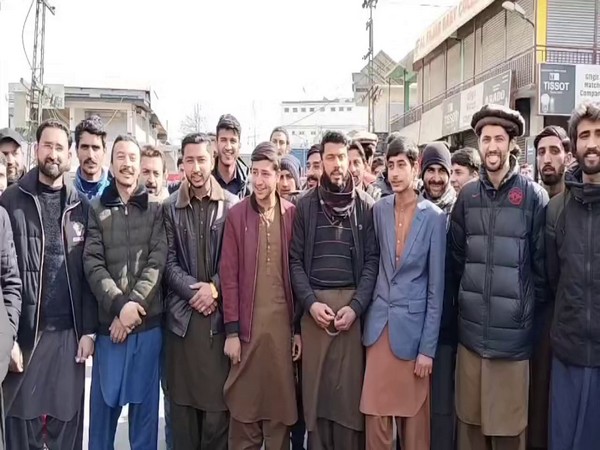
Local traders protest in Pak-occupied Gilgit-Baltistan, demand action on law & order issues

In a display of frustration and discontent, local traders in Gilgit, Pakistan-occupied Gilgit Baltistan (POGB), took to the streets on Thursday to protest against the rising incidents of burglary and lawlessness plaguing the area. The demonstration coincided with the general elections taking place in Pakistan, underscoring the urgency and gravity of their concerns.

Voicing their grievances, the traders lamented the apparent security lapses and the perceived negligence on the part of security agencies, holding them responsible for rampant unlawful activities. A prominent local businessman, who fell victim to a recent burglary, expressed the collective sentiment, demanding justice from the authorities.

People are agitated over the lack of vigilance by the occupying administration, law and order machinery. They stated that they pay the taxes and it is the duty of the occupying Pakistani government to look after the people and their properties. Even more concerning is the response of the police which lacks muscle to act swiftly.

Talking to media a businessman said, “We are asked to pay protection money to officials. If they cannot provide us with adequate security, then they must compensate us for our losses. We demand assurance that we will be protected or compensated, but nothing like this has happened till now. Hence, we are forced to put our demands forward by protesting.”

Traders and businessman stated that they have to pay the security money on time, failing which their shops are sealed but when it comes to compensation, there is no answerability of the occupying government and administration.

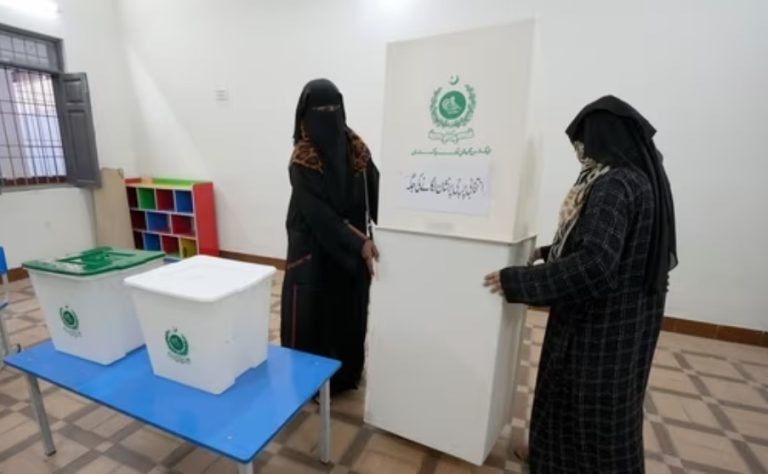
Pakistan Elections: Imran Khan’s allies securing significant victory in Khyber-Pakhtunkhwa

Pakistan elections: The counting is on, the trends are coming and the clarity in the political landscape of Pakistan is going to emerge gradually. After various cases of violence, booth capturing and amidst all discussions and apprehensions, the development is astonishing for many as the trends suggest something that most people see as defying the establishment dictates.

For the National Assembly, Imran Khan’s PTI backed independent candidates are advancing against the ‘chosen’ Nawaz Sharif’s PML-N. In Khyber Pakhtunkhwa PTI backed independent candidates have secure 10 seats so far. As of now PTI backed independent candidates won at 26 seat viz, NA-2 (Swat 1), NA-3 (Swat 2), NA-4 (Swat 3), NA-5 (Upper Dir), NA-6 (Lower Dir 1), NA-7 (Lower Dir 2), NA-9 (Malakhand), NA-10 (Buner, NA-13 (Battagram), NA-15 (Mansehra-cum-Torghar), NA-16 (Abbottabad 1), NA-17 (Abbottabad 2), NA-18 (Haripur), NA-19 (Swabi 1), NA-20 (Swabi 2), NA-21 (Mardan 1), NA-22 (Mardan 2), NA-23 (Mardan 23), NA24 (Chharsadda 1), NA-25 (Chharsadda 2), NA-26 (Mohmand), NA-27 (Khyber), NA-29 (Peshawar 2), NA-30 (Peshawar 3), NA-31 (Peshawar 4), NA-32 (Peshawar 5).

On the other hand, Nawaz Sharif’s PML-N has only managed to win one seat NA11 (Shangla) in Khyber-Pakhtunkhwa. Moreover, the tally of PTI backed candidates is poised to go up as they lead on many seats including NA-1, NA-17 among others. Interestingly, Bilawal Bhutto’s PPP has failed to appropriate a single seat in the National Assembly polls.  

Balochistan rebukes Pakistan’s sham elections

In any democratic country, the election process serves as the bedrock of political legitimacy and citizen representation. The sanctity of elections encompasses various elements, including transparency, fairness, accountability, and adherence to established electoral laws and procedures.

The election commission is responsible for conducting elections in every nation. However, in Pakistan, the Pak Army conducts elections in a rigged manner. The recent general election in Pakistan starkly paints a picture of the grim reality of the state.

The election days began with two major explosions disrupting a polling station in the Kech district of Pak-occupied Balochistan just minutes after the voting process, which led to an immediate suspension of polling activities there. Numerous bombings occurred in coastal areas like Gwadar, raising security concerns. Voting was delayed or cancelled in many places as a result of attacks on poll workers and polling places in Kharan, Kech, Zamuran, and Panjgur.

Public Rejection

A significant portion of the populace expressed their strong opposition to the election process by staging boycotts and protests. Women gathered at a polling place in the Kech district of Heronk and denounced voting as being similar to terrorism.  

Baloch women and children surrounded the Pak Army vehicles in Goburd, Mand, and chanted “Yeh Wardi Wale, Deshatgard.” Amidst these tensions, the local election process was suspended.

The outburst of protest reverberated in several other districts, such as Kech, Gwadar, and Kharan, where local protesters disrupted the election process and engaged in conflict with the “death squad” contesting elections.

Polling places remained empty in places like Tehsil Mand in the Kech district and Tehsil Hoshab, with neither voters nor poll workers present, reflecting widespread calls for boycotting the elections advocated by various nationalist groups. Reportedly, extremely low voter turnout was seen in Baloch majority areas of Balochistan.

Communication Blackout and Security Measures

Internet services were cut in key districts of Pak-occupied Balochistan such as Quetta, Gwadar, and Kharan which hampered communication and cast doubt on electoral transparency. Before the election, over 125 incidents targeting campaigns occurred with BRAS claiming responsibility for 112 attacks.

The challenges of holding elections in the face of political turmoil and security concerns are highlighted by these protests, violent attacks, and a resounding rejection of the electoral process in regions with a Baloch majority. The incidents show a significant gap between Baloch community sentiment and the Pak establishment’s electoral objectives.

Since the Pak Army forcibly occupied their region on March 27, 1948, the people of Pak-occupied Balochistan have been fighting against the atrocities and Baloch genocide committed by the Pak Army. These atrocities include but are not limited to daily home raids, disappearances, staged encounters, target killings, torture, humiliation at checkpoints, and kidnappings for ransom.

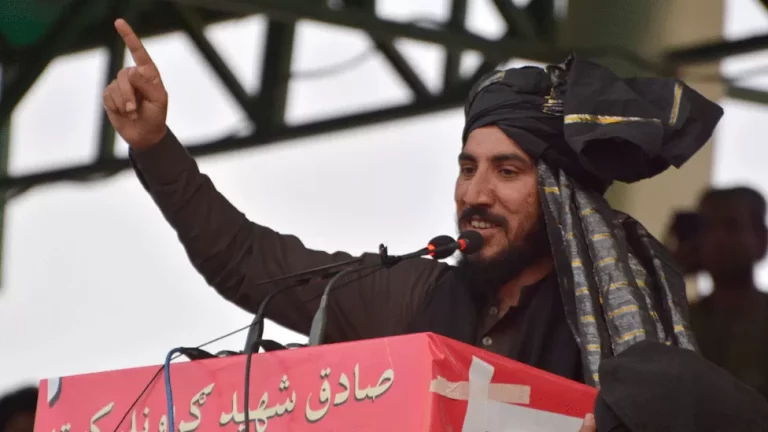
Pashtun leader Manzoor Pashteen released after over two months of needless arrest by Pak Army

Manzoor Pashteen has been released from the Attock jail after enduring months of imprisonment and torture at the hands of Pakistan Army.

Manzoor Pashteen was implicated in 3MPO thrice by the Jhelum, Chakwal and Attock police in a consecutive way. Notably, Pashteen was released on Wednesday, February 7, a day before general elections in Pakistan.

Pashteen was abducted from Chaman on the night of December 3, when he was enroute to participate in the Turbat protest, organized against the extra judicial killing of innocent Baloch youths by the so-called Counter Terrorism Department.

Since then, he has been implicated in different cases one after other. After two consecutive arrests by the Islamabad Police, he was finally released from the Adiala prison, but was picked by Jhelum police from the gates of prison. Jhelum Police implicated him in 3MPO and when the judicial remand ended, he was picked up by Chakwal Police only to be released and picked again by Attock police.

The consecutive arrest validates the claims of Pashtun Tahafuz Movement (PTM) that their leader was arrested and was being harassed on the orders of Pakistan Army. It is a well-known fact that Pakistan Army de facto controls the administration and exploits the law-and-order machinery for its gains. Since, Pashteen has always remained a vocal critic of authoritarianism of Pakistan Army, his implication in five different cases and subsequent swift transition from jail-to-jail clearly highlights that Pak Army has used its influence.

Unsubstantiated arrest

Also, the cases had no such substance to keep him incarcerated for so long. During a hearing over his detention by Chakwal Police, DC Chakwal was scorned off for the same reason. When the Lahore High Court enquired the reason for Pashteen’s arrest, Chakwal DC stated that they found a pamphlet in his pocket which was crucial for national security. Court lambasted her for citing such nonsensical reason to implicate a person in 3MPO.

There is absolute absence of legal safeguards in Pakistan when it comes to defending the human rights. Interestingly, Manzoor Pashteen’s statement after his release shows that he persists on his struggle against Pakistan Army. His resistance is only going to increase in the coming times. During his address he said, “They said this is Punjab (allegedly conveyed by establishment during his prison tenure), one day I will show you this is Pakhtunkhwa.” Nonetheless, after over two months of captivity, Pashteen is now out and contrary to what Pakistan Army thought, PTM is enthusiastic to continue its struggle and go for a more unified resistance along with Baloch in the coming time.        

Pak Army forcibly disappears Baloch father & son in Pak-occupied Balochistan

The disturbing turn of incidents in Pak-occupied Balochistan has once again shed light on the pervasive human rights abuse by the Pak Army. The Pak Army has forcibly disappeared four individuals from the Awaran and Mastung districts of Pak-occupied Balochistan, among them is a father and his son, adding to the series of daily reported cases of enforced disappearance.

Reportedly, the Pak Army has forcibly detained a man identified as Majeed and his son Ajeem from the Jhal Chedgi area of the district and then subsequently moved them to an undisclosed location. In a similar incident, the Pak Army had wrongfully arrested Salam Qambarani from Peerandar Awaran and moved him to an undisclosed location.

Also, in the Mastung district of Pak-occupied Balochistan, the Pak Army detained a youth on February 2nd, 2024 and then forcibly disappeared him. The victim is identified as Mohammad Alizai.

It is important to note that these cases of enforced disappearance are not uncommon in Pak-occupied Balochistan. it occurs daily. Notably, six cases of enforced disappearances were recorded on Wednesday alone from different parts of the region. Families of Baloch missing persons, on the other hand, have been protesting nonstop for their loved ones’ safe return. A sit-in has been going on for the last eight days on the D-Baloch Highway close to Turbat in hopes of securing the safe return of the individuals who disappeared from the district of Kech.

Since the Pak Army forcibly occupied Balochistan on March 27, 1948, the people of Pak-occupied Balochistan have been fighting against the atrocities and Baloch genocide committed by the Pak Army. These atrocities are not just limited to daily home raids, disappearances, staged encounters, target killings, torture, humiliation at checkpoints, and kidnappings for ransom.

Pakistan Army murders another enforced disappearance Baloch teenager

In a tragic event, Arman Baloch, once a joyful teenager in a close-knit family, was forcibly disappeared on July 2, 2023. The trauma inflicted upon his mother and family since that day is immeasurable.

The heartbreak of a mother is immeasurable who is aware that her child is enduring physical and mental torment in secret dungeons under of Pak Army. She remained undeterred by the indifference of the Pak “establishment” and its puppet officials, and embarked on a courageous journey from Quetta to Islamabad, covering hundreds of kilometers, facing harsh weather, mental and physical distress, and the callousness of Pak Army.

For over a month, she stood at the forcibly disappeared persons camp in Islamabad, in front of the National Press Club (NPC), desperately seeking information about her missing son. Her return home, bearing the same picture of her disappeared son, reflected the profound agony of a mother left without answers.

Seven agonizing months later, her son returned, but his body was marred by bullets. Shockingly but as an expected, not only she discovered that her child had been extrajudicially killed in a staged encounter, but was also branded as a terrorist.

The ordeal worsened as Pak Army initially denied her the right to claim her son’s body. After enduring hours of torture and staging a demonstration at the Civil Hospital in Quetta, she finally reclaimed her son. The injustice inflicted upon this grieving mother reveals a tragic tale of loss, resistance, and the harsh realities faced by those seeking truth and justice.

Pak -occupied Balochistan is enduring violence for decades under the Pak Army. They are indiscriminately shot, abducted and extrajudicially killed. Once a resource rich province, now lies in the ruins because of bullets from the Army.

Civil disobedience in POJK as Joint Awami Action Committee continues protests

In a striking display of discontent, the Joint Awami Action Committee of Pakistan occupied Jammu and Kashmir (POJK) has initiated a sit-in and civil disobedience movement in Muzaffarabad, POJK. The protest, aimed at addressing a comprehensive charter of demands, vows to continue until all concerns are met. Notably, the people of POJK are refusing to pay taxes or electricity bills as a part of their civil disobedience strategy.

The Joint Awami Action Committee had presented a well-articulated charter of demands months ago, yet the authorities in the illegal occupant Pakistan have failed to take any action. In October of the previous year, the committee issued a comprehensive charter of demand and devised a plan of action, leading to the initiation of widespread and unprecedented protests in the occupational history of POJK. And so the people from all walks of life, including women, students, and the elderly, took to the streets in a massive display of dissatisfaction. The complete shutdown during the protest highlighted the unwavering resolve of the people.

Of particular significance is the fact that for the past almost eight months, the residents of POJK have boycotted paying electricity bills, employing symbolic gestures such as creating paper boats out of the bills and organizing funeral processions for them. This collective act of defiance underscores the frustration of the people with the perceived lack of response from Pakistan and its puppet government in the region.

Realizing that their concerns are not being addressed, the people of POJK sent a clear message of detachment by observing February 5 as the Black Day, a departure from the traditional celebration of Kashmir Solidarity Day.

The civil disobedience movement, reminiscent of the Indian freedom struggle, represents the latest approach in the ongoing fight of POJK residents against what they perceive as Pakistani oppression.

Baloch Raji Aajoi Sangar (BRAS) strikes against Pak Army’s fake election preparations

Recently, Baloch Raji Aajoi Sangar (BRAS) has launched a series of coordinated attacks targeting the Pakistan Army and election campaign offices in areas like Gwadar, Buleda, Panjgur, Khuzdar, Hub, Kharan, and Nushki. These incidents, involving remote-controlled IEDs, grenade launchers, and automatic weapons, mark a significant escalation in armed activities.

The Baloch Raji Aajoi Sangar (BRAS), an alliance of various Baloch pro-independence groups, has claimed responsibility for 15 of these attacks. Baloch Khan, BRAS’s spokesperson, asserted that the attacks aimed at the occupying Pak Army and those involved in the mock electoral process caused numerous casualties among Army personnel and equipment/infrastructure damages.

These attacks are targeted towards the 2024 general elections to be held in Pakistan. Pak-occupied- Balochistan under the brutal Pak Army is facing atrocities daily. They are committing Baloch genocide through kill and dump policy, indiscriminate shooting, extra-judicial killings and frequent enforced disappearances. Therefore, the elections to be held are nothing more than a phoney attempt to showcase to the world that a civilian govt is in power, however, in reality, the Pak Army has forcefully occupied the region – through brutality and violence.

On February 4, BRAS freedom fighters targeted a Pak Army vehicle with a remote-controlled IED in Naleent, Gwadar, allegedly causing multiple casualties. On February 2, another attack targeted an Army post in Buleda, using rockets and grenade launcher rounds.

The campaign of attacks also focused on individuals associated with the election campaign. On the night of February 2, Mir Yaqoob Qambarani’s residence, a National Party leader, was hit with hand grenades in Awaran. Subsequent attacks targeted residences of election candidates and former ministers in Panjgur, as well as election offices in Hub and Greshag, and polling stations in Kharan. An IED explosion damaged the Election Commission office in Nushki.

These actions were warnings from BRAS to those involved in the election campaign, with precautions taken to minimize civilian casualties. They have also advised the public to maintain a safe distance from election-related activities, indicating a rise in attacks as Pakistan’s general elections approach.

BRAS, the umbrella organization of armed Baloch freedom fighters , has executed 92 attacks across the region in just 8 days. The Baloch people’s struggle for independence remains fervent under the oppressive regime of the Pakistan Army. Since the Pak Army forcibly occupied their region on March 27, 1948, the people of Pak-occupied Balochistan have been fighting against the atrocities and Baloch genocide committed by the Pak Army.

Lok Sabha passes bills amending Scheduled Castes and Tribes lists for Jammu & Kashmir

In a decisive move, the Lok Sabha has given its nod to two Bills seeking amendments to the lists of Scheduled Castes and Scheduled Tribes in the Union Territory of Jammu and Kashmir. The legislative action is viewed as a pivotal stride toward fostering inclusivity and equality post the abrogation of Article 370.

Constitution (Scheduled Castes) Order (Amendment) Bill, 2024

The first bill, titled the Constitution (Scheduled Castes) Order (Amendment) Bill, 2024, has been passed to include the Valmiki community in the SC list. Valmiki is now recognized as synonymous with Chura, Balmiki, Bhangi, and Mehtar communities in the Union Territory.

During the debate, Minister for Social Justice and Empowerment, Virendra Kumar, asserted that the scrapping of Article 370 has established equality in Jammu and Kashmir. Kumar addressed concerns by affirming that the government has no plans to discontinue pre-matric and post-matric scholarships for Scheduled Caste students.

Constitution (Jammu and Kashmir) Scheduled Tribes Order (Amendment) Bill, 2024

The second bill, titled the Constitution (Jammu and Kashmir) Scheduled Tribes Order (Amendment) Bill, 2024, incorporates four communities – Gadda Brahmin, Koli, Paddari Tribe, and Pahari Ethnic Group – into the ST list in Jammu and Kashmir.

The Paharis have for long been struggling to be included in the ST. The amendment was passed through voice vote with support from across party lines even as MP from Anantnag, Hasnain Masoodi sought guarantees from the central government on its specific strategy to ensure the quota for existing STs is protected.

Subsequently, Arjun Munda, the Tribal Affairs Minister, highlighted that the scrapping of Article 370 signifies the government’s commitment to the unity of India. Meanwhile the opposition raised the issue of Ladakh where responding to opposition demands for the inclusion of Ladakh in the Sixth Schedule of the Constitution, Munda assured that the BJP government prioritizes the welfare of the people in the Union territory.

Both bills seek to amend the Constitution (Jammu and Kashmir) Scheduled Castes Order of 1956 and the Constitution (Jammu and Kashmir) Scheduled Tribes Order of 1989. Accordingly, these amendments aim to create separate lists for Scheduled Castes and Scheduled Tribes for the Union Territories of Jammu and Kashmir, and Ladakh.

The legislative developments are perceived as positive strides toward ensuring social justice and inclusivity in the recently reorganized Union Territories, marking significant post-Article 370 progress.