Home Blog Page 17

Protests erupt across POB after Pak Army abducts journalist Zubair Baloch

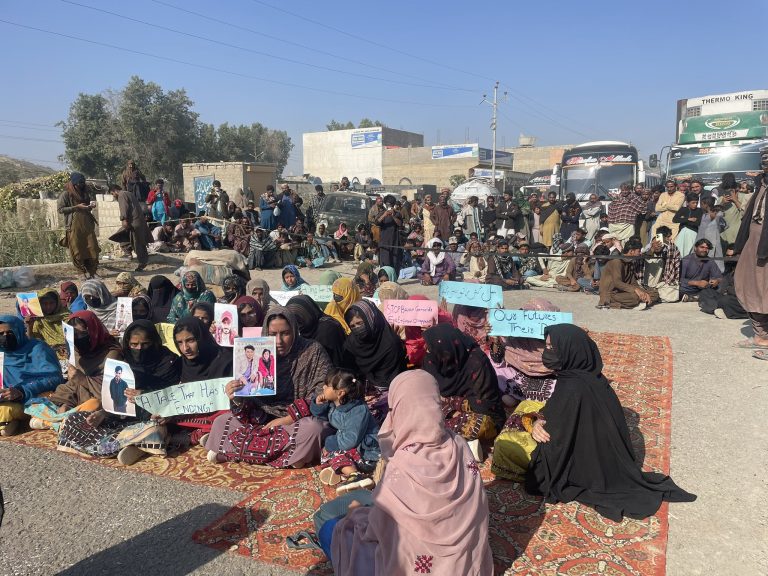
Protests have erupted across POB after journalist and student Zubair Baloch was forcibly abducted by Pakistan Army during a late-night raid in Hub Chowki. His family and local residents have staged an unrelenting protest, blocking the Karachi-Quetta Highway for over eight hours, demanding his immediate release. The Paki establishment’s systematic repression continues to raise alarms, as enforced disappearances become an all-too-familiar pattern in the region.

Reportedly, armed men in a Vigo vehicle stormed the home of Zubair Baloch in the early hours of Sunday, forcibly taking him into custody. Zubair’s family remains in the dark about his whereabouts, with no official explanation provided for his abduction. His sister described the terrifying moment when security forces violated their privacy, saying, “We have no idea where he has been taken or why he was targeted.” Zubair, a graduate of Political Science from Balochistan University, had previously worked with local media outlets, including the Intekhab newspaper.

In response to the abduction, protests have spread across Hub Chowki, where demonstrators have blocked the CPEC Highway, further escalating tensions. They have vowed to continue their sit-ins until Zubair is safely returned. The protests are a stark reminder of the increasing intolerance faced by journalists in Balochistan and the violent tactics of the Pak military to suppress independent voices and dissent.

The Baloch Yakjehti Committee (BYC) has joined in condemning the Pak Army’s actions, warning that the abduction could follow the disturbing trend of enforced disappearances, often leading to extrajudicial killings or staged encounters. The family of Zubair Baloch has set a three-day deadline for the authorities to secure his release, threatening to intensify their protests if their demands are ignored.

This latest incident is part of the ongoing campaign by the Pak Army to silence journalists, activists, and the Baloch nationalist movement, which has been demanding autonomy and an end to Army-sponsored violence since Pakistan’s illegal occupation of Balochistan in 1948. The military’s brutal tactics, including forced disappearances and extrajudicial killings, have left Baloch communities living in constant fear, while the international community remains largely indifferent to their plight.

Lahore: Death of Hafiz Abdul Rahman Makki, Mumbai attack mastermind’s kin

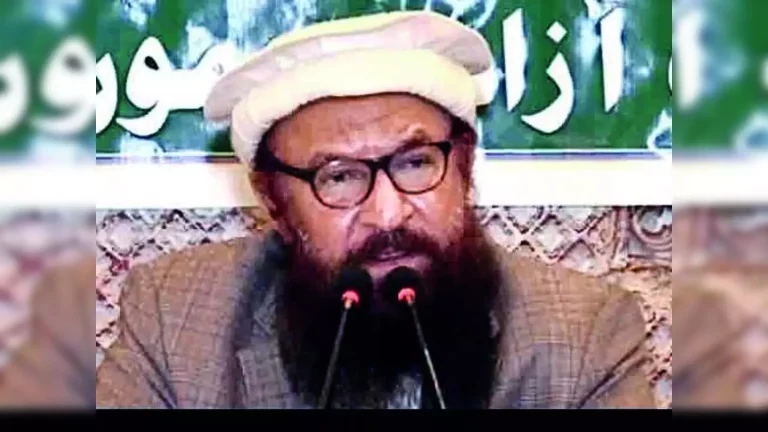
Hafiz Abdul Rahman Makki, the brother-in-law of Mumbai attacks mastermind Hafiz Saeed and deputy chief of the banned Jamaat-ud-Dawa (JuD), passed away on Friday due to a heart attack in Lahore.

According to reports, JuD, Makki, who had been suffering from health issues in recent days, was receiving treatment for high diabetes at a private hospital in Lahore. As per sources, JuD he suffered a cardiac arrest early Friday morning and was pronounced dead at the hospital.

Makki, who had kept a low profile since his conviction in 2020 for terror financing, was sentenced to six months in prison by an anti-terrorism court.

Makki, a key terrorist in organisation Lashkar-e-Taiba (LeT), was heavily involved in providing financing for the 26/11 Mumbai terror attacks, which left 166 innocents dead. Nine terrorists were killed in counter-terror operations, and one terrorist, Ajmal Amir Kasab, was captured alive.

In addition to his role in the Mumbai attacks, Makki was also wanted by Indian security agencies for his involvement in the 2000 Red Fort attack, where six LeT terrorists stormed the fort and opened fire on security forces.

Makki’s terror group, LeT, was also involved in the 2018 killing of senior journalist Shujaat Bukhari, the editor-in-chief of Rising Kashmir newspaper, and his two security guards.

In 2023, Makki was designated as a global terrorist by the United Nations Security Council (UNSC), which placed him under sanctions, including an assets freeze, travel ban, and arms embargo. The UNSC, in its resolution, stated, “The Security Council Committee pursuant to resolutions 1267 (1999), 1989 (2011) and 2253 (2015) concerning ISIL (Da’esh), Al-Qaida, and associated individuals, groups, undertakings, and entities approved the addition of the entry specified below to its ISIL (Da’esh) and Al-Qaida Sanctions List of individuals and entities subject to the assets freeze, travel ban, and arms embargo set out in paragraph 1 of Security Council resolution 2610 (2021) and adopted under Chapter VII of the Charter of the United Nations.”

Makki had kept a low profile since being sentenced in 2020 for terror financing. He had been serving a six-month sentence handed down by an anti-terrorism court.

In a statement, the bigoted fundamentalist terrorist sympathiser organisation, Pakistan Mutahida Muslim League (PMML) described Makki as a staunch advocate of Pakistan’s ideology, mourning his passing.

Pak Army abducts young Baloch worker from Kech

In yet another incident, a young man was forcibly abducted by Pakistan Army in the Mand area of Pak-occupied-Balochistan’s Kech district.

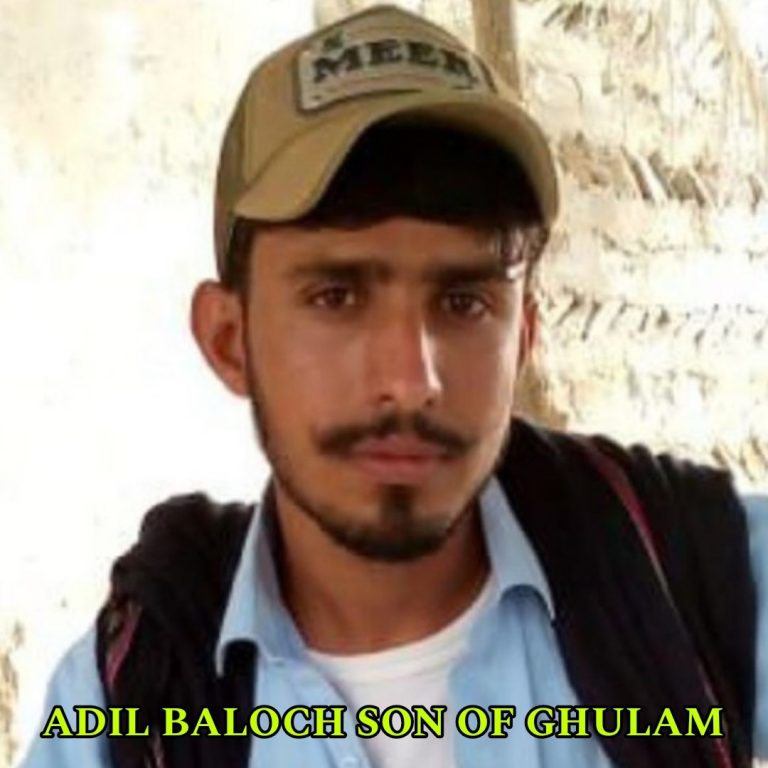
Reportedly, the young man, identified as Adil, son of Ghulam and a resident of Mand, Balochabad, was detained in the border area of Radeeq and transferred to an undisclosed location. The incident occurred while Adil was on his way to the border region for daily wage work.

According to family members, Adil was taken into custody by Pak forces without any explanation or warrant, and his whereabouts remain unknown. His family has expressed deep anguish, stating that they have received no information about him since his detention.

This abduction is part of a long-standing and brutal policy of enforced disappearances carried out by the Paki establishment in POB. Thousands of Baloch men, women, and even children have been abducted in recent years, by Pak Army and their proxies. Victims are often taken from their homes, workplaces, or public spaces, only to vanish without a trace.

Pakistan Army with inflicts its draconian “kill and dump” policies in POB, where abductees are often found dead, bearing signs of torture. Despite international condemnation, the Pakistan continues to silence Baloch community. As the world remains silent, POB continues to bleed under the shadow of Army terror.

Radical Islamists torch 16 Christian homes in Bangladesh on Christmas

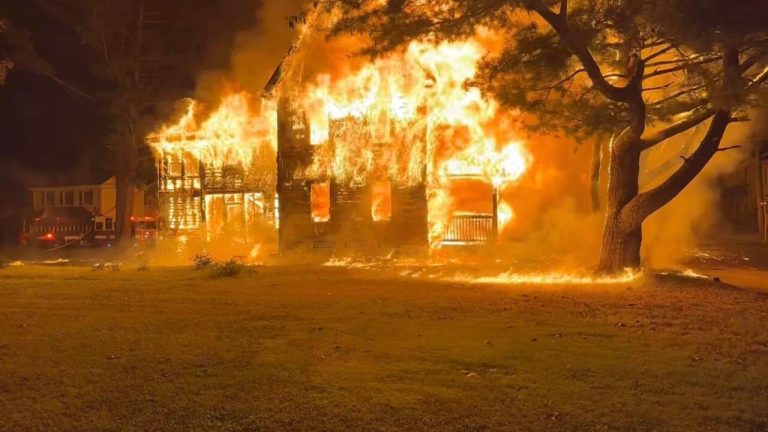
Christmas turned into a day of devastation for the Christian community in Chittagong, Bangladesh, as radical Islamists unleashed terror by setting 16 homes ablaze. The attack occurred while families were away at church celebrating the holy day, leaving their homes vulnerable to this act of sheer brutality.

This incident is yet another grim reminder of the precarious situation faced by religious minorities in Bangladesh. Despite repeated assaults on minority communities, the Bangladeshi government has failed to rein in radical Islamist elements, allowing them to operate with near-impunity. This laxity has emboldened extremists, resulting in a sustained pattern of violence and persecution against Christians, Hindus, and other minority groups.

The repeated failure of the Bangladeshi government to address the growing influence of radical Islamists has drawn widespread criticism. Observers have noted that successive administrations have turned a blind eye to the plight of minorities, often prioritizing political appeasement over justice and equality. This inaction not only violates the constitutional promise of protection for all citizens but also erodes the country’s secular foundations.

The international community has long urged Bangladesh to uphold its commitments to human rights and minority protection, yet the ground reality remains grim.

BLA attacks Pak Army, warns foreign tourists against wildlife exploitation

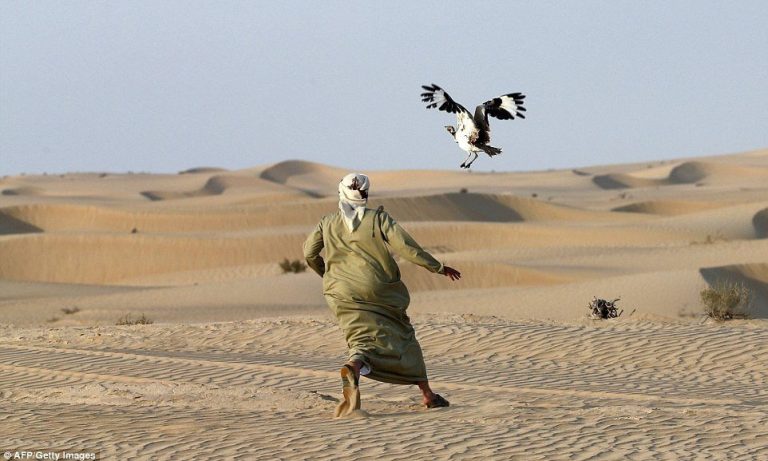
In yet another blow, fidayeens from the Baloch Liberation Army (BLA) targeted a Pakistan Army convoy in a remote-controlled IED attack in the Dasht, Zaren Bug area of Kech. The ambush resulted in the elimination of four Pak soldiers, with four others critically injured, and a military vehicle destroyed. The convoy, notably, was tasked with providing security to foreign tourists brought to POB to hunt rare wildlife—yet another glaring example of Paki establishment’s reckless exploitation of Baloch resources.

The BLA, in a strong statement, reiterated that Balochistan is a war zone and explicitly warned foreign tourists against entering areas where the Pakistan Army facilitates hunting for profit, at the expense of Baloch land and wildlife conservation. The fighters clarified that the attack deliberately avoided targeting the tourists’ vehicle, instead striking the military convoy as a stark warning. The BLA vowed to forcibly expel anyone violating the ban on hunting in these conflict-ridden areas, underscoring their commitment to protecting Balochistan’s environment and sovereignty.

Those killed in the attack included Naik Zaman and Lance Naik Umar Zahir, while Naik Naeem, Sepoy Javaid, Sepoy Amin, and Sepoy Waheed were among the injured. This marks yet another example of the Pak Army’s personnel being sacrificed in their futile attempts to suppress the Baloch people’s rightful resistance against decades of occupation and exploitation. By escorting wealthy foreign tourists to hunt endangered species in Balochistan, the Army once again displays its mercenary nature.

This attack underscores the BLA’s ongoing struggle against Pakistan’s militarized exploitation of Balochistan since its forceful occupation in 1948. Baloch fidayeens have long maintained that their struggle is not only for the liberation of their land but also for safeguarding its cultural and environmental sanctity, which Pakistan continues to undermine. This incident serves as yet another testament to the resilience of the Baloch fidayeens and their refusal to bow to Pakistan’s militarized hegemony.

Another minor Hindu girl slain by attackers in Pakistan

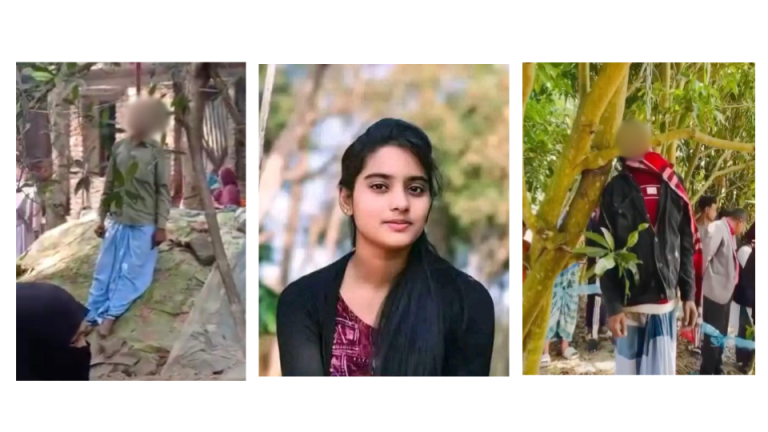
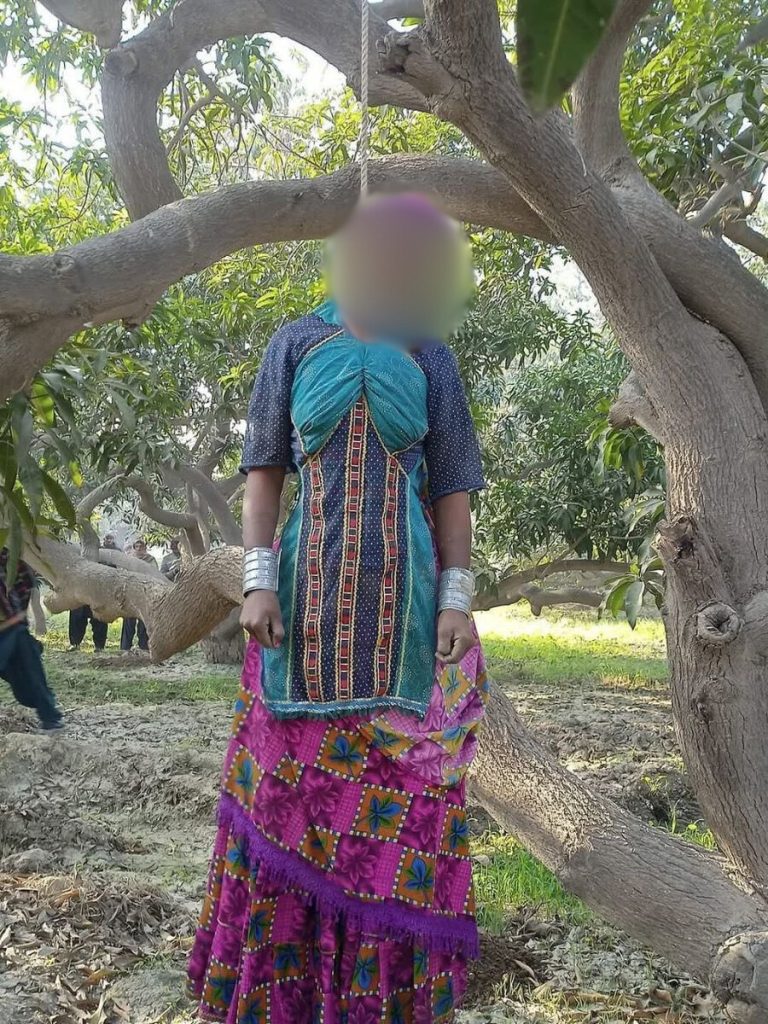
In yet another chilling testament to the ongoing persecution of minorities in Pakistan, a young Hindu girl has been found strangled to death, her life cut short by the systemic violence that has become a horrifying norm in the country. This latest tragedy highlights the grim reality faced by Pakistan’s dwindling Hindu community, which teeters on the brink of extinction due to decades of Army-sponsored discrimination and unchecked atrocities.

Paki establishment is the reason for enabling this slow genocide. The Pakistan Army, notorious for its oppressive tactics, has long fostered an environment where religious minorities are treated as second-class citizens. Their complicity in the persecution of Hindus—alongside Christians, Sikhs, and other minorities—reflects the institutionalized bigotry entrenched in the country’s power structures.

Forced conversions, abductions, sexual violence, and murders have become disturbingly common for Hindu girls and women in Pakistan. Time and again, young Hindu girls are abducted, raped, and forcibly converted to Islam, often with the complicity of local authorities who either turn a blind eye or actively aid the perpetrators. This most recent murder is part of a sinister pattern aimed at erasing the Hindu community from Pakistan’s social fabric.

The Pakistani establishment weaponizes blasphemy laws to silence dissent and maintain a stranglehold over its people. Hindus, along with other religious minorities, live in constant fear, knowing that accusations of blasphemy can lead to mob violence or Army-sanctioned punishments.

The international community’s silence on this “drip-drip genocide” is deafening. How many more lives must be lost before the world pays attention? If the current trajectory continues, the Hindu community in Pakistan—already reduced to less than two percent of the population—faces complete disappearance.

Pashtuns hold grand meeting in Jamrud, demands release of Malik Naseer Afridi

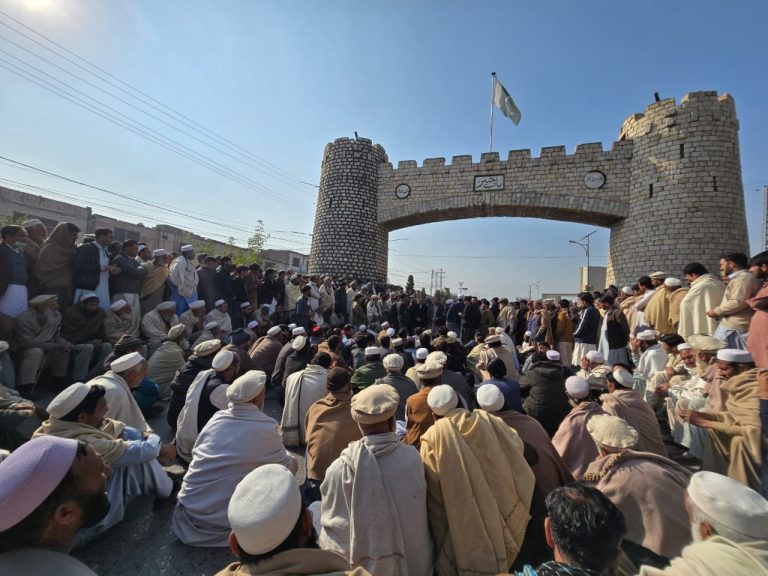
A grand meeting of the Pashtuns took place in Jamrud, where leaders and community members expressed strong opposition to the arrest of Malik Naseer Afridi, a prominent figure in the Pashtun community. The meeting, attended by an 80-member delegation from the Pashtun National Jirga, sent a stern message to the Paki establishment, demanding that Malik Naseer be released within three days.

The delegation made it clear that if the Pak authorities fail to release him by the third day, the Pashtuns will escalate its actions. A crucial meeting will be held at Bab Khyber, where a collective decision will be made. The resistance, they warned, will not be confined to Khyber, signaling the potential for a wider Pashtun uprising if the demands are ignored.

Malik Naseer’s arrest, ordered by the District Police Officer (DPO) of Khyber, has sparked outrage among the Pashtun community, as the DPO had summoned him for a traditional jirga meeting before taking him into custody. This move has been widely condemned as an affront to the Pashtun cultural heritage, particularly the revered jirga system that has long been a cornerstone of Pashtun society. The jirga, a traditional assembly of elders and community leaders, is considered a sacred institution for resolving disputes and maintaining peace within Pashtun communities.

The leaders have expressed their anger at the DPO’s actions, emphasizing that the arrest of Malik Naseer is an insult to the Pashtun way of life. “The DPO, who is clearly unaware of our traditions, has no place here. His actions not only undermine the authority of the jirga system but also reflect the broader disdain shown by the Pakistan towards the Pashtun people and their rights,” said one of the leaders.

The incident has further deepened the longstanding tensions between the Pashtun community and the Pakistan Army, as well as the broader Paki establishment. The military’s repeated interference in Pashtun affairs, including the suppression of dissent and the disregard for Pashtun cultural and political rights, has fueled a sense of disenfranchisement among the community.

Explosion on railway track near Balochistan university

A powerful explosion late Tuesday night rocked the railway track near Sariab Road, close to Balochistan University in Quetta, the provincial capital of POB. The blast, reportedly caused by an improvised explosive device (IED), completely destroyed a section of the railway track.

No casualties have been reported so far, but the incident has once again highlighted the fragile security situation in Balochistan. Police and security forces quickly cordoned off the area and launched an investigation. The explosion has disrupted railway operations, with the railway administration earlier canceling the departure of the Jaffar Express due to heightened security concerns.

The attack comes amid escalating violence, a region plagued by unrest and conflict since Pakistan’s forceful annexation of the territory in 1948. Just a day earlier, a police vehicle was targeted in a bomb attack on Quetta’s Kambriani Road. In another incident in Zamran, security forces’ foot patrols were ambushed, resulting in the reported deaths of two personnel.

The timing of the blast is significant, occurring on the anniversary of General Aslam Baloch, a founding leader of the Baloch Liberation Army (BLA). The anniversary prompted Pak Army to increase security across the province, with mobile networks shut down in areas like Nushki and others.

The unrest in Balochistan underscores the region’s long-standing grievances against Islamabad, including its exploitative policies, resource plundering, and brutal military operations. The Baloch nationalist movement, which has been resisting Pakistan’s oppressive tactics for decades, continues to gain traction despite heavy-handed measures such as enforced disappearances, extrajudicial killings, and suppression of dissent by Pakistan Army.

Pakistan’s airstrikes kill 15 in Afghanistan, Taliban warns retaliation

Pakistan launched late-night airstrikes in Afghanistan’s Paktika province on Tuesday, killing at least 15 people, including women and children. The strikes, purportedly targeting members of the Tehreek-e-Taliban Pakistan (TTP), have drawn severe condemnation from the Afghan Taliban, who termed the attacks a violation of international principles and warned of retaliation.

Pak security officials claimed the airstrikes dismantled a terrorist training facility and targeted seven villages in the mountainous region bordering Pakistan. Afghan media reports suggest that one village was completely razed to the ground. While Islamabad attempted to justify the attacks as counter-terrorism efforts, the Taliban’s Ministry of Defense accused Pakistan of targeting refugees from the Waziristan region and called the assault a “cowardly act.”

“This brutal aggression against civilians is a blatant violation of international principles,” the ministry stated. It added that such unilateral actions would not resolve the ongoing tensions, warning that Afghanistan retains the right to defend its sovereignty.

The strikes come amid escalating tensions between Pakistan and Afghanistan over Islamabad’s claims that the TTP operates from Afghan soil to conduct attacks within Pakistan. Kabul has repeatedly denied these allegations, accusing Pakistan of using Afghan territory as a scapegoat for its own failures in countering militancy.

Airstrikes in Paktika

Ironically, the strikes were conducted mere hours after Pakistan’s special representative for Afghanistan, Mohammad Sadiq, held talks with the Taliban leadership in Kabul to discuss bilateral ties. Among those he met was Sirajuddin Haqqani, Afghanistan’s acting interior minister, whose family has also been a victim of terrorism in the region.

The airstrikes are the latest in a series of cross-border assaults by Pakistan, which has ramped up its military operations under the guise of action against the TTP since the group unilaterally ended a ceasefire in November 2022. While Islamabad portrays itself as a victim of terrorism, its actions in Afghanistan betray a colonial mindset, where it exerts aggression under the guise of national security, often at the cost of innocent lives.

The Pak Army in-bred terrorist organisation, TTP has gone rogue and significantly increased its attacks on Pak forces. However, Pakistan’s heavy-handed tactics, such as these airstrikes, have done little to curb the threat and have instead deepened the animosity between the two neighbors. This is not the first time, in March, Pak air force jets bombarded border regions in Khost and Paktika, killing scores of civilians in response to an attack on Pak forces by the TTP.

J&K’s Poonch: Army vehicle accident claims lives of five soldiers

Five soldiers lost their lives, and several others were injured when an Army vehicle veered off the road and plunged into a 350-foot-deep gorge in Jammu and Kashmir‘s Poonch district on Tuesday. The tragic incident occurred in the Gharoa area as a convoy of six vehicles was en route to a forward post.

The Nagrota-based White Knight Corps confirmed the deaths on X, formerly Twitter, stating, “All ranks of #WhiteKnightCorps extend their deepest condolences on the tragic loss of five brave soldiers in a vehicle accident during operational duty in the #Poonch sector. Rescue operations are ongoing, and the injured personnel are receiving medical care.”

A defence spokesperson attributed the accident to a possible loss of control by the driver at a sharp turn. “A 2.5-ton vehicle, part of a convoy of six, went off the road into a nallah while traveling on an operational track near Poonch. The track is on the home side of the LoC fence,” the spokesperson said, adding that preliminary investigations ruled out any terrorist involvement.

The spokesperson also noted that a nearby Army post, located approximately 130 meters from the accident site, and a backup vehicle stationed 40 meters away, provided immediate assistance.

This tragedy follows a similar incident in the Kalakote area of Rajouri on November 4, when a soldier died and another was injured after their vehicle fell into a gorge.

Rescue efforts for Tuesday’s accident are ongoing, with the injured receiving medical treatment. The Army has launched an investigation to ascertain the exact cause of the mishap.