Home Blog Page 187

Protests erupt against Pakistan Army’s atrocities in Dera Bugti

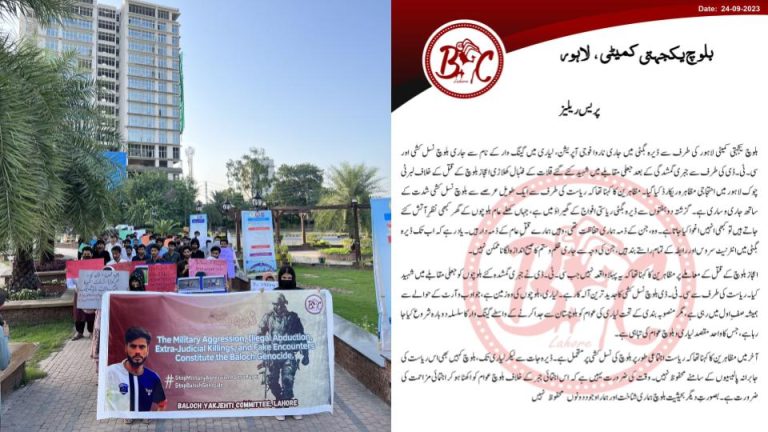
On 24 Sept, demonstrations by Baloch Youth Council (BYC) Lahore were held in Liberty Chowk in order to shed light on the grave injustices being carried out in Dera Bugti and Karachi by the Pak Army. This has ignited a flame for change that echoes across borders.

Karachi’s grief

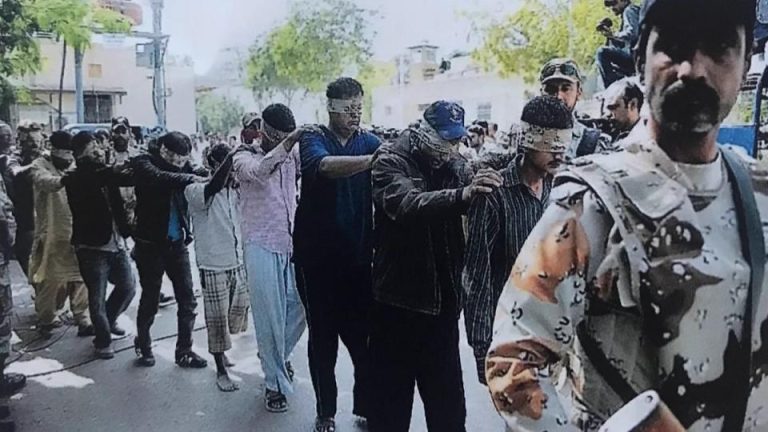
The streets of Karachi, particularly Lyari, is bearing the scars of extrajudicial killings, individuals Yaseen and Tahir were the victims of the Pakistan Army’s atrocities. Pak Army commits Baloch genocide under the guise of “Gang Wars” and fake encounters. Their lives were tragically cut short for just being a Baloch. For belonging to a particular ethnicity. No other reason.

The Paki establishment and its ruthless control is life-threatening to everyone they that they have forcefully occupied and Pakistan-occupied-Balochistan is one of them.

Dera Bugti’s struggle

On the night of 24 sept, Dr. Jamak, son of Washo Bugti, was forcibly taken from his clinic in Sui. Liaqat, son of Paroo Bugti, met a similar fate during a Pakistan Army raid in Zafar Colony. These abductions are not isolated incidents; they are part of a larger pattern of repression that continues to grip Dera Bugti in fear.

The Pak Army operation in Dera Bugti, now entering its 15th day, paints a grim picture of suffering and violence. Dera Bugti has been under siege by the Pak Army. Baloch homes are set on fire, innocent citizens are unabatedly abducted from Sui, Uch, Zain kho, and Daranjen is a chilling reminder of the Pak Army’s brutality in this region.

The Paki establishment contends that the Pak Army launched a rescue operation to recover six footballers who were abducted over the weekend while traveling from Sui Dera Bugti to Sibi. However, under this lie, families are torn apart, communities are shattered, and lives turned to dust. These are the consequences of this unchecked brutality of Paki establishment. The internet services and communication have been cut off in the region of Dera Bugti, making it impossible to measure the depth of ongoing oppression and violence.

Global cry for justice

On 23 sept, in London, Baloch Republican Party (BRP) of UK Zone raised its voice against the genocide in Dera Bugti, Pakistan-occupied-Balochistan. The protesters demanded that the international community must intervene to stop the violence. This international solidarity reminds us that the struggle for justice knows no boundaries.

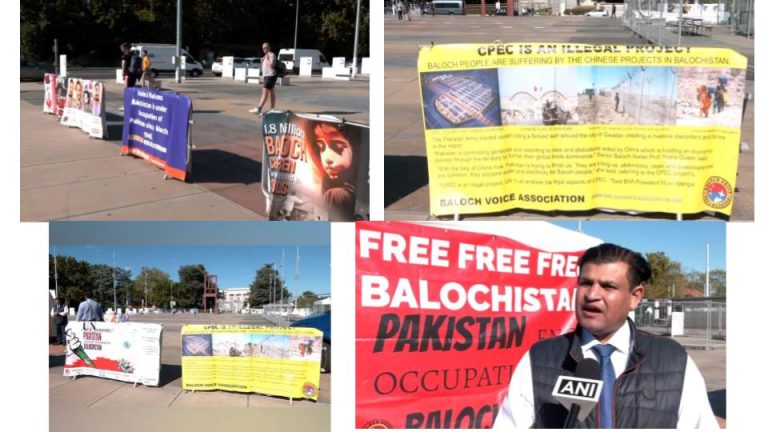
Free Balochistan Movement also organized protests outside the Iranian embassy in Helsinki, Finland. They highlighted the widespread atrocities committed against Baloch in Pakistan-occupied-Balochistan.

The Butcher of Balochistan

Asif Ghafoor, infamously known as the ‘Butcher of Balochistan,’ continues to perpetrate heinous acts against innocent Baloch in Dera Bugti. His actions have drawn additional criminals from the Pakistan Army to oppress the people of this region. More than 26 people have been abducted so far, a chilling indicator of the relentless Pak Army operation.

In a world where voices are often choked, where the cries of the oppressed too frequently go unheard, it is heartening to see the youth of Balochistan rise in passionate protest. In the face of such adversity, the Baloch youth and their supporters refuse to be silenced. These protests, both at home and abroad, serve as a stark reminder to the world that the Baloch people demand their rights, dignity, and an end to the atrocities.

The Pakistan Army has committed numerous atrocities, including daily home raids, disappearances, staged encounters, target killings, torture, humiliation at checkpoints, and kidnappings for ransom. Following the illegal occupation of Balochistan in March 1948, Balochistan has been fighting the war of its existence.

J&K Police busts two terror modules, arrests five terrorists

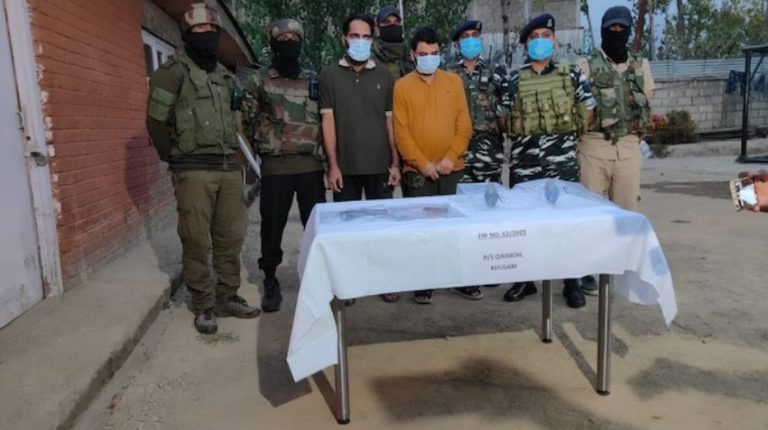
In a significant development, the Kulgam Police in Jammu and Kashmir have apprehended five individuals described as “hybrid” terrorists, following the dismantling of two terror modules in the region. The operation, conducted on Sunday, also led to the recovery of a cache of arms and ammunition, further underscoring the gravity of the situation.

Among the seized items were two pistols, three hand grenades, one Under Barrel Grenade Launcher (UBGL), and various other types of ammunition. The five individuals arrested in this operation have been identified as Aadil Hussain Wani, Suhail Ahmad Dar, Aitmad Ahmad Laway, Mehraj Ahmad Lone, and Sabzar Ahmad Khaar. Their alleged affiliation with the notorious terror outfit Lashkar-e-Taiba has raised alarms among security forces.

A First Information Report (FIR) has been filed at the Qaimoh police station, officially documenting the arrests and related discoveries. An ongoing investigation is currently underway to ascertain the full extent of their involvement and any potential connections to other criminal activities.

Series of terror modules busted

This recent development comes roughly a month after the police, in collaboration with the 26 Assam Rifles and the Central Reserve Police Force (CRPF), successfully uncovered and dismantled a terror module in north Kashmir’s Bandipora region. Subsequently, two terrorists were arrested and arms and ammunition were confiscated from them, emphasizing the continuous efforts to combat terrorism in the region.

The authorities have been vigilant in their pursuit of individuals involved in terrorist activities, with a commitment to ensuring the safety and security of the region’s residents. In the last few months, security forces have busted several terror revival plot in J&K. A month before the Bandipora dismantle, security force also thwarted a terror revival plot in Srinagar, where the 43 separatists and terrorists were arrested following a raid in a hotel. The recent arrests and seizures highlight the continued challenges faced by security forces in Jammu and Kashmir, underscoring the need for ongoing efforts to maintain peace and stability in the region.

Three Ahmadiyya mosques vandalised by radical Islamists in Pakistan

In a latest development, three Ahmadiyya mosques have been attacked by radical Islamists and police officers in Pakistan.

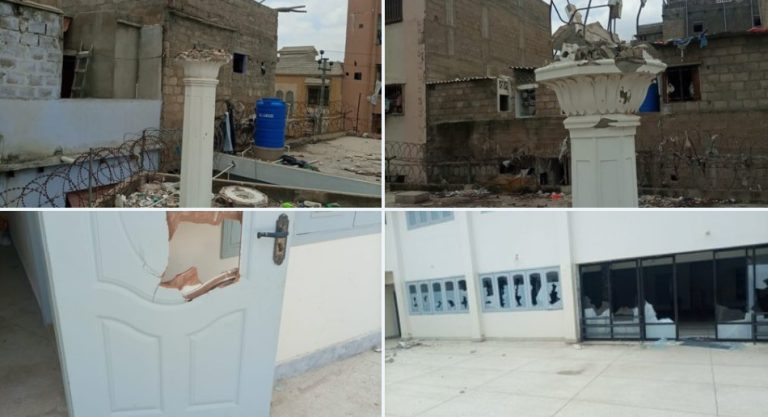
On September 23, two Ahmadiyya mosques were attacked and vandalised in Sheikhpura, Pakistan. As usual, the radical Islamists targeted the minaret of the mosques in Narang Mandi and Nano Dogar. Shockingly, the Polce was present at the site but it refrained from taking any action. Some reports even suggest that the Police personnel were themselves involved in desecration of the minarets.


Similarly, on September 21, about 8 to 10 people sneaked into an Ahmadiyya mosque situated at Martin Road in Karachi. As per reports, the miscreants vandalized the mosque and its property including gates, windows, bulbs and other furniture. The perpetrators used a ladder to climb and enter from above the mosque. In a blasphemous act, they also vandalised the images of the founders of Ahmadiyya community.

This is yet another establishment backed attack on Ahmadiyya’s place of worship. Ahmadiyya along with other religious minorities are vulnerable inside Pakistan. The radical Islamist who do not believe Ahmadiyya to be a sect of Islam perpetuate attacks on their places of worship. They get an ideological support from the Paki constitution which has barred Ahmadiyyas to call them Muslims. Not only the ideological support, but they also get religious support from the bigoted Sunni clerics and a legal support from the so-called law enforcement authorities, who themselves share the same thought process and are often found involved in carrying out such activities.

Jamaat-e-Ahmadiyya Pakistan officer Amir Mahmood recently said, “Police under the pressure of Tehreek-i-Labbaik Pakistan (TLP) desecrated 74 graves of Ahmadis by destroying their tombstones in Daska city of Sialkot district of Punjab, some 100kms from Lahore.” The statement itself speaks volume about the hand in gloves of Pakistan’s police with the radical Islamists.

Notably, the Ahmadiyya community in Pakistan was officially categorized as non-Muslims by constitutional decree in 1974. Furthermore, in 1984, Pakistan revoked their right to identify themselves as Muslims. It is deeply disturbing that such a flagrant infringement of human rights continues to exist in the modern world.

India hits back at Pakistan over Kashmir issue at the UN General Assembly

0

India lambasts Pakistan for raising Jammu and Kashmir issue in the United Nations General Assembly (UNGA). During his UNGA address, Pakistan’s caretaker PM, Anwar-ul-Haq Kakar called on international community to act over Kashmir issue.  In response, Petal Gahlot, India’s first secretary at the United Nations, labelled Pakistan’s remarks as a “malicious propaganda” attempt to divert international attention away from its own human rights record.

Mincing no words, Gehlot stated, “Pakistan has become a habitual offender when it comes to misusing this August forum to peddle baseless and malicious propaganda against India.” Went on to say that the international community is well aware of the foul tactics of Pakistan, which aims to divert the spotlight from its depressing human rights record.

She again emphasised India’s stand over the entire J&K and Ladakh by saying, “We reiterate that the union territories of Jammu and Kashmir are an integral part of India. Matters pertaining to the UTs of J&K and Ladakh are purely internal to India. Pakistan has no locus standi to comment on our domestic matters,” she added firmly.

India’s diplomatic slap to Pakistan comes after Pakistan’s caretaker Prime Minister Kakar said, “Development depends on peace. Pakistan is situated in the least economically integrated region in the world. Pakistan believes that regions develop together; therefore, [the country] desires peaceful and productive relations with all neighbours, including India.”

Pakistan wasting both time and international platform over Kashmir

Kakar also called on the UNSC to ensure the implementation of its Kashmir resolution and suggested reinforcing the United Nations Military Observer Group for India and Pakistan (UNMOGIP). Accordingly, he urged global powers to persuade New Delhi to accept Pakistan’s offer of mutual restraint on strategic and conventional weapons.

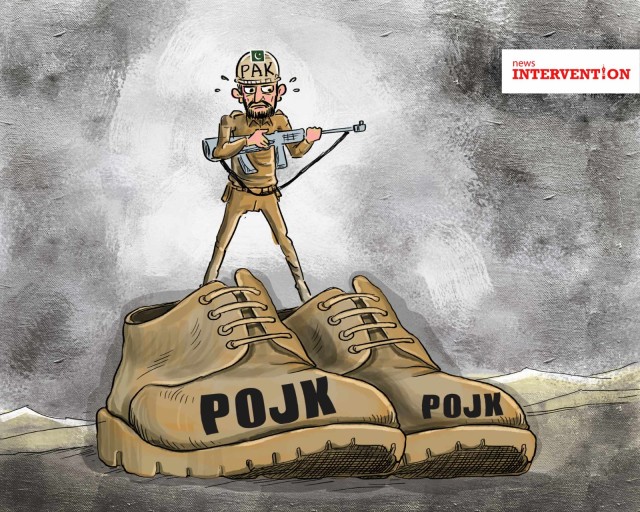
Pakistan’s statement on peace is nothing short of hilarious. The country, which mostly comprises illegally occupied territories like Balochistan, POJK, and POGB, is talking about peace. If there is any country that is most responsible for instability and insecurity in the subcontinent, it is Pakistan. With its industry of terrorism and its patron, the Pakistan Army, Pakistan has disrupted peace not only in the region but also in the territories it has illegally occupied. Every region, including POJK, POGB, Balochistan, Sindh, and Pakhtunkhwa, is raising its voice to break free from the identity of Pakistan forcibly imposed upon them.

Pakistan has a history of exploiting international platforms to bring up the Kashmir issue. It persistently attempts to internationalize the J&K, including at the United Nations. India, however, has maintained an unwavering stance, asserting that the entire region of Jammu and Kashmir and Ladakh is, was, and will always be an integral part of India. Pakistan should understand that it is wasting its precious time and an international platform over an issue that has nothing to do with it. Instead, it should use this international platform to put up some crucial issues that relates to it and its people.

Canada: ‘One million march for children’ protests against coerced gender indoctrination in schools

Thousands of individuals gathered in various Canadian cities to voice their concerns about the way schools are addressing topics related to sexuality and gender identity, particularly concerning transgender youth. The protesters claimed that schools were introducing what they referred to as “gender ideology” to children and insisted that parents have the right to be informed if their children are questioning their gender identity. These demonstrations have sparked a nationwide conversation about premature sexualization, education, tolerance, and LGBTQ2S+ rights in Canada. The protestors have raised concerns over gender indoctrination under “One million march for children.” According to them, the curriculum is heavily radicalized in favor of the LGBTQ community. They raised the slogans of “Leave the kids alone.”

What does the government say?

In response to the protests, Canadian Prime Minister Justin Trudeau made a statement condemning hatred and discrimination. Accordingly, he said, “Transphobia, homophobia, and biphobia have no place in this country. We unequivocally denounce this hatred and its expressions, and we stand in solidarity with 2SLGBTQI+ Canadians nationwide—your identities are valid, and you are valued.” Trudeau’s response emphasized Canada’s commitment to LGBTQ2S+ rights and inclusivity. Similarly, the Mayor of Ottawa has said, “As Mayor, I condemn any form of discrimination and hatred. Members of the 2SLGBTQI+ community have the right to live free from harassment and bigotry.”

Over the past decade, the 2SLGBTQI+ community has received widespread attention and acceptance. This progress has been possible because of society’s unwavering belief in individual freedom. However, individual freedom cannot be a one-way road where only a single thought process is allowed to proceed.

Gender indoctrination is a child abuse!

What the schools in Canada are imposing on children is similar in intensity to what the 2SLGBTQI+ community believes they faced for many years—coercion. Children who do not conform to traditional gender roles beyond their clothing choices are coercively subjected to sexual indoctrination. This is happening because some form of fanaticism seems to have taken hold in the so-called liberal world. Simply put, if a society wants individuals to decide their gender and sexual orientations, that should be left to the individual. However, there must be an age limit at which individuals can use their wisdom to navigate their sexual experiences and gain a better understanding of their gender identity. Imposing mandatory and coercive sexual indoctrination on innocent children who have neither the understanding nor the capacity to make informed choices is a violation of children’s rights. In fact, it constitutes child abuse.

Therefore, Canadian schools and the government are imposing their thought process on the entire population of Canada, including those who may not agree with them. All of this is happening in an attempt to appease the 2SLGBTQI+ community. The ‘one million march for children’ and the subsequent response of the government highlight a new low in Canadian society, one that seems willing to sacrifice everything in the name of wokeness.

Tibetans protest in New York against China’s genocidal policy on Tibetans in Tibet

China received a protest from the Tibetan community in New York on the sidelines of the UNGA meeting.

Chinese President Han Zheng was in US and scheduled to meet with world leaders yesterday when a significant number of Tibetans flooded the streets outside the building in New York. People of all ages participated in the protest, voicing their concerns about the persecution of Tibetan children.

The message from the Tibetan community was loud and clear: Han Zheng is not welcome here with Tibetan blood on his hands. According to Students for a Free Tibet (SFT), a US-based Tibetan rights organization, ‘With over 1 million Tibetan children forced into Chinese colonial boarding schools, Han Zheng intended to use this week’s UNGA meeting to legitimize China’s genocidal policies in Tibet. We made sure that didn’t happen.’

Protest through illuminated digital banners

SFT also called on the UN to protect Tibetan children and close down the colonial Chinese schools in Tibet. Additionally, SFT organized a projection action to protest against the Chinese CCP and expose its actions to the world. As part of this action, high-rise buildings were illuminated with digital banners highlighting Tibetan concerns and Chinese brutality.

The banners displayed messages such as ‘Han Zheng and China are committing genocide in Tibet,’ ‘United Nations, don’t let China commit genocide,’ ‘Abolish China’s colonial boarding schools in Tibet,’ and ‘Tibet will be free.’

Amidst all this, United States has announced visa restrictions on the Chinese officials in response to the forced Tibetan Children’s colonial boarding school on Friday.

It is worth mentioning that China has committed some of the most egregious human rights violations in Tibet. Not only has it attempted to change the demographic composition of the region, but it has also coerced the Tibetan community to adopt Chinese-prescribed ways of life. China is making extensive efforts to eradicate ancient Tibetan culture subtly and replace it with a more pro-Chinese sentiment to legitimize its control over the land. In doing so, it has compelled Tibetan children to attend colonial boarding schools that, under the guise of education, alienate them from their culture.

Manzoor Pashteen seeks UN High Commissioner’s action against Paki atrocities on Afghan refugees

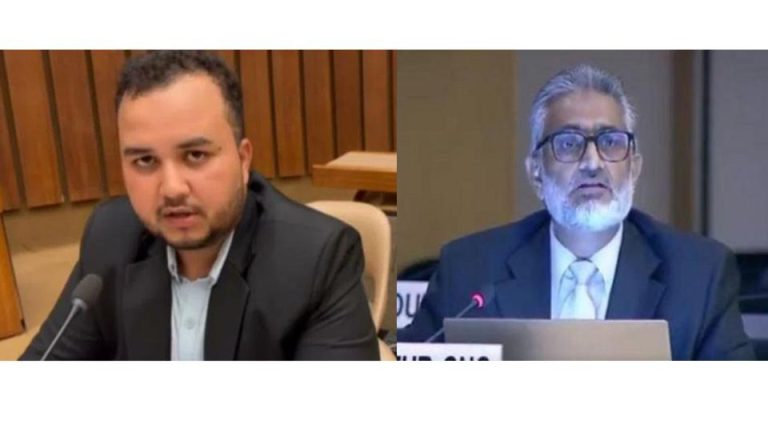
In a recent development, Manzoor Pashteen has penned a letter to the Office of United Nations High Commissioner for Human Rights (OHCHR). The letter is addressed to UN High Commissioner for Human Rights, Turk Volker, seeking his attention to the unjust arrests and mistreatment of Afghan refugees in Pakistan. Pashteen has also called upon Pakistani human rights organizations to join in advocating the critical human rights abuse by Paki ‘establishement’.

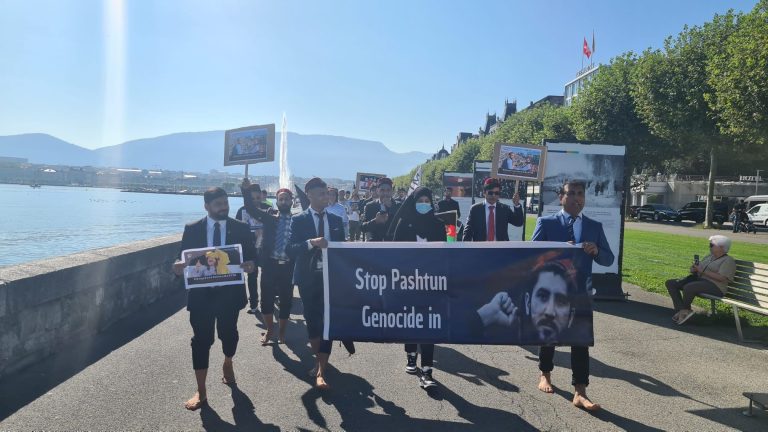
In his letter to the UN Human Rights Commissioner in Geneva, Switzerland, Pashteen highlighted the urgency of addressing grave human rights violations, which include harassment, inhumane and degrading treatment, arbitrary detention and torture suffered by Afghan refugees residing in Pakistan.

Moreover, disturbing reports have emerged, pointing towards the alleged torture and abuse of Afghan women and children under the pretext of repatriating them to Afghanistan. Reportedly, some of these individuals face severe security threats to their lives if forced to return to Afghanistan.

Furthermore, Pakistan has imposed indiscriminate and heavy fines and fees on Afghan nationals who have overstayed their welcome. Such actions are viewed as clear violations of human rights principles, as they impose undue burdens on individuals already facing displacement and uncertainty.

Accordingly, Manzoor Pashteen’s plea to the UN Human Rights Commissioner seeks immediate attention and action to protect the rights and well-being of Afghan refugees in Pakistan. Nevertheless, this issue underscores the need for a comprehensive response to safeguard the dignity and safety of vulnerable populations caught in the midst of conflict and displacement.

Notably, PTM under Manzoor Pashteen has actively put up the issue of Afghan civilians and Pashtuns and voiced for their human rights which is denied under the Pakistan establishment. Be it the set up of lawyer’s panel or an active protest, PTM has fought the atrocious Pakistan Army in every possible way.

Another Khalistani terrorist Sukha Dune killed in Canada

Sukhdool Singh, a Khalistani terrorist, commonly referred to as Sukha Duneke, was reportedly killed during a violent clash between rival gangs in Canada on Wednesday night. Sukha Duneke was a notorious figure with ties to the Davinder Bambiha gang in the Moga district of Punjab. Though unconfirmed, reports suggest that the incident took place in Winnipeg, Canada. Notably, Sukha Duneke was closely associated with another Khalistani terrorist, Arshdeep Singh, also known as Arsh Dala. This incident bears similarities to the assassination of terrorist Hardeep Singh Nijjar during a gang conflict in Surrey on June 19, where Nijjar was targeted with a barrage of 15 bullets.

Some reports suggest that Lawrence Vishnoi gang has taken responsibility of killing Sukha Duneke. This same gang was involved in the killing of Punjabi singer and politician, Siddhu Moosewala. Lawrence gang operates in Canada also and is rival to some of the Khalistani extremists and their gangs. The killing highlights the growing chaos around these gangs and their rivalry.

Sukha Duneke’s presence in Canada raises questions, given that he had fled India in 2017 using forged documents, with seven criminal cases registered against him. Additionally, it has come to light that at least 29 gangsters from the Punjab region have sought refuge outside India, often evading the law through Indian passports, forged travel documents, or by using the Nepal route. The killing also unveils the true face of Canada, which covertly breads these extremists that are a vital threat to the sovereignty of India.

Canada’s accusation proved wrong!

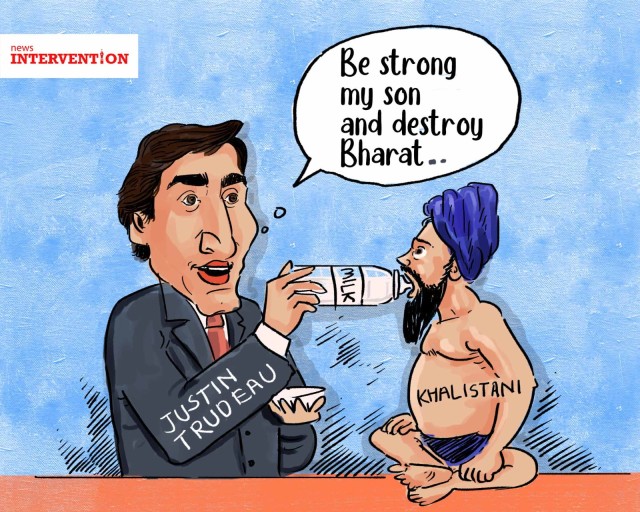
Canada has been identified as a primary destination for these individuals seeking shelter. Interestingly, Canada has accused India of political assassination in the case of Khalistan Tiger Force (KTF) member Hardeep Singh Nijjar, despite a lack of substantial evidence.

A diplomatic dispute between India and Canada ensued, with India releasing a list of 43 criminals and extremists sheltered in various countries worldwide, including Khalistani elements in Canada. Sukha Duneke’s name appeared on this list as well.

In the latest development, India has suspended the visa services for the Canadian citizens for an indefinite time. Suspension of visas is a diplomatic action taken against the Canada for Trudeau’s undiplomatic and unubstantive accusations.

Indian Visa Application Centre Portal (Photo: Social Media)

This recent incident involving Sukha Duneke highlights a troubling trend among these individuals seeking refuge abroad, particularly in Canada. It is becoming increasingly evident that the killing of Hardeep Singh Nijjar may have been another case of gang rivalry. Instead of solely pointing fingers at India, it is essential for Canada to address the radicalized Khalistani extremist presence within its borders, which appears to be embroiled in a complex web of gang rivalries and criminal activities.

As investigations into this matter progress, it becomes clearer that these extremists fled India not only to evade legal inquiries and investigations but also to sustain their criminal activities abroad. The responsibility now lies with Canadian authorities to address this concerning situation and ensure that their territory does not become a safe haven for extremists engaged in criminal activities and inter-gang conflicts.