Home Blog Page 186

Voice for Baloch Missing Persons’ hunger strike camp completes 14 years, students join in solidarity

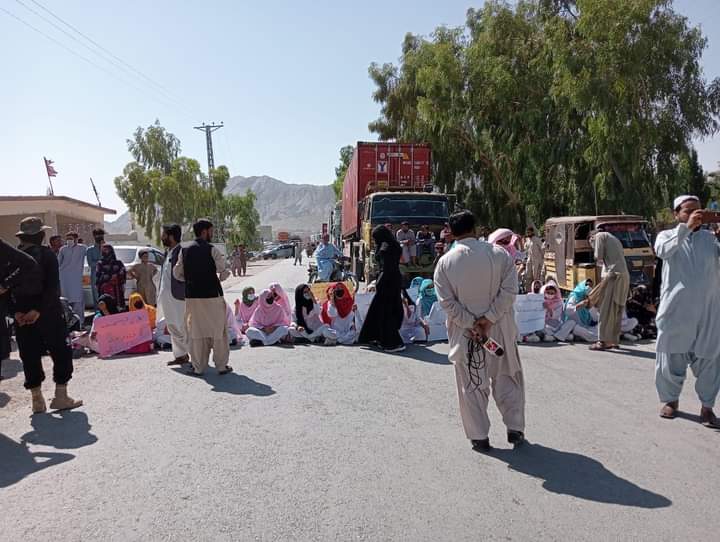
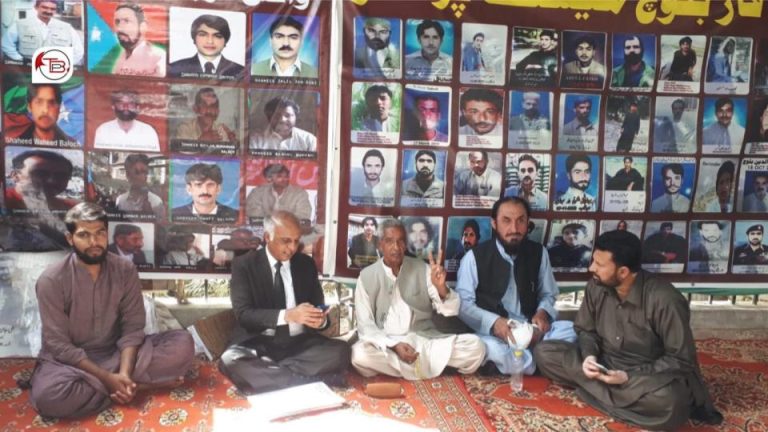
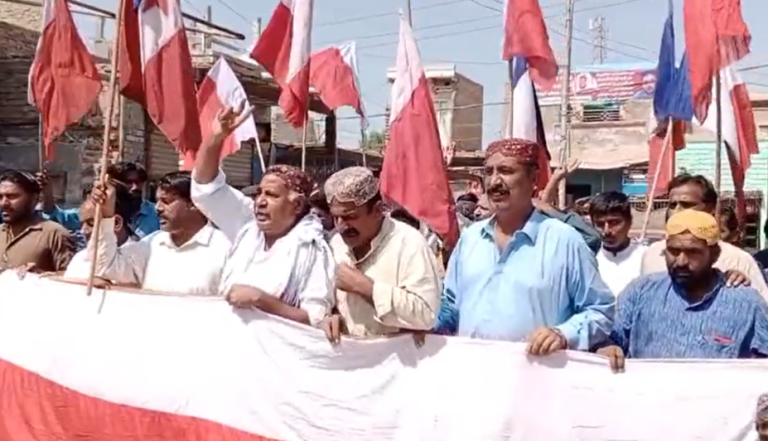
A group of students led by Nazir Baloch joined the Voice for Baloch Missing Persons (VBMP) hunger strike camp in Nushki on September 29, 2023. The camp, demanding the recovery of the thousands of Baloch people abducted by the Pak Army, has been ongoing for fourteen years.

In a speech to the students, VBMP Vice Chairman Mama Qadeer Baloch said that oppressive regimes around the world have used death squads to suppress people’s voices. He said that Pakistan is using the same strategy in Pakistan-occupied-Balochistan. Paki establishment has gathered all social evils, including local brokers and drug dealers, to openly harm Baloch people. In addition to hinder the growing popularity of the national struggle. People hold these protests to address the ongoing issue of missing persons in Pakistan-occupied-Balochistan.The enforced abduction by the Pakistan Army has persistently undermined the rights of Balochistan and its people, against which VBMP has been protesting for years. 

Furthermore, Qadeer Baloch noted that the Balochistan death squad in Khuzdar is an ongoing horror. He also added that Pak Army’s death squads, including those from ISI, have set an example of their brutality and terrorism in Balochistan, including Khuzdar. Moreover, the death squads have mercilessly targeted the families, elders, and women who were part of the Baloch Missing Persons Movement.

However, Qadeer Baloch said that the Baloch sons in Khuzdar have initiated a caravan of justice and will not relent in the face of oppression and coercion until they reach their destination. For far too long, Pakistan-occupied-Balochistan has witnessed enforced disappearances, targeting political activists, students, and civilians by the Pak Army. They are subjected to torture, and their lifeless bodies are discarded in isolated areas. Following the illegal occupation of Balochistan in March 1948, Balochistan has been fighting the war of its existence and freedom from Pakistan. Be it the peaceful way of protests or the armed resistance, against the inhumane authoritarian quasi state of Pakistan, Balochs are fighting an all-front war.

Sindh: Pakistan Army kills 9 people in Sakrand

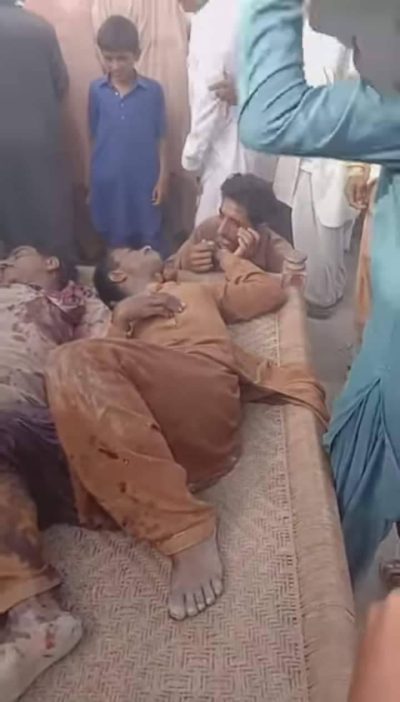
The so-called “Counter-Terrorism Department” (CTD) and Pakistan Army has killed about 9 innocent people including women in Sakrand Sindh.

On September 28, the CTD of Pakistan, based on an intel, attacked village Maari Jalbani in Sakrand to kill a nationalist activist Rajab Jalbani. The atrocious rangers opened indiscriminate firing over the people of village. This led to the killing of almost 9 innocent individuals including women. The incident has again raised concern over the Pakistan Army and its operations against the native people of Sindh.

People residing in the neighbourhood told media that the persons killed in the attack had no cases registered against them neither were they related to any sort of movement. They were simple farmers and labourers. In fact, they didn’t even posed any kind of threat to the operation, still, they were killed.

The incident has aroused anger in the local people. Agitated people pelted stones over the barbarian army. Meanwhile, the local youth from Hyderabad blocked the National Highway and protested against the Pakistan Army.

Various Sindh rights organization like Jeay Sindh Freedom Movement (JSFM) and SUP have come forward and condemned the incident as well as persecution, that Sindhis face on the hands of terrorist army known as Pakistan Rangers.

Jeay Sindh Freedom Movement (JSFM) Central Chairman Sohail Abro, Vice Chairman Zubair Sindhi, among others issued a joint statement against the attack. While condemning the brutality, cowardice and barbaric actions of Pakistan, JSFM urged the international organization including United Nations, Human Rights Watch and Amnesty International to take cognizance of the incident and ensure strict actions “as per the international on the state terror activities of the cruel fascist Punjabi Army and its intelligence agencies.”

Sindh: Rocket launcher explosion inside house; 9 killed

In a devastating incident in the Mehwal Shah area of Kashmore district’s Kandhkot tehsil, a deadly rocket launcher explosion rocked a house, resulting in nine fatalities, including four children. The tragic incident occurred on Wednesday and left a woman injured, according to local authorities.

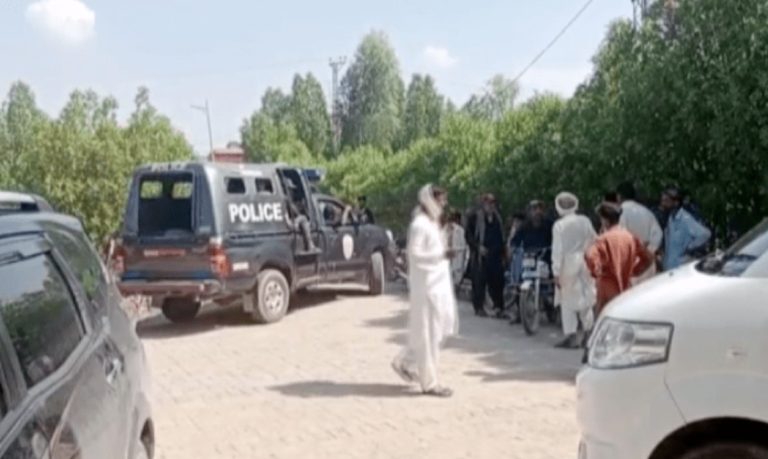
The house belonged to Ali Nawaz Sabzoi, and all the victims and the injured woman were part of the same family. Initial investigations suggest that children discovered what appeared to be a rocket while playing and brought it home, where the devastating explosion occurred, claiming eight lives. Law enforcement authorities have cordoned off the area and initiated further inquiries into the incident.

The incident has sparked concerns, prompting authorities to explore the circumstances that led to the rocket launcher explosion and the loss of lives. Tragic accidents involving the mishandling of explosive objects have occurred in the past, emphasizing the need for caution and awareness.

Reportedly, Kashmore-Kandhkot Senior Superintendent of Police (SSP) Rohail Khoso confirmed the heartbreaking loss of lives, indicating that the victims included five children, two women, and two men. The injured woman was promptly transferred to a hospital in Larkana, while the deceased were brought to the Kandhkot Civil Hospital.

Past incidents

The incident highlights the long persisting problem of easy general public’s easy access to dangerous explosives and weaponry. Some of the distressing incidents from recent years include:

  • April 2023: A shepherd lost his life in Chaman when a hand grenade he discovered detonated as he began playing with it.
  • January 2023: Merely two days before the Kashmore incident, three children tragically perished in an explosion within an abandoned compound in the same region, where they were playing with an object they had stumbled upon.
  • January 2022: Two children met a grim fate when a grenade they were handling exploded, causing severe injuries to another.
  • June 2021: Quetta witnessed a heartbreaking event where three teenagers lost their lives while playing with a hand grenade, having mistakenly believed it to be a harmless toy.
  • January 2021: Peshawar experienced a similar tragedy when three brothers were killed, and two others sustained injuries after a grenade they found in the fields detonated during play.
  • January 2019: In Balochistan’s Washuk district, three children were killed, and one was injured as they innocently played with an unexploded grenade they had discovered.
  • April 2013: Buner District witnessed a devastating incident where a toy bomb exploded, claiming the lives of two children and a woman. The explosion occurred when they were handling a rocket-like shell they had found.
  • April 2013: South Waziristan’s Wana area was shaken by an incident where at least two individuals were injured during a political gathering when an unidentified rocket landed abruptly.

Pakistan-occupied Balochistan and Khyber-Pakhtunkhwa epicentres of poverty

0

Pakistan is facing a ticking time bomb in the form of its poverty crisis. Recently, the World Bank’s report says that this year, another 1.25 crore people have been pushed into poverty, with the total number of people living below the poverty line now at 9.6 crore. Nearly 40% of the population lives below the poverty line, and the situation is only getting worse. With the rising cost of living, lack of infrastructure, and weak economic policies, ordinary Pakistanis are struggling to make ends meet.

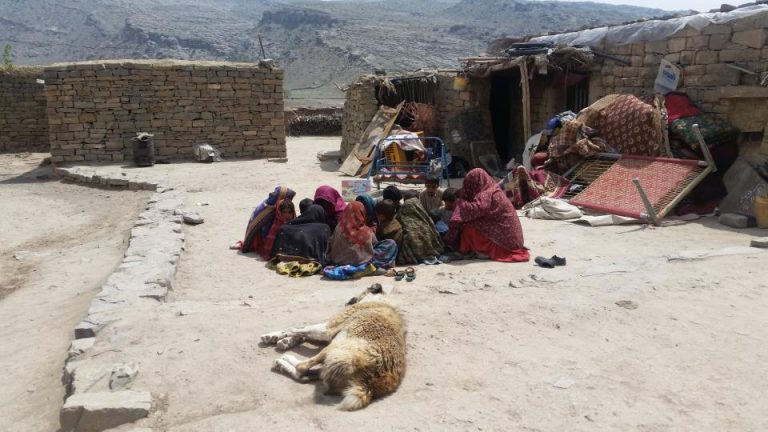
Economists say that the provinces of Pakistan-occupied-Balochistan and Khyber Pakhtunkhwa are the most poverty-ridden regions in the country. The rising cost of living, lack of infrastructure, and weak economic policies have all had a negative impact on the lives of ordinary people in these provinces. However, the major issue is that Pak Army has targeted these regions specifically for their resources. Illegal-occupation of these regions was their only motive, the Paki establishment just wanted to exploit their resources and benefits of the resources should be reap by the Panjabi Pakistan.

The World Bank also said that the income of middle-class people in Pakistan has decreased by 34.5% since 2018, with the daily income per person dropping to $3.20.

Where poverty meets inequality

Pakistan economists have blamed the authorities . They suggest that more taxes from the affluent-class should be used to provide assistance to the lower-class. The United Nations Development Agency (UNDP) reports that the highest poverty rate in Pakistan is 65% in Balochistan, followed by 50.7% in Khyber Pakhtunkhwa, 50% in Sindh, and 25% in Punjab.

Economists highlighted that the middle class has a special status in a country’s economic development and they can play an important role in the country’s development. They point to India as an example, where the middle class of 56 crore people pays for education, goes shopping, and buys things, which is why all countries want to invest in India, build factories and export their products in India.

The World Bank report also says that the per capita income in South Asia has increased by four percent over the past 20 years, but Pakistan, which previously had the highest per capita income among South Asian countries, remains the last in this region.

The report’s findings are alarming and highlight the urgent intervention by the international communities. Pakistan-occupied-Balochistan and Khyber Pakhtunkhwa are under the strong grapples of the brutal regime, they need humanitarian assistance and support for freedom not these reports that doesn’t address their scar.

For far too long, Pakistan-occupied-Balochistan has witnessed enforced disappearances, targeting political activists, students, and civilians by the Pak Army. They are subjected to torture, and their lifeless bodies are discarded in isolated areas. 

Geneva: ‘Sindhi Lives Matter’, World Sindhi Congress

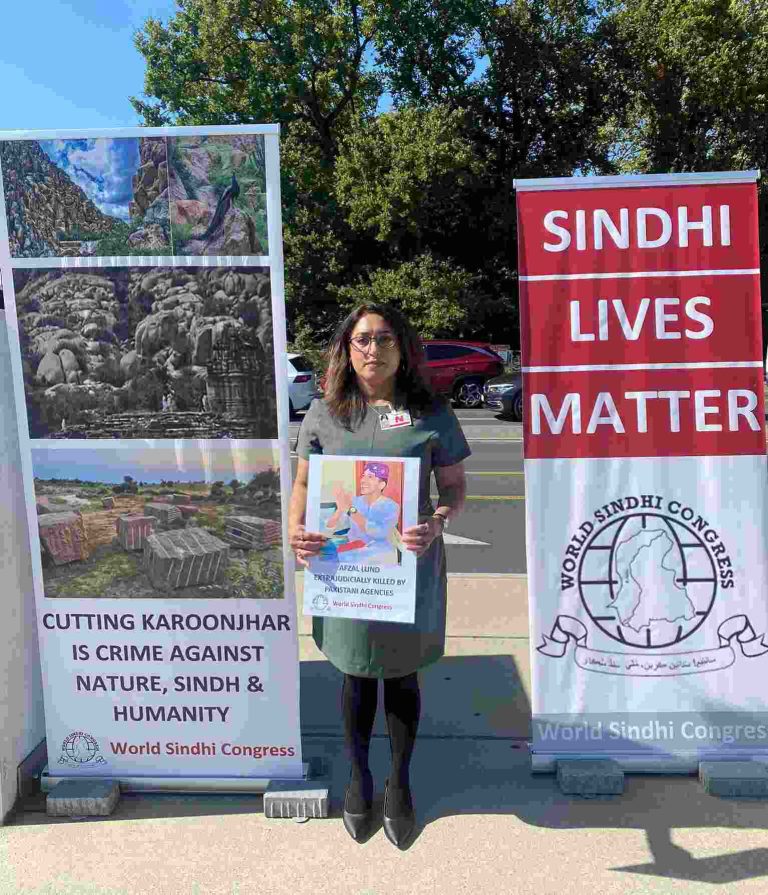
The voice of Sindh reached the United Nations as the World Sindhi Congress held a massive protest against Pakistan in Geneva. With the banners of Sindhi lives matter, WSC sent a strong message to the world and condemned the ongoing persecution of the native Sindhis in the region.

The protest saw a significant number of participants from across the world. The protestors raised the issue of the illegal occupation of Sindhi land by Pakistan. Along with that, WSC raised the crucial issue of persecution of Sindhi Hindus.

It is no hidden fact that Hindus are under continues threat of Pak sponsored hatred and persecution. There are hundreds of cases where minor Hindu girls are being abducted and forcibly converted to Islam. They are often married to their abductors of thrice their age. The cases of Hindu women and girls being raped are other disturbing developments in Pakistan. Besides, there have been instances when Hindu temples have been vandalised, sometimes even through a bombardment!

The presence of dacoits is also a sorry state of Sindh that is hounding the Hindus. In past few months, their terror has increased, many Hindus were abducted by the dacoits and were traded with a heavy ransom amount. Recently, various Sindh activists and inhabitants held a series to protest against the dacoits’ terror and a demand from the authorities to take strict action. Instead of taking actions against them, the Police carried on a baton charge over protestors. Some Police personnel even posed as dacoits to attack the protestors.

Issue of Karunjhar

Nonetheless, the World Sindhi Congress also raised an important issue of Karunjhar mountains. Karunjhar hold an important ancient significance for the Sindhi community and the entire historical heritage of South Asia. However, just for monetary gains, Pakistan is trying to cut those mountains and extract the resources so that they could be sold and exported.

During the Secretary General of the World Sindhi Congress, Lakhu Luhana said, “There are 1000 issues…The human rights situation (in Sindh) on every front is worsening…We request the international community and all the powers in the world…they should act now…”

Pakistan had earlier issued the notification of tender despite knowing that the matter was under the consideration of judiciary. This is actually not just an issue of allocation of tenders, rather it is a policy to erase anything that can be ascribed to Sindhi Hindus. Along with silencing their voice, Pakistan has always tried to completely wash out the traces of rich civilisation of religious minorities. The policies of Pakistan are nothing less than that of the ethnic cleansing of Sindhis and Hindus from the region.

Voices from Pak-occupied Jammu & Kashmir and Pak-occupied Gilgit-Baltistan in UN Human Rights Council

0

In a powerful and heartfelt address to the 54th regular session of the United Nations Human Rights Council (UNHRC), Professor Sajjad Raja brought forth the plight of the people living in Pakistan-Occupied Jammu and Kashmir (POJK). Along with him, Danish Ali a human rights activist from Pakistan-occupied-Gilgit Baltistan(POGB) also spoke up and exposed Pakistan Army’s human rights crimes in the occupied region. His words resonated with a passion that sought not just attention but, more importantly, action from the international community.

Plight of POJK

Professor Sajjad Raja is the Chairman National Equality Party, JKGBL, that stands for Jammu and Kashmir Globalization Board of Leaders. It is a political party in Pakistan-occupied Kashmir (POJK) that advocates for the rights of the people of POJK and POGB. His intervention at the UNHRC session shed light on the grim circumstances faced by the people of POJK, who have long yearned for a life of peace and dignity on their own land. His concerns centered around two critical issues: the availability of essential resources like flour and electricity and the pressing need to free the region from Pakistan Army’s oppressive grip.

The professor appealed to the global community and reminded us of the decades-long struggle of those living in POJK. Their aspirations for freedom and self-determination have been consistently denied with the use of utmost violence. And their basic human rights have been violated. This situation calls for immediate attention and intervention, and Professor Raja’s impassioned plea came at a critical time. Pakistan is grappling with inflation, debt and instability. These economic hardships has now been transferred to the innocent civilians, and the burden of high electricity rates and food has led to numerous protests, burning of the electricity bills in the region.


Pakistan’s Human Rights violations in POGB

The voice of Danish Ali also reverberated through the UNHRC chambers as he brought to light the coercive measures employed by Pakistan Army to suppress human rights in the region. Pakistan-occupied-Gilgit-Baltistan has, for far too long, suffered under the shadow of political and military control, with the local population’s basic rights going unfulfilled.

Ali spoke about the Paki establishment’s suppression of freedom of expression of POGB. He also highlighted the deprivation of basic human rights and amenities, including medical and educational facilities, under Pakistan’s illegal occupation. Pak Army also restricts internet services to cut the region off and isolating it from the rest of the world.

Furthermore, people of POGB are suffering due to Pakistan’s anti-people model of control, and lack of any form of governance. Pak has imposed excessive tax on the electricity bills on POGB and it has forced the people to launch a civil disobedience movement. Also, currently Shia minorities are being targeted through misuse of blasphemy law. These issues has resulted in protests in the region.

Minorities in Pakistan especially Shias, Ahmadiyas, Christians and Hindus are living under constant threat of cultural and physical genocide. Therefore, Ali urged the international community to support POGB & POJK to reunite with India & end to Pak illegal occupation.

Demand for Justice

The people of POGB and POJK are now taking a stand, raising their voices to demand justice and basic rights. They are no longer willing to accept a status quo that has deprived them of the resources and freedoms they rightfully deserve. Their peaceful protests show the urgency of the situation and the need for international platforms to step in and address their grievances.

Fatima Shigri, another brave voice from POGB, has questioned Pakistan’s priorities. In her poignant words, she asks why the suffering of the people in her region goes unnoticed, while trivial matters make headlines. Her question resonates with many who feel that their lives and struggles have been overshadowed by the politics of Pakistan.

A Global Call for Attention and Action

The people of POGB & POJK are standing up for their rights and their land. Their demand for justice is clear, and their commitment to bringing about change is unwavering. They understand that their land and resources are only what Pakistan wants, but they are determined to reclaim what is rightfully theirs.

In a world where headlines are often dominated by global politics and power struggles, it is essential to pay attention to the voices that often go unheard. Professor Sajjad Raja, Danish Ali, and Fatima Shigri, along with countless others in POJK and POGB, have now raised their voices for themselves. Their passionate pleas at the United Nations should serve as a wake-up call to the international community.

Geneva: PTM leads a barefoot march to the United Nations against atrocities by Paki Army

Pashtun Tahafuz Movement (PTM) carried out a barefoot march to the United Nation in Geneva Switzerland highlighting the terrorism spread by Pakistan Army and its subsequent human rights implications.

PTM’s march started from Lake Geneva to Broken Chair in front of the United Nations. The event was attended by hundreds of Pashtuns from Pakistan and Afghanistan along with other supporters of the cause.

During the march, Pashtun protestors raised slogan against Pakistan Army. They underscored the fact that Pakistan Army and its sponsored terror organization TTP have carried out a genocide of Pashtuns. The Pashtun community is facing the consequences of the terror war which is not even related to them.

International Conference on Human Right Violations of ethnic minorities in Pakistan

Beside the march to the United Nation, PTM Europe also organized the International Conference on Human Right Violations of ethnic minorities in Pakistan. PTM workers present at the event told the media that no religious minority is safe in Pakistan. Pakistan Army with its breaded terror outfits continue to hound every tribe, sect and religion.

The issue of illegal arrest and extra-judicial measures being taken by Pakistan were also raised. PTM sought attention of the conference towards the crackdown on Pashtun activists and absolute abrogation of human rights in Pakistan.

Notably, Pakistan has employed every subversive tactic to curb the voice of dissent. PTM which has been a non-violent right advocacy movement, is being dealt with brutality. In addition to that, the terror of extremist organization like TTP among others has also made the region and Pashtuns vulnerable. Pasthun workers have time and again voiced their concerns by exemplifying the horrendous situation in Khyber Pakhtunkhwa. As per them, the streets of areas like Waziristan remain filled with the terrorist and army vehicles.

The kids who need to play with toys see guns lingering at the shoulders of terrorists and military personnel. According to Pashtuns, any sensible government would never throw its citizens to such a hell, unless it is brutal and inhuman as Pakistan.

US ambassador to Pakistan’s secret visit to POGB & POJK bolsters India’s strategic autonomy

A couple of days after Indian Foreign Minister’s remark that “it is still the world of double standards,” the United States has proved him correct. The US Ambassador to Pakistan Donald Blome visited Pakistan occupied Gilgit-Baltistan (POGB) and Pakistan occupied Jammu and Kashmir (POJK).

The secret visit raises concerns and apprehensions over the intention of the United States regarding its relationship with India. The point being, US clearly knows that the concerned areas are under the illegal occupation of Pakistan and making political maneuvers in those area could compromise its relation with India. Despite that, the US ambassador visited the region and that too secretly.

Even the media was not informed about his visit. If reports are to be believed, it was not a casual visit as he met with some of the local Pak-backed politicians and Food and Tourism Minister of the occupying government, Ghulam Muham­mad in Gilgit.

Donald should have taken the cognizance of protests in the POJK and POGB, where people are protesting over the persecution by Pakistan Army. Visiting the region implies not only legitimizing the Pakistani claim but also the persecution and oppression by Pakistan Army in POGB and POJK.

What was the mysterious activity?

The United State must now contemplate why it should not be called as a sympathiser of a terrorist regime? It must know that with this secret visit, it has crossed the line which the other Indian rivals have never tried to cross!

Above all, the alleged reference to POJK that Donald used, i.e., “Azad Kashmir” is in sheer contrast to the Indian stand and being the non-party in the matter, such an attribution is also a kind of legalisation which raises question, that why should India think of United States as a strategic partner? And under what authority, he got the right to address that region as “Azad”?

Furthermore, it is not only India that is raising question, Mr. Donald’s secret visit has also come under the sharp criticism from the opposition party in POGB. The opposition leader of GB, Kazim not only criticised his secret visit but also called it the “mysterious activity” of the US Ambassador in the region.

So, what was that mysterious activity? Was it a visit to count the abducted youth of the region, who are coercively fed into terror factory on a daily basis? Or was it a visit to see the protests of hungry citizens who are demanding their national recognition right along with basic amenities? Well, if these are not the concerned activities, then it’s time for India to stop the recognition of US face that relates to human rights and recognise the US face through which the blood lust lingered during the Iraq invasion. The US has always thrived on the dead bodies of lakh of innocents and made the world, its battleground so that it could benefit from every cooking conflict.

Connecting threads

This takes us to a very important development. Reportedly, the recent Canadian allegations were based on the “so-called” intelligence from the Five Eyes, especially United States. This rings the bell. First providing an intel to Canada based on open-source information, then US ambassador’s secret visit to POGB and POJK makes it very clear that US is pulling the strings and playing from behind the scenes. Reason? Growing Indian dominance is stinging in the eyes of US.

Apparently, there is no room left for the doubts! US is certainly trying to play its cold war game play of equilibrium. It wants to woo India because it sees New Delhi as the only potential country that can face China. Meantime, it is also leaving no stone unturned to reinstate Pakistan as a potential rival to India so that it can keep India’s dominance under check.

This becomes more evident by the statement of US ambassador to India, Mr. Eric Garcetti. When asked about Mr. Donald’s secret visit, he very nicely steered the question and gave a diplomatic reply that, a delegation also went to Kashmir during G20 and that the issue is bilateral and apart from India and Pakistan, no third party will interfere. While he cleverly upheld the Indian stand of no foreign intervention, he also justified US’ intervention in POGB and POJK.

US has made a mistake worth regretting!

Since the cold war time, US has tried to appease and neglect India as per its need. One of many reasons that melted their heart, at the advent of 21st century, was the growing aggression of China and their desperate need for India by their side. But now, as India is growing and is becoming a beacon of hope for the larger world, US is trying to revive a counter in Asia, yet again through Pakistan. As, it is no hidden fact that US helped Pakistan to gets bailout from IMF after it promised to supply weapons to Ukraine, while India has resisted every pressure of taking hardline on Russia.

The secret visit of US ambassador to POGB and POJK highlights the US double standards. Hopefully, India’s neutrality has the space for more autonomy. The United States has done what it had to, now its time for India to reply. In coming days it is definitely going to be proved as the biggest mistake of United States. Nevertheless, one thing is pretty much clear that the neutrality and strategic autonomy of India is going to be more strong than ever.

Geneva exposes Pakistan’s ‘Kill and Dump’ policy of Baloch

Geneva, September 26, 2023: In a display of solidarity, a three-day-long photo and banner exhibition has been launched in front of the United Nations office in Geneva. This exhibition aims to draw attention to the dire situation faced by the Baloch people in Pakistan-occupied-Balochistan. It also highlights the alarming abuse of human rights and the rising incidents of enforced disappearances in the region.

The exhibition was jointly organized by the Baloch Voice Association, Voice for Baloch Missing Persons, and Baloch Peoples’ Congress. The organizers demanded urgent UN intervention to protect the lives of the Baloch people, who have been facing the worst human rights violations.

Plight of Baloch People

For far too long, Pakistan-occupied-Balochistan has witnessed enforced disappearances, targeting political activists, students, and civilians by the Pak Army. They are subjected to torture, and their lifeless bodies are discarded in isolated areas.

Munir Mengal, President of the Baloch Voice Association, said, “Pakistan Army is abusing the fundamental rights of the people on a daily basis and every day we receive through social media information that people have been abducted. And also, we have been receiving information that those who have been abducted by the Pakistan army, are throwing their dead bodies in different areas.”

Mengal said that in the last two weeks, 20 mutilated bodies of those people who had been victims of enforced disappearances by the Pakistani forces have been found.

Human Rights Abuses 

Mengal added, “This is how Pakistan is doing her kill and dumb policy and the world has not taken interest on this issue. For this purpose, we are here to seek the attention of the UN and Pakistan, a member state of the UN and member states should take notice of human rights which the Pakistan forces are doing over there”.

The demonstration also included Pashtuns, Sindhi, Baloch, and activists from Bangladesh. Political activists from Pakistan-occupied Jammu & Kashmir (PoJK) also made their voices heard, demanding that Islamabad vacate Kashmir and allow its people to live in peace.

The demonstration, organized by the United Kashmir People’s National Party calls to “STOP human rights violations in PoJK and Gilgit Baltistan” and “Pakistan must stop Human Rights Violations.” The outrage in PoJK and Pak-occupied Gilgit-Baltistan stems from violations of human rights, misuse of laws, and issues such as high inflation, poverty, and unemployment.

Rogue Pakistan Army abducts 6 Kashmiri youth

In a disturbing and heartbreaking incident, the rogue Pakistan Army has once again displayed its oppressive nature by abducting six innocent Kashmiri youths. These young individuals were engaged in a selfless act of cleaning and maintaining a cemetery in Pakistan-occupied Jammu and Kashmir (PoJK). This heinous act sheds light on the true face of oppression and injustice that persists in the region.

Children abducted for terror training

This incident is not isolated. Just a few months ago, a local traders’ body in PoJK raised an alarming concern about the abduction of children who were being subjected to terror training by Pakistan-based jihadi groups. Shockingly, it is reported that over 150 children have gone missing from the region in the past two months.

During a press conference, Maulana Khalil, the chief of the Pakistan Occupied Kashmir Traders’ Association (POJK), revealed that most of the missing children hail from various areas in PoK, including Muzaffarabad, Balakot, Rawalkot, Noorkot, Nowshera Samani, and Bagh. Maulana Khalil expressed his shock at the situation and suggested that these abductions appear to be pre-planned.

While Maulana Khalil did not directly accuse the Pakistan Army or ISI (Inter-Services Intelligence), it is obvious that they are involved in providing training to the abducted children in terror camps. Operating such camps without the blessings or involvement of the Pakistan Army or ISI is not possible.

Local bodies have also alleged that Paki establishment is attempting to alter the demographics of PoJK by settling non-Kashmiris, particularly those of Punjabi origin, in the region.

This is not the first time that the Pakistan Army has abducted innocent civilians in PoJK. In recent years, hundreds of missing persons have been reported, including members of the Muttahida Qaumi Movement (MQM) party. Many of these missing persons are the sole breadwinners of their families, and their disappearance has caused immense hardship and suffering.

The Pakistan Army has been accused of using torture and other inhumane treatment against detainees. In many cases, detainees have been held incommunicado for months or even years without charge or trial.

Human rights groups have repeatedly called on the Pakistan government to investigate the disappearances and to bring those responsible to justice. However, no meaningful action to address this issue has been taken so far.

Locals resist abduction attempts

In 2020, in Rawalakot city, Pakistan-occupied Jammu & Kashmir (PoJK), brave residents prevented an abduction attempt by Pakistan Army’s agents targeting a Kashmiri youth named Nauman. A video shared by the United Kashmir People’s National Party (UKPNP) captured the moment when locals intervened. They smashed the abductors’ vehicle, broke its windows, and confronted the kidnappers, who claimed to be from the Federal Investigating Agency (FIA) but were accused of carrying fake identity cards.

Pakistan-occupied Jammu & Kashmir has been a hotspot for terror activities against India for a long period. It was the target of surgical strikes by the Indian military following the Uri attack in Jammu and Kashmir.

The abduction of Kashmiri youths and children raises serious human rights concerns and highlights the need for international attention and intervention. Under illegal occupation of Pakistan, PoJK has suffered for decades. The calls for justice and an end to such abductions grow louder each day, and the we must not remain silent in the face of such atrocities.