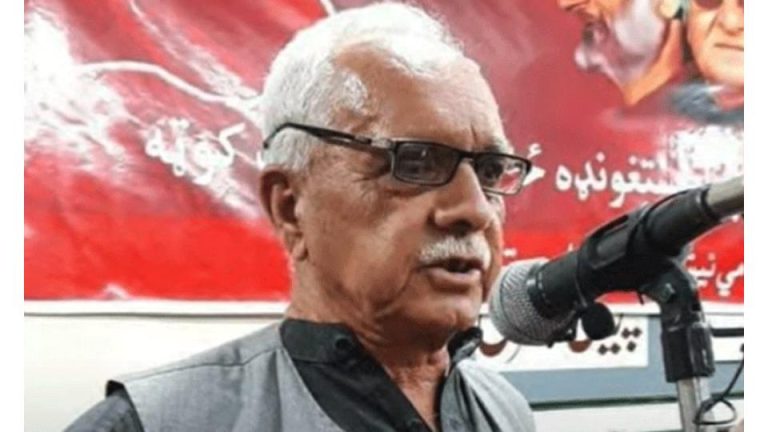
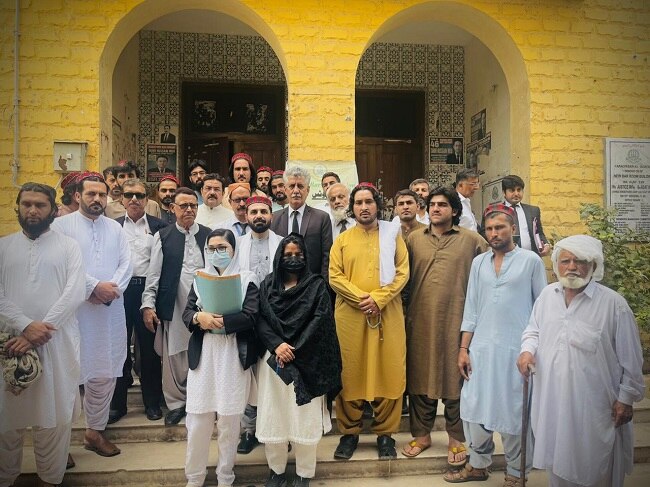
Advocate Arbab Ghulam Kasi, Baloch politician and leader of the Awami National Party (ANP) who was also the provincial president of the National Lawyers’ Forum, was “found dead” (read murdered) in the Kuchlak area, around 25 kilometers from Balochistan’s capital Quetta along the Quetta-Chaman Highway.
The ANP leader’s lifeless body was found in an isolated area of Killi Sheikh Jamal Atozai under puzzling circumstances, prompting concerned locals to alert the Kuchlak police.
Upon receiving the distressing news, the police reached the scene and took custody of Arbab Ghulam Kasi’s body, transferring it to Quetta Civil Hospital.Senior police officer Abid Mengal stated, “The body was discovered near an abandoned gas station, and a pistol was found nearby, alongside the ANP leader’s remains.”
Medical sources from the hospital reported that the deceased had sustained a fatal gunshot wound near his ear. Authorities initially found themselves in a perplexing situation regarding the cause of the ANP leader’s demise, leaning toward the possibility of suicide.
However, family members rejected the notion of suicide, asserting that Arbab Ghulam Kasi had left home around 4 p.m., expressing his intention to travel to Quetta. An ongoing investigation will unravel the circumstances surrounding this tragic incident.
This incident is similar to another tragedy occurred two years ago when another senior ANP leader, Obaidullah Kasi, met a tragic end at the hands of unknown assailants in the Kuchlak area. Obaidullah Kasi had a close kinship with Arbab Ghulam Kasi.
Earlier, Hafiz Hamdullah, a leader of the Jamiat-e-Ulema-e-Islam Fazl (JUI-F), sustained injuries along with one of his aides and his security personnel in a roadside blast in Mastung district, Pakistan-occupied-Balochistan. The JUI-F leader and spokesperson of the Pakistan Democratic Movement (PDM) alliance was en route to Mangocher city in Pakistan-occupied-Balochistan when the incident occurred.
These are not isolated incidents; it seems as though the Pak Army is either failing to protect the leaders or targeting these leaders themselves. This lawless land is now safe for absolutely NO ONE!
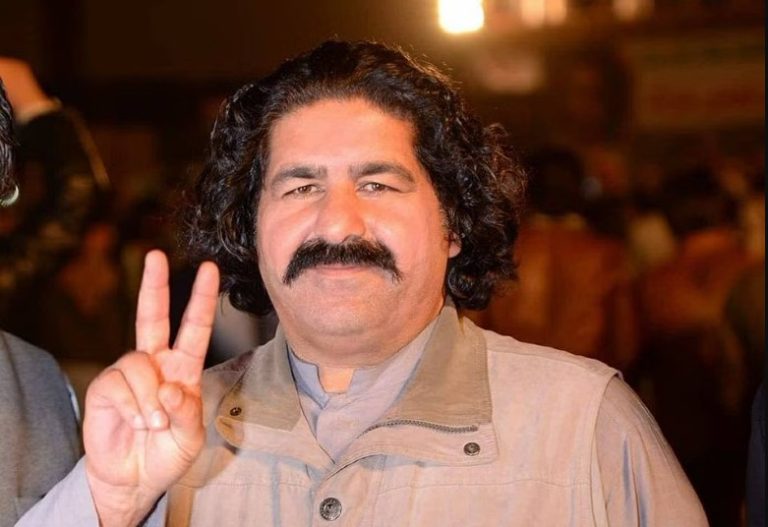
Former Member of the National Assembly (MNA) and PTM leader Ali Wazir, has been released from Adiala Jail after being granted bail in false cases related to sedition and terrorism.
Previously, Ali Wazir had four FIRs registered against him in two different police stations in Islamabad. Specifically, two FIRs were filed at Tarnol Police Station, one at Bara Kahu Police Station, and another case was registered against him with the FIA.
Ali Wazir has been arrested multiple times in the past and is the living example of the persecution by the Paki establishment. It is unimaginable to think of the persecution of common Pashtun when an ex-MNA is victimised by Pakistan.
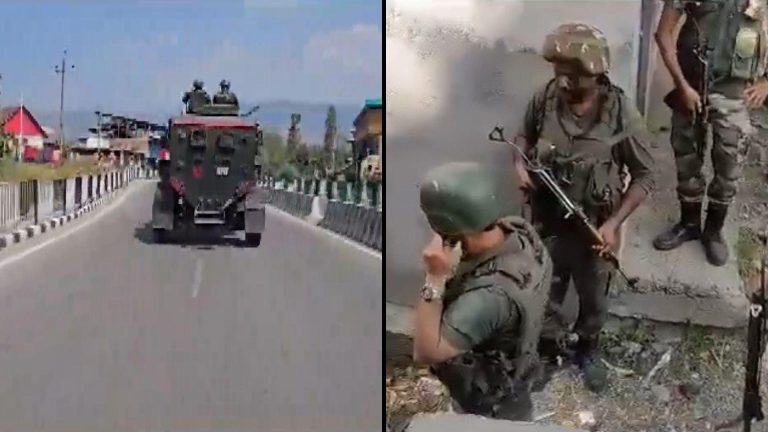
Encounters between security forces and terrorists are commonplace in J&K. However, the Gadole encounter is in limelight as the casualties suffered by security forces include a commanding officer and company commander of Rashtriya Rifles as well as a deputy superintendent [Dy SP] of J&K police. Though not unprecedented, such an inordinately high casualties in officer-rank during an operation is nevertheless uncommon-and perhaps this is what has rattled alarmists and made the imagination of some fertile minds run wild.
An example is a piece titled ‘Terror as family business? Why Kokernag ambush may have roots in India’s war against Lashkar’ [https://theprint.in/india/terror-as-family-business-why-kokernag-ambush-may-have-roots-in-indias-war-against-lashkar/1763835/] written by a fairly well known Indian defence analyst that appeared in The Print on September 16. If this author is to be believed, then the Kokenag incident wasn’t an operation based on specific intelligence that culminated in an encounter, but a terrorist ambush [surprise attack by armed men lying in wait in a concealed position].
This analyst has based his inference on a statement issued by The Resistance Front [TRF], a front organisation of Pakistan based terrorist outfit Lashkar-e-Taiba [LeT], which [in his own words] reads, “Today’s glorious attack in Kokernag is a glorious tribute to shaheed [martyr] Muhammad Riyaz, who was martyred in the Rawlakote area.” Belonging to the Surankote area of Poonch district of J&K, Riyaz was a key LeT operative based in Pakistan occupied Kashmir [PoJK] actively involved in coordinating terrorist activities in J&K. He was gunned down by an unidentified assailant in Rawlakote [PoJK] on September 8.
It’s a well known fact that Islamabad jumps at every conceivable opportunity to accuse New Delhi for any violent act inside Pakistan or in PoK. A recent example is its Interior Minister’s claim made last year that Islamabad had “strong evidence” of India’s involvement in the 2021 suicide car bombing outside Mumbai attack mastermind and LeT co-founder Hafiz Saed’s residence in Lahore. The fact that Islamabad hasn’t yet furnished the so called “strong evidence” that it claims to possess is a classic example of Islamabad’s incurable habit of crying “Wolf”!
Interestingly, the Pakistan police have classified the Rawlakote killing of LeT operative Riyaz as a “blind murder,” and not a targeted killing, while TRF has hailed the casualties inflicted on Indian security forces during the Kokernag action as a “glorious tribute” to this deceased LeT commander. With the Pakistan police not levelling any allegations of Indian involvement in the killing of Riyaz, and TRF not terming the Kokernag encounter as planned retribution for this killing, the ambush theory propounded by many expectedly falls flat on its face.
Similarly, a popular Hindi TV news channel has come out with another incredible account that would put novelist Frederick Forsyth to shame. Titled ‘Anantnag Encounter’s BIG revelation; Plot planned in Pakistan’s Army Headquarter’ [https://news.abplive.com/videos/news/india-anantnag-encounter-s-big-revelation-plot-planned-in-pakistan-s-army-headquarter-abp-news-1629774] this TV channel in a 7.50 minutes video released on September 15, makes some rather ludicrous claims. According to it, the Kokernag incident was a well planned attack on Indian security forces with links spreading across Rawalpindi, PoK as well as Türkiye.
As per this news channel, in an effort to divert public attention away from the havoc being wrecked by Tehreek-e-Taliban Pakistan terrorist group, the Pakistan Army was anxious to orchestrate a big terrorist strike in J&K, and it conveniently did so by ordering LeT to use its front group TRF for the Kokernag ‘attack’ in order to avenge the killing of LeT “top commander” Riyaz.
However, the news channel gave no information to substantiate its claim of Ankara’s involvement in the Kokernag attack other than mentioning that this incident occurred took place when Pakistan Army chief Gen Syed Asim Munir was on a visit to Türkiye! This apology of an investigative report aired on prime time exposes how some desperate TRP hungry TV channels peddle nonsense by using catchy buzz words like “BIG revelation”!
While the import of the “If a dog bites a man it’s not news, but if a man bites a dog it is” maxim cannot be overemphasised , overzealous analysts and media houses need to curb the temptation to grab attention by expounding wacky theories on terrorism related issues and incidents for two basic reasons.
One, replacing hard facts with unrealistic assumptions just to ‘spice up’ the narrative trivialises the daring actions of security force personnel and culminates in unwarranted glorification of terrorists. The second reason for avoiding factual inaccuracies and hearsay is that these cause immense anguish to both those participating in anti-terrorism operations as well as the near and dear ones of those who made the supreme sacrifice.
For example, manufacturing an ‘ambush tale’ conveys a completely incorrect impression that those participating in the Kokernag operation had disregarded basic tactical tenets that ensure physical security of columns while on the move. Since the officers and soldiers participating in this operation were well trained and had sufficient experience in anti-terrorist operations, it is inconceivable that they would have thrown caution to the winds while moving in an area in which there was a suspected terrorist hideout site.
The ambush theory also suggests that it was casualness that caused the rank and file to walk straight into an ambush- lock, stock and barrel. Such untrue depiction based on a mere assumption or hearsay brazenly mocks the professionalism of the security forces. This untruth really hurts those in uniform and such a casually derived inference indirectly implies that those who lost their lives or were injured due to firing by terrorists had ‘asked for it’.
Covering terrorism related issues and incidents demands fact-based reporting and innuendoes that create space for negative inferences or provide ready material to inimical forces for propaganda purposes are unpardonable acts that need to be univocally condemned. So, while it’s obvious that something must have gone seriously wrong during the Kokernag operation which resulted in high casualty figures, and the Indian army will definitely incorporate remedial measures to avoid recurrence. So, there is no need for alarmists and apologists to paint a doomsday scenario.
Similarly, those who see the Kokernag encounter as an indicator of J&K returning to the nineties, or consider outfits like TRF as a “major challenge” to the Indian security forces need to loosen up and stop making mountains out of molehills. The Indian army has the professional acumen and determination to decisively defeat terrorist groups-it has done so in the past, is doing so now, and will continue to do so in future. Alarmists should not forget that unlike the Pakistan Army which bends backwards to broker peace deals with terrorist groups, the India army strictly believes in disciplining terrorists and not humouring them like Rawalpindi.
Officers of the Indian army live by the ‘Chetwode motto’ which states that “The safety, honour and welfare of your country come first, always and every time. The honour, welfare and comfort of the men you command come next. Your own ease, comfort and safety come last, always and every time.” [Emphasis added] and by choosing to lead from the front in an extremely dangerous situation, 19 Rashtriya Rifles Commanding Officer Colonel Manpreet Singh and his Company Commander Major Aashish Dhonchak implicitly lived up to this motto both in letter and spirit and Late Dy SP Himayun Muzamil Bhat of J&K police too did the same.
While their loss is irreplaceable, the valour and sacrifice of those who made the supreme sacrifice makes those in uniform as well as the veteran fraternity extremely proud and they will remain an everlasting source of inspiration for future generations.
In his address yesterday, Justin Trudeau made a startling announcement in the House of Commons, alleging the involvement of the Indian government in the killing of Hardeep Singh Nijjar, a Khalistani sympathizer.
In his speech to the House of Commons, Canadian Prime Minister said, “Today, I am rising to inform the house of an extreme serious matter. I just informed the leaders of the opposition directly, and I now want to speak with all Canadians. Over the past numbers of weeks Canadian security agencies have been actively pursuing credible allegations of a potential link between agents of the government of India to the killing of the Canadian citizen Hardeep Singh Nijjar. Canada is a rule of law country. The protection of the citizens and defence of our sovereignty are fundamental.”
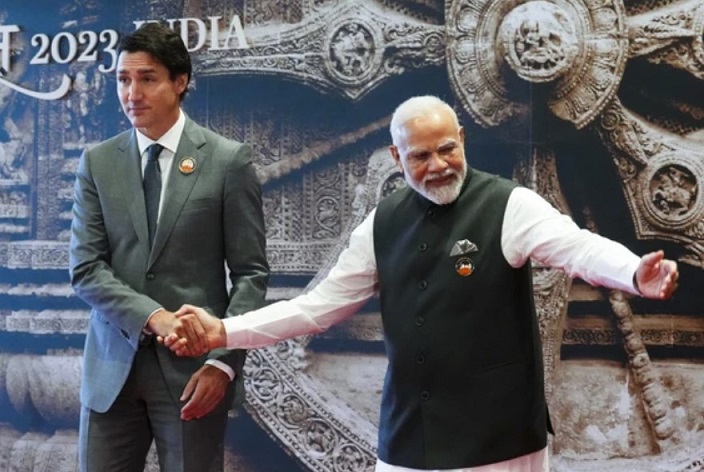
He went on and said, “Canada has declared its deep concern to the top intelligence and security officials of the India government. Last week at the G20, I brought them personally and directly to Prime Minister Modi and no answers in return.” He also urged the Indian govermment to cooperate to get to the bottom of the matter.
Later it was reported that, a top Indian diplomat was expelled from Canada.
Accusation without evidence
As Justin Trudeau has levied a serious allegation against the Indian government, he explained that Canadian security agencies have been actively pursuing the case. However, he failed to present any substantive evidence after weeks of pursuing what he called ‘credible allegations of a potential link’ to support his accusations. This raises suspicion that it may be an attempt to divert attention from the Trudeau government’s perceived incompetence in dealing with the Khalistani menace and the subsequent humiliation.
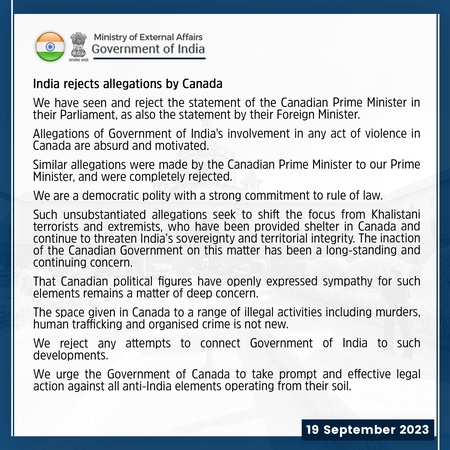
This resonated in the Indian government’s reply which rejected such allegations. In their statement, MEA stated that the accusations are absurd and motivated. India has said that such unsubstantiated allegations seek to shift the focus from Khalistani extremists and terrorists, who have been provided shelter in Canada, and continue to threaten India’s sovereignty and territorial integrity.
MEA Statement (Photo: MEAIndia)
The MEA also raised concern over the inactivity of Canadian government over these extremist elements. Subsequently, Indian government summoned Canadian High Commissioner to India and expelled a senior Canadian diplomat.
What Justin Trudeau is doing is employing a naive tactic of damage control by creating a sensation out of false allegations. To better understand his immature and condemnable statement, let’s examine the chronology of events.
Brampton Parade is not a freedom of expression its expression of terrorism
In June, a controversial parade was held in Brampton, Ontario. The theme of the parade was the assassination of former Indian Prime Minister Smt. Indira Gandhi. This sparked resentment among people in India and the Indian diaspora abroad. The Indian government strongly protested against this manifestation, but Canada defended it as “freedom of expression.” This stands as a glaring example of hypocrisy and insensitivity. How can the murder of a Prime Minister of one country be celebrated in another under the guise of ‘freedom of expression’?
Not only would any respectable nation object to such an event in the strongest possible terms, but it would also not permit such processions. This is how a ‘free, open, and democratic society’ operates.
Regarding his concerns over sovereignty and territorial integrity, he justifies his government’s actions on the basis of international law. However, he must understand that international law calls for upholding the sovereignty and territorial integrity of every nation, not just Canada’s. It’s crucial for him to grasp that harboring terrorists and extremists could potentially lead Canada to be labeled as a state supporting terrorism, rather than a champion of freedom of speech and expression. These constitutional concepts have limitations that a just society should recognize.
If, under the pretext of freedom of expression, the sovereignty of any nation can be violated, it sets a dangerous precedent that could result in the unraveling of the society we have built over time. Perhaps Justin Trudeau needs a course in political theories, their concepts, and their evolution over centuries to gain a better understanding. These concepts also call for the protection of foreign missions and diplomats, an area where he has failed miserably.
Trudeau peddling lies!
Following this unacceptable incident in Canada, India gradually began distancing itself from various aspects of its relations with Canada. This was possibly the reason Canada was not offered a bilateral meeting but only a pull-aside. Prime Minister Modi didn’t even post a welcome note for Trudeau, as he did for all other leaders. During the pull-aside meeting, the Indian Prime Minister raised concerns about the increasing anti-India activities in Canada and the Trudeau government’s inaction in addressing them. In its press release after pull aside, India clearly outlined issues such as “inciting violence against Indian diplomats, damaging diplomatic premises, and threatening the Indian community in Canada.”
Canada faced a snub at the G20 summit due to its undiplomatic behavior and insensitivity in addressing the concerns of other nations. This resulted in the termination of trade talks between both countries.
The cold reception India gave to Canada during the G20 summit was reflected in the Canadian media as well. Consequently, Trudeau faced heavy trolling and criticism in Canada for not receiving the welcome that the Canadian PM is typically accorded. It was clear that India gave a stern message to the Canadian PM, but he chose to lie in the House of Commons that it was he, who raised concern to the Indian Prime Minister. His attitude has been completely against the Statemenship.
We all know that Khalistanis have a significant number of vote share that Trudeau lures and that is why he turns a blind eye on every terrorizing activity they do.
And when snubbed by India and trolled by own citizens, Trudeau is just trying to get an appraisal by creating a sensation. At this point it must be noted that Trudeau’s statement is to incite anger in the heart of every Canadian. While mentioning Hardep Singh Nijjar, he used the phrase “the killing of Canadian citizen on Canadian soil”, something that was used by his foreign minister also.
Apparently, this statement is politically motivated because in 1982, Khalistanis targteted an Air India plane which left 329 killed. Unfortunately, 268 among them, were Canadians. The terrorist behind this attack was given the protection by Justin’s father Pierre Trudeau. Justin Trudeau is sympathizing with the same monsters, who killed Canadians on Canadian soil. So, what Trudeau has said is just to ignite anger in the hearts of general Canadian citizens so that ultimately, he could cash it politicly.
By falsely accusing India, Trudeau might get the supports of the terrorists he breaded at his home and get a return ticket to the government, but he has lost the golden opportunity to align with the mother of democracy during its golden period of economic and diplomatic rise.
The North Area Transport Company (NATCO) has found itself mired in an economic crisis that has triggered significant unrest and protests among its employees. The root cause of the turmoil lies in NATCO’s failure to address the pressing salary issues of its workforce, resulting in a series of protests and the shutdown of its offices.
Employees of NATCO, a crucial transport service provider in the region, have been plagued by salary-related grievances for an extended period. Unable to withstand the financial strain any longer, they decided to take matters into their own hands. As a consequence, NATCO’s employees initiated a collective protest, withholding their services and causing disruptions in the essential transportation services the company offers.
GBUM extends support
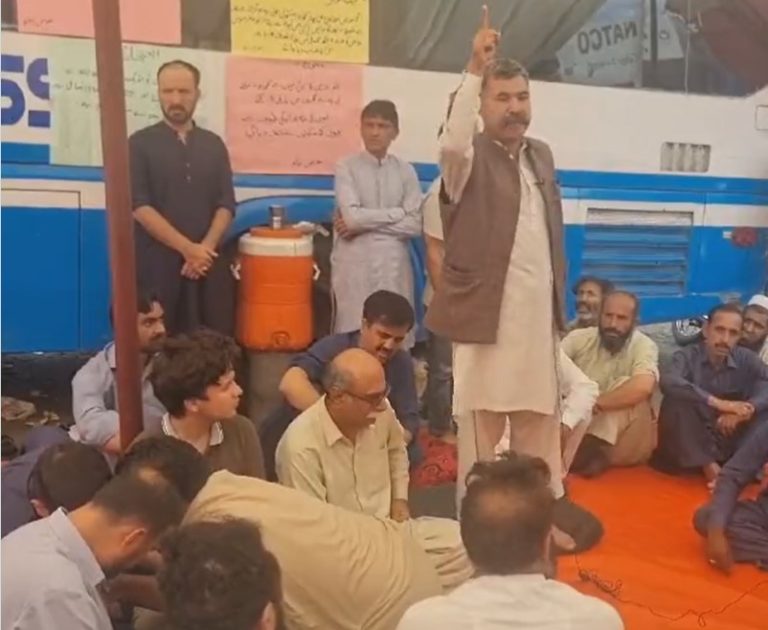
Shabbir Mayar, representing the Gilgit-Baltistan United Movement (GBUM), joined the chorus of discontent by participating in the sit-in protest. The GBUM’s involvement highlights the broader societal concern over the non-payment of NATCO employees’ salaries for several months, the absence of necessary alliances, and a shortfall in their insurance coverage.
گلگت نیٹکو ملازمین کی تنخواہوں کی کئی ماہ سے عدم ادائیگی، الائنسوں کی عدم موجودگی اور انکی انشورنس کی رقم میں خرد برد کرنے کے خلاف دیئے گئے ملازمین کے دھرنے میں گلکت بلتستان یونائیٹڈ مومنٹ کی نمائندگی کرتے ہوئے شرکت اور مختصر خطاب. pic.twitter.com/Ek3p8u1jaR
The situation escalated further when Rahmatullah, President of the Contractor Association in Pakistan occupied Gilgit-Baltistan, squarely placed blame on the Chief Secretary for the mounting problems in the region. Moreover, Rahmatullah called for the immediate removal of the Chief Secretary, holding him responsible for the current crisis. His statement was made during his address to the sit-in organized by NATCO employees.
This courageous assault comes in direct contradiction to earlier reports in the local media, which had downplayed the incident, suggesting that only one soldier was killed and another injured in an attack by armed individuals on an Pak Army base in Wali Thangi.
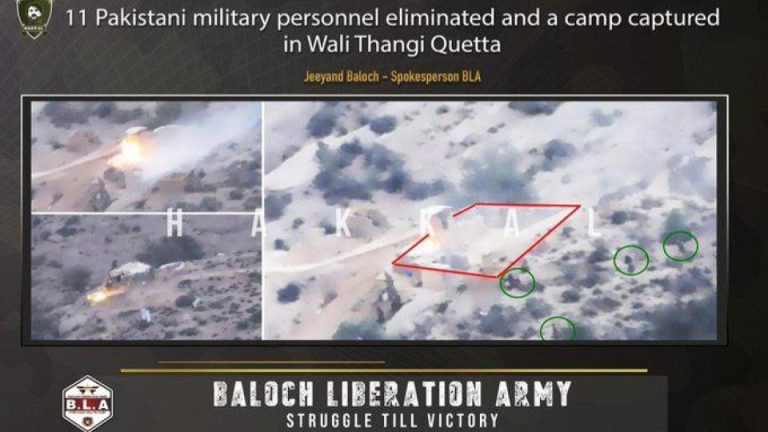
According to the statement released by the Baloch Liberation Army, their freedom fighters launched a well-coordinated and fierce attack on the occupying Pakistan Army camp in Wali Thangi, at 6 p.m. on 14 Sept. The freedom fighters approached from multiple directions, effectively pinning down the enemy troops and forcing them to abandon their camp.
In Quetta's Wali Tangi, the #BLA takes credit for seizing the #PakistanArmy's camp. According to the BLA, 11 Pakistani military men were killed, and copious amounts of weapons and ammo were seized.
After the BLA’s attack, the Pak Army camp witnessed chaos. The Pak Army left behind not only their camp but also their weapons and their injured soldiers. Two posts of the camp the Army camp were entirely captured, and the enemy’s arm depot suffered complete destruction at the hands of BLA rockets. This decisive strike resulted in the death of eleven enemy personnel, including Subaidar Qaisar Raheem.
Moreover, the Baloch Liberation Army reported that they successfully confiscated arms and ammunition from the retreating Pakistan Army, further weakening the occupying forces in the region.
The BLA’s commitment to the cause of Balochistan’s freedom is firm. Their spokesperson, Jeeyand Baloch, made it clear in the statement that these actions are part of a broader effort to target Pakistan Army until a full withdrawal from Balochistan is achieved. This determination shows the lengths to which the BLA is willing to go to secure the rights and autonomy of the Baloch people in their homeland.
Pashtun Tahafuz Movement (PTM) is fighting tooth and nail against Pakistan’s atrocious crackdown over the Afghan refugees.
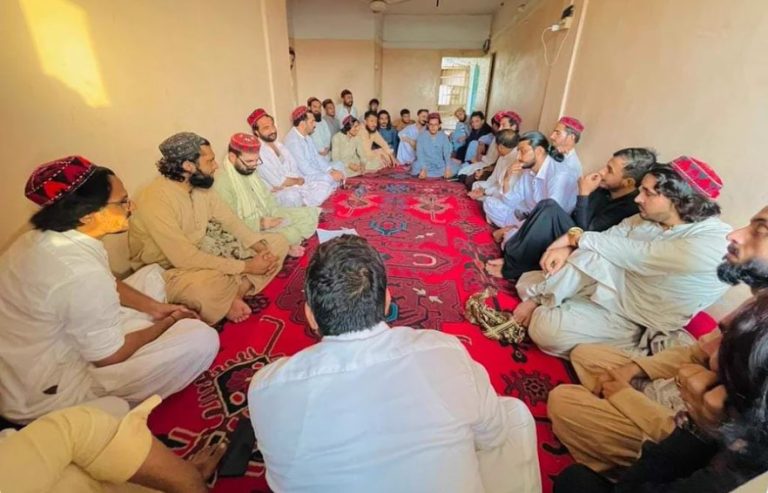
In a latest development, PTM has convened a meeting in Karachi regarding the sudden and brutal repatriation efforts initiated by Pakistan against the Afghan civilians. After the meeting, PTM announced to hold a protest against the ongoing injustice on Friday, September 22, at Ziauddin Hospital Karachi. As per PTM, the protest will be held to raise the voice against this injustice.
Furthermore, on 23 September , PTM will host a cultural event celebrating the Pashtun culture and tradition. The site for the cultural event will be the same as protest, that is, Ziauddin Hospital, Karachi.
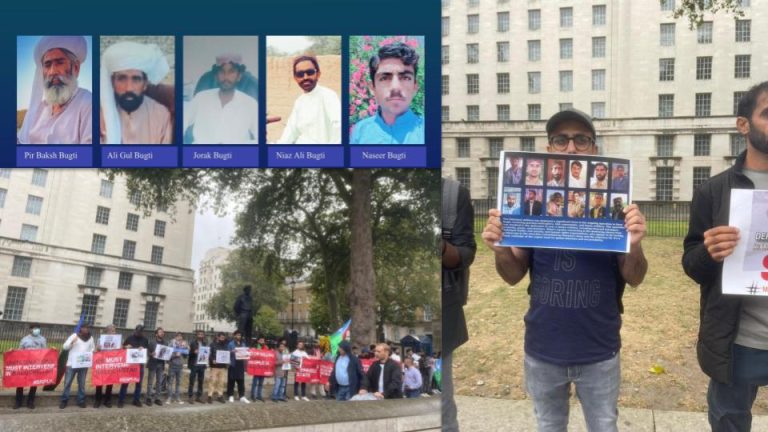
In a passionate display of solidarity and unwavering determination, members of the Baloch Republican Party (BRP) gathered in front of the British Parliament on 17 Sept, raising their voices against the heinous atrocities committed by the Pakistan Army in Dera Bugti, Pakistan-occupied-Balochistan. For eight painful days, the people of Dera Bugti have endured pain and suffering, with nearly two dozen innocent individuals subjected to enforced disappearances.
Protesters in London demand accountability for the enforced disappearances in Dera Bugti, Balochistan. The international community must take a stand against these human rights violations.#MilitaryOperationInDeraBugtipic.twitter.com/p4FSovgWnV
As the world watches in silence, the Baloch Republican Party has taken a stand, demanding an end to the ruthless military operations and enforced disappearances that plague the region. In their quest for justice, they are not alone. The Baloch Yakjehti Committee, too, held a protest rally in Quetta, condemning the military aggression and enforced disappearances that have become synonymous with life in Pakistan-occupied-Balochistan.
Protest rally held in #Quetta by Baloch Yakjehti Committee, against military aggression and enforced disappearances in Dera Bugti, Balochistan. Pakistani army continues it's atrocities in Dera Bugti and other parts of Balochistan. #MilitaryOperationInDeraBugti#Balochistanpic.twitter.com/BpSdE9KcIC
The plight of the Baloch people has reached a critical juncture. Among the protesters were prominent figures such as senior leader Mansour Baloch and BRP Central spokesman Sher Mohammad Bugti, who stood shoulder to shoulder with their fellow activists, determined to make their voices heard on behalf of those who have been silenced.
On the night of 17 Sept, the Pakistan Army struck again, abducting at least five more individuals during the ongoing military operation in Dera Bugti. Among the abductees were 60-year-old Pir Baksh Bugti and 16-year-old Naseer Bugti. The anguish of the Baloch people knows no bounds as they watch their loved ones disappear into the abyss of enforced disappearances.
The brutality displayed by Pakistan in Pakistan-occupied-Balochistan has shattered all records, and the world must take note. Ijaz Baloch, abducted on the 24th of August 2023, was held in detention without trials. On the night of 17th Sept, his mutilated body was discovered, a stark reminder of the Paki estbalishment’s brutal attempt to ethnically cleanse the Baloch nation.
From how long Baloch have to suffer from this! another Young Baloch have become the latest victim of state’s Kill and Dump policy, recently abducted ejaz Baloch’s tortured dead body was found in Balochistan,#MilitaryOperationInDeraBugtipic.twitter.com/NaSj8IzMIb
The protesters outside the British Parliament today bear witness to a struggle for justice, human rights, and an end to the suffering endured by the Baloch people. Their message is clear: the world must not remain silent in the face of such unspeakable brutality. The cry for justice in Pakistan-occupied-Balochistan echoes not only in the hearts of the protesters but also in the collective conscience of humanity. It is a cry that demands a response—not only of justice, freedom, but the sanctity of human life.
In a groundbreaking move, the G20 leaders have embarked on an ambitious mission to establish a comprehensive global framework for the cryptocurrency market by the year 2027. At their summit in New Delhi in 2023, the G20 leaders, through the Delhi Declaration, unveiled their motive to regulate cryptocurrency market assets on a global scale.
The primary motivation behind this initiative is to mitigate the risks associated with cryptocurrencies, including fraud, market manipulation, and illegal activities. This shift in strategy shows the potential of crypto assets in a well-regulated financial market while acknowledging the difficulties of enforcing a blanket ban.
The G20 leaders have called upon the Financial Stability Board to oversee the implementation of globally coordinated regulations for cryptocurrencies. The ultimate goal is to establish a common baseline for the regulation and oversight of crypto assets while allowing individual policy autonomy. Importantly, none of the G20 member nations intends to grant legal tender status to cryptocurrencies.
Key Developments in the Global Cryptocurrency Regulation:
1. Crypto-Asset Reporting Framework (CARF): The G20 leaders are swiftly implementing CARF, a standardized method for reporting tax information related to cryptocurrency transactions. This framework aims to enable the automatic exchange of tax-related data between taxpayers and their respective jurisdictions of residence on an annual basis. And any crypto transactions by Indian residents on foreign-based crypto exchanges will fall under CARF’s automatic information exchange protocol.
2. Amendments to the Common Reporting Standard (CRS): The joint declaration also emphasizes on tax transparency through amendments to CRS. The importance has been given to accurate reporting and compliance in the cryptocurrency and international financial landscape.
Global Support for Regulatory Consistency:
Leaders from various sectors have supported this G20’s mission:
Edul Patel, CEO & Co-founder of Mudrex, appreciated the tax transparency and accurate reporting in the cryptocurrency sphere. Richard Teng, Head of Regional Markets at Binance, welcomed the roadmap presented by the International Monetary Fund (IMF) and the Financial Stability Board (FSB). Rahul Pagidipati, CEO of ZebPay, commends India commitment to nurturing a secure and innovative digital economy. He emphasized on the importance of responsible regulations prioritizing investor protection, AML measures, and cybersecurity.
Industry Perspectives:
Rajagopal Menon, Vice President at WazirX, highlighted the potential to enhance monetary sovereignty, financial stability, accountability, and transparency. Menon suggests that the document strikes a balance in regulation, neither overly strict nor too permissive.
Ashish Singhal, Co-founder and CEO at CoinSwitch, praises the Indian government’s efforts in taking the stance to expand dialogue and understanding of virtual digital assets (VDAs). This shows the change in the nature from discussions focused on banning VDAs, to recognizing the importance of a global consensus on crypto. Cryptocurrencies’ borderless nature makes them challenging to regulate, potentially leading to financial integrity threats and inefficiencies.
Advancing Transparency and Reducing Data Gaps:
Sidharth Sogani, Founder and CEO at crypto research firm CREBACO, supports the document but cautions that India may still be at least a year and a half away from concrete regulations. He suggests that India may await global regulations, which might be the reason behind Coinbase’s recent exit from the Indian market.
Among G20 countries, only around 15 have clear cryptocurrency regulations, including Canada, the United States, Europe, and Japan. Sogani highlights the need for a universal tax policy, risk officers, and a regulator for centralized exchanges.
As many countries are still formulating policies and regulations for crypto assets, the G20’s directions are expected to quicken and refine this process. India has not yet legalized cryptocurrencies but has imposed a 30% tax on crypto investments and a 1% TDS on crypto trades in the 2022 budget. The Reserve Bank of India has also expressed concerns about the risks associated with this decentralized currency. Later. the central bank’s efforts to introduce an official digital currency as an alternative to unregulated cryptocurrencies showed a significant policy shift.
Even though, the official digital currency may gain prominence, the decentralized cryptocurrencies exists due to their nature and immunity to macroeconomic developments. Additionally, blockchain-based currencies have the potential to challenge the dominance of the US dollar in global payment settlements, offering emerging economies like India opportunities to promote cross-border trade settlements in their own currencies and rebalance global financial dynamics.
Cryptocurrencies, as decentralized digital assets, have the potential for misuse, as has been seen in the past. However, this does not diminish their appeal or undermine their utility as a safe haven for investors. Therefore, we can safely conclude that the G20 leaders’ approach to cryptocurrencies reflects a balanced and pragmatic stance. They are officially recognizing the need for regulation while acknowledging the potential of blockchain-based assets. The global crypto landscape is continuously evolving, and coordinated regulation is important to play a pivotal role in future.
Amdist the crackdown on Afghan civilians by the Pakistan Army, PTM has raised its voice against the ongoing Pak aggression. Recently, Pakistan arrested almost 250 Afghan refugees from Sindh. The operation of repatriating undocumented Afghan civilians was started on September 11. The operation was ruthless and was carried out with an intention to harass the Afghan civilians who can not move back to Afghanistan because of security related concerns.
PTM provincial committee leaders along with several workers visited Afghan colony, where the Afghans urged them for protection. PTM leaders extended their support and promised a protest against the brutal and inhumane treatment of the establishment.
#کراچیPTM آج افغان کالونی میں افغان مشران کے دعوت پر PTM سندھ صوبائی کمیٹی وفد کی شکل میں افغان کالونی گئے ۔ ان سخت حالات میں PTM اپنے افغان بھائیوں کیساتھ کھڑے ہیں ۔ وياړ خپل قامي تحريک. pic.twitter.com/amv7AFPIJ2
Taking immediate action, PTM members convened a meeting and set up a team of 60 lawyers to provide the protection to the Pashtuns and Afghans in every way possible. The team would look into the arrest and detention of any Pashtun and Afghan civilians and would ensure them the legal facilitation, whatsoever required.
#کراچيPTM نن تحريک ملګرو ده پښتنو وکيلانو سره ملاقات وکړي. وکيلانو پښتنو افغانانو ده پاره 60وکيلانو ليګل ټيم جوړ کړئ. داغه ټيم ده پښتنو افغانانو هر قسمه قانوني مرسته کوي. وياړ خپل قامي تحريک. وياړ خپل قامي وکيلان. pic.twitter.com/LhfI2IWDzh
Crackdown on Afghan refugees once again exposes the malicious face of Pakistan Army. Pakistan Army and its subsequent government have a specialization in carrying out illegal and extra-judicial atrocities.
The Paki establishment is increasing the intensity of its attack on the Pashtuns and Afghans. In between all this, PTM extending support to Afghan refugees adds another important aspect to the movement to deal with the inhumane Pakistan Army.
We use cookies on our website to give you the most relevant experience by remembering your preferences and repeat visits. By clicking “Accept All”, you consent to the use of ALL the cookies. However, you may visit "Cookie Settings" to provide a controlled consent.
This website uses cookies to improve your experience while you navigate through the website. Out of these, the cookies that are categorized as necessary are stored on your browser as they are essential for the working of basic functionalities of the website. We also use third-party cookies that help us analyze and understand how you use this website. These cookies will be stored in your browser only with your consent. You also have the option to opt-out of these cookies. But opting out of some of these cookies may affect your browsing experience.
Functional cookies help to perform certain functionalities like sharing the content of the website on social media platforms, collect feedbacks, and other third-party features.
Performance cookies are used to understand and analyze the key performance indexes of the website which helps in delivering a better user experience for the visitors.
Analytical cookies are used to understand how visitors interact with the website. These cookies help provide information on metrics the number of visitors, bounce rate, traffic source, etc.
Advertisement cookies are used to provide visitors with relevant ads and marketing campaigns. These cookies track visitors across websites and collect information to provide customized ads.
Necessary cookies are absolutely essential for the website to function properly. These cookies ensure basic functionalities and security features of the website, anonymously.
Cookie
Duration
Description
cookielawinfo-checkbox-analytics
11 months
This cookie is set by GDPR Cookie Consent plugin. The cookie is used to store the user consent for the cookies in the category "Analytics".
cookielawinfo-checkbox-functional
11 months
The cookie is set by GDPR cookie consent to record the user consent for the cookies in the category "Functional".
cookielawinfo-checkbox-necessary
11 months
This cookie is set by GDPR Cookie Consent plugin. The cookies is used to store the user consent for the cookies in the category "Necessary".
cookielawinfo-checkbox-others
11 months
This cookie is set by GDPR Cookie Consent plugin. The cookie is used to store the user consent for the cookies in the category "Other.
cookielawinfo-checkbox-performance
11 months
This cookie is set by GDPR Cookie Consent plugin. The cookie is used to store the user consent for the cookies in the category "Performance".
viewed_cookie_policy
11 months
The cookie is set by the GDPR Cookie Consent plugin and is used to store whether or not user has consented to the use of cookies. It does not store any personal data.