Home Blog Page 190

Pakistan’s shameful actions: Unlawful crackdown on Afghan civilians

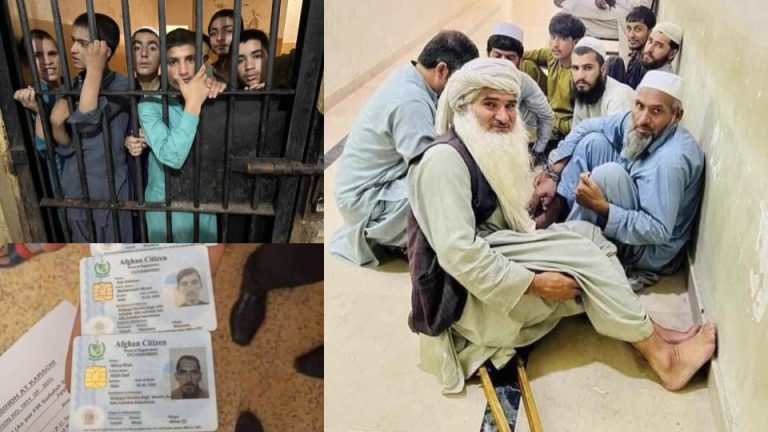
In a shocking and deeply concerning turn of events, the Paki ‘establishment’ has once again displayed a blatant disregard for human rights and decency. The recent arrest of more than 250 Afghan refugees and migrants in the southern province of Sindh is a stark example of this cruelty.

This ruthless crackdown, which began in Karachi on September 11, is ostensibly part of an effort to repatriate undocumented Afghans. However, it has quickly become evident that the true aim of these arrests is to harass and persecute impoverished Afghan civilians, many of whom are unable to return to Taliban-occupied Afghanistan due to legitimate security concerns and dire economic circumstances.

Governor of Sindh, Kamran Tissori, brazenly confirmed the establishment’s directive to target and apprehend Afghans living in Pakistan without proper documentation. This is nothing short of racial profiling and discrimination against a vulnerable community.

Lawyer Muniza Kakar, who has valiantly represented Afghan refugees arrested in Karachi, rightly points out the racial profiling at play here. Many of those detained possess Paki ‘establishment-issued’ identification cards confirming their Afghan origin. The mass arrests of Afghan refugees are not only unjust but also deeply distressing, and immediate action is needed to protect the rights of these refugees.

Afghan refugees in Pakistan have long endured harassment, inadequate support, and a lack of information regarding the documentation required to extend their stay in the country. The situation has only worsened with the recent crackdown. Many refugees, like Ahmad, who shared his story, have faced bureaucratic hurdles and mental anguish as they desperately seek legal means to remain in Pakistan.

The Paki establishment’s decision to let Proof of Registration cards expire on June 30 has created a dire situation for Afghan refugees. The United Nations High Commissioner for Refugees (UNHCR) has called on Islamabad to extend the deadline, but so far, these pleas have fallen on deaf ears.

This hostile environment has left Afghan refugees living in constant fear. Aimal Habibi, an Afghan refugee in Sindh, expressed his deep anxiety about being arrested even when he ventures out to buy groceries. The Pakistan Army’s actions have created a hostile and distressing atmosphere for these vulnerable individuals.

Pakistan was considered a better place when Taliban occupied Afghanistan, approximately 1.4 million documented Afghan refugees, with an equal number of undocumented Afghans were residing within its borders. However, now the situation has become unbearable.

This crackdown on Afghan refugees occurs against the backdrop of recent violence in Chitral. The loss of four Pak Army personnel and the killing of over 16 others as a result of TTP terrorists’ attempts to cross into Pakistan from Afghanistan is the main reason. Earlier as well, TTP attack killed 11 labourers in Pakistan. Pakistan has witnessed a resurgence of radical Islamist militant attacks since the breakdown of a ceasefire between the Paki establishment and the TTP last year.

However, using these incident as a pretext to unjustly target Afghan civilians is not the solution. But, Pakistan Army has always been popular for its inhumane actions.

In the backdrop of this incident, the Caretaker PM of Pakistan stated that since the abrupt withdrawal of the USA, a massive stockpile of weapons and ammunition has been taken up by the Taliban. Therefore, it is safe to conclude that Pakistan is now critiquing and targeting the Taliban for using this automated machinery to inflict damage on the Pakistan Army. Pakistan Army is now doing what it does best, in an attempt to cover up their failing structure, the Paki establishment is now issuing a yet another brutal crackdown on the innocent Afghan refugees.

Protests intensify in Pakistan-occupied Gilgit-Baltistan

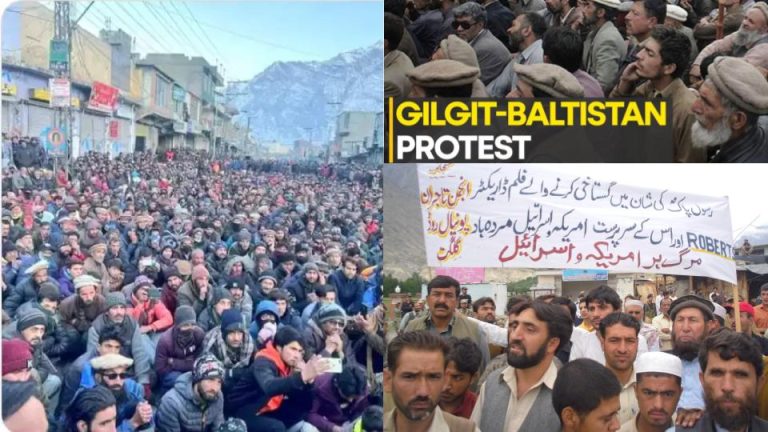
Shia protests have intensified across Pak-occupied Gilgit-Baltistan (POGB) after the Paki regime introduced the controversial bill that makes Shia faith blasphemous. The Paki officials employed in POGB denied the rumors of the Pak Army being sent in. They clarified that they have asked for the help of the Pakistan Army and civil armed forces only to ensure law and order during the upcoming observance of Chehlum of Imam Hussain next week. This fact is not true at all, and Rawalpindi is desperately trying to conceal the real reasons of Shia movement, which is due to the insensitive anti-Shia remarks made by Sunnis over the past few days.

It appears that the only route to connect Pakistan-occupied Gilgit-Baltistan (POGB) with Pakistan is the Karakoram Highway (KKH), which passes through Diamer and Kohistan. Ten years ago, buses traveling from Rawalpindi to POGB were stopped, and Shiite passengers were singled out based on their identity cards. At least on one such occasion the Shias were indiscriminately fired upon and were brutally shot dead in public. A video of this heinous act was captured and went viral on social media. Despite massive hue and cry by the Shias these Sunni terrorists were never arrested and till date no action has been taken against them. Gilgit-Baltistan has a long history of Shia-Sunni conflicts which most often is engineered by the Sunni Paki ‘establishment’, that uses it for ethnic cleansing.

Currently, protests and rallies are being taken out in Pak-occupied Gilgit-Baltistan’s largest city– Skardu. A massive Shia raly was held at Yadgar-e-Shuhada in which the speakers demanded that the Paki regime immediately withdraw the controversial blasphemy bill. At the time of writing this news report Shia protests are happening across Gilgit, Chilas and Diamer.

It should be noted that in early August, tensions escalated in POGB following the presentation of the Blasphemy Bill in Pakistan’s National Assembly. Religious groups started clashing in Pakistan-occupied Gilgit-Baltistan, leading to protests and confrontations between leaders of both Shia and Sunni communities.

In Chilas, an influential religious leader, Maulvi Farman Wali, openly threated to kill Shias and take away their properties and women. This video went viral on social media. Maulvi Farman Wali had falsely accused Allama Syed Baqir Al Hussaini Naib Khatib Juma Skardu of insulting the Sahaba and demanded the police to register a case against him. Maulvi Farman Wali further threatened that if police did not arrest Syed Baqir Al Hussaini then Shias would chased on the Karakoram Highway and slaughtered en masse. He also reminded of the earlier slaughter of Shias in Gilgit-Baltistan and other parts of Pakistan.

Allama Muhammad Afzal Haidari, Secretary General of the Wafaq-ul-Madaris of Pakistan, has strongly condemned Qazi Nisar’s insolence in the honor of Imam Mahdi and demanded to file a case against Qazi Nisar. There are demands to arrest this fitna immediately and make it a lesson so that no one dares to be insolent about the holy personalities of Muslims.
While giving a speech at the protest sit-in at Skardu Jail-Ghar Chowk, a local Shia scholar said “Where the lives of Shias are not safe, you should not expect any good from us. If our lives and property cannot be protected, we are not interested in coming to Pakistan, our historical routes and Kargil Road should be opened”.

In response, the protests and rallies have spread throughout POGB. There have been complete shutdowns, road blockades, and protest rallies in all major cities. Internet services were suspended after which the Pak Army was called in to control the situation. Pakistan Army is ruthlessly trying to curb the Shia movement across Gilgit-Baltistan. According to the Gilgit-Baltistan Information Department, in major cities of POGB, the Rangers and FC have been deployed, and Section 144 has been enforced.

The protests have flared up and now seems to be out of Pak Army’s control. The citizens of POGB (Pak-occupied Gilgit-Baltistan) are now demanding a merger with India which has raised the temperature of the Paki ‘establishment’. They are now trying every means necessary to suppress these peaceful protests.

US envoy visits Gwadar in Pakistan-occupied Balochistan

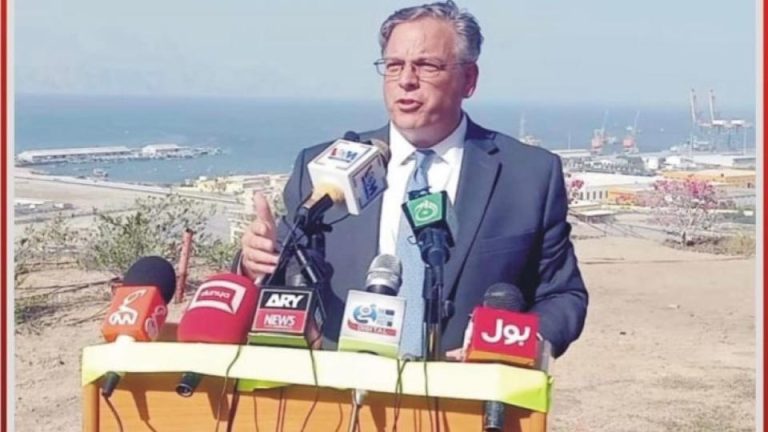
On 13 September, US Ambassador Donald Bloom visited the coastal city of Gwadar in the Pakistan-occupied-Balochistan district. On this occasion, he stated that the relationship between the United States and Balochistan has a long history of successful cooperation. Last year, following devastating floods, the United States provided assistance to over 830,000 individuals and delivered food to mitigate the risk of hunger for 90,000 children.

Ambassador Bloom mentioned that the American aid during the past year resulted in the successful renewal of eighteen health centers. In the field of education, American aid contributed to the development of programs at BUITEMS (Balochistan University of Information Technology, Engineering, and Management Sciences) and Sardar Bahadur Khan Women’s University. This effort aimed to enhance the teaching of Balochi and other languages, as well as educational materials, ultimately empowering the youth of future generations. These initiatives are important, however, USA failed to criticise the actions of Pak Army in the region.

During his visit, Ambassador Bloom engaged in constructive discussions with political leaders, representatives of the Gwadar Chamber of Commerce and Industry, as well as various government and private sector leaders. In his meetings with political leaders, he emphasized the potential for economic growth, disaster preparedness and recovery, security, and trade and investment between the United States and Balochistan through American assistance. He highlighted how these initiatives could create a more favorable environment for investment in Pakistan. But, he didn’t address the atrocities committed by the Paki ‘establishment’ in various areas. Pak Army has time and again committed daily home raids, disappearances, staged encounters, target killings, torture, humiliation at checkpoints, and kidnappings for ransom. The rally of the victims’ families for the recovery of their loved ones is at an all-time high; however, the ambassador didn’t even mention this fact once.

The Ambassador focused on areas such as business, transportation, tourism, and fisheries, suggesting ways to promote American trade and investment in the region. He also discussed the U.S.-Pakistan Green Partnership Framework, which addresses environmental issues, energy, water, and economic necessities, benefitting all of Pakistan, with a special focus on enhancing the ability to cope with environmental challenges.

Ambassador Bloom stated that the United States is providing assistance to increase the capacity to address environmental issues, boost alternative energy efforts, and promote economic growth for all, particularly in Pakistan-occupied-Balochistan. Under the Green Partnership, twelve thousand farmers received American aid, with most of them hailing from Balochistan. Advanced technology and administrative methods were introduced, resulting in increased production and reduced post-harvest losses. Ambassador Bloom also visited Gwadar Port and met with Chairman Pasand Khan Buledi to discuss port operations, development prospects, the potential to become a regional commercial hub, and avenues to connect it with Pakistan’s largest market, the United States.

This visit makes one thing clear, that is the international communities have continued to neglect the plight of Baloch. They are trapped and are enduring inhumane conditions and violence by the Pakistan Army in their own homeland. Following the illegal occupation of Balochistan in March 1948, Balochistan has been fighting the war of its existence. Be it the peaceful way of protests or the armed resistance, against the inhumane authoritarian rule of Pakistan Army, Balochs are fighting an all-front war.

Pak Army murders a Sindhi in Tando Adam

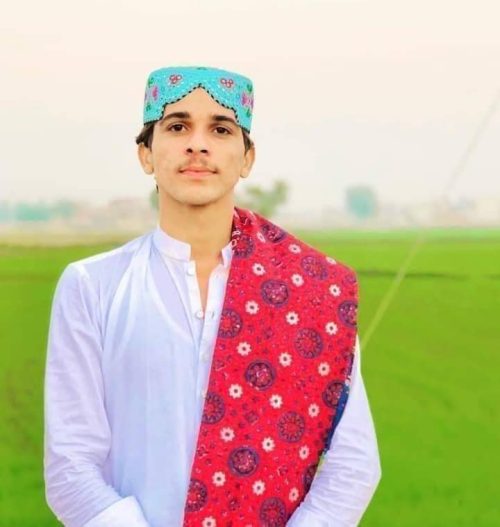
A Sindhi nationalist has been shot dead in Tando Adam, Sindh.

As per reports, Afzal Lund, a Sindhi nationalist was a political worker and a social media activist who was quite popular over TikTok. He used the platform to raise the voice against the establishment’s persecution. He was the resident of Khairpur Nathan.

Following his pursuit to raise awareness regarding the cruelty of Paki establishment, last year he was forcibly disappeared by the Pakistan Army. Later, he was released.

Now, he has been brutally killed. Apparently, it is the terrorist Pakistan Army that has killed him uncompassionately.

Pakistan Army has been the perpetrator of the most horrendous suppression of the people across Pakistan. Sindh is fighting for the freedom and human rights of Hindu and other minority communities. Pakistan Army and the establishments on the other hand are leaving no stone unturned to suppress the freedom seeking voices.

Akin to Balochistan, Pakistan Army is incorporating the tool of enforced disappearances and extra judicial killings to suppress the voice of dissent.

Afzal Lund’s bullet riddled body underscores the atrocities of the Pakistan Army and Pakistan’s government which has destroyed the life of uncountable number of families.  

Balochistan: BLF attacks Pak Army personnel

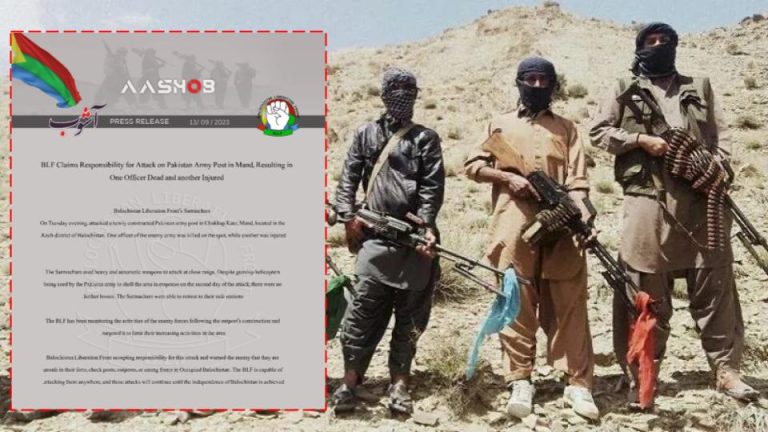
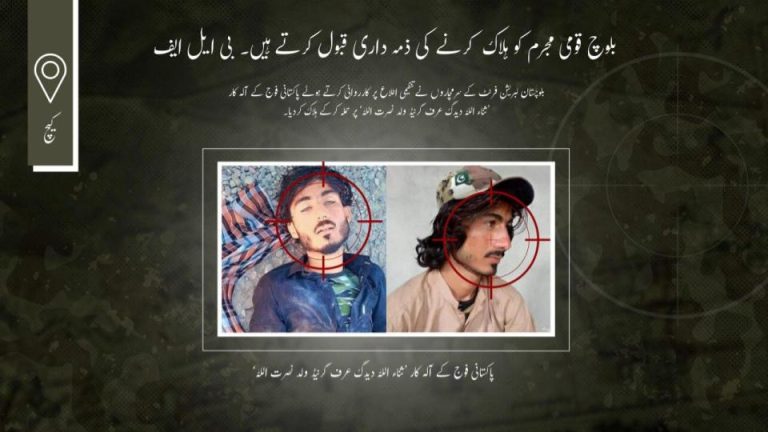
BLF has carried out two significant attacks targeting a national criminal and an army personnel. The attack was a targeted assassination of a former Baloch independence activist turned national criminal, along with an army official. These actions, according to BLF, were carried out in defense of Baloch national interests and in retaliation for crimes against the Baloch people.

Targeting of ‘Sanaullah Deedag aka Grenade’

Sanaullah Deedag, also known as Grenade, was the primary target of the BLF’s recent operation. He had once been associated with a Baloch independence organization but had later surrendered to the enemy Pak Army and engaged in anti-national activities. Despite previous attempts on his life by Baloch Sarmachars (freedom fighters), he persisted in his nefarious activities.

The BLF had been closely monitoring Sanaullah’s activities, and on September 9, 2023, they shot him dead between Shey Zangi and Jangal Bazar in the Dasht Tehsil of District Kech. He was returning from Turbat after a meeting with the Pakistan Army in a nearby camp.

The BLF’s investigation into Sanaullah’s national crimes found substantial evidence, leading to him designated as a national traitor. He was implicated in multiple military operations conducted by the Pakistan Army against Baloch Sarmachars, including looting national resources during attacks on Baloch Sarmachar camps.

Furthermore, Sanaullah was linked to social evils as well. He was included in nefarious activities such as drug trafficking, and the desecration of Baloch martyrs’ graves in the area. His involvement in these activities, along with his collaboration with the Pakistan Army, led to his execution based on the BLF’s organizational decisions.

Attack on Border Post

In a separate incident, BLF freedom fighters launched an attack on a Pakistan Army post established to protect the border fence. This assault occurred at 3 o’clock on Sunday, September 10, in the Hamzai Band Kasgani River area of Mand Tehsil in Kech. The attack resulted in the death of a Pakistan Army personnel, who was targeted by a sniper.

A Warning and a Promise

In their statement, the Balochistan Liberation Front made it clear that they would continue to hold accountable all Paki establishment’s entities working against the Baloch national cause, society, and the freedom movement. They warned these elements to desist from their crimes, emphasizing that the BLF would spare no effort in protecting Baloch national interests.

Nonetheless, BLF’s recent actions against Sanaullah Deedag and the Pak Army official serve as a stark reminder of the ongoing struggle for autonomy and independence in Pakistan-occupied-Balochistan. The Pakistan Army has committed numerous atrocities, including daily home raids, disappearances, staged encounters, target killings, torture, humiliation at checkpoints, and kidnappings for ransom. Following the illegal occupation of Balochistan in March 1948, Balochistan has been fighting the war of its existence.

Sindh: Minor boy raped in a Madrasa

A disappointing case of an innocent boy being raped in a madrasa, by a radical Islamist maulana, has emerged in Ghotki, Sindh.

Recently, a video went viral on social media showing a maulana sexually exploiting an innocent boy in Madrasa. The Maulana has been identified as Azim Soomro from Mirpur Mathilo in Ghotki, Sindh. He is well connected and widely acknowledged as a religious scholar. After the video got leaked, he was arrested for a short time before the police released him proclaiming that maulana is not guilty.

Maulana has accepted the commission of paedophilia; however, he has claimed that the video is three years old, and that the boy joined him voluntarily. Nonetheless, father of the boy acknowledged the rape of his son and registered a formal complaint.  

After the release of Maulana, the people got agitated over the police. After widespread criticism over the social media, the Sukkur DGP suspended SHO Mirpur Mathilo.

Maulana Azim Soomro is reported to be a close associate of Maulana Fazal-ur-Rehman, the president of Jamiat Ulema-e-hind.

Harsh reality of Pakistan’s law and order machinery

Madrasas in Pakistan have become a safe house for maulanans and Qaris to sexually exploit and abuse the innocent children. Unfortunately, these pedophiles are getting a patronage of not only the prominent leaders but they also enjoy a great sense of respect because of their position as religious leader. However, their gruesome crimes evidently show that these maulanas and their existence is evil for the society.

It must also be noted that a couple of weeks ago, a girl named Fatima died in a Pir’s house. She used to work there and was physically abused and tortured. She succumbed to her injuries and died. Both the cases have a shocking similarity when it comes to legal proceedings. In both cases, the accused have good political connections, and both got arrested after the videos got viral. This shows the gruesome reality of law and order in Pakistan. Additionally, in both cases local  police tried to suppress the case and subsequently, the local SHOs got suspended.

It underscores the reality of police system that works in Pakistan. Once, things go out of hand, the so called senior level officials come to the rescue but when children face molestation and are sexually abused, it is this system and their godfather leaders who provide protection and patronage to the culprits like Maulana Azim Soomro.

Balochistan: Pak Army continues atrocities in Dera Bugti

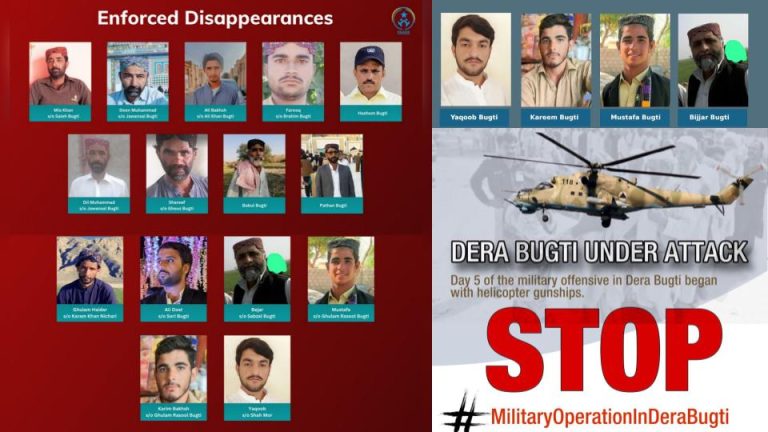
On Sunday (10th sept), Pakistan Army launched a large-scale military operation in Pakistan-occupied-Balochistan’s Dera Bugti region. The search operation was conducted under the guise to recover the missing six “footballers” who was abducted by unknown individuals from the region a day prior.

Under the guise of security measures, the operation is taking place in various areas, including Sui and Uch, encompassing Gandoi, Sonari Matt, Sardar Pati, Bashk, Dam, and Laghar Dawan. The Army has raided houses and has forcibly detained ten individuals from different areas. They have been taken and detained to undisclosed locations. 

The ten detainees are Aziz Bugti, Suleiman Bugti, Sharif son of Ghaus Bugti, Farooq son of Brahim Bugti, Ali Bakhsh son of Ali Khan Bugti, Babal Bugti, Lota Bugti and his brother Deen Mohammad, sons of Jawansal Bugti, Mirzhan Bugti and his nephew Hashim son of Sori Bugti.

Baloch Republican Party (BRP) said that the use of gunship helicopters in the operation has resulted in multiple civilian casualties. While distorted and biased official sources claim a lower death toll, real reports suggest a higher number of civilians killed, along with the illegal detention of several individuals.

The Baloch Republican Party (BRP) confirmed that the Pakistan Army is continuously shelling and bombing the civilian population which has resulted in the death of at least five civilians. Internet services have been suspended throughout the entire Dera Bugti district, causing further distress to the local baloch population.

Disputed Reason for Operation

Interior Minister of occupied Balochistan, Sarfaraz Bugti stated that the operation was initiated to recover six kidnapped footballers who were abducted while traveling from Dera Bugti to Sibi. However, BRP’s Central Spokesman Sher Mohammad Bugti dismisses this explanation. He stated that the Paki establishment’s statements are merely scripts provided by higher authorities. He said that the Pak military is using the kidnapping as an excuse to justify its large-scale military operation against the civilian population in Pakistan-occupied-Balochistan. This operation is a cover up to stifle the dissent voices of Pakistan-occupied-Balochistan.

Military operations continued for the second consecutive day, and more than 50 military trucks of the Pakistan army, loaded with war equipment and personnel, are repeatedly reaching Sui from Sibi to take part in the ongoing operation.

Earlier in 2005, Dera Bugti had faced a tragic massacre, and Pak Army killed hundreds of Baloch civilians in the operation. And now the recent reports of Pakistan Army operations in the same region are deeply concerning. It resembles the violence of the same nature. 

The Pakistan Army has committed numerous atrocities, including daily home raids, disappearances, staged encounters, target killings, torture, humiliation at checkpoints, and kidnappings for ransom. Following the illegal occupation of Balochistan in March 1948, Balochistan has been fighting the war of its existence.

The operation is reportedly targeting Baloch freedom fighters, who have been fighting for independence for Balochistan from the brutal regime of Pakistan Army for decades. However, this operation is not only targeted to the fighters but also to the civilian casualties, as it had in the past. The world must not turn a blind eye to the suffering of the Baloch people, and it must press the Pakistan Army to retreat not only from Dera Bugti but also from Balochistan.

New Delhi: A closer look at G20 outcomes


In a historic triumph, the G20 nations have embraced the New Delhi declaration during India’s G-20 leadership, amid growing tensions over the Ukraine conflict. This momentous achievement follows India’s strategic efforts to bring global leaders together at the G-20 Summit in New Delhi, where they tackle pressing global issues.

PM Modi, while addressing the summit, stated, “There is good news… with our team’s hard work and with the help of everyone involved, the New Delhi G20 Leaders’ Summit Declaration has reached a consensus.” With those words, he officially declared the adoption of the declaration by banging a ceremonial gavel.

Finding consensus among G20 members has become increasingly challenging in recent years, mainly due to deep divisions among key members regarding issues such as Russia’s war in Ukraine and climate change funding. Here are the top highlights from the summit.

Key Takeaways from the G20 Summit

  1. A New Permanent Member: The African Union has been granted the status of a new permanent member of the G20, updating the group’s acronym to G21. This development is seen as a significant step towards reshaping the global order and giving developing nations a more influential voice in global decision-making. In June, India proposed granting full G20 membership to the African Union, consisting of 55 countries, a move that has now been realized. The idea was initiated after discussions at the ‘Voice of the Global South’ summit in January, which included the participation of many African countries. Further talks on this proposal took place in Addis Ababa, Ethiopia, where the African Union is headquartered. Previously, the only African country in the G20 was South Africa.
  2. Global Connectivity Initiative: At the G20 Summit, Prime Minister Narendra Modi and world leaders introduced a new trade route called the India-Middle East-Europe corridor, connecting the United States, India, Saudi Arabia, Gulf and Arab states, and the European Union. This corridor might offer another option to China’s Belt and Road project, which has led many developing nations into significant debt.
  3. Delhi Declaration: The Delhi Declaration was adopted, was adopted unanimously by the group. This declaration calls on nations to uphold international law, including principles related to territorial integrity, sovereignty, international humanitarian law, and the multilateral system that promotes peace and stability. It is also presented as an alternative to China’s Belt and Road initiative, which has led many developing countries into significant debt.
  4. Global Biofuel Alliance: PM Modi announced the launch of the Global Biofuel Alliance, a pivotal step toward promoting cleaner energy sources. This alliance is expected to expedite global efforts to achieve net-zero emissions by facilitating the trade of biofuels derived from various sources, including plant and animal waste. Prime Minister Narendra Modi proposed launching a ‘G20 Satellite Mission’ for monitoring the environment and climate. He also suggested the creation of a ‘Green Credit Initiative’.

Need To Deal Global Trust Deficit

In his address, Prime Minister Modi also emphasized the need to overcome the rising “global trust deficit” through greater cooperation among G20 member countries.

The New Delhi G20 declaration, as outlined by India’s G20 Sherpa Amitabh Kant, underscores the commitment to fostering strong, sustainable, balanced, and inclusive growth. It places a significant emphasis on accelerating progress towards achieving the Sustainable Development Goals (SDGs) and forging a Green Development Pact for a sustainable future. Additionally, it highlights the importance of modernizing multilateral institutions and reinvigorating multilateralism for the 21st century. These focus areas demonstrate the collective dedication of G20 nations to address global challenges and shape a better future for all.

G20 summit: PM Modi unveils India-Middle East-Europe Economic Corridor

In a groundbreaking development, India, the Middle East, and Europe are set to launch an economic corridor- “The India-Middle East-Europe Economic Corridor,” that promises to reshape global trade and connectivity. This visionary initiative is the first of its kind, involving collaboration between India, the United Arab Emirates (UAE), Saudi Arabia, the European Union (EU), France, Italy, Germany, and the United States. The project was unveiled during the annual Group of 20 summit hosted by India and attended by U.S. President Joe Biden, European Commission President Ursula von der Leyen, among other G20 members and invited dignitaries. The latest project is a component of the Partnership for Global Infrastructure Investment (PGII), an initiative led by Western countries that aims to finance infrastructure projects worldwide. This initiative is perceived as a response to China’s Belt and Road Initiative (BRI).

A historic route

The India-Middle East-Europe economic corridor is a historic endeavor that seeks to bolster economic growth and political cooperation among participating nations. This ambitious project will create a direct link between India and Europe, substantially reducing trade transit times. Ursula von der Leyen, European Commission President, stated, “The ‘India-Middle East-Europe’ economic corridor is historic. It will be the most direct connection till date that will make trade faster.”

One of the central objectives of this corridor is to expedite trade between India and Europe. Ursula further added, “An India – Middle East – Europe economic corridor will make trade between India and Europe 40% faster”. This efficiency boost will not only save time but also reduce costs associated with transportation. US President Joe Biden said, “This is a big deal. This is a really big deal.”

Key components of the corridor

The India-Middle East-Europe economic corridor will be a multi-faceted project with several crucial components:

  • Rail and Shipping Links: The corridor will include railway and shipping connections that traverse through the UAE, Saudi Arabia, Jordan, and Israel, facilitating seamless movement of goods and services.
  • Digital Connectivity: In addition to physical infrastructure, the project aims to enhance digital connectivity, allowing for smoother data transfers and communication.
  • Green Hydrogen: The corridor will support the production and transportation of “green hydrogen,” a clean energy source that can potentially revolutionize the energy landscape in the participating regions.
  • Energy Resources: By linking Middle Eastern oil-rich nations with India and Europe, the corridor will contribute to the transport of energy resources, reducing dependence on fossil fuels.

While the primary focus of the corridor is economic, its significance extend into geopolitical domain as well. By connecting India’s massive market with Western countries, the corridor has the potential to reshape global trade dynamics. This initiative can serve as a counterbalance to China’s Belt and Road Initiative (BRI), which has been expanding its influence worldwide. This economic corridor might also aid in normalizing relations between Israel and Arab Gulf states, which have historically been strained.

This is the first-of-its-kind economic corridor, this historic initiative is based on connectivity and infrastructure. The India-Middle East-Europe economic corridor has the potential to be a game-changer in global trade and connectivity. It addresses critical economic and geopolitical objectives while promoting sustainability through green energy initiatives. 

Another Christian family implicated under the unjust ‘Blasphemy Law’ in Pakistan

Another Christian family has been implicated under the controversial blasphemy law by Pakistan in Punjab.

Shoukat Masih and his wife Kiran have been booked under Section 295B by the Police in Dogage Town, Lahore Cantt. As per the FIR, the couple have allegedly torn the pages of the Quran and thrown them outside their house.

The incident was reported when a man standing near the house of Shoukat and Kiran saw some pages flying outside the window. The pages were found to be of the Quran and hence a case was registered.

However, the couple have argued that they didn’t commit the act instead, it was their minor children, who would have probably done it.

Since the Jaranwala attack, Christians are being targeted in Pakistan. The blasphemy law that was crafted by the government has largely been used to curb the minorities in Pakistan. In Punjab, Christians have emerged to be the most affected minority.

Blasphemy law has made the religious minorities vulnerable from two sides. On one hand, Pakistani ‘establishment’ is using the unjust law to carry on their persecution under the garb of constitution. And on the other, the radical Islamists are targeting them with full impunity leading them to fear.

One such instance of horror and fear could be witnessed in Punjab’s Tandlianwala. As per reports, as many as hundred Christian families have left their homes and fled from the Christian colony.

The unjust blasphemy law has not only vitiated the environment but also started a chain of hate crimes against, and horrendous persecution of, religious minorities. So, it would not be an exaggeration to say that what is happening to religious minorities across Pakistan, is actually sponsored by the unjust establishment of Pakistan.