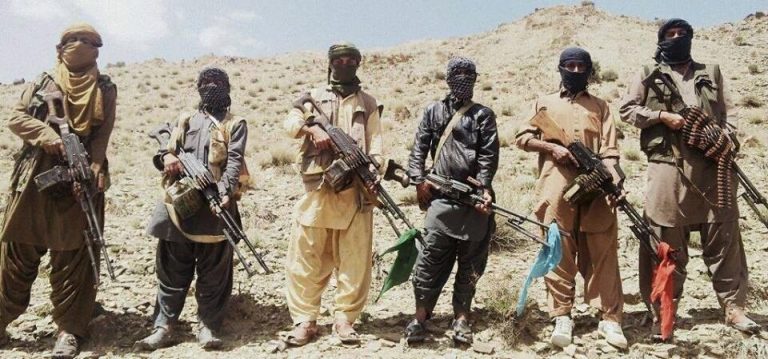
BLA and BLF has carried out separate attacks on the Pakistan Army and its infrastructure, making a strong dent on the occupying military.
In a deadly attack on the Pakistan Army post, Baloch Liberation Army has killed two of their personnel in the capital city Quetta. On August 25, around 8 p.m., BLA freedom fighters launched an assault using rockets and heavy weaponry on the occupying military’s post near PMDC site in Zarghun. The attack resulted in the killings of two personnel of the occupying army.
In the attack enemy forces suffered heavy men and material losses.
In a separate incident on the same day, Balochistan Liberation Front (BLF) set fire to the machinery of the mobile tower of Chinese Zong company in Dilsar village of Dasht Tehsil in Kech. BLF has stated that the Pakistan Army uses the Chinese communication setups to monitor Baloch people and their activities. Besides geo-fencing techniques with mobile towers, Pakistan Army also keeps surveillance on the Baloch freedom fighters and people by installing cameras and other espionage tools on these towers. Thus, it becomes more beneficial to the occupying army rather than the local Baloch people.
Both BLA and BLF have committed to continue attacking the occupying army until the liberation of Balochistan is achieved. Pakistan Army has been illegally occupying Balochistan since more than 76 years. After Balochistan gained its independence from the British on 11 August 1947, Pakistan eyes to merged it coercively into Pakistan, failing which, it launched an attack on Balochistan and illegally occupied it on March 28, 1948.
Since, then it has incorporated various abusive and inhumane practices to subvert the Baloch society. On the contrary, Balcoh society has emerged more strengthened and firm in their resistance to their illegal occupation.
Dr. Naseem Baloch, the Chairman of the Baloch National Movement (BNM) has stated that along with other abuses, Pakistan has tried to start conflicts by widening the religious rift in the Baloch society. However, Baloch nationalism has stopped all their efforts.
He said this while he was in Germany where he met with various leaders of the BNM. He attended multiple meetings in Berlin, Hanover, South-Rhine-Westphilia, Kamenetz and Bremen where various topics including social media, party performance and ongoing war of freedom in Balochistan were discussed. Alongside him also joined Asghar Ali Baloch, President of BNM Germany.
During his address, he mentioned the case of Rauf Barkat, who was killed over the charges of blasphemy. He clarified that despite charges against him, people knew that it was a conspiracy. People also know that this is a state-sponsored act to tarnish Baloch society.
Efforts for future Cabinet
Dr. Naseem Baloch highlighted the last council session of the party where changes were made in BNM constitution as per the current situations. According to him, these changes will transform the party into an institutionally based organization. As part of this initiative, BNM has established sub-committees such as Media, Human Rights, Social Welfare, Foreign Department, Zrumbesh and Paank.
Underscoring the future aspirations, he said that this structure will allow for subsidiaries to entrust their performance and records to these sub-committees in the event of a new elected cabinet in the future.
When asked about Baloch women fidais, Dr. Naseem said that BNM constitution extends support to all freedom-seeking organisations. He went on to say, “It is within our right to express objections or criticism towards the policies and procedures of other organization. By doing so, we aim to prevent harm to overall freedom movement.”
Exiled government without consent is a joke
He also answered a question regarding the hot issue of the exiled government. He explained that establishing a government requires the recognition of the country, which extends power to establish its embassy. Any party must unify in the national struggle before taking any action and it can not be accomplished by anyone person or the organization. He categorically said that without consent of the stakeholders, the world would see this act as nothing more than a joke.
He stated that it is their dedication and obligation that keeps them bound to the track and the moment these feelings are suppressed, they become vulnerable. Active participation is what that maintains their connection with the cause.
He also underscored the importance of Baloch diaspora by saying that the choice to go in exile is not an easy one to make. A significant level of commitment is required for that. But the Baloch diaspora, like any other, are committed to the nation. However, the situation of Baloch diaspora I different as they have witnessed subjugation and torture and bear more responsibility.
He lambasted Pakistan by saying that it is making efforts to eradicate the secular culture of Baloch society. They claim that they can transform the Baloch into “good Muslims” as if Baloch people are non-Muslims. He elucidated that Pakistan is a new-found state while Balochistan has existed for thousands of years, with many Baloch being Muslims for centuries. There are Hindus and other religious communities that have lived among Baloch, assimilating the Balochi language and tradition.
Again highlighting the importance of parties, he mentioned that in the long ongoing struggle, the parties have surpassed two-decades. He also said that the freedom movement demands persistent against the enemy, where resistance is extended until the adversary is compelled tom leave the land.
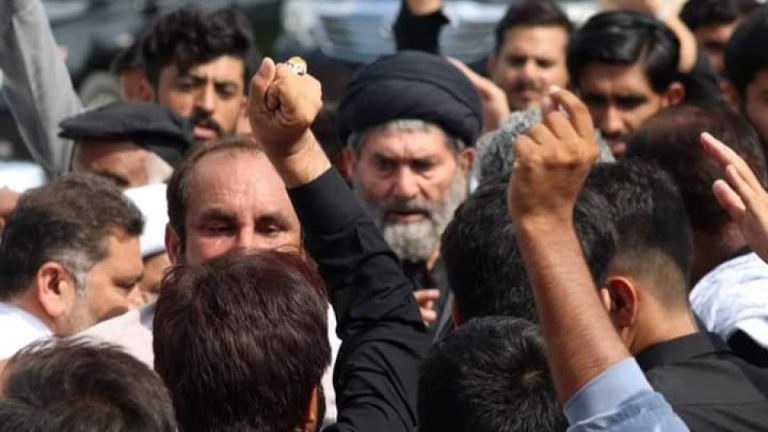
Protests and demonstrations that originated in Chilas (Diamer), Pak-occupied Gilgit-Baltistan (POGB) have expanded to other regions, including Upper Kohistan district. Astore district has also witnessed additional sit-ins and demonstrations making the law and order situation in POGB worrisome. These protests have led to road closures and disruptions across the area.
The Karakoram Highway remains blocked in Chilas, and traffic on Babusar Road has come to a halt. In Gilgit city, roads have been obstructed at multiple locations, and sit-ins persist in various parts of the city.
The protests originated from disrespectful remarks by Sheikh Baqir Al-Hussaini, a religious scholar based in Skardu. He has made various derogatory comments about religious and historical figures, however, he denies this. Therefore, protesters are demanding legal action against the scholar and his arrest, or else they will continue their demonstrations.
Members of the Shia community have also faced discrimination by the Pakistani government, which has played an important role in intensifying and adding to the recent wave of protests. This region has a history of sectarian conflicts that has led to loss of lives.
The controversial bill has been framed against the Shias sect with a specific objective which is not acceptable in any way. We will never compromise on our faith said Anjuman Imamiya Skardu. Such#SectarianBillRejectedpic.twitter.com/nCIAUhUZGZ
The epicentre, Chilas, has witnessed blockades to the Karakoram Highway, which has halted the traffic on Babusar Road. Moreover, several routes within Gilgit city have been closed off by demonstrators. Even though, elected officials and administrators have attempted to engage with demonstrators, the negotiations have failed.
Refuting the rumours, the GB Education Department has denied of any plan to close schools in Gilgit city on Monday. However, some private educational institutions might remain close.
Gilgit-Baltistan is a Shia-majority region in Pakistan-occupied-Jammu and Kashmir. It is grappling with economic hardships and lack of quality educational facilities. This gap has been filled by madrasas, which has often propagated sectarian hatred and extremism. The violence of the region is the result of weak and inefficient political and judicial systems. This region has always been manipulated by the Pakistan ‘establishment’ which has led to escalation of the sectarian violence in the region.
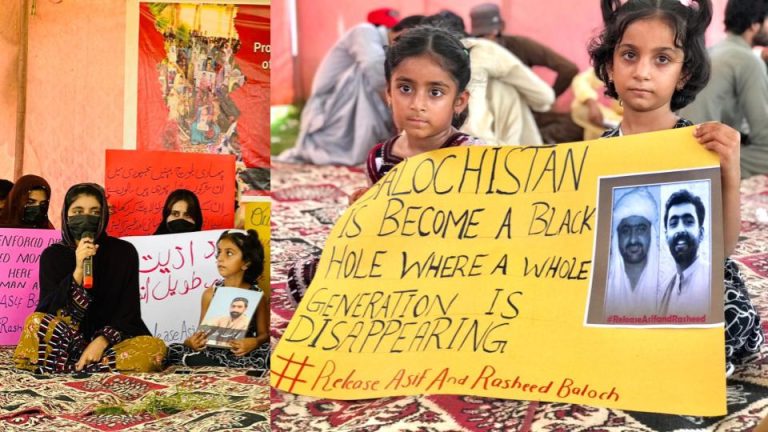
Balochistan was forcibly occupied by Pakistan on March 27, 1948 and the Baloch have been fighting for their independence since then. Yet a large section of mainstream media considers Balochistan’s freedom struggle as an internal matter of Pakistan. Dil Murad Baloch, Secretary General Baloch National Movement (BNM) is upset that media and the intelligentsia still look at the Balochistan’s freedom struggle from the perspective of Panjabi Pakistan. In this discussion with Vivek Sinha, Editor-in-Chief News Intervention, Dil Murad Baloch explains that the Pakistani regime spreads rumors of negotiations with the Baloch people only to divert attention even as Pakistan Army continues to abduct and kill the Baloch people. Excerpts:
Vivek Sinha: Balochistan attained independence on Aug 11, 1947 which is four days before Indian independence. Yet very few people outside Balochistan know about this important historical fact. What are the efforts of BNM to let the world know about Balochistan’s history? Dil Murad Baloch: Following the British occupation of India, their efforts to thwart Soviet Union’s influence in Afghanistan led to hurdles, with independent Baluchistan acting as a significant obstacle. This was due, in part, to the strategic importance of the Bolan Pass — the primary route the British believed was the best way to launch attacks against Afghanistan. During the British occupation of Afghanistan, the Baloch people put up formidable resistance as the British army marched through Bolan Pass. The British army suffered heavy losses there. The British opted to occupy Balochistan as a means of exerting control over Afghanistan. Britain wanted to use Balochistan and Afghanistan as a buffer state against the Soviet Union. Upon returning from Afghanistan, the British army, led by Major Wilshire, initiated a significant assault on Kalat, the capital of Balochistan, on November 13, 1839. However, Baloch ruler Khan Mehrab Khan valiantly fought a historic battle and, along with his companions, was ultimately martyred.
The British, despite their occupation, did not eliminate the Baloch’s sovereignty. Instead, they entered into four well-known agreements with them: the 1841, 1854, 1854, and 1862 agreements. Khan Kalat was officially acknowledged as Balochistan’s ruler through these agreements.
Following the aftermath of the World War, Britain relinquished control over its colonies. Rather than acknowledging India’s independence, the country was partitioned. It is ironic that the Congress leadership supported the partition of India, resulting in ongoing religious strife in the region.
On August 4, 1947 a meeting was held in New Delhi, chaired by Lord Mountbatten, the Viceroy of India, with the participation of Baloch ruler Ahmed Yar Khan, Mr. Muhammad Ali Jinnah and Nawabzada Liaquat Ali Khan from the Muslim League leadership. Balochistan stood out as a distinct entity during these discussions.
The proposal acknowledged Balochistan as a distinct and autonomous country, and the return of British Balochistan’s Baloch areas. It recognized Balochistan’s separation from the Indian states as an independent sovereign territory. Kalat (Balochistan) was declared an independent state by its ruler, Khan Kalat Mir Ahmad Yar Khan, on August 11, 1947. Kalat’s liberation was reported by All India Radio Delhi, and also covered by The New York Times in its 12 August 1947 edition.
On August 15, 1947, Britain created two dominion states in the Indian subcontinent: India and Pakistan, just four days after Balochistan had declared independence. Governor General of Pakistan Muhammad Ali Jinnah pushed for Kalat (Balochistan) to be included in Pakistan. To discuss this matter, the Diwan Aam (Lower House) of Kalat held its first meeting from 12 to 15 December 1947 in Dhadar.
In a unanimous decision, the House rejected the proposal to join Pakistan. Similarly, on January 4, 1948, the Diwan Khas (Upper House) also refused the proposition to join Pakistan during their meeting in Dhadar. During the second session on February 27, 1948, the Kalat parliament rejected the proposition of joining Pakistan. However, on March 27, Pakistan occupied Balochistan by force, taking away our freedom.
Vivek Sinha: A section of Pakistani media refers to Baloch freedom struggle as “Pakistan’s internal matter”. These Pakistanis claim that they are in talks with Baloch and that they will be pacified. Your thoughts. Dil Murad Baloch: Not a part of the Pakistani media, but the entire media considers the Baloch national issue and the freedom movement as an internal matter of Pakistan. Due to the absence of independent media in Pakistan, there is a non-existence of any reference to Balochistan in the media. All institutions there (in Pakistan) are under the control of the army. The army’s influence can be found in every institution in Pakistan, from the parliament to the judiciary. However, these institutions are completely devoted to maintaining and advancing the army’s viewpoint. Whatever is provided to them by the army, they propagate it.
Occasionally, certain individuals spread rumors of negotiations with the Baloch or others in an attempt to sow discord within our movement. These claims are unfounded and baseless. Those involved in the Baloch movement cannot negotiate with Pakistan or engage in politics under the guise of Baloch interests. How can there be a dialogue between the weak and the powerful, rather a dialogue means putting one’s neck on the sword. After numerous sacrifices, it is not expected that the Baloch will be deluded into accepting Pakistan.
Vivek Sinha:Despite widespread protests by Baloch diaspora the Pakistan Army continues to abduct Baloch and kill innocent Baloch people. Why do you think Pakistan Army is killing Baloch intelligentsia? How many Baloch have been forcefully abducted and killed by the Pakistan Army over the last two decades? Dil Murad Baloch: Not only does the Baloch diaspora, but large-scale demonstrations and political protests persist on Baloch land too. However, despite these the acts of genocide and forced disappearances continue unabated. It is evident that Pakistan recognizes the fact that the Baloch people have no desire to coexist with their country. That is why Pakistan is implementing a strategy of collective punishment as a means to teach the Baloch nation a lesson. The ultimate objective is to effectively weaken the Baloch nation through genocide and collective punishment in hopes that it will eventually withdraw from its pursuit of national independence.
Mother and Father of Hayat Baloch crying over the body of their son. Hayat Baloch was a student and was murdered in cold blood by the Pakistani security forces in occupied Balochistan. (Photo: News Intervention)
The history of nations proves that they cannot be subdued in such a manner. Presently, the Baloch independence movement is complex and intricate, consisting of various dimensions and layers. When Pakistan tries to suppress one-layer, other layers become more active. Therefore, despite twenty years of war crimes, Pakistan is unable to crush the Baloch national movement.
As far as the statistics of murders and enforced disappearances are concerned, Pakistan has forcibly disappeared more than twenty youths during the last week. This process is continuous. This provides an insight into the staggering number of individuals who have been forcibly disappeared or killed within the past two decades. The count is expressed in thousands and continues to rise with each passing day.
Vivek Sinha:Given the prejudiced approach of international organizations such as the UN, UNHRC, Amnesty International etc. the Baloch still expect that these international organizations will help Balochistan’s independence struggle. Don’t you think that too much expectation from these international organizations is delaying Balochistan’s independence? Dil Murad Baloch: The Baloch people did not rely on any international organizations or neighboring countries to grant them freedom and assistance. They depended on their own actions and efforts. The Baloch are unwavering in their willingness to make any sacrifice necessary for the sake of freedom, recognizing that it is a fundamental requirement. This is an entirely indigenous movement, being fought locally and solely driven by its own resources. However, we make a concerted effort to remind both, countries and international organizations of their responsibilities. Why are institutions created and what is the primary goal of the United Nations?
In the UN, “nations” refers to a nation itself. Therefore, as a nation, we must remind them that it is their responsibility to act when a nation is in distress, undergoing genocide, or stripped of its freedom. The United Nations must act in such circumstances, and we strive to raise awareness among other human rights organizations. The institutions face questions about their existence when they fail to perform their fundamental responsibilities. I think this is the problem of these institutions more than us.
Vivek Sinha:International media and the mainstream Indian media, in particular, still reports about Balochistan’s freedom struggle from the Panjabi Pakistani perspective. What is BNM doing to change this? Dil Murad Baloch: It raises the question of the seriousness of the Indian media that despite the passage of seventy-six years, the most important issue of the region i.e. the Baloch national issue is seen from the point of view of Punjabi Pakistan. We can only regret this. The Indian media ought to recognize the root cause of the dire state of the entire region, including India. Where is the center and source of terrorism? What were the historical events that led to the partition of India on the basis of religious differences?
Regrettably, discussions of this nature seem to be absent from the Indian media. What was the status of the Baloch nation during India’s partition and how was Balochistan occupied? The Baloch nation has now become a recognized party, despite having faced numerous wars in the past. For the last twenty-three years, the Baloch people have been in a constant battle with the world’s seventh nuclear power. Here Pakistan is not alone but China is also present.
Everyone should know that Pakistan and China are not only the problem for Baloch, but the region and your India will also be affected by it. To understand these issues in depth, there is no remarkable performance in the Indian media to discuss them. No research is seen, no documentary is seen, but a few superficial issues are thrown around in such a way that the real issue is never seen on the screen.
Vivek Sinha:One Naila Qadri is claiming that she has set up Balochistan’s government in exile. She also claims to lead the Baloch freedom struggle. What is the truth regarding this? Dil Murad Baloch: The answer to this also lies in the answer to the previous question, because most of us knew from the Indian media that “we have a government-in-exile and Banuk Naila Qadri is our PM”. This is a movement, people are making daily sacrifices here. Behind this movement, there are political parties and organizations that have the support of the masses. In the current era of social media, it is essential to verify the authenticity of anyone who claims to be the true representative of the Baloch nation. If this practice persists, the number of Prime Ministers will multiply.
The Baloch nation alone holds the right to form a government-in-exile; it is not the right of one individual. Baloch nation is represented by well-known parties and organizations. In the event that establishing a government-in-exile becomes necessary, all parties involved will collaborate. No one has the right to make such a claim and their credibility is lost if they do. Indian media must take extra precautions to avoid this.
Vivek Sinha:What does Balochistan expect from the Indian people? Dil Murad Baloch: The discussion of India and Baloch is often framed within the context of the Pakistan-India arch rivalry, wherein the principle of “the enemy of my enemy is my friend” holds sway. We strongly disagree with this. We require all countries and nations to aid and protect us from oppressive forces and the occupier.
When we talk about India, we mean the largest population in the world and the largest democracy in the world. Given its status as the world’s largest republic, we have high expectations for India to fulfill its responsibilities. Our aim is to make it clear that Pakistan poses a threat not only to the Baloch people, but to all of humanity. Pakistan has become associated with terrorism around the world as it has been observed that wherever acts of terrorism happen, a connection to Pakistan is often found.
China has established a presence in Balochistan and their joint plans with Pakistan in this area are unimaginable. It is crucial for India to recognize the gravity of the current situation. We will take charge of our own battle, but it is crucial for the global community, and India in particular, to advocate for our fallen independence. The dire circumstances that have arisen in the region since Pakistan’s formation can only be rectified by dismantling it. Independent Balochistan is the guarantor of peace in the region.
In Pakistan, its various ethnic minorities remain in a constant state of agitation. The government in Islamabad remains aloof from the turmoil taking places on the country’s peripheries where local and national policies and dictates run foul of local communities like the Pashtuns, Baloch and Sindhis.
The Sindh province, located to the south-east of Pakistan with its borders touching the Indian states of Rajasthan and Gujarat, is again in news over Pakistan’s plan to unlock mining activity in the ancient mountains of Karunjhar. Part of the Rann of Kutch, the mountains are sacred to Sindhis besides acting as enablers of groundwater recharge and sustaining wildlife in the region.
In July this year, an advertisement proclaiming auction of lease for granite mining raised the hackles of the Sindhi people. The subsequent public furore led the department of mining to cancel the auction but after a couple of weeks, the plan to auction the Karunjhar mountains for granite mining was revived.
India Narrative speaks with Sohail Abro, Central Chairman of Jeay Sindh Freedom Movement (JSFM) about the state of the nationalist movement in Sindh as well as Pakistan’s depredations in its province. Abro says that in his 30-year-old political career, he has been abducted by the intelligence agencies and tortured in the infamous torture cells by security agencies.
Abro adds that Pakistan has cracked down on nationalist Sindhi politicians through forced abductions and brutal killings. He says that with a sliding Pakistan economy, Islamabad is selling off Sindhi natural assets including the Karunjhar mountains.
IN: What is the current situation in Sindh, particularly of the masses due to the economic downturn and political instability in Pakistan? SA: Pakistan’s situation is not hidden from the world. People are leading tough lives. What was available to us for Rs 50-100 is now around Rs 600. People are ready to sell their children to be able to feed themselves and provide for their children.
The situation because of floods in Sindh is bad. People’s houses and lands are still inundated. They are living on the roadsides because the politicians did not allow water to be let out. Some of the water-related incidents were done deliberately to show people in a pathetic light so that misery could be showcased before the world and aid could be collected. We have been appealing to international agencies to not give aid to Pakistan unless the donors visit Sindh and see the situation for themselves. Once there, they can give aid directly to the needy.
IN: The Pakistani government and the army are selling off the assets to other countries including airlines, ports and buildings. Is Sindh also witnessing something similar – the sale of its assets and lands? SA: The Pakistani Army has captured the natural resources and land of Sindh. Even the Pakistan People’s Party (PPP) is involved in the sale of lands in Sindh.
Sindh generates a large amount of revenue but it is all taken away by the federal government. We have the third-largest coal mine in the world but the electricity produced is not shared with us. If just ten per cent of the revenue generated from Sindh is spent on the people, things would be much better for the masses.
IN: There is news from Sindh that a lot of people are being arrested by Pakistan. Why is that happening? SA: There were a series of kidnappings by the Pakistan’s ISI and military intelligence in Tando Muhammad Khan in the run-up to the Pakistani Independence Day. This included once again picking up Ramesh Kumar – one of our political activists who has been abducted twice earlier.
The Pakistani agencies begin to round-up people in Sindh so that the celebrations around Pakistan’s Independence Day are not disrupted by people seeking an end to human rights violations. Also, many political parties like ours carry out rallies for freedom.
Also, attempts were made to kidnap Sajjad Chana and Zahid Chana from Jamshoro city. They were fired upon and their motorcycle was hit by vehicles leading to severe injuries and broken bones.
IN: Can you please tell us about the armed groups in Sindh? SA: Sindh does not have a similar insurgency like Balochistan which is being fought in hills and mountains. Ours is an urban political movement. We are mobilising people to come out on streets and hold rallies and protest against the ethnic genocide of Sindhis.
We are trying to build a movement exactly like the Bangladesh movement and not a military campaign like Subhash Chandra Bose and Bhagat Singh.
(This article was first published in India Narrative)
A special court in Pakistan has extended the remand of former foreign minister Shah Mehmood Qureshi by three days in connection with the leakage of a confidential diplomatic cable. The cable was alleged to have been misused for political purposes by the previous Imran Khan-led government.
سائفر کیس ایف آئی اے شاہ محمود قریشی کو آج خصوصی عدالت میں پیش کرے گی آفیشل سیکرٹس ایکٹ کے تحت یہ خصوصی عدالت قائم کی گئی ہے گذشتہ سماعت پر شاہ محمود قریشی کا چار روزہ جسمانی ریمانڈ منظور ہوا تھا مزید تفصیلات بی بی سی اردو لائیو پیج پر: https://t.co/a2frxbdOAwpic.twitter.com/Gdnz9JA4K4
Shah Mehmood Qureshi, a prominent member of the Pakistan Tehreek-e-Insaf (PTI) and a close aide to former Prime Minister Imran Khan, was taken into custody on August 19 under the Official Secrets Act. The charges originated from his alleged violation of the secrecy of an official cable sent by the Pakistani embassy in the US to the foreign office during his tenure as the foreign minister.
The special court, established under the recently enacted Official Secrets Act, held an in-camera hearing for the case. Judge Abual Hasnat presided over the proceedings, during which Qureshi’s remand was extended. The trial of both Imran Khan and Qureshi, under the same act, is anticipated to commence within the next two weeks.
The leaked diplomatic cable in question reportedly contained sensitive information from a meeting between US State Department officials and Pakistani envoy Asad Majeed Khan. The case gained further attention when a US media outlet, The Intercept, published what it claimed to be the contents of the cable. The leak was alleged to have taken place when Qureshi was the foreign minister.
Former Prime Minister Imran Khan, currently serving a jail term in a corruption case, has repeatedly claimed that he was ousted from office as part of a “US conspiracy.” The PTI party asserts that the leaked cipher contained a threat from the United States to remove Khan from power.
Qureshi’s lawyer, Advocate Shoaib Shaheen, said that the case is “political” and argued that the diplomatic cable was already with the Ministry of Foreign Affairs. This is a developing story with many layers to uncover and names to be revealed.
Protests have erupted in Holland, Belgium and Germany against Pakistan Army’s harsh crackdown on the PTM Islamabad rally. Supporters of the PTM movement have raised their voices against the unconstitutional arrests of PTM members, indictments under false charges, and infliction of physical and mental wounds on the peaceful protestors. They have stated that a series of protests will continue for a month in different parts of Europe.
فوجی ریاست کاPTMکےخلاف کریک ڈاون،PTMکےساتھیوں کی غیرآئینی گرفتاریاں،جھوٹےمقدمات،ظلم جبر اور تشدد کےزریعےہمارےساتھیوں سےویڈیوز بنانےکےخلافPTMیورپ کی جانب سےہالینڈ میں احتجاج ریکارڈ احتجاجوں کا یہ سلسلہ اگلےایک مہینےتک یورپ کےمختلف ملکوں میں جاری رہیگا#StopTorturingPTMActivistspic.twitter.com/5KPqBIn1zi
On August 25th, PTM supporters also organized massive protests in Frankfurt against the Pakistan Army to condemn their brutal crackdown and torture of the PTM leaders and activists.
Against the illegal arrest of PTM leaders in Pakistan, the abduction of colleagues in North Waziristan and their illegal detention for three months, a protest rally will be held in Frankfurt Hauptbahnhof, the main city of Germany.#ReleasePTMActivistspic.twitter.com/wbXV2e5kBi
پشتون تحفظ مومنٹ یوروپ کے طرف سے پاکستان میں جاری PTM کے کارکنوں کیخلاف غیر قانونی کریک ڈاؤن کیخلاف آج ہالینڈ میں احتجاجی مظاہرہ کیا گیا ۔ یوروپی ممالک میں احتجاجی مظاہروں کا سلسلہ جاری رہیگا ۔#ReleasePTMActivistspic.twitter.com/xqY3tNkraj
Videos and reports of leaders and protesters being harassed and tortured to the point that they are unable to stand up have resurfaced on social media. This peaceful rally that started on August 18 in Islamabad took a turn when the Pakistan ‘establishment’ launched a violent crackdown. They arrested leaders through unconstitutional means and tormented the activists.
The purpose of the rally was to demand answers from the ‘establishment’ about the atrocities committed by the Pakistan Army against Pashtuns. Several cases of enforced disappearances, extra-judicial killings, and restrictions on speech and movement have been reported.
کل لدھا میں 13 سالہ بچے اظہرالدین اور آج بنوں جانی خیل میں 16 سالہ عبدالرزاق کو فوج نے گولی مار کر شہید کردیا ہے اور ایسے واقعات روزانہ ھورہے ہیں البتہ ایک گھٹیا نسل ہے جو قاتل سے سوال کی بجائے مقتول کے وارثان کو کہتی ہے کہ تمہارا لہجہ ٹھیک نہیں ہے،تمہیں بات کرنے کی تمیز نہیں ہے
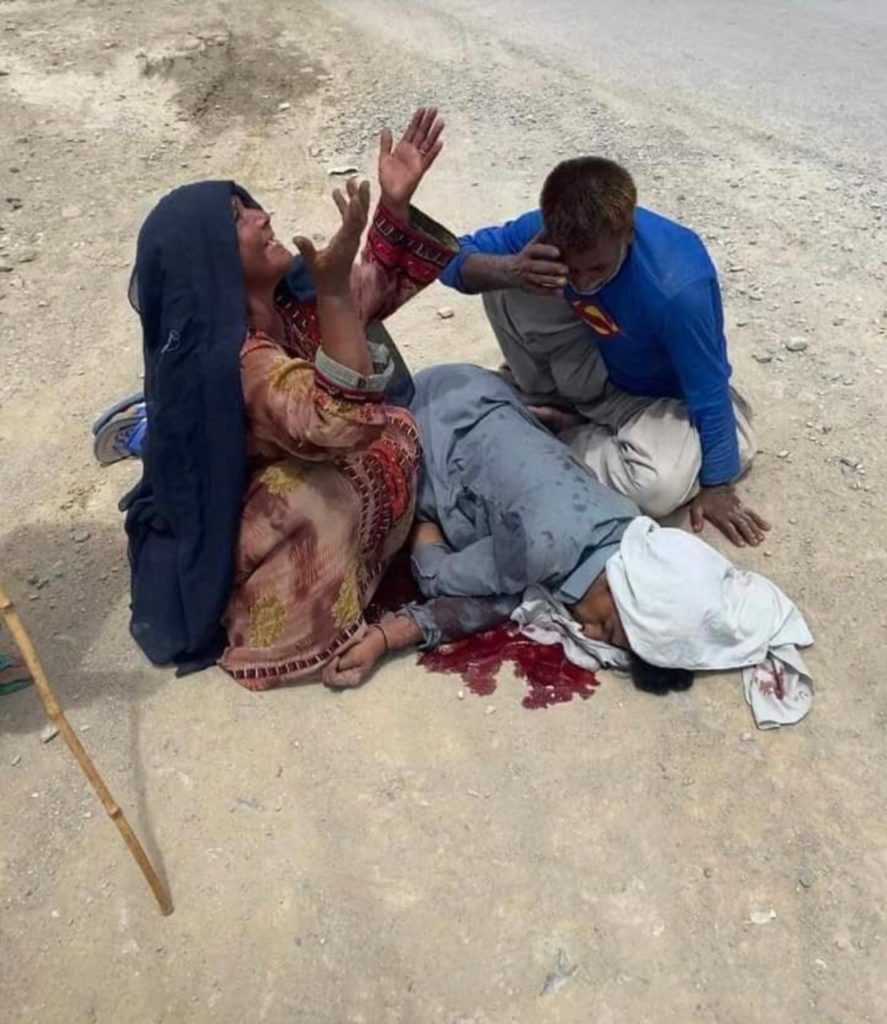
Recently, Azharuddin, a 13-year-old child in Ladha and 16-year-old Abdul Razza in Jani Khel were killed by security forces. They shot Razza and his body was taken afterward. This is the case in point. Pashtuns are under a brutal regime with no way out; they are fighting back the Paki “establishment”.
Zohaib Pashtun, a member of the Pashtun Tahafuz Movement (PTM), is currently in critical condition due to severe torture during his recent detention by the Pakistan army. This brutal treatment has led to the complete failure of Zohaib’s kidneys.
Zohaib was detained by intelligence agencies in Tank, and was subjected to the torture that left him unable to stand or move. Recently, he was released on bail, yet his condition demanded immediate hospitalization for dialysis due to his failing kidneys.
پی ٹی ایم ٹانک رہنماء زوہیب پشتن کو پولیس نے اغوا کرکے خفیہ اداروں کے حوالے کیا تھا زوہیب ہشتن کو کہی دن لاپتہ کیاگیااور شدید تشدد کا نشانہ بنایا گیا تھا عدالت میں پیش کرنے کے بعد زوہیب کی ضمانت ہوئی ریاستی تشدد سے زوہیب کے گردے تقریبا فیل ہوچکے ہے#StopTorturingPTMActivistspic.twitter.com/XiheIOX4gx
Tragically, Zohaib Pashtun is not alone in facing such circumstances. Jamal Maliar, another detainee, experienced maltreatment while imprisoned, including having his hair forcibly cut.
جمال مالیار ایک سیاسی ورکر ہے پی ٹی ایم اسلام اباد کے جلسے میں شرکت کرکے واپس بنوں جارہے تھے یارگ چیک پوسٹ پر ان کو گرفتار کرکے کینٹ منتقیل کیا گیاجمال مالیار کی لمبے بال تھےکینٹ میں ان کے بال کاٹے گئے اور پر اسلام اباد لا کر عدالت میں پیش کیا گیا#StopTorturingPTMActivistspic.twitter.com/lyRcHq3icN
On August 18, PTM conducted a mega rally in the heart of Islamabad. The peaceful protest was cracked downed by the Pakistan Army, who not only unlawfully arrested leaders and protestors but also, brutally tortured them.
Zohaib’s story, however, represents a broader issue. Currently, 15 PTM activists are in custody, with 12 detained in Adiala Jail, 3 in Waziristan, and 1 in Bajaur. Among them are notable figures like Ali Wazir, Kamran Khan, Noorzada, Wasim Pashteen, Ulus Yar, Fida Pashteen, Shah Faisal Ghazi, Fida Mehsud, Badashah Pashteen, and Said Sajjad Ali from Bajaur.
15 PTM activists in jail:12 in Adiala Jail, 3 in Waziristan & 1 in Bajaur Imaan Mazari (lawyer) Ali Wazir Kamran Khan Noorzada Wasim Pashteen Ulus Yar Fida Pashteen Jamal Malyar Shah Faisal Ghazi Fida Mehsud Badashah Pashteen Said Sajjad Ali (Bajaur)#ReleasePTMActivists
The movement highlights grave human rights violations committed by Pakistan Army against Pashtuns. These violations encompass acts of brutality, enforced disappearances, extrajudicial killings and the loss of innocent civilian lives.
The peaceful PTM activists are continuing to face adversity, even as they advocate for their rights in a peaceful manner. The Army is ruthless, and they continue to suppress the movement at all cost. The voice of the protestors are falling on the deaf ears as the global powers are busy providing funds and incentives to this terror-infested state. With no civilian govt to check, the real question is: How far will the military go to repress this movement?
We use cookies on our website to give you the most relevant experience by remembering your preferences and repeat visits. By clicking “Accept All”, you consent to the use of ALL the cookies. However, you may visit "Cookie Settings" to provide a controlled consent.
This website uses cookies to improve your experience while you navigate through the website. Out of these, the cookies that are categorized as necessary are stored on your browser as they are essential for the working of basic functionalities of the website. We also use third-party cookies that help us analyze and understand how you use this website. These cookies will be stored in your browser only with your consent. You also have the option to opt-out of these cookies. But opting out of some of these cookies may affect your browsing experience.
Functional cookies help to perform certain functionalities like sharing the content of the website on social media platforms, collect feedbacks, and other third-party features.
Performance cookies are used to understand and analyze the key performance indexes of the website which helps in delivering a better user experience for the visitors.
Analytical cookies are used to understand how visitors interact with the website. These cookies help provide information on metrics the number of visitors, bounce rate, traffic source, etc.
Advertisement cookies are used to provide visitors with relevant ads and marketing campaigns. These cookies track visitors across websites and collect information to provide customized ads.
Necessary cookies are absolutely essential for the website to function properly. These cookies ensure basic functionalities and security features of the website, anonymously.
Cookie
Duration
Description
cookielawinfo-checkbox-analytics
11 months
This cookie is set by GDPR Cookie Consent plugin. The cookie is used to store the user consent for the cookies in the category "Analytics".
cookielawinfo-checkbox-functional
11 months
The cookie is set by GDPR cookie consent to record the user consent for the cookies in the category "Functional".
cookielawinfo-checkbox-necessary
11 months
This cookie is set by GDPR Cookie Consent plugin. The cookies is used to store the user consent for the cookies in the category "Necessary".
cookielawinfo-checkbox-others
11 months
This cookie is set by GDPR Cookie Consent plugin. The cookie is used to store the user consent for the cookies in the category "Other.
cookielawinfo-checkbox-performance
11 months
This cookie is set by GDPR Cookie Consent plugin. The cookie is used to store the user consent for the cookies in the category "Performance".
viewed_cookie_policy
11 months
The cookie is set by the GDPR Cookie Consent plugin and is used to store whether or not user has consented to the use of cookies. It does not store any personal data.