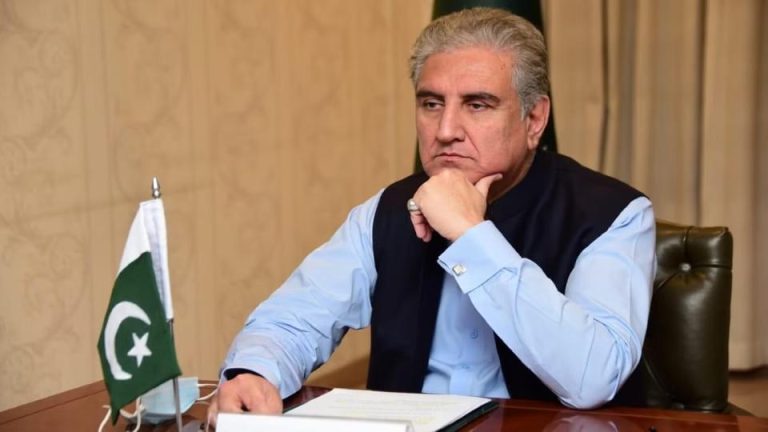
A special court in Pakistan has extended the remand of former foreign minister Shah Mehmood Qureshi by three days in connection with the leakage of a confidential diplomatic cable. The cable was alleged to have been misused for political purposes by the previous Imran Khan-led government.
سائفر کیس ایف آئی اے شاہ محمود قریشی کو آج خصوصی عدالت میں پیش کرے گی آفیشل سیکرٹس ایکٹ کے تحت یہ خصوصی عدالت قائم کی گئی ہے گذشتہ سماعت پر شاہ محمود قریشی کا چار روزہ جسمانی ریمانڈ منظور ہوا تھا مزید تفصیلات بی بی سی اردو لائیو پیج پر: https://t.co/a2frxbdOAwpic.twitter.com/Gdnz9JA4K4
Shah Mehmood Qureshi, a prominent member of the Pakistan Tehreek-e-Insaf (PTI) and a close aide to former Prime Minister Imran Khan, was taken into custody on August 19 under the Official Secrets Act. The charges originated from his alleged violation of the secrecy of an official cable sent by the Pakistani embassy in the US to the foreign office during his tenure as the foreign minister.
The special court, established under the recently enacted Official Secrets Act, held an in-camera hearing for the case. Judge Abual Hasnat presided over the proceedings, during which Qureshi’s remand was extended. The trial of both Imran Khan and Qureshi, under the same act, is anticipated to commence within the next two weeks.
The leaked diplomatic cable in question reportedly contained sensitive information from a meeting between US State Department officials and Pakistani envoy Asad Majeed Khan. The case gained further attention when a US media outlet, The Intercept, published what it claimed to be the contents of the cable. The leak was alleged to have taken place when Qureshi was the foreign minister.
Former Prime Minister Imran Khan, currently serving a jail term in a corruption case, has repeatedly claimed that he was ousted from office as part of a “US conspiracy.” The PTI party asserts that the leaked cipher contained a threat from the United States to remove Khan from power.
Qureshi’s lawyer, Advocate Shoaib Shaheen, said that the case is “political” and argued that the diplomatic cable was already with the Ministry of Foreign Affairs. This is a developing story with many layers to uncover and names to be revealed.
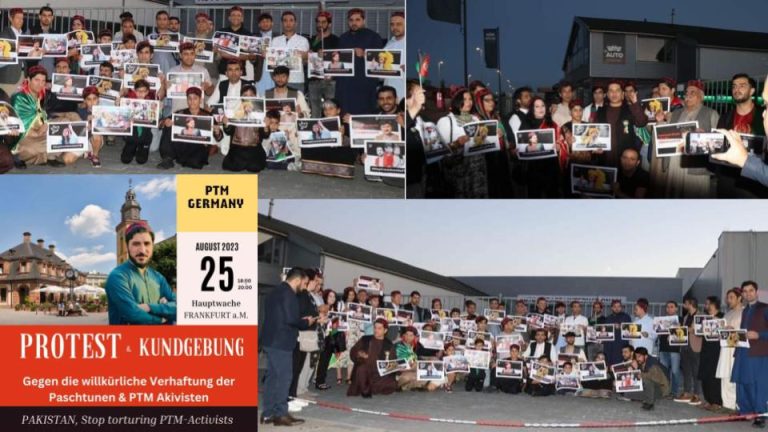
Protests have erupted in Holland, Belgium and Germany against Pakistan Army’s harsh crackdown on the PTM Islamabad rally. Supporters of the PTM movement have raised their voices against the unconstitutional arrests of PTM members, indictments under false charges, and infliction of physical and mental wounds on the peaceful protestors. They have stated that a series of protests will continue for a month in different parts of Europe.
فوجی ریاست کاPTMکےخلاف کریک ڈاون،PTMکےساتھیوں کی غیرآئینی گرفتاریاں،جھوٹےمقدمات،ظلم جبر اور تشدد کےزریعےہمارےساتھیوں سےویڈیوز بنانےکےخلافPTMیورپ کی جانب سےہالینڈ میں احتجاج ریکارڈ احتجاجوں کا یہ سلسلہ اگلےایک مہینےتک یورپ کےمختلف ملکوں میں جاری رہیگا#StopTorturingPTMActivistspic.twitter.com/5KPqBIn1zi
On August 25th, PTM supporters also organized massive protests in Frankfurt against the Pakistan Army to condemn their brutal crackdown and torture of the PTM leaders and activists.
Against the illegal arrest of PTM leaders in Pakistan, the abduction of colleagues in North Waziristan and their illegal detention for three months, a protest rally will be held in Frankfurt Hauptbahnhof, the main city of Germany.#ReleasePTMActivistspic.twitter.com/wbXV2e5kBi
پشتون تحفظ مومنٹ یوروپ کے طرف سے پاکستان میں جاری PTM کے کارکنوں کیخلاف غیر قانونی کریک ڈاؤن کیخلاف آج ہالینڈ میں احتجاجی مظاہرہ کیا گیا ۔ یوروپی ممالک میں احتجاجی مظاہروں کا سلسلہ جاری رہیگا ۔#ReleasePTMActivistspic.twitter.com/xqY3tNkraj
Videos and reports of leaders and protesters being harassed and tortured to the point that they are unable to stand up have resurfaced on social media. This peaceful rally that started on August 18 in Islamabad took a turn when the Pakistan ‘establishment’ launched a violent crackdown. They arrested leaders through unconstitutional means and tormented the activists.
The purpose of the rally was to demand answers from the ‘establishment’ about the atrocities committed by the Pakistan Army against Pashtuns. Several cases of enforced disappearances, extra-judicial killings, and restrictions on speech and movement have been reported.
کل لدھا میں 13 سالہ بچے اظہرالدین اور آج بنوں جانی خیل میں 16 سالہ عبدالرزاق کو فوج نے گولی مار کر شہید کردیا ہے اور ایسے واقعات روزانہ ھورہے ہیں البتہ ایک گھٹیا نسل ہے جو قاتل سے سوال کی بجائے مقتول کے وارثان کو کہتی ہے کہ تمہارا لہجہ ٹھیک نہیں ہے،تمہیں بات کرنے کی تمیز نہیں ہے
Recently, Azharuddin, a 13-year-old child in Ladha and 16-year-old Abdul Razza in Jani Khel were killed by security forces. They shot Razza and his body was taken afterward. This is the case in point. Pashtuns are under a brutal regime with no way out; they are fighting back the Paki “establishment”.
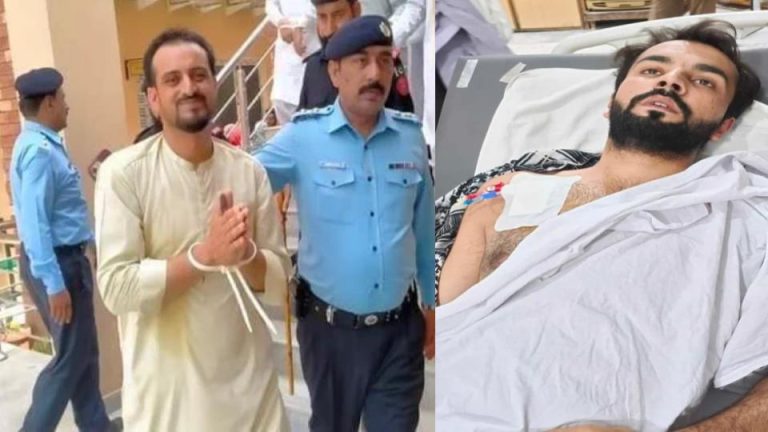
Zohaib Pashtun, a member of the Pashtun Tahafuz Movement (PTM), is currently in critical condition due to severe torture during his recent detention by the Pakistan army. This brutal treatment has led to the complete failure of Zohaib’s kidneys.
Zohaib was detained by intelligence agencies in Tank, and was subjected to the torture that left him unable to stand or move. Recently, he was released on bail, yet his condition demanded immediate hospitalization for dialysis due to his failing kidneys.
پی ٹی ایم ٹانک رہنماء زوہیب پشتن کو پولیس نے اغوا کرکے خفیہ اداروں کے حوالے کیا تھا زوہیب ہشتن کو کہی دن لاپتہ کیاگیااور شدید تشدد کا نشانہ بنایا گیا تھا عدالت میں پیش کرنے کے بعد زوہیب کی ضمانت ہوئی ریاستی تشدد سے زوہیب کے گردے تقریبا فیل ہوچکے ہے#StopTorturingPTMActivistspic.twitter.com/XiheIOX4gx
Tragically, Zohaib Pashtun is not alone in facing such circumstances. Jamal Maliar, another detainee, experienced maltreatment while imprisoned, including having his hair forcibly cut.
جمال مالیار ایک سیاسی ورکر ہے پی ٹی ایم اسلام اباد کے جلسے میں شرکت کرکے واپس بنوں جارہے تھے یارگ چیک پوسٹ پر ان کو گرفتار کرکے کینٹ منتقیل کیا گیاجمال مالیار کی لمبے بال تھےکینٹ میں ان کے بال کاٹے گئے اور پر اسلام اباد لا کر عدالت میں پیش کیا گیا#StopTorturingPTMActivistspic.twitter.com/lyRcHq3icN
On August 18, PTM conducted a mega rally in the heart of Islamabad. The peaceful protest was cracked downed by the Pakistan Army, who not only unlawfully arrested leaders and protestors but also, brutally tortured them.
Zohaib’s story, however, represents a broader issue. Currently, 15 PTM activists are in custody, with 12 detained in Adiala Jail, 3 in Waziristan, and 1 in Bajaur. Among them are notable figures like Ali Wazir, Kamran Khan, Noorzada, Wasim Pashteen, Ulus Yar, Fida Pashteen, Shah Faisal Ghazi, Fida Mehsud, Badashah Pashteen, and Said Sajjad Ali from Bajaur.
15 PTM activists in jail:12 in Adiala Jail, 3 in Waziristan & 1 in Bajaur Imaan Mazari (lawyer) Ali Wazir Kamran Khan Noorzada Wasim Pashteen Ulus Yar Fida Pashteen Jamal Malyar Shah Faisal Ghazi Fida Mehsud Badashah Pashteen Said Sajjad Ali (Bajaur)#ReleasePTMActivists
The movement highlights grave human rights violations committed by Pakistan Army against Pashtuns. These violations encompass acts of brutality, enforced disappearances, extrajudicial killings and the loss of innocent civilian lives.
The peaceful PTM activists are continuing to face adversity, even as they advocate for their rights in a peaceful manner. The Army is ruthless, and they continue to suppress the movement at all cost. The voice of the protestors are falling on the deaf ears as the global powers are busy providing funds and incentives to this terror-infested state. With no civilian govt to check, the real question is: How far will the military go to repress this movement?
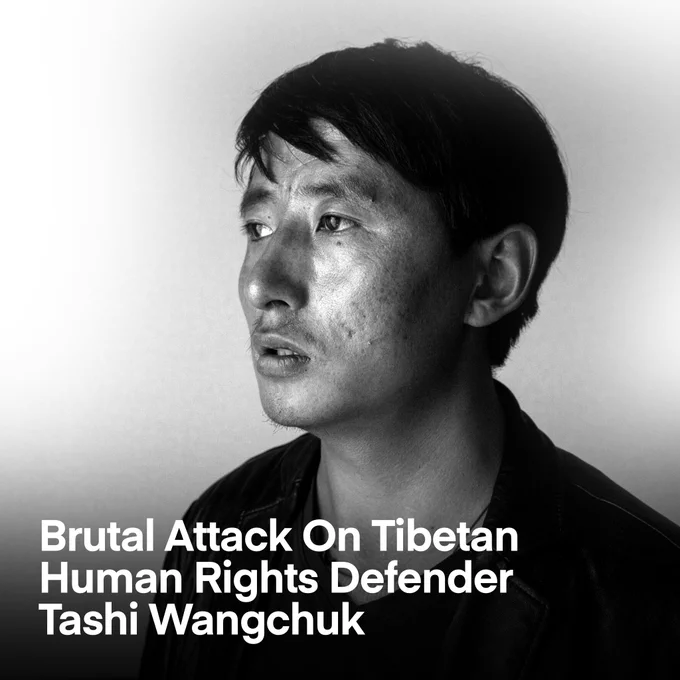
Tibetan language advocate and former political prisoner Tashi Wangchuk was attacked on Saturday 19 August by a group of unidentified, masked men in Darlak county, China occupied Tibet. Wangchuk like many other Tibetan rights activists is one of those who continue to fight and defend Tibetan language and culture despite knowing the high risk involved like persecution or brutal torture by the Chinese Communist Party (CCP) forces onTibetans. Wangchuk was in Darlak county to campaign for the protection of Tibetan language, the official language of China-occupied Tibet and raise awareness about the disappearance of the Tibetan language from schools in favour of Chinese dialects.
At around 8 p.m., Tashi Wangchuk’s hotel room door was forced open and he was beaten and kicked by a group of men wearing masks for around 10 minutes. He believes he was followed to his hotel from the school. After complaining to the hotel owner, the police reached the spot and Wangchuk was taken for questioning to the police station.Tashi Wangchuk, is from Kyegudo in Yulshul (Chinese: Yushu) eastern Tibet. He came to international prominence after speaking to the New York Times in 2015 about his efforts to file a lawsuit against local authorities after local Tibetan classes were shut down in Tibet by the CCP authority.
Wangchuk had earlier been arrested in 2016 after which he was sent to a secret location where he was brutally tortured by the CCP forces. After spending two years in pre-trial detention, he was found guilty of “inciting separatism” and sentenced to five years in prison and was released in 2021. Wangchuk is known for peaceful language advocacy as Chinese authorities have imposed policies to marginalise or even eliminate the Tibetan language from the public sphere across occupied Tibet in a bid to promote Chinese language and dialects and history which wipes off Tibet’s actual standing.Tibetans have been experiencing tumultuous challenges under China. Till now, 169 Tibetans have self-immolated themselves for the just cause and freedom of Tibet. In 1950, Tibet was invaded by the newly established Chinese Communist regime and since then Tibet has been under their occupation. Tibetans in occupied Tibet suffer under the Chinese repressive rules. Tibetans who have fled from Tibet live as refugees mostly in the himalayan regions of India like Darjeeling, Kalimpong, Dharamshala and Sikkim and even southern parts of India.
Tashi Wangchuk, language advocate and former political prisoner, was attacked on Saturday 19 August by a group of unidentified masked men at a hotel in Darlak county, according to a report by https://t.co/YPNhZfQbnL. He was in Darlak County to campaign for the Tibetan Language. pic.twitter.com/Hj7mUA0jMu
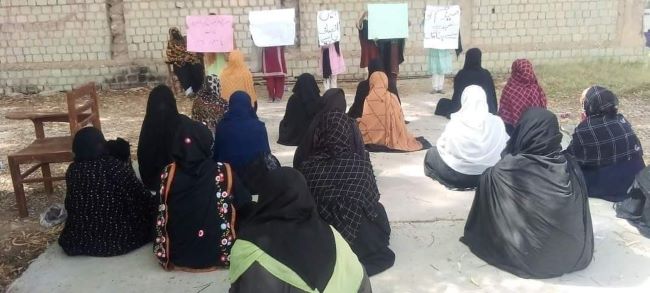
Protest erupted in the Barkhan district of Balochistan. Female students from the government girls’ college carried out the protest against the inefficient functioning of the college.
According to the protesting girls, the college lacks basic educational facilities, with the absence of teaching staff being a prominent issue. It is reported that out of 10 positions, 9 are vacant, and no teaching staff have been recruited so far. As a result, students are compelled to abandon their chosen subjects.
The problem has continued since months. On August 16, 2023, the Deputy Commissioner of Barkhan visited the Government Girls Inter College. The students along with the principal raised the concern regarding the same. However, no measures has been taken so far. The college has become non-functional and is closed.
بارکھان گرلز کالج کی طالبات اپنی بنیادی حق تعلیم کیلئے رات کی اس تاریکی میں اجتجاج پہ بیٹھی ہیں ۔ یہ انتظامیہ کی ہٹ دھرمی ہے اور 14سے 15 گنھٹے گزرنے کے باوجود انتظامیہ کی طرف سے کوئی ردِعمل نہیں آیا۔۔#SaveEducationOfBarkhanpic.twitter.com/V3WGhyFdqS
After the night protest, the students carried out a peace walk to protest and demand the right of education from the authorities. The lack of staff and negligence over girl’s education highlights the similarities between Pakistan and Taliban, where also the girls education has been stopped by the terrorist regime.
A peace walk has been held for Barkhan girls college. Education is our basic right which they wanna deprive us of. BWF is with our sisters until their demands are met. We are shocked at the incompetent administration. Administration must resolve the issues of Barkhan college. pic.twitter.com/YvKtTPgdhS
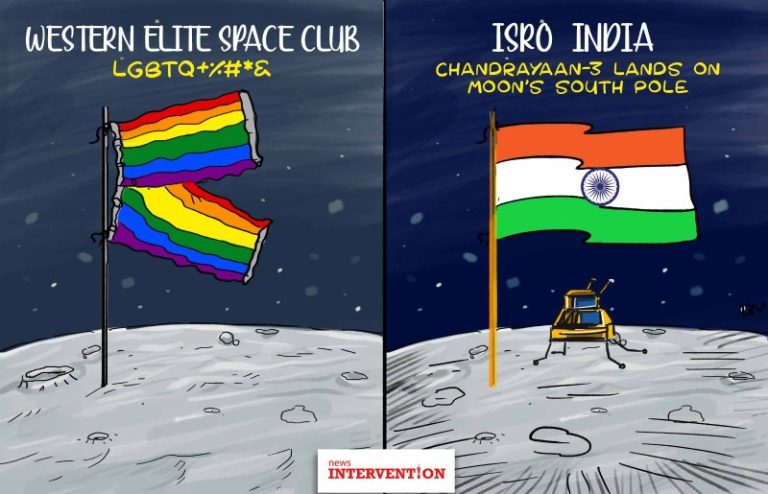
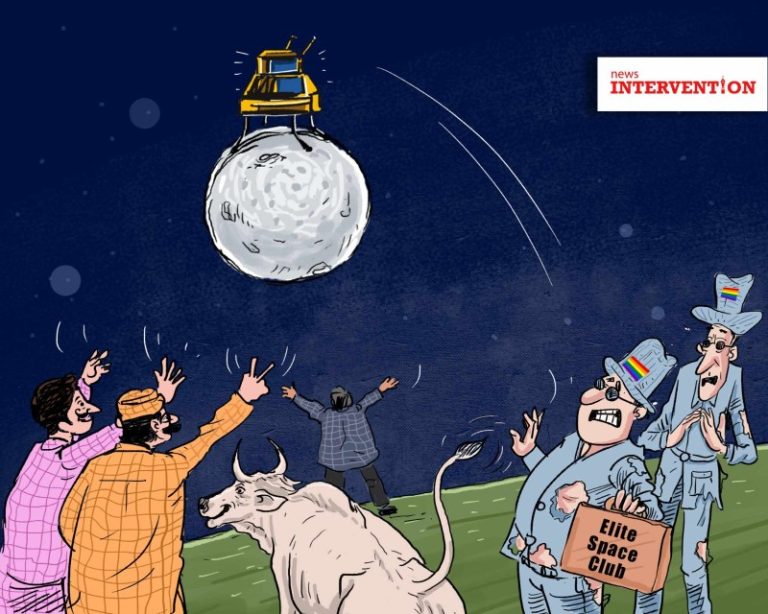
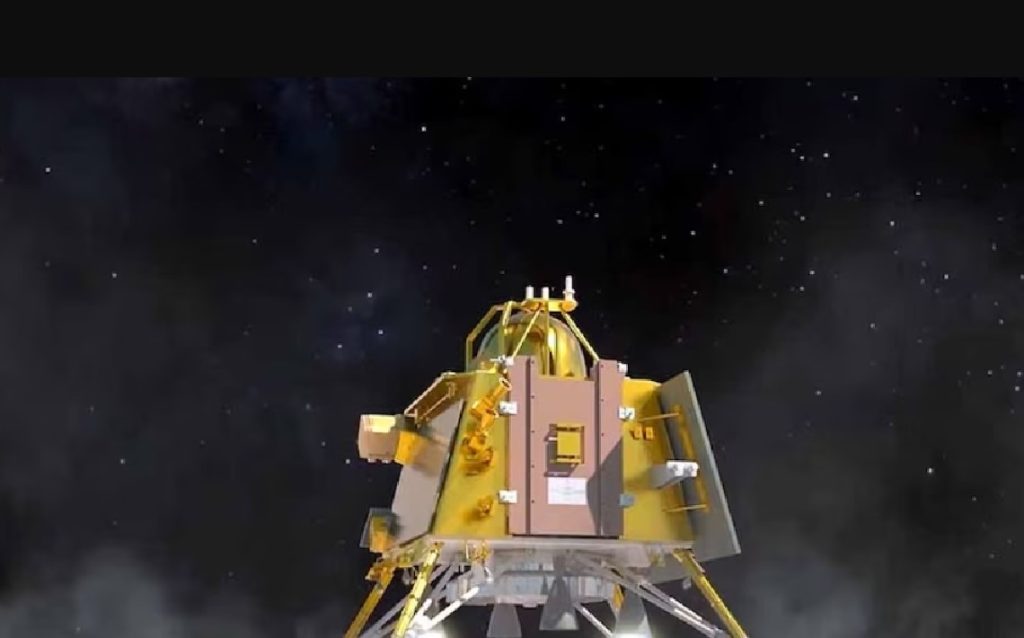
Britain is still living in the imperial past, or so it seems, else the island nation wouldn’t have dared to criticize India and ISRO’s space scientists on the spectacular success of Chandrayaan-3’s soft landing on moon’s south pole. This soft landing on the lunar south pole is a first in world, something that even the self-proclaimed space super powers US, China and Russia had failed to do after repeated attempts. Ironically, even Britain knows that ISRO’s achievement is too big, yet rather than applaud Britishers have resorted to nitpicking.
Patrick Christys, news anchor of Britain’s GB News stated in his program that “I would like to invite India to return £2.3 billion foreign aid money that we sent them between 2016-2021. Also said to give them £57 billion next year but I think that the British taxpayers should keep a hold of that. Don’t you? We should not be giving money to the countries that have space program as I rule, if you can afford to fire a rocket to the darker side of the moon, you shouldn’t be coming to us with your hands out.”
Similarly, the BBC that has a reputation of running anti-India propaganda campaigns tried to steer the narrative to fulfill its agenda. During a news show, a BBC anchor asked: “Should India which lacks in Infrastructure and has extreme poverty, should they be spending this much amount of money on a space program.”
This is how propaganda works. GB News journo raking up the issue of British aid is fabricated and false. The fact remains that this was being talked about in 2012 when the Indian government rejected British aid, calling it peanuts. After 2015, India is receiving no aid from Britain on the grounds of poverty alleviation. The funds that Patrick Christys is talking about are ‘developmental aid’. The funds were provided to support the 2030 UK-India roadmap objectives. Simply put the British government is spending these funds to facilitate its economic and geopolitical interests in the Indian subcontinent !
Now coming to the question of poverty, it is well known that India was a rich country until the Britishers set foot. The Britishers plundered $48 trillion from India during their colonial rule. This monetary drain from India to UK degraded India’s economy. So, India’s poverty is a direct result of British Imperialism.
Chandrayaan-3 (Photo: ISRO)
In fact, India’s poverty alleviation program has shown tremendous results. Recent reports suggest that around 13.5 crores (135 million) people have escaped multidimensional poverty during the five years between 2015-16 to 2019-21. Notably, this time period includes the devastating Covid-19 pandemic.
These facts can only be analysed when someone wants to do so. The British media platforms don’t even bother to take a glimpse on data and facts, probably because of their pseudo superiority complexes and jealousness. These racist bigots have time and again proven that they consider themselves superior to the entire human race. And this presumption comes from their imperialist mentality. It’s hard for Britishers to think of a developed India when their own economy is crumbling.
Also, the illogic behind such an argument raises questions about their cognitive abilities. Well, if India should not spend on space missions due to poverty, and if the sole responsibility of such missions lies with the developed countries then why has Britain never reached the moon? Wouldn’t it be more appropriate for the British media to ask this question from their own government? They won’t do it.
Further, the during Covid pandemic, when India’s 13.5 crore (135 million) people escaped poverty, UK’s economy was devastated. The situation is so worse that they Britain had to postpone the coronation ceremony of King Charles, while India has emerged as the fifth largest economy in the world.
There is a basic difference between the attitude of India and UK. India is an ancient civilization with an illustrious past and a bright future. Britain’s history is of plunder, loot and destruction. Despite this Britishers never give up on their false sense of pride. On the other hand, India is a country that remains polite even at the time of greatest achievement. This was visible after the success of Chandrayaan-3, when Prime Minister Narendra Modi addressed the nation. Modi clearly said that this achievement is not only India’s achievement rather it’s the achievement of humanity and the whole world, which is a single family.
It’s time for the British media to give up their superiority complex, wake up and smell the coffee! When Britain was an imperial power all she did was exploit every country’s natural resource which was the prime reason for her economic dominance. Alas this is not the case now. Britain’s former colony, India, is a free country that has control over her resources and if India chooses to enter the elite space program and succeed in soft landing on the lunar south pole then Britishers could ask for some guidance from the Indian scientists. India is known for her generosity!
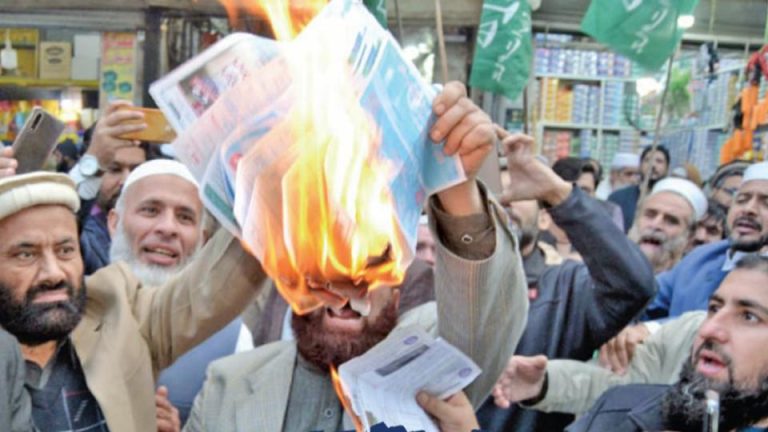
Pakistan’s ongoing challenges have taken yet another distressing turn, as the public is now on the streets to express their anger about the rise of electricity bills. The sentiment echoes across the nation. Hapless public is accusing the government of misusing funds borrowed from entities like the IMF and other countries for personal gains, while pushing the citizens to the brink of starvation.
An incident has been reported where a citizen of Pakistan received an electricity bill of Rs 30,000, of which Rs 11,000 was attributed to taxes. This scenario has prompted questions about why the public is burdened with covering the government’s expenses.
Earlier, residents of 10 areas of Pakistan-occupied Jammu and Kashmir held protests and sit-ins against the rising prices of flour and electricity.
Last month, the National Electric Power Regulatory Authority (Nepra), Pakistan’s power regulator, sanctioned a Rs 4.96 per unit increase in the national average power tariff for the current fiscal year. This decision was in line with a condition stipulated by the International Monetary Fund (IMF). Now, the protests are the consequence of this move.
With the rise of inflation, political chaos and debt trapped by China, Pakistan is neck deep in instability. The rise in electricity taxes is an unfortunate but anticipated move. Pakistan’s instability is its own creation, the world as a spectator can only watch as it is slowly burning.
We use cookies on our website to give you the most relevant experience by remembering your preferences and repeat visits. By clicking “Accept All”, you consent to the use of ALL the cookies. However, you may visit "Cookie Settings" to provide a controlled consent.
This website uses cookies to improve your experience while you navigate through the website. Out of these, the cookies that are categorized as necessary are stored on your browser as they are essential for the working of basic functionalities of the website. We also use third-party cookies that help us analyze and understand how you use this website. These cookies will be stored in your browser only with your consent. You also have the option to opt-out of these cookies. But opting out of some of these cookies may affect your browsing experience.
Functional cookies help to perform certain functionalities like sharing the content of the website on social media platforms, collect feedbacks, and other third-party features.
Performance cookies are used to understand and analyze the key performance indexes of the website which helps in delivering a better user experience for the visitors.
Analytical cookies are used to understand how visitors interact with the website. These cookies help provide information on metrics the number of visitors, bounce rate, traffic source, etc.
Advertisement cookies are used to provide visitors with relevant ads and marketing campaigns. These cookies track visitors across websites and collect information to provide customized ads.
Necessary cookies are absolutely essential for the website to function properly. These cookies ensure basic functionalities and security features of the website, anonymously.
Cookie
Duration
Description
cookielawinfo-checkbox-analytics
11 months
This cookie is set by GDPR Cookie Consent plugin. The cookie is used to store the user consent for the cookies in the category "Analytics".
cookielawinfo-checkbox-functional
11 months
The cookie is set by GDPR cookie consent to record the user consent for the cookies in the category "Functional".
cookielawinfo-checkbox-necessary
11 months
This cookie is set by GDPR Cookie Consent plugin. The cookies is used to store the user consent for the cookies in the category "Necessary".
cookielawinfo-checkbox-others
11 months
This cookie is set by GDPR Cookie Consent plugin. The cookie is used to store the user consent for the cookies in the category "Other.
cookielawinfo-checkbox-performance
11 months
This cookie is set by GDPR Cookie Consent plugin. The cookie is used to store the user consent for the cookies in the category "Performance".
viewed_cookie_policy
11 months
The cookie is set by the GDPR Cookie Consent plugin and is used to store whether or not user has consented to the use of cookies. It does not store any personal data.