Home Blog Page 20

Pak Army’s reckless targeting continues to jeopardise Pashtun lives in Khyber

The situation in Khyber District’s Tirah region has spiraled into chaos, with the Pak Army’s relentless operations wreaking havoc on civilian lives. Communication signals remain suspended, isolating the residents from the outside world and leaving them unaware of the escalating violence. Military operations, mortar shelling, and drone strikes continue unabated, causing severe casualties among ordinary people. Just today, mortar shelling on homes in Tirah Maidan injured three women and a young man, highlighting the indiscriminate brutality of the military’s tactics.

This comes mere days after a tragic incident in Bannu, where three young seminary students—brothers Zeeshan and Wahab, along with their friend Alamzeb—lost their lives after a mortar shell, left behind by the Army, exploded while they innocently played with it, mistaking it for a toy. Such incidents lay bare the reckless and callous policies of the Pak Army and its intelligence apparatus, the ISI, which have long maintained an iron grip over the tribal regions. By fostering chaos and leaving behind remnants of their military campaigns, like unexploded ordnance, the Army continues to endanger the lives of innocent Pashtuns.

For decades, Pashtun lands have been the Army’s playground for experiments in fostering and weaponizing extremism. Young boys have been manipulated into pawns of militant ideologies, their futures destroyed in a calculated strategy aimed at exploiting the region for geopolitical leverage. This cynical policy serves to crush any semblance of Pashtun nationalism or resistance, leaving the region mired in fear and devastation.

The Army’s brutality, cloaked under the guise of counterterrorism, only perpetuates instability while Pashtun civilians bear the brunt of its consequences. These calculated acts of state violence serve the interests of a military establishment that seeks to suppress dissent, maintain control, and further its geopolitical ambitions at the expense of innocent lives. Once again, the people of Tirah and other tribal regions are paying the ultimate price for the Army’s oppressive and exploitative policies.

Pak media cheers POJK presidential ordinance victory after suppressing their voices

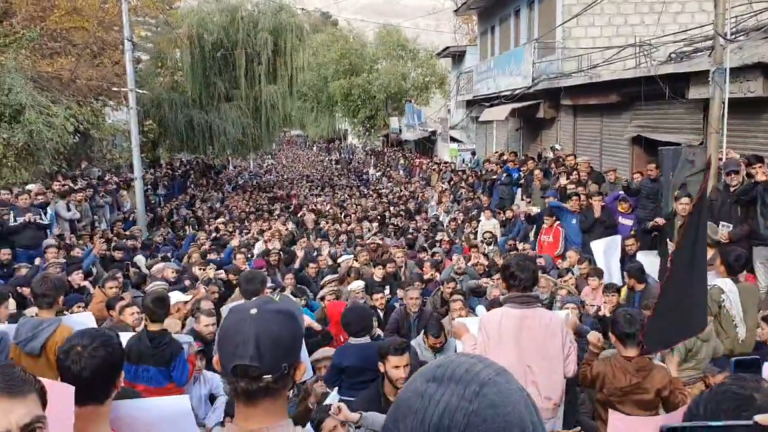
The people of Pak-occupied- Jammu and Kashmir (POJK) have once again exposed the repressive tactics of the Paki establishment and the blatant hypocrisy of its media. A fierce protest movement, marked by wheel-jam and shutter-down strikes, culminated in the repeal of a controversial presidential ordinance on Sunday after weeks of determined struggle. Yet, the protests—met with Army-police violence and media blackout—only received coverage after a settlement, allowing pro-establishment media to paint a picture of collective triumph while ignoring the brutal suppression faced by protestors.

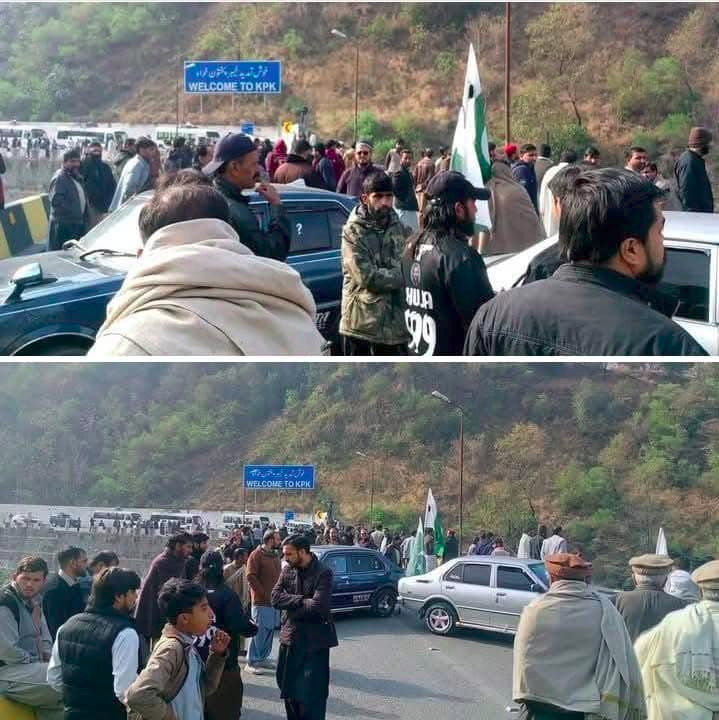
For days, POJK residents braved police brutality, blocked key entry points like Kohala Bridge, and stood their ground against attempts to force Pakistani flags onto their vehicles. The protests highlighted the growing resentment among residents against Islamabad’s colonial-style governance, which continues to treat the region as a mere pawn in its geopolitical ambitions.

The controversial “Peaceful Assembly and Public Order Ordinance, 2024,” is a draconian tool to crush dissent, was at the center of the unrest. The ordinance sought to suppress peaceful assembly and free expression—fundamental rights of the people. Despite the POJK Supreme Court’s suspension of the ordinance earlier this week, the protesters demanded its complete repeal and an end to the oppressive measures it represented.

After prolonged negotiations, the occupying- govt conceded to the 16-point demands put forth by the Jammu and Kashmir Joint Awami Action Committee (JAAC). These included withdrawing the ordinance, releasing all prisoners, canceling FIRs filed since May 2023, reinstating dismissed employees, compensating victims of violence, and addressing issues related to electricity tariffs and infrastructure damages. The agreement also included a promise to hold student union elections and implement a Charter of Demands within six months.

While the settlement marks a victory for the people of POJK, it comes at a heavy cost. Violent clashes between police and activists left at least three people dead and dozens injured. Businesses, medical services, and public transport came to a standstill during the strikes, reflecting the depth of public frustration with Islamabad’s heavy-handed policies.

POJK’s struggle is a stark reminder of the Paki establishment’s colonial mindset toward its so-called “autonomous” territories. Islamabad has long exploited the region, plundering its resources, imposing heavy tariffs, and disregarding the needs of its people. The protests are not just about one ordinance but a broader rejection of decades of systemic neglect and repression.

BLA attacks Pak Army post in Kohlu killing two Pak soldiers

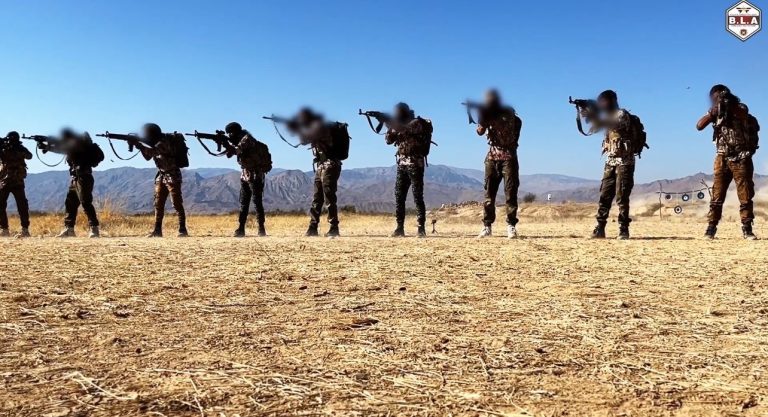
In another bold assault, the Baloch Liberation Army (BLA) has once again demonstrated its unwavering resolve to resist Pakistan’s oppressive regime. On the night of December 8, 2024, BLA fighters targeted a Pak military post in Kohlu, POB, as part of their ongoing fight for freedom and justice. The attack, which took place in the Loond area of Naway Shum, saw the use of heavy weaponry, including rockets, aimed at the Pak forces. The outcome was swift: two soldiers were killed, and at least four others were wounded. The BLA has taken full responsibility for the attack, sending a clear message to Pakistan’s brutal military establishment that the struggle for Baloch autonomy will not cease.

The Pakistan Army, which has consistently subjected the Baloch people to atrocities and oppression, has once again proven its inhumanity. Despite the BLA’s justified resistance, the Pak military continues its attempts to silence the voices of Baloch freedom fighters by subjecting innocent civilians to extrajudicial killings, enforced disappearances, and brutal military operations. It is clear that the Pak Army’s goal is not just to suppress dissent but to erase the identity of the Baloch people and their right to self-determination.

The attack in Kohlu comes just days after a similar assault in the Dukki region, which also resulted in casualties among the Pak military ranks. The BLA’s Majeed Brigade and Fatah Squad have been at the forefront of these attacks, launching highly strategic operations that have left Pakistan’s forces scrambling for answers. Last month, these elite units carried out coordinated strikes in Quetta and Kalat, resulting in the deaths of over 60 soldiers.

While the occupied-govt and military continue to distort the truth and paint the BLA as a mere insurgent group, the reality is that the Baloch Liberation Army is fighting for a just cause—freedom from a ruthless occupation that has violated every aspect of human rights in POB. Pakistan’s military presence in POB, especially through its ‘kill and dump’ tactics, has only fueled the resolve of Baloch fighters who remain committed to liberating their land from colonial control.

This attack in Kohlu is a reminder that the struggle of the Baloch people is far from over. It also serves as a stark reminder that Pakistan’s army, which continues to shelter radical elements within its ranks and in neighboring regions, will never be able to crush the spirit of Baloch resistance. The BLA’s actions continue to expose the Pak Army’s failure to protect its own forces while also highlighting the Baloch people’s ongoing fight for justice, autonomy, and freedom from military tyranny.

Miscreants desecrate Kali temple in West Bengal

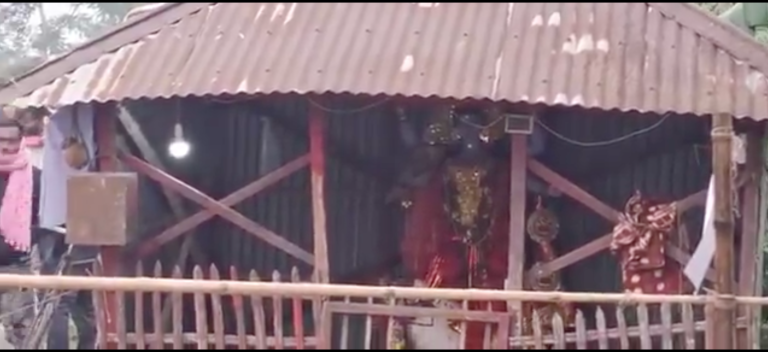
In a shocking incident, a Kali Mata temple in Nimatala village, under Karimpur Police Station in Nadia district, was desecrated on the night of December 8, 2024. Miscreants vandalized the idol of Kali Mata, smeared human feces on it, and urinated inside the temple premises. Adding to the insult, phrases in Arabic or Urdu were reportedly scrawled on the temple walls, according to locals.

The attack on the temple has left the local Hindu community enraged and fearful, as this incident is a growing pattern of targeted vandalism against Hindu religious sites in the region. The deteriorating law and order situation is due to the perceived apathy of the West Bengal government, which has often been accused of sheltering Islamist elements and illegal Bangladeshi immigrants who are radicalizing the region.

Over the years, West Bengal has seen a surge in incidents of communal unrest and attacks on Hindu religious institutions. Critics argue that the state government’s approach to minority appeasement has emboldened radical groups, creating a fertile ground for such acts of violence. The ruling Trinamool Congress (TMC) has often been accused of prioritizing political calculations over the safety and sentiments of the majority community.

The desecration of the Kali Mata temple is emblematic of the unchecked radicalization brewing in the border regions of West Bengal, where illegal infiltration from Bangladesh has led to demographic shifts and heightened communal tensions. Locals allege that the administration turns a blind eye to the activities of these groups, fearing backlash from its vote bank politics. This lack of accountability has only deepened the mistrust between communities, threatening the fragile social fabric of the state.

The Karimpur Police Station has reportedly initiated an investigation, but many locals remain skeptical, pointing to the state’s track record of failing to bring the culprits of such incidents to justice. The Hindu community in Nimatala village has demanded immediate action against those responsible and measures to ensure the safety of their religious institutions.

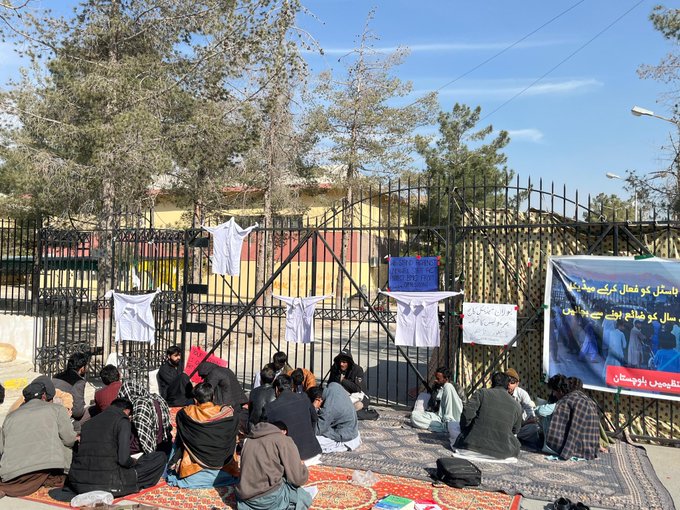
Sammi Deen Baloch demands release of Baloch students kidnapped by Pak Army

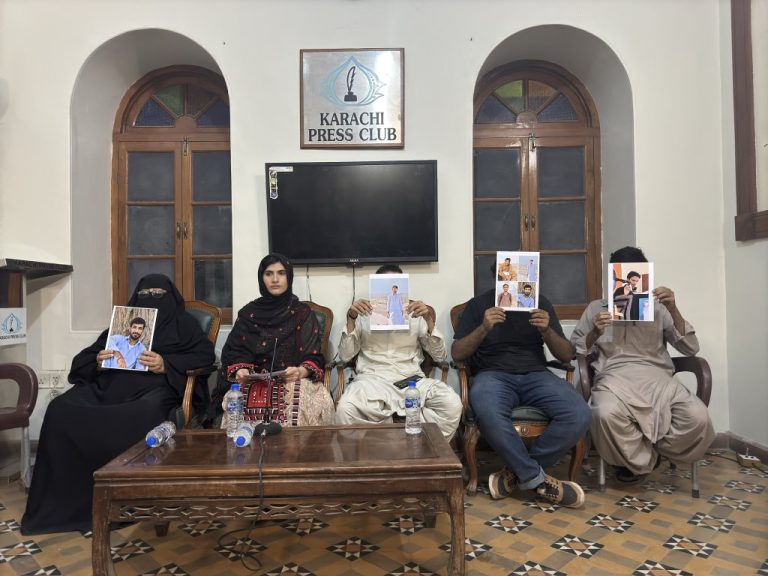
The systematic abduction of Baloch youth by Pakistan’s apparatus continues unabated, with yet another appalling incident surfacing in Karachi. Sammi Deen Baloch, leader of the Baloch Yakjehti Committee, exposed the grim reality at a press conference held at the Karachi Press Club, highlighting the relentless targeting of innocent Baloch individuals.

“Whenever a Baloch comes forward to hold a press conference, it is evident that another innocent soul has been forcibly disappeared. In Balochistan, not a single day goes by without such atrocities. Today, we bring forth yet another heart-wrenching incident to amplify our cries for justice,” Sammi said.

On the night of December 9, around 1 AM, unidentified Pak agents stormed a flat in Karachi’s Maskan area, where four Baloch students were residing for their studies. These students—who hail from the remote, marginalized regions of POB—were forcibly taken, joining the growing list of Baloch victims of enforced disappearances.

The abducted students were identified as:

  • Ghamshad, son of Ghani (MPhil student, Philosophy, Karachi University)
  • Doda Elahi, son of Elahi (sixth-semester student, International Relations, Karachi University)
  • Muzammil, son of Abdul Ghaffar (sixth-semester student, Philosophy, Karachi University)
  • Mairaj, son of Ghamshad (recent graduate of Karachi University, aspiring to pursue MPhil).

Adding to the anguish, another young man, Ismail, son of Ibrahim, a resident of POB who had recently returned to Karachi from Dubai, was abducted from Hasan Square the same night.

What makes this case even more alarming is that two of the abducted students, Doda Elahi and Ghamshad, have previously been victims of enforced disappearance. Their re-abduction underscores the impunity with which Paki establishment operate, weaponizing enforced disappearances to terrorise the community into suppression and crush the any form of dissent or Baloch nationalist movement.

“The practice of enforced disappearances has plagued Balochistan for over two decades, but the oppression has now extended beyond its borders, reaching Sindh, Punjab, and even federal areas. The abduction of Baloch students from Karachi, Islamabad, and other cities is a glaring example of how deeply rooted this injustice has become,” Sami said.

Enforced disappearances are a calculated strategy to crush any voice that challenges Islamabad’s hegemony. The Baloch Yakjehti Committee has demanded the immediate and safe recovery of all five victims and issued a stark warning: if the abducted youth are not released within the next two days, a protest strategy will be announced.

Paki regime arrests prominent POGB activist in Rawalpindi

Ehsan Ali Advocate, a stalwart of the Awami Action Committee (AAC) and a vocal defender of the oppressed people of Pak-occupied-Gilgit-Baltistan, has been arrested from a hotel in Rawalpindi. The arrest of the prominent activist has sparked outrage, with widespread condemnation of a targeted attack on dissent and the AAC’s resistance movement.

Ehsan Ali, known for leading protests against the oppressive policies of the Paki establishment in Pakistan-occupied Gilgit-Baltistan (PoGB), was at the forefront of demonstrations demanding justice and economic relief for the region. The AAC-led protests compelled the occupying government to promise the fulfillment of their charter of demands. However, these promises proved hollow. As soon as the protests subsided, the authority launched a systematic crackdown on the AAC, aiming to weaken the organization, suppress the masses, and silence the region’s demands for justice and development.

Since the forceful occupation of POGB, its residents have endured severe economic exploitation. The region is now grappling with an acute economic crisis marked by skyrocketing inflation, rising unemployment, and a stark lack of meaningful development. Over the past two years, inflation in the region has surged by a staggering 400–500 percent, plunging locals further into despair.

One of the primary drivers of this economic turmoil is the relentless rise in fuel prices, which has led to skyrocketing transportation costs and an unrelenting increase in the prices of essential goods, including food and medicine. Petrol prices in the region have been on a constant upward trajectory, exacerbating the hardships of an already struggling population.

Pakistan pays the price in Rawalpindi-PTI conflict

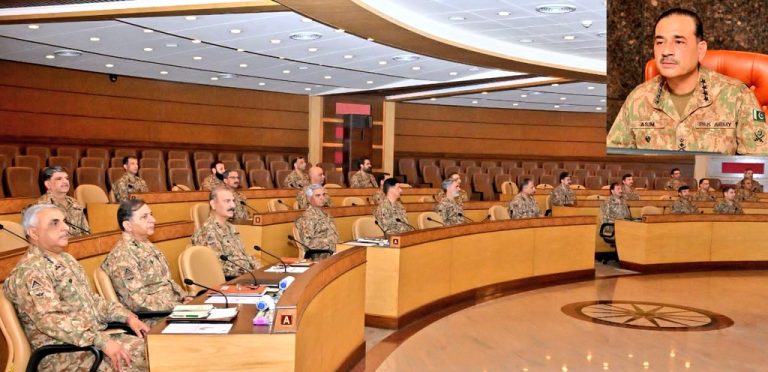
From the statement issued by Pakistan Army’s media wing Inter Services Public Relations [ISPR] on conclusion of the 84th Formation Commanders Conference held last Thursday, it’s apparent that the spectre of “propaganda and disinformation” against the country’s armed forces continues to give the Pakistan military’s top brass sleepless nights. This is understandable because in a country where the Army is considered a holy cow by the people, anything that impinges on the military’s exalted status is unacceptable as this can become a serious threat to the Army’s phenomenal overreach and extra-constitutional authority.

Hence it is evident that Pakistan Army chief Gen Syed Asim Munir’s emphatic “any effort to weaken our armed forces is akin to weakening the state” declaration is merely a cunning ploy to invoke nationalism for preserving Rawalpindi’s exclusive turf. Similarly, while there could well be “foreign hand” involvement of in social media campaigns against the Pakistan Army, but overplaying this issue to the extent of suggesting that this trend has acquired gargantuan proportions solely due to foreign intervention is clearly an attempt by Rawalpindi to conceal its own misdoings and highhandedness.

Gen Munir wants the government to “check unfettered and unethical use of freedom of expression to spew venom, lies and sow the seeds of polarisation” and maintains that “those spreading fake news for vested political/financial interests need to be identified and brought to justice.” His observations and recommendations do create the misleading impression that even though the Pakistan Army is being systematically demonised by “vested political/financial interests,” the government unfortunately continues to remain a silent and inactive spectator.

Rawalpindi vs PTI

Readers would recall that after facing mounting criticism, Rawalpindi had in 2021 craftily orchestrated an amendment in Pakistan Penal Code and Code of Criminal Procedure through insertion of Section 500-A. This section which criminalises ridiculing of the armed forces states, Whosoever intentionally ridicules, brings into disrepute or defames the Armed Forces of Pakistan or a member thereof, he shall be guilty of an offence punishable with imprisonment for a term which may extend to two years, or fine which may extend to five hundred thousand rupees, or with both.” 

That the Pakistan military is perhaps the only Army within the community of democratic nations that needs legal protection against slander from its own countrymen, does convey a lot!

With no clarity on what constitutes ridiculing, bringing into disrepute or defaming the armed forces or its members, this draconian law gives the Army [which has its own full-fledged legal setup] the opportunity to take offenders to court. So, instead of initiating legal action against those who he perceives are maligning the Army, why is Gen Munir unnecessarily complaining against what he considers to be government apathy and the Army’s helplessness? Isn’t it his moral responsibility to uphold the image of the Army?

However, for the Army to blame the government is nothing new in Pakistan. [Didn’t former Pakistan Army chief Gen Qamar Javed Bajwa say that the 1971 debacle which led to creation of Bangladesh was “a political failure and not a military one”?]

Bullets and blame

The ISPR statement further mentions that “This pre-planned coordinated and premeditated propaganda reflects the continuity of a sinister design by certain political elements as an attempt to drive a wedge between the public & Armed Forces and institutions of Pakistan.” [Emphasis added]. Though ISPR hasn’t named the “political elements” that it accuses of spreading propaganda, it’s obvious that this barb is directed at Imran Khan and his Pakistan Tehreek-e-Insaf [PTI] party. This is yet another classic example of Rawalpindi’s unending interference in politics, which is the prime reason behind its burgeoning unpopularity. Remember former Pakistan Army chief Gen Qamar Javed Bajwa’s matter-of-fact admission that “The main reason for this [public criticism] is the involvement of the Army in politics for the last 70 years, which is unconstitutional”?

Gen Munir is enraged by PTI’s accusation that the Pakistan Army and Rangers [which are commanded by Army officers] had opened fire at protesters in D Chowk on November 26 causing death of 12 workers and injuries to several others. This is evident from ISPR’s statement that the “Forum noted with concern the malicious propaganda done in the aftermath of the lawful deployment of the Army in the capital to secure key government buildings and provide [a] safe and secure environment for the valued visiting dignitaries.” However, does this anger justify Rawalpindi’s getting into a one-on-one slugfest with PTI and creating a mess?

Both the government and the Pakistan Army may deny having fired live bullets at protesters but there’s credible evidence that suggests otherwise. In an Al Jazeera video, senior journalist Kamal Hyder reporting from ‘ground zero’ clearly mentions use of live bullets by security forces and even draws attention of listeners to what’s undoubtedly the repetitive staccato of semi-automatic rifle fire in the background. He also confirms not having seen any armed protesters at D Chowk.Then there are several horrific videos on social media that show civilians with gunshot wounds.

Caught in the crossfire

Most importantly, abduction of TV anchor and You-tuber Matiullah Jan and his colleague Saqib Bashir by men in black uniforms while they were collecting data on protester casualties from Pakistan Institute of Medical Sciences and booking Jan on terrorism and narcotics related charges also raises serious doubts regarding the official claim that no bullets were fired at protesters. The

One of the most gruesome video that’s bound to generate anti-Army sentiments amongst the people is that of an elderly man offering prayers mercilessly being pushed down from atop a container by Rangers. Why has Rawalpindi maintained a stoic silence and failed to take cognisance of this criminal act by soldiers commanded by Pakistan Army officers is indeed intriguing and provides a reason for public resentment against the Pakistan Army.

Dawn in its December 7 editorial has aptly observed that “The ruling party’s-and the establishment’s [Pakistan Army]-disagreements with the PTI are political and need to be resolved through political means, while terrorist groups pose an existential threat to the nation…. It is unwise, therefore, to link the PTI to militant groups. Both the civilian and uniformed leaderships need to focus all their efforts on countering the terrorist threat… the effort to brand the PTI or other critics of the state as ‘terrorists’ will only divert attention from the real threat.”

Whether Gen Munir will heed to this sagacious suggestion however remains a million dollar question!   

Karakoram highway blockade continues as Kashmiris demand release of Jirga member

The Karakoram Highway (KKH), a crucial artery connecting Rawalpindi with Pakistan-occupied-Gilgit-Baltistan (POGB), remained blocked for the second consecutive day as members of the Muttahida Kohistan Jirga continued their protest demanding the release of elder Maulana Kareemdad.

The demonstration, which began on Wednesday, resumed at 8 a.m. Thursday in the Pattan area of Lower Kohistan, severely disrupting traffic on the KKH. Starting December 9, a sit-in will be held on the highway, leading to its complete closure.

Protesters from Upper Kohistan, Lower Kohistan, and Kolai-Palas have united in the blockade, vowing to maintain it until their demands are met. Former Member of the Provincial Assembly (MPA) Maulana Dildar said, “We will not end our protest until the district administration releases Maulana Kareemdad and resolves all pending issues, including road reconstruction.”

Although the jirga temporarily lifted the blockade overnight to allow stranded travelers to proceed, they resumed it Thursday morning, with further plans to extend the protest into Upper Kohistan.

The jirga has allowed limited passage for vehicles, granting access for one hour after Zuhr and Asr prayers. The jirga has refused to engage with the police and Wapda officials. Instead, they convened their own meeting to decide the next course of action.

In a show of strength, the jirga expanded its membership from 45 to 90, with equal representation from all districts.

The arrest of Maulana Kareemdad, a former National Assembly candidate, alongside contractor Aurangzeb, has fueled tensions in the region. Both men have been transferred to Haripur prison, a move that protesters see as unjust and provocative. The Paki establishment’s deliberate strategy to suppress the region—economically, politically, and socially—is a stark reminder of its exploitative agenda. For the people of PoGB, the path forward lies in resistance, as their voices grow louder in demanding autonomy, dignity, and justice.

PoJK protests force revocation of Pak Army’s controversial ordinance order

The Pakistan Army’s puppet-President of PoJK, Sultan Mehmood Chaudhry, has ordered the revocation of the controversial “Peaceful Assembly and Public Order Ordinance, 2024,” following widespread protests and unrest across the region. The decision came after a week of intense civil action spearheaded by the Joint Awami Action Committee (JAAC), a coalition of civil society activists fighting for regional rights.

The ordinance, which had been criticized for stifling basic freedoms and suppressing peaceful assembly, had sparked outrage among PoJK’s residents, who feel increasingly disenfranchised under Pakistan’s rule. In response to growing public outrage, President Chaudhry directed PoJK Prime Minister Chaudhry Anwarul Haq to release all individuals detained under the ordinance, signaling a rare, though reluctant, step by the occupied-government to defuse tensions.

Despite the move, protests have continued, with JAAC-led marches from Rawalakot, Bagh, and Dheer Kot, converging at strategic entry points into PoJK. In one of the most dramatic moments of the protests, thousands of demonstrators gathered at the Kohala bridge, which links Pakistan to PoJK, braving the freezing cold to voice their anger. Another protest took place in Bararkot, where marchers demanded accountability and an end to Islamabad’s indifference to PoJK’s plight.

The protestors, largely ordinary citizens and activists, have long faced Islamabad’s neglect. The region, despite its strategic importance and natural beauty, has been left impoverished and underdeveloped, with promises of improved infrastructure and economic development largely unfulfilled. These unmet promises have led to a sense of abandonment, fueling disillusionment and a growing sense of resentment toward Pakistan.

Shaukat Nawaz Mir, a core member of JAAC, made it clear that the protests would persist unless the occupied-govt formally repeals the ordinance and ensures the release of all detained activists. While PoJK’s Information Minister, Pir Mazhar Saeed, claimed that all detainees had been released, the actions remain insufficient to quell the anger on the streets.

The protests, including a wheel-jam strike that lasted for four days, have been remarkable for their peaceful nature, with protestors emphasizing non-violence in their demands. The restraint shown by the people of PoJK is a lesson in peaceful civil disobedience, a stark contrast to Pakistan’s often heavy-handed approach to dissent.

Pak Army abducts 10 Baloch youth in a span of 7 days

Balochistan, witnessed yet another chapter of atrocities as the Pak Army continues its reign of terror against the Baloch community. In the latest incidents, four civilians from the Kech district were forcibly disappeared after being detained during a midnight raid.

The raid in Shoolig, Dasht, carried out around 1 a.m., saw Pak forces breaking down doors, assaulting residents, and abducting four individuals. The victims have been identified as Haji Hasil, Abdul Salam (son of Haji Hasil), Yasir (son of Abdullah), and Saleem (son of Qadir Bakhsh). Their families remain in anguish as their loved ones were taken to an undisclosed location, with no information provided about their fate.

In another incident in the same district, two more civilians, Waris (son of Ibrahim) and Gulab (son of Boheer), were forcibly taken by the military from Dasht Bahot Chat, leaving their families in despair.

The brutal militarisation of POB is no secret. Under the guise of “national security,” the Pakistan Army has long waged an undeclared war against the Baloch people, exploiting the region’s vast resources while systematically silencing dissent. The abduction and torture of civilians, including students, is a routine tactic to suppress the community.

Terrorising Students

Zahid Mustafa, a data science student at Gwadar University, became the latest victim of the Army’s barbarity. On December 6, Pak forces stormed his home in Gwadar, scaling walls to abduct him in a convoy of five vehicles. Zahid was blindfolded and subjected to three days of inhumane torture. His blindfold was only removed upon his release, leaving him traumatised and unfit to attend his university exams.

Such incidents illustrate the Pakistan Army’s unrelenting pursuit of silencing the educated youth of POB, fearing their voices may expose the systemic oppression and resource plundering by the region.

While three of four recently abducted civilians in Panjgur were released, the fate of many remains unknown. The enforced disappearances, extrajudicial killings, and torture have become tools of governance in POB, enabling the Army to sustain its chokehold on the region.

From mining minerals to extracting gas, the resources of POB are drained to feed the Punjabi Pak elite while Baloch people live in perpetual poverty, fear, and insecurity. Civilians, including women and children, bear the brunt of this brutal war. Villages are raided, homes destroyed, and anyone daring to demand basic rights is silenced through abductions or killings.

It is high time the international community recognises the atrocities committed by the Pakistan Army in POB. This unchecked militarisation and exploitation must be condemned unequivocally.