Home Blog Page 205

Occupying Pak Army battered by BLF & BLA in multiple attacks across Balochistan

Balochistan’s struggle for independence witnessed defiant actions as freedom fighters from the Baloch Liberation Army (BLA) and the Balochistan Liberation Front (BLF) targeted the occupying Pakistan Army and construction sites.

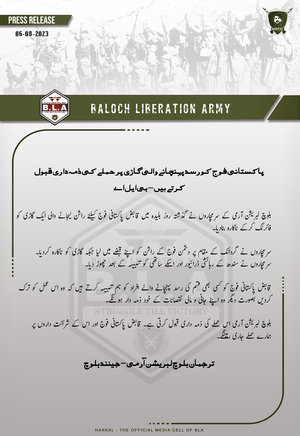
On August 6, 2023, BLA freedom fighters attacked a supply vehicle belonging to the Pakistan military in Bulaida near Gardank area. The supplies meant for enemy forces were seized, and the vehicle was destroyed. Subsequently, the drivers, who were from Sindh, were released after being warned. The BLA spokesperson, Jeeyand Baloch, issued a warning to anyone involved in facilitating supplies for the occupying forces to refrain from such practices, or they would face consequences.

BLA Press Release (Photo: Social Media)

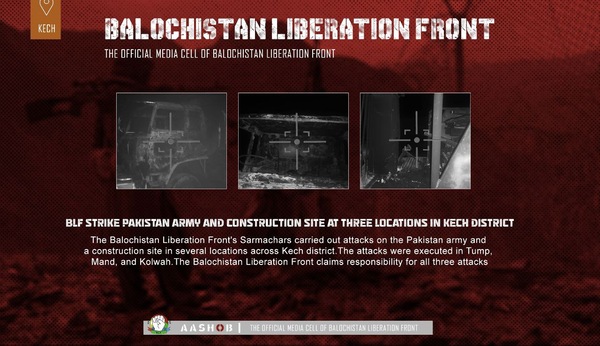
In a separate incident, the BLF’s Sarmachaars executed attacks at three locations in the Kech district. On August 5, at 8 pm, the Pakistan Army’s main camp in Dandaar Kolwah was targeted using heavy automatic weapons and rockets from three sides, causing extensive damage and resulting in two army personnel killed and several others injured.

Another attack took place on August 3 between Malikabad and Nazarabad in Tump, where a tanker and construction machinery were set ablaze. The target was a company involved in road construction, and the workers were released after being cautioned.

Additionally, on August 5, a skilled sniper team from BLF attacked a Pakistan Army post on the eastern side of Apsaar in Mand, resulting in the death of one army personnel. The BLF sniper team showcased their combat skills and precision in this operation.

Both the BLA and BLF have declared their determination to continue targeting the occupying Pakistani military and its collaborators until Balochistan gains its independence.

Since the illegal occupation of free Baloch land in March 1948, Pakistan has left no stone unturned in exploiting the Baloch land for its interests. The sole purpose of this illegal occupation was to expand the length and breadth of the country to make it more resource-inclusive, disregarding the rights of the people. Each voice that rises has been silenced using enforced disappearance or the ‘kill and dump’ policy. This makes the armed organizations’ struggle, like the BLA & BLF, even more significant.

Flood calamity: Punjab needs help and empathy from its leadership

0

The first week of July 2023 witnessed unprecedented rainfall in north India, leading to a flood calamity in the states of Himachal Pradesh, Punjab, Haryana and Delhi. Of these the states of Himachal Pradesh and Punjab suffered the most.

About 1450 villages in Punjab stretching over 19 districts are water logged. About six lakh acres of cultivable land is inundated. As things stand there is little scope of timely sowing of the rice crop in this inundated area. The wastage of cultivable land may extend even to the next wheat crop and beyond for which an assessment can be made only once the water recedes.

On the human scale, nearly 50 people have lost their lives  and 2000 more have been compelled to seek shelter in relief camps since their houses have been completely destroyed. This apart, infrastructure in terms of private houses, Government buildings (especially hospitals and schools) roads, bridges etc has been severely damaged.

Containment

Lack of preparation on the part of the incumbent Aam Aadmi Party (AAP) led government of Punjab constitutes a major failure of the pre-emptive containment action. Punjab being a riparian state has always been prone to floods during monsoons, for which reason, all governments have been ensuring timely action towards strengthening of the river embankments, de-silting and cleaning of drains  and other flood protection works. Traditionally, funds were allotted for this purpose and meetings with the government officials were presided over by none less than the chief minister well in advance. There is no intimation of a similar exercise having been conducted by the present government during the last two monsoons of its tenure. While Punjab was lucky to have escaped unscathed in 2022, this year has witnessed unprecedented damage due to this oversight.

The Government has been cautioned continuously by the opposition to check unfettered mining of sand and mud, but it has failed to act. Enhanced turbulence and erratic flow of the flood water has emerged as a major cause for the widespread destruction of infrastructure.

A sincere effort towards flood control measures would have absorbed the fury of nature to a great extent. There is a need to carry out a detailed enquiry into this aspect and those responsible need to be punished for criminal negligence leading to loss of life and property.  

Relief

Sadly, the government of Punjab was caught napping even after the floods came in with all fury. Nobody seems to have bothered to contact the national metrological department or even the Bhakra Beas Management Board (BBMB) to gather information. This is apparent from the fact that no advance warning was issued to the people to help them prepare with storage of food and medicine etc before the floods came in. The local administrations were completely paralysed under the impact of the floods. Not much effort was made to activate resources from areas that were less affected.

The relief work, however, witnessed an unprecedented leverage from the intrinsic spirit and good will of the people of Punjab. Those living in less affected areas reached out to those affected. Social and political organisations ensured provision of food, water, medicines, etc., to the doorsteps of the flood affected people. The relief volunteers waded through waist deep water, used small inflated boats and even tractors in certain places to reach out. Sterling effort was put in by the volunteers of the Rashtriya Swayamsevak Sangh (RSS), Shiromani Gurdwara Prabandhak Committee (SGPC) and other similar organisations.

Workers of political parties like the Bahratiya Janata Party (BJP) worked tirelessly over many days to mitigate the suffering of the flood affected people. Relief teams of the Aam Aadmi Party (AAP) were also seen working in the affected areas. However, their work fell short of expectation given the fact that they had the strength of the Government to support them but this facility was not leveraged. If they had been better prepared and organised they could have done wonders.

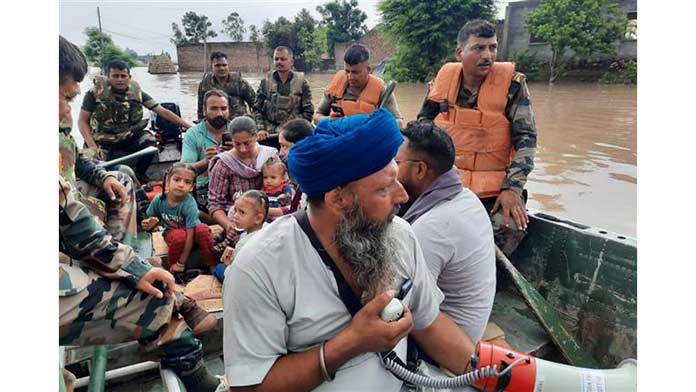
The Indian army and the National Disaster Response Force (NDRF) were on the forefront of the relief work. Those needing rescue were taken out by army and NDRF boats; those needing medical treatment were looked after in-situ by army Doctors. In most places, the soldiers were seen working in close coordination with Sangh Karyakartas.

It was due to the aforementioned collective effort that the relief operations witnessed a high degree of success and loss of life remained at a low level which is a great boon.

Rehabilitation

The relief work is presently underway since water had not receded in its entirety. Simultaneously, the rehabilitation process has been initiated. The Union Government has already sent the first instalment of Rs. 218 crore towards flood relief and rehabilitation to Punjab. More funds will be made available once the state government sends a damage assessment to the centre. 

The sad part is that the Government of Punjab has, as usual, chosen to take a confrontationist and politically motivated posture. The information machinery of the Government, with the chief minister in the lead, is saying that the Union Government has always given step-motherly treatment to Punjab and now, since an AAP led government is in power in Punjab not much can be expected from the centre. It adds for effect that , the AAP  led government will not go to the centre with a begging bowl.

Nothing can be further from the truth, the Union government has done all it could by activating the Indian army and NDRF in affected areas. It has also, without being asked, released the first instalment of the relief package. BJP, Punjab is closely monitoring the situation and providing all inputs to the Union government on a regular basis. The response of the state government, on the other hand, is tardy and irresponsible.

It is quite apparent that AAP intends to derive political mileage from the calamity through misinformation. It probably intends to keep Punjab bereft of rehabilitation only to prove a point that the BJP led Union Government is unwilling to come to the aid of the people of Punjab.

The emerging critical situation brings forth the need for the BJP and the Union Government  to understand the diabolic plan laid out by AAP and come forward to assist the people of Punjab who are being forsaken by their own government. There is also a need to politically counter the misinformation campaign that has been launched by AAP.

The people of Punjab need to be aware of the AAP lethargy and procrastination in preparing and submitting the damage assessment. Other states have already done so. The centre can assist by insisting on an early submission of the document and then making an immediate release of the complete relief package to put a lid on the misinformation campaign.

The possibility of direct disbursement of funds to the flood victims can also be explored by the centre. This apart, reconstruction of infrastructure like roads, schools and hospitals can be taken on by the concerned ministries through a direct route wherever possible. Visits by senior Union Ministers to the flood affected areas will be a great morale booster.

Punjab needs help at this crucial juncture. The hapless people of the state should not remain victims of the apathy of an opportunistic government that cannot see beyond the prism of the forthcoming parliamentary elections. A well thought out project to reach out will not only help ameliorate the problems of the people which is of primary importance, it will also help to usher honest, above-board politics in a state that is in urgent need of the same.

Two US navy officers arrested for spying for China

Two US Navy officers in southern California have been arrested on charges related to allegations of espionage and bribery, amplifying concerns surrounding national security breaches involving China. Jinchao Wei, stationed aboard a naval vessel in San Diego, is accused of transmitting classified national defense information to Chinese officials. Simultaneously, Wenheng Zhao faces charges of conspiracy and accepting bribes from a Chinese official. The allegations, which include sharing sensitive data on aircraft imagery, personnel training, and weapons systems, underscore potential risks to US military preparedness.

Wei, stationed on the USS Essex, is alleged to have communicated with a Chinese intelligence officer, sharing technical manuals, blueprints, and photographs of military equipment. Meanwhile, Zhao is accused of accepting bribes from a Chinese intelligence officer in exchange for sharing sensitive military information, including plans for a military exercise and blueprints for a base in Japan.

Matt Olson, Assistant Attorney General for National Security, has said, “Make no mistake, as a department, we will continue to use every legal tool in our arsenal to counter that threat and to deter the PRC [People’s Republic of China] and those who aid it in violating the rule of law and threatening our national security.”

Pak Army forcibly disappears three men in Balochistan

In a distressing turn of events, three young men from different areas have fallen prey to enforced disappearances in Balochistan, leaving their families in a state of anguish and uncertainty. The incidents have raised concerns about the rising cases of enforced disappearances in the region.

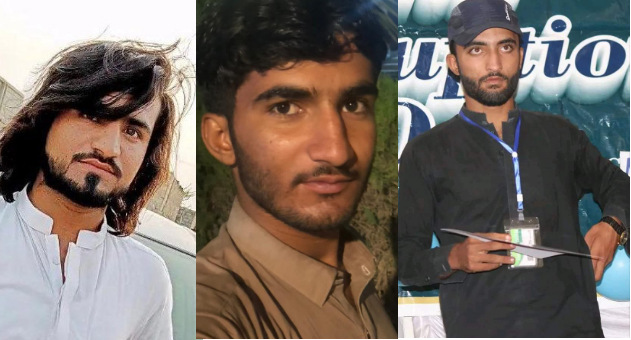
Saif, son of Umeed Ali, was known as a diligent and hardworking individual, managing a stationery shop in Turbat, Absar. On 1 August, his life took a tragic turn when Pak security forces stormed his shop and took him away. Since then, his family has been desperately seeking answers, but no information about his whereabouts has surfaced.

Naushad Baloch, a 17-year-old student and son of Mian Dad Bajeer, faced a night of terror when he was illegally detained while returning home from the Turbat Main Bazaar on the evening of July 31st. Pak security forces forcefully disappeared him, leaving his family devastated and uncertain about his fate.

Similarly, Kashif Ejbari, a dedicated student and son of Qari Inayatullah, was abducted in the vicinity of Hafiz Jamil Naseer Madrassah in Kharan city on the night of 1 August. Security forces took him into illegal custody, and his family has not received any information regarding his safety or whereabouts.

In the troubling scenario of enforced disappearances in Balochistan, a paradox has emerged. Those who referred to as “security forces” are the very reason behind insecurity for innocent families. This glaring contradiction has raised serious concerns about human rights protection and rule of law in the region

BLA attacks Pakistan Army in Noshki and Kolwah

In a recent series of attacks, the Baloch Liberation Army (BLA) attacked Pakistan Army installations in Noshki and Kolwah, aiming to assert their demands for the liberation of the Baloch motherland.

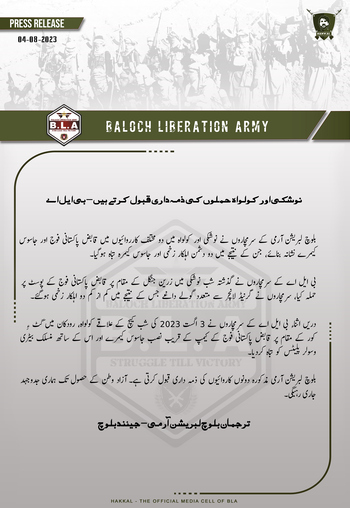
On the night of 3 August, BLA freedom fighters launched a daring assault on a Pakistan military post located in Zaren Jungle, near Noshki. Armed with grenade launchers, the fighters successfully carried out the attack, resulting in two enemy personnel sustaining injuries.

In Kolwah’s Rodkan region, BLA fighters also engaged in strategic action, destroying surveillance equipment, including cameras and solar plates, installed near a Pakistani military outpost. This move aims to disrupt enemy surveillance efforts and further emphasizes the group’s commitment to their cause.

The Baloch Liberation Army spokesperson, Jeeyand Baloch, made it clear that the BLA will persistently target occupying forces until their mission to liberate the Baloch motherland is achieved.

The incident underscores the ongoing armed struggle of Balochistan freedom fighters against the occupying forces of Pakistan. Since the illegal occupation of free Baloch land in March 1948, Pakistan has left no stone unturned in exploiting the Baloch land for its interests. The sole purpose of this illegal occupation was to expand the length and breadth of the country to make it more resource-inclusive, disregarding the rights of the people. Each voice that rises has been silenced using enforced disappearance or the ‘kill and dump’ policy. This makes the armed organizations’ struggle, like the BLA, even more significant.

JSFM rally in Sindh against Karunjhar mining auction

Jeay Sindh Freedom Movement (JSFM) held a massive protest rally at Karachi and Mehar against the auctioning and cutting of the Karunjhar mountains and against the forced conversion of Sindhi Hindu girls under the patronage of Pakistan and against the settlement of foreign Afghans on the Sindh land. While the enforced abduction and conversion of Hindu girls and settlement of Afghans have been a persistent problem in Sindh, the Karunjhar issue is the latest one that sheds light on the exploitation of Sindh heritage sites on the pretext of national resources. The protest implies that Pakistan’s deep state is continuously alienating Sindh with a new problem each day.

What Happened So Far

Notably, Karunjhar issue came to light when on July 22, an auction notice was published in local newspapers regarding the grant of mining lease of the granite in Nagarparkar district in Tharparkar, Sindh. The auction was scheduled on 1 August. This led to public outrage. People across the Sindh stood against the exploitative notification.

As a result of the public outcry, Sindh government’s DG of Mining and Licensing issued a clarification notification that the auction was cancelled. But, soon after this, another notification was issued which rescheduled the auction on 4 August.

Consequently, the frequent shift in decision making indicated towards the sinister interests of the authorities that led to the protests.

Why Karunjhar Is Important

Karunjhar mountains hold a historical significance along with providing various benefits related to life-line of the region. The mountains were part of ancient history of Rann of Kuchh.

As of today, the mountain act as a natural mechanism for recharging ground water in the region that makes up the only source of potable water. The mountains are shelter to a variety of wildlife and helps in disposing Nagarparkar sewage. The herbs and vegetation that grows on the mountain have a medicinal importance and are a source of livestock feeding.

Moreover, the legal aspect also raise questions on the auctioning. In November 2019, the Sindh High Court passed an order that stayed the mining in the mountains. Later in another petition in January 2021, the court adjudicated to form a committee to declare Karunjhar mountains as ancient and heritage site. Although, the committee was formed, it failed to address the illegal mining in the region.

Now, along with illegal mining, Pakistan has also made it’s intention clear ,i.e. to devastate the heritage site. JSFM has always raised voice against the atrocious policies of Pakistan in Sindh. Subsequently, the Karunjhar issue is another such policy of Pakistan that is against the heritage and the people of Sindh.

71 year old Uyghur man dies in Xinjiang prison, imprisoned for learning the Quran

In yet another distressing incident amid the ongoing Uyghur persecution in China, an elderly Uyghur man, Abdurusul Memet, aged 71, has tragically died while serving a nearly 14-year prison sentence in Xinjiang. His imprisonment dates back to 2017 when he was arrested for studying religion as a child.

The harrowing details of Memet’s case came to light through the Xinjiang Victims Database, a platform dedicated to collecting records of Uyghurs and other Turkic minority peoples detained in Xinjiang. According to the report by rfa, database shows that Memet was sentenced to 13 years and 11 months in prison for learning the Quran from his father during a period between November 1964 and March 1965.

Memet’s arrest and subsequent imprisonment were due to “illegal religious activities” that he engaged in during his childhood. These activities included praying namaz, having a beard, and studying the Quran when he was just 12 years old.

As Radio Free Asia delved into Memet’s case, they discovered that the Uyghur man died after he had been incarcerated in a prison in the regional capital, Urumqi. A police officer in Kashgar county confirmed the tragic news of Memet’s death in mid-July while serving his sentence. The cause of death was reported as hypertension, even though Memet had been in good health before his detention. Following his passing, authorities returned his body to his family.

The case of Abdurusul Memet serves as a stark reminder of the grave human rights violations faced by Uyghurs in Xinjiang. It underscores the ongoing concerns regarding arbitrary detentions, religious restrictions, and reported abuses against this ethnic minority group.

Indonesian Islamic cleric arrested for allowing women to preach & pray beside men

Another islamic country is now making the headlines. This time it’s Indonesia. A muslim cleric has now been arrested for allowing women to preach and pray beside men. He has been charged with blasphemy and hate speech.

At the age of 77, Panji Gumilang was arrested on tuesday. The Indonesian National Police official Djuhandhani Rahardjo of the Criminal Investigation Agency confirmed that Panji will be detained in the their detention facility for 20 days. However, the police did not specify what the cleric has said or done that has constituted blasphemy. They only notified that the action was taken on public complaints.

Panji runs the Al-Zaytun boarding school in Indramayu district of West Java, which is home to roughly 5000 students. In the past as well, the school has faced backlash for its practices that were deemed as ‘ too liberal’ by the conservative mass. Practices such as allowing men and women to pray alongside each other, and allowing women to become imams. The practice of not abiding by the gender segregation practice like other islamic boarding schools have angered the public.

His supporters are angry and confused over the arrest, one has asked, “So he went against (the curve) – does he deserve to be punished for his compassion.” 

This move was not sudden, in June, the Islamic Clerical Council said they were investigating Al-Zaytun for,” misguided religious practices”. If found guilty of blasphemy and hate speech, Panji faces a maximum 10 years in prison.

Even though Indonesia has an overwhelming majority, it is constitutionally secular and officially recognises-  Protestantism, Catholicism, Hinduism, Buddhism and Confucianism. Earlier Indonesia practiced tolerance, but in recent years, there has been a rise in religious conservatism.

Practices such as alcohol and gambling ban, public flogging for various offenses including homosexuality and adultery, sex outside marriage ban etc is the reflection of the rise of rights groups in the country.

India puts import restriction on laptops and PCs

In order to augment the growth of indigenously manufactured palmtops, laptops, PCs, the government of India has announced an import restriction on the foreign products.

As per the notification issued by the government on 3 August , the Directorate General of Foreign Trade stated that imports of computers and other seven category items of HSN 8471 have been restricted to be imported. However, the restriction will not be applicable to imports under baggage rules.

The imports will only be allowed against a valid license for restricted imports. Along with that, import licensing exemption is also provided to the imports of one laptop, All-in-one PC, ‘ultra small form factor computer’ or tablet through post or couriers. This also includes the products ordered through e-commerce. However, such imports will attract import duties as applicable.

Apart from the above, any import that counts to capital goods will also be exempted. For the purpose of R&D, repair, testing, evaluation among others, the import restrictions have been eased to 20 items per consignment, subject to refraining from re-sale.

Two Way Implications of Import Restriction

The move has two way implications. First, the local manufacturing will get a boost and second, to relinquish the dependency on Chinese manufactured products that have a major share in Indian markets.

As it is well-known that India is currently pushing the indigenous production of electronic hardware in the country for which PLI scheme has been boasted as the most crucial support scheme. If reports are to be believed, India has seen a surge in the shipment of laptops, PCs and other equipment in past few years before registering a decline since past few quarters.

Potential In Indian Markets

As per Canalys, in Q1 of 2023, Indian PC market shipment suffered an y-o-y decline of 35% to 3.9 million units. But interestingly, the figure is still 47% more than pre-pandemic era, i.e., Q1 of FY19. Therefore, the decline is the result of returning to normalcy after the pandemic era, during which the demand saw an offshoot. All in all, the demand is still high which has created an opportunity for local production.

This is evident by the import figures which show that in FY23, China accounted for 75% of Indian imports of laptops and PCs, which accounted for $5.33 billion. Nonetheless, the restriction also has some repercussions, and the first one is the restricted supply, as the govt. notification puts an import restriction with immediate effect. Lastly, for quite some time, the products will come with a higher cost.

The resurgence of jihad in Kashmir: An unforgiving analysis

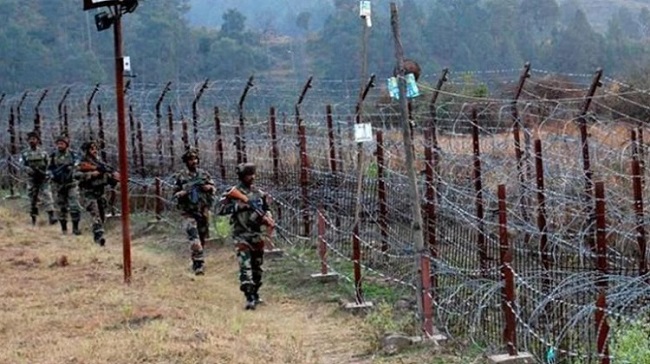
Traditional infiltration routes through the Line of Control (LoC) have shifted, with some suggesting the use of alternative routes through the Nepal and Bangladesh borders. This presents a new challenge for security forces in preventing militant infiltration across the LoC.

The traditional routes have been plugged resulting in a sharp decline in infiltration attempts. However, the vulnerable crossing points like Krishna Ghati in the Poonch sector or Machail in the Tangdar sector remain vulnerable. It is along these two or three points that sneaking infiltrators have been liquidated and a large cache of arms has fallen in the hands of Indian security forces and J&K Police.

Among the seized arms and ammunition, many items categorized as the most sophisticated weapons left behind by the fleeing Americans in Afghanistan, have been recovered from the possession of infiltrators shot dead at the border or fleeing back in desperation.

After the departure of the Americans, a huge arsenal of sophisticated weaponry fell into the hands of the Taliban; part of it was siphoned off by the Taliban to prospective buyers from Pakistan. Included among them were the jihadists of JeM, the foremost Pakistani terrorist organization that had established close contacts with the Taliban when the US and NATO forces were fighting them in Afghanistan. According to knowledgeable sources, Masud Azhar, the designated terrorist leader is reported to be sheltered by the Taliban of Afghanistan. It is through this channel that these sophisticated weapons were used by the infiltrating terrorists and finally have been seized from them by the Indian forces.

Contrary to official claims, infiltration has not come down only the tactics of the militants have changed. For more than a year, the ISI has changed the tactics of militancy in Kashmir valley for definite reasons.

Two reasons have been premised. Firstly, after more than three decades of militancy, ISI is now confident that militant cadres of locals, meaning Kashmiri Muslims, have come up to their expectations in terms of training and commitment. The idea of jihad against the infidel (kafir) as a religious duty has taken root in the mindset of Kashmiri Muslim youth. The proof is that now not the children of the poor but of the upper middle class and even those from the creamy layers are willingly offering themselves for recruitment as a jihadist.

The father of Zakir (a captured militant) is a retired engineer from government service. His eldest son is a doctor and his daughter is a professor at the government degree college. Zakir had got an engineering seat in Chandigarh. But he had not completed even one year of engineering when he gave up his studies and joined the ranks of Hizbul Mujahidin. It is a top-class family, fairly rich, educated and well-connected. Yet neither their parents nor relatives dissuaded young Zakir from leaving studies halfway and joining militancy. They lionised him for his dedication to the cause of Islam.

The mindset has become so hard that knowing he will meet his end at the hands of the security forces one day, Zakir has taken the risk of his life on the premise that he is supposed to complete the Islamic mission of spreading the message of Allah coming down through the instrumentality of the Prophet.

Secondly, the ISI has suffered huge losses in terms of trained manpower for Kashmir jihad. It was because of the operation ‘All Out’. One of the important reasons for the depleting number of field commanders, generally from Pakistan or POJK, is that Indian security forces are using highly sophisticated monitoring devices, mostly acquired from Israel, which are highly effective in intercepting the messages exchanged by the militants with their handlers in different parts of Pakistan. Since they chatted in either Urdu or Punjabi, both languages were easy for the Indian security forces to decode. The ISI has lately changed its tactics and while the local militants are well informed of local topography and have over ground as well as underground network, they speak to one another only in Kashmiri. Since the messages exchanged are highly sensitive, Indian security forces have hesitation in asking the Kashmiri police for translating these messages into Hindi or Urdu. Local Muslims are not prepared to assist the security forces because of the fear that their identity getting disclosed and they could become sitting ducks for the bullets of the militants. Security forces are discouraged from recruiting the Kashmiri Pandits for this purpose as well because of the lack of trust in them and the hateful apathy that the authorities harbour against them.  This is one of the reasons why apprehending the militants before they execute an attack or commit a murder has become difficult. Thus, the militants are making full use of smart information technology. Since they operate in small groups, therefore, they suffer minimal loss of manpower in comparison to the security personnel. Recent clashes in Poonch provide a glaring example.

It has to be admitted that almost all people in the valley are the silent cells or over-ground contacts of the militants. The fear of the gun has not gone down rather it has resurfaced.  Anti-India rhetoric has become a common practice in mosques in almost all major towns in north as well as south Kashmir. The maulavis (Muslim preachers) imported from UP, Bihar, MP and other places in the country are receiving salaries from the state exchequer but there is no control over what they preach and whom they preach. There is no accountability. It has been found that they exert a profound influence on the youth because they are gifted with delivering anti-India propaganda lucidly.  Kashmiri over-ground moles are spread out throughout the entire country, particularly in New Delhi, Mumbai and Bengaluru.

There is no need for any inhabitant of the valley to go to a Pakistani seminary (madrasah) to receive indoctrination because the religious institutions apart, every home is an institution where the kids are imparted the Islamic teachings that are highly controversial and misleading according to many religious authorities of Islam. The Crown Prince Salman of Saudi Arabia has rejected tradition (hadith) as controversial owing to the lack of acceptable authentication but quotes from hadith adorn not only the doors of mosques but even street light poles as well.  In every Kashmiri Muslim household, the members of the family rise from bed and go to bed after listening to the vicious anti-India propaganda released from the Pakistani electronic media. There is no control of the government to deny the dissemination of this vicious propaganda. The Kashmiri youth are now convinced beyond an iota of doubt that he or she has to play a role to prove the Quranic statement that Islam is God’s choicest religion and it must prevail over all other religions. Opposing the government for everything and anything is the desk rule principle of the Puritans (al momentum) because in Kashmir, it is not an Islamic government but that of the infidels (kafirs) dispensing justice. 

Several factors, such as the use of smart technology, operations in small groups, and the reinvigoration of sleeper cells and over-ground workers, have boosted the resurgence of militancy in Kashmir.

Official circles find pride in asserting that there is peace in Kashmir. Tactical withdrawal of fighting forces is part of the game they play.  The ground situation in Kashmir is not of silence but of simmering lava.  Silence is generally the precursor of an impending storm. The local political leadership is fuelling the flames of hatred, discord and separation in sugar-coated terminology. Even the best of the laws passed by the Indian parliament, the laws welcomed by the vast numbers of the Muslim population in the rest of the country, are unacceptable to the Kashmiri Muslims. To them nothing but the streams of milk and honey flow in Pakistan because that country is made and created through divine dispensation. 

Kashmir Muslim leadership of all hues has come out against the concept of a uniform civil code. They label it as anti-sharia, and hence, reprehensible. In other words, they want only sharia law to prevail for the Muslim community. Now assuming that the Muslims of the valley would be comfortable with the sharia law, they should stop depositing their money in the banks that are run by non-Muslim staff and governing bodies. They should stop accepting interest on their deposits whether from a nationalised or private bank. They should stop doing business with non-Muslims particularly the kafirs. They should not send their boys and girls to Hindu professional institutions. Properties like land, shops, houses, orchards, etc., which they have purchased from Hindus or Sikhs on throw-away prices are haram (impure} and should be returned forthwith. Mosques raised on lands encroached from temples and Hindu shrines should be declared haram and bulldozed under sharia law.  In short, the Islamic theologians (faqih) and traditionalists (muhaddison) of Kashmir should sit down and, while denouncing UCC, they should also draw a list of does and don’ts under the sharia law and promulgate the fatwa immediately.

And lastly, it is no surprise that the Kashmir jihadists have, of late, made common cause with the narcotics and drug peddlers. Pakistani drones (lent by Turkey) are heavily engaged in dropping narcotics, ammunition, arms, literature and Indian currency notes at pre-determined destinations along the LoC ad the IB and conduits receive information digitally to collect these for distribution among the jihadists in Kashmir. Many droppings have been seized and many drones have been destroyed but the practice is at its peak.

This is the ground situation in Kashmir. The valley leadership has, like the early years of insurgency, made a dent into the Indian media. They receive wide coverage of their anti-national utterances couched in a dubious language which suits the sold-out media.

The NDA government has chosen the tactics of pouring mountains of money in Kashmir in the hope that development of mega proportions will convert the people to rationality. It is going against the stark lessons of history. India mind is trishunka — neither on the earth nor on sky but just suspended in-between.