Home Blog Page 204

Baloch missing persons’ family appeals for protection amid threats

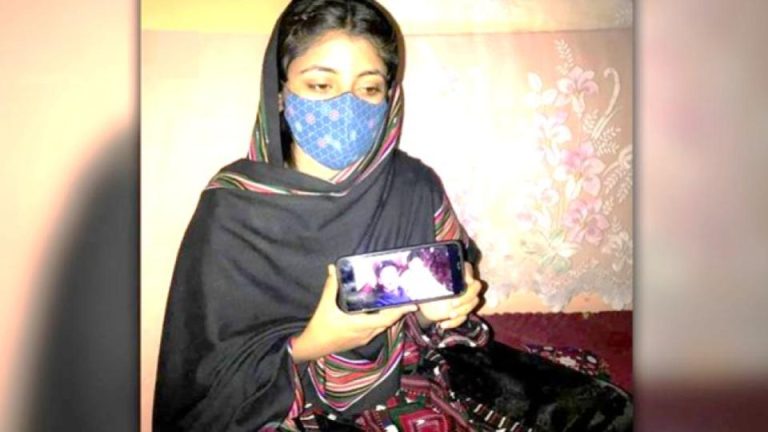
Saira Baloch, a family member of the missing individuals Asif and Rashid Baloch, has come forward to shed light on a distressing situation. She reports that her sisters and other family members are currently facing harassment from unidentified individuals, compelling some to abandon their studies. Saira Baloch has called upon the district administration to step in and provide the necessary security.

Saira Baloch, hailing from the Khuzdar district of Balochistan, has tirelessly fought for the recovery of her forcibly disappeared brother Asif and cousin Rashid Baloch over the course of five years. Engaging in protests across cities such as Quetta and Islamabad, Saira Baloch has exhibited unwavering commitment, even participating in court proceedings and commissions dedicated to missing persons.

In a recent statement, Saira Baloch disclosed the distressing situation her family is enduring. She revealed that unidentified individuals have embarked on a campaign of harassment, targeting her sisters and other family members residing in Khuzdar city. These tactics range from leaving menacing notes to issuing threats, culminating in the coerced abandonment of educational pursuits by her sisters.

Furthermore, Saira Baloch unveiled the broader extent of the intimidation campaign, asserting that both herself and others within her network have received threatening phone calls from unfamiliar numbers.

Lamenting the ordeal, Saira Baloch underscored the irony of her predicament. Rather than witnessing the safe return of her brother and cousin, their prolonged and unlawful disappearance has only exacerbated the vulnerabilities of her family. She emphasized that, instead of addressing their pleas for justice, the authorities’ lack of action has left them even more vulnerable.

Expressing her frustration, Saira Baloch called upon the Khuzdar district administration, Deputy Commissioner, Police officials, and other relevant authorities to swiftly intervene and offer the necessary protection. She implored these entities to take decisive action against those responsible for terrorizing girls attending local schools and tuition centers.

Saira Baloch’s plea extended beyond governmental bodies. She implored the political and social spheres to raise their collective voice against the ongoing oppression faced by her family.

Following the illegal occupation of Balochistan in March 1948, Balochistan has been fighting the war of its existence. Be it the peaceful way of protests or the armed resistance, against the inhumane authoritarian quasi state of Pakistan, Balochs are fighting an all-front war.

As the human right abuses and exploitation of the Baloch resources are increasing with each passing day, there is also an inceasing voice from inside Balochistan demanding the forceful resistance against these atrocities. Unfortunately, one of the various reasons for such a voice is also the ignorance of international and multilateral human rights organizations. Inspired by their sinister interests, almost every organization has turned a blind eye towards the complete devastation of Balochistan.

Balochistan teacher murdered for allegedly insulting Islam

The harrowing story of Abdul Rauf, a Baloch teacher, has brought to the forefront concerns of religious manipulation in Balochistan. Abdul Rauf, the son of Barkat from the Zagri community, had recently undertaken the Law Admission Test, aspiring for a bright future. However, his aspirations were abruptly shattered when he became embroiled in a nightmare of false accusations which led to his tragic killing.

Police said Abdul Rauf, 22, an English teacher, was shor dead near a graveyard in the Malikabad area on Saturday when he, accompanied by some people, was going to attend a jirga of ulema to explain his position on the matter.Sources said students of the language centre had lodged complaints with local clerics, accusing Mr Rauf of committing blasphemy during a lecture. The allegations have led him to death and his family in distress, as they grapple with the life-altering ramifications of these baseless claims. 

Significantly, the incident is symbolic to a larger trend that has sparked apprehensions among Balochistan’s residents. The Baloch Solidarity Committee (BYC) has stepped forward to address these concerns. According to the committee’s spokesperson, such instances of false accusations and religious manipulation have cast a shadow of fear and uncertainty over the community.

Abul Rauf’s case highlights misuse of religion to create a rift

The spokesperson emphasised that religion has often been misused for personal interests within Pakistan. But now it has contributed to rise in religious extremism. Talking about Mufti Shah Mir Thaki, who also accused Abdul of blasphemy, BYC stated that he has started a series of blackmailing the teachers as well as the students of private schools in the name of religion. He demands money from the management and teachers along with employment of two religious clerics. Echoing past examples, the spokesperson underscored that the manipulation of faith for individual gains is not a new phenomenon. However, the recent events involving Abdul Rauf and Mufti Shah Mir Thaki reveal a disturbing pattern that calls for attention and action.

BYC stated that it is deeply alarmed by the fake allegations against Abdul Rauf and the potential dangers posed by such acts of religious manipulation. The committee voiced fears that when conventional methods of control fail, certain elements resort to exploiting religion to serve their own purposes. This poses a grave threat not only to individuals like Abdul Rauf but also to the broader unity and harmony of the Balochistan community.

Demand for strict action

In response to these concerns, the BSC urged authorities to take swift action against those who exploit religion for personal gain. Furthermore, the committee called for a thorough examination of strategies to ensure that religion is not weaponised as a tool of manipulation. The spokesperson emphasised that the Balochistan community’s unity and well-being are of paramount importance, and that peaceful protests remain a constitutional right if such tactics persist.

Certainly, the case of Abdul Rauf and the subsequent response by the Baloch Solidarity Committee underline the religious persecution and exploitation of religion thereof. The radical Islamists along with Pakistan are indulged in the anti-Baloch practices that solely look forward to break the unity of Baloch community by misusing the concept of religion.

Pakistan’s misguided pursuit of corporate farming

As Pakistan’s economy grapples with mounting debt and financial challenges, the recent launch of the “Khanewal Model Agriculture Farm” raises concerns about the government’s priorities and its ability to address the needs of the people. The enthusiasm surrounding this venture suggests a shift towards agricultural development, albeit one that is fraught with historical pitfalls and potential for exacerbating inequality.

The “Khanewal Model Agriculture Farm”, spanning a vast expanse of 2250 acres, is presented as a step towards a greener future. However, this initiative, part of the so-called Green Revolution, has historical echoes of past failures. The Green Revolution of the mid-1960s, championed by the Ayub dictatorship under the influence of World Bank Group President Robert McNamara, promised to increase agricultural productivity and alleviate hunger and poverty through the adoption of modern farming technologies. The results were far from its ambitious goals.

This revolution was not a defense of “nature”; rather, it commenced with the proclamation of alleviating hunger. Approximately 12 agricultural laborers or farmers became unemployed with the introduction of a single tractor. During the era of the Green Revolution, a mere 6% of Pakistan’s landlords held ownership over 40% of the land, while half of the rural population possessed a mere 6% of the land. Regrettably, this glaring inequality remained unattended, and the issue of feudalism persisted without resolution. The feudal lords were exposed to Western technology, fertilizers, and agricultural chemicals, further exacerbating the problem.

However, the intended goal of the green revolution slogan was left unattained. This program implemented during the Ayub dictatorship led to the exacerbation of inequality, bolstered feudalism, degraded rural agricultural lands, and fostered a dependence on fertilizers. Regrettably, in its pursuit, the Green Revolution disregarded natural agricultural methods and fell short in its mission to alleviate poverty and hunger in Pakistan.

Subsequently, the turning point arrived with the eruption of the first significant public movement in Pakistan, which commenced in 1962 and culminated in the overthrow of the Ayub dictatorship. The subsequent Yahya dictatorship also faced public outcry, leading to its eventual demise. Zulfikar Ali Bhutto, compelled by mounting public pressure, particularly evident in the Toba Tek Singh Kisan Conference on March 23, 1970, where millions of farmers voiced their concerns, embarked on agrarian reforms in 1972. As a result of these reforms, land was redistributed among farmers, including those who were small-scale and landless, ultimately fostering a more equitable distribution.

The lessons from history should serve as a warning against blindly adopting similar models. Despite the lofty promises of agricultural development, the “Khanewal Model Agriculture Farm” appears to be a continuation of the flawed approach of handing over government lands to capitalists and landlords. This approach perpetuates the concentration of wealth and power in the hands of a few, leaving the majority of small-scale farmers and landless individuals to suffer.

Similarly, proponents of the Green Revolution today echo the rhetoric once championed by the Ayub dictatorship. They advocate for land division among farmers and landless individuals as a means to uplift the nation from poverty. However, this call rings hollow when juxtaposed with the reality of powerful landlords securing government lands under the guise of embracing new technology. A notable example is the recently established farm in Khanewal, sprawling over 90 square meters of land, with its owner displaying an insatiable appetite for even more land.

It becomes evident that the capitalist and feudal elite of Pakistan remain incapable of effectively addressing the core challenges faced by the nation. The complexities of poverty, inequality, and sustainable development cannot be resolved by their conventional approach. Instead, the path towards resolution lies in the principles of food sovereignty, agroecology, and fostering a spirit of cooperative solidarity.

Curiously, in the current landscape, a so-called “second green revolution” is unfolding, albeit with a questionable agenda. Government lands are being relinquished to capitalists under the banner of corporate farming, a move that raises eyebrows and prompts concern. These capitalists, driven by profit motives, are set to transform these lands into housing societies and other commercial ventures. This maneuver threatens to exacerbate existing issues rather than usher in a genuine agricultural revolution.

As the nation grapples with its economic challenges and social disparities, the insistence on repeating past mistakes in the name of progress seems ill-fated. A more prudent approach necessitates a departure from the status quo, emphasizing equitable land distribution, sustainable farming practices, and a commitment to the well-being of all citizens. Only through such transformative measures can Pakistan truly pave the way for a prosperous and inclusive future.

This approach is poised to yield anything but an agricultural revolution. Instead, the consequence may entail a surge in the costs of food and agricultural goods, contributing to the exacerbation of inequality and a deepening of class oppression.

For a true agricultural revolution to transpire, a paradigm shift is imperative. Government-owned lands must be allocated to small and landless farmers, who are the lifeblood of rural communities. The state’s active participation in aiding these farmers in settling the land is crucial, fostering a fair and inclusive distribution process. Addressing the colossal landholdings of landlords is another vital step, where thousands of acres need to be restructured and confined to prevent a concentration of wealth. The cap of 25 acres on fertile land ownership would further contribute to a balanced and just distribution.

Considering the historical inability of capitalist forces to steer the nation toward development, it begs the question: What can be expected now? The trajectory appears to widen the existing bottleneck rather than dismantling it. If substantive progress is to be achieved, breaking free from the chains of imperialist loans is essential. Redirecting financial resources toward the welfare of the people holds the potential to initiate genuine change.

Central to this transformation is the implementation of comprehensive agrarian reforms. The distribution of both government and privately-owned vast tracts of land to small and landless farmers becomes pivotal. Such reforms are not only conducive to agricultural advancement but also lay the foundation for robust industrial growth.

Pashtun Jirga warns Pakistan of dire consequences

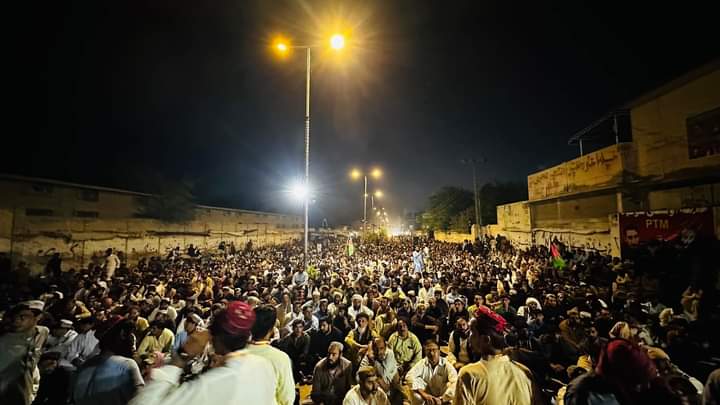
In a bold move, the Pashtun Jirga has issued a 72-hour ultimatum for the immediate release of Hikmat Mehsud, a prominent figure within the Pashtun community. The demand for Mehsud’s release has been met with unwavering determination, as the Pashtun Jirga warned of initiating an indefinite sit-in at a crucial location if the ultimatum is not heeded. The Pashtun Jirga, a collective of influential Pashtun voices, has officially announced their intent to launch a persistent sit-in at a strategic site, which includes highway or the press club. 

Following the illegal occupation of Balochistan in March 1948, Balochistan has been fighting the war of its existence. Be it the peaceful way of protests or the armed resistance, against the inhumane authoritarian quasi state of Pakistan, Balochs are fighting an all-front war.

As the human right abuses and exploitation of the Baloch resources are increasing with each passing day, there is also an increasing voice from inside Balochistan demanding the forceful resistance against these atrocities. Unfortunately, one of the various reasons for such a voice is also the ignorance of international and multilateral human rights organizations. Inspired by their sinister interests, almost every organization has turned a blind eye towards the complete devastation of Balochistan.

Sindh:Radical Islamists abduct & coerce another Hindu girl into marriage

In a distressing incident, a 16-year-old Hindu girl named Maryam Kolhi was reportedly abducted by a group of radical Islamists, while leaving her school in Mirpurkhas. The incident took place as the victim’s brother, Ramesh Kolhi, was taking dropping her to the school. The abduction was carried out by a group of radical Islamists riding three motorbikes and a white Mehran car. The suspects have been identified as local residents Muhammad Kanbhar, Yusuf Nohri and Mushtaq Leghari.

According to eyewitnesses, the alleged abductors forcefully abducted the minor girl over the gun, in broad daylight. The victim’s brother, Ramesh Kolhi, was powerless to prevent the abduction, and the group sped away from the scene

Adding to the worry, a video surfaced showing Maryam reading a piece of paper, through which, she stated that she willingly married Muhammad Kanbhar. However, her fearful appearance in the video clearly narrates entirely different story of coercion that she faced.

Apart from that, an affidavit also came to light according to which, Maryam is referred to as an adult exercising free will. This has sparked outrage among the community and human rights advocates.

The brothers of Maryam Kolhi had protested in front of Press club, Mirpurkhas, demanding her return.

It is well established fact that Hindu girls, especially minor ones, have been witnessing a worst phase of human rights and juvenile rights violations. Unfortunately, the Pakistan backed Sindh government’s tacit consent and hand in glove with the radical Islamists has further worsened the condition.

Kuki People’s Alliance withdraws support to Biren Govt in Manipur

The Kuki People’s Alliance (KPA), a key political player in Manipur, has officially withdrawn its support from the BJP-led government in the state. The announcement was made by KPA president Tongmang Haokip on Sunday evening, citing a lack of fruitful outcomes from their continued backing of the incumbent government.

In a statement released on Sunday, KPA President Tongmang Haokip stated, “After careful consideration of the current conflagration, the continued support for the incumbent government of Manipur, led by Chief Minister N Biren Singh, is no longer fructuous. Accordingly, the support of the KPA to the Government of Manipur is hereby withdrawn and can be considered null and void.”

The KPA holds two seats in the Manipur Legislative Assembly, represented by MLAs Kimneo Haokip Hangshing and Chinlunthang, who represent Saikul and Singhat respectively. Formed in 2022, the KPA marked its political debut by securing these two seats in the Assembly elections. Following the election, the party lent its support to the BJP during the government formation process.

The recent decision to withdraw support follows a period of tension and disagreement between the KPA and the BJP-led government. Meanwhile, the Manipur political landscape is further complicated by the presence of eight other MLAs from the Kuki community, all aligned with the BJP. These MLAs, including two ministers, have been openly at odds with the Biren Singh government, yet have not severed ties with the ruling coalition.

As the Manipur Assembly prepares to convene on August 21, there are indications of potential disruption. BJP MLA LM Khaute, representing Churachandpur, expressed concerns over the prevailing law and order situation and stated his inability to attend the session. Khaute suggested that the ongoing unrest stemming from demands made by the Kukis for a separate administration could impede the participation of several Kuki-Zomi-Hmar MLAs.

Additionally, the Coordinating Committee on Manipur Integrity (COCOMI), a Meiti organization, announced a “social boycott” of the Manipur government, its MLAs, and functionaries. This decision is in response to the government’s failure to convene a special Assembly session to address the ongoing crisis. COCOMI coordinator Jeetendra Ningomba emphasized that their demand was for an urgent special session, not a regular one.

Kashmir Valley politicians had misused Art 370 & Art 35A to form a feudal cult: Col. Jaibans Singh

Around 890 central laws are now applicable in Jammu & Kashmir and 250 unfair state legislations have been eliminated after Art 370 and Art 35A were revoked in 2019. Col. (Retired) Jaibans Singh, a veteran Indian army officer and a reputed analyst of Indian defence and security issues tells Sabita Mishra, Special Correspondent, News Intervention that Art 370 and Art 35A were misused by some politicians and both these articles should have been repealed decades ago.

Sabita Mishra: Could you give a short perspective on the now abrogated Article 370 and Article 35A of the Indian Constitution?
Col. (Retd.) Jaibans Singh: Many legal luminaries and prominent citizens of India have, for long, expressed the conviction that Article 370 was set up as a temporary measure to implement the Indian Constitution fully in Jammu and Kashmir. This line of thought logically concluded that Article 370 should have been repealed within six months after having completed the constitutional obligation. For six decades the country remained behind time in this regard. The so-called mainstream local parties of Kashmir argued that Article 370 provided the constitutional link between the Union of India and the state of Jammu and Kashmir, which is a fallacy. How is it that a billion plus citizens of this country survived happily without the provisions of Article 370 that seemed to be a matter of life and death for some political leaders of J&K? Was the rest of India withering under political restrictions simply because Article 370 was not applicable to them?

Seminars on the subject were arranged across the country in education and other institutions. These and articles on J&K by prominent thinkers and experts indicated a universal acceptance for the abrogation proposal mooted by the Union government under the stewardship of Prime Minister Narendra Modi.

Sabita Mishra: How were the Article 370 and Article 35A misused, and why was it important to repeal these special provisions?
Col. (Retd.) Jaibans Singh: The provisions of Article 370 and article 35A were misused by politicians, especially from the Kashmir Valley to establish a feudal cult in the erstwhile state of Jammu and Kashmir. When the demand for its repeal gained momentum they got worried about their future and spoke vociferously against such a move by the Union government. When seen in this context the reaction of both NC (National Conference) and PDP (Peoples Democratic Party) reflected the insecurity that they harboured on the subject. There were many areas where Article 370 was posing impediments in the progress of the state and its people. There were many progressive legislations and provisions of the central government which could not be extended to the J&K because they had not been legislated upon by the state government. Repeal was the only method by which the people of Jammu and Kashmir could fully enjoy the rights and privileges granted to them by the Constitution of India.

Sabita Mishra: Can you specify some parameters where Article 370 and article 35 A were detrimental to the people of Jammu and Kashmir?
Col. (Retd.) Jaibans Singh: The economic and political loss that the people of the state suffered due to continuation of the Articles far outweighed the preferential treatment that it assured. The list is very long indeed. I will refer, very shortly, to the main aspects that come to my mind.
· Many progressive legislations and provisions of the central government could not be extended to J&K because they had not been legislated upon by the state government.
· Panchayats of the state were constantly fighting for empowerment which was being denied since 73rd and the 74th amendments to the Constitution of India had not been extended to the state.
· More serious was the loss borne by the Scheduled Castes, Scheduled Tribes and Other Backward Classes who were not availing the benefits of central schemes.
· Business suffered because people from the rest of the country could not establish infrastructure in the state.
· The socio-psychological divide created by the statute negated integration of the youth of the state with other parts of the country.
· The 1947 refugees from Pakistan and people of the Valmiki Samaj were denied citizenship of the state for seven decades since independence.
· Women of Jammu and Kashmir, due to provisions of Article 35A, were being denied full-fledged rights to land and property in the state.
· The state government was not accountable to the nation despite looking for assistance all the time. The Right to Information route could not be applied to find out where the funds went? The poor people remained ignorant while the rich and mighty were in collusion.

Sabita Mishra: Could you share specific examples of the positive changes or developments you have observed in Jammu and Kashmir following the abrogation of Article 370 and 35A?
Col. (Retd.) Jaibans Singh: The biggest change is that the people are happy, as is evident from the fact that no agitation has taken place since the repeal and now nobody even speaks about the said Articles. Those who supported their continuance are politically marginalised. The second big change is that it has paved the way for greater political and economic integration with the rest of India. 890 central laws which were not applicable to the state are now in place while 250 unfair state legislations have been eliminated. So many marginalised communities like the West Pakistan refugees, the Valmiki Samaj and most importantly the women of J&K have benefited tremendously from the change. These are just a few examples, the list is very long.

The economic environment in the state has witnessed a huge positive trajectory. There is a surge in national and foreign investment due to a conducive business atmosphere being provided to the investors. As per records, in 2021, the union territory of Jammu & Kashmir attracted investments amounting to US$ 2.5 billion (₹ 20,680 crore). There is a fast paced development of infrastructure and creation of industrial estates, with a special emphasis on MSMEs. The environment is peaceful and full of hope for the future.

Sabita Mishra: How do you assess the potential implications of the abrogation on cross-border activities, including infiltration and ceasefire violations, along the Line of Control?
Col. (Retd.) Jaibans Singh: There has been no implication at all. The more important countries immediately accepted the abrogation as an internal matter of the country carried out under accepted constitutional norms. Pakistan did make a noise, but nobody listened to it. Now, Pakistan’s own condition is such that it cannot support its stooges sitting in Kashmir. So far as the world is concerned, the matter is over and done with.

Sabita Mishra: In your perspective, how has the Jammu and Kashmir community responded to the abrogation of special status and its integration into the rest of India? Are there signs of increasing acceptance and unity?
Col. (Retd.) Jaibans Singh: “Kashmir will burn if Article 370 and Article 35 A are tampered with.” “Central Government should refrain from playing with fire,” are examples of the statements that were made by separatists and so-called tall leaders of the mainstream local parties of Kashmir like the National Conference (NC) and the Peoples Democratic Party (PDP). Non-reaction by the people of Jammu & Kashmir indicated how divorced they were from the ground reality.

The acceptance is complete and irrevocable. Article 370 and Article 35A are now history that may not even be taught in consideration of its irrelevance. Yes, there may be a lesson here for all constitutional democracies as to how a few words or Articles can keep a people subjugated for so long. The objective of every law and statute is betterment of the people; if such betterment is not coming by, then legality cannot be quoted as a reason for continuing with it. The integration now is complete and integration with India irrevocable.

Sabita Mishra: What lies ahead for Jammu & Kashmir?
Col. (Retd.) Jaibans Singh: The question of colonisation of Pakistan-occupied Jammu and Kashmir (POJK) and especially Gilgit-Baltistan, which are integral parts of Jammu and Kashmir under illegal occupation of Pakistan and are being exploited brutally and it needs to be addressed with urgency. The world in general and India in particular need to wake up to the massive atrocities and human rights violations that the people of the region are being subjected to for no fault of theirs. India has a special responsibility since the people of POJK are a part of our country and we have a constitutional and moral obligation to protect them. There is a new dawn in Jammu Kashmir as the region moves forward to enjoy all fruits of democracy and freedom guaranteed under the Constitution of India. The ball, now, is now entirely in the court of the people; they can make or break their destiny and the future of their younger generations.

More than 30 killed in Pakistan train crash

In a tragic turn of event, at least eight carriages of the Hazara Express overturned near Sahara railway station in Nawabshah. So far, 30 people have lost their lives, leaving 100 wounded. As the rescue teams are trying their best to rescue people from the wreckage, injured passengers are being moved to the nearby hospitals. 

Footages of passengers climbing out of the overturned carriages, women and children lying on the ground have started resurfacing on social media owing to the incident.  

One eye witness said, “They were shouting and screaming. I didn’t know what to do. I filled my hands with water from this canal nearby and poured it on the faces of those who were unconscious, hoping they would regain consciousness.” 

The Railway Minister Saad Rafiq informed that the initial investigation has revealed the train was traveling at normal speed. He added,” It could be the result of a mechanical fault or sabotage”. But the reasons for the derailment is still unknown. The authorities, however, denied the rumour that the tracks were flooded.

Military, paramilitary troops and rescue workers worked till Sunday evening and rescued trapped passengers. Seriously injured passengers were also transported to better-equipped hospitals in military helicopters.

Unlike India, rail crashes and incidents are not uncommon in Pakistan. Between 2013 to 2019, around 150 people died in rail crashes. In 2021, two trains collided in Sindh killing at least 40 and injuring dozens.

https://twitter.com/aprajitanefes/status/1688183823102873601?s=20

Indian Army foils two Pak backed terrorist infiltration attempts in 24 hours, J&K

In a significant development, the Indian army successfully foiled two separate infiltration attempts by terrorists along the Line of Control (LoC) in Jammu and Kashmir’s Poonch and Tangdhar districts. The incidents occurred on different days, with the latest one being reported today in Poonch Sector.

According to Jammu-based Public Relations Officer (Defence) Lt Col Suneel Bartwal, the encounter in Poonch district took place when alert Indian troops in the Degwar sector noticed the movement of terrorists attempting to cross over from the other side under the cover of darkness. An army ambush party engaged with the terrorists in the Garhi battalion area at around 2 am.

In the ensuing gunfight, one terrorist was killed, while another managed to flee towards Pintu Nala, after being shot. Meanwhile, officials added that the whole area has been cordoned off and a search operation is underway.

Similarly, in the Tangdhar Sector, Indian Army and Kupwara Police jointly launched a cordon and search operation in the Dakhen-Amrohi area based on intelligence about possible infiltration attempts. During the operation, the joint party encountered terrorists attempting to infiltrate to the Indian side. In the ensuing encounter, one terrorist was neutralized.

The spokesperson of the Kupwara Police, while speaking to PTI said, “During the search operation, movement of terrorists, trying to infiltrate to our side, was observed. They were challenged by the joint party in which one terrorist was neutralized. ”