Home Blog Page 213

Pak Army abducts a young Baloch student

A Baloch student has been forcibly disappeared by the Pakistan Army from Turbat.

In an ongoing series of enforced disappearances across Balochistan, a young Baloch student, Shahid, son of Char Shambey, studying in class 10 in Turbat, was abducted forcefully. Originally from Madag-e-Kalat in Dandar area of Kolwah, Kech, he had moved to Turbat in search of better educational facilities that his village lacked. Reports indicate that he was illegally detained by the Pakistan Forces at Kolwah Stop and has subsequently gone missing.

Enforced disappearances have been a grim reality in Pakistan for decades, but the abduction and illegal detention of students further exacerbate the situation. Since the illegal occupation of Balochistan in March 1948, Balochs have faced the worst physical and emotional torture, which has intensified with each passing day. Unfortunately, enforced disappearances not only subject victims to physical torment but also inflict emotional anguish upon their families. The uncompassionate Pakistan Army does not differentiate between men and women, adults and children, perpetuating a grave violation of human rights and international norms.

 It is disheartening to witness such barbaric acts of enforced disappearances persist, even in an age where human rights voices are raised worldwide.

Jammu & Kashmir: Pakistan’s proxy war and India’s strong message

Pakistan’s Lament

Islamabad has a perpetual grudge that it isn’t taken seriously by the global community. While this observation is undeniably true, international apathy towards Pakistan is not due to politicking or vested commercial interests [as it claims], but solely due to Islamabad’s unabashed duplicity. With the Pakistan Army brazenly following its morbid strategy of nurturing terrorist groups as ‘strategic assets’ for waging proxy wars against its neighbours, how can Islamabad expect to be taken seriously by the international community

Just one example of Pakistan’s perfidy- it keeps boasting about having conducted the world’s biggest anti-terrorist campaign [Operation Zarb-e-Azb] and emphasising that “We are going after terrorists of all hue and colour.” However, statistics don’t support its latter claim. Though the Pakistan Army claims to have neutralised as many as 3,500 terrorists during Operation Zarb-e-Azb, there’s not even a single terrorist belonging to the Haqqani network amongst the dead, which outrightly defies the laws of probability but is a mere happenstance for Rawalpindi!  

So, when Pakistani Prime Minister Shehbaz Sharif declared that Terrorism in all its forms and manifestation, including state terrorism, must be condemned in clear and unambiguous terms” while addressing the 23rd SCO meet, he had probably expected the international media to lap up his telltale. However, this didn’t happen and his brave words went largely unnoticed, because taking Islamabad’s comments at face value, especially when related to terrorism, can be very embarrassing for the media.

Pakistan’s Anti-Terrorism Pretense

A month before the 23rd SCO meet, Indian security forces and J&K police jointly thwarted up to five attempts by Pakistan trained terrorists to infiltrate across the Line of Control [LoC] in J&K. The fact that a total of 11 foreign intruders were killed in these operations leaves no room for doubt regarding the Pakistani establishment’s active involvement in sponsoring cross border terrorism. No wonder Sharif’s condemnation of terrorism wasn’t taken seriously by anyone.  

Barely two weeks have elapsed since the Pakistani prime minister used the SCO platform to condemn terrorism, and it’s business-as-usual as far as attempts at infiltration across the LoC are concerned. With the Indian security forces and J&K police thwarting two back-to-back major attempts by Pakistan based terrorists to infiltrate across the LoC in the Poonch sector, Pakistan’s double talk on terrorism has yet once again been exposed.

Prognosis

Some analysts believe that sooner or later, the realisation that adopting a confrontationist approach towards India comes at a prohibitive cost will compel Islamabad to mend fences with New Delhi. This eventuality is theoretically possible; but when a country claims that its people are prepared to eat grass or even stay hungry just in order to match its neighbour militarily, then any logic-driven rapprochement initiative becomes a distant dream.  

Ashley J. Tellis, a senior fellow at the Carnegie Endowment for International Peace, specialising in international security and U.S. foreign and defence policy with a special focus on Asia and the Indian subcontinent has no illusions about Pakistan seriously considering dialogue with India to normalise relations. Au contraire, he is sanguine that “The international community’s routine call for continuous India-Pakistan dialogue is not only misguided but also counterproductive.”

Tellis points out that “This entreaty [for dialogue], which often follows major Pakistani-supported terrorist attacks in India, fails to recognize that the security competition between the two nations is not actually driven by discrete, negotiable differences.”

He goes on to explain that “… the discord is rooted in long-standing ideological, territorial, and power-political antagonisms that are fuelled by Pakistan’s irredentism, its army’s desire to subvert India’s ascendency as a great power and exact revenge for past Indian military victories, and its aspirations to be treated on par with India despite their huge differences in capabilities, achievements, and prospects.”

Pakistani politicians have realised that promoting anti-India sentiments amongst the population is a foolproof mechanism for diverting public opinion from its own humongous failings. Similarly, in order to exercise sweeping extra-constitutional powers and justify consuming a lion’s share of the national budget, Rawalpindi has demonised India as an existential threat and how the army is preventing New Delhi from embarking on its hegemonistic ambition to wipe out Pakistan’s very identity.

India’s Reaction

In view of the aforesaid, any hope of Pakistan smoking the peace pipe with India in the foreseeable future is nothing but a grand illusion- and the sooner India accepts this harsh reality, the better it would be for the country. With Pakistan Army’s no-holds-barred attempts to push-in terrorists into J&K, there’s definitely a need to ensure that the anti-infiltration grid established by Indian security forces has the intrinsic ability as well as requisite redundancy to decisively defeat Rawalpindi’s nefarious designs.

Use of advanced technology to detect infiltration and track down terrorists is a great force-multiplier, and hence must be fully exploited. However, since the thickly forested area and rugged terrain along the LoC favours infiltration, technology cannot replace the requirement of ensuring adequate ‘boots-on-ground’. It’s heartening to note that the Indian army has accorded this important issue the due attention it deserves by shelving plans to shift troops from J&K to Ladakh.

What India is facing in J&K isn’t mere terrorism- it’s a full blown proxy war and has to be viewed accordingly because misconstruing inactivity in terms of infiltration attempts and terror related incidents in a particular sector along the LoC as an indicator of normalcy could prove suicidal.  It doesn’t require rocket science to discern that such an abnormal state of affairs could well be a ploy to induce military commanders into shifting troops from a particular area to elsewhere and unwittingly creating a safe passage for use by infiltrators. 

Lastly, with former Pakistan Army chief Gen Qamar Javed Bajwa declaring that “Pakistan Army firmly stands by the Kashmiris in their just struggle to the very end [and] we are prepared and shall go to any extent to fulfil our obligations…,” wouldn’t it be naïve to believe the balderdash that terrorism in J&K is being fuelled by non-state actors?   

Pak Army’s torture and murder of a Pashtun in Khyber-Pakhtunkhwa sparks protests

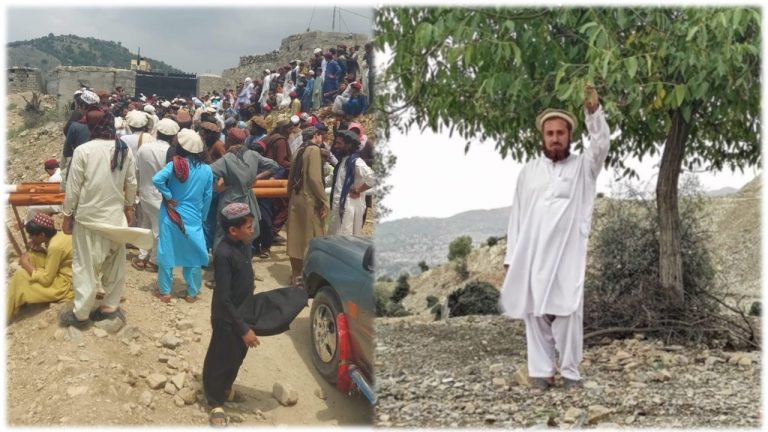
Tensions rose in the Shaktoi region when locals and Pashtun Tahafuz Movement (PTM) activists gathered on the streets to protest the suspected extrajudicial killing of Muhammad Wali, a Shaktoi resident. Wali was arrested and detained by the Pak Army two days ago without any formal FIR or court proceedings. Instead, he was tortured by the military.

When the Army dumped Wali’s lifeless and tortured body back into the village, the situation took a tragic turn. The horrifying tragedy has spurred local community with anger and grief, driving them to gather in protest outside the military fort in Shaktoi.

PTM leaders have arrived to the spot to express solidarity with the deceased’s family and the outraged locals. The protest is still going on, and protesters are refusing to leave until their demands for justice and transparency are met.

The extrajudicial death has aroused severe concerns about security personnel’ behaviour and their regard for due process and human rights. The lack of an official inquiry into Wali’s detention and subsequent torture has only fueled public discontent and distrust of the authorities.

The Shaktoi incident sheds light on the broader issue of enforced disappearances and wrongful detentions in the region. Human rights organisations and activists are appealing for an immediate and impartial investigation into the facts behind Muhammad Wali’s death as the situation unfolds.

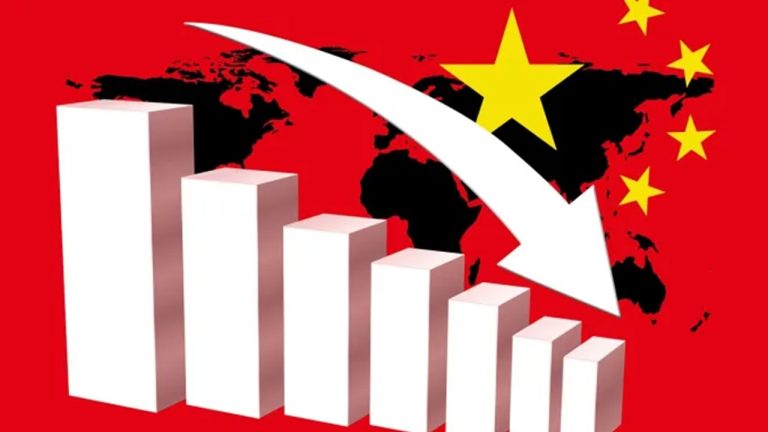
Trouble brews for China’s economy as challenges mount

On Monday, China announced that its GDP of the second quarter grew by 6.3% in comparison to previous year. The unemployment rate, on the other hand, increased by 21.3% in June among young people between the ages of 16-24. This has set a new record, proving Analysts at Reuters wrong, who had predicted a 7.3% increase in the second quarter GDP.

Fu Linghui, National Bureau of Statistics spokesperson, agreed that China is facing complex environment both geopolitically and economically, however, he added China can still achieve its target set for full-year, i.e., 5% growth for 2023.

China’s economic recovery in June showcased a mixed picture, with retail sales rising 3.1%, slightly below the expected 3.2% growth. The data revealed that catering, sports, entertainment products, alcohol, and tobacco sales experienced the most significant upswing. However, autos, office products, and daily use goods witnessed a decline in sales compared to the previous year.

Online sales of physical goods grew by 6.7% in June compared to the previous year. While still positive, this rate was slower than the growth seen in May, indicating a potential stabilization in the online retail sector.

Industrial production, on the other hand, saw a robust growth of 4.4% from a year ago, surpassing the earlier forecast of 2.7%. This indicates a rebound in manufacturing activities and reflects positive momentum in China’s industrial sector.

Fixed asset investment for the first half of the year recorded a growth rate of 3.8%, beating the predicted 3.5%. Investment in manufacturing continued at a steady pace, but growth in infrastructure investment experienced a slowdown. Notably, investment in real estate further declined in June compared to May, suggesting continued challenges for the struggling property market.

Despite signs of recovery in various sectors, the unemployment rate for urban residents in June remained at 5.2%. Concerns about youth unemployment were raised, with expectations that it might increase further before showing signs of improvement after August.

Looking ahead to the second half of the year, spokesperson Fu expressed expectations of low real estate investment in the near future. He also warned of the possibility of rising youth unemployment before eventual improvement. China lifted its Covid-19 controls in December, but the initial economic rebound has lost momentum. The real estate sector continues to face difficulties in recovery, and falling global demand has impacted exports negatively.

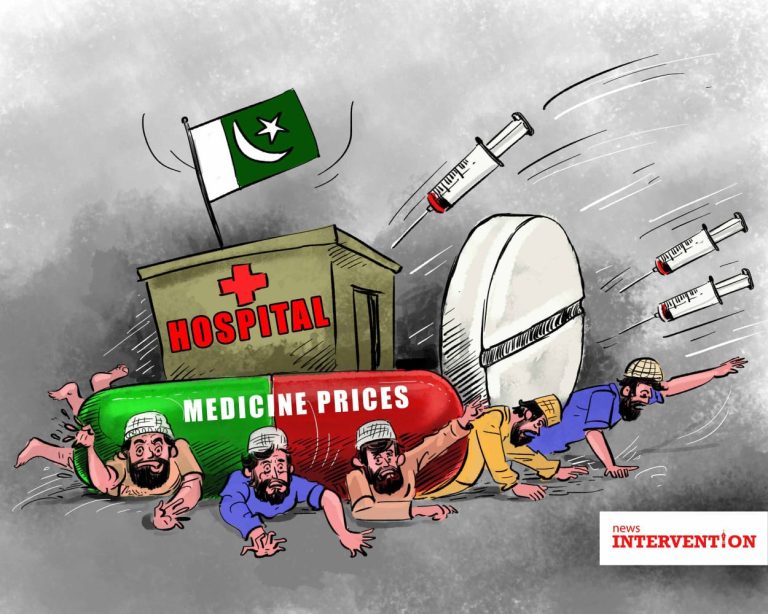
Medicine prices skyrocket by 700% in Pakistan flouting manufacturing norms

Over the last five years, the prices of medicines have reportedly increased by approximately 700% in Pakistan. The majority of pharmaceutical companies in Pakistan use smuggled, sub-standard, and very cheap raw materials and other materials required for manufacturing medicines in the guise of Afghan transit trade. Companies also do not allow drug regulatory authority officials to inspect the actual prices of raw materials and other items used in medicines, whether they are purchased legally or obtained through bribes.

Similarly, the Ministry of Health and DRAP authorities do not even evaluate the quality of raw materials and other items used in the manufacture of medicines.

On the other hand, this pharmaceutical mafia requests an increase in prices day by day, justifying it by citing the rising cost of raw materials and other commodities due to the increase in the value of the dollar. It should also be noted that drugs made from smuggled raw materials are substandard and may be used for various other diseases. Even after purchasing the most expensive medicine in the region, the patient does not experience immediate recovery.

The DRAP authorities have failed to check whether the raw materials and other items used in the manufacture of medicines were purchased legally or not.

It is the responsibility of The FBR, especially the Customs authorities, to examine how many drugs are being manufactured annually by pharmaceutical companies and how much raw materials and other items are used in their production. They have to verify whether these materials are legally purchased or not and whether all government benefits and taxes have been paid or fudged.

NAB and FIA should also investigate whether the prices, which are being increased daily on the basis of raw materials and other necessary accessories required for pharmaceuticals, have been determined fairly. They should verify whether the items used in the preparation of medicines have been purchased legally.

It should be noted that in the last 5 years, the prices of medicines have increased by more or less 700%, while the value of the dollar has not increased even by 200%.

BLA targets Pak Army collaborators, sends strong message to Paki forces

In a recent operation, the Baloch Liberation Army (BLA), a prominent Baloch nationalist group, carried out a targeted action in Bolan, delivering a strong message to the Pak armed forces. The BLA stated that the operation was conducted in response to the continuous oppression and atrocities committed against the Baloch people.

The apprehended individuals were identified as Jan Muhammad, also known as Samad Muhammad Shahi Sakanah Lais Dagari, and Ghulam Hussain, also known as Hamza Muhammad Shahi Sakanah Lais Dagari. The BLA claimed that both individuals had played active roles in assisting the occupying Pakistani forces during a military operation that took place in April 2023, resulting in the martyrdom of two BLA members.

According to the BLA, Jan Muhammad and Ghulam Hussain were captured approximately one month ago and were kept under careful observation. During the subsequent investigation, they confessed to collaborating with the enemy forces and providing vital information for an extended period. Their involvement allegedly included facilitating the enemy forces’ operations in various regions, particularly in Saro and Mach areas of Balochistan.

Following the operation in which two BLA fighters, Ghanee Khan (known as Hasan Ruki) and Waleed (known as Commando Bahar), sacrificed their lives, the BLA asserted its commitment to exposing and punishing those involved in betraying the Baloch nation. Jan Muhammad and Ghulam Hussain were found guilty of acts of national betrayal by the Baloch National Court, and as a consequence, the BLA executed them in accordance with the court’s verdict.

Maharashtra police arrests Qari in Love Jihad Case

In a case of Love Jihad, a radical Islamic Qari (Maulana) named Shoeb Noori has been apprehended by the Maharashtra Police in Indore. Maulana Shoeb Noori, hailing from Gandhinagar, Indore, was arrested on Sunday for his alleged involvement in a Love Jihad case. He has been accused of coercing Hindu women into religious conversion.

According to the information provided, a person named Sayam Qureshi used Instagram as a medium to lure Hindu women from Kopargaon, Maharashtra. It is reported that they became friends on Instagram four years ago. Last year, when the girl visited Indore, Sayam took her to a friend’s home near Anand Bazaar. It was at this location that Maulana Shoeb Noori allegedly forced her to recite the kalma and married her against her will. Later, they pressured the girl to convert to Islam. However, the victim firmly denied their demands. Enraged by her refusal, they began threatening her. Feeling overwhelmed by the threats, she sought help from Hindu organizations in Kopargaon. With their assistance, she filed a First Information Report (FIR) against Sayam Qureshi, Maulana Shoeb Noori, Imran Sheikh, Ayaaz Qureshi, and Chotu Kalim, who aided Sayam in Kopargaon.

As a result, the Maharashtra Police arrested Sayam Qureshi on July 12. Subsequently, Maulana Shoeb Noori, the radical Islamic cleric, was apprehended in Indore. Love Jihad was previously considered a random crime when there were only a few cases reported. However, over time, it has become evident that Love Jihad is an organized crime. The involvement of radicalised maulanas further exacerbate the situation.

India to forge UPI deal with Indonesia following agreement with France

After closing the currency deal with Singapore, France, and the UAE, India is all set to strike up a deal with Indonesia to promote the local currency. Both countries are working on a real-time payment mechanism, and India is looking for new opportunities to expand the scope of digital payments.

Indonesian finance minister Sri Mulyani Indrawati said, “Both countries would discuss the possibility of cooperation in digital technology, payments systems under central banks and using local currency.”

Officials said that the deal is similar to the one made with the UAE; therefore, it will be beneficial for both parties as Indian exporters will pay in Indonesian Rupiah and would subsequently earn in Indian rupee.

The subject of discussion appeared when Finance Minister Nirmala Sitharaman met with her Indonesian counterpart, Indrawati, during the launch of ‘Economic and Financial Dialogue’. This dialogue was focused on expanding and deepening trade and investment ties between the two countries.

India and Indonesia have deep trade ties, with Indonesia ranking India’s sixth largest partner in 2022 and enjoying a $19 billion surplus for the large shipments of palm oil and petroleum. Therefore, this deal is an important turning point and marks a new beginning.