Home Blog Page 25

After intense protest Paki regime hands over BLA fidayeen Shah Zeb’s body to family

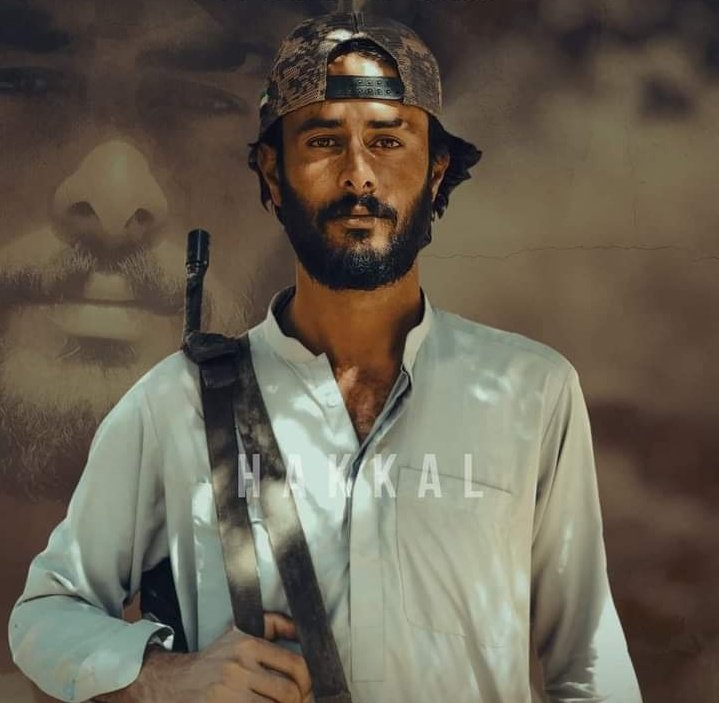
The body of Shah Zeb Satkzai, a BLA fidayeen killed during clashes with Pak Army in Kalat, was finally handed over to his family after a massive public outcry and protest outside Quetta’s Civil Hospital.

Satkzai, a member of the Baloch Liberation Army’s (BLA) Fatah Squad, had died in the recent attack on a Pak Army’ camp, following which his body was seized by occupied-authorities. Initially, hospital officials, under the pressure of the Counter-Terrorism Department (CTD), refused to release the body to the grieving family, triggering widespread anger among the local population.

The occupied-authorities’ refusal to return Satkzai’s body demonstrates the continuous oppression and disregard for the dignity of Baloch individuals at the hands of the Paki establishment. Despite Satkzai’s tragic death in the conflict, the Pakistan Army treated his family’s grief with inhumanity and indifference, only relenting after a large-scale public protest.

Citizens, including women and youth, gathered outside the hospital in protest after Shah Zeb’s sister’s public appeal for help in receiving her brother’s body. Her emotional video message highlighted the cruelty of the occupied-authorities, who had instructed her to go to CTD officials and the local court without any resolution. Even then, the body was withheld, reflecting the deep-rooted oppression faced by Baloch families who are subjected to not only violence but also the denial of basic human rights such as dignity in death.

This case highlights the ongoing pattern of abuse in POB, where the Pak authorities have long treated Baloch lives as expendable. This is part of a larger strategy to suppress the voices of dissent, silence activists, and enforce a militarized occupation of Baloch lands. The Paki establishment, under the pretext of counterterrorism, has militarized Baloch areas, displacing families, abducting young activists, and even resorting to extrajudicial killings to maintain control.

After the protest, the authorities finally surrendered the body to the family, who then transported it to the Dghari area of Quetta. The funeral prayer for Shah Zeb Satkzai is scheduled for Friday morning, but the tragic episode serves as a reminder of the relentless suffering endured by the Baloch people under the Paki regime.

Protests intensify in POJK against repressive ordinance passed by Paki regime

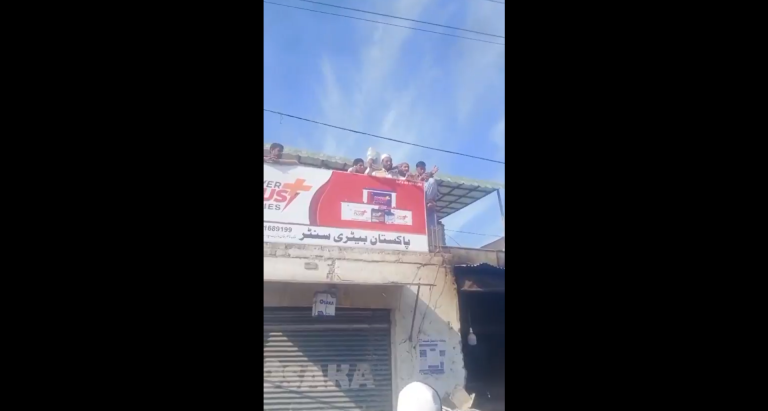
In a powerful display of resistance, citizens across Pakistan-occupied Jammu and Kashmir (POJK) have risen against an oppressive presidential ordinance that curtails basic democratic rights. Protests and demonstrations are planned for Khai Gala and Tarar Khal, Kotli on Thursday and Rawalakot on Friday. Sardar Sagheer Khan and Sardar Aman Kashmiri, burned copies of the ordinance and FIRs at Kacheri Chowk, decrying it as a tool of tyranny wielded by the Paki establishment and its local collaborators.

The ordinance, described as a “black law,” has sparked widespread outrage for its draconian measures that restrict peaceful gatherings and criminalize dissent. Under this repressive policy, participants in unauthorized protests face up to seven years in prison, immediate detention, and heavy fines. Even registered political parties and unions must obtain prior approval from Deputy Commissioners (DCs) to stage protests, submitting detailed plans about participants and venues. The sweeping powers granted to DCs allow them to arbitrarily declare “Red Zones” and “High-Security Zones,” effectively outlawing demonstrations in key areas.

Rawalakot has become the epicenter of resistance, with traders shutting down shops in solidarity and the city coming to a standstill as protesters defy the ordinance. Police retaliation has been severe, with peaceful demonstrators subjected to baton charges and violent dispersals. The heavy-handed response has drawn sharp criticism, as occupied-state terrorism aimed at silencing those who dare to challenge the occupying authority.

The outrage has been further fueled by the extensive powers granted under the ordinance, which is designed to quash any form of dissent in POJK. Public gatherings are not only heavily restricted but also subject to extreme scrutiny, with the law banning even symbolic acts of resistance such as the carrying of sticks or delivering impassioned speeches. These measures have little to do with maintaining law and order and are instead a deliberate strategy to suppress the voices of the Kashmiri people.

Rape and murder of another minor Hindu girl in Pakistan

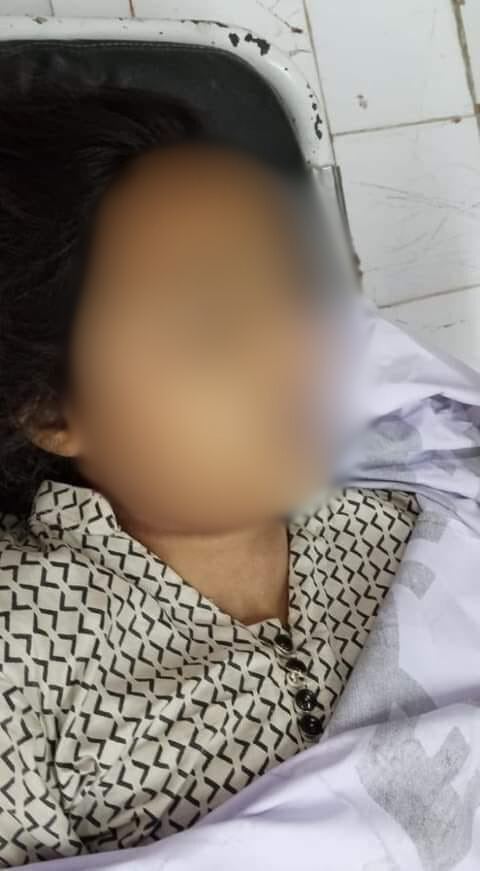
In Pakistan, the horrific murder of Karitika, a 15-year-old Hindu girl who was raped and her body was dumped in a garbage heap near Dargah Usman Shah, has once again shed light on the perilous conditions faced by religious minorities in the Islamic Republic. Just days earlier, two Hindu girls, Hema (15) and Venti (17), were found hanging from a tree in Islamkot, Tharparkar, Sindh, in another heinous crime against vulnerable minorities.

Such atrocities reflect the grim reality for women and girls from minority communities in Pakistan, particularly Hindus and Christians. They live in constant fear of abduction, violence, forced conversions, and forced marriages. Many suffer physical assaults, and in the most brutal cases, they are raped and murdered. Disturbingly, justice for such crimes remains elusive as perpetrators escape accountability, shielded by systemic failures and societal complicity.

In Sindh, home to a significant portion of Pakistan’s Hindu population, incidents of abductions and forced conversions of underage girls are rampant. Local reports and human rights organizations frequently document these abuses, yet they receive scant attention from the authorities. Victims and their families often face immense pressure, legal obstacles, and threats, making it nearly impossible to seek justice.

The plight of minorities in Pakistan is exacerbated by a judicial system that sides with perpetrators, particularly in cases involving forced conversions. Courts routinely validate such conversions and marriages under the pretext of “religious freedom,” ignoring the coercion and violence underpinning these acts.

Beyond physical violence, minorities endure systemic discrimination in education, employment, and political representation. Hate speech against non-Muslims is alarmingly common, further entrenching societal prejudices. The state’s failure to protect its minorities starkly contrasts with its constitutional claims of equality and justice.

The murders of Karitika, Hema, and Venti are not just individual tragedies; they are a damning indictment of Pakistan’s institutionalized neglect and active oppression of its minority communities. Until the Paki establishment confronts its deeply ingrained biases and reforms its governance structures, the lives and rights of millions of its citizens will remain in peril.

Abduction of Baloch child triggers massive protests in Quetta; no response from Pak regime

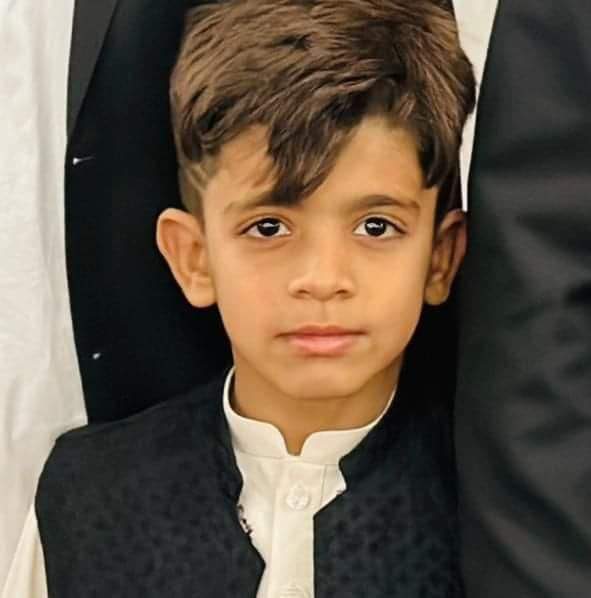
For the third consecutive day, protests have gripped Quetta as citizens demand the safe recovery of 10-year-old Muhammad Musawir, who was abducted earlier this week. Demonstrators accuse the occupied-authorities, including the police and the puppet provincial government, of negligence and failure to act decisively.

Gathering at the city’s central square on Monday afternoon, protesters chanted slogans against the occupied-authority, demanding immediate action to rescue the child. The boy’s family has expressed deep anguish, criticizing the lack of effective measures and highlighting the indifference to their plight.

This heartbreaking incident is a part of a broader pattern of systemic oppression and collective punishment by the Pakistan Army in Pak-occupied-Balochistan. Since forceful occupation of POB in 1948, the Pakistan Army has employed abductions, intimidation, and violent coercion as tools to suppress the Baloch people. This strategy aims to instill fear and silence dissent within local communities, echoing the military’s long-standing policy of collective punishment.

Since the forced annexation of POB in 1948, the Pak military has been executing a brutal “kill and dump” policy, where abducted individuals are tortured, killed, and their bodies discarded to terrorize the population. The abduction of children, like Muhammad Musawir, underscores the depths to which the Paki establishment has fallen in its attempts to maintain control over the resource-rich region.

Pak Army & TTP clash in Khyber Tirah; mortar shells hit displaced Pashtuns

Nine militants were killed, and six others were injured in the Tirah Valley of Khyber District following intense clashes with Pakistan Army. The battle, which lasted for several hours, also claimed the lives of eight security personnel and left seven others injured. Reportedly, the engagement took place at three separate points, as security forces carried out an intelligence-based operation targeting a high-value target.

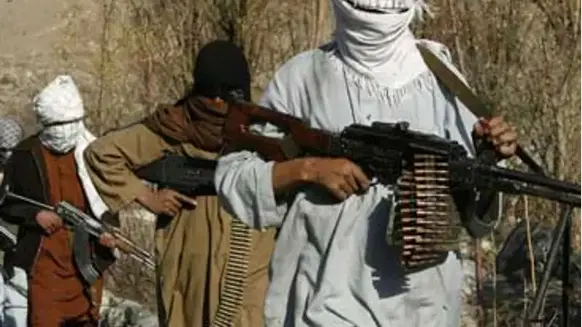
Allegedly, the Tehrik-e-Taliban Pakistan (TTP) is believed to have ambushed Pak Special Forces (SSG) during the operation, leading to heavy casualties on both sides.

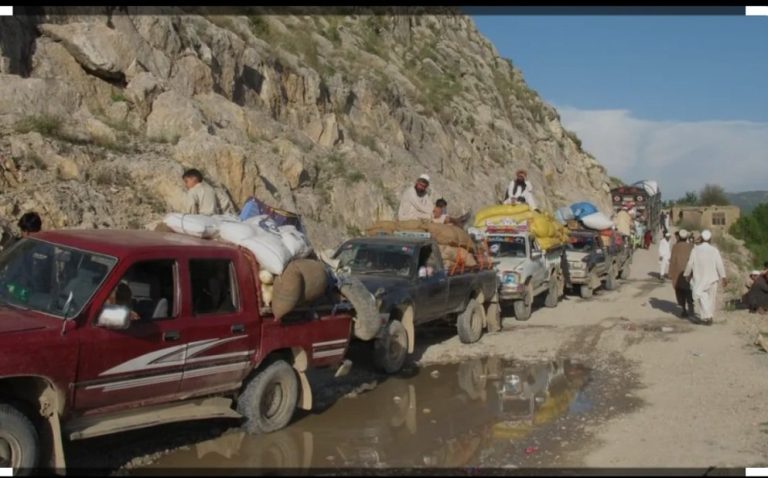
However, mortar shells fired during the clashes landed in civilian areas, causing damage to homes and injuring local residents. This incident comes amid heightened tensions as the Kokikhel Internally Displaced Pashtuns (IDPs), who were forcibly evicted from Tirah 13 years ago, have begun returning to their homes.

These ongoing clashes are part of a broader strategy by the Pak military to discourage the return of the displaced Pashtuns and maintain control over the region, which are a valuable strategic and fertile area. The military’s heavy-handed tactics shows that the Punjabi Pak Army is deliberately escalating tensions to prevent the resettlement of displaced Pashtun families, deepening their alienation. This incident is part of a broader form of exploitation and militarization of Pashtun lands, with innocent civilians caught in the crossfire.

Protests erupt in Awaran over kidnapping of Diljan Baloch by Pak Army

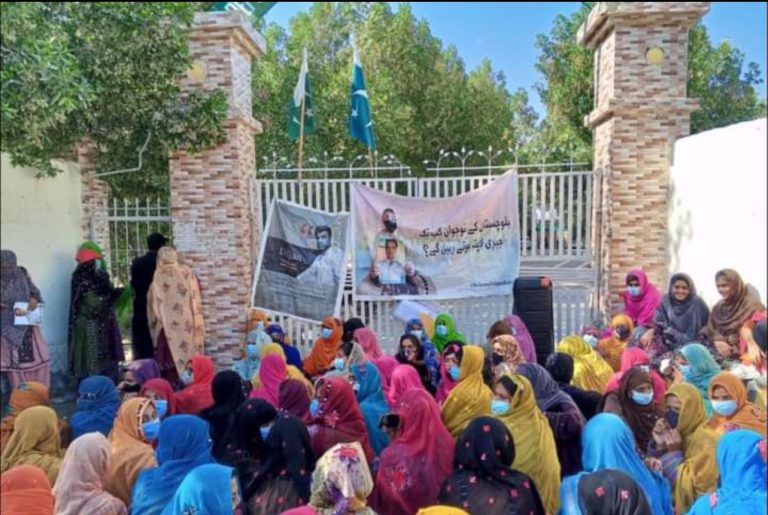
A large protest rally was held in Awaran Bazaar by the family of Diljan Baloch, condemning his enforced disappearance. The rally culminated in a sit-in outside the Deputy Commissioner’s (DC) Complex, drawing hundreds of participants, including women and children, demanding justice and the safe recovery of Diljan.

Protesters criticized the occupied-state and law enforcement agencies for their silence on the issue and called for an immediate halt to the ongoing practice of enforced disappearances in POB. Demonstrators demanded that Diljan Baloch be presented in court if there are charges against him, or otherwise released without delay.

Three weeks ago, the family had staged an indefinite sit-in for Diljan’s recovery. At that time, local authorities, including the district administration, the District Police Officer (DPO) of Awaran, and so-called-political leaders, assured the protesters that Diljan would be recovered within 14 days. However, with no progress made and the deadline expired, the family and community members have resumed their protests, as the administration of failing to honor its promises.

The enforced disappearance of Diljan Baloch is part of a systematic policy of intimidation employed by the Paki establishment against the Baloch people. For decades, the Pak Army has relied on abductions, torture, and extrajudicial killings as tools to crush Baloch identity by terror and subjugation.

Since the forceful occupation of Balochistan in 1948, the Pak Army’s “kill and dump” policy has resulted in countless disappearances. Families are left devastated, with many never receiving information about the fate of their loved ones. Protesters at the rally emphasized that these actions are not isolated incidents but a systemic feature of Pakistan’s oppressive regime in POB.

Govt school comes under rocket-propelled grenade attack in South Waziristan

An occupied- government-run school in Qara Bagh, Azam Warsak, South Waziristan, came under attack on Monday night when unidentified individuals fired a rocket-propelled grenade (RPG) at the building. While the school sustained minor damage, no major destruction was reported, according to a security official.

Reportedly, the assailants detained the school staff in a room before launching the attack. No injuries have been reported so far, but the incident has heightened tensions in the region.

It is suspected that the banned Tehrik-i-Taliban Pakistan (TTP) is involved, as the group remains active in the area. However, such incidents indicate deeper connections between terrorism and Punjabi Pak Army-backed elements.

This attack highlights the fragile security situation in South Waziristan, a part of the Pashtun-majority Khyber Pakhtunkhwa province. Pashtun territories have long faced violence by the Punjabi Pak Army under the guise of counterterrorism, with heavy militarization, checkpoints, and a lack of accountability exacerbating local grievances.

Pashtuns to protest against Punjabi Pak Army’s ‘dollar war’ on Pashtun land

On November 21, Pashtun political parties, tribal representatives, and the Pashtun Jirga will unite for a large-scale protest demonstration at Khyber Chowk in Bara Bazaar. The demonstration aims to address pressing issues, including the escalating violence in the region, dollar war, and the release of political prisoners.

PTM activists emphasize that the protest represents the collective voice of Pashtuns, who have long suffered under the weight of exploitation and militarization in their lands. The “dollar war” is the regional instability perpetuated by the Punjabi Pak Army for financial aids and political gains, with innocent Pashtun communities bearing the brunt of the consequences.

The protest comes against the backdrop of broader grievances faced by Pashtuns, including enforced disappearances, militarized checkpoints, and the use of counterterrorism as a pretext for heavy-handed control over their territories. The region has also seen systematic extraction of resources and violence against peaceful activists and journalists, particularly members of the Pashtun Tahafuz Movement (PTM).

This demonstration is a significant moment of solidarity, as Pashtuns seek justice and accountability for decades of exploitation. Protesters are also demanding the release of political prisoners detained under dubious circumstances and an end to Pak Army-backed policies that have led to widespread violence and human rights abuses of Pashtuns.

Bomb blast in Khyber-Pakhtunkhwa kills two and injures six

A bomb blast in Khyber Pakhtunkhwa province on Sunday resulted in the deaths of two individuals and left six others injured, local police reported. The blast occurred in Azam Warsak Bazaar, near the Shahzada Mosque, a busy area in the region.

The explosion led to the immediate deaths of two victims, while six others sustained injuries, three of whom are reported to be in critical condition. Local hospitals are currently treating the injured, with doctors expressing concern over the severity of the wounds.

Police swiftly cordoned off the area and launched a large-scale search operation to apprehend those responsible for the attack. While the perpetrators have yet to be identified, such bombings have become increasingly common in the region.

The Paki establishment has long used the Pashtun region as a battleground, with the Punjabi Pak Army’s under the guise of protection against militants often leads to collateral damage with children and livestocks being the major victims. The situation has been worsened by the rise of rogue terrorist groups who, once controlled or aligned with the Punjabi Pak Army elites, have now turned against their own people. These elements, originally bred by the Punjabi Pak Army elites to carry out its strategic objectives, now operate independently, making the region even more dangerous for Pashtun civilians.

The Pashtun community, already reeling from years of violence and military operations, continues to bear the brunt of this instability. While the Army touts its operations as counterterrorism efforts, it is the innocent Pashtun civilians who suffer the most, caught between the crossfire of both the military and the terrorists.

POJK: Rawalakot rally against Pakistan’s draconian presidential ordinance

The implementation of a controversial Presidential Ordinance in Pakistan-occupied Jammu and Kashmir (PoJK) has sparked widespread protests, with citizens and political activists condemning it as a draconian measure to suppress civil liberties. Sardar Mohammad Sagheer Khan Advocate of the Jammu Kashmir Liberation Front and former National Awami Party President Sardar Liaquat Hayat Khan, have publicly denounced the ordinance, going as far as burning copies of the legislation in protest.

The ordinance imposes severe restrictions on public gatherings and protests. It mandates seven years of imprisonment and immediate detention for those participating in unauthorized assemblies. It is a black law that has been brought to stifle dissent and erode fundamental democratic rights.

The ordinance mirrors the Public Order and Peaceful Assembly Bill 2024 recently enacted by the occupied-government in Islamabad, which similarly criminalizes public gatherings without prior authorization. The POJK version, however, has gone further, granting sweeping powers to Deputy Commissioners (DCs) to impose penalties, declare zones off-limits for protests, and arbitrarily disperse gatherings.

Harsh Restrictions on Fundamental Rights

Under the ordinance, only registered political parties and unions are allowed to stage protests, and even they must secure prior approval from the DC at least seven days in advance. Protest organizers are required to provide extensive details, including participant information and venue specifics. Violators face up to three years in prison, fines, and immediate arrests.

The law also empowers DCs to declare “Red Zones” and “High-Security Zones,” where protests are outright banned. Peaceful demonstrations are subject to strict controls, including bans on weapons, sticks, and inflammatory speeches. These measures are designed to stifle legitimate dissent rather than maintain law and order.

Establishment’s Colonial Approach

This ordinance has further fueled resentment against the Paki establishment in PoJK, a region already grappling with human rights abuses, enforced disappearances, and systemic neglect. Reports indicate that over 20 Kashmiri youths have been forcibly disappeared this year alone, adding to the decades-long grievances of the local population.

While the Pak military projects itself as a defender of the nation, its actions in PoJK reveal a colonial mindset that prioritizes control over development and rights. Residents have frequently protested against the lack of basic necessities, such as clean water, healthcare, and infrastructure. The recent ordinance is seen as yet another tool to silence these voices and tighten the establishment’s grip on the region.

Political activists and pro-independence groups have vowed to resist the ordinance, calling it an assault on the rights of the people of PoJK. Citizens have taken to the streets in Rawalakot and other towns, demanding the repeal of the law and not treat the region as a colony.