Home Blog Page 270

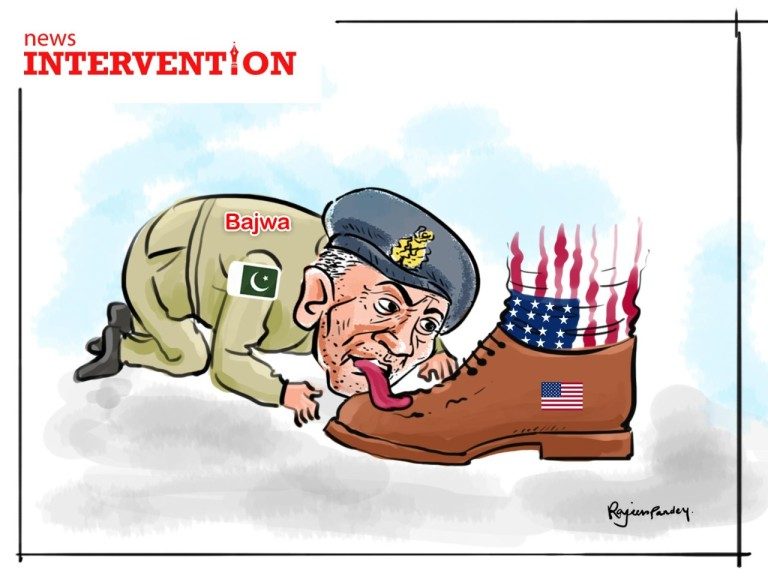
Pakistan Army’s ‘Novel Coup’ in Islamabad

By orchestrating the dismissal of the no-trust motion against himself through a clumsily contrived narrative of a “foreign conspiracy”, Pakistan Prime Minister Imran Khan has lived up to his promise of giving opposition parties seeking his ouster a “surprise”. However, the cricketer-turned-politician cannot be accused of keeping the opposition completely in the dark since in his April Fools’ Day interview [no pun intended] given to ARY News, he had mentioned that the “establishment” [Pakistan Army] had given him three options- one, to resign, two, face the no-confidence motion, or three, call for fresh elections.

So, had those baying for Khan’s blood paid heed to his revelation, they would have got a clear hint that something unusual was in the offing. After all, didn’t Khan reveal that the all-powerful Pakistan Army [which he has euphemistically referred to as “establishment”], was not only closely monitoring the political developments, but had even laid down the choices available to the beleaguered Prime Minister that were acceptable to Rawalpindi? Furthermore, by adding that “We said elections is the best option, [as] I cannot even think about resigning . . . ,” Khan did give an indication regarding the shape of things to come.

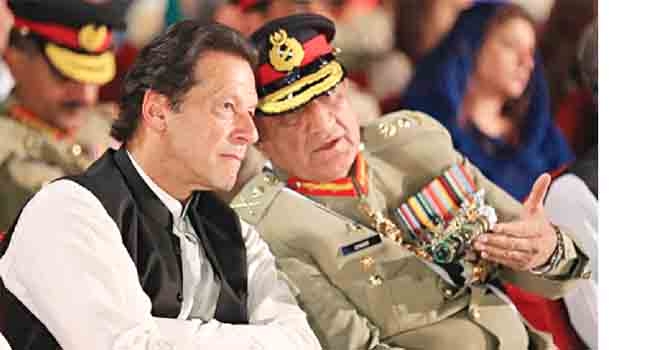
Soon after the Pakistan National Assembly [NA] Deputy Speaker Qasim Khan Suri on Sunday dismissed the no-confidence motion against Khan, the Pakistan Army stated that it was the Prime Minister who had requested for a meeting and not the military. Even the options mentioned by Khan weren’t spelt out by the army, but only “mutually discussed”. Whatever be the truth, but one thing is certain- a meeting between the army top brass and the Prime Minister to discuss the emerging political scenario did take place, and Khan cunningly exercised the third option [elections] by nixing the second [no confidence motion] which is a masterstroke that rendered the first option [resigning] superfluous!

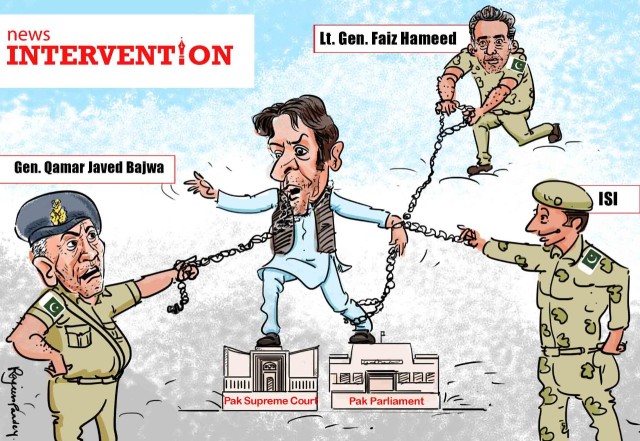
This meeting not only contradicts Pakistan Army chief Gen Qamar Javed Bajwa’s much touted “neutrality” claim, but also mocks his media chief’s oft repeated claim that “the army has nothing to do with politics”. Those hopeful that the judiciary will intervene to set right this brazen ‘murder’ of democracy through rejection of the no-confidence motion by the deputy speaker of the National Assembly may be disappointed. Despite its insistence to the contrary, the Pakistan Army is known to be manipulating the judiciary and there is credible evidence in this regard.

Readers may recall former Pakistan Army chief Gen Pervez Musharraf admitting that despite him being on the Exit Control List [ECL], the then Pak Army chief Gen Raheel Sharif had helped him to leave Pakistan, ostensibly for medical treatment. His chilling revelation was that “These courts work under pressure behind the scenes and then give decisions. The army chief [Gen Raheel Sharif] had a role to play in releasing the pressure behind the scenes”. Though Musharraf was referring to government pressure, the fact of the matter is that the army chief can, not only influence the judiciary, but also ride roughshod over the legislature!    

Then we also have the famous case of Justice Shaukat Siddiqui, a sitting judge of Islamabad High Court, admitting that “Today the judiciary and media have come in the control of ‘Bandookwala’ [literal meaning- ‘those with guns’, used here disparagingly for the army]. Judiciary is not independent” and adding, “In different cases, the ISI [spy agency of Pakistan army] forms benches of its choice to get desired results.” Since the army has been holding talks with the Prime Minister and even charting his future moves, impartiality of the judiciary while dealing with the no confidence motion case, remains suspect.

The question as to who will be the next Prime Minister is a vexed one. Many feel that while Rawalpindi may still overlook Khan’s tirade against the army, but by saying “the Indian army is not corrupt and they never interfere in civilian govt,” the PTI chief has done the unthinkable. He has berated Pakistan Army by a veiled but very obvious reference to Rawalpindi’s congenital meddling in the country’s internal politics, thus crossing the red line, which many feel rules out his political ‘rehabilitation’. However, strange things happen in Pakistan as the rejection of the no confidence motion indicates, and so, a ‘reformed’ Khan returning to power, though seemingly unlikely, won’t be a bolt from the blue.

Washington may be unhappy with Khan, but it knows there’s nothing to worry about as long as Rawalpindi is on its side, and by taking pains to reassure the US of Pakistan’s continued support, Gen Bajwa has ensured timely damage control. The good thing about Khan is that despite his sporadic outbursts, he still makes an excellent ‘marionette’, as three and half years of his prime ministership has proved, which suits Rawalpindi very well. Moreover, since he’s not averse to making ‘U’ turns, Khan can always be ‘persuaded’ by the army to tone down his anti-US rhetoric, and so his return to power, may well be the second surprise that Khan springs on his detractors!

Imran Khan’s Reko Diq Deal is malicious for Balochistan

Recently a seminar was organized by the newly formed Reko Diq Defence Campaign in Quetta Press Club (Balochistan). The seminar had the presence of many journalists, intellectuals, civil society members, politicians, Human Rights Commission members and others who voiced their discontent on the Reko Diq deal and the closed door meeting between Pakistan and a Canadian mining corporation called Barrick Gold. The speakers of the seminar demanded that the people of Balochistan have every right to know the details of the deal signed as it has not been made public so far by the Pak government.

What is the Reko Diq Deal? Why is it facing desistance from the Baloch?

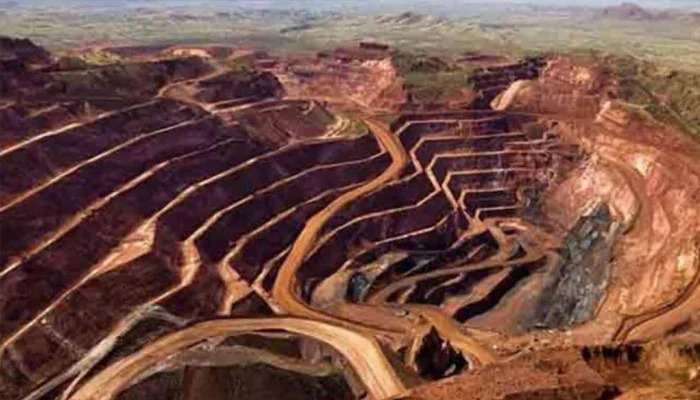
The Reko Diq mine is situated near Reko Diq town in Chagai district, occupied Balochistan. It is one of the largest undeveloped gold and copper deposits globally, which has a capacity of producing 250,000 ounce gold and 200,000 tons of copper annually for more than half a century. The Tethyan Copper company — of which the Canadian gold firm Barrick and Chile’s Antofagasta Mineral control 37.5 % each — had found vast gold and copper deposit at Reko Diq. In 2011 this open-pit mine project came to a halt after the local government denied renewing the lease with Tethyan Copper and it was declared invalid in 2013. Further, in 2019 the World Bank’s arbitration tribunal committee levied a penalty on Pakistan for “unlawful denial of mining” and declared that Islamabad had violated the Pakistan Bilateral Investment Treaty and awarded $6 billion, plus interest penalty, against Pakistan to Tethyan Copper Company Limited .

The Reko Diq mine situated near Reko Diq town in Chagai district, occupied Balochistan

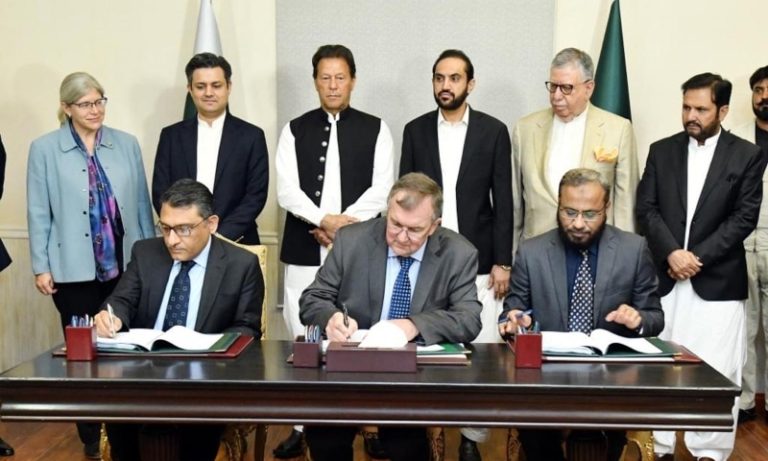
However, now Barrick, the Canadian mining company, has ended its dispute after holding multiple meetings and negotiations with Islamabad. An out of court settlement has been announced by the Pakistani officials. Islamabad on 20 March 2022 awarded the development contract of the Reko Diq project to Barrick Gold while the penalty of $11 billion, i.e. with interest imposed on Pakistan by the World Bank tribunal was dropped. It is estimated that the company will invest multi-billion dollars in Reko Diq project in Balochistan. With the successful out of court settlement of a long standing dispute, Barrick will once again be looking after the project with a full-fledged mining lease and the Reko Diq project shall be revived and developed in partnership with Pakistani entities.

After signing and revival of the project, the now ousted PM Pakistan Imran Khan took to his Twitter account to say, “RD will potentially be the largest gold and copper mine in the world. It will liberate us from crippling debt and usher in a new era of development and prosperity”. Soon after the announcement of the deal’s revival and the tweet, the people of Balochistan started to vehemently oppose the closed door meeting on mining and signing of the deal.

As opposed to the deal the “Reko Diq Defense Campaign” was launched at the University of Balochistan by the Baloch leader and former senator Lashkari Raisani and many other political workers and politicians. They held a seminar on 2nd April 22 where the former Chief Minister of Balochistan Nawab Aslam Raisani stated that “Imran Khan has said that the Pakistani state will use revenue generated from Reko Diq to payback Pakistan’s borrowings. But we need to first understand the extent of the loans that have been taken in last 70 years and how much of these have been spent in Balochistan. We will find out that Balochistan has nothing to do with these loans”. He further left a message by saying that it is the collective responsibility of the people of Balochistan to resist this “type of fake political processes to save our future”.

One of the speakers said, “Only the people of Balochistan have the right to make any deal on the resources of Balochistan”. Addressing the seminar, Rashid Karim Baloch, the Deputy Organizer of National Democratic Party also said: “…it is alleged that people of Balochistan are against the development process, but the reality is we are against exploitation not real development”. He further added “Reko Diq belongs to the people of Balochistan and only they have the first rights on it. The people of Balochistan must unite to raise voice against the exploitation of Baloch resources”. The speakers  while detesting the entire deal said that the people of Balochistan were not taken into confidence not only in this deal but also when agreements of Saindak and CPEC were signed (China and Pakistan had signed the Saindak copper gold project and the China Pakistan Economic Corridor).

Dr Ishaq Baloch, the Vice President of The National Party, said: “Reko Diq mine is a very important natural resource reserve of Balochistan, however, the agreements around it have been manipulated since the beginning. Therefore, the public now needs to know all details around the new variations of this agreement”. They stated that several aspects of Reko Diq deal with Barrick Gold are still concealed and Balochistan is not aware “of the details of the agreement”.

President of Balochistan Bar Council, Rahib Bulaidi, said that “details of Reko Diq’s resources, its excavations processes, and accountability mechanism are all vague. The violation of court orders and constitution are alarming”. He added that the state did not find it necessary to take the bar councils in confidence vis-à-vis Reko Diq.

Dr Mahrang voiced that Baloch have been misled in the past to extortion but this time any fancy increase in percentages will not distract them. “Now Baloch people will only follow the path the was envisioned by late Sardar Khair Baksh Marri”, she said referring to Baloch revolutionary leader. The Barrick Gold Corporation is also facing stiff resistance from Balochistan’s freedom movement groups fighting for the freedom of Balochistan from Pakistan’s extortion, harassment, enforced disappearances of Baloch people by Pak forces.

How Much Funds Should You Allocate in Mirae Asset Emerging Bluechip?

This large and mid-cap category fund offers enough stability that makes it a preferred choice for many investors.

For investors who want to divert their investments in large-caps as well as want the exposure of mid-caps for better returns can opt for Mirae Asset Emerging Bluechip fund in India. The fund has come out well and has performed extremely well. Earlier it stood in the mid-cap category but later was recategorised as a large and mid-cap fund after SEBI’s mutual fund re-categorization which was performed in 2018. Mutual funds under this category have to allocate at least 35 per cent of their assets each in large-cap and mid-cap stocks.

Mirae Asset Emerging Bluechip Fund has ₹21,084 Crores worth of assets under management (AUM) as on 2021 with an expense ratio of 0.71%, which is less than what most other Large & Midcap funds charge. The fund has also grown exponentially as its returns of last one year stand at 22.30%. The fund has been consistently delivering an average return of 24.08% annually having doubled the money every 2 yrs, which is outstanding.

So far, Mirae Asset Emerging Bluechip is the largest fund under Mirae Asset. The fund has stopped accepting lump sum investments since October 2016, hence investors can start with an SIP amount that shouldn’t exceed over ₹2,500 a month.

Mirae Asset Emerging Bluechip was launched in 2013 and since its inception has outperformed its peers, which were bucketed into the same large and mid-cap category in 2018. The scheme has been performing at its optimum levels and fetched investors attractive returns as well-being rates as a five-star fund under BusinessLine Portfolio Star Track MF Ratings.

Mirae Asset Emerging Bluechip has generated an average three-year return of 15.9 percent and five-year return of 16.0 per cent over the last seven-year period. During this period, the 3-year and 5-year return for the category was 9.4 per cent and 9.2 per cent, respectively. In the past five years the fund has performed extremely well during downsides as well as upsides which has improved its credibility in the market. The scheme allocates 35 to 65 percent of its assets to large and mid-cap stocks.

The fund has major investments in industries that include financial, tech, healthcare, automobile and energy.

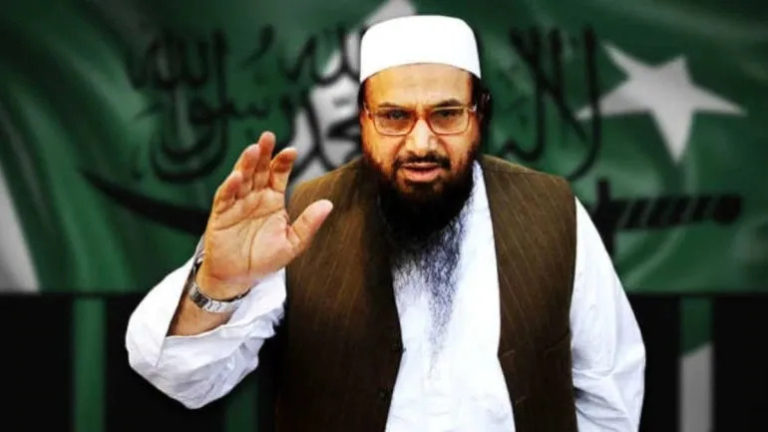
Islamic terrorist Hafiz Saeed jailed for 31 years in 2 terror cases

Lahore: An anti-terrorism court sentenced Jamaat-ud-Dawa chief and founder of the terror group Lashkar-e-Taiba Hafiz Saeed to thirty two years in jail in two cases and also imposed a collective fine of rupees three lakh forty thousand in both the cases. Judge Ijaz Ahmed Batar’s in his verdict handed down the jail term to terrorist Hafiz Saeed for sixteen years six months and fifteen years six months on two separate charges.

Saeed has been under arrest since 2019 and so far he has been convicted in seven cases. Saeed’s arrest is, however, an eyewash for the international community. Hafiz Saeed continues to run his terror network within the jail premises. In fact, he lives a lavish life at the expense of Pakistani exchequer.

The latest sentencing comes as Pakistan tries to avoid blacklisting by the global terror financing watchdog the Financial Action Task Force (FATF), which judges a country’s ability to combat illicit financing, including to terrorist organisations. Pakistan has been on the watchdog’s “grey list” since 2018.

Saeed is still an important Pakistani figure and is living a secured life under the security of the Pak army. Anti-terrorism court judge Ijaz Butter ruled on the completion of the trial. The CTD (Counter-Terrorism Department) has registered cases against Hafiz Saeed and others accused. It must be noted that Hafiz Saeed has been convicted by an anti-terror court in the past. Hafiz Saeed and other leaders of his organization were charged in December 2019 for illegal terror funding. The case was registered against Hafiz Muhammad Saeed and others by the anti-terrorism department while he was arrested on July 17, 2019 from Gujranwala, Punjab.

Kashmiris are ‘expendable’ in Pakistan’s dirty game

The latest incident of a burka clad lady hurling a Molotov Cocktail at a CRPF post in Sopore area of J&K has once again brought to focus the repugnant side of what separatists and their supporters euphemistically refer to as ‘armed struggle’ in Kashmir. The comforting part is that no one was injured in this attack as the petrol bomb missed it’s target, and the J&K police deserves a standing ovation for having quickly and accurately identified the perpetrator from a CCTV footage as Haseena Akhtar, a 38-year-old lady and arrested her.

As per police reports, there are three FIRs under Unlawful Activities [Prevention] Act [UAPA] registered against Haseena and she was out on bail when she carried out the petrol bomb attack. While she was definitely involved in terrorism related activities in the past and she wasn’t directly involved in any violent act of terrorism earlier, the police statement rightly termed her “an OGW [over ground worker] of terror outfit LeT”. However, even after having hurled a petrol bomb at a CRPF security outpost with an obvious aim to cause bodily harm, it is unfortunate that J&K police continues to refer to her as an “OGW”.

Debate on this incident has been mostly confined to the issue of terrorists using women for carrying  attacks against security forces, with some opining that this incident indicates a paradigm shift as regards terrorist strategy in J&K. While this is undoubtedly an unusual occurrence, yet to draw any hasty inference from just one instance invariably results in missing the wood for the trees, especially since terrorists in J&K have been taking full advantage of impractical laws governing search of females, and have therefore been using women as accessories while carrying out acts of violence.

In the 90s, ladies [and even school going girls] were often used by terrorists as messengers, ferrying small weapons like pistols, hand grenades and ammunition. Due to non-availability of requisite number of lady police women, as well as fear amongst security force personnel of being falsely implicated in contrived sexual harassment cases, not only the use of females as carriers but even wearing of burkas by male terrorists to avoid apprehension is not uncommon.

In this instance, some contend that the LeT may have used Haseena to hurl a Moltov Cocktail at a CRPF post since its male cadres couldn’t come close enough to the target due to surveillance being maintained by those manning this bunker. However, CCTV footage of this attack belies this argument as one can clearly see people freely moving to and fro, without any restrictions. In fact, a young person can be seen calmly walking past the lady and even looking back out of curiosity as she struggles to take out the petrol bomb from her purse and ignite it. So, the question arises- why did LeT put a woman’s life in danger to do something that its male cadres could have easily done?

The answer is not hard to find. In Kashmir, it’s not local terrorists but Inter-Services Intelligence [ISI] of Pakistan Army which plans attacks, and it does so with military precision. Knowing that very high intensity of terrorist activities could attract global censure, ISI is ensuring that while violence levels in J&K are maintained at a level that causes pain to India, it doesn’t outrage global sensitivities or enrage the international community. So, while waging Pakistan Army’s proxy war in J&K, the ISI is ensuring that phases of well-planned violent activities are suitably interspersed with short spells of uneasy calm.

The ISI has realised that perpetrating acts of terrorism without owning responsibility is a convenient way to kill two birds with one stone- bleeding India without inviting international criticism. For example, despite causing civilian deaths and injuries, terrorists continue hurling grenades at security force personnel in crowded areas. Contrary to popular belief, their main aim is not inflicting casualties on security force personnel, but provoking them to fire back in self-defence and cause collateral damage. Any civilian casualties that occur due to such action can easily be passed off as the cold-blooded murder of innocent shoppers and pedestrians by security forces.

Coming back to the incident of the petrol bomb attack on a CRPF checkpost by a woman. As this is a crude and rudimentary type of attack, its potential to cause serious damage is very low, and that’s why there’s much more to it than what meets the eye. So, this attack wasn’t planned solely with the aim of inflicting casualties on security force personnel- it had a far more sinister objective. The real aim of this attack was to provoke CRPF personnel to retaliate and since the lady who hurled the petrol bomb was literally at a stone’s throw away from the bunker, the probability of her being killed was extremely high.

Imagine just what would have happened in the unfortunate eventuality of Haseena being shot dead during or after her botched-up petrol bomb attack. Even though she had brazenly committed an undeniable violent act of terrorism, the pro-Pakistan lobby would have portrayed her as an innocent victim of excesses by CRPF and thus succeeded in arousing public ire against the establishment and security forces. With a host of rights activists in India, who for reasons unknown, are ever-ready to jump in and without even caring to investigate the truth, join pro-Pakistani groups in maligning the government and security forces.

The suggestion that terrorists had lured a young lady into a dangerous situation wherein she could perish may sound outlandish. However, the fact of the matter is that for terrorists, their ISI masters as well as its proxies like All Parties Hurriyat Conference [APHC], Kashmiris are ‘expendable’– an inference supported by hard facts, like terrorists provoking security forces to retaliate in crowded places. A classic example concerns the Indian Parliament attack facilitator Afzal Guru who was awarded capital punishment.

While APHC sheds copious tears on his execution, readers would recall that a US cable released by WikiLeaks mentions- “Moderate Hurriyat Leader [Mirwaiz Umar Farook] told PolOff (political office) candidly that his faction of political separatists was remaining as quiet as possible about the issue because they do not feel strongly that India should pardon Afzal [Guru]”.

The Mirwaiz washed his hands off Afzal Guru, not on grounds of principles or ideology, but only because for the ISI and the pro-Pakistan cabal, a dead Afzal, was far more valuable as a propaganda tool than him being jailed for terrorist related activities. Similarly, other APHC leaders including stalwarts like late Syed Ali Shah Geelani and Yasin Malik too have not only been silent spectators as far as killing of innocent Kashmiris by ISI backed terrorists is concerned, but on several occasions even defended such killings.

As per reports, Haseena is an ardent follower of ‘Dukhtaran-e-Millat’ [DeM] founder and chief Asiya Andrabi and while she is well within her rights to follow whatever ideology she believes in. However, this doesn’t give her the right to indulge in violence and so she must face the consequences of her crime. It’s not known whether Haseena has any progeny, but if she has any, then going for them will be particularly rough because Haseena’s husband is also currently behind bars on charges of stone-pelting.

So, while cooling her heels in jail, the Sopore petrol bomb attacker may take solace from the fact that Andrabi too is currently in jail on terror financing charges, the thought that unlike Andrabi’s son who’s living up life in Malaysia, her own kids would have to fend for themselves, will surely come to haunt her!

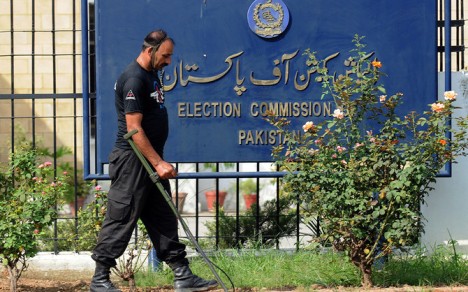
Can’t hold elections in 3 months: Pak’s Election Commission

The Election Commission of Pakistan (ECP) has expressed its inability to hold general elections over the next three months citing various legal hurdles and procedural challenges. A senior official of Pakistan’s Election Commission said that preparations for the general elections would take around six months.

The Election Commission official said that the latest demarcation of constituencies, especially in Khyber-Pakhtunkhwa, where the number of seats was increased under the 26th Amendment, and assigning the electoral rolls district-wise is a big challenge. He added that demarcation of constituencies is a time-consuming task whereas the law provides one month to make objections while they require another month to resolve them.

The election official explained that would take at least three months to complete the work, after which updating the voters’ lists would be another big task. He said procurement of election material, management of ballot papers and appointment and training of polling staff are also among the challenges. “Under the law ballot papers with water mark are to be used which are not available in the country and they will have to be imported. The ECP had proposed to amend the law to provide ballot papers with ‘security features’ instead of ‘watermark’. Inviting bids and checking financial and technical references will also require some time,” the official added. 

The Election Commission Pakistan official also said that there would be a massive requirement of election material for about 100,000 polling stations. “There would a requirement of 2 million stamp pads, a large quantity of scissors and other writing material including ball point pens also need to be ordered.”

Citing some legal hurdles, the official said that under Section 14 of the Elections Act, the ECP was to announce an election plan four months before conducting the general elections. He said that the law to use EVMs (electronic voting machines) and granting voting rights to Pakistanis overseas also came into the fray and had to be repealed. The commission has already announced the schedule for municipal elections in Balochistan.

Polling day has been fixed on May 29 and local elections are also underway in Punjab, Sindh and Islamabad. “If general elections have to be held, we have to stop the plan for municipal elections,” he said. Expressing deep concern over the recent political developments and the resulting constitutional crisis, the Free and Fair Election Network (FAFEN) has identified a number of constitutional, legal and operational challenges in holding early elections. The constitutionality of the steps to dissolve the National Assembly will be decided by the Supreme Court, a statement said.

FAFEN hopes for an immediate decision from the Supreme Court, which correctly raised the issue automatically because any delay would continue to cause supplementary problems due to constitutional deadlock. “As a result, there has already been public confusion and political divisions that could potentially turn into violent expression,” FAFEN added in the statement. The organization said that political parties have a great responsibility to organize their workers and ensure that political differences do not turn into violence, especially before the premature elections. According to FAFEN, early elections cannot be a smooth process given many constitutional and legal complexities. Their statement further said that the main factor of the legality of any election will be the completion of the Election Commission. FAFEN pointed out that Election Commission Pakistan (ECP) members from Punjab and Khyber-Pakhtunkhwa are yet to be appointed.

India’s geo-political stocks rise amidst Ukraine war

It’s all about geo-politics and money, honey. Human lives don’t count.

Strategic and Operational Review of the War.
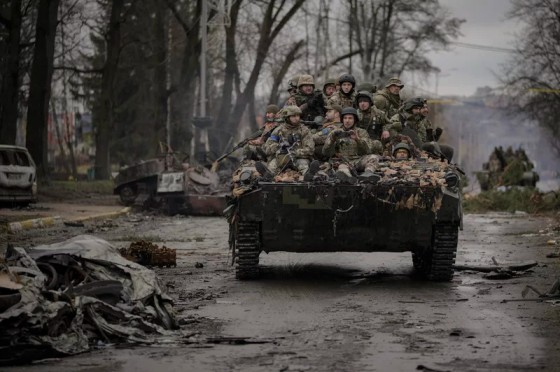
The Ukrainian war is into its second month with no end in sight; western press is talking of a stalled Russian offensive, leading to a desperate Putin getting more brutal with more indiscriminate bombings and rocket attacks in civilian areas. The Russians deny any deliberate targeting and accuse Ukrainian forces of using civilians and civil structures to target Russian troops. The truth lies in between. I assess that Russia is not done yet, her major strategic military objective of surrounding and isolating Kiev, cutting off Ukrainian and other probable forces access to the Black Sea and sea of Azov, and capturing major portions of Donetsk and Luhansk enclaves with the aim of absorbing it along with formalising the absorption of Crimea is still within reach.

However, there has been some signaling from the Russian side that they are now reshaping and moderating their war aims and terminal objectives which does not include Kiev; met with customary scepticism by the West. The Russians are masters of deception and psychological warfare and difficult to predict. Time will tell how this is going to pan out.

There is a general consensus, that actions of the USA and NATO in the last two decades precipitated the crisis, leading to the war which undoubtedly is President Putin’s creation. However, while easy to condemn Putin, it is debatable, that with a distinct probability of NATO suddenly including Ukraine into its fold (in the backdrop of continuous expansion despite repeated Russian request: interestingly membership of Ukraine was not once denied by NATO or Ukraine, except after the invasion), if any other Russian leader would have taken a similar drastic step. Let us not forget that NATO membership provides Ukraine collective security guarantees under Chapter 5 which follows ‘all for one and one for all’ guiding principles, allowing the deployment of forces and weapon systems (including nuclear assets, missiles and rockets) within member nations. Putin using extensive EU, NATO support to Ukraine significantly impacting Russian security has placed his nuclear deterrent forces on high alert. The equally powerful and potent domain of ‘information warfare’ leading to weaponization of social media is undoubtedly being waged by all sides, but being comfortably won by Ukraine supported by the West.

Complex Geo-political Cauldron: Russia, ‘the energy superpower and a nuclear power’ is unlikely to stop the war till it’s redline demands are met (guaranteed formal agreement of Ukraine not joining NATO, Crimea becomes part of Russia, with an aim plus of Luhansk and Donetsk region merging with Russia and no locating of NATO forces and weapon systems East of an agreed designated line). Ukraine an independent proud nation with deep linkages with Russia has found its national calling under Zelensky, and will not surrender thanks to the brave and selfless armed forces and citizens, helped diplomatically, economically, militarily and geo-politically by USA and NATO (except for physical deployment of forces; however presence of using US and NATO special forces are circulating with dangerous implications of widening the conflict, as also employing mercenaries by both sides making a volatile situation even worse as they have neither loyalty nor scruples).

NATO finds its raison d’etre in evil hegemonistic, revisionist Putin, rearms, gets stronger and more united, plans to live life sans Russian energy. USA gets the cake and eats it too: it stabilises Europe with resurgent EU and NATO confronting a weakened Russia, searches for alternate sources of energy with erstwhile adversaries and backburner friends like Venezuela, KSA (Kingdom of Saudi Arabia) and even Iran by softening its nuclear stance; which allows it to focus on its officially stated peer competitor and adversary China and the Indo-Pacific region; the pivot of the future. Unfortunately, the bottom line is that the Ukrainian people are suffering immensely, and the situation has created the largest refugee crisis in Europe, and the geo-political and economic impact will adversely affect the world and its alignments profoundly.

China and India caught in the centrifugal forces of events.
Caught up in the centrifugal force of events are two nations; China an emerging superpower and India increasingly playing the balancing role in Asia and now the world. The Ukraine war has added both similar and contrary layers to the geo-political environment enveloping both countries. Simplistic assessments in black and white, of them caught between a rock and hard place between two competing orders does not truly illuminate the nuances of a multi-polar world in throes of change. So far both China and India have walked a fine line by not calling out Russia for its aggression, but concurrently supports the sovereignty of nation states and diplomacy and peace instead of war (interestingly both have not recognized the 2014 annexation of Crimea).

Many feel that Xi was taken by surprise at Putin’s war, and India too would have hoped for better sense to prevail amongst all direct actors to pull back from the brinkmanship displayed. Ideally both China and India would like to continue maintaining strong ties with Moscow, safeguard relationship with Ukraine (specially trade), strengthen economic ties with EU, ensure nil or minimum impact of sanctions, and concurrently strengthen/maintain ties with USA and neighbourhood. Obviously, though similar and common aspirations, the nuances are markedly different; for example, while China would be keen to ensure no further deterioration of ties with USA, NATO and EU (specially trade), India would like to continue enjoying a strong strategic partnership with both Russia and USA keeping its unique requirement vis-a vis China and Indo-Pacific region. It does make one wonder, if both nations had set aside their differences, found common ground to address the Ukraine crisis together: would it have made a difference or even avoided the War?

Obviously, realising all aspirations will be impossible, and the stance taken by both nations will be increasingly difficult to maintain and will come at a cost. Given the current strategic climate post COVID, and events leading to the war specially a belligerent, assertive China, she may well bear the heavier cost. India thanks to its rising stature and growing geo-political clout and current adversarial relations with China has so far been able to weather the storm. As the war prolongs, with corresponding economic (certainly the most vital in this hardened ‘real politik’ world), human, material, infrastructural costs, coupled with the massive refugee influx in Europe, it is going to get harder to maintain strategic autonomy or stay neutral. Already both sides (West and Russia) are getting more strident in asking both China and India to back them more overtly and unequivocally.

China at Crossroads: Larger the power the more you gain or lose.
We need to be clear that the Chinese ship bears the flag of Xi and CCP and not of China. China has openly blamed the actions of NATO’s eastward expansion with full support and encouragement by the ‘West’ (NATO, EU, Japan, South Korea, Australia and nations aligned to them) for causing the war. The Ukraine war is exposing the vulnerabilities and limitations of Chinese President Xi Jinping’s foreign policy. Beijing’s global aspirations are now clashing with its desire to remain selectively ambiguous and aloof. Although Chinese leaders may not recognize it, their country’s closer alignment with Russia may rebound at least in the short and medium term. Relations with Europe has already taken a hit, Washington has warned of severe repercussions, Japan, South Korea and Australia apprehending the Russia-China alliance have already indicated closer ties with West and getting militarily stronger, and traditionally nonaligned countries and Africa could revolve away.

F.M. Wang’s visit to India on 24 March 2022 indicates that China is deeply concerned about the longevity of the Ukraine war and its international ramifications to itself. China is realising that her ‘no limits’ relations with Russia has limits after all. India seeing the closer and strengthening (and isolated ties) between China and Russia may well start aligning openly and strategically with USA and the West; with far reaching consequences to Chinese Indo-Pacific interests. Chinese continued support to Russia could consolidate a return to ‘cold war geo-politics’ with USA and rejuvenated, more potent West (and many others who currently prefer non-alignment or strategic autonomy/neutrality like India) on one side, and China and Russia (the weaker pole) on the other. China which always supports a multi polar would be destroying its own dream of becoming a global power. A weakened isolated Russia might someday return the favour by supporting Chinese territorial aspirations or cooperating on revising the structures of global governance (this eventuality needs a separate article as it now increasingly within the realms of probability). It may not be out of place to say the current China’s position appears confused; supporting Russia overtly but urging respect for a nations’ sovereignty.

What could be Xi’ Jinping’s rationale?  
Xi Jinping does not run China’s political system alone, but as with Putin, the consolidation of personalized authority over an extended period of time has rewired the decision-making processes in his favour and his advisers. As a result, on issues ranging from Taiwan, India to Ukraine, the entire political system in China is dictated by Xi. The foreign policy directive till 2027 enunciated in the 20th Party Congress, will be driven entirely by Xi’s subjective view of international events and the increasingly isolated decision-making ecosystem that surrounds him. Xi may perceive that by stopping short of providing any direct military aid to Russia, it will at most suffer secondary sanctions for its political and economic support. While the West is focussed on Ukraine and Europe, China could play her hand in the Indo-Pacific and Asia, specially Taiwan, boundary dispute with India along LAC and China seas. It is possible that Xi seeing the bleak security environment post COVID against China, with little possibility of change around and increasing cooperation within the ‘West’, views close partnership with Russia a credible response to build on (also implying its confidence in her own global heft), thereby providing an alternate credible order, with Russia obviously playing the junior partners role (which could be a problem in times to come). 

India: World leaders are descending in New Delhi, and those who are not, are calling up; Japanese and Australian PMs with $42 billion and $282 million investment, Israel P.M. expected shortly, visit of Chinese FM Wang, UAE signed $100 billion trade pact, and QUAD confirming India’s strategic importance; and incredibly Imran Khan of Pakistan praised India’s independent foreign policy. They appear to conveying a clear message and one request; understanding of India’s nuanced stance due to her own geo-political compulsions, and requesting India’s considerable clout to stop Putin from continuing the war. When it comes to the Indo-Pacific region and Asia, leaders are at pains to tell India that their relationship will NOT be impacted by India’s stance regarding Ukraine. The icing on the cake was the visit of China’s F.M. Wang Yi, who was treated very firmly and courteously with the unequivocal message that business as usual is only possible if the LAC impasse is resolved. I have had confidence in India’s growing international stature in all realms be it economic, diplomatic, military or geo-strategic; which now stands amply vindicated, given decades of mature, consistent foreign policy stands and actions.

False Narrative of India on shaky ground: The widely written and heard narrative that India’s current stance on Ukraine, will considerably weaken/dampen the global reaction in case China attempts to use force along the LAC, is in my opinion flawed. Finally, it’s all about national interests and economy; a revisionist, belligerent, offensive China will be met with even more resistance by the West, given Chinese potential and comprehensive national power (CNP) intertwined with the global economy, especially when the West and the Rest perceive that in partnership with Russia she is trying to change the world order. The reaction could be muted if at all, not because of India’s stance in the current Ukraine war which all have accepted, but due to economic compulsions. Led by the USA and her allies, most nations will support India in all domains less the kinetic/military domain. They will do so gladly, as it means tying up China within South Asia/Asia, divert her focus from her China dream (superpower by 2050), reduce her potency in the China seas and against Taiwan and most importantly slow down her growth aggravating the adverse domestic dissensions. They will assist, also because India is not a small power, but a potent, experienced, professional military power with economic resources, with the potential of grinding down China and keeping it engaged.

A word on our relationship with Russia; this too has undergone subtle changes in the last decade with both nations seeking more alignments and alternatives to meet their strategic compulsions (however, we cannot ignore the military hardware dependence of nearly 70%). For obvious reasons of growing stature, flexibility in military domain, niche technologies, and belligerent China (and Russia getting cozier to China and even Pakistan), India has strengthened her relations with the West, dampening the deep relations with Russia. Currently, we need to maintain our strategic autonomy as we need both the poles.

Current Status and Conclusion
Meanwhile, the Ukraine war continues in a multi-domain mode, the visible kinetic hybrid war between Ukraine and Russia; non-kinetic, non-contact operations in other domains of economic, diplomatic, political, information and cyber between Russia and the US led West; over three million refugees and counting; not to mention human casualties of soldiers and civilians.

Realisation has come that a China-led global order can be quite detrimental, and urgent steps are needed to stall China’s rise. Naturally, some nations mostly governed by authoritarian regimes/dictators do find common cause with Xi and CCP style of governance. Security alliances such as NATO, QUAD, and AUKUS have got rejuvenated with a renewed sense of purpose. Though Xi Jinping has made attempts to play the mediator role requested by Ukraine, it is clear that the costs of defending Russian President Vladimir Putin are rising, specially with Russia getting bogged down, and increasing collateral damage and refugees. After meeting the German Chancellor Olaf Scholz, Xi described the situation as ‘worrisome’, and has announced that it is providing war-torn Ukraine with about $790,000 in humanitarian aid.

Let us be clear that China is not worried about its global status on being closely associated with Russia, but is worried about the economic consequences, given her slow growth rate and rising internal challenges. Supply chains of Russia and China (which are more global) will be impacted as all nations will try to lessen their dependence and vulnerabilities, which is already happening globally. In this dynamic and volatile climate, India must now focus on ‘Aatma-nirbharata’ (self reliance) for all sensitive and critical domains and technologies, as also strengthen her CNP especially her military and economic power. Finally, India is uniquely positioned not just to strengthen her geo-political status, but also to prevent a deeply destabilizing and extremely violent conflict from escalating.

Who will be the next Pak Army chief?

0

Imran Khan is a mere pawn. The real fight is about who would be the next Pak Army chief?

Imran Khan deceives Pakistan, saves his skin

Pakistan President Arif Alvi acting on the advice of Imran Khan dissolved the National Assembly in order to save “selected PM” Imran Khan from certain defeat in the No-Confidence Motion.

The session of the National Assembly was convened under the leadership of Deputy Speaker Qasim Suri. In the beginning of the meeting, Law Minister Fawad Chaudhry termed the resolution as an attempt by a foreign country to change the government in Pakistan. In his address to the National Assembly, Fawad Chaudhry said that the no-confidence motion is presented under Article 95 of the Constitution, but Constitution’s Article 5 mentions that loyalty to the country is the responsibility of every citizen.

Article 5 (1) states that loyalty to the state is the primary duty of every citizen, Art (2) states obedience to the Constitution and the law is an obligation to every citizen, wherever he may be, and everyone who is currently in Pakistan.

“On March 7, one of our ambassadors is [ was ] summoned to an official meeting and he attended the meeting,” said Fawad Chaudhry. The meeting also had ambassadors from other countries, our ambassador was informed that the motion would not move.

He said that no confidence was presented on 8 March and that “our Ambassador told that the relationship of this country with Pakistan depends on the success of this movement. Immediately after Fawad Chaudhry’s objection, the Deputy Speaker addressed the Members of the National Assembly and said that the opposition had moved the No Confidence Motion against the Prime Minister of Pakistan on March 8, 2022.

The no-confidence motion must be in accordance with the law and rules. He said that no foreign power has the right to call down Pakistan’s elected government under conspiracy. “The points raised by the Law Minister are correct, therefore I rule that the no-confidence motion is against the constitution, national sovereignty and independence and I rule that it is against the rules and regulations.” He further said that “in exercise of the powers delegated under Article 3 of Article 54 of the Constitution of the Islamic Republic of Pakistan, I dismiss the meeting convened on Friday, 25 March 2022”. At the same time, Qasim Suri adjourned the lower house for an indefinite period. Earlier, Maryam Aurangzeb had presented figures in a tweet of 174 MLAs who were supporting the opposition in the no-confidence motion.

Pak’s ‘selected’ PM Imran Khan on his way out

Pakistan’s National Assembly will vote for no confidence motion against Prime Minister Imran Khan on 3 April 2022. It will require 172 united opposition votes to form the government. The opposition votes include more than 20 members of Imran Khan’s party, including government allies MQM, BAP, Q-League and other independent members who will vote against Imran Khan.

Sources said that Imran Khan has sent provocative messages to his party workers to prevent his party’s assembly members from reaching the National Assembly under any circumstance. To which the Pakistan Army Chief General Qamar Javed sent a message to Imran Khan that inciting people would be a threat to the security situation in the country. The Attorney General has issued a statement that the motion for no confidence in the National Assembly will be peacefully conducted during the voting and there will be no disturbance.

Imran Khan in an interview to Ary TV channel said that the establishment gave him three offers from the opposition, which were: Face distrust motion, resign or hold elections. “Early elections are the best way and I will fight the no-confidence motion till the last minute,” Imran Khan said, referring to the options before him. He said he would never resign. Ironically, Imran Khan’s government in Punjab has also come to an end. Punjab Governor Chaudhry Muhammad Sarwar accepted the resignation of Chief Minister Usman Bazdar. The Punjab cabinet has also been dissolved after the resignation of the Punjab Chief Minister was accepted. The Governor of Punjab has convened a meeting on 2nd April to elect the new Leader of the House.

It may be recalled that a few days ago, Prime Minister Imran Khan had named the Speaker Punjab Assembly Pervez Elahi as chief minister in place of Chief Minister Usman Bazdar. In return, the Muslim League-Q announced its support to the government in the no-confidence motion. On the other hand, reliable sources say that President Pakistan Arif Alvi has sought opinion from legal experts on his resignation. It is believed that Arif Alvi will resign on 3rd April after Imran Khan’s removal in the no-confidence motion voting.

It should be noted that after the removal of Imran Khan, the joint front of opposition parties has planned to remove the President, then the Chairman of the Senate, and then the Speaker and Deputy Speaker of the National Assembly from their posts and bring their own people.