Home Blog Page 269

Nokandi & Chagai incidents reveal Pakistan’s psychological defeat: Dr. Allah Nazar

Baloch nationalist liberation leader Dr. Allah Nazar Baloch while condemning the Nokandi and Chagai incidents said that it was a continuation of the ongoing genocide and collective punishment in Balochistan. He said, “This is not the first kind of incident and will not be the last. The massacre of Baloch people has been going on for seventy four years of Pak occupation and has turned Balochistan into a military cantonment. There are Nazi-style concentration camps here. For Pakistan’s brutality, the word collective punishment and genocide seem too small”. He added said that the Baloch nation has decided that the only way to seek revenge our innumerable martyrs and their sacrifices is freedom.

The so-called development, mega projects, troop withdrawals or negotiations are the manifesto of the parliamentary parties because protection of Baloch national survival and identity is not possible without independence of Balochistan. Independent Balochistan is the goal of Baloch sacrifices.

Dr. Allah Nazar Baloch said that the guardians of international human rights, the United Nations and the world powers should play their moral role because the Baloch nation is fighting its war as a nation in accordance with the international law. Today it exists as an organized movement.

Addressing the Baloch youth and the Baloch nation, Dr Allah Nazar said that “our enemy is an unnatural state and has completed its natural age. Its economy is declining and the only state structure that’s present in is in the form of army only, while new energy is entering Balochistan’s independence movement everyday. We are right and the occupying state is wrong. We are sure of our victory, but for this we must face the enemy with new determination and courage.”

Dr. Allah Nazar Baloch also explained that incidents like Tezi, Nokandi and Chagai are the result of psychological defeat of the Pakistan Army which is unable to compete with the Baloch rebellion.

Should Imran Khan be demonized?

Pakistani Prime Ministers, Presidents or Army commanders who usurped political power through a military coup, one and all, have been on the list of our adversaries. As such it has become our culture to demonise them. But there are strong reasons for our estrangement and these can be looked up in history. The very basis on which Pakistan was created is the antithesis of rational and humanistic criteria of coexistence among people of different faith, culture and languages. Pakistan was created on the principle of exclusiveness. Iqbal said that Musalman is a different creation, different from all other human creations. But he could not give a cogent argument to convince us in what respect a Musalman was god’s different creation. Just to say that Islam is god’s choicest religion and that Musalmans are born or created by Allah to dominate all existing religions and rule the world is hardly a convincing argument. At least for the last so many centuries the colonial powers of the West have been ruling almost all the five continents of the globe.

The crux of the Indian freedom movement was that the Muslims of India opposed the freedom from the British colonial yoke unless a separate state for the Muslims of India was carved from Indian territory. Ultimately, with the connivance of the British colonialists, they managed to trifurcate India into India, Pakistan and later on Bangladesh. In recent years, Kashmiri Muslims surrendering to the Pakistani proxies have extirpated the small Hindu community from their homeland and Islamised the Kashmir Valley. Short of declaring it a Muslim State (within the secular Indian Union), it is an Islamic State for all intents. Kerala is fully under the sway of Islamists and in West Bengal, Mamata Banerjee is fulfilling the agenda that Nehru had set forth for corroding India’s secular denomination.

These are hard facts. Some nationalists will not be happy to put them as a record. But unless we accept the ground reality we will not be able to come to the roots of the problem. Many commentators have criticised India for not agreeing to talk to the military Generals of Pakistan on the Kashmir issue. After all the world knows that the real power in Pakistan rests with the Army and Kashmir and foreign affairs are handled by the Pakistan Army alone. If that reality is understood by India then why does she dither from talking to the Pakistan Army? Have not the democracies in other countries of the world been talking to autocrats or autocratic regimes?

When Mehbooba Mufti and  Farooq Abdullah, the ex-Chief Ministers of Kashmir implore India to talk to Pakistan — considering her a stakeholder —- they mean that the Indian leadership should talk to Pakistan Army. We do not know whether Indian authorities understand that or go by the advice of the intelligence sleuths which is misleading in most cases owing to their lack of understanding of the Kashmir psyche. India’s top decision-making circles are, therefore, convinced that as long as the Pakistan Army remains in control of the Kashmir issue, there will be no solution to the tangle. The interest of the Pakistan Army lies in the simmering Kashmir conflict. If this is the steel-frame conclusion drawn by the Indian policy planners, then we need to remind them that for the first time an opportunity has surfaced in which the masses of people have started challenging the Pakistan Army’s hegemonic behaviour and its greed to outstrip it’s legal jurisdiction.

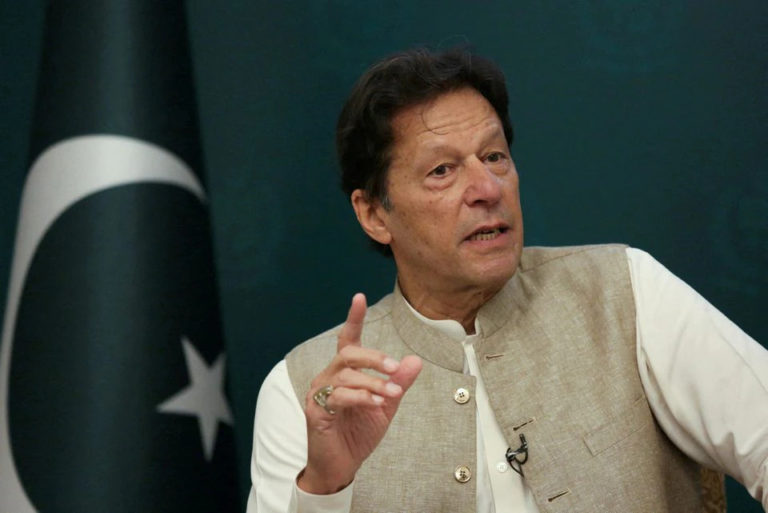
Imran Khan Niyazi deserves kudos for awakening his people against the hegemony and authoritarian disposition of the Pakistan Army. He is performing a great role in delivering his nation from the yoke of authoritarianism of the Pakistan Army. India may not directly interfere in the internal matters of Pakistan but on a moral and humanitarian basis what ensures peace and tranquillity in the subcontinent should be forcefully supported. It is for the first time in the history of Pakistan that a massive public cry has been raised against the hegemony of its Army and it is for the first time that the large masses of Pakistan have come out on the streets to decry American interference in the internal matters of Pakistan. American repudiation of Imran Khan’s allegations is weak knowing the entire gamut of US-Pak relations ever since the creation of Pakistan. A wide section of thinkers in Pakistan asks the question what benefit did Pakistan derive by joining the American initiated military pacts like Baghdad Pact, CENTO or SEATO ?

In the course of the unusual political and legal fracas in Pakistan ending up in the ouster of Imran Khan, the Pakistan Army got not only exposed but even humiliated. Misbehaving with the elected Prime Minister, challenging his authority and powers and finally playing a subtle role in the overthrow of a duly elected government has convinced Pakistan and the world that as long as the army holds sway over the domestic and foreign policy of Pakistan, this nation cannot find its way out of the morass. The division within the Pak army is no more a secret. The officers of the younger generation are receiving revulsive stories of how the senior officers have looted the country’s treasury and have built a luxurious life for themselves and their progeny in the US.

Only a few days back Pakistan Army ordered the bombardment of certain locales in the provinces of Kunar and Khost saying the TTP had assembled there. If that is true and Pakistan finds justification in the airstrikes, then India’s action in Balakot is equally justified. Afghan Taliban have resorted to gunfights when Pakistan Rangers tried to set up barbed wire to demarcate the Durand border with Afghanistan. Kabul regime issued a stern warning that it never accepted the Durand Line and would never allow artificial division of Pashtuns as Pakistan wished. We can predict with confidence that the Durand Line issue is going to become a huge flashpoint between the Taliban and Islamabad. These are all symptoms of the Pakistan Army losing its grip on the internal and external affairs of Pakistan and political parties eyeing the ultimate return of the Pak Army units to their barracks to run their unending mutual dissensions.

The U.S will change its policy and perception of Pakistan once it understands how fragile the Army’s position has become. The Baloch nationalist forces have declared installation of their government.

In the final analysis, Imran Khan has embarked on playing a historic role in Pakistan. The only power that can decimate Pakistan Army’s hegemony and domination in Pakistan is the power of the masses. Fortunately, the quirk of destiny has, at long last, instilled the masses of people with a sense of pride and the will to live the life of a free, independent and honourable people and shape their destiny with their hands. This is a moment for India to play a constructive role in helping the people of Pakistan stabilise democracy and restrain the Pak Army from playing a spoiler. But we know that India has rarely shown the guts to play a decisive role at a crucial turn of history. Tragically, she has stuck to the cheap trickery taught by demagogues and not to the bravery taught by warriors like King Lalitaditya, Rana Pratap, and Chhatrapati Shivaji Maharaj and Rani Lakshmibai of Jhansi. The deposed Prime Minister of Pakistan has far larger gatherings to address and lead than what was the position while he was in power. It is for the people of Pakistan to decide whether they should demonize Imran Khan or lionize him as the hero of the modern history of Pakistan.

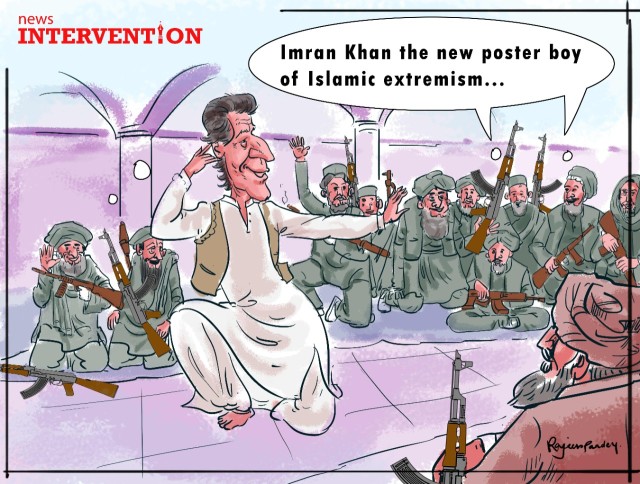
Imran Khan the new poster boy of Islamic extremism

0

…and here comes the new poster boy of Islamic extremism–Imran Khan.

30 Islamist madrasas at POK turn into terrorism factories

Of the ten districts in Pakistan-occupied Kashmir (POK), Muzaffarabad, Neelam Valley, Hattian Bala and Forward Kahuta have a high level of Islamic extremism. According to an estimate, at present there are more than thirty Islamist madrassas, which in reality are factories of terrorism.

About twenty seven madrassas can be found across Mirpur, Bhimber and Kotli which belong to the Barelvi sect and four madrasas are owned and operated by the Taliban. In the past when the Taliban were ready to send mujahideens to the Indian Kashmir, their base camp was in Kotli. Neelam Valley, Hattian Bala, Forward Kahuta and Kotli are a few districts that share border with the Indian Kashmir. The madrasas in these districts are used to sneak in mujahideen across the Indian Kashmir to spread terrorism, the consequences of which are then borne by the common people.

Significantly, the Jamaat-e-Islami has firmly planted its claws in Kashmir, especially in Bagh and Rawalakot where they have literally started a mujahideen factory. They have turned young impressionable Muslims into Islamist cannon fodder, and continue to work on their evil plans.

Similarly, in Bagh and Rawalakot there are extremists of Sipah Sahaba, Lashkar-e-Taiba, Lashkar-e-Jhangvi and Jamaat-ud-Dawa whose only job is turn themselves into suicide bombers and/or spread religious extremism. These Islamic extremists openly carry out their activities in these areas of occupied Kashmir. They run religious seminaries as well as NGOs and raise millions of dollars in the name of philanthropy, which is then used to carry out their evil “mission”. They employ all possible means to eliminate secular minded people and are responsible for tarnishing the image of religious Muslims.

These Islamic fundamentalists relentlessly campaign against anyone who tries to question or reason out with them. Negative propaganda is openly spread so that rational and secular people are unable to speak up. All questioning is curbed because Islamists find it very difficult to answer questions, they are only used to giving sermons. Pakistan’s intelligence agencies offer full support to these Islamist fanatics.

Islamist fanatics in Mirpur, Bhimber, Kotli receive all kinds of support from the Pakistani intelligence agencies. Although religious jihadists are also present in large numbers in these districts but the methodology is slightly different. This is because the people of this region are Peeri-Mureedi (disciples of Sufis and Saints)types, which is seen in the Barelvi sect of Islam.

Pakistani intelligence agencies play the Islamic religious card in a way that antagonizes different sects and beliefs of people of “Azad Kashmir” (POK). Their actions ensure that all sects are at loggerheads with each other.

It would not be wrong to call Jamaat-e-Islami, Lashkar-e-Taiba, Jamaat-ud-Dawa, Lashkar-e-Jhangvi as the radical Islamist military wing of Pakistan Army and the ISI. Ganga Choti is a famous tourist spot of Bagh. Ganga Choti is at around 12,000 feet above sea level and is considered as one of the highest peaks of Kashmir. Even at this tourist place there is exists a check post of Jamaat-ud-Dawa. An ISI goon also remains on duty with the mujahideen at this check post. These mujahideen are stationed round the year whether its cold, hot, snowy or sunny. The mujahideen and ISI are present to facilitate the entry of terrorists produced in the madrasas inside Indian Kashmir.

Balochistan protests Baloch drivers’ murder by Frontier Corps at Nokundi

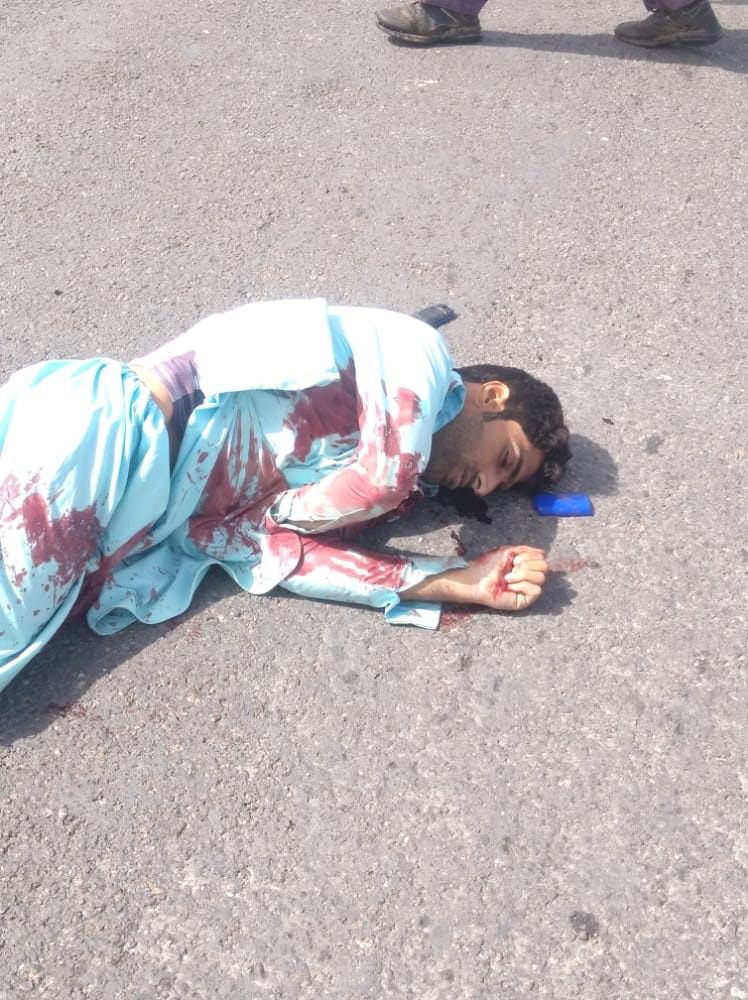
The recent killing of a driver in Nokundi by the Pakistani Frontier Corps (FC) has spurred waves of condemnation and protests in different areas of Balochistan. In Nokundi, Dalbandain and the adjacent areas, hundreds of protestors brought the dead body of the slain driver to the RCD highway and blocked it with protests. The protestors chanted slogans against the Pakistani security forces and demanded justice for the slain driver.

Pakistani forces tried to disperse the protest and reopened the busy highway for the incoming traffic and a scuffle broke out between protestors and the forces. The latter opened fire on the former, injuring several protestors in the process. The injured were shifted to Nokundi Rural Healthcare Centre for medical treatment and two others were further referred to the Trauma Centre, Quetta. No fatalities have been confirmed yet from the incident.

The slain driver is identified as Hameedullah Baloch who was killed by the Pak security forces in the Panch Naik area near the Pak-Afghan border when he allegedly sped away after being signaled to stop. The forces opened fire on his vehicle and Hamedullah was killed on the spot. The protestors reportedly set fire to the main gate of a government building being used by the security forces. The forces opened indiscriminate fire and injured several protestors.

The protests were called off after negotiations between the local authorities and the protestors. According to local officials, the protestors’ demand for the reopening of the entry point at the Pak-Afghan border for trade was also accepted. The officials also assured the drivers that the vehicles captured by the security forces will be handed over to their respective owners.

The trade at the Afghan border is a source of employment for the people living in the areas near the border. According to details, the Pak security forces stopped several vehicles near the border. They reportedly poured sand in the vehicles’ radiators and took out their batteries, thus rendering them useless and abandoning the drivers in the scorching desert heat during the holy month of Ramadan. The drivers said that the forces confiscated their vehicles and told them to leave the area on foot. Nokundi and the Afghan border are several hundred kilometres apart – the drivers were told to make that journey through the desert on foot without any food or water.

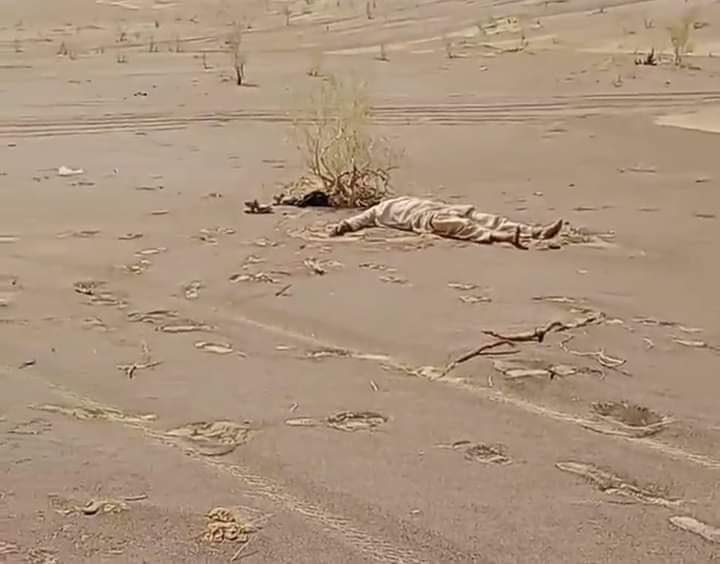
The drivers were compelled to leave their vehicles and make the arduous journey back home. After several hours of trekking in the desert, some fortunate souls spotted a vehicle and sought help, but others did not survive. At least three drivers died of dehydration and starvation while making the journey. In a video that became viral on social media, the dead bodies of the drivers can be seen lying in the desert.

Dead body of Baloch drivers. Several Baloch drivers were forced by Pakistanis to abandon their vehicles and walk across the desert on foot.

The video spread like wildfire on social media, spurring a series of condemnations and demonstrations. In a media statement, the Baloch Women Forum said that the “oppression of the Baloch” has not stopped even in the holy month of Ramadan. The Nokundi incident is reminiscent of the killing of Hayat Baloch, Taj Bibi Baloch and countless others who were slaughtered in cold blood. The group said that the border trade has become a lifeline for the people of Balochistan and the people in power must realize that. They said that the silence of the political parties, government and judiciary is only worsening the crisis and leading to a human rights catastrophe. The group announced carrying out a demonstration in Quetta against the Nokundi incident and demanding justice for the slain drivers.

The Baloch Yakjehti Committee also carried out a protest in Karachi on to demand justice for the slain drivers and fix responsibility on the culprits. The Baloch Student Organization Azad (BSO-Azad) also condemned the Nokundi incident in a media statement, saying that it is the continuation of the colonial policies of the Pakistani state. BSO-Azad said that since the “occupation” of Balochistan, the Pakistani state has inflicted horrendous atrocities on the Baloch nation and yet the world powers and human rights groups remain silent.

BSO-Azad said that the Nokundi incident – and countless other such incidents – shows that the Pakistani state considers “genocide” as the only solution to the Baloch national issue. The Baloch youth are forcibly disappeared throughout Balochistan and the bullet-riddled dead bodies of the Baloch missing persons are discovered thrown in random places or buried in mass graves. BSO-Azad said that this cruelty is not just limited to any specific area or a tribe – the entire Baloch nation is suffering from it.

BSO-Azad said that the silence of the human rights groups on this humanitarian crisis is only adding fuel to the fire – it is time to hold the Pakistan regime accountable for its human rights violations in Balochistan. The Human Rights Commission of Pakistan also took notice of the Nokundi incident. In a media statement, Hina Jilani, the Chairperson of the HRCP, said that the government has neglected Balochistan for too long. The security forces are inflicting cruelties on the people of Balochistan. She said that the provincial government must take note of the incident and bring the culprits to justice.

Story of Ayumi is all set to create ripples around the NFT space

The impressive NFT project depicts the story of an orphan who unravels her story to the world. Story of Ayumi is one impressive NFT project set to make its debut shortly. It revolves around the story of an orphan who travels the world to understand her story. The project is backed by its powerful AI on the Ethereum Blockchain. This is perhaps one of the most impressive project to have stepped into the NFT space which has an engaging storyline attached to it with a host of spectacular features. With a host of interesting NFT projects being introduced, many enthusiasts have been joining the bandwagon to experience this new world. This is perhaps one of the best NFT projects to be introduced in recent times as it will disrupt the industry in a big way.

Story of Ayumi with a host of exciting features will take over the rest on its debut, as industry experts are confident of the impact it will make once it steps in. The creators have stepped into the NFT space looking at the popularity of NFT markets which has been on a rise, with its horizons expanding at fast pace. They have taken every minutest detail into consideration to churn out an interesting project which will sweep the NFT sphere off its feet. One of the team members associated with the project says, “Looking at the trade volume of NFTs which was around $40 billion last year, it is undoubtedly expected to grow to towering heights even more this year, reaching upto $70 billion. Introducing an NFT project that has potential will most certainly call for a long innings, the reason we have come up with Story of Ayumi, as it has a unique flavour in it which lacks in the recently launched NFT projects in the market.”

Story of Ayumi is the latest addition to the already glowing NFT space, the future of which looks bright as ever. Looking at the kind of buzz it has generated, industry experts are predicting that it will take over once the space once it is launched. The makers are also relying a lot on their community for governance as they are consulted on various decisions regarding their investment strategy which are laid in a systematic manner. They have built a strong foundation for their governance system which will work well in the future. There would be an additional offering in the form of merchandise with the launch of their games and the introduction of DAO. 

Stay updated with the latest news on Story of Ayumi via their Twitter @StoryOfAyumi.

Bored Stackers is set to create a deep impact on its debut

Industry experts predict this to be one of the biggest successes ever known across the NFT sphere in recent times.

The numerous technological advances that Web 3.0 has brought forward has amazed all. These newer advancements like blockchain, cryptocurrencies and NFTs have spellbound users till no end as they have offered limitless opportunities that have never ever been seen before. These have made a headway towards the future at a steady pace and now they are almost on the verge of disrupting the industry in the biggest possible way. NFTs have in fact gained momentum at an exponential speed in the past year, with many interesting projects hovering around that sphere being introduced consistently, much to the thrill of investors. Out of all the recent projects, one particular one has stood out owing to its unique features and is predicted to rule the space once it makes its debut. We are talking about Bored Stackers, which has already created a strong buzz around it as it holds something unique which is guaranteed to benefit its holders to a great extent.

The team behind Bored Stackers have worked hard to make sure the project matches up to people’s expectations as they have designed the most beautiful collection within a short span of time, with each being unique and holding distinctive traits that make it stand out in its own way. By minting NFTs from Bored Stackers, holders can earn rewards, and be a part of various events and interesting opportunities that would entrall them till no end. Bored Stackers will also be creating its own native token on a platform which is chosen by its community. By holding NFT’s members will get weekly airdrops of tokens which will allow them to accumulate them and earn more rewards along their journey. Users can also earn many more exciting things by staking. Looking at its impressive setup, there’s no doubt that the project will gain momentum right from the time it opens for public minting. Its success will be unleashed soon, once it makes its debut.

Russia is first country to allow Afghan Taliban embassy in Moscow

Russia has become the first country to allow appointment of a diplomatic representative of the Afghanistan’s Taliban government. A spokesman for the Taliban’s foreign ministry in Kabul said the arrangement of the Afghan embassy in Moscow has now been formally handed over to a Taliban-designated diplomat. Simultaneously, the Moscow government has formally accepted the diplomat’s nomination papers.

According to a statement issued by the Afghanistan’s Foreign Ministry in Kabul, the ambassador designated by the previous Afghan government in Moscow had stopped doing his job. Now, Al-Amur Jamal Gharwal, the Taliban’s designated diplomat, has taken over his diplomatic duties in Moscow. Meanwhile, the Russian news agency Interfax reported that Russian Foreign Minister Sergei Lavrov had recently approved the appointment of Jamal Gharwal as Afghan chief of staff in Moscow by the Taliban government in Kabul, recognizing his diplomatic credentials.

In the days leading up to the final withdrawal of the U.S. forces in Afghanistan last year, when the Taliban captured Kabul, the then Afghan President Ashraf Ghani fled the country. Just days later, the Taliban established a regular nationwide but interim government, which they technically called the caretaker government of Afghanistan. The same government is still in power in Kabul.

It has been about eight months since the Taliban came back to power, but no country has formally recognized their government so far. Against this backdrop, Moscow’s appointment of Taliban-designated diplomat Jamal Gharwal as Afghan Nazim al-Amour allowed the hardline Taliban to be the first of its kind at both international and political levels. Since the Taliban came to power for the second time in this Hindu Kush state, many of the basic human rights of ordinary Afghans, especially women, have been restricted once again. The Taliban have not yet allowed Afghan girls to go back to school and all girls high schools in the country still remain closed.

Serious human rights violation in Pakistan: US Report

The U.S. State Department recently released it’s annual report on the human rights situation around the world, including Pakistan. One of the chapters of the report covering human rights in 2021 points to serious human rights violations committed in Pakistan. Foreign Minister Antony Blinkin was also present at the release of the report.

Blinkin said that he was part of the release ceremony for the second time because human rights are of  great importance to American foreign policy. He said that many parts of the world have consistently seen a decline in democracy, the rule of the constitution and respect for human rights for many years. According to him, when a report on the human rights situation was being released last year, the process of degradation of rights was underway.

In this regard, the Foreign Minister pointed towards Russia’s ongoing aggression and said that clear evidence was being received in which Russia was committing brutality within Ukraine. The Secretary said that the State Department’s annual report describes the internal human rights situation of about 200 countries and this has been reported through investigation. According to him, the United States applies to itself the same standards of human rights reverence as it wants to see in the rest of the world. He further said that there are human rights concerns and shortcomings within the United States as well.

The State Department’s annual human rights report for the year 2021 also contains a 72-page chapter on Pakistan covering human rights violations. The report said that within Pakistan, military, paramilitary and intelligence agencies that are in principle accountable to civilian institutions, do their job without supervision of civilians and they have committed a number of violations according to local and international organizations. According to the report, there are major human rights issues within Pakistan. It says that measures such as extrajudicial killings, torture, rigorous detention, retaliatory arrests, and politically motivated detention of citizens by the government and its agents are among the measures taken. State agencies have been found committing incidents such as kidnapping, murder and torture of their citizens within other countries, the report said. The US State Department report claims that illegal military armed groups within Pakistan, including the Taliban were supported. Children were made fighters and freedom of speech and media were put on hold. Violence was committed against journalists. They were held in undue custody or disappeared. Criminal laws of censorship and defamation were enacted.

According to the report, internet freedom in Pakistan was also undermined by blocking several websites in 2021. Peoples’ right to gather was violated and many religious freedoms were also “compromised”. According to the annual human rights report, religious and ethnic minorities were tortured within Pakistan. The report also showed that Pakistan’s political parties have been expressing concern over the Pakistan Army’s interference in these elections. There was no immediate response from Pakistan to the report and this report comes at a time when Imran Khan-led Pakistan Tehreek-e-Insaf (PTI) has been ousted as a result of last week’s no-confidence vote and a new Prime Minister Shehbaz Sharif has been selected. There has been no immediate response from Pakistan Army’s spokesperson DG ISPR to the report.

Gen Bajwa preserves American interests at all cost

1

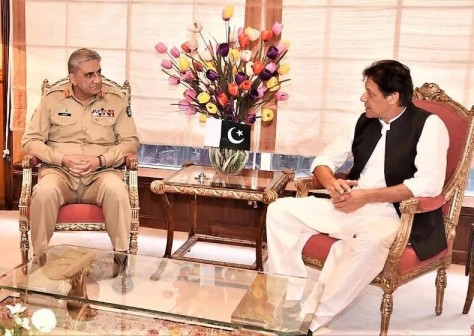
Pakistan Army chief Gen Qamar Javed Bajwa is overtly subservient to his American masters.