Home Blog Page 28

BLF fidayeens ambush Pak Army convoys in Kolwah, kills nine Paki soldiers

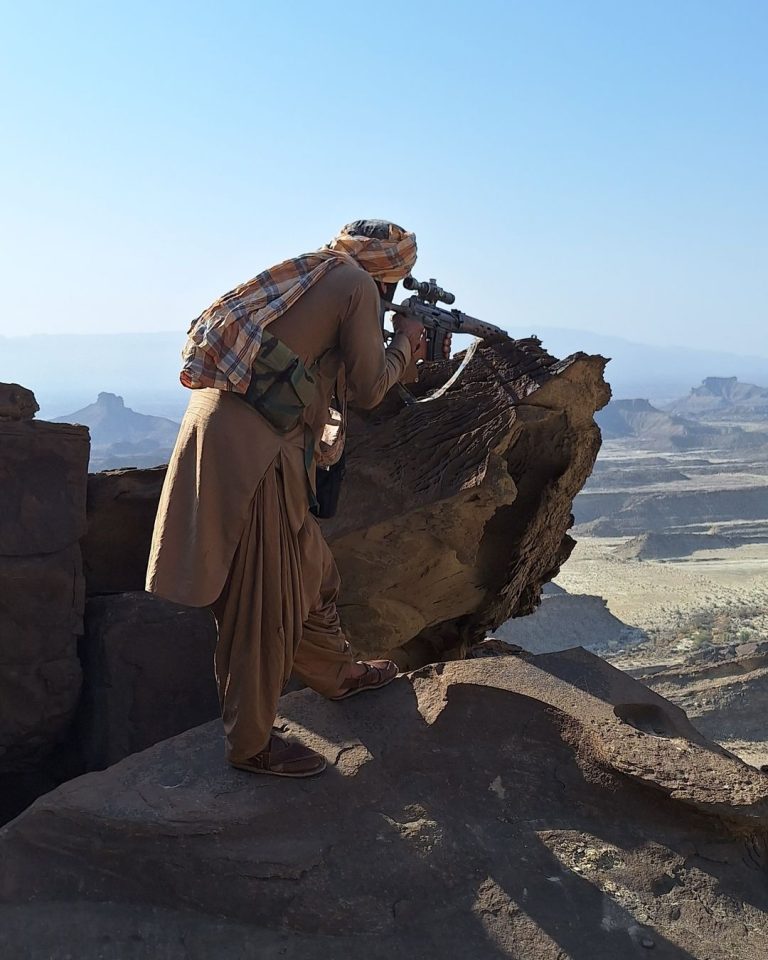
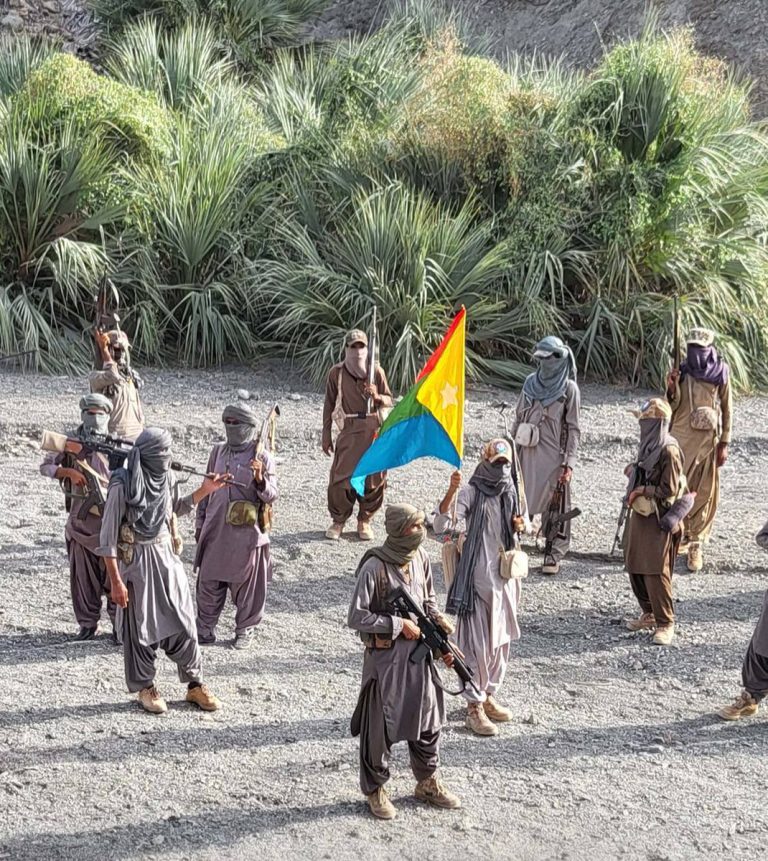
The Balochistan Liberation Front (BLF) has launched two separate attacks on Pakistan military convoys in the Kolwah area of POB’s Kech district, which left nine soldiers dead and several others wounded.

According to the BLF, the first attack took place on Sunday, November 10, at around 12:30 p.m. in the Marastan area of Kolwah. BLF fighters ambushed a Pak military convoy that was entering the region for an operation. The attack resulted in the deaths of five soldiers, with several others sustaining injuries.

The second attack occurred shortly after, at around 1:30 p.m, in the plains between Sagak and Kade Hotel. This assault targeted another military convoy, killing four Pak soldiers and injuring others.

In a detailed statement, the BLF spokesperson, Gwhram Baloch, revealed that earlier that morning, a large number of Pak soldiers entered Kolwah from Hoshab, conducting house-to-house searches and intimidating local residents. As the military convoy attempted to leave the area after the operation, BLF fighters, aided by their Special Operations Squad and Qurbani Unit, ambushed the convoy using heavy weaponry. Four military vehicles and several motorcycles were destroyed in the attack, resulting in the deaths of five soldiers and injuries to others. Despite attempts by Pak armored vehicles to encircle the BLF fighters, the fidayeen successfully repelled the military forces.

BLF Launches Successful Assault

The spokesperson further stated that after the attack, the military forces, fearing another ambush in the mountainous terrain, retreated toward Kade Hotel. They took a route through the plains between Sagak and Kade Hotel, but BLF fighters ambushed the convoy again, killing four soldiers and injuring several others.

In a strong condemnation of the Pak military’s actions, Gwhram Baloch said that the occupying forces continue to carry out brutal operations across Balochistan, targeting civilians under the guise of military operations. However, he added that the true defenders of Balochistan have proved time and again that they will not allow such aggression to succeed.

The BLF spokesperson emphasized that the struggle for a free Balochistan is ongoing, with BLF fighters, intelligence units, and special operations squads delivering both military and psychological blows to the Paki establishment. He concluded by saying that the day is near when the flag of a free Balochistan will fly over the land, and the occupying forces will be expelled for good.

Mother of abducted minor Hindu girl cries justice after Pakistani court gives custody to kidnapper

In a heartbreaking scene outside the Hyderabad Press Club, the mother of Chanda Maharaj—a minor Hindu girl abducted and handed over to her kidnapper by court order—is demanding her daughter’s safe return. For two years, Chanda’s mother has fought for justice while her daughter remains missing, last seen with Shaman Magsi, a man implicated in her abduction, yet inexplicably granted custody over her by the court. Despite repeated appeals, the mother’s pleas have been met with silence from the authorities, underscoring the terrifying reality faced by Pakistan’s Hindu minority.

Chanda Maharaj’s case is emblematic of the injustices inflicted on Pakistan’s minority communities, particularly Hindus, whose young girls are abducted, raped, forcibly converted, and subjected to marriages under duress. Even institutions, including the courts and law enforcement, appear complicit in perpetuating the abuse rather than providing protection. The court’s decision to hand Chanda over to her kidnapper reflects a system that seems indifferent to the suffering of minorities, often subjecting them to legal structures that effectively sanction their persecution.

Bangladeshi muslims threaten to repeat Noakhali massacre

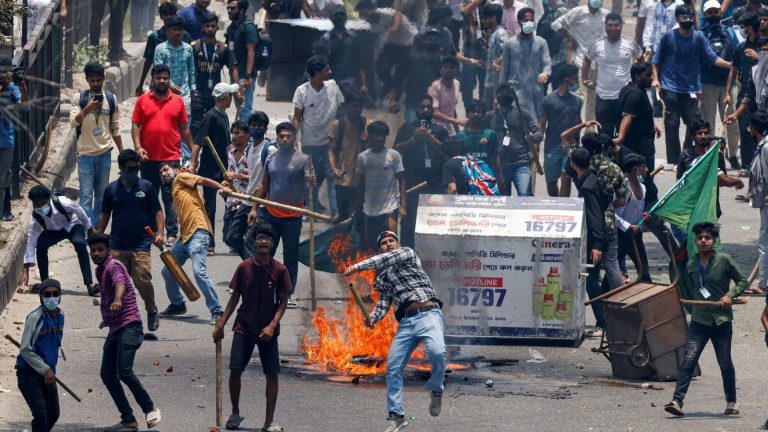
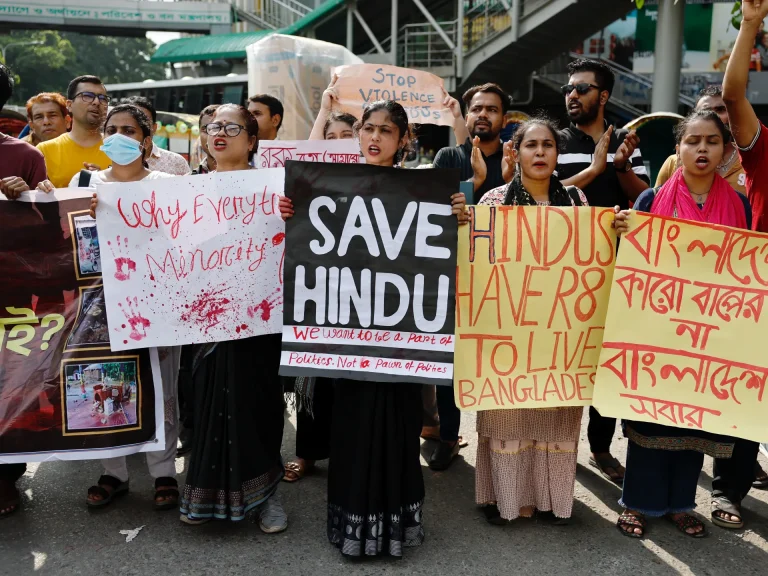
In yet another grim escalation of anti-Hindu violence, an Islamic extremist mob attacked a Hindu temple in the Shibatala Karmakar area of Chapainawabganj district, sending shockwaves through the vulnerable Hindu minority in Bangladesh. Reports indicate that the army has arrived on the scene, but, astonishingly, they are failing to provide the crucial assistance needed by the besieged community. Instead, helpless members of the temple committee have taken to the streets in protest, decrying the army’s indifference to their plight.

The International Society for Krishna Consciousness (ISKCON), a globally recognized Hindu Vaishnavite organization, now finds itself at the center of a coordinated assault in Bangladesh. For months, ISKCON has served as a unifying force for the Hindu minority, providing resistance against a wave of violence that is being fueled by radical Islamist groups like Hifazat-e-Islam. In recent days, the extremists have intensified their campaign, with Hifazat-e-Islam openly calling for attacks against ISKCON and spreading incitement through social media channels, even brazenly invoking the memory of the infamous Noakhali massacre to instill terror in Bangladesh’s Hindu community.

Tensions escalated in Bangladesh’s port city of Chittagong as security forces launched a massive crackdown on the minority Hindu community following clashes sparked by a social media post. The incident began on November 5 in the Hazari Gali area when Osman Ali, a member of the radical Islamic group Jamat-e-Islami, posted derogatory remarks against the Hindu religion and the International Society for Krishna Consciousness (ISKCON) on social media.

Footage of the incident showed scenes of chaos, with security personnel clashing with civilians, chasing them, and hitting them with batons. 

ISKCON Under Siege

ISKCON is far from a political threat; it is an esteemed spiritual organization with a presence in over 76 countries, promoting universal principles of peace and unity through the Hare Krishna Movement. In Bangladesh, ISKCON’s outreach extends beyond spiritual gatherings to humanitarian work, assisting communities in need, particularly during natural disasters. Yet, this internationally respected institution now faces an unprovoked assault because its monks and Brahmacharis have dared to speak out against the brutal persecution of Hindus in Bangladesh.

As extremists rallied in Chattogram from Teri Bazar to Cheragi, their chilling slogans echoed through the streets, inciting violence with chants such as, “There is no place for ISKCON in this Bangla; burn down ISKCON, torch ISKCON’s addresses; raze down ISKCON, demolish ISKCON’s addresses.” These violent calls to action are nothing short of a national disgrace, yet the Bangladeshi government remains disturbingly silent, seemingly content to watch as its extremist factions terrorize its own citizens.

This escalating violence against ISKCON is emblematic of the broader failure of the Bangladeshi government to protect its minority communities from rising religious extremism. Instead of confronting this menace, Bangladeshi authorities appear more concerned with appeasing radical elements, effectively condoning the persecution of Hindus under the guise of “maintaining order.” Such inaction lays bare a damning truth: the government’s complacency has emboldened extremists, leaving Bangladeshi Hindus at the mercy of mobs intent on erasing them from the nation.


Pak Army mortar shelling kills two innocent Pashtun children in Waziristan

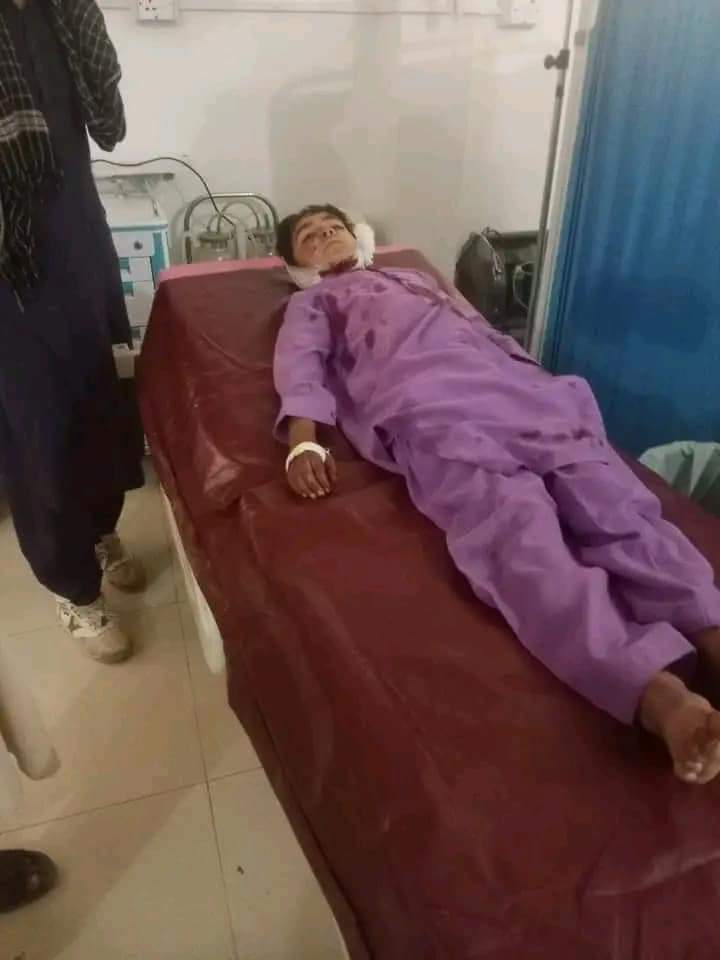
In yet another heinous act of violence, Punjabi Pak Army fired mortar shells into the Shaktoi village in Upper Waziristan’s tehsil Sharkai at 11 a.m. on 9 Nov, killing two innocent children and injuring another. This latest atrocity follows a disturbing pattern of targeted attacks on civilians by the Pakistan Army, reminiscent of the recent shelling in Khyber Terah just a day earlier.

The mortar fire is deliberately aimed at the civilian population. The repeated targeting of children and livestock, raises serious questions about the intentions behind these brutal assaults. In stark contrast, the shells never seem to hit the terrorists or Pakistan Army personnel, this shows that these attacks are truly meant to instill fear among the already suffering civilian populace.

The Pakistan Army’s reckless shelling of civilian areas has become a grotesque tactic aimed at intimidating and displacing the local population. This marks yet another chapter in the long history of the military’s violent oppression in regions like Waziristan, where Pak Army have long been perpetrating atrocities to silence Pashtuns and to facilitate their mass eviction and seize control of the mineral-rich lands predominantly owned by Pashtuns.

BLA’s Majeed Brigade attacks Pak Army at Quetta station

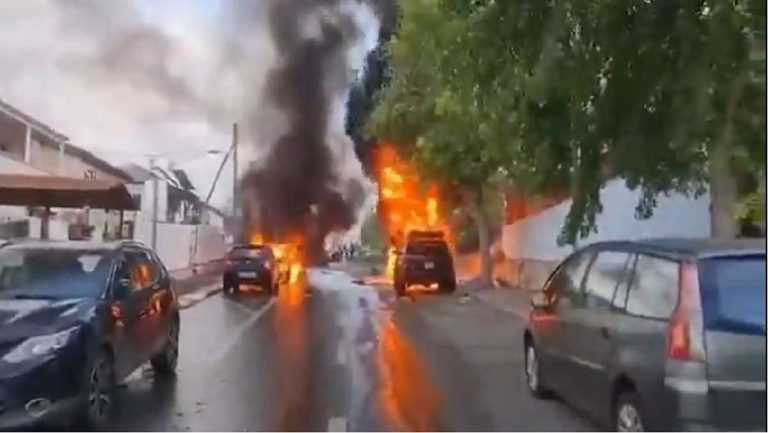
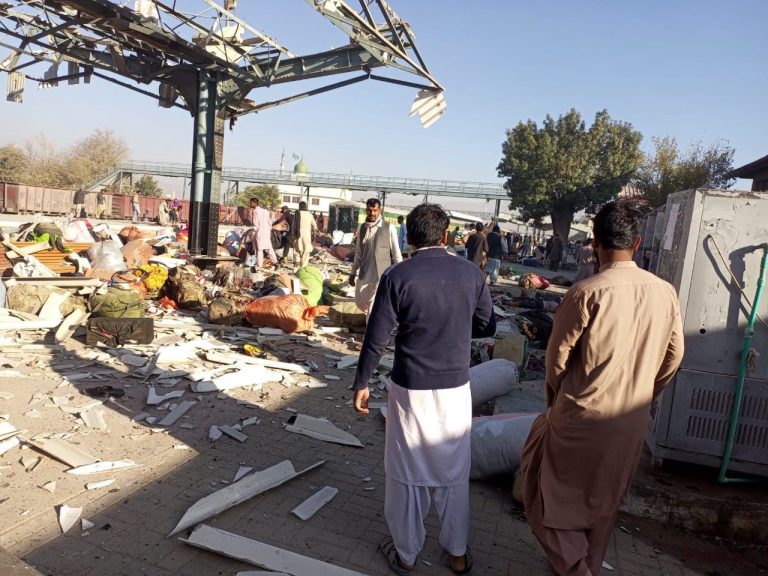
In a deadly explosion on Saturday morning at Quetta Railway Station, at least 24 people lost their lives, and around 18 others were wounded as they prepared to board trains. Rescue and security teams responded, transporting bodies and the injured to Quetta’s Civil Hospital, where emergency measures were promptly implemented.

Medical staff were rushed to duty as several critically injured individuals were moved to the trauma center. Authorities have since cordoned off the area, launching an investigation into the blast’s specifics.

The explosion reportedly occurred near the station’s ticket booth, as two scheduled trains were preparing to depart, drawing a large crowd to the platform. Railway officials confirmed the timing and location of the blast. An assessment of the damages is also underway, with officials determining the full extent of the blast’s impact.

Quetta Blast

In a statement shortly after the attack, the Baloch Liberation Army (BLA) identified the assault as a targeted operation against Pak military personnel present at the station. According to Jeeyand Baloch, a spokesperson for the BLA, the attack was carried out by the Majeed Brigade, their unit dedicated to high-profile operations. The targeted personnel were reportedly returning via the Jaffer Express after completing a training course at the Infantry School.

Photos shared by locals and media outlets depict the aftermath, including scattered luggage reportedly belonging to military personnel caught in the explosion’s wake. The BLA, which has waged a war for Baloch independence, stated that the operation was aimed at highlighting their resistance against the Pakistan’s military occupation and systematic suppression of Balochistan.

This incident is BLA’s response to years of enforced disappearances, military crackdowns, and atrocities that the Baloch community has been facing since 1948 after a forceful occupation.

Pak Army’s mortar attack aimed to block the return of Kukikhel Pashtuns to Tirah valley

On November 7, a tragic incident unfolded in the Tirah Valley of Khyber district, where a mortar shell struck a group of children returning home from school, killing one young student and leaving five others seriously injured. This incident has deepened concerns over the Punjabi Pak Army’s attempts to obstruct the return of the displaced Kukikhel Pashtun community, who have been fighting for years to reclaim their homeland after being forced out in 2013 due to military operations.

The Pak Army has been actively discouraging Kukikhel internally displaced Pashtuns (IDPs) from returning to their homes. When local leader Malik Naseer Koki Khel and the Pashtun Tahafuz Movement (PTM) advocated for the Kukikhel community’s right to return, the Army initially resisted, only relenting after sustained pressure. Now, however, the Army is using intimidation tactics to scare the people back into displacement.

For weeks, the Kukikhel have reported instances of Punjabi Pak Army-backed intimidation, with local homes coming under sporadic fire, and recent events escalating into the fatal mortar attack on schoolchildren. These actions are deliberate tactics designed to instill fear and disrupt the resettlement process, undermining their hard-won right to return. Despite a formal agreement reached in the October 11 jirga allowing Kukikhel Pashtuns to come back, the Army continues to throw obstacles in their path, resorting to various forms of harassment to deter their return.

Pak Army’s Mortar Shelling Strategy

This brutal crackdown on the Kukikhel community highlights a much larger issue faced by displaced Pashtuns across the region. Since their forced displacement in 2013, the Kukikhel people, like many other Pashtun IDPs, have fought tirelessly to return to their ancestral homes. The plight of these displaced communities is a direct result of Pakistan’s flawed policies, which have seen Pashtuns used as pawns in military operations under the guise of counterterrorism. The military’s interference in their resettlement only deepens the humanitarian crisis that continues to unfold in FATA and Khyber Pakhtunkhwa.

The Kukikhel Pashtuns’ forced displacement and continued suffering echo a broader pattern of marginalization and repression faced by Pashtuns under the Paki establishment. The military’s heavy-handed tactics in Tirah Valley reflect a deliberate disregard for the rights and well-being of its own citizens, with the occupied-government showing little interest in resolving the suffering of these communities. In their calls for justice and the right to resettle in their ancestral lands, the Kukikhel are once again met with resistance and violence, with the Pashtun Protection Movement (PTM) vowing to bring international attention to the injustices faced by the Pashtun community in Pakistan.

Families in Turbat protest, demand recovery of Baloch kidnapped by Pak Army

In Turbat’s Fida Ahmed Chowk, families of Shir Jan and Irshad Baloch are staging a protest, demanding the immediate release of their loved ones, who were reportedly abducted by Pak Army forces in yet another act of enforced disappearance. The latest abduction, from the Balida area of Kech district in POB, has intensified outrage as the Pak Army is systematically targeting the Baloch people.

According to relatives, a large contingent of Pak forces raided the area late last night, brutally detaining Shir Jan and Irshad, before forcibly taking them to an undisclosed location. When families attempted to locate the two young men through local police and other authorities, they were told that neither was in official custody, exposing the stark impunity with which the Pakistan Army operates in the region.

The anguish and frustration of the families are evident. The families have expressed their resolve to escalate the protest, warning that if their loved ones are not released, they will block the main highway, holding the authorities accountable for the lives and safety of the missing men.

The Pakistan Army’s oppressive tactics in Balochistan reflect a long-standing policy of suppressing Baloch through intimidation, violence, and the unchecked use of enforced disappearances. These acts have become a grimly familiar tool to silence dissent and maintain control over POB, whose people have long demanded justice, rights, and recognition. The Army’s colonial mindset towards POB and its people is evident in the routine abductions, the dismissal of due process, and the inhumane treatment of innocent Baloch citizens.

Hindus and Christians coerced into sanitation jobs in Pakistan

In a troubling incident involving a sanitation post has raised serious concerns about the Islamic Republic’s treatment of religious minorities. A question has emerged as to why religious identity was even a factor in assigning this position, which appears to directly violate Article 25 of Pakistan’s Constitution, which guarantees equality for all citizens. This discriminatory practice reinforces the troubling belief that Hindus and Christians are destined to fill sanitation roles in Pakistan, regardless of their skills or qualifications.

Earlier, this systemic mistreatment was highlighted when a Christian sanitation worker was brutally assaulted by a Muslim family in Karachi. The worker, punished for a allegedly delayed garbage collection, was left chained in the street for hours, further underscoring the dehumanizing treatment faced by the country’s minority communities. The assault serves as yet another example of the widespread abuse faced by Pakistan’s marginalized Christian population, who are often derogatorily referred to as “Chuhra” – a term that historically denoted a low caste, specifically used for sanitation workers.

This deeply discriminatory attitude extends across Pakistan, where the 80% of sanitation workers are Christian, and they are subjected to both verbal abuse and physical mistreatment. The labeling of Christians and Hindus as “low caste” by Islamic society reinforces the ongoing cycle of social exclusion, where these individuals are confined to menial, degrading jobs. The lack of legal protections and societal support further exacerbates their suffering, as they continue to be treated as second-class citizens in their own country.

CTD executes three Baloch youth in a fake encounter

In yet another appalling incident in Pak-occupied-Balochistan, the Counter Terrorism Department (CTD) has killed three previously kidnapped Baloch men by Pak Army under the guise of a staged encounter. This recent event in Musa Khel exemplifies the brutal and systematic tactics employed by Pakistan Army to silence Baloch voices while maintaining a facade of “counter-terrorism operations.”

According to CTD, four individuals were killed in an “encounter” in Musa Khel. However, among the deceased were three individuals known to have been forcibly disappeared weeks before the incident: Muhammad Nawaz Buzdar, Ghulam Buzdar, and Jaffar Mari. Reportedly, Muhammad Nawaz Buzdar, a resident of Barg Pusht in the Rarah Sham area, was forcibly taken by authorities on September 10 from Loralai. Ghulam Buzdar was abducted on September 21 from Buzdar Petrol Pump, and Jaffar Mari was forcibly disappeared on October 2 while shopping in Rarah Sham. Now, they have been “encountered” in an area where they were previously abducted by Pak forces—a disturbing reminder of the brutal and unlawful methods used by the Paki establishment to suppress Baloch voices.

CTD Stages Fake Encounter

The CTD’s use of staged encounters to eliminate forcibly disappeared individuals has become a familiar and chilling tactic across POB, where countless families are left with no news of their loved ones, only to learn later of their supposed deaths in staged operations. The Baloch community has raised its voice against these Army-sanctioned extrajudicial killings, with protests taking place repeatedly, yet their pleas fall on deaf ears in Islamabad. Despite frequent questions raised in Pakistan’s national and provincial assemblies, the authorities has failed to hold the CTD and Pak Army accountable for these atrocities.

Last year, a similar case occurred when a young Baloch man in custody was killed in a staged encounter by the CTD in Turbat. The incident sparked a series of protests, culminating in a long march led by Dr. Mahrang Baloch from Quetta to Islamabad, demanding justice and accountability. Yet, the Paki establishment continues its ruthless campaign, effectively targeting the Baloch population with impunity, all while silencing anyone who dares to challenge their actions.

The CTD and Pakistan Army’s tactics are more than mere acts of repression—they represent a targeted campaign to dismantle the social and political fabric of POB. These “encounters” are not isolated mistakes but intentional, systematic attempts to break the Baloch people, treating them as enemies within their own land. Such actions reveal the true face of the Paki establishment’s approach to POB: one of occupation, oppression, and extermination.

Pak Army shelling in Khyber kills innocent Pashtun children

A tragic and brutal incident unfolded in Wadi Tirah Maidan (Khyber), where a mortar shell struck children returning home from school, leaving one young student martyred and five others seriously injured. These were students of Government Primary School Hashim Khan Clay Bar Qambarkhel, merely heading home after a school holiday—hardly “security threats.” Yet, the tragedy raises an unsettling question: has the Punjabi Pakistan Army declared war on Pashtuns?

For the Pashtun community, such incidents are becoming disturbingly routine. Regions like South and North Waziristan are subjected to an increasingly oppressive military presence, with countless checkpoints and soldiers patrolling their lands. The Pak Army has intensified its presence in these areas, allegedly to counter security threats, but the reality is far from these claims. In this highly militarized zone, Pashtuns face a targeted campaign of violence and repression, aimed at controlling this resource-rich region. What the Pak Army frames as “security operations” has translated into the systematic suffering and displacement of Pashtuns.

The Pashtun Tahafuz Movement (PTM) has been vocal about these atrocities, but even their reports fall short of capturing the full extent of the Army’s brutality. The crackdown in Pashtun lands is driven by a colonial mindset—an attempt by the Punjabi-Pak military to dominate and marginalized Pashtun communities.

The Army’s so-called security strategy has become a cover for ethnic violence, with innocent children, like those martyred and wounded in Wadi Tirah, paying the ultimate price. The Paki establishment has turned its forces against them, effectively treating Pashtuns as enemies within their own homeland.