Home Blog Page 287

Chi Running: A Better, Safer Way to Run

Since our schooldays, we have been running in a particular non-scientific way, as told by our school Physical Training (PT) instructors — long steps, heel – toe roll and neck down. We were told that running is natural to us and there is nothing to teach.

As youngsters, majority of us could take all that pounding of feet for miles and miles in the most non-scientific ways, but not for too long. However, running injuries like shin fracture, plantar fasciitis etc. are normal if we continue running during our school days. Also, over the years during the course of our professional life and running, many regular runners and especially school gold medalists have to deal with an injury at some point in time. Thereafter, we get into the cycle of pains and injuries combined with long sitting hours on the jobs and sedentary life styles and we tend to refrain from running and look for other options to remain fit.

It’s not running that hurts our bodies, it’s the way we run that creates problems.

More than 80% of running injuries are caused by too much impact and overuse of the lower extremities. This is due to the fact that these are small muscles which are too often required to do most of the work. Knees, lower legs, ankles, feet and toes are by far the most common injury areas for runners.

As runners, we land around 170-180 times per minute. Our feet hit the ground and transfer forces that are 3-8 times our body weight. Therefore, if we are running inefficiently, with poor mechanics, we are basically punishing our body during every run, regardless of the distance. Getting injured or experiencing pain is common, but not inevitable! Running the right way and finding ways to eliminate pain and injuries are essentials for a long-term running lifestyle.

Normal Running Mistakes
Here are four mistakes that prevent us from reaching our potential as runners.
(a) We tend to overuse our lower body and run by over-relying on our legs for propulsion, which can lead to pain or injury.
(b) We don’t adapt our running technique to the terrain we’re running on, (i.e. hills, pavement, trail, wind, etc.).
(c) We don’t ‘listen’ to how our body is feeling, and adjust our technique accordingly.
(d) We don’t use our whole body to run in a unified way because we place too much emphasis on the legs. People don’t learn and work on what’s slowing them down and they continue to run in poor technique/posture, and finally get injured.

PT instructors in schools and most of the coaches in colleges/gyms also focus too much on speed, but not on technique or posture improvement. Majority of training schedules/trainers just focus on cardio-aerobic fitness or muscle strength.

Eliminate the two main causes of injury
There are two main categories of injuries: overuse and impact.
(a) Overuse
Overuse injuries are caused by using our muscles incorrectly or beyond their capacity.
(b) Impact
Impact injuries come from over-striding, which creates a heel strike and produces excessive braking motion.

Chi Running
Chi Running is a revolutionary approach to effortless, injury-free running which can eliminate injuries caused by overuse and impact. Founded by the renowned ultra-marathoner Danny Dreyer, it is based on the movement principles of T’ai Chi, which allows the energy that unites body, mind and spirit to move from your core into the limbs to create movement.

Since 1999, Chi Running has helped thousands of runners transform their technique – reducing, preventing and recovering from injuries. Runners of all ages and levels have improved their efficiency and performance, and now find running to be pain-free, easier, and enjoyable.

Col. Avdhesh Kumar (Retd.) with Danny Dreyer, founder of Chi Walking & Running, at Asheville, North Carolina, USA during his certification process.

Chi Running addresses all these issues about injury prevention and energy efficiency so that you can run better and faster. Chi Running combines the central movement principles of T’ai Chi with the sport of running by shifting the workload to our core muscles, and away from our legs, giving us more efficiency with less injuries. The two main themes underlying all the Chi Running materials are: energy efficiency and injury prevention.

Advantages of Chi Running.
(a) Setting us up for a lifetime of injury-free running.
(b) Build confidence in one’s abilities.
(c) Go farther or faster with less effort.
(d) Improve our body alignment for optimal efficiency.
(e) Lower impact to our joints.
(f) Reduce the work of our legs – at any speed.
(g) Build core strength with every step.
(h) Run with whole-body relaxation.
(j) Become more mindful in how we use our body.
(k) Become a highly efficient and adaptable runner.

Chi Running is one of the most publicly recognised training systems developed all over the world for running well. The books ‘ChiRunning’, ‘ChiWalking’ and ‘ChiMarathon’ have been published in more than 17 languages, and are always on the top ten list of bestselling books under fitness/sport category claimed by Forbes and Amazons.

Conclusion
Running is much more than simply “one foot ahead of another.”  We must introduce low-impact, efficient running techniques at an early stage to ensure a future of healthy and fit running citizens. The Chi Running technique emphasizes the proper biomechanics of running and helps eliminate the aches, pain and fatigue caused by improper running. Chi Running has helped thousands of runners improve their running form – reducing and preventing injuries, while decreasing recovery time. Runners of all ages and levels have improved their efficiency and performance, and now find their running to be pain-free, easier and more enjoyable.

Let us play our part in “Fit India” movement.
Kashmir Valley leadership responsible for ‘Kashmir conundrum’

0

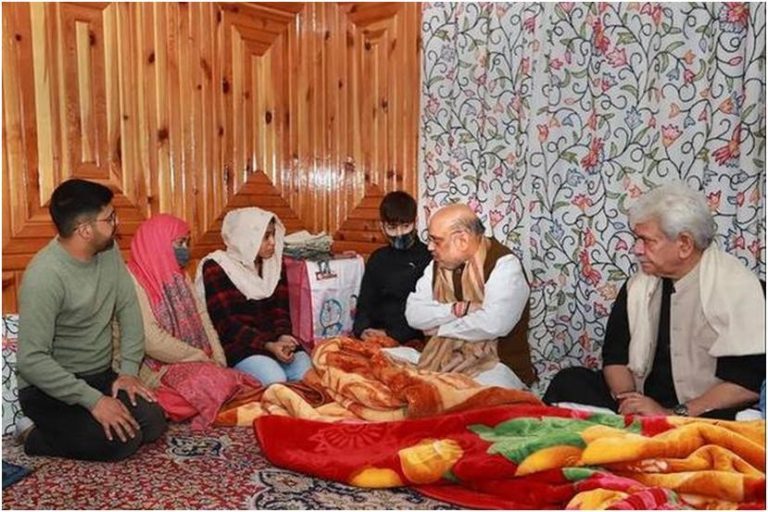
Two years after he had introduced the J&K State Reorganization Bill in the Parliament and got it passed with a majority vote, Home Minister Amit Shah visited Jammu & Kashmir in its new avatar as J&K Union Territory minus Ladakh which has been made a separate entity and conferred Union Status as well.

For the Kashmir Valley leadership, the abrogation of Article 370 has been a surprise and a shock which they usually spoke about but never believed would be translated into action. A constitutional provision designated as “temporary” had almost been construed permanent and then absolutely inviolable. Such was the political and circumstantial adherence to the temporary Act that the local leadership warned that blood would flow if the special status was tampered with or that there wouldn’t be a single person to raise the tricolour in Kashmir if the Article was abrogated.

Nothing of the sort happened. Yes, public men and women suspected of whipping up anti-India passions and giving the episode a communal colour were detained and denied the opportunity to be adept rabble-rousers.  Preventive detention in the shape of house arrest is a mild and democratic way of handling obstructionists who believe in misleading the proxies, meaning the public, in what they call expression of freedom of speech. Kashmir could be a fine example of the misuse of democracy and especially the freedom of speech.

The Home Minister has met with several delegations in the valley and Jammu. He has personally heard their grievances. He has interacted with them. He has made an objective assessment of the ground situation. 

The trouble in Kashmir is the creation of valley-based leadership. Jinnah’s comment on Sheikh Abdullah was that he was not reliable but in this context, Nehru put all eggs in one basket. He had to remove and arrest the Sheikh on the night of 8-9 August 1953 for he would not want to be part of India even though he concluded an Accord in 1974 after conceding that 12 sal ham ne darbadari ki meaning we wasted 12 years.

With the sudden and almost senseless removal of Bakhshi Ghulam Muhammad from power under the dubious Kamaraj Plan, the then government at New Delhi laid foundation for alienation of Kashmir and its gradual distancing from accession. It was Bakhshi who had piloted the ship through storm after Sheikh Abdullah had reneged. Once the pilot was dropped there was no end to the ship tossing against the waves.

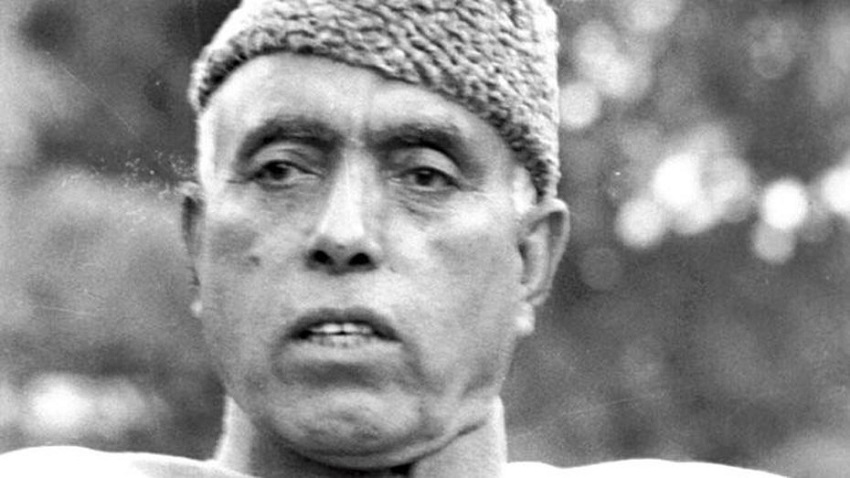
Sheikh Abdullah, founder of the political outfit National Conference that has a presence in certain pockets of the Kashmir Valley. (File Photo)

The Kashmir Valley leadership took full advantage of misusing Article 370 and Article 35A. Its plank was that India was trying to snatch the autonomy of sorts given to Kashmir in the Indian Constriction. In retaliation, as the leadership could not disarm the Centre, it turned its ire on the Jammu region as a whole and subjected it to discrimination in various ways. Protests and anger of the Jammu people did not help the Kashmir leadership see the reason. Besides, this leadership targeted the Kashmiri Hindu and Sikh minority also and stonewalled their role in the development of the state by denying them recognition as religious minorities. At the same time, it genially accepted the Centre’s policy of recognizing national religious minorities and Muslims at the top of the list.

In his autobiography, Sheikh Abdullah went to the extent of labelling Kashmiri Pandits as spies of the government of India. Three generations of the Sheikh dynasty ruled over Kashmir; their scions remained the ministers in the Central Cabinet; they enjoyed the freedom of grabbing large chunks of forest land and so did their blued – eyed boys and cronies, one and all in the name of service to the people of Kashmir, and yet not they but the Kashmiri Pandits who toiled to eke out a living were branded as India’s spies.

Valley leadership’s anti-India and anti-Jammu bias deepened while New Delhi continued to pour in huge instalments of money under the nomenclature of developmental projects. State bureaucracy seldom submitted utilization certificates despite repeated reminders and punitive measures by the CAG. The fate of the centrally sponsored developmental projects for J&K is better not to be talked about. In most cases contractors were approved, funds released, a fraction of work done and then the projects were abandoned for one reason or the other. 

Projects, viable or non-viable, were almost offered on a platter to the valley whereas the people of Jammu region had to struggle, go on dharnas, bring out protest rallies, faces lathis and run from pillar to post to make New Delhi shell out some small and non-descript projects for the region. Tourism in Jammu is a case in point. In employment, promotion, postings and senior positions in public sector enterprises etc. Jammu region was given a step-motherly treatment.

The Congress regimes never restrained their bias and parochial approach in serving the interests of the people without any discrimination. The rise of Theo-fascism in 1990 led to the ethnic cleansing of Kashmir and the extirpation of the entire Kashmir Pandit community which never figured in the narrative of the Congress.

Denial of state citizenship to lakhs of Hindus and Sikhs who could escape the genocide in Muzaffarabad, Mirpur, Kotli, Poonch and other areas now called POJK  in October 1947, when they had found safety in Jammu for more than seventy years is an unjustifiable and blatant violation of the human rights of the affected people according to the UN Charter on Human Rights of Refugees. On the one hand, Sheikh Abdullah went all the way to Lake Success, New York to tell the Security Council how the human and civil rights of Kashmiris were violated by Pakistan-sponsored invaders of the  Frontier and on the other he stubbornly denied citizenship of the refugees from the POJK. How could this paradox be resolved, was a headache for the policy planners in New Delhi. 

Kashmir Valley terrorists, crossing over to the other side of the LoC were received warmly by the retired Pakistan Army commanders in terrorist camps across POJK and even in such camps inside Pakistan. They were regular infiltrators and exfiltrators engaged in killing, kidnapping and mayhem in the valley. Many among them married in POK/Pakistan, raised families. The J&K government announced amnesty to them if they returned home, promised jobs, documentation and also said all criminal cases would be withdrawn against them and they would be rehabilitated adequately. Scores of them have been allotted accommodation, given jobs and other perks. Compare this munificence with the scurvy treatment meted out to Hindu and Sikh refugees from POK.

In a session of the last legislative assembly of J&K, the chief minister, Mehbooba replying to a question admitted that four to five thousand Rohingya Muslims from Myanmar had come to Jammu and the government provided them with some facilities. She did not go beyond that one sentence. But the reality on the ground is that no fewer than 89 thousand Rohingyas have been allowed to settle down in Jammu by the PDP government. Please note that they were settled along the international border in Samba and Jammu. Within weeks they were provided with Adhaar Card, ration card, identity card, power connection, admission in government schools to their children. How come the defenders of the Special Status for Kashmir allowed 89 thousand Muslims to settle down in the State and particularly in Jammu region? Isn’t it a clear attempt to bring about demographic change in Jammu? And still, Kashmir leadership cries at the top of its voice that the abrogation of Article 370 is intended to bring about change in the demographic complexion in Kashmir not a single outsider has been allowed to settle in Kashmir ever since the NDA government came to power in 2014.

All this narrative explains fully that abrogation of the two constitutional provisions was not only legal but highly desirable to ensure the human rights of the people and to see that violence is curbed and firm steps taken towards strengthening normalcy. Home Minister has categorically stated that the era of discrimination in Jammu is a past story. His emphasis on the development and active involvement of the youth of J&K is what should be given priority.

At the same time, his warning to the terrorists and Theo-fascists is loud and clear. No power on earth can separate Kashmir from India because Kashmiris have opted for accession to India, India has invested trillions of rupees in the all-round development of the erstwhile state and has helped raise per capita income in Kashmir which is around Rs, 9000/- perhaps the highest in the country. Indian army, paramilitaries and state police force have made great sacrifices in preserving the democratic and secular arrangement of the state. Kashmir has very strategic importance for India,  and Pakistan is steadily selling out chunks of Indian territories in northern Kashmir to the Chinese to embrace the “iron brother” who may or may not let her breathe one day because of tight embrace.

The heroes of Indo-Pakistan War, 1947-48

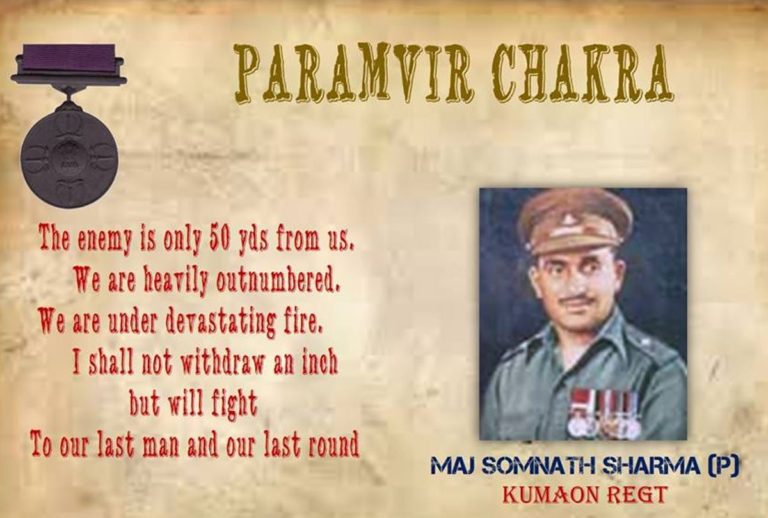
“We are heavily outnumbered… I shall not withdraw an inch but will fight to the last man.” These historic words need to be indelibly etched in the memories of all Indians since they framed the destiny of India post-Independence.

These words were spoken by Major Somnath Sharma, Param Vir Chakra (PVC), Posthumous, on November 3, 1947 when he along with his brave soldiers of 4 Kumaon challenged the Pakistani hordes in the historic Battle of Budgam. The brave troops of 4 Kumaon did not give an inch to the enemy despite many casualties including Major Somnath Sharma who fell to a hero’s death on the battlefield.

Equally motivating, though lesser known, is the story of Sepoy Dewan Singh of the unit who fought side by side with Major Sharma and exhibited courage beyond the call of duty. He was awarded Mahavir Chakra, Posthumously.

In the battlefront at Srinagar, the forceful stand of 4 Kumaon facilitated the landing of more troops. By 6 November, Indian forces had effectively defended Srinagar from all sides and eliminated the risk posed to the population by the barbaric hordes.

Before the Indian Army landed in Srinagar and opposed the tribal hordes, they had laid waste every living being that came their way. In Baramulla particularly, they surpassed all tenets of inhumanity in a pillage that lasted for four days. The men and children were tortured and killed while the women were raped and carried back as sex slaves. Even nuns of the convent were not spared; they were raped and killed ruthlessly.

After securing Srinagar, the Indian troops faced a big challenge at Shaletang where the enemy was preparing to launch a massive counter-offensive as a last ditch effort to take Srinagar. The brave Indian soldiers, instead of taking a defensive posture, decided to attack and thus was fought the historic Battle of Shaletang. The offensive was launched by troops of I Sikh, 4 Kumaon, 32 Field Battery and 7 Cavalry, the cowardly hordes of the enemy were taken by surprise and decimated in the short and swift battle as they fled the scene leaving behind their arms, ammunition and 300 bodies of their comrades. Lieutenant NG David and Dafadar Jage Ram were awarded Vir Chakra in this epic battle. Within two days, on 8 November, Pattan followed by Baramulla were recaptured.

These victories were merely harbingers of a conflict that carried on over two campaigning seasons (1947-48) and resulted in the total rout of the tribal and regular forces sent by Pakistan to forcibly occupy the state of Jammu and Kashmir that had legally acceded to the Indian Dominion.

The war witnessed the award of four more PVCs (Param Vir Chakra) and many other gallantry awards to the brave Indian soldiers who fought against terrible odds. The brave recipients of PVC were Lance Naik Karam Singh, 1 Sikh, in the Battle of Tithwal; Company Havildar Major Piru Singh, 6 Rajputana Rifles, also for the Battle of Tithwal; Second Lieutenant Rama Raghoba Rane, Corps of Engineers for the Battle of Jhangar and Naushera and Naik Jadunath Singh, 1 Rajput, for the defense of Naushera.

Also part of folklore is the bravery of Brigadier Rajendra Singh, Chief of Staff of the Jammu and Kashmir State Forces, who obeyed with his life the command of Maharaja to hold “the enemy at Uri at all costs and to the last man.” Brigadier Rajendra Singh was recipient of the first Maha Vir Chakra, Posthumous, of independent India.

Any talk of bravery and courageous tenacity exhibited during the war would be incomplete without mention of Brigadier Mohammad Usman. At the time of partition he declined to move to Pakistan despite being given the bait of becoming the Pakistan Army Chief. He did not relent from his spirit of nationalism and continued to serve the Indian Army. He was in command of the 50 Parachute Brigade during the war and was deployed in the Naushera-Jhangar sector. When Jhangar fell due to insurmountable odds of the Pakistani attack, Brigadier Usman vowed to take back the strategic location and did so within a period of three months. For his feats of valour and defence of Naushera he was nicknamed “Lion of Naushera.”

Brigadier Usman fell to a hero’s death on July 3, 1948 while defending Jhangar. He was awarded Maha Vir Chakra, Posthumously, and became the highest ranking Indian Army officer to have received this award during the war. His funeral was attended by Prime Minister Jawaharlal Nehru and his cabinet colleagues.

The saga of courage would remain incomplete without mention of  a civilian, Maqbool Sherwani, who put in a herculean effort to save Baramulla. When the Pakistani tribal occupation of Baramulla was at its peak and unspeakable atrocities were being committed by them, this daring boy, only 19 years old, went about on a cycle spreading a message that the Indian Army was at the doors of Baramulla. This information stalled the march to Srinagar and saved the city from a fate even worse than that of Baramulla. When the Pakistanis realised that young Maqbool Sherwani had misled them, they shot and crucified him. The young boy, with his courage and presence of mind, etched a place for himself in history for all times.

It merits mention here that the Indian Army fought the war in Jammu and Kashmir with full support of the local population inclusive of the Muslims, Dogras, Sikhs, Buddhists, Paharis and the many other communities who form part of the state. There was not even an inkling of separatist tendencies at that period of time.

There are certain anti-India vested interests within the country and out of it who work ceaselessly to distort history and belittle the sacrifices of the brave soldiers and the many civilians brutally killed by the invading hordes in 1947-48. The truth is that soldiers of the Indian Army and the people of Jammu & Kashmir displayed unparalleled gallantry and indomitable spirit in thwarting the evil machinations of a sadistic enemy who was conclusively defeated.

Ever thought of planning a meal?

Meal planners also help you check the fridge before you shop.

Amiyaa, a meal planner – distinctly different from the chalkboard variety – is making Indians sit up and take notice. But more importantly, one must first understand why meal planning is important for Indians. Shalini Chaudhary Goyal, who crafted Amiyaa, says her application (read App) is like a breakfast, lunch and dinner wallchart rolled into one. She says she is aware that meal planners are niche products in India and it has a way to go before it becomes mainstream. 

But Indians need to get used to it because they rarely plan their meals. A meal planner is not scary, it helps you think about cooking and also saves time, stress and, most importantly, cash.

In India, meal planners are a hit with wellness gurus, yoga teachers and weight-loss experts because it also helps cut food waste, a matter of serious concern for India. Nearly 40 percent of food produced in India is wasted every year, says the Food and Agricultural Organisation (FAO). This is a loss that occurs even before the food reaches the consumer. And then, household food waste in India is a whopping 68,760,163 tonnes a year. 

Hence meal planners have led to a new wave of interest. Meal planning or menu planning gets you an idea of what you are going to eat on a particular day and at a specific time. It is actually a detailed plan of foods the family is going to eat for the next few days. Making a week’s meal plan is workable and comparatively easy to start with.

Goyal says the Indian menu plan – it largely works through the internet – could work wonders in India, where the internet penetration rate is around 50 percent out of 1.37 billion people.

But then, Indians need to understand reasons why they should seek a meal planner. It saves time, health and cash.

After all, there could be days when spending just five minutes to decide the day’s menu could look impossible and one ends up cooking a pack of junk to satisfy the family’s hunger. And then, making a healthy meal at least 4 times every day is not a joke. Right?

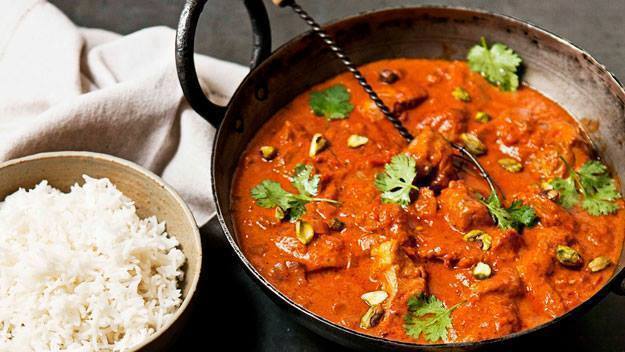
(Representative photo)

At the same time, meal planners should not be confused with diet charts. Only qualified dieticians can prescribe options as per your food choice, health condition, and family food habit. But Goyal says her application will help develop a family menu plan and it could be easily aligned with personal diet charts and other health conditions and food preferences.

Amiyaa enables users to create distinctive meal plans, which are as per the unique tastes and preferences of their family members. It also provides helpful suggestions and triggers, which ease the decision-making process and also provides other engagement opportunities to the users.

Thanks to Amiyaa, you do not have to ask what to cook today, something which is routine in Indian homes. “Even when someone else is undertaking the cooking of the food, the menu planning is still done by the woman of the house with little or no participation from the other family members. The homemaker by the nature of her role is multi-tasking and thus this everyday decision-making becomes an unacknowledged source of anxiety for her. Meal Planning is of help as it enables a situation of readiness be it with respect to the menu, ingredients, recipe knowledge and preparation for the said meal,” says Goyal.

Shalini Chaudhary Goyal has crafted Amiyaa– a meal planning App.

Goyal says meal planning is making a plan of meals with optimal nourishment and nutrition for every member of the family within the available resources.

“A balanced meal plan of the day should ideally include all five groups of food namely vegetables, fruits, grains, protein, and dairy. Each food group provides the body with different nutrients; therefore, by including foods from all five groups in our daily meals we can make sure that we get the required nutrients needed for our bodies to function effectively and stay healthy. However, most of our effort each day goes towards managing family’s expectations of taste, preferences, diet requirements and our familiarity of recipes to be cooked and hence we continue to operate in our comfort zones (stress included) along with taking care of our other responsibilities,” says Goyal.

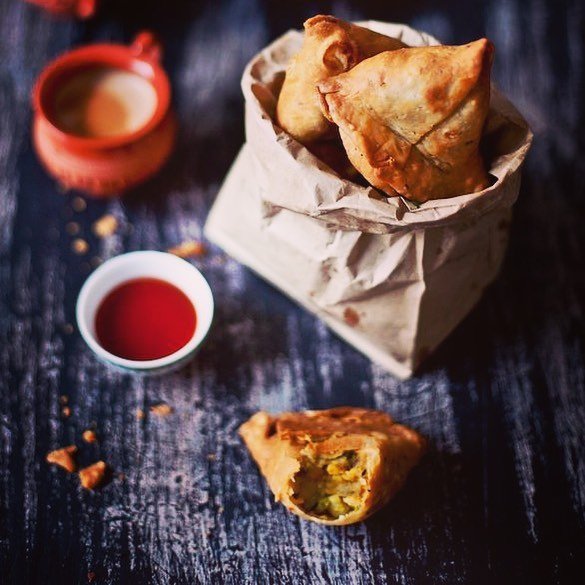
(Representative photo)

Goyal is clear that a meal planner should not dictate anyone’s life. Working across seven days gives you flexibility. It helps you to ease work and family life situations. It offers infinite possibilities. In short, it simplifies your kitchen work. Cooking dinner plus an extra portion for lunch at work the next day is a great way to minimise cost and waste.

It even helps you check your fridge before you shop.

And the biggest challenger for a meal planner in India? Getting Indians hooked on it. Meals are important for Indians but they rarely think about food while eating.

Can Amiyaa change the trend?

What is the best recourse for Punjab in the coming elections?

0

As the time for Punjab state legislative elections approaches the political landscape in the region is heating up at a very fast pace. The situation and narrative is changing almost overnight. Sadly, incidents of violence are also on the increase which indicates frustration in certain quarters that wish to see the limelight focussed on themselves and are ready to go to any extent for the same.

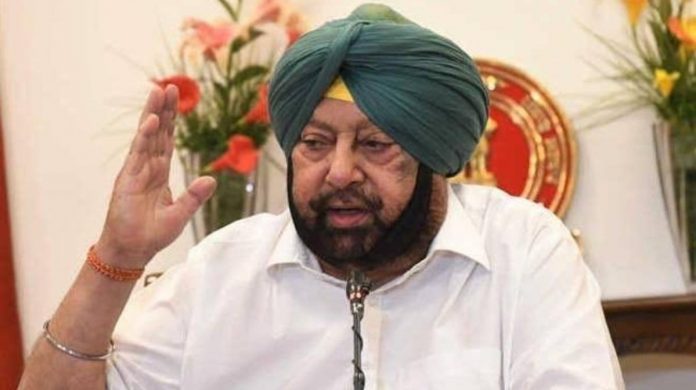
There are three issues that the state is seized with presently. The latest and most significant is the decision of launching a new party announced by Captain Amarinder Singh, former chief minister of Punjab. Also of note is the brutal murder of a Dalit Sikh by a group of Nihangs (a Sikh sect).

The decision of Captain Amarinder Singh to form a new party was expected given the obnoxious manner in which he has been treated by the Indian National Congress (INC). With complete disregard to his four decade service to the party and his stature and two time Chief Minister of the state he was arbitrarily removed from the chair of Chief Minister a few months before the state assembly elections. No leader of the stature of Capt. Amarinder Singh would take such an insult lying down; by deciding to leave the Congress and launch his own party he has done what is right and honourable under the circumstances.

“Hopeful of a seat arrangement with the BJP in 2022 Punjab Assembly polls if farmers’ protest is resolved in farmers’ interest. Also looking at alliance with like-minded parties such as breakaway Akali groups, particularly Dhindsa and Brahmpura factions,” said Amarinder Singh’s media advisor Raveen Thukral in a tweet even as the leader is yet to make a public statement.

The reference to BJP as a possible alliance partner has set the political and media circles abuzz in the state. While the senior leadership of the BJP has maintained a diplomatic silence, the other parties, especially the Congress, are in a state of panic. Wild allegations about Amarinder Singh having been a BJP mole in the Congress since taking over as the Chief Minsiter are being made by senior Congress leaders. They are in bad taste and only expose the weakness of the party. The Shiromani Akali Dal (SAD) has claimed the possible alliance between the BJP and Amarinder Singh as an “unholy nexus”. In so saying the party has conveniently sidelined the fact that it remained a partner with the BJP for thirty long years.

Quite obviously, the opposition being exhibited to the decision of Captain Amarinder Singh lacks substance and is the result of frustration. For any right thinking person this move would constitute a step in the right direction and well within the constitutional rights of the individual. It will possibly throw up a new leadership which is much needed  in Punjab.

The icing on the cake would be a rapprochement with the Farm Bills agitators through joint interventions by Captain Amarinder Singh and the centre; a positive move in this direction would be of great benefit to the region that is suffering immensely due to disruptions caused by the agitation.

A seat sharing alliance between Amarinder Singh’s party, the BJP and possibly the Taksalis (Dhindsa and Brahmpura) would depend upon how the new party evolves. If it is going to be a surrogate of the earlier corrupt Congress dispensation then nothing new can be achieved.

Captain Amarinder will need to shed the baggage of the past and come up with a new vision involving new and young talent. Further, jointly with the centre he will need to engage with relevant farm leaders and come up with a solution that is just and honourable for the centre, the nation and Punjab. If these parameters can be met then all like-minded parties can get together to give to Punjab an effective and dynamic leadership.

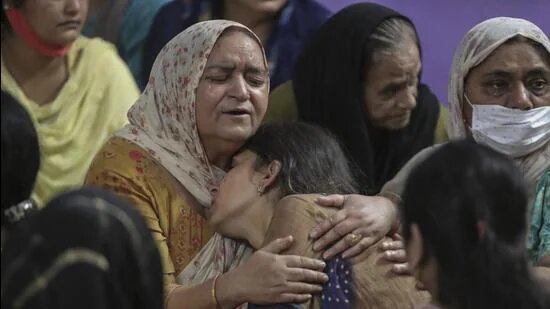
The barbaric killing murder of the Dalit Sikh, Lakhbir Singh, at the Singhu border has sent shock waves across India and the world. As the police investigations proceed it is seen from media reports that the statements given by those present there, including those arrested on having taken responsibility for the killing. It is being alleged that the same was a premeditated murder in which an extreme form of violence was witnessed. This makes the agitation sites very dangerous as dens of vice and criminality.

Close in the heels of the alleged crime at the Singhu border the Supreme court during hearing of a petition seeking removal of the protesters from the roads on 21 October has observed that farmers had the right to protest, but roads cannot be blocked indefinitely. “You may have a right to agitate in any manner but roads should not be blocked like this. People have right to go on roads but it cannot be blocked,” said the bench. “Ultimately some solution has to be found. We are not averse to their right to protest even when a legal challenge is pending, but roads cannot be blocked,” the court further observed. A bench has granted three weeks’ time to farmer unions to file their response and the next hearing has been slated for 7 December. As the legalities proceed it is quite apparent that common people are very disturbed by the continuous blockade and the Court is sensitive to their discomfiture.

The vacation of the agitation sites stands identified as the most critical challenge for the regional and the central leadership, since it is posing a huge security threat to the region and to the nation at large. Vacation on resolution of the vexed Farms Bills issue would be the best and permanent method to put this unfortunate situation to rest permanently. It is here that Captain Amarinder can play a dynamic role. If he works in close coordination with the centre and the group succeeds it would be deemed as the biggest service to the beleaguered state. The leadership of the group will be firmly established.

In the forthcoming elections an alliance based on a righteousness  approach keeping in mind the many challenges that the state of Punjab is facing would be a welcome step in the right direction. Like minded parties will need to reach to a common minimum programme and then pursue it with honesty. This would be the best recourse for Punjab. 

Decoding the attacks on Kashmir minorities

0

Taliban Angle
While the Pakistan-backed Taliban was rapidly gaining ground in Afghanistan, there was widespread apprehension that once it came to power, Rawalpindi would demand its pound of flesh by directing Kabul to divert its fighters into J&K. Since this had already happened in the 1990s, after the then Soviet army had left Afghanistan, it was but natural to expect a replay after US forces left and the Taliban seized Kabul. Accordingly, there are some who are linking the recent attacks on minority communities in Kashmir Valley with the Taliban takeover of Kabul.

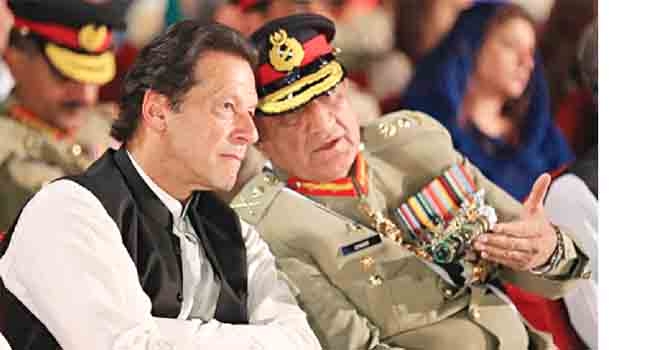
With Pakistan Army chief Gen Qamar Javed Bajwa reiterating that “Pakistan Army firmly stands by the Kashmiris in their just struggle to the very end”, and qualifying that “We are prepared and shall go to any extent to fulfil our obligations. . .”, there’s a distinct possibility that Taliban fighters could make their way into J&K. However, nothing could be more dangerous than jumping the gun by ascribing the recent killings of minority community members in Kashmir Valley to Taliban ideology, since this is exactly what Inter Services Intelligence [ISI] of the Pakistan Army, which is overseeing proxy war in J&K, wants.

Killing people belonging to minority communities in J&K has been going on ever since terrorism raised its ugly head here more than three decades ago. However, for obvious reasons, while no known terrorist group ever took responsibility for such despicable killings, unknown outfits with high sounding Islamic names promptly did. That’s why when a group calling itself The Resistance Front [TRF] promptly took responsibility for killing two Kashmiri Pandits [KPs], one Kashmir Sikh lady and one Hindu migrant, it gave everyone a morbid sense of déjà vu.

Origin of TRF 

Revocation of Article 370 on 5 August 2019 and TRF coming into existence soon thereafter provides a vital clue regarding the emergence of this terror group. It needs to be understood that by abrogating Article 370, New Delhi virtually pulled the carpet from under Rawalpindi’s feet. Why I say Rawalpindi, and not Islamabad, is because it’s no secret that Pakistan’s Kashmir policy has always been the sole preserve of the army.

Immediately after Article 370 abrogation, the government of Pakistan had announced its unconditional support to the separatist movement in J&K. Therefore, if the Pakistan Army [like all militaries in democracies the world over] was subservient to the legislature and only implementing Islamabad’s decisions, then isn’t its support for what it refers to as “just struggle” in Kashmir axiomatic?

So, where was the need for Gen Bajwa to make a pledge that Pakistan Army firmly stands by the Kashmiris in their just struggle to the very end”?  Furthermore, doesn’t the next part of Gen Bajwa’s statement about the Pakistan Army being prepared and determined to go to “any extent to fulfil our obligations,” clearly indicate a paradigm shift in Rawalpindi’s proxy war strategy in J&K.

Desperate Times

Even though it never had any legal grounds to stake a claim on J&K, Pakistan has nevertheless been fooling its own people and proxies by contending that J&K is under “illegal occupation” of India by selectively referring to UN resolutions and quoting them out of context. However, after New Delhi abrogated Article 370, Islamabad in a knee jerk reaction, took this issue to the United Nations Security Council [UNSC] and even announced that it would also approach the International Court of Justice [ICJ] regarding the same.

With UNSC refusing to entertain Islamabad’s request for debate on legality of Article 370 abrogation and instead holding a closed-door informal general meeting on J&K, in which neither were the proceedings recorded, nor any statement issued, Islamabad ended up vindicating India’s stand on J&K. As far as approaching ICJ was concerned, with its ICJ counsel Barrister Khawar Qureshi admitting that “. . . in the absence of these pieces of evidence [of alleged atrocities in J&K], it is extremely difficult for Pakistan to take this case to the ICJ”, Islamabad wisely chose not to exercise this option.

Subsequently, by admitting that “. . . anybody looking at India and Pakistan and what is going on in Kashmir sitting elsewhere may have a different view and they may see Jammu and Kashmir as an inalienable part of India”, the erudite barrister Qureshi hammered-in the last nail on the coffin of Pakistan’s already tottering Kashmir narrative. Stung by Pakistan Peoples Party [PPP] leader Bilawal Bhutto Zardari’s caustic remark of how “Earlier, Pakistan’s policy on Kashmir was on how we will take Srinagar. Now, under Imran Khan’s government, we have been forced to think on how we will save Muzaffarabad”, a miffed Gen Bajwa decided to confront the desperate situation that had arisen due to Article 370 abrogation by adopting desperate measures.

 This is how and why TRF came into being.

Shape of Things to Come

While Gen Bajwa may refer to the ongoing terrorism in J&K as a “just struggle”, his claim doesn’t have any takers, and with TRF running amok and targeting minorities, he’s made things even more embarrassing for Islamabad. However, while the international community may condemn killing of innocent people belonging to religious minorities in Kashmir, ultimately, it’s New Delhi that has to take appropriate actions to thwart Rawalpindi’s nefarious designs by revisiting its Pakistan policy and taking tough decisions, even if it upsets others.

Today, Pakistan is indeed of a fix on the J&K issue. Its diplomatic offensive has drawn a blank and its army lacks the capability to wrest control and settle the ‘K’ issue in its favour. Accordingly, its “Kashmir Banega Pakistan” [Kashmir will become part of Kashmir] dream is destined to remain unfulfilled. So, even though it’s become abundantly clear to Rawalpindi that its ambitious plan to avenge ‘East Pakistan’ has failed miserably, the military’s super-inflated ego will never accept the reality.

In any case, since those being killed in its proxy war are Kashmiris, Pakistan army has nothing to lose, because right from the beginning, its real aim wasn’t “liberation” of Kashmir but bleeding India through a “thousand cuts”, which it is achieving.

Epilogue

In 1944, when the German army was unable to contain the allied forces’ advance, Adolf Hitler ordered Field Marshal Dietrich von Choltitz to ensure that “Paris must not fall into enemy hands except as a field of ruins”. Since destroying Paris would have given Germans no military advantage, it’s evident that Hitler gave this outrageous order only to soothe his chaffed ego and take perverse delight in the fact that if he couldn’t have the beautiful city of Paris, then no one else would!

Kashmir today seems to be facing a similar situation because after seeing the mayhem being orchestrated by ISI in Kashmir Valley, two things are evident. One, Rawalpindi is convinced that just like in 1947 and 1965, Kashmiris have yet once again let the Pakistan army down by not toeing its line and hence deserve no sympathy. Two, if Pakistan can’t have what Mughal Emperor Jahangir had referred to as ‘paradise on earth’, then it will ensure that the Kashmir is turned into a veritable hell!

So, it’s high time Kashmiris see through Pakistan’s motivated agenda and how Rawalpindi is using them as cannon fodder in its proxy war with India. Instead of being mere pawns of Pakistan and suffering, don’t Kashmiris deserve to become masters of their own destiny?

It’s time Pak civil society starts questioning the Pakistan Army

“The military is taking decisions without any accountability. It has become very dangerous”
Ayesha Siddiqa,
Pakistani political scientist, scholar and author

There were two major developments concerning Pakistan last week. The first was Pakistan Prime Minister Imran Khan’s instructions to all foreign missions to observe October 27 as a ‘Kashmir black day’. The second was international money laundering and terror financing watchdog Financial Action Task Force [FATF] retaining Pakistan on its grey list yet again. Though seemingly unrelated, a closer scrutiny reveals that both these developments are closely interlinked and serve as a tragic example of how ordinary Pakistanis are forced to pay a very high price for the senseless and failed ‘strategic asset’ obsession of its army.

It’s no secret that Pakistan has been smarting under its repeated military failure to seize J&K and hence for it to observe October 27 as ‘black day’ is understandable as it marks the glorious day in 1947 when the Indian Army landed in Srinagar to evict Pakistan Army personnel assisted by armed tribesmen from the erstwhile kingdom of J&K, which had become part of the Indian dominion the previous day. Pakistan’s first military misadventure (codenamed Operation Gulmarg),which commenced on October 22, 1947 took everyone by surprise because just two months ago, it had entered into a ‘standstill agreement’ (a legal bilateral arrangement between princely states of undivided India under British rule and the newly created dominions of India and Pakistan) with the Maharaja of J&K.

In essence, the ‘standstill agreement’ was a measure to facilitate continuation of the existing administrative arrangements that these kingdoms had with the Crown pending the princely states’ final decision on accession to either India or Pakistan. Since newly-born nation states invariably accord top priority to creating requisite infrastructure essential for efficient governance and therefore seldom allow hegemonistic ambitions to take centerstage, so its brazen military intervention in garb of a tribal ‘invasion’ was tantamount to violating the ‘standstill agreement’-something no one ever expected.

Pakistan has the dubious distinction of being placed on FATF’s grey list thrice [2008 to 2009, 2012 to 2015 and 2018 till date]. In a research paper titled “Bearing the cost of global politics — the impact of FATF grey-listing on Pakistan’s economy” released by Pakistani thinktank Tabadlab, Dr Naafey Sardar has pegged the total GDP losses of the country due to FATF grey-listing during the period from 2008 to 2019 at a whopping US$ 38 billion. Statistical data in this report also confirms that FATF grey listing has serious negative short-to-medium term implications for the economy, and thus serves as a compelling testament highlighting the high price that the people of Pakistan are paying for the army’s fixation with Kashmir.

So, while Islamabad may accuse FATF of being “politicised” and blame New Delhi for “Manipulating an important technical forum [FATF] for narrow political designs against Pakistan,” the reality is entirely different. In its March 2021 commentary, European Foundation for South Asian Studies, a renowned thinktank has noted that “Pakistan’s long-standing policy of creating, harbouring, sponsoring and exporting terrorists to neighbouring Afghanistan and India has meant that the country has almost incessantly been in the FATF’s crosshairs, even if it has somehow incredulously managed so far to escape blacklisting by the watchdog.”

After the June 2021 plenary, FATF’s message to Pakistan was clear-“continue to make progress to address as soon as possible the one remaining Combating the Financing of Terrorism -related item by demonstrating that Terror Financing investigations and prosecutions target senior leaders and commanders of UN designated terrorist groups.” With just one issue to resolve, it seemed that exiting the FATF grey list would be a cakewalk for Islamabad.

However, since Pakistan continues to languish in FATF’s grey list after this month’s plenary, it’s obvious that it has failed to act against UN designated terrorist groups and their leaders operating from its soil. The reason is obvious- the FATF doesn’t expect any action against Rawalpindi’s ‘strategic assets’ by Islamabad.

Debt-ridden Pakistan’s already precarious financial condition is worsening by the day, and according to some sources, as much as one-third of the national budget goes towards interest payment on outstanding loans. The situation is further aggravated by its army’s ever-increasing demand of funds, and the fact that in 2021-2022 Pakistan Army is expected to consume nearly 16 percent of the government’s total expenditure. This indicates Pakistan’s skewed sense of priorities!

So, it’s time saner voices in Pakistan started questioning the government’s failure to act against UN designated terrorist groups and their leaders. Continuing to figure in FATF’s ignominious grey list for more than three years and suffering avoidable economic hardships just to humour Rawalpindi makes no sense.

Accordingly, it’s also time that someone asked Pakistan Army two basic questions-One, with the Ashraf Ghani government gone and closure of all Indian embassies and consulates in Afghanistan, who is now patronising Tehreek-e-Taliban Pakistan [TTP]? Two, having successfully orchestrated the Haqqani-dominated Taliban’s return to power in Afghanistan, why is it that rather than reducing, there’s an increase in incidents of TTP attacks against Pakistani security forces? 

Since the Criminal Law [Amendment] Bill, 2020, gives armed forces of Pakistan protection against ridicule, disrepute or defamation, queries on Rawalpindi’s debilitating ‘strategic asset’ policy could well be interpreted as an attempt to belittle the army. Thus, those seeking accountability from Pakistan Army need to exercise due caution!

What do you know about troubled forests?

A peek into India’s illegal wildlife trade

One of India’s forest wildlife experts has raised a serious alarm. Samir Sinha, a senior Indian Forest Service (IFS) officer and additional principal chief conservator of forest, Uttarakhand, has alerted the nation that India is among the top countries for illegal wildlife trade, and its fast expanding airport sector — a matter of pride for New Delhi — is often used by wildlife traffickers to smuggle high-end, high-value species and products.

In India, the number of airports increased from 50 in 2009 to 127 in 2019, including 23 international airports which handled 66.54 million passengers in 2019-2020. Wildlife trafficking by the air is generally of high-end, high-value products.

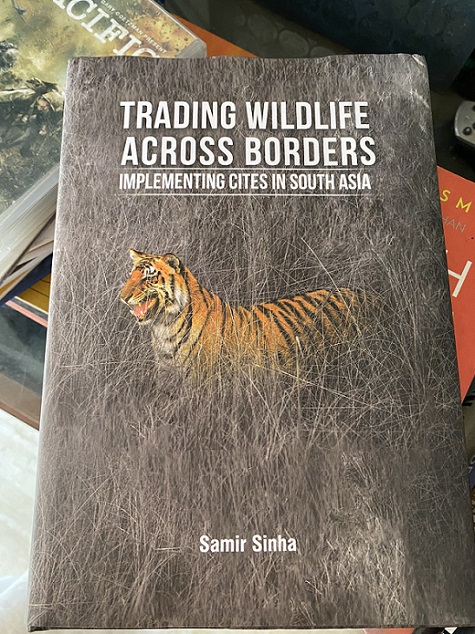
In his brilliantly researched book, Trading Wildlife Across Borders: Implementing CITES in South Asia, Sinha — a former director of India’s largest Corbett Tiger Reserve — says wildlife trade poses the second biggest direct threat to the survival of species in India after destruction of habitat across the country. Alarmingly, figures with the Indian government show over 31 percent trafficked items were in the checked luggage for flights operating out of India and 20 percent in air cargo.

Samir Sinha’s book “Trading wildlife across borders” explains how and why India is among the top countries for wildlife trade.

In short, smuggling of wildlife animals is turning out to be as sophisticated and well-connected as smuggling of arms. 

“Changing national laws across South Asia provided a basis for better engagement across borders. With the emergence of Convention on International Trade in Endangered Species of Wild Fauna and Flora (CITES) in 1973 as a global framework for regulating wildlife trade, the region’s countries began exploring provisions as a means for protecting indigenous species like tigers. Even so, the trade in tiger products was too lucrative for some to abandon. In the face of changing national and international laws, they moved their operations underground,” writes Sinha.

Illegal trade, as a result, remains an all time high. Across the wild jungles of Brazil, Malaysia, Singapore, Thailand, Papua New Guinea, Australia, New Zealand, and some African nations, exotic birds and rare animals are caught and sent out on cargo ships to India and then offloaded through fishing trawlers on the coasts of Konkan and Daman. Some species also come to Kolkata from next door Bangladesh. And eventually, they are sold in thriving illegal markets of Delhi, Mumbai, Hyderabad, Ahmedabad and Kolkata.

(Representative photo)

Sinha says in his book that revenues generated by the trade in endangered species are estimated at 16-18 billion Euros per year, with the EU the foremost destination market in the world. 

Many animals do not survive the trauma of being transported for long hours from their homes through several countries. However, the buyers still make full payment to sellers as the buying cost is astonishingly low.

“Given the high profits from such illicit activities along with the relatively low probability of detection, poor conviction rates and low punishment received by those convicted, these crimes appear very attractive to professional, organized criminals,” writes Sinha, adding such illegal networks comprise many interlinked elements that carry out different functions in the chain.

So checkmating such criminals is a herculean task.

“Criminals engaged in illicit trade in tiger and bear products between Russia and China are known to have engaged with the Russian mafia to have items smuggled across the border. It is believed that the Russian mafia controls a large part of the illegal trade in caviar,” writes Sinha.

The book says – very rightly – interventions by the judiciary have failed to work on such smugglers. In some cases, the traders wait for a particularly strict judge to retire so that they can resume their business without any problems. And anyway, most cases are dropped due to high corruption. Consider the case of Mumbai’s Crawford market for illegal sale of birds and animals, the cops are reportedly in cahoots with illegal traders. Raids rarely take place and when it happens, the cops find nothing because the traders get their alerts well in advance. In some markets, exotic species are kept in stressful conditions alongside domestic animals. The Wildlife Conservation Society said in a report that there are at least 25 markets in India that trade in live wildlife and 14 that trade in wild meat. 

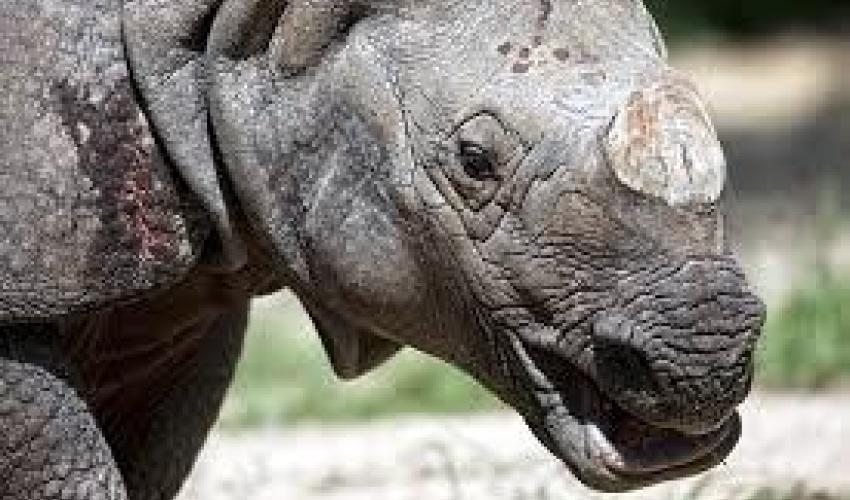
A rhinoceros with its horn cut off by the poachers.

Experts claim loopholes in wildlife laws have been routinely exploited by the traders. Consider this one. The WPA regulates trade in wild animals, but — at the same time — WPA does not include exotic wild animals imported into India. Experts claim that this very loophole, in turn, has pushed commoditising and trade of exotic species, since the WPA is enforced only for trade in native animals protected by its six schedules. As a result, illegal trade in exotic species takes place in brick-and-mortar stores across India as well as online, via e-commerce platforms like Quikr and Olx without being licensed and permitted by the State Animal Welfare Boards. So what does the rules say, the book says trade in any exotic species listed in Appendix I of CITES is allowed only with import and export licences from CITES Management Authorities in the importing and the exporting country, a certificate from the Directorate General of Foreign Trade in India, and permissions from the Chief Wildlife Warden of the state to which it is being imported. But then, there is a serious catch. The legal lacunae lie in the fact that the animal may be freely traded once it has entered Indian land. “If someone were found with a kangaroo 100 kilometers inside Indian territory, there is no law to prosecute the owner or possessor,” says a report in a newsmagazine/ https://www.thecitizen.in/index.php/en/newsdetail/index/13/20511/why-the-exotic-wildlife-trade-is-rising-steeply-in-india

Sinha says it is a serious concern. The global illegal trade in wildlife is around $20 billion. What is scary is that this is the fourth largest illicit market across the world after drugs, counterfeit, and human trafficking.

India is among the top 20 countries for illegal wildlife trade. 

Fauna species smuggled include star tortoises, exotic birds, red-eared slider turtles, iguana, python, spiders, marmoset and tamarin monkeys, along with tricolour squirrels, iguanas and leopard cubs. Flora smuggled include red sanders, sandalwood, and kuth roots. Some illegal traders also smuggle peacock feathers and shark fins.

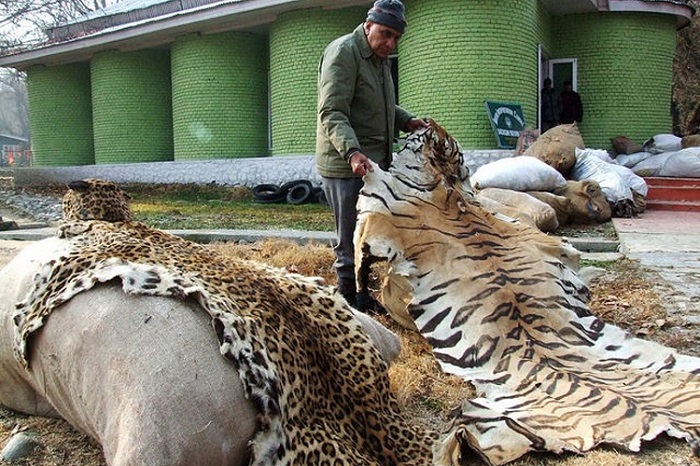
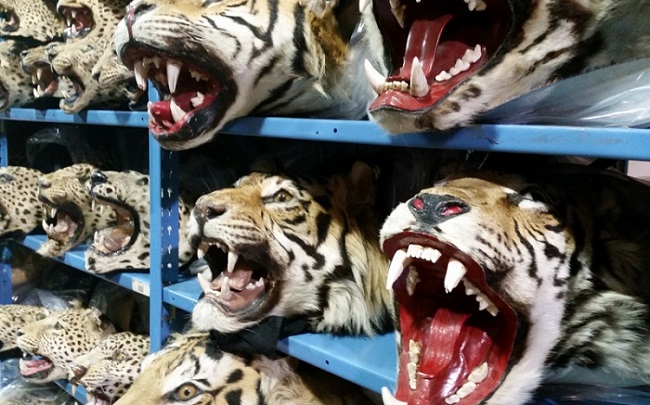
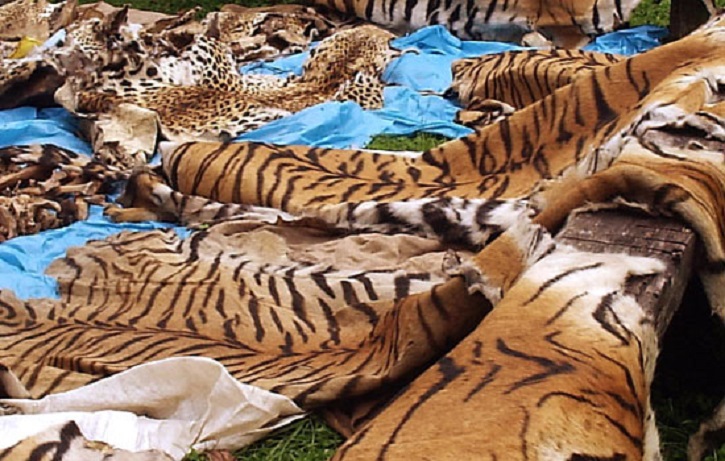
Tiger skin being dried before being packed for smuggling. (Representative photo)

The book says India is at the epicenter of the south Asian reptile trade. Endangered Indian star tortoises and black pond turtles are smuggled to South East Asian nations where they are sought after as pets. On the other hand, red-eared slider turtles are brought in from southeast Asia.

Sinha says the illegal wildlife supply-chain goes beyond the seizures at the airport. The supply-chain originates in forests and natural habitats, and involves several people, from locals and poachers to carriers – all responsible for transporting consignments across India and also out of the country.

The book says TRAFFIC’s campaign, Don’t Buy Trouble and the UNEP-WCCB collaboration campaign Not All Animals Migrate By Choice are aimed to create awareness amongst flyers, tourists and airport authorities about the prevalence of illegal wildlife trafficking.

Is the government listening?

The charade of ‘armed struggle’ in Kashmir

1

It’s now been more than three decades since terrorism first raised its ugly head in J&K and no Kashmiri has remain untouched by the pain and suffering it has caused. Despite a host of human rights organisations and activists who claim to be extremely concerned and greatly distressed by violence in J&K, not even one of the self-professed ‘well-wishers’ of Kashmiri people has made any serious attempt to educate those who have picked up the gun on the futility of the so called “armed struggle”. Au contraire, there are plenty who by justifying violence perpetrated by terrorists are actually encouraging a culture of violence that’s brutalising the very people these activists claim to be so worried about!

Grand Illusions

Whereas forces that propel terrorism may differ, but the common denominator is that it’s a bustling industry the world over and J&K is no exception. Islamabad may euphemistically refer to terrorism in J&K as a ‘legitimate struggle for self-determination’ and wax eloquent on how it can’t be equated with terrorism and also may have issued a postage stamp to honour a terrorist killed in an encounter with security forces. However, it’s puerile attempt to eulogise terrorism has no takers. So much so, that even that its ‘all weather friend’ China, close ally Turkey as well as the Organisation of the Islamic Cooperation [OIC], have out rightly disapproved use of violence as a means to resolve the Kashmir issue.

Amusingly, despite being the sole supporter of terrorism in J&K, Islamabad continues to blow hot and cold on the one hand talking about peaceful resolution of the Kashmir issue, while on the other hand, stoutly endorsing terrorism by terming it a ‘legitimate struggle for self-determination’. However, such is Islamabad’s obduracy that in spite of being globally isolated on this issue and continuously figuring in the grey list of international terror financing watchdog Financial Action Task Force [FATF] since 2018, Pakistan still refuses to mend its ways.

In Denial 

It’s not that the separatist lobby in J&K that toes Pakistan’s line is ignorant about the futility of terrorism. As early as 2007, while visiting Pakistan, senior All Party Hurriyat Conference [APHC] leader Mirwaiz Umar Farook had pleaded that “The dialogue process to resolve the Kashmir issue should be given a chance as efforts through military means have not achieved any results except creating more graveyards.” The United Jihad Council or UJC [a terrorist organisation created by Pakistan Army for exercising unified command over all terrorist groups fighting in J&K] expectedly hit back at him and his supporters by advising them “. . . not (to) teach the lesson of cowardice and hopelessness,” to Kashmiri youth.

The UJC spokesperson also said that“If Mirwaiz and other leaders of his like have become tired, disenchanted or hopeless about the future of freedom struggle due to adverse circumstances, we suggest them to sit back in their homes to lead a life of comfort.” In the process of castigating Mirwaiz, the UJC spokesperson unwittingly admitted that the future of the so called “freedom struggle” being waged by terrorists in J&K was “hopeless”.  

Former Hurriyat leader Late Syed Ali Shah Geelani, was a firm advocate of the so called “armed struggle” who had officially accepted that “We [APHC] never denied or ignored the role of gun in our struggle”. However, even he accepted that the so called “armed struggle” “won’t serve its purpose unless and until it is well-coordinated. It needs support of a country… resources and training camps . . . it also needs ideologically perfect youth. It needs strategy”, and admitted that “militancy in Kashmir lacks these things”.

From the Horse’s Mouth

While Islamabad is busy trying to defend the indefensible and trying to secure international legitimacy for terrorism in J&K that it is patronising, former Pakistani politicians, its army Generals and terrorist commanders themselves have openly admitted that the violence in J&K is pure terrorism. In 2009, the then Pakistan President Asif Ali Zardari admitted that “Militants and extremists emerged on the national scene and challenged the state not because the civil bureaucracy was weakened and demoralised, but because they were deliberately created and nurtured as a policy to achieve short-term tactical objectives”.

A year later, Zardari’s revelation was confirmed by former Pakistan President and ex-army chief Gen Pervez Musharraf. In an interview with Der Spiegel, when asked whether Pakistan created “militant underground groups to fight India in Kashmir”, he nonchalantly replied “They were indeed formed [by Pakistan army]”, adding that “The government turned a blind eye because they wanted India to discuss Kashmir.” In 2012, while addressing a two-day ‘Shuhada [martyr] Conference’ in Swan Adda area of Rawalpindi, UJC chief Salahuddin proudly announced that “We are fighting in Kashmir. It doesn’t matter to us if we are labelled terrorists.”

Even as recent as 2019, Prime Minister Imran Khan admitted That “when you talk about militant groups, we still have about 30,000-40,000-armed people who have been trained and fought in some part of Afghanistan or Kashmir.” So, if the ongoing “armed struggle” is indeed an indigenous one [as Islamabad claims], then how does Khan explain that such a large number of trained and armed people who have fought in Kashmir be present on the Pakistani soil?

What Impels Terrorism in J&K?

So, with the international community distancing itself from terrorism in J&K and AHPC as well as UJC itself being convinced that this so called “armed struggle” won’t achieve anything, the question that arises is, what could be the driving force behind terrorism in Kashmir? One doesn’t have to look far for an answer since the same has been explicitly spelt out by both the person heading the terror amalgam in J&K as well an erstwhile patron.

In 2012, during an interview with ‘Arab News’, UJC chairman Syed Salahuddin himself admitted that “we are fighting Pakistan’s war in Kashmir”, a claim which was endorsed by Gen Musharraf two years later when he disclosed that “We have source [in Kashmir] besides the [Pakistan] army. . . People in Kashmir are fighting against [India]. We just need to incite them”. No prizes for guessing who the “source” or “people in Kashmir” being referred to by Pakistan’s former army chief are!

Five years later, Musharraf once again boasted of how “Kashmiris who came to Pakistan received hero’s reception here. We used to train them and support them. We considered them as Mujahideen who will fight with the Indian Army then various terrorist organisations like Lashkar-e-Taiba rose in this period. They were our heroes”.

So, it doesn’t require rocket science to deduce that Pakistan is patronising terrorism in J&K solely to serve its own vested interests and is using terrorists and separatists to befool gullible Kashmiris into picking up the gun through the emotional ‘armed struggle’ and ‘jihad’ clichés!

The Tragedy

It is heart wrenching to see unscrupulous influencers radicalising youth in the prime of youth to pick up the gun; it’s revolting to see such unprincipled people misusing their political, religious, social or ‘nationalist’ aura to lure young boys of impressionable age into terrorism- and it’s agonising to see how the otherwise very vocal civil society in Kashmir chooses to maintain a stoic silence even after witnessing young boys being pushed onto the path of certain death. Lastly, it’s really tragic to see how just for the sake of petty gains, some Kashmiris don’t have any qualms in putting their own brethren in harms way!

Pakistan-TTP talk is merely a diversionary tactic

The Past
In April 2017, Ehsanullah Ehsan, a senior spokesperson of Tehreek-e-Taliban Pakistan [TTP] who subsequently joined its breakaway faction Jamaat-ul-Ahrar [JuA] supposedly, ‘surrendered’ to the Pakistan Army. It was a great moment for Rawalpindi and the then Director General [DG] of Pakistan Army’s media wing Inter Services Public Relations [ISPR] Maj Gen Asif Ghafoor who proudly announced how “The state is re-establishing its writ”, adding that “No element can challenge the state if the state has the will to weed out dangerous elements”. He also said that “There can be no bigger achievement for Pakistan than the fact that our biggest enemies are now realising the error of their ways and are turning themselves in,” an unquestionable assertion that even Rawalpindi’s staunchest detractors had to accept.

However, with JuA (Jamaat-ul-Ahrar) insisting that Ehsan had not surrendered but had been captured by Pakistan Army’s spy agency Inter Services Intelligence [ISI] from Paktika province of Afghanistan, ISPR’s claim lost much of its sheen. But this didn’t bother Rawalpindi as the former TTP spokesperson’s ‘confession’ was music to its ears. Alleging that spy agencies of India [Research and Analysis Wing or RAW] and Afghanistan [National directorate of Security or NDS] were using TTP to orchestrate terrorist activities in Pakistan, he went to the extent of claiming that “They [RAW and NDS] supported [TTP], extending financial assistance and they also gave targets, and for each attack (TTP) charged a price”.”

While Islamabad made a massive hue and cry demanding action against New Delhi, accusing it of inciting terrorism, the international community’s response to Ehsan’s assertions was guarded- and there were good reasons for this.

Firstly, it’s common knowledge that once a person is in custody of security agencies, he can be compelled to say whatever his captors demand, and the extremely controversial ‘arrest’ of former Indian Navy officer Kulbhushan Jadhav a year earlier was still fresh in peoples’ mind. Secondly, before commenting on espionage and terror related issues, every nation corroborates claims being made a ‘surrendered’ terrorist with inputs from other more credible sources, and needless to say, except for Pakistan, no other country has accused New Delhi of patronising terrorist groups. Au contraire, the whole world is well aware of how Pakistan Army believes in ‘good’ Taliban and uses it to wage proxy wars against its neighbours.

If Ehsan’s ‘surrender’ was enigmatic, then equally mysterious was his subsequent ‘escape’ alongwith his entire family three years later, despite being under Pakistan Army’s watch. It’s here that Rawalpindi’s link with terrorist groups became all the more apparent. Jadhav, who was allegedly ‘captured’ by Pakistan in March 2016, was charge-sheeted, tried and sentenced to death by a military court in just 13 months. However, despite being in the army’s custody for 34 months, leave alone being tried, Ehsan wasn’t even charge-sheeted for the several acts of violence against Pakistani nationals for which he as spokesperson of TTP [and later JuA] had taken responsibility. This raises suspicions of Rawalpindi protecting the former TTP spokesperson.

In December 2017, a parent whose son was amongst the 149 killed in the 2014 Army Public School Peshawar terrorist attack approached Peshawar High Court [PHC] to prevent clemency being granted to Ehsan by government of Pakistan. The fact that Peshawar High Court took cognisance of this appeal and directed that Ehsan shouldn’t be released without a trial confirms that the petitioner’s plea had merit and wasn’t frivolous. So, retaining the former TTP spokesperson in military custody right from the time he surrendered [or was apprehended], and not charge-sheeting him for nearly three years is a clear indication that Rawalpindi never intended to bring Ehsan to book and this lurking suspicion is unambiguously confirmed by his mysterious escape.

The Present
With Pakistan ‘owned’ Taliban replacing the Ashraf Ghani government and no Indian presence in Afghanistan, TTP, which as per Islamabad was being manipulated by RAW and NDS should have shrivelled due to lack of patronage. However, after the regime change in Kabul, TTP seems to have become more aggressive and this rubbishes Islamabad’s claims backed by shady people like Eshan of TTP being New Delhi’s creation for “whipping up terrorism” in Pakistan. Furthermore, Pakistani Prime Minister Imran Khan’s disclosure that Islamabad had initiated a “reconciliation process”, by commencing talks with TTP clearly indicates that this group is the product of ‘home grown’ terrorism in Pakistan. 

In a country where the army and not the legislature calls the shots, it’s hard to believe that Rawalpindi would allow Islamabad to start these negotiations for many reasons. Firstly, it mocks the army’s claim that Pakistan “trusts that the Taliban will keep their promises and take effective measures to ensure TTP does not operate against any country from Afghan soil”.  Secondly, it contradicts Pakistan army’s bold claim that “No element can challenge the state if the state has the will to weed out dangerous elements”. Lastly, even though Khan has tried to defend his army’s reputation by saying that “I am anti-military solution, and as a politician, I believe political dialogue is the way ahead”, the fact of the matter is that talks with TTP is tantamount to admission that Pakistan army is incapable in ridding Pakistan of this menace!

The Future
Though one wishes that Islamabad can convince TTP to eschew violence, but the prospects don’t appear to be very bright, and once again the fault lies within, as political parties in Pakistan have generously promoted radicalism just to garner votes. However, it was Rawalpindi that actually institutionalised radicalism in Pakistan. Former President and ex-army chief Gen Pervez Musharraf has himself admitted that “We poisoned Pakistani civil society for 10 years when we fought the Soviets in Afghanistan in the 1980s. It was ‘jihad’ and we brought in militants from all over the world, with the West and Pakistan together in the lead role”. 

So, in reality, TTP isn’t an Indian proxy but a group of radicalised Pakistanis, “poisoned” by the military into believing that terrorism is ‘jihad’. Accordingly, for Khan to expect that TTP story to have a happy ending – they will lay down arms and in return “we [will] forgive them and they [will] become normal citizens”, is a tall order and a typical case of over-optimism. In 2014, Khan’s predecessor Nawaz Sharif too had entered into talks with TTP and instead of ushering peace, it led to ‘Operation Zarb-e-Azb’ in which 490 army men were killed and nearly 2,000 injured.

Ultimately, it seems that former US Secretary of State Hillary Clinton’s prophetic words “You can’t keep snakes in your backyard and expect them only to bite your neighbours. You know, eventually those snakes are going to turn on whoever has them in the backyard”, have come back to haunt both Islamabad and Rawalpindi!

Tailpiece: On 30 September, Captain Sikander of Pakistan Army was killed in a gunfight with TTP terrorists in Tank area of Khyber-Pakhtunkhwa. He was only 27 years old. One can only empathize with the grieving kith and kin of the unfortunate ones like Captain Sikandar who are being killed by the very terrorists with whom Islamabad is not only currently negotiating but also considering to grant them amnesty!