Home Blog Page 30

Pak backed terrorists throw grenade near Lal Chowk in Srinagar; injure 12 Kashmiris

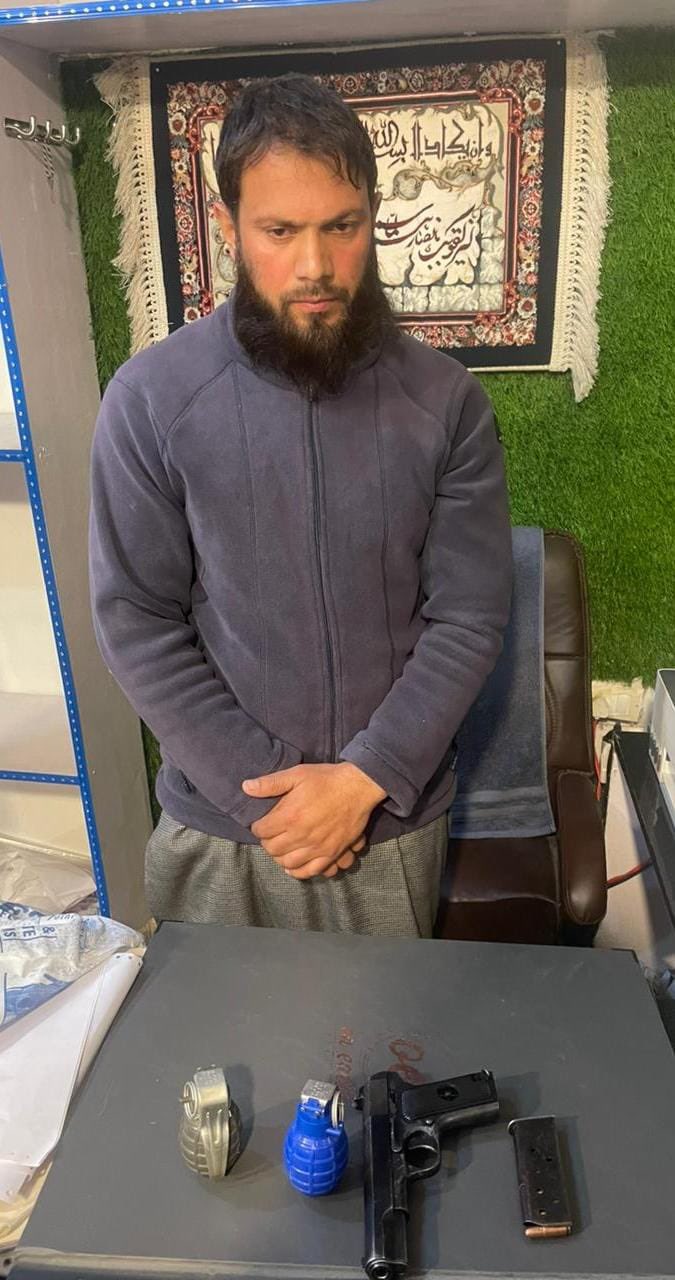
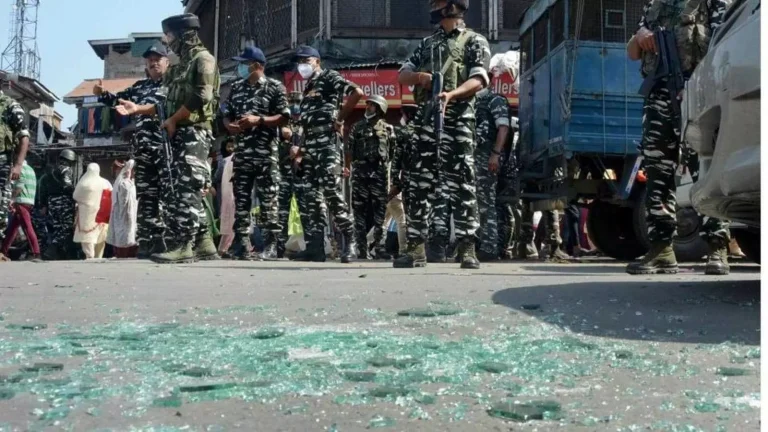
A grenade attack near the heavily-guarded Tourist Reception Centre, close to the bustling Lal Chowk area in Srinagar, Jammu and Kashmir, left 12 civilians injured on Sunday afternoon, according to the J&K Police. The incident took place around 2 p.m., when Pak backed terrorists hurled a grenade at a security force deployment stationed near the crowded Sunday Market.

The explosion occurred amidst a crowd of civilians, injuring 12 people, including a woman who sustained serious injuries. Among the injured are Misba, 17; Azaan Kaloo, 17; Habibullah Rather, 50; Altaf Ahmad Seer, 21; Faizal Ahmad, 16; Uer Farooq; Faizan Mushtaq, 20; Zahid, 19; Gulam Muhammad Sofi, 55; and Sumaiya Jan, 45. Four individuals were treated and discharged after receiving first aid, while two others are reported to require surgery due to severe injuries.

Srinagar’s Deputy Commissioner, Dr. Bilal Mohidin, visited the injured at the hospital, saying that special medical care would be provided. “Two patients will have to undergo surgery. The rest will be discharged after completing their treatment,” he said.

Jammu and Kashmir Chief Minister Omar Abdullah condemned the attack, describing it as “deeply disturbing” and an inexcusable assault on civilians. “The last few days have been dominated by headlines of attacks and encounters in parts of the valley. Today’s news of a grenade attack on innocent shoppers at the ‘Sunday market’ in Srinagar is deeply disturbing. There can be no justification for targeting innocent civilians,” Abdullah wrote in a post on X. He urged the security forces to intensify efforts to prevent further violence, stating, “The security apparatus must do everything possible to end this spurt of attacks at the earliest so that people can go about their lives without any fear.”

The Srinagar Police have registered an FIR under Case No. 66/2024, invoking sections of the Unlawful Activities (Prevention) Act (UAPA), along with other relevant charges related to explosives. Authorities are treating the incident as a deliberate attempt to disrupt law and order in Srinagar, adding a recent resurgence of terror activity aimed at destabilizing the region.

Pak Army occupies Baloch properties in Kech, convert schools & homes into military checkpoints

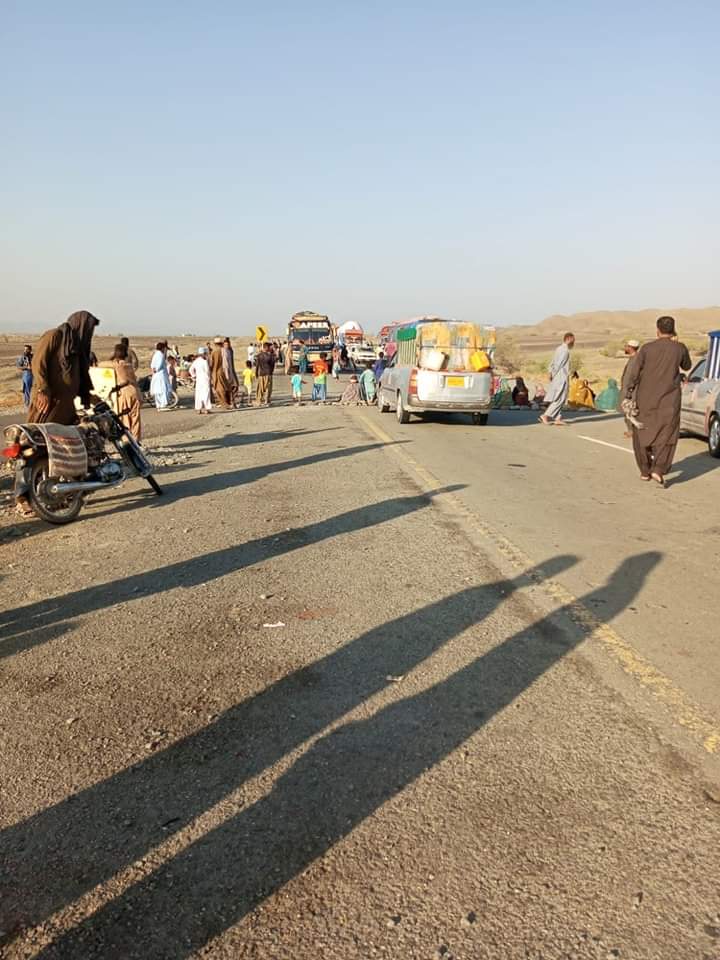
Pak Frontier Corps (FC) forces have reportedly taken over homes, lands and even a school in Mand, a town in Pak-occupied-Balochistan’s Kech district, converting civilian spaces into fortified military checkpoints. Residents, fed up with this encroachment on their lives and properties, protested on Friday, blocking a main highway and demanding the immediate removal of the occupying forces.

FC forces launched raids on homes and lands in the Mehr area of Mand, establishing checkpoints on properties that have been in families for generations. These forceful occupations are just the latest tactic in Pakistan’s ongoing campaign to destabilize and intimidate the Baloch people, undermining their rights and stripping them of control over their own lands.

Protesters took to the streets, with men, women, and children voicing their outrage at the military’s incursion into their lives. Chanting against the occupying forces, they blocked the main road, calling on Pak authorities to end this ruthless campaign of occupation and return their homes and lands.

“Our homes are not battlefields, yet they are being taken over and transformed into military checkpoints,” a resident said. “They’ve turned our lives upside down, occupying not only our homes but our children’s school. Soldiers have set up positions on the rooftops, terrorizing children and women teachers. The sight of armed men on school buildings has sparked fear and trauma in our community.”

Baloch Lands Under Siege

Reports indicate that the military occupation is spreading to more nearby lands, further threatening the livelihood and safety of the community. In a move reflective of a colonial mindset, Pak forces have restricted residents’ access to their homes and lands, even threatening them with consequences if they dare to protest.

The people of Mand have called for urgent intervention from occupied-government bodies to free their homes and lands from military occupation. “If our demands are ignored, we will be left with no choice but to escalate our protests,” one of the community leaders said.

This occupation and conversion of civilian spaces into military checkpoints is a grim reminder of Pakistan’s ongoing campaign against POB. The Pak military’s aggressive tactics in the region are not about security—they are about control and repression. By establishing a stronghold in civilian spaces, the Pak forces are sending a chilling message to the Baloch people: that their lives, homes, and lands are no longer their own.

This unchecked occupation, targeting a vulnerable community already marginalized by decades of occupied-state neglect and oppression, highlights the pressing need for international attention and accountability. POB has been systematically stripped of its resources, silenced through enforced disappearances, and now, forced to endure the indignity of military occupation in civilian spaces.

Pak Army abducts ten Baloch students from Rawalpindi

In a display of Pakistan’s oppressive policies towards the Baloch community, Pakistan security forces conducted a midnight raid on an apartment near the IJP Metro Station in Rawalpindi, abducting ten Baloch students. The students, all residing at the apartment, were taken to an undisclosed location, leaving their families and communities in anguish as yet another case of enforced disappearance unfolds.

The students identified as Saleem Arif, Balach Fida, Khudadad, Khalil Ahmed (two individuals with the same name), Hamal Hasani, Babar Ata, Noor Mahim, Iftikhar Azam, and Ehsam, were pursuing higher education in fields such as International Relations and Education. Hailing from regions across Pak-occupied-Balochistan, including Turbat, Awaran, and Panjgur, these young individuals had come to Islamabad in search of knowledge and opportunities. Instead, they became the latest targets of Pakistan’s relentless crackdown on Baloch youth, a systematic policy that aims to stifle voices from POB.

Rawalpindi Raid

The Baloch Students Council in Islamabad expressed deep concern over the students’ safety, urgently appealing for support in securing their release. “We fear for their lives,” a Council spokesperson said, calling on all communities and organizations to condemn these abductions and pressure authorities to safely return the students. They warned that, should the students not be released soon, they would announce further actions to protest the escalating repression.

These disappearances on the same day underscore the systematic persecution of Baloch individuals by the occupied-state. The Paki establishment’s calculated campaign of enforced disappearances, extrajudicial killings, and oppressive tactics aim to silence a community that dares to demand basic human rights and autonomy. This strategy, long condemned by international human rights organizations, reflects an ongoing Baloch genocide under Pakistan’s iron-fisted rule.

Brigadier Rajinder Singh: Kashmir’s ‘Captain of the Gate’

0

Immediately after the British left Indian shores in 1947, both Independent India and the newly created state of Pakistan undertook a flurry of consolidation related activities. While the Indian leadership concentrated on shaping a unified India by negotiating terms of accession with the more than 500 erstwhile princely states, the Pakistanis unfortunately seemed to be more concerned about expanding the nascent nation’s boundaries through devious means. 

On August 18, Pakistan Army’s Commander-in-Chief [C-in-C] Gen Frank Walter Messervy issued written orders outlining details of a covert military campaign [codenamed Operation Gulmarg] in garb of a tribal ‘invasion’ to annex J&K. That the Army of a newly created nation would issue a war directive within 96 hours or so after its birth may sound bizarre, this is exactly what happened and Pakistan’s perfidy would have gone unreported had Maj [Later Maj Gen] OS Kalkat not stumbled upon this crucial document. 

Warning Ignored

Serving as Brigade Major of the Bannu Frontier Force Brigade being commanded by Brig CP Murry, Maj Kalkat was authorised to open official communications addressed to the Brigade Commander in his absence. As Brig Murry was away on August 20, 1947, Maj Kalkatopened a demi-official top secret letter written by Pakistan Army C-in-C that was addressed to the Brigade Commander. This document that had been signed just two days ago contained war plans for Operation Gulmarg and mentioned October 22, 1947, as the day of its commencement. 

Though Maj Kalkat managed to escape to India and on reaching Army headquarters at New Delhi narrated details about the imminent invasion of J&K to senior military officers, unfortunately, his warning wasn’t taken seriously. Probably it was opined that a newly created nation with a host of national issues required to be urgently addressed was unlikely to take such a drastic step. 

In Srinagar, the ruler of J&K Maharaja Hari Singh was also oblivious of Pakistan’s sinister designs. He refused to exercise his option for accession and appeared confident that Pakistan wouldn’t resort to annexing his kingdom through force and subterfuge. The reason for his optimism was probably the ‘standstill agreement’ which Pakistan had entered into with the princely state of J&K. 

The ‘standstill agreement’ ensured that after Independence, all existing administrative arrangements between the British Crown and princely states would continue unaltered between the signatory dominion [India/Pakistan] and concerned princely states until new arrangements were made. Hence, any move by Pakistan to change the status quo through use of force was tantamount to brazen violation of this agreement and hence extremely unlikely. 

An Agreement Dishonoured

Recognition of the British Crown’s suzerainty by the royalty of undivided India ruled out the scope of local skirmishes or any clash of arms between principalities.  Furthermore, the British rulers ensured that state forces maintained by princely states posed no threat to the British Crown and as such, these armies were largely ceremonial in nature with negligible combat experience, and J&K was no exception.   

Being numerically far inferior and equipped with obsolete weapons, J&K state forces were no match for the World War 2 battle hardened regulars of the Pakistan Army providing command elements as well as bolstering the strength of tribal lashkars [militias] as foot soldiers. As this force approached Muzaffarabad on the night of October 21/22, Muslim soldiers of J&K Princely State Forces stationed there mutinied, murdering their commanding officer and Dogra comrades-in-arms as they slept.

With the mutineers joining the invaders, the entire 180 km route to Srinagar was left completely unguarded. The situation, to say the least, was utterly hopeless as all seemed lost!

J&K’s ‘Horatius’ Emerges

On October 22, the beleaguered Maharaja summoned his Army chief Brigadier Rajinder Singh and ordered him to defend J&K “till the last man and last bullet.” The Maharaja’s son Dr Karan Singh who was present in the room recalls that on receiving this order, Brig Rajinder Singh “just saluted and walked away.” Mustering about 150- 260 men including some officers armed with obsolete weapons and limited ammunition, he set out for Uri in private transport and reached there at about 2 AM on the night of October 22/23. 

Taking a small body of soldiers with him, Brig Rajinder Singh moved forward and encountered the invaders in Garhi. Though it offered stiff resistance, his small detachment was greatly outnumbered as well as outgunned. Despite the overwhelming odds, Brig Rajinder Singh remained steadfast and continued rallying his troops through personal example, carrying out retrograde operations to slow down the advance of the invaders. This included blowing up the Uri bridge and fighting delaying actions from a series of defensive positions at Mahura, Rampur and finally at Baramulla.

The fact that Brig Rajinder Singh was able to delay the more than 20,000-strong invading force with less than 300 men speaks volumes about his professional acumen and dedication. Despite having had several brushes with death, Brig Rajinder Singh continued leading from the front and when his driver was killed in an ambush, he took control of the wheel himself. On being grievously injured subsequently, Brig Rajinder Singh refused evacuation as it would further deplete the already miniscule strength of the defenders. 

Instead he ordered his men to proceed and execute the defensive battle plan as time was at a premium, leaving him where he was. Inspired by Brig Rajinder Singh’s selflessness and sacrifice, his men engaged the invaders in a tough fight during which most of them laid down their lives. Nothing is known what happened to Brig Rajinder Singh as his mortal remains were never found. 

However, those who fell while defending J&K from invaders didn’t die in vain- they were able to delay a much larger and better armed enemy for four days, creating a window that enabled J&K’s accession to India and facilitated the Indian army to land its troops at Srinagar airport for evicting the intruders. Brig Rajindir Singh was posthumously awarded Maha VirChakra, India’s second highest gallantry award.

By living up to the exacting “last man last bullet” credo, Brig Rajinder Singh has epitomised the core professional value revered by every thoroughbred military person and reminds one of Thomas Babington Macaulay’s famous lines-

“Then out spake brave Horatius,
The Captain of the Gate:
“To every man upon this earth
Death cometh soon or late.
And how can man die better
Than facing fearful odds,
For the ashes of his fathers,
And the temples of his Gods?”

Kashmir: Diwali celebrations illuminate Sharda temple at LoC

The sacred grounds of the newly constructed Sharda Yatra Temple in Teetwal, Kashmir, at the Line of Control (LoC), came alive with the glow of Diwali celebrations this year. In a momentous gathering, Kashmiri Pandits, locals, and Indian Army personnel united to celebrate Diwali with candles and traditional oil lamps, infusing warmth and light into the crisp mountain air.

The event was led by construction committee member Ajaz Khan, who compared the historic celebration to the grandeur of Diwali in Ayodhya. Ravinder Pandita, founder and head of Save Sharda Committee Kashmir (Regd.), extended his Diwali greetings to Sharda followers worldwide.

The Save Sharda Committee, which spearheaded the temple’s reconstruction, has been working to restore both the Sharda Temple and an adjacent Sikh Gurudwara on the same plot of land, a site that once housed a dharmshala and gurdwara before being destroyed during the 1947 tribal raids.

Last year, the committee reclaimed the site, launching a reconstruction effort that is now nearing completion. This Diwali celebration at the Sharda Temple symbolizes not only the victory of light over darkness but also the revival of cultural and spiritual heritage along the Line of Control.

Baloch missing persons camp against Pak Army’s brutality completes 15 years & 4 months

After 15 years, 4 months, and 27 days, the hunger strike camp by the Voice for Baloch Missing Persons (VBMP) continues to shed light on the grim reality of enforced disappearances and systematic oppression under Pak-occupied-Balochistan. Activists Bilal Notezai, Maheem Khan, Shams Samalani, Doda Khan and Advocate Farzana recently joined the camp to express solidarity with the families of the forcibly disappeared—a powerful stand against the occupied-state’s ruthless tactics of silencing Baloch voice.

Mama Qadeer Baloch, Vice Chairman of VBMP, condemned Pakistan Army for intensifying its terror-driven operations across POB, calling it a systematic campaign of genocide against the Baloch people. He highlighted regions like Khuzdar, Awaran Nal, Greshag, Bolan, and Sibi, where the Pak Army, alongside local agents has accelerated abductions of Baloch youth, especially in Karachi. This “enforced disappearance” strategy has become a hallmark of the Paki regimes’s efforts to erase Baloch identity and resistance.

5,622 Days and Counting

Qadeer Baloch’s remarks underscored Pakistan’s utter disregard for international laws and human rights. Despite repeated violations and atrocities, he said, international organizations and human rights defenders remain shamefully silent, reducing their lofty claims to mere words. This silence has turned Pakistan’s systematic repression into a grim reality for POB, where the UN’s indifference has emboldened Pakistan’s military to act with unchecked brutality, rendering the concept of human rights meaningless in the region.

Under Pakistan’s iron-fisted rule, POB has become a territory beyond the reach of humanity—where enforced disappearances, extrajudicial killings, and a relentless campaign of violence against the Baloch people paint a harrowing picture of life under occupation. The Army’s escalated terror activities in the name of “national security” are nothing but a cover for a Army-sanctioned assault on Baloch identity and rights.

Bangladesh slaps sedition charges on Hindu leaders over saffron flag display

In a move sparking significant outcry, Bangladeshi authorities have filed a sedition case against Chinmoy Krishna Brahmachari, spokesperson for the Sanatan Jagaran Mancha, and 19 other Hindu community members for allegedly raising a saffron flag above the national flag in Chattogram. The case, filed on Wednesday night at Kotwali Police Station, includes charges under various sections of the Penal Code and accuses the group of undermining the nation’s sovereignty.

Plaintiff Firoz Khan, who lodged the complaint, named 19 individuals, including Lilraj Das Brahmachari, the head of ISKCON’s Prabartak Sri Krishna Temple, and 15-20 unnamed individuals. Chattogram Metropolitan Police Additional Deputy Commissioner Kazi Md Tarek Aziz confirmed that two individuals, Rajesh Chowdhury and Hriday Das, have already been detained.

The incident allegedly occurred on October 25, during a rally organized by the Bangladesh Sanatan Jagaran Mancha at the Laldighi field in Chattogram. Following the anti-discrimination protests that led to the ousting of the Sheikh Hasina regime, a national flag was mounted at New Market square; however, reports surfaced alleging that a saffron flag—a color symbolizing the Hindu faith and associated with ISKCON—was placed above it during the rally. Images of the alleged incident quickly circulated on social media, fueling a wave of public outrage.

The rally drew a large turnout and included announcements for upcoming district and divisional rallies and a long march to Dhaka, intended to press the government to protect minority rights. The case argues that the act of placing a religious flag above the national symbol was a “seditious” attempt to destabilize the state and challenge its integrity.

The Human Rights Congress for Bangladesh Minorities (HRCBM) has denounced the charges as baseless, asserting that the case is a state-driven agenda to silence those advocating for minority rights. In a strong statement, the HRCBM condemned the charges against Hindu leaders, warning that these oppressive tactics echo patterns of past authoritarian regimes. “This systematic oppression, aimed at forcing minorities into submission, marks a dangerous shift in Bangladesh’s governance,” the HRCBM stated, urging international human rights advocates to speak out against what they see as an assault on minority rights.

https://twitter.com/hrcbm/status/1852187750126043308?t=cqcb7_kGvM-JtlIopjMuQQ&s=08

Pakistan: Maulana rapes and films twenty minor boys inside Madrasa

Another troubling case of children sexual abuse has emerged at a Pakistan’s madrasa, highlighting ongoing exploitation of about twenty innocent boys in Pakistan’s religious education system. It is being said that a Maulana at the Jamia Faizan-e Khushbu-e Madina seminary in Nala Musalmana, Rawalpindi District, sexually abused and filmed approximately 20 minor students. The innocent boys were also threatened into silence.

This is not a new phenomenon, madrasas in Pakistan have become a safe house for maulanans and Qadris to sexually exploit and abuse the minor students. Unfortunately, these culprits are getting a patronage of not only the prominent leaders but they also enjoy a great sense of respect because of their position as religious leader.

However, their gruesome crimes evidently show that these maulanas and their existence is evil for the society. It underscores the reality of Pakistan. This is not a new phenomenon, boys are often abused by the maulanas who were never held accountable. The law enforcement officials and justice system often come to rescue these pedophiles when children face molestation and are sexually abused. Child protection is virtually non-existent in Pakistan, where minor boys in madrasas and minority girls are often victimized by radical Islamists.

Radical Islamists abduct, gangrape & murder minor Hindu girl in Sindh

In a harrowing incident that underscores the systemic violence faced by religious minorities in Pakistan, the minor daughter of a Hindu resident, Hero Kohli, was abducted by four Muslim men in Sindhri three days ago. The girl, named Keshu, was subjected to brutal gang-rape during her captivity. Tragically, she was discovered unconscious and thrown outside her home, succumbing to her injuries before reaching Mirpurkhas Hospital.

The response from local authorities has been appalling. Instead of investigating the heinous crime committed against Keshu, police have arrested her parents, falsely accusing them of prostitution involving their daughter. This grotesque twist of justice exemplifies the extreme vulnerability of minority communities in Pakistan, particularly Hindu families who frequently find themselves caught in a web of abuse and neglect by the Paki establishment.

Families of kidnapped girls often face a grim reality: when they report abductions, they are met with counter-accusations from the kidnappers, who falsely assert that the marriages to their abducted daughters are consensual. Victims are coerced into silence, intimidated into testifying in favor of their abductors, leaving families powerless and desperate. The fear of retaliation looms large, forcing many to accept the status quo rather than pursue justice.

The ongoing abduction and forced conversion of Hindu girls in Pakistan reveal a broader pattern of oppression and violence against religious minorities. Hindu communities in Sindh have long been marginalized, derogatorily labeled as “kafirs” and subjected to societal scorn and discrimination. This case not only highlights the tragic fate of Keshu but also serves as a stark reminder of the pervasive atmosphere of fear and hostility that surrounds minority groups in Pakistan.

Protests sweep POB as Baloch demand end to Pak Army kidnappings

Protests erupted across Pak-occupied-Balochistan under the powerful theme “Breaking the Silence: Standing Against Enforced Disappearances”, as Baloch community raised their voices against Pakistan’s oppressive tactics of forced disappearances. In Nokundi, the Baloch Yakjehti Committee (BYC) organized a large rally that saw men, women and even children marching in unity, carrying photos of their loved ones who have vanished under mysterious circumstances attributed to the Pakistan Army’s actions. The rally moved from Shaheed Hameed Chowk to Nokundi Bazaar, where protesters held a sit-in, demanding justice and the immediate release of those abducted.

These protests form part of a larger campaign by BYC, which has already seen powerful demonstrations in Karachi, Hub Chowki, Khuzdar, Turbat, Panjgur, Kharan, Quetta, Nushki, Dalbandin, and Chagai. Each protest serves as a testimony to the deepening crisis in POB, where enforced disappearances have become a daily reality for families who live in fear under an occupying force that seems hell bent on silencing the Baloch voice.

‘Breaking the Silence’

BYC’s recent calls to action come amidst an alarming spike in the frequency of these disappearances, driven by the Pak Army and its shadowy network of collaborators. Human rights groups and international observers have long criticized Pakistan for its unchecked use of enforced disappearances as a weapon to suppress Baloch community in their homeland. However, the silence of global human rights defenders only compounds the suffering, as the Paki establishment grows more emboldened in its campaign of terror against the Baloch people.

The voices that echoed through the streets of Nokkundi, as in many other towns across POB, were not just cries for justice—they were defiant calls against an occupation that has pushed POB into a state of constant fear and insecurity. The Pak Army’s actions have left a trail of despair, as families wait endlessly for news of their disappeared loved ones, often only to discover their tragic fates later in the form of mutilated bodies. The “Breaking the Silence” campaign stands as a stark reminder of the human cost of Pakistan’s authoritarian rule in Balochistan.