Home Blog Page 334

Battle of Dograi: Indian Army’s victory against all odds in 1965 Indo-Pak War

If one goes by tactical doctrines taught in army schools of instructions all over the world, then the attack launched by Third Battalion of the Jat Regiment [3 Jat] of Indian Army against well-fortified Pakistani defences in Dograi on the outskirts of Lahore during 1965 Indo-Pak conflict should not only have failed, but have ended with its complete annihilation as all the odds were against this battalion. But not only did 3 Jat defy every parameter prescribed in tactical manuals considered essential for attacks to succeed, but it went on to embellish history of warfare with a spectacular account of battle that will continue to stupefy armchair analysts as well as inspire soldiers.

In order to pose a direct threat to Lahore, 15 Infantry Division of Indian Army was tasked to capture Dograi and cross the Ichoggil canal. To achieve this, 3 Jat was ordered to capture the intervening Pakistan Army locality at Gosal Dial and once this attack succeeded, another battalion (15 Dogra) would move ahead and capture Dograi. The operations commenced on September 6, and 3 Jat, commanded by Lt Col [later Brig] Desmond E Hayde), crossed the international border (IB) at 4 AM and moved with such amazing stealth and speed that the enemy was taken by complete surprise.

Though 3 Jat succeeded in capturing Gosal Dial, thus clearing the way for 15 Dogra to capture Dograi, a problem cropped up. In the process of clearing the area from international border to Gosal Dial, 15 Dogra had suffered heavy casualties and so the task to capture Dograi and the bridge over Ichhogil canal was instead assigned to 3 Jat. Despite having just fought a battle, the brave Jats didn’t pause for a well-deserved rest, but instead immediately rushed forward and captured the bridge over Ichhogil canal.

The retreating Pakistan Army’s attempt to demolish this bridge was partial, while it was rendered unusable for vehicles, but it could be still crossed by foot and taking advantage of this, Lt Col Hayde along with two companies crossed over and reached as far as Batapur. However, the exuberance of having secured a foothold over Ichoggil canal was short lived as 3 Jat was ordered to fall back to Gosal Dial on the same day due to lack of reinforcements, non-availability of immediate replenishment on account of damages caused by Pakistan Air Force strafing of its administrative convoy and inability of the controlling Headquarters to be in communication with the unit.

This allowed Pakistan Army to reoccupy Dograi and realising its importance, inducted additional troops who were supported by tanks to beat back any Indian attack. So, when 3 Jat was ordered to recapture Dograi on September 19, it was pitted against a formidable force level and to make matters worse, the enemy knew that the Indian Army would reattempt the capture of Dograi. In order to capture Dograi, [which was held by 16 Punjab’s two companies, reinforced by elements of 8 Punjab, 2 Baluch, 18 Baluch along with recee and support detachments], it was essential to evict the enemy from Mile 13, which in turn was held by two companies of 16 Punjab.

The two phased attack plan entailed 13 Punjab capturing the enemy locality at Mile 13 in Phase 1 by midnight on the night of September 20/21, and thereafter 3 Jat would use this area as a firm base to attack Dograi from the North at 1.30 AM on September 22 and capture it in Phase 2. However, due to stiff resistance, the Mile 13 was only partially captured by midnight and this implied that Phase 2 would have to be delayed until Mile 13 was cleared of the enemy. But the audacious Lt Col Hayde wasn’t the type who would go by the book– not in war, at least! So, he decided to go ahead with the attack on Dograi as planned.

Basic tactical doctrine stipulates that for any attack to succeed, the minimum attacker to defender ratio should be 3:1, as reduction in the same would invariably lead to failure. This meant that with four companies available, 3 Jat could have attacked only one company defended locality of the enemy at a time. This wasn’t acceptable to Lt Col Hayde because attacking enemy localities one by one would provide the defender the scope of either reinforcing the locality under attack or counter-attacking captured localities by moving troops from positions not addressed and this could end in a failure for the attacker

Being as unconventional as he was audacious, Lt Col Hayde decided to attack the two-company strong locality of the enemy supplemented by additional detachments with two of his companies. The enemy was well entrenched and very determined but in the fierce battle that ensued and culminated in hand to hand fighting, the Jats proved to be more resolute.  Lt Col Hayde describes the situation thus: Once my boys closed in with the enemy on the objective, very intense and severe hand-to-hand fighting had to take place, because it was difficult to get the enemy out of their trenches. The enemy for obvious reasons was not very keen to leave their trenches and we for very obvious reasons had to get in there and push them out…”

Lt Col’s Hayde’s daring plan assaulting Dograi keeping an attacker to defender ratio of even less than 2:1 worked, and this remains an unbeaten record in the annals of modern warfare!

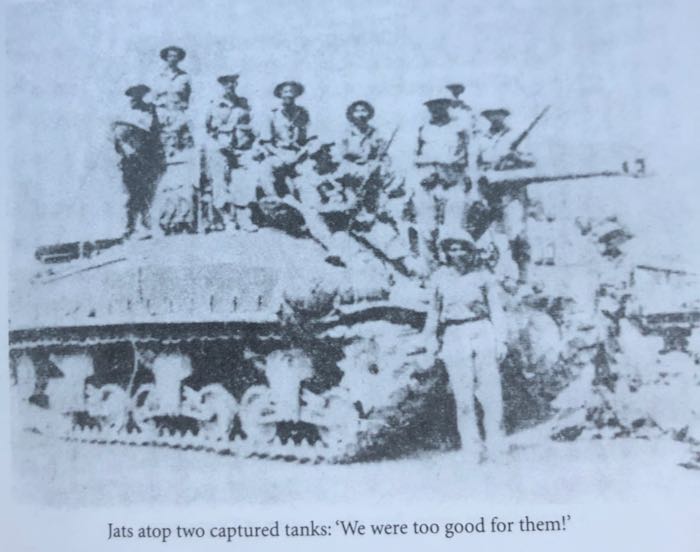
Indian soldiers from the 3 Jat Battalion sitting atop the Pakistani tank after capturing Dograi from Pakistan Army in the 1965 Indo-Pak War.

That the fall of Dograi was something that the Pakistan Army couldn’t digest is evident from the fact that within 24 hours the enemy launched four determined counter attacks in an attempt to recapture this locality, but the indomitable Jats held their ground and beat them back. Had ceasefire not been declared on September 23, God alone knows how many more attempts the Pakistan Army would have made. However, for 3 Jat, this spectacular victory came at a very heavy price- while five officers and 59 soldiers attained martyrdom, six officers, five Junior Commissioned Officers (JCOs), and 142 men were wounded.

But these weren’t the only casualties that 3 Jat suffered- since the commencement of the war till September 20, the battalion had lost one officer, one JCO and 23 soldiers, while three officers, three JCOs and 72 sustained injuries. In overall context, out of a total 552 all ranks that participated in these operations, 322 either gave the supreme sacrifice or sustained injuries on the battlefield. This translates into more than 58 percent casualties, implying that one out of six men of 3 Jat who fought the Battle of Dograi, either didn’t return home or came back with the ‘red badge of courage’.

So, while these figures speak volumes about the valour and sacrifices displayed by all ranks of 3 Jat, the ferocity with which the Jats fought can be gauged from the fact that while the enemy lost 305 soldiers, 108 soldiers of all ranks (including Commanding Officer of 16 Punjab) were taken prisoners. Number of Pakistani soldiers who were injured and had been evacuated by retreating Pakistani troops, though not known is expected to be quite heavy. Besides this, 3 Jat and its affiliated armoured squadron from Scinde Horse destroyed six tanks and captured six others intact.

While the exemplary valour and sacrifice of all ranks is commendable, the fact that 75 percent of officers were either killed or injured clearly indicates that in keeping with the age-old ethos of the Indian Army, these officers led from the front. The crowning glory for 3 Jat is that Lt Col Hayde was himself amongst those injured and by continuing to lead his troops in battle, this rare combination of  professional competence and personal courage proved that he was a true leader who “knows the way, shows the way and goes the way”!

Global Times is the obnoxious headquarters of Chinese ‘Information Warfare’

In the world of today, information has been identified as the biggest asset; it is utilised by nations for creating beneficial narratives on the one hand and dissension within inimical domains on the other. Authoritarian regimes are masters in the use and misuse of information. It is so because they can ensure full internal secrecy and simultaneously apply underhand means to gather external information and use it to their advantage.

China has taken the front seat in this ignominious activity and become a master in propaganda. It has gained more proficiency than Russia and Germany who have held top positions earlier. Propaganda, when applied to engineer adversarial acts against India, holds special significance for China and follows in letter and spirit the famous quotes of their strategist Sun Tsu, “Supreme excellence consists of breaking the enemy’s resistance without fighting,” and, “The greatest victory is that which requires no battle.”

Information Warfare is carried out through the People’s Liberation Army Strategic Support Force (PLASSF). It is used to influence and intimidate in equal measure. The concocted mind games aim at sowing seeds of self doubt within the Indian polity.

China has a huge array of multimedia tools to carry out “Information Operations.” It leverages online operations, audio visual productions and of course the traditional media of newspapers and television news channels. It reportedly controls more than 3,000 public television channels in the world, over 150 pay TV channels, around 2,500 radio stations, about 2,000 newspapers and 10,000 magazines and more than three million internet sites.

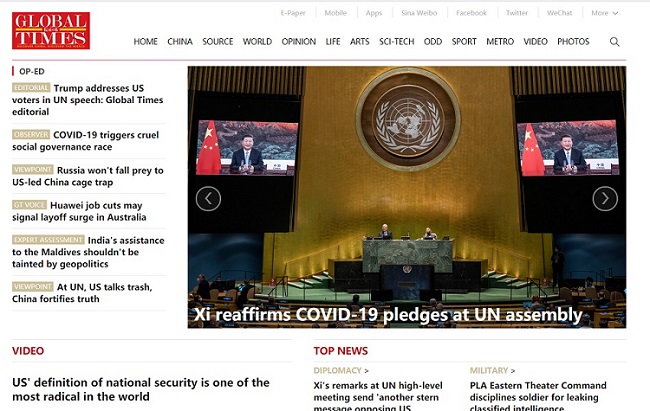
The biggest and by far the most important asset in this propaganda machinery is the Global Times. It is a tabloid that has been appropriated by the Chinese Communist Party (CCP) and now attempts to pass off as a daily newspaper. Earlier it came out only in the Chinese language for internal consumption; in 2009 it started publication in English to cater for “international readership.” CCP openly acknowledges ownership of this media outlet and holds it responsible to comment on issues with a national perspective. Global Times is reported to have a reach of nearly 2 million followers. It is from this newspaper that the world gets to know what China thinks, notwithstanding the fact that the reportage is biased, speculative, toeing the line of the CCP and always telling half truths, if not blatant lies. It is the main asset of the PLASSF. All other media vehicles take a cue from this tabloid for their propagandist responsibilities. The newspaper, therefore, has emerged as the headquarters of the obnoxious Chinese “dirty tricks department.”

Global Times has remained on the forefront of the Chinese propaganda machinery all through the ongoing India-China conflict in Eastern Ladakh, as it was earlier during the Doklam and other incidents of border related tension between the two countries.

During the Galwan face-off in mid-June, when India reported the loss of its three soldiers including Col. Santosh Babu, the Global Times slammed Indian media for “unprofessional reporting.” Alongside, its Editor-in-Chief, Hu Xijin, issued a warning through a personal tweet. “Based on what I know, Chinese side also suffered casualties in the Galwan valley physical clash. I want to tell the Indian side, don’t be arrogant and misread China’s restraints as being weak. China doesn’t want to have a clash with India, but we don’t fear it,” he wrote. This unsolicited advice, its timing and crude presentation clearly indicates the nexus between the PLA and the tabloid.

When the clash escalated, leading to the loss of 20 brave Indian soldiers and almost twice the number of casualties reported on the Chinese side, it was Global Times again that came out in aid of the beleaguered Chinese military a week later. It did admit to Chinese casualties but with a twist. “If China releases the number which is less than 20, the Indian Government would again come under pressure: Observer.” The “Observer” was added to shed all responsibility for the authenticity of the post.

A cursory look at the headlines of other pieces written by the tabloid mainly in the name of two reporters Yang Sheng and Liu Xuanzun make the embedded “yellow journalism” of Global Times very clear. “India underrates China’s will to defend every inch of territory” wrote Yang Sheng on 3 September. “Indian troops’ tactics won’t help with negotiations with China: experts” said the writers on 9 September, a little before the Shanghai Cooperation Organisation meeting of foreign ministers of the two countries. Such articles, invariably quoting unknown experts and analysts, are being published in the newspaper on a daily basis. This is crude out and out propaganda.

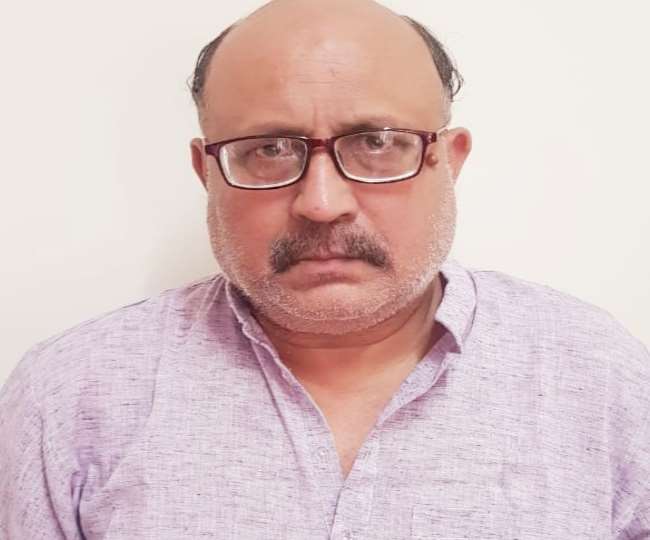
The Global Times is also a conduit for purchasing the services of certain collaborators within India. On 19 September, Delhi Police arrested a senior journalist, Rajeev Sharma, for allegedly violating the “Official Secrets Act.” According to the Delhi Police, Sharma passed sensitive defense and strategic information to Chinese intelligence officials in Kunming. Also arrested were a Chinese woman and her Nepalese companion who could be his handlers. In the course of investigations it has emerged that Sharma wrote for the Global Times from 2010 to 2014, it was during this period that he was recruited by a Chinese intelligence agent named Michael. How many more Sharmas are on the payroll of Chinese intelligence and Global Times? Definitely, many skeletons will come out of Sharma’s closet.

Journalist Rajeev Sharma was arrested by the Delhi Police on September 19, 2020 for passing on classified defense-related information to the Chinese intelligence officials. Rajeev Sharma wrote for Global Times from 2010 till 2014, when he was recruited by the Chinese intelligence agencies.

As a response to the Rajiv Sharma issue, Hu Xijin has said that “Global Times” has a large number of special writers and ordinary authors all over the world, and, “it is very common for someone to write for us from India.”

Chinese media influencers are often termed as a key Line of Effort (LoE). They may be crude but are adept at identifying and targeting democracies like India that believe in freedom of speech and expression. Half truths repeated with regularity often impact gullible minds. Some so-called defence experts, who have to speak but are not privy to information, fall prey to Chinese misinformation and quote it as a credible source to the detriment of the nation.

So far as its internal security is concerned, China has no qualms in the use of its high technology threshold to stop the flow of such information that CCP and PLA deem unfit for consumption of its local population. A recent such example is the ban on the WION website in China.

It is imperative for all Indians and especially Indian media to remain ever vigilant of the machinations of the evil Chinese propaganda machinery. We should not allow it to take advantage of our democratic norms to exploit and weaken us with the spread of misinformation through distorted and biased narratives. It is best for us to keep absolute faith in our armed forces who are shouldering, most successfully, a very challenging responsibility on our borders. We need to always remain assured that they will give their lives but never let down the nation. If India remains steadfast, the Chinese hybrid war capability will get nullified and it will lose its inherent strength.

USCIRF – A Dao Released from Prison in Vietnam Now

0

The United States Commission on International Religious Freedom spoke to the release of A Dao, a pastor with the  Montagnard Evangelical Church of Christ. In Vietnam, he was arrested on August 18, 2016 when returning from a conferencing covering East Timorese religious freedom.

USCIRF Commissioner James W. Carr said, “I am delighted that Pastor A Dao is free, even as I lament the fact that prison robbed him of four years of his life.”

Carr went on to elaborate that this release is important for the Vietnamese government because this shows some improvement in the conditions surrounding the right to freedom of religion. Potentially, this is an augury of the release of other individuals who are serious about advocacy for religious freedom as things develop on the rights front in Vietnam in the future, as others are in jail, still.

Nguyen Bac Truyen is listed as one such case. The USCIRF went on to urge the Vietnamese government to ensure local authorities protect the “freedom and safety” of A Dao if he wants to return to his home community.

A Dao, according to the USCIRF, has been advocating for fellow church members for years in terms of the ability to enjoy freedom of religion in Vietnam’s Central Highlands. However, in April of 2017, he was tried and sentenced for imprisonment for 5 years because of “helping individuals to escape abroad illegally,” which is stipulated in the Penal Code of Vietnam under Article 275.

A Dao claims that he was tortured into giving a confession. Given the five year sentence, he was not expected to be released until August 18, 2021.

“I hope that his release is a sign of Vietnam transitioning from an anti-God totalitarian state to a country in which religion in general and Christianity in particular can be openly practiced. This also shows the importance of American elected officials speaking out against oppression and promoting the importance of religious freedom throughout the world,” Representative Glenn Grothman stated, “Religion should not be a tool to oppress any person nor a stain on their character. I hope other American Congressmen familiarize themselves with the oppression that religious minorities, which in many parts of the world are Christians, have to deal with on a daily basis.”

The USCIRF 2020 Annual Report argued for the U.S. Government to support religious freedom projects in Vietnam with further funding. In June of 2020, the country update from the USCIRF spoke about “religious prisoners of conscience in Vietnam.”

With files from the USCIRF.

Photo by Ruslan Bardash on Unsplash

Pak forces wreak havoc in Balochistan, set fire to forests

Pakistan Army’s military operation continues at Gichak, Meshkay in district Awaran of occupied Balochistan and one person went “missing”. Pakistani forces have been conducting large scale operations in different parts of occupied Balochistan since last month.

Local Baloch sources told News Intervention that the military operation is in full swing at Awaran, Gichak, Meshkey and surrounding areas. They said that the Pakistani forces cordoned off Pirandar, Jakro, Allah Bakhsh Bent, Darman Bent, Himal Bazaar, Tulgi Valley, Ghulamu, Kandahar and Bakshi Bazaar areas of Awaran and all adjoining localities since Monday morning. One person has gone missing after being taken into custody. The missing person has been identified as Bashir Ahmed who is a shopkeeper who has been taken into custody and shifted to an unknown location.

Click on the YouTube link to watch this news analysis.

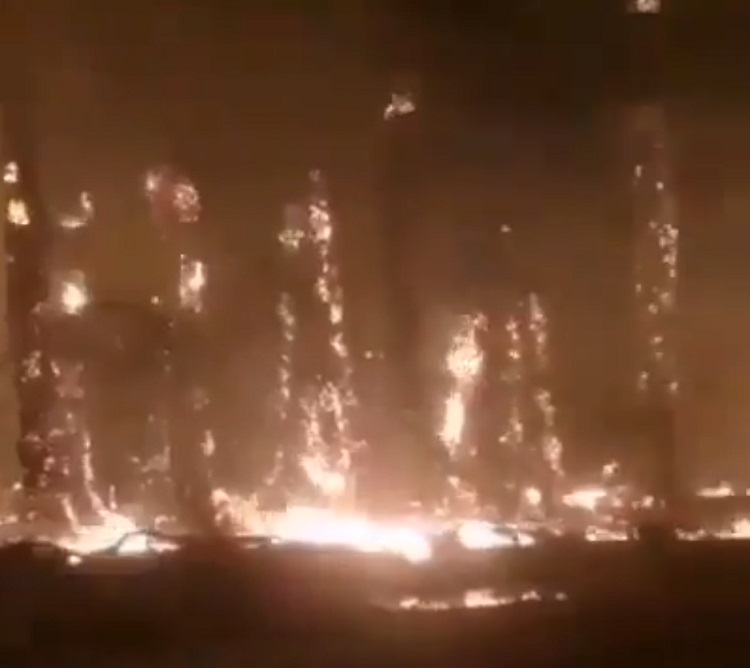
The Pakistani forces also looted houses in different areas during these operation and have set them on fire.

https://twitter.com/AllahNizarNizar/status/1307764953084985347
Balochistan’s charismatic leader Dr Allah Nazar tweeted about the fire lit up by Pakistani forces in different areas of occupied Balochistan.

Meanwhile, Pakistani forces cordoned off Kalan, Tir Kashi, Ragha and other areas in Meshkay while new checkposts have been set up at various places. The forces have also detained several herdsmen and transferred them to an unknown location.

The livelihood of the people in these areas is dependent on animal husbandry and agriculture.

Pakistan Army: Is it no longer the Holy Cow?

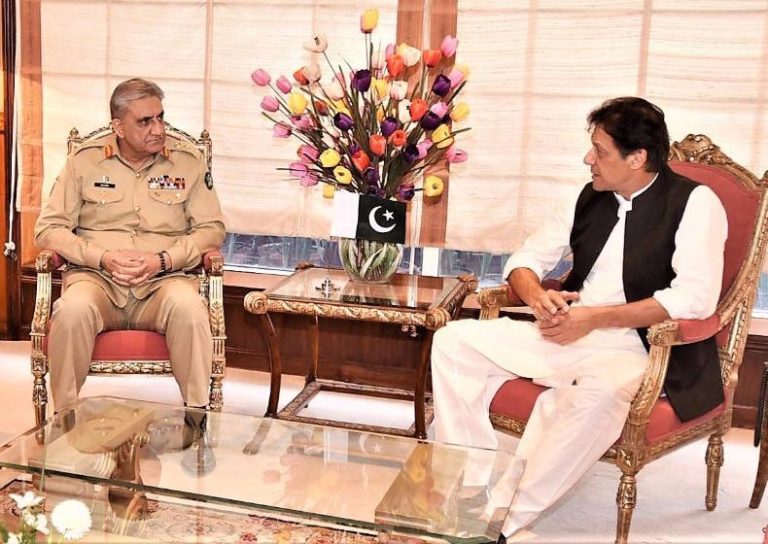
They say that to every rule there is an exception and this observation holds good in politics. When elected governments all over the world are accused by opposition parties of having lost public confidence those in power invariably dismiss these charges leveled against them by reaffirming that they continue to enjoy support of the masses. But Pakistan’s Prime Minister Imran Khan conveys the same message in a different way — he simply reiterates that his government is in no danger of falling since it has an “excellent relationship” with the army and that “the military completely stands by all the democratic government’s policies.”

However, it would be unfair to single out Imran Khan as the only prime minister who has subserved himself and his political party to the powerful military, because in Pakistan it has always been the army and not the government that’s been calling the shots. Of course, there have been some who did show some spine by standing up against the military’s gross interference in the country’s internal and external affairs, but those who dared to do so paid a very heavy price for their temerity of crossing swords with the Pakistani Generals.

In what has been widely condemned as “judicial murder,” Zulfikar Ali Bhutto was sent to the gallows by Gen Zia ul Haq since the military dictator considered him a potential threat. His daughter Benazir Bhutto Zardari was assassinated soon after her return from self-exile, and in his statement before the anti-terrorism court in Rawalpindi, American journalist Mark Siegel testified that he was present when Ms. Benazir Bhutto received the threat call from Musharraf, but the General denied this allegation. Though Gen Musharraf wasn’t implicated, there are no convincing motives to suggest that Siegel had trumped-up this charge against Gen Musharraf. But even if this allegation is false, by recording in its concluding remarks “that security arrangements for Ms. Bhutto were fatally insufficient and ineffective”, the impartial three member UN commission of inquiry has left nothing to imagination!

Former Prime Minister Nawaz Sharif enraged the army twice and is lucky to have survived. In 1999, he was ousted in a military coup and exiled after he sacked Gen Pervez Musharraf. The second time was in 2017, when he dared to convey it to the military that Rawalpindi needed to act against terrorists which it was shielding to avoid the imminent danger of Pakistan’s international isolation. As the news of this meeting and details of what was discussed were published in Dawn, Rawalpindi was severely embarrassed and it started gunning for Sharif.

Officially, Sharif met his nemesis after being found guilty of financial impropriety by the courts in what is referred to as the Panama Papers case and since his fate was decided by the judiciary, the army didn’t have any overt role in it. But Justice Shaukat Aziz Siddiqui, a serving judge in Islamabad High Court has disclosed that “The ISI [Pakistan Army’s intelligence agency] had asked the Chief Justice [CJ] to make sure that Nawaz Sharif and his daughter Maryam Nawaz should not come out of jail before 25 July election. It also had asked him not to include me in the bench hearing the appeal of Nawaz Sharif and his daughter on Avenfield case.” Siddiqui even went on to say that “the CJ told ISI that he would make a bench of its choice.” Accordingly, there are good reasons to believe that the military ‘got’ Sharif through the judiciary!

So, when the army’s writ runs throughout Pakistan, where was the need for the Imran Khan government to lay The Criminal Law (amendment) Act Bill, 2020 in National Assembly for amending Pakistan Penal Code 1860, and the Code of Criminal Procedure 1898 in order to protect the armed forces against being ridiculed, brought to disrepute or defamed by making such acts criminal offences? Aren’t existing laws to protect individuals and organisations against malicious slander good enough? Doesn’t this proposed amendment impinge on right to freedom of speech as stipulated in Article 19 of Pakistan’s Constitution? Finally, when Pakistan Army has been braving a host of wide-ranging allegations for more than seven decades, why does it NOW need crutches of the law to defend itself? Could it be that the public has now become more discerning and doesn’t respect the army and feels that it’s no more a holy cow?

However, the army does command great respect in Pakistan and this is evident from the remark that “There is in this country no dearth of admiration for our armed forces,” which appears in Dawn’s editorial (September 17). Therein it has also been logically argued that “No one would ridicule or defame them [armed forces] when they acquit themselves honourably in their duty to safeguard the nation’s territorial integrity. It is only when they stray from that path into the dirty world of politics and business that they render their institution controversial.”

So, if the people of Pakistan express their annoyance against the armed forces, then they aren’t fully to blame because Rawalpindi’s high-handedness and shady acts at times are indeed infuriating. For example, when a CIA official expressed apprehensions that the secret deal allowing US drones to fly over Pakistani territory and engage targets may get comprised, Gen Pervez Musharraf trivialised the intellect of his own countrymen by saying, “In Pakistan, things fall out of the sky all the time.” How can any full-blooded Pakistani ever overlook such a crass remark which makes Pakistanis look like a bunch of buffoons? Similarly, isn’t his claim that “Military rule has always brought the country back on track, whereas civilian governments have always derailed it,” display utter contempt for all those not in uniform as well as towards the institution of democracy?

It’s Rawalpindi’s palpable disdain for democratic values and its ‘the army can do no wrong’ attitude that galls the public. How can anyone keep silent when Director General Inter Services Public Relations (DGISPR) Maj Gen Asif Ghafoor used his official twitter handle to belittle the Office of the Prime Minister by posting that “Notification on Dawn Leak is incomplete and not in line with recommendations by the Inquiry Board. Notification is rejected”? Who is the army to accept or reject notifications issued by the PMO? Or, using a relatively junior army officer was intentional and meant to remind Sharif that it’s not Islamabad but Rawalpindi that has the final word in Pakistan?

Next, how can the army spokesperson publicly warn Pashtun Tahafuz Movement [PTM], a social movement working for Pashtun human rights by declaring that “Their time is up”? Doesn’t army generals issuing ultimatums to rights organisations convey to the world that Pakistan is a ‘banana republic”? Similarly, isn’t the former DGISPR’s snide retort- “You have a deep attachment with missing persons (but) so have we,” that was given to a very senior journalist who asked a question on enforced disappearances, uncouth? Lastly, how does the army expect not to receive flak from human rights organisations, the media and intelligentsia when the DGISPR in question makes the nauseating remark that “We don’t wish that anyone should be missing; but when its war, you have to do a lot of things- as they say, all is fair in love and war; war is very ruthless” ?

Dawn’s editorial has hit the nail on the head by noting that “This country has lived through multiple military dictatorships; and senior security forces personnel, retired and otherwise, run vast corporate concerns. Parliament must not place these areas beyond the scope of fair comment, which is made in the public interest and thereby constitutes a defence against a charge of defamation.” Corruption and wrongdoing, whether its institutionalised-like illegal construction of Pakistan Navy Sailing Club at Rawal Lake and a whopping 90 acres of agricultural land ‘grant’ to former army chief Gen Bajwa, or under-the table dealings like the alleged fortune amassed by Lt Gen Asim Bajwa (Retired) is bound to invite adverse public reactions.

However, with The Criminal Law (amendment) Act Bill, 2020 being tabled in the National Assembly, it appears that the army isn’t amenable to making amends by ending meddling in politics and cleansing itself of the filth of corruption- acts that angers the public most. So, while the Dawn editorial is bang on target in analysing this issue in detail, but its closing view that “surely the military itself would rather not be seen as so intolerant of constructive criticism,” seems to be completely off the mark!

India must transform to meet future international security trends

The World is no longer One Family
Our ancient sages and texts have said “Vasudhaiva Kutambakam” (world is one family). Unfortunately, today and for the foreseeable tomorrow, a multi-polar, fragmented but inter-connected world, where all nations are cooperating, competing, confronting, and if required, conflicting with each other in economic, political, diplomatic and informational sphere to establish / retain / expand their strategic space, realise their national aspirations and find their place amongst the comity of nations; and the nations are hardly behaving like a harmonious family.

Every country’s destiny is dictated by its geography, geo-political and geo-strategic environment which is no longer constant (even geography due to globalization and technology). India the ancient, proud civilization with a glorious history aspires to be a great power in the World Order, and is destined by its geography, size, population, resources and history. India is expected to equal/even surpass the United States (in PPP terms) and become the world’s second largest economy, behind China. We must be absolutely clear that ALL countries are in competition with us including our strategic partners, especially our known collusive adversaries China and Pakistan and immediate neighbours. In future (two decades-2040), while it is envisaged that humans will continue to be central to the decision-making process, its character will be determined by politics, strategy, society and technology, and confrontation/ conflicts fought increasingly by robots or autonomous systems could change the very nature of warfare, as there will be less emphasis on emotions, passion and chance. Alongside this Indian emergence, the international order is undergoing significant change as well, with power increasingly diffused within and among states and a new, multi-polar geostrategic landscape begins to emerge with fresh layers of complexities. 

Why Study Future Security Trends
It primarily provides focus to security policy makers, and Indian armed forces. It has applicability across Indian government and agencies to help their understanding of the future environment in which we all may find ourselves operating by 2040. The nature of ‘futures’ is such that attempting to pinpoint when particular trends or characteristic will emerge is invariably problematic. Some characteristics are likely to be similar to those apparent today, but novel factors (re-alignment of nations, emergence of hi-technology impacting environment, geo-pol-strategic-economic shifts) will emerge and some will become increasingly important in determining the future environment in comparison to today.

Global and Regional Security Zones
International Relations Theory and Regional Security Complex Theory[i] (RSCT) postulate that territorial pre-eminence (military) is more potent and powerful than non-territorial domains in the security calculus. Regional security zones are fairly independent of globalisation and global political trends, due to their strong emotional, geographical and historical links. The capabilities of global powers (US and China) enable them to transcend distance, while lesser powers are satisfied to play within their region. By 2040, two nations US and China will play a truly global game, treating each other as a special class, and projecting their power into far-flung regions. But for the great majority of states, the main game of security is defined by their near neighbours. China will dominate the regional security zones of Asia (East, South-East and South Asia). The probability of being in the midst of a cold war between USA and China with its attendant characteristics similar to the previous cold war is very high. India, while currently caught in the classical power play of global and regional security dynamics as its not yet a great power, should position itself as a ‘balancing power’.

An Overview Of Multi-Domain World (MDW)
Globalisation brought many good practices and developmental growth, but also caused instability and conflict. While threat of full-scale conventional wars has gone down, correspondingly the span of conflict, its complexity, unpredictability, lethality, accuracy, reach and manifesting into many domains have emerged. The physical and nonphysical domains including the cognitive have expanded. Competition is 360 degrees, 24×7, with no front, rear and flanks and there is no place to hide. Commonly held perception of deterrence and conflict has changed irrevocably. Specially after COVID-19, with a flux in the global power structure, nations are in a state of ‘persistent engagement’.

Warfare has already transcended the domains of soldiers, military units, and military affairs, and is increasingly becoming a matter for politicians, scientists, networks and even bankers! Four interrelated trends will define competition and conflict by 2040: adversaries will contest all domains, with the electromagnetic spectrum (EMS) and the information environment gaining pre-eminence; smaller armies can fight on an expanded battlefield that is increasingly lethal and hyperactive; nation-states have more difficulty in imposing their will within a politically, culturally, technologically, and strategically complex environment; and states will compete below armed conflict (Pakistan’s game against India, Iran, North Korea Vs USA).

India is already engaged in a Multi-Domain World (MDW) Confrontation / conflict is a national effort and not fought by armed forces alone. Increasingly our adversaries China and Pakistan, have leveraged multi-domains to expand the battlefield in time (a blurred distinction between peace and war), in domains (space, cyberspace, information, psychological, diplomatic, legal), and in geography (now extended all India) to create strategic, operational and tactical payoffs. In a state of continuous competition, they are trying to exploit the conditions of the operating environment to achieve their objectives without resorting to armed conflict (stay below our red lines) by resorting to hybrid warfare, attempting to fracture our resolve (proxy war, salami slicing and waging ‘Three Wars’ concept). MDW calls for a change of thought process, ‘a transformation and not just modernisation [ii]’.

Simply put, MDW envisions the military and non-military; everything from fighters to destroyers, space shuttle to submarine, cyber to satellites, tanks to attack helicopters, electromagnetic to electronic, media to information influence operations, economists to MNCs, politicians to think tanks, munition factory worker to hacks — working together intrinsically as ONE, to overwhelm the enemy with attacks from all domains. Interdependence, interoperability, and integration are vital to inevitable success on the battlefield no matter its form. Are we, as a nation and the armed forces, ready to fully commit to being such a “full spectrum (military and non-kinetic) capable” armed force and avoid paradigm paralysis? This will also provide India the necessary deterrence, and tomorrow’s India is counting on it. Hopefully, our security eco-system led from the top (PM, CCS, NSA, CDS) will make meaningful headway to meet future challenges from China and Pakistan starting NOW.

Evolving Trends which will Impact Security Environment and India
A future security scan is incomplete without examining, clearly discernible and distinct trends emerging (by 2040) which at first glance appear theoretical and esoteric, but will need careful analysis, planning, management and implementation for India to exploit/manage[iii]. This will enhance our geo-political, economic, diplomatic and military clout, thus ensuring matching capabilities and capacities against our adversaries regionally, along our continental, maritime and space borders and other domains.

  • Diffusion of States: Internally and Externally. Asia and Indo-Pacific will emerge as economic power centres, where the political and military power of China, and to a lesser extent India, will grow, potentially rivalling that of the United States. Other regional players EU, Russia, Iran, Turkey, Japan, Australia, Nigeria, Brazil will remain important political actors, but their influence is likely to diminish and the economic and soft power of the West will reduce. Whether the current institutions, mechanisms and norms of the international system can adapt to accommodate this shifting balance of power is difficult to predict. If it cannot, there will be instability. Dispersed and contested political power will make it harder to forge internationally-binding treaties, and non-compliance and subversion of international laws are likely to increase. The transition of power between states is occurring alongside the diffusion of power within states. A few multinational corporations will become bigger and more powerful, providing vital services that states will depend on, and some will use their power to demand concessions from the state. The sovereignty of the state will diffuse and a more complex, potentially decentralised, hybrid system of governance may begin to emerge.
  • Ever increasing Power and Role of Information. Processing power for the volume and variety of data, and network centric operations will continue to grow exponentially, driving the development of artificial intelligence (AI), quantum computing and the ability to solve problems of increasing complexity and difficulty, leading to improvements across all aspects of human endeavour. Digitization, cyberspace, information will become pivotal to humanity, and ironically conflict. Information Influence Operations (IIO) to include social media will be pervasive creating ‘echo chamber’ effect, polarise populations, eroding trust in institutions, creating uncertainty, and fueling grievances. Difficult to regulate and protect, cyberspace and social media will continue to be exploited by nations, corporates, global terrorist and criminal groups and other malicious actors. Both China and Pakistan are already waging the ‘Three Wars’ against India.
  • Mushrooming Niche and Disruptive Technologies. The change to a significantly more automated world (variously referred to as the 4th Industrial Revolution) involving a range of new technologies that are fusing the physical, digital and biological worlds and impacting all disciplines, economies and industries, is likely to happen faster than previous transitions. Easy accessibility, quantity and quality of kinetic and non-kinetic systems is already changing the global economic and security landscape. This will be beneficial but equally disruptive. China is at the forefront in this field and will exploit her asymmetric superiority in all domains to the detriment of India.
  • Climate Change and Environmental Stress, and Impact of Demographics. There will be a spike in natural and man-made disasters with an enormous impact on the economic and security environment. China and South Asia are particularly susceptible to these developments. Disaster alleviation and community action plans need urgent implementation. Whichever country manages the environment better will enjoy a more stable and steady developmental growth. Needless to state that mismanagement could lead to confrontation and conflict (floods, pandemics, draught, migration, employment). There is sudden realization of the adverse impact of poor demographics and declining population; it can be a game changer and assist achievement of national aspirations or can even be the cause of a nation’s decline (Japan, China, Russia).
  • Rising Human Empowerment. Human security, prosperity, health, awareness and empowerment (limitless information) will grow. May come at the price of more fragmented societies and increasing populism. Inequality is growing, and so is division within many countries between those with liberal and those with traditional views, and nationalism, religious intolerance and antipathy towards immigrants are on the rise. Many governments are becoming more authoritarian, and even with some checks and balances, the rise of autocrats/dictators (Xi Jinping, Trump, Duterte, Kim Jong-un) who will be the final arbiters of a nation is growing. Knowing the mind and personality of leaders is assuming critical dimensions.
  • As a theoretical concept, deterrence rests on the assumption that where risk is involved, humans act rationally, in the sense that they base their decisions on a cost-benefit calculus and act only when the expected gains outweigh the anticipated costs. Research in behavioural economics has cast great doubt on this assumption. Humans, it turns out, cannot be counted to always maximise their prospective gains. Even when they do, they are remarkably inept at understanding how the other side; the adversary in a conflict, calculates his own costs, benefits and risks. In the triangular relations of China-Pakistan-India, we are looking at two illiberal nuclear weapon countries ruled by CCP/military, are collusive and believe in hybrid warfare. India must study its adversaries and their leaders thoroughly.

Manifestation of Trends impacting India
Trends highlighted above can manifest in unexpected ways and complexities due to cross linkages. To illustrate; may result in significant geopolitical shifts in alliances; major conflict (US-China; India-China; India-Pakistan); natural or man-made disasters; financial crisis; collapse of key multilateral organisations; proliferation of a disruptive technology; and 24×7 competition between nations which is already happening. Specific action plans need to be designed and activated to manage the trends. If India does not measure up/cope/exploit niche and disruptive technologies (AI, robotics, nano), public, societal and political unrest, adversary’s IIO (influence information operations), disasters and climate change, and be ahead of the loop for scarce resources like water, rare earths; act pro-actively to dominate/capture fair share of global commons (cyberspace, the oceans, polar regions and space); it will impact our multi-domain capabilities and capacities adversely. In turn this will slow down our GDP growth, impact our freedom to operate in expanding strategic space, with grave consequences to our aspirations for being a regional player, and allow China along with collusive Pakistan and other countries in immediate neighbourhood (Bangladesh, Nepal, Myanmar) to exploit our vulnerabilities. Concurrently, India by planning and execution, can emerge as a regional power.

Deterrence Capabilities and Reputation
Deterrence requires a national strategy that integrates diplomatic, informational, military, and economic powers. India must develop strategies, plans and operations that are tailored to the perceptions, values, and interests of specific adversaries (China, Pakistan, immediate neighbours). A crucial aspect is that successful deterrence is knowledge-dependent and requires the ability to establish secure communication access to adversaries in order to generate the desired decision outcomes. Our military capabilities and potential must be visible and known to all as it’s a pivotal ingredient of deterrence.

Effective deterrence combines military and non-military means. In some cases, military capabilities may not be an effective tool to deter a particular adversary’s action, making other instruments of power the primary deterrent. We certainly need to constantly review our nuclear policy and capabilities in line with global trends specially China and Pakistan. Additionally, coalition support should be integrated to enhance deterrence credibility, but deterrence also must be viable as a unilateral strategy. Military options/actions will always remain the final arbiter to achieve national objectives both proactive and reactive.

However, armed forces are incapable of deterring threats from many non-kinetic domains like economic sanctions, cyber and information warfare. Possessing adequate CNP (comprehensive national power) alone is not sufficient but one must create a reputation (Israel, China, USA) for using deterrent tools when national interests/ sovereignty is at stake. With China, Pakistan and some of our immediate neighbours constantly impinging on our national interests/sovereignty, India must start enhancing her ‘Multi-Domain Deterrent Reputation’ positively by 2040.

Is the Answer a Grand Strategy for India?   
A grand strategy is a road map for how to match means with ends. It works best on predictable terrain, in a world where policymakers enjoy a clear understanding of the distribution of power, a solid domestic consensus about national goals and identity, and stable political and national security institutions. Economic and military power no longer yield influence as reliably as they once did. The result is an emerging world of multi-polarity and disorder, where grand strategy may not work well. For India, the answer possibly could be a mix of centralization and decentralization and moving in increments since changes will be more sudden, unpredictable with global ramifications. We must follow this strategy specially against China and Pakistan, when moving forward, as predictions of global geo-politics is fraught with uncertainties.

Conclusion
Anticipating and exploiting emerging trends have the potential to position India as the world’s most influential democracy in the second half of the 21st century, giving it the ability to shape Asia, Indo-Pacific region and the dynamically evolving global order. From a military point of view, for India to take its destined place as a regional power in the mid-term and a global power in the long term, we need to be a continental, maritime, air, space, cyber, military, information power– a multi domain power. We need to play our cards very carefully and deliberately, exploit emerging trends, continue relentlessly building all verticals of our CNP (comprehensive national power), and create conditions (not just hope) for breaking out from South Asia to balance the security environment regionally, in Asia and beyond.


[i] Relations Regions and Powers; The Structure of International Security; Cambridge Studies International, Barry Buzan and Ole Wæver, CAMBRIDGE

[ii] ‘Multi Domain Warfare in the Indian Context’ by Lt Gen PR Kumar, 36th USI National Strategic Paper, 2018

[iii] Inputs have been taken based on personal experience, seminars, interaction with core experts, and extensive study, reading and research not only from mainstream media, but from Think Tanks, and online SOPs/texts/manuals from global armed forces institutions. It also finds focus in the paper ‘Global Strategic Trends: The Future Starts Today’, MoD, UK

Army ethics permit minimum use of force in counter-terrorist operations

It is being alleged that three men from Rajouri, who had gone to work as labourers in Kashmir, have been killed in the course of a counter-terrorist operation in Shopian. The gunfight took place on July 18 and the men, declared unidentified at that time, have now been identified on the basis of photographs shown to the families. Earlier, the families had registered a missing report for their kin; the DNA reports are awaited.

The Indian Army took cognisance of certain reports concerning the incident and immediately instituted an inquiry under the Army Act. Reports suggest that the process was initiated by the Corps Commander of the Srinagar-based Chinar Corps, Lt. Gen. BS Raju.

This quick response, by the army, to a whiff of a misdemeanor clearly indicates the resolve of the organisation to ensure conduct of sensitive counter-terrorist operations from the highest ethical platform as laid down in the Armed Forces Special Powers Act (AFSPA) and the “Do’s and Don’ts”(also called Ten Commandments) given by the Chief of Army Staff and approved by the Supreme Court. It is clear that the Army is not ready to tolerate violation of the established ethical platform under any circumstances.

The Ten Commandments are, no rape; no molestation; no torture; willingly carry out civic actions with innovations; respect for human rights; no military disgrace (loss of arms, surrender, loss of post or imbibing of an un-army like culture); no meddling in the civil administration (i.e. land disputes or quarrels) and others in the professional domain.

It seems that, in this case, contravention was in respect to human rights violation. As the legal process commenced the Army also put in an advertisement in local newspapers requesting for “credible information” on the case.  

What stands out here is the quick and humane response of the army authorities to meet ends of justice. Further, the Indian Army has sent out a message that despite functioning under the protection of AFSPA it does not countenance any act of indiscipline by its soldiers and will not hesitate from investigating and appropriately dealing with any such matter that comes to its notice.

There is a human rights cell in all army headquarters from the Division level upwards. This cell takes cognizance of all cases of human rights violations that are reported by the national/state human rights commissions or any other body and immediate inquiries are instituted. Cases that come to light within the service itself are also subject to an inquiry.

Such cases that deem legal action, are dealt in accordance with the stringent provisions of the Army Act, 1950. A sizeable number of soldiers have been meted out exemplary punishment in the form of dismissal from service and imprisonment in earlier instances in the state of Jammu and Kashmir itself. In November 2014, the Indian Army convened a General Court Martial (GCM) to try five Indian soldiers, including two officers, on charges of conducting a fake encounter in the Machil sector of the Kashmir Valley in the year 2010. The GCM found the soldiers guilty and awarded them life imprisonment.

So far as the incident under reference is concerned, security forces have confirmed that the operation was conducted jointly by the Army, JK Police and the paramilitary forces on the basis of an intelligence input about presence of terrorists in Village Amshipora of district Shopian. It has also been confirmed by the security forces that the encounter started when holed-in terrorists opened fire on the security forces. When it ended, three bodies were found there which are now being said to be those of the labourers from Rajouri. Some arms, ammunition and other war like stores were also recovered from the encounter site. A point of significance is that though the operation took place on July 18, and the families had lost contact with the men on July 17, itself. It is well possible that the terrorists had taken the labourers into their custody a day earlier and then used them as human shields.

The involvement of this trio with terrorism or related activities is also under investigation by the police. Their presence, since their arrival, in places considered to be terrorist dens in Shopian is being probed. The reason behind their jumping out of a window when an operation was launched at their rented accommodation is also being looked into.

So far as the Army is concerned, it has accepted that “Prima Facie” evidence suggests that the troops who conducted the operation used power in excess of what is permissible under the AFSPA, against the spirit of the Ten Commandments by the COAS. “Committed to ethical conduct during anti-militancy operations, the Army initiated an inquiry after social media reports indicated the three men were from Rajouri district in Jammu and had gone missing at Amshipura,” said Col Rajesh Kalia, the defence spokesperson in Srinagar while adding that, “the probe will be completed in four weeks.”

Justice meted out by the army through its internal mechanism is invariably quick and exemplary; had this case been tried in a civil court it would have dragged on for years on end. All through the period of turmoil in Jammu and Kashmir, the Army has been maintaining high standards of transparency and punishing those among its ranks who are indicted for violating rules. Yet, the unfortunate reality is that the conduct of counter-terrorist operations against a vicious and well trained enemy of foreign origin has its own set of challenges, including collateral damage. This said, all efforts are being made to keep collateral damage at the minimum even at the cost of buying casualties within the army. Alongside, it is the need to protect the soldiers in cases of professional expediency and also mete out exemplary punishment in instances of dereliction of duty and breaking of established protocols.

‘Death Squads’ backed by state have spilt Baloch blood: Mama Qadeer

The state-backed Death Squads have spilt the blood of the Baloch across several areas of Balochistan during August this year, said Mama Qadeer Baloch, vice-chairman of Voice for Baloch Missing Persons (VBMP) on Monday. “Death Squads have been formed and licensed for carrying out carnage in Balochistan. Dozens of Baloch have been shot down,” said Mama Qadeer.

The VBMP protest completed its 4,075 th day on Sunday. Israr Baloch, the general secretary of Baloch Student Organization (BSO) and several others visited the camp and expressed solidarity with the families of Baloch “Missing Persons”.

Talking to the delegation, Mama Qadeer said that the Baloch have been, and still are, a historically persecuted nation. Due to remoteness and the scant connectivity it’s not possible to deliver assistance in the wake of ‘bloody military operations’ and this results in ‘cruelty and barbarity’ across Balochistan.

Mama Qadeer explained said that devastating military operations have been carried out in Gichki and Awaran. “Pakistani forces and the Death Squads backed by them have spilt the blood of Baloch sons and dishonoured women. The said operations have expanded to Parom and Panjgur. The women and elderly are harassed and beaten regularly. However, the Baloch women are playing an important role in the Baloch struggle. No obstacle can deter the peaceful Baloch struggle,” he added.

Chinese ‘Dragon’ & its Mind Games

0

As it naturally happens in our great nation, we love to live from crisis to crisis. Aamir Khan in the movie Ghazni made the term ‘short term memory loss’ as part of our household lexicon but this affliction is embedded in our DNA as a nation. The capriciousness of this malice has been capitalized on by TRP hungry media houses, I am reminded of a famous song by Roxette; ‘C’mon Join the Joy Ride’ when we listen to the debates and rants on prime time TV.

And then of course the ‘New Media’ — the citizen journalists who with a smartphone and a social media account can influence the opinion of the nation; be it on Facebook or Twitter. The ‘Twitterati’ are the microcosm of our society, ranting, raving, debating and of course the sound of sanity in the cacophony emerges for nanosecond before it’s drowned again in the morass of chaos. Having described our state of mind, or the lack of it, for the adversary this is a fertile ground for sowing seeds of self-doubt and influencing the mind. Since the crisis in Eastern Ladakh commenced in May 2020, Global Times has become a primary source of Chinese influence operations in India, as I script this piece, it has 1.9 Million followers and is the oft quoted reference point for Chinese views and opinions. Knowing very well that it’s the mouth piece of the Chinese Government and it says so ‘China state-affiliated media’ and its status reads ‘China’s National English Language Newspaper under the People’s Daily’. We have allowed it to cloud our judgment as a nation.

Way back in 2016, Russian defense expert Vasily Kashin had commented on PLA Strategic Support Force (SSF); “Apart from the former Third and Fourth Departments of the PLA General Staff Headquarters, which were responsible for the technical reconnaissance, cyber intelligence, electronic warfare and offensive cyber operations, the new forces will be responsible for the military intelligence at large and for the psychological operations in particular. It will also incorporate the Foreign Affairs Bureau of the former PLA General Political Department, responsible for political warfare and propaganda operations targeted at the army and population of an enemy.”[1] 

If we had not developed the symptoms of dementia and taken corrective measures, we would have remembered that SSF is the driving force behind whatever Xinhua or Global Times spew out as news. A seminal work done by French Military called Information Manipulation; A Challenge for Our Democracies “China controls more than 3,000 public television channels in the world, over 150 pay TV channels, around 2,500 radio stations, about 2,000 newspapers and 10,000 magazines and more than three million internet sites”[2] and Global Times is surely one amongst them.

China has had a long history of the use of propaganda and today, this know-how is at the service of Chinese interests on a global scale. Beijing has developed tools of influence and interference that are specifically geared towards offensive intentions. Effort on the ideological front has two objectives: First, to shape the internal political space and maintain the Party’s legitimacy (through censorship and disinformation); Second, to influence international opinion and wage the “information war” in favor of Chinese interests.

Information warfare is an integral dimension of PLA’s strategy of influence and intimidation. Chinese strategists brought to fore the manifestation of the “three wars” (sanzhan) in the field of information even during Doklam crisis[3]. Combining the war for public opinion, psychological warfare and legal warfare, this approach is intended — in peacetime as in wartime — to control the dominant discourse and influence beliefs and perceptions so as to serve the interests of the PLA, while also reducing the ability of adversaries to respond.[4] 

This strategy, which explicitly targets public opinion in democracies, exploits the vulnerabilities of open societies like ours and gullible minds or may be senile minds of some of our strategists and experts who in turn become mouth pieces of PLA which then enjoys systematic and multi-vector information manipulation and control capabilities. Chinese content then is broadcast in Hinglish conveying positions and principles that are contrary to Indian interests; a rather convoluted form of HMV (His Master’s Voice). This dimension goes well beyond the framework of conventional conflict and forms part of the deeply volatile and ambiguous hybrid conflict where in the definition of battle space and combatants is a farrago.

On the contrary, internet control and surveillance was initially introduced under the guise of the Golden Shield Project[5] (金盾工程), a massive series of legal and technological initiatives meant to improve intelligence assessments and surveillance capabilities of the national police force. Among the techniques developed at the time was a system for blocking and censoring content known as the “Great Firewall”[6] designed to keep Chinese cyberspace free of pollutants of all sorts, by the simple means of requiring ISPs [internet service providers] to block access to ‘problem’ sites abroad. The Chinese have mastered the art of quarantine and one of the recent events was banning of WION website in China[7].

While they can go ahead and influence the world the QPQ in information domain has been severely constrained. Chinese state or can be read as PLA too, also employs a series of active disinformation and distortion measures to influence social media users. One of the most widely studied has been the so-called “50 Cent Party.” This group of people hired by the Chinese government to surreptitiously post large numbers of fabricated social media comments, as if they were the genuine opinions of ordinary Chinese people, it was initially meant for the domestic audience but its success has prompted the PLA to engage them internationally too. The name is derivative of a rumor that these fake commentators were paid 50 Chinese cents per comment.

The Chinese government has surely sought to use state and PLA resources to influence how Indians view China in this standoff. What separates the influence operations of today from those of 1962 are two factors; First, the ubiquity and impact of social media, and Second, the expanded intent and scope. While he continues to adopt old tactics of playing ‘Bhangra Music’ at the Friction Points[8], the proliferation of social media platforms, the increasingly broad range of services offered, and the ability to engage with (and not just broadcast to) the intended gullible Indian audience offers him deeper strategic reach. Over the course of the past decade, social media platforms have evolved to play an ever-expanding role in the lives of users. In India Indians spend more than 280 minutes a day on social media[9], due to the COVID pandemic lockdown which is an increase of 87% of what was the normal usage prior to the pandemic. Indians have begun to trust the reliability of social media more than traditional news platforms and credit must go to our firebrand anchors who want to know everything even if the nation doesn’t want to (pun intended) and be the judge, jury and executioner on every aspect of our lives, reminds me of old Amitabh Bachchan movies like Shahenshah and further, social media companies increasingly offer users a wider array of services, pulling more of the average user’s time and attention to their platforms.

The last five months has demonstrated that propaganda, the foundation for PLA run influence operations, can still be highly effective, even if it is perceived as overt. This is for the following five reasons:-

(a) We as people are poor judges of true versus false information, and they do not necessarily remember that particular information was false (short term memory loss again).

(b) Information overload leads people to take shortcuts in determining the trustworthiness of messages.

(c) Familiar themes or messages can be appealing, even if they are false and especially if they are anti-establishment or aimed at bashing and grinding an organization to death and some more.

(d) Statements are more likely to be accepted if backed by evidence, even if that evidence is false.

(e) Peripheral cues, such as an appearance of objectivity, can increase the credibility of propaganda.

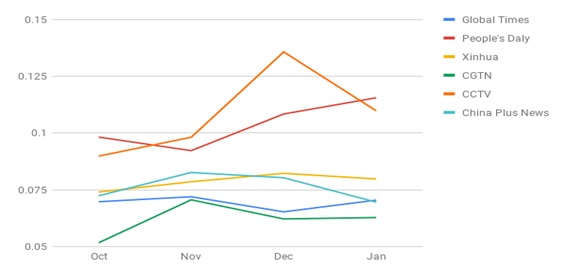
China seeks to convince the world as a whole and India in particular that its development and rise is unfailingly positive, beneficial, cooperative and constructive for the global community. While sentiment analysis can be inexact and possesses a mixed track record, it is most useful on large data sets like this one. Vader sentiment analysis[10] technique and code from their Github repository indicate positive sentiment on the scale as greater than 0.05 and the various Chinese media houses are all above the datum of 0.05.

Positive sentiment for Chinese English Media

PLA has a set of strategic goals, and to achieve it, Chinese state-run social media influence operations are a key Line of Effort (LoE). China’s goal to exert greater influence on the Indian mind during the current imbroglio by portraying the Chinese as indestructible on one side and a benevolent and constructive vector for the region on the other has proven successful thanks to our short term memory loss. China has attempted to influence the Indian population through messages, propaganda, and media influencers some even home grown and military trained too. The travails of a democratic society have been exploited to the hilt and China has inserted an intentionally distorted and biased narrative “for hostile purposes.” In order to advance its aims on a competitive playing field that is hardly level, China propagated a distorted and convoluted view of our government and the armed forces of India. Chinese information manipulation on social media can be countered only by identifying the goals and techniques of these influence operations and then by countering their deleterious agents and effects they generate.


[1] https://sputniknews.com/asia/201601191033349605-china-strategic-support-forces/

[2] J.-B. Jeangène Vilmer, A. Escorcia, M. Guillaume, J. Herrera, Information Manipulation: A Challenge for Our Democracies, report by the Policy Planning Staff (CAPS) of the Ministry for Europe and Foreign Affairs and the Institute for Strategic Research (IRSEM) of the Ministry for the Armed Forces, Paris, August 2018, pg 59.

[3] Indrani Bagchi, Doklam Standoff: China playing out its ‘Three War fares’ strategy against India, https://timesofindia.indiatimes.com/india/china-playing-out-its-three-warfares-strategy-against-india/articleshow/60036197.cms

[4] Elsa B. Kania, “The PLA’s Latest Strategic Thinking on the Three Warfares,” China Brief, XVI:13, August 2016, p. 10–14.

[5] Chandel, Sonali & Jingji, Zang & Yunnan, Yu & Jingyao, Sun & Zhipeng, Zhang. (2019). The Golden Shield Project of China: A Decade Later — An in-Depth Study of the Great Firewall. 111–119. 10.1109/CyberC.2019.00027.

[6]https://cs.stanford.edu/people/eroberts/cs181/projects/20101/FreeExpressionVsSocialCohesion/china_references.html

[7] https://www.dnaindia.com/world/report-as-china-blocks-access-to-wion-support-pours-in-from-readers-across-the-world-2830759

[8] https://timesofindia.indiatimes.com/india/new-pla-tactics-punjabi-songs-warning-to-indian-troops-in-hindi/articleshow/78158229.cms

[9]http://timesofindia.indiatimes.com/articleshow/74879674.cms?utm_source=contentofinterest&utm_medium=text&utm_campaign=cppst

[10] Hutto, C.J. & Gilbert, E.E, VADER: A Parsimonious Rule-based Model for Sentiment Analysis of Social Media Text. Eighth International Conference on Weblogs and Social Media (ICWSM-14). Ann Arbor, MI, June 2014.

Isn’t the Chinese Dragon getting oversized? Yes, the world feels so

Expansionism by force and by treachery is China’s well-known forte. If the originator of the Hindi-Chini Bhai Bhai naiveté became its hopeless victim, bring not the onus to the doorsteps of China. The great lessons that India learnt from the 1962 debacle are primarily twofold. One is the bitter truth that “power flows from the barrel of the gun”, and the second is that “the internal enemy is far more dangerous than the external one” more so when the latter is patently in cahoots with the enemy. Modi’s predecessor exuded the threefold rhetoric of Insight, Jumhuriyet and Kashmiri but left the borders open and penetrable, especially the passes. His was the continuation of Congress’ policy of leveraging its minority community vote bank.

True, during the last three decades China focused on trade and export and was able to strengthen her economy to play godfather to the Third World Countries. With financial affluence, China made solid improvement in her defence preparedness on sea, land and the air. With a strong economy and influence in the world community, China began dreaming of her ancient habit of land hunger or expansionism. Today she is having strained relations with at least 18 neighbouring countries.

If China still toys with the idea of India of 1962, she does it based on the feedback from her Indian moles in politics, administration and media. The Galwan Valley butchery, the Pangong Tso up-reach and Eastern Ladakh border build-up and many months long Sino-Indian military eyeball-to-eyeball stance have opened the eyes of Beijing on India of 2020. From the frontline in Ladakh-China border, Prime Minister Modi thundered that the days of expansionism were over. China was left wondering whether it was the same India whose Prime Minister had shed tears in a public gathering organized in Delhi to condemn the Chinese incursion of 1962. PM Modi knows that China has, in all probability, moved nuclear missile launching pads close to the border. Modi knows that China is blackmailing to convey a message to Islamabad. In a discussion on Pak TV, I happened to watch recently, one zealot boasting that if there was war China would be in New Delhi in 8 hours. The anchor quipped, “Yes it may be that but remember that in the case of war India will be in your GHQ in just 8 minutes”.

Beijing has begun to feel the heat of Indian democratic dispensation because after Xi was declared life-long President in China, his opponents in the party and civil society began expressing their resentment. The resentment is snowballing. The world community has singled out China for bringing the scourge of COVID-19 to the rest of the world which has consumed lakhs of people in hundreds of countries world over and the relent is still nowhere in sight. China stands castigated.

China has compulsions to destabilize normalcy in the Ladakh border. India will become a member of the Security Council’s non-veto group from January 1, 2021. China has got the wind that India is likely to propose exclusion of China from the permanent membership of the Security Council on COVID count and her aggressive and intimidating stance against her small neighbours in the sea and the land. Other permanent members are reported to have informally given a nod to such a proposal.

China cannot go on a full-fledged war with India for various strategic and tactical reasons. She will, therefore, continue with the policy of sword rattling which India understands and responds adequately. China tried the trick of engaging India in prolonged dialogue on various levels of military and civilian to divert her attention from ground action and tried several times to capture some heights. But alert Indian forces scuttled China’s plans and made her eat the humble pie. Indian forces are not only at advantageous heights in Ladakh frontline but are fully prepared to stay put during the cold winter when the temperature falls to -50 degrees centigrade to deny the Chinese any chance of doing an act of perfidy. 

China knows that any big step toward confrontation In Ladakh means galvanizing the Allied naval force in the Indian Ocean. The US, Australia, Japan, Vietnam and France have already assured India of their support in meeting the threat of Chinese expansionism. Many US Congressmen and officials are all praise for India for stoutly confronting China in Ladakh. Lisa Curtis, the deputy assistant to President Donald Trump, said in a virtual panel discussion organized by the think tank Carnegie Endowment for International Peace that the US provided “strong and unambiguous support” to India during its current border crisis with China, which is engaged in increasingly aggressive behaviour throughout the Indo-Pacific even during the Coronavirus pandemic, “Throughout the crisis, the US has provided strong and unambiguous support for India, and our cooperation has certainly grown closer. We are encouraged by India’s strong, yet responsible approach to the Chinese aggression,” said Curtis, who is the Senior Director for South and Central Asia on the National Security Council (NSC) at the White House.

By “India’s responsible approach to the Chinese aggression,” the senior US diplomat referred to the taxing effort that India made in engaging the Chinese on military and on official and foreign affairs level to de-escalate tensions, withdraw forces to previous positions and ensure that nothing would be done to upset the peace. It has to be reminded that despite an agreement arrived at Galwan talks, the Chinese tried to capture some heights at night but had to be beaten back.

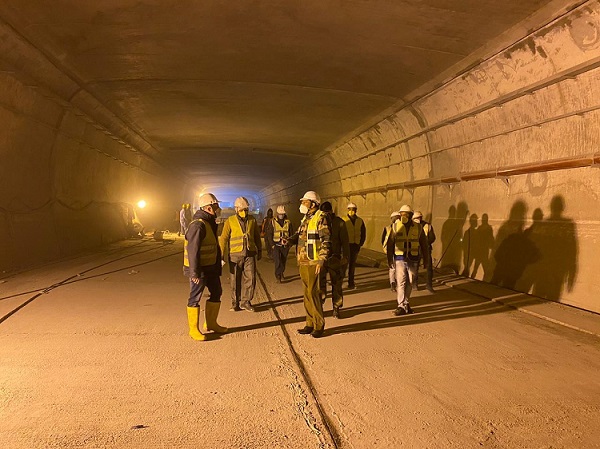
From the hints one gets from the statements of the American senior diplomat, it is clear that the US considers that Chinese aggressive postures in Ladakh are linked to the unpredictable situation in the Indo-Pacific region. Whatever happens in Ladakh will have a reflective impact in the Indo-Pacific situation where American naval carriers are already positioned along with Indian submarines. It has to be noted that China has made a strong build-up along the border in Ladakh, and consequently India had to speed up the construction of Manali-Leh Atal Tunnel, a masterwork of superb engineering which will reduce the journey of 5-6 hours to a few a minutes. It is proving gall to China because not only will it ensure round the year supply of arms, ammunition and provisions to our forces in Ladakh but will also enable keeping surveillance on the movement of Chinese troops along their border.

Atal Tunnel connects Manali with Leh. This tunnel has drastically reduced the travel time to Ladakh. (Photo: PIB)

The developments since June last should be the eye-opener for Chinese that the days of expansionism are over. The days are gone when they would march at leisure into our territory in Ladakh and write Chinese slogans on stones and buildings. Moreover, the days are gone when China used to conduct clandestine smuggling of Chinese goods in a large measure from Ladakh. India has allocated considerably increased budget for the defence purposes and all the bridges and roads connecting Ladakh with the rest of the country are put in place. Five years from today Ladakh will be a different picture of prosperity and peace and the Chinese will not dare to cast a glance on our border. This is the achievement of the Modi government and the achievement of the people of India who are moving along the path of democracy.

The Pakistan Angle

There is another interesting aspect to Kashmir narrative which Pakistan is trying to link up with India-China tussle. At a time when border issues are the most pressing issues India is facing on both its fronts, with Pakistan as well as China, the United Nations on Wednesday called for a “positive” resolution to the matter” The UN Secretary-General Antonio Gutierrez urged India and Pakistan to move in a positive direction to resolve differences concerning the border issue along the Line of Control, reported a UN brief.

It was a clear indication from the UN that the two countries sitting on the eastern and the western borders of the Indian part of Kashmir have adopted threatening posture against India which must be put an end to. By implication, the Secretary-General means that not only Pakistan but China also should settle a border dispute with India.

The second and more important point which he has made in reply to a question by a Pakistani journalist, the Secretary-General said. “The Shimla Agreement between former Prime Minister Indira Gandhi and then Pakistan president Zulfikar Ali Bhutto stated that disputes between the two countries should be settled bilaterally and without any third party involvement.”

As per Resolution 47 adopted on April 21, 1948 the Pakistani government must “secure the withdrawal from the State of Jammu and Kashmir of tribesmen and Pakistani nationals not normally resident therein who have entered the State for fighting, and to prevent any intrusion into the State of such elements and any furnishing of material aid to those fighting in the State”.

Secretary General’s statement nullifies rather belies the claims of Pakistan and also the resolutions of the OIC that India is declining to implement the UN Security Council’s Resolutions on Kashmir. India’s point is that since Pakistan has not implemented the very first clause of the resolution for seven decades and has even deployed more fighting forces in the illegally occupied part of Kashmir, the Resolution of April 21, 1948 has lost its validity as well as sanctity, and is no more tenable. That is the reason why India lately demanded that the Kashmir issue should be deleted from the agenda of the Security Council.