Home Blog Page 34

Baloch protesters demand an end to kidnappings by Pak Army

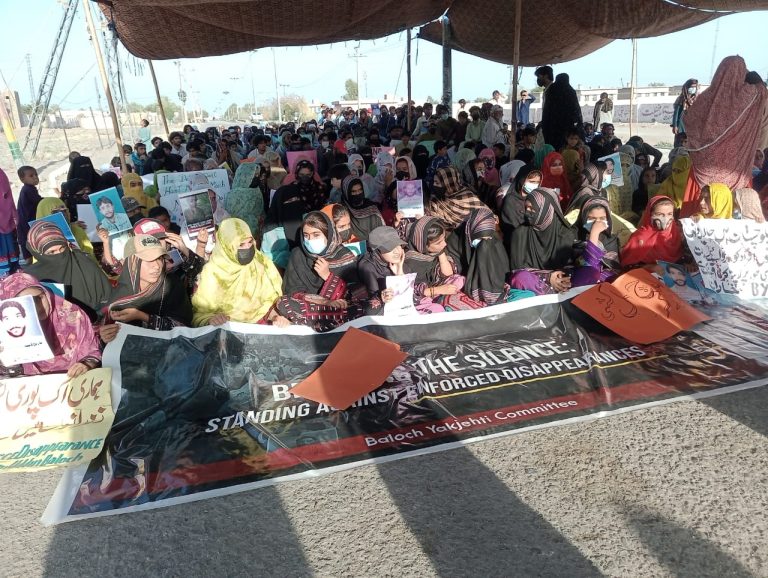
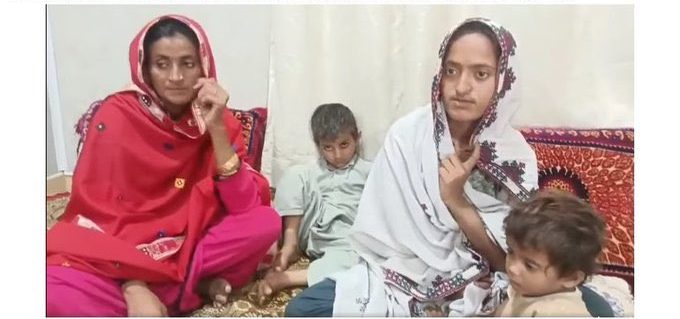
The Baloch Yakjehti Committee (BYC) has intensified its campaign titled “Breaking the Silence: Standing Against Enforced Disappearances”, with protests spreading across Pak-occupied-Balochistan. These demonstrations highlight growing frustration with the Pakistan Army and intelligence agencies of orchestrating the abduction and enforced disappearances of Baloch students and civilians.

In Kharan, the latest rally took place today, with demonstrators marching from Nawab Akbar Khan Bugti Stadium to the Red Zone, condemning the military’s brutal tactics. Participants, including families of the disappeared, carried photographs of their missing loved ones. The protesters chanted slogans against Army institutions, demanding an end to abductions and the immediate release of those forcibly disappeared.

The protest in Kharan is part of a broader wave of demonstrations that has seen gatherings in Karachi, Hub Chowki, Khuzdar, Turbat, and Panjgur. The BYC emphasized that despite persistent threats and violence from the occupied-state, the Baloch are determined to fight for justice. “Our peaceful struggle for survival and justice will continue, no matter the aggression from the authorities,” the BYC said, urging the public and families of the disappeared to join the protests and report details of missing persons.

Pak Army repression and death squads in action

The Pakistan Army and its intelligence networks have long been using abductions as a tool to crush dissent in POB. The military’s ‘kill-and-dump’ policy—where abducted individuals are tortured and later found dead—remains a grim reminder of the Army’s disregard for human lives. Enforced disappearances are part of a deliberate strategy to silence Baloch voices and maintain military dominance over the region, which has resisted Pakistan’s occupation since 1948.

The Paki establishment has responded to the growing dissent with violence. In Karachi, BYC protesters were assaulted by police and intelligence operatives, with several participants arrested. Similar harassment was reported during protests in Hub and Khuzdar. Yesterday in Panjgur, the police disrupted protests, while Army-sponsored death squads abducted a youth named Haseeb. Haseeb was released this morning in a severely tortured condition.

The Pakistan Army-backed death squads have operated with impunity in POB, using abductions and violence to spread fear among the population. These squads, working under military protection, have become instruments of terror, systematically targeting Baloch activists and their families. Despite the repression, the BYC vowed to continue its campaign, calling for nationwide participation to expose the injustices in POB.

Since 1947, Pak Army has not only forcefully occupied Balochistan but also has benefited from its rich resources. Pak Army has left the province at the rock bottom of the socio-economic ladder, leaving the Baloch community oppressed, alienated and exploited with kidnappings and abductions of Baloch.

Tehreek-e-Labbaik threatens to destroy Ahmadiyya mosques and graves in Rabwah after Oct 28

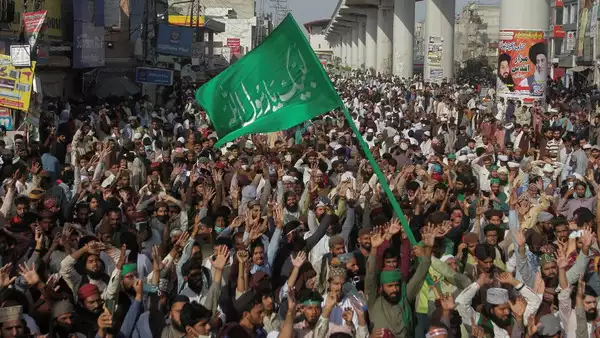
The radical Islamist group Tehreek-e-Labbaik Pakistan (TLP) has issued an ultimatum to the Chiniot district administration, that if Islamic symbols and rituals are not removed from Ahmadi places of worship by October 28, they will take matters into their own hands and start demolishing Ahmadiyya mosques and graves. The threat has intensified fears within the already vulnerable Ahmadiyya Muslim community, highlighting the dangerous environment they face in Pakistan.

The TLP’s statement, circulated through flyers and social media, said: “If the Islamic rituals are not removed from the worship places of the Qadianis, we will act on our own, and the authorities will be responsible for the consequences.” The message underscored the group’s justification, claiming their actions would be in defense of the “honor of the Holy Prophet (PBUH),” with supporters vowing to sacrifice their lives if necessary.

Among the targeted sites is the Ahmadiyya common graveyard and the revered Bahishti Maqbara in Rabwah, which holds profound significance for the Ahmadiyya community. The planned destruction of these gravesites is not only inhumane but also a direct violation of the human rights of Ahmadiyyas and explains how the minorities are treated within Pakistan.

The Tehreek-e-Labbaik Pakistan (TLP) campaign is being spearheaded by notorious hate preacher Muhammad Naeem Chattha Qadri, infamous for his inflammatory rhetoric and history of inciting violence. In 2022, Qadri called for attacks against pregnant Ahmadiyya mothers, amplifying the violent persecution faced by the community. Muhammad Naeem Chattha Qadri’s involvement in the upcoming rally has heightened tensions, as he has clearly announced his aim to destroy Ahmadiyya mosques, graves, and buildings in Rabwah.

The Ahmadiyyas are a sect within Islam and have long been a target of systemic persecution in Pakistan. Their systematic repression dates back to 1974, when the Pakistan Army officially declared Ahmadiyyas non-Muslims. In 1984, Rawalpindi nudged the then puppet political government in Islamabad to enact legislation barring Ahmadiyyas from identifying as Muslims or building mosques with Islamic architectural elements such as minarets. These laws have not only denied Ahmadiyyas their religious identity but have also emboldened extremist Islamist groups to harass, attack, and vandalize their places of worship with impunity.

Pakistan Army abducts 4 Sindhi activists in a desperate bid to crush dissent

Jeay Sindh Freedom Movement (JSFM) has condemned the abduction of four Sindhi nationalist activists, including Nader Bugti, in a brutal and systematic attack by Pakistan Army and its intelligence wing the ISI. The recent wave of enforced disappearances reflects the deepening repression against those advocating for autonomy and human rights in Sindh.

Nader Bugti was abducted from the Dhabeji stop on Thursday evening while three other Sindhi activists—Younis Chang, Tufail Sheikh, and Qadir Bugti—were abducted over the past three days. These “enforced disappearances” highlight the increasing use of abductions by Pakistan’s military agencies to silence voices calling for political autonomy and resisting loot of Sindh’s resources.

The JSFM condemned these acts as a gross violation of human rights and a deliberate attempt to crush peaceful dissent. “These abductions are not isolated incidents but part of a broader campaign by Pakistan’s Army and ISI to intimidate and suppress minority political activists demanding justice and autonomy for Sindh,” said Sohail Abro, the chairman of JSFM.

Sindhi Activists Abducted

The “enforced disappearances” and forceful abduction of political activists have been a tool of Pakistani regime to curb dissent and suppress all kinds of criticism. Activists and political dissidents have long been targets of enforced disappearances, leaving families and communities in anguish. The pattern of targeting Sindhi nationalists echoes similar tactics employed by the Pakistan military in other ethnic regions, where enforced disappearances, extrajudicial killings, and death squads have terrorized the population.

The JSFM has appealed to international organizations, including the United Nations, Amnesty International, and Human Rights Watch, to take urgent notice of the growing atrocities in Sindh. “The world must not turn a blind eye to these barbaric acts by Pakistan’s military. The safety and immediate release of these abducted activists must be ensured, and the perpetrators held accountable,” urged Zubair Sindhi, a central leader of the movement.

The abductions come as part of Pakistan’s broader strategy to maintain its colonial grip over Sindh, suppress political movements, and stifle calls for freedom. These actions are a stark reminder of the oppressive role the military plays in undermining democracy across Pakistan.

JSFM leaders reaffirmed their commitment to non-violent resistance and vowed to continue their fight for the rights and dignity of the Sindhi people. “We will not be silenced by fear or brutality,” said Amar Azadi. “The struggle for Sindh’s freedom will persist, and we demand justice for our abducted comrades.”

Imran Khan’s 3rd wife, Bushra Bibi, released on bail in Toshakhana case

Islamabad High Court granted bail to Bushra Bibi, the wife of imprisoned former Prime Minister Imran Khan, in the Toshakhana corruption case. This decision comes nearly nine months after her arrest in connection with the alleged illegal sale of state gifts.

The Toshakhana case revolves around allegations against Imran Khan and Bushra Bibi for reportedly profiting from the sale of gifts received from foreign dignitaries. Bushra Bibi is Imran Khan’s third wife who consistently pleaded innocence throughout the proceedings.

Justice Miangul Hassan Aurangzeb approved the bail application of the 50-year-old Bushra Bibi, requiring a surety bond of Rs one million. The ruling provides much needed relief to Bushra, who was taken into custody following her and her husband’s conviction on January 31, which resulted in a 14-year prison sentence for corruption.

During the hearing, Justice Aurangzeb interrogated an officer from the Federal Investigation Agency (FIA) about the necessity for further questioning of Bushra Bibi. The officer confirmed that no additional investigation was needed, clearing the path for her release.

Bushra’s bail is viewed as a significant relief for both her and Imran Khan, who has consistently claimed that his wife is not implicated in the case. Bushra Bibi is not wanted in any other cases and could be released once her bail bond is submitted and the necessary paperwork processed.

Turkish Air Force hit Kurds in Syria and Iraq

Turkey bombed Kurds in northern Syria and Iraq hours after a deadly attack on the headquarters of Turkish Aerospace Industries (TUSAS) near Ankara by the PKK/KCK (Kurdistan Workers’ Party)–a militant group fighting for the rights of Kurds. The Turkish Aerospace assault left five dead and twenty-two injured with Turkey calling the Kurdish assault as “terrorist attack”.

The Kurd militants—a man and a woman—stormed the TUSAS facility on killing four employees and a taxi driver before being neutralized by security forces. Turkey’s vice president Cevdet Yılma confirmed the victims included the Turk driver who unwittingly transported the Kurd assailants to the site.

Hours after the attack, Turkey’s Ministry of National Defense announced that its air force conducted a series of operations against alleged Kurd targets associated with the PKK/KCK in northern Iraq and Syria. “In accordance with our legitimate defense rights under Article 51 of the United Nations Charter, air operations were carried out, neutralizing numerous terrorists (Kurds) across 32 targets,” the ministry stated.

Turkey bombs civilians

However, the Syrian Democratic Forces (SDF) provided a sharply contrasting narrative, accusing Turkey of targeting civilians and essential infrastructure. In a statement, the SDF said Turkish forces launched artillery shelling and airstrikes on civilian infrastructure across northern and eastern Syria. “Bakeries, power stations, oil facilities, and checkpoints were hit among the 42 civic sites targeted,” the SDF claimed, adding that 12 civilians, including two children, were killed, and 25 others injured in the assault.

“This barbaric aggression underscores Turkey’s hostility toward our people,” the SDF said, accusing Ankara of sowing chaos in the region to deflect from its domestic crises. The group vowed to defend their territory against what they described as Turkey’s repeated attempts to destabilize the region.

Turkey, which has a long history of military operations against Kurdish forces, continues to justify these campaigns under the pretext of combating terrorism. Yet the escalation has drawn criticism from human rights groups and regional observers, who warn that Turkey’s operations risk further destabilizing an already volatile region. The strikes come at a time when the Kurdish-majority areas governed by the SDF are essential for maintaining peace in north eastern Syria, raising fears that Turkey’s military actions may lead to widespread humanitarian fallout.

Sindh: Radical cleric abducts and forcibly converts two Hindu mothers to Islam

In yet another horrifying incident, two Hindu women—Gulzadi, a mother of four, and Momal, along with her young daughter—have been abducted and forcibly converted to Islam by radical Islamist cleric Mian Mithu. The notorious Islamist, known for orchestrating such abductions with impunity, continues to operate freely.

The abduction, rape and forced conversion of Hindu girls and women have become a grim reality in Sindh, where Hindus, once a thriving community, now struggle to survive as a marginalized minority. Radical Islamist groups prey on young Hindu girls/women, coercing them into Islam and marrying them off to their captors—often older men. This form of exploitation, shrouded in the pretext of religious conversion, not only strips these women of their autonomy but also exposes them to horrific sexual violence.

Despite repeated appeals from minority groups and human rights activists, the Paki institutions have consistently turned a blind eye to such abuses. Law enforcement agencies, rather than intervening to protect victims, act in collusion with radical clerics, ensuring that the perpetrators evade justice. Courts, too, have failed to uphold the rights of these women, dismissing their testimonies as voluntary conversions even when coercion is evident.

Mian Mithu’s long-standing involvement in forced conversions, abductions, and marriages of Hindu mothers is an open secret, yet the institutions continues to shield him. The silence of Paki authorities reflects a deliberate attempt to placate powerful Islamist groups, exacerbating the vulnerability of minorities.

BLF attacks Levies in Kalat, warn collaborators of dire consequences

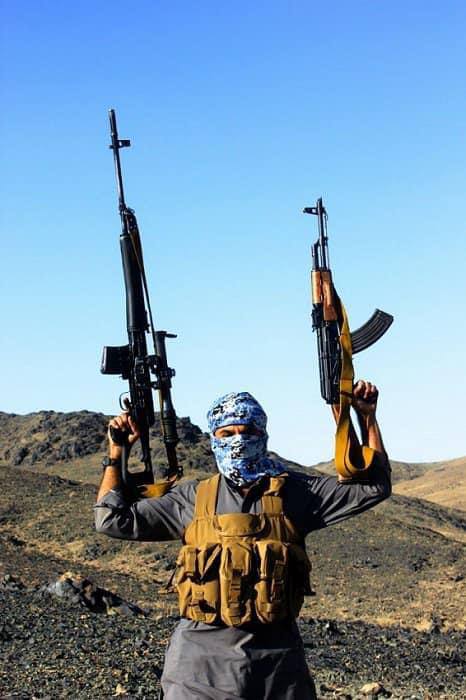
The Balochistan Liberation Front (BLF) has launched an operation against Levies personnel in Kalat’s Nchari area on October 18, 2024. According to a statement by BLF spokesperson Major Gwahram Baloch, the group’s fighters (Sarmachars) initially encountered Levies forces during routine patrols. After disarming the Levies officials of their occupied-government-issued weapons, the BLF fighters released them unharmed.

Later the same day, BLF fighters confronted the Levies again at a police checkpoint, issuing a final warning to avoid obstructing the Baloch national liberation movement. However, instead of heeding the warning, Levies officers attempted to launch an attack. In response, the BLF fighters took defensive positions, resulting in the death of Levies soldier Abdul Qayyum and the injury of Rahmatullah Nichari.

Major Gwahram expressed regret over the loss of Baloch lives, emphasizing that the group had repeatedly warned Baloch individuals working in Army forces to abandon their roles in suppressing the movement. “It is deeply painful to see fellow Baloch being used by the occupying Paki establishment to sabotage our struggle for freedom. Our fight is for every Baloch, and it’s a tragedy when our own people become pawns of the enemy,” the statement read.

BLF Warning

The spokesperson condemned the Paki establishment for pursuing its colonial policy of dividing and weakening Baloch society. “Like all oppressive regimes, Pakistan thrives on spreading discord among the people it occupies. We urge every Baloch to resist becoming a tool of the state and instead recognize their responsibility towards the national cause,” he added.

The BLF issued a stern warning to Baloch personnel working in Paki institutions, urging them to avoid aiding the occupied-state’s brutal oppression. “Any Baloch aiding the enemy will not be spared. Collaborators will be held accountable before the national court of justice. The BLF will continue to act against all those who betray their people for the interests of the occupying state,” said Major Gwahram.

The statement concluded saying the BLF will target anyone who works against the liberation movement on the orders of the Paki establishment. “Our struggle will persist until Balochistan is free from the clutches of Pakistan’s military rule. Collaborators will face the full weight of justice for their betrayal,” the spokesperson warned.

This incident highlights the growing resistance within Balochistan, where nationalist fighters resist Pakistan’s military of sowing division and using local forces as proxies. With the BLF’s unwavering commitment to the cause, Pak Army tensions are likely to escalate as Baloch fighters intensify their efforts to counter Army repression.

Pashtuns detain Pakistan Army officials over unlawful raid in south Waziristan

Tensions erupted in South Waziristan when an SHO led an unauthorized raid on a local house without a legal warrant, sparking outrage among the residents. In a bold act of defiance, the local Pashtuns detained the SHO and accompanying officials, demonstrating their frustration with repeated violations perpetrated by the Paki regime .

In an attempt to diffuse the situation, police officials later arrived seeking the release of their detained colleague. Embracing Pashtun customs, they offered goats as a gesture of reconciliation.

However, such traditions of peace are repeatedly undermined by the Punjabi Pakistan Army’s oppressive actions in Pashtun areas. The same livestock presented as peace offerings today are often decimated by relentless airstrikes carried out by the Punjabi military, leaving Pashtun families impoverished and struggling for survival.

The Paki establishment is deliberately inflicting economic hardship on the Pashtun population through these attacks. The Army’s use of heavy-handed tactics, such as indiscriminate bombings, has only deepened resentment among Pashtuns, who are victims of systemic brutality. Despite these hardships, the community remains resilient, resisting the Army’s colonial-style repression and exploitation.

Turbat erupts in protest against Baloch kidnappings by Pak Army

Responding to the Baloch Yakjehti Committee’s call, protesters took to the streets in Turbat, demanding the immediate recovery of forcibly disappeared individuals. The rally, which ended in a sit-in at Shaheed Fida Chowk, reflected the growing anger toward the Pakistan Army’s oppressive tactics in Pak-occupied-Balochistan.

Protesters, including women and children, marched through the streets carrying photos of their missing loved ones and chanting slogans against the Paki establishment’s atrocities. The gathering at Shaheed Fida Chowk saw emotional speeches from the families of the disappeared, as well as leaders of the Baloch Yakjehti Committee.

Shahji Sighatullah, a central leader of the committee, condemned the Army for making enforced disappearances a norm, not only in POB but also in Karachi and other parts of Pakistan where Baloch students study. “Over 50 people were abducted in October alone, many of them students, with police and security officials complicit in these crimes,” he said.

He criticized the Paki establishment for failing to protect the people of POB while instead sponsoring lawlessness. Referring to a recent bank robbery in Buleda, Shah Ji said, “Despite dozens of Army checkpoints in the area, no robbers were arrested. The military’s role seems limited to silencing dissent rather than ensuring public safety.”

Shahji further highlighted the growing trend of targeting released detainees. “Just last night, a man previously abducted by occupied-state agencies was shot and wounded in Sangani Sar. His court hearing was scheduled for today. This shows how the Army’s hostility toward the Baloch continues even after they release their victims.”

He criticized the occupied-govt’s manipulation of media narratives, particularly the smear campaigns against Baloch women. “Several innocent women have been falsely branded as suicide bombers to tarnish the image of Baloch resistance. These fabricated stories, like the recent attempt in Aapsar, aim to criminalize our people. But we refuse to accept these lies.”

Turbat Rally

Shah Ji also condemned the occupied-state’s suggestion to compensate families of the disappeared. “No Baloch mother will ever sell her son’s corpse for 5 million rupees. The Army fails to understand our culture. These so-called open courts and reconciliation efforts are nothing but deceitful performances,” he said.

He concluded by reaffirming the right of the Baloch people to resist oppression. “We are an oppressed nation fighting for survival. Every oppressed group has a natural right to victory, and the Baloch will claim that right, no matter what.”

Advocate Mehrab Khan Gichki echoed these sentiments, warning, “The fire that the establishment has ignited in Balochistan will eventually consume those responsible. The Baloch are engaged in their final struggle, and no amount of military repression can halt our movement.”

Family members of the missing also addressed the sit-in, sharing painful accounts of their loved ones’ abductions. The sister of Asad Baloch recounted how her brother was taken from CGS Colony, Quetta, in 2014. “We filed an FIR and attended every hearing, but nothing has changed. He went to Quetta to study, only to be abducted. We are helpless, but protesting is our right,” she said.

The sister of Sohail Baloch disclosed that her brother, who suffers from epilepsy, was abducted twice—first from Dazen and later from a relative’s house in Turbat on October 11. “In October alone, 50 individuals, mostly students and children, were abducted. The Army’s oppression leaves us no choice but to unite and fight for justice,” she added.

Another speaker, the sister of Iqbal, abducted from Tump in 2007, said, “We are not asking for hospitals or schools. We are only asking for Iqbal’s release so he can live a normal life. Is that too much to ask?”

The protest saw heartfelt speeches from siblings of several missing persons, including Attaullah Noor, Javed Baloch, Yasir Baloch, Abdul Malik, and Hayat Sabzal, all demanding the safe return of their brothers.

Israel kills Nasrallah’s successor & Hezbollah’s new chief Hashem Safi Al-Din

Hezbollah has confirmed the death of Sayyed Hashem Safi Al-Din, chairman of the group’s executive council, following an Israeli airstrike. The group released a statement mourning his loss, describing him as a key figure in the “nation of martyrs and resistance” and pledging to continue the path of struggle against Israel. The Israel Defense Forces (IDF) also confirmed that Safi Al-Din, who was regarded as a possible successor to Nasrallah, was killed alongside Ali Hussein Hazima, Hezbollah’s intelligence chief, during a targeted strike on the group’s intelligence headquarters in Dahieh, Beirut.

According to Hezbollah, Sayyed Hashem Safi Al-Din was killed during what it termed a “criminal Zionist raid of aggression”, joining the ranks of martyrs whom the group reveres. The statement compared his role to that of Abu Al-Fadl Al-Abbas, a figure of loyalty and sacrifice in Islamic tradition, emphasizing that Safi Al-Din stood by Hezbollah’s Secretary-General Hassan Nasrallah in times of crisis and was entrusted with leadership responsibilities.

Hezbollah praised Safi Al-Din’s long service to the organization, highlighting his management of the Executive Council and various institutions within the resistance movement. The group framed his death as part of an ongoing struggle for the liberation of Jerusalem, invoking the symbolism of Karbala and the importance of martyrdom.

The statement extended condolences to Imam Mahdi, the spiritual guardian of Muslims, as well as to the Islamic seminaries, Safi Al-Din’s fellow fighters, and his family. Hezbollah vowed to carry forward his mission, pledging to continue the resistance until “freedom and victory” are achieved.

This development follows reports that Hassan Nasrallah himself was killed in an earlier Israeli strike. The deaths of both Nasrallah and Safi Al-Din represent a significant blow to Hezbollah’s leadership structure, as both men were seen as pillars of the Iran-backed organization.