Home Blog Page 35

Pakistan Army’s Quetta cantonment hit by mortar shelling attack

The main cantonment of Pakistan forces in the heart of Quetta came under attack as unknown armed men launched multiple mortar shells, shaking the city and exposing the military’s grip on Pak-occupied-Balochistan.

Witnesses reported loud explosions as some shells breached the heavily-guarded cantonment area, detonating with force. Despite the Army’s claim of tight security, the attackers managed to penetrate the military stronghold with ease.

The sound of the blasts echoed across Quetta, triggering fear among residents. One mortar shell hit an electric pole near Model, plunging several areas into darkness. The Army, however, has tried to downplay the incident by providing no details about potential casualties or damage.

The attack once again highlights the increasing challenges faced by the Pakistan military in maintaining control over Pak-Occupied Balochistan (POB), where years of suppression and brutal tactics have only fueled resentment. Despite the Army’s oppressive operations, including enforced disappearances and military-backed death squads, freedom fighters like BLA & BLF continue to strike at will, undermining the occupied-state’s authority.

The Pakistan Army’s colonial mindset and its obsession with silencing Baloch community have only deepened the conflict, making military installations like the Quetta cantonment prime targets for retaliatory strikes.

TTP holds back on Pashtun issues, lashes out at Pak Army

In a recent statement, the Tehrik-i-Taliban Pakistan (TTP) reiterated its stance regarding confrontations with parties or institutions other than the Pakistan Army, which they labeled a “slave army” and merely remnants of the Royal Indian Army. The TTP emphasized that any conflict involving their fighters outside this scope would only serve the interests of the military. They instructed their militants to maintain silence on matters related to the Pashtun National Court jirga and the Pashtun Tahafuz Movement (PTM).

The TTP claimed that if any relevant issues arise in the future, they would clarify their position at that time. Until then, they urged their fighters and social media activists to focus their efforts on the “oppressive” military, which are the true enemy.

Reiterating their previous declarations, the TTP asserted that their primary targets are the security forces and their affiliates. They conveyed a message to the Khyber Pakhtunkhwa police, stating that they are not the main target and should refrain from unnecessarily involving themselves in this conflict. The TTP insists that police personnel should only be engaged if they impede operations against the military.

The statement also addressed a recent incident in Laki Marwat, where a TTP fighter was brutally killed by a group known as the National Lashkar. The TTP warned this group to remain uninvolved in the ongoing conflict, asserting their intention to keep their struggle focused and undistracted. This shows the Pak military’s role in the proliferation of militancy in the region. These militants are a direct consequence of the military’s past actions, which have come back to haunt them in the form of an empowered insurgency.

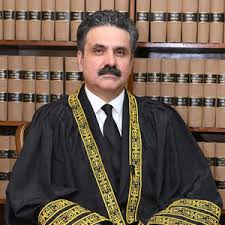
Pakistan appoints Yahya Afridi as 30th Chief Justice ; PTI boycotts selection process

Justice Yahya Afridi has been appointed as the 30th Chief Justice of Pakistan, following approval from President Asif Ali Zardari. Afridi, who has served as a Supreme Court Justice since 2018, will officially assume office on October 26, succeeding Chief Justice Qazi Faez Isa.

The appointment was finalized after a 12-member special parliamentary committee nominated Afridi under the 26th Constitutional Amendment. The decision received the backing of Prime Minister Shehbaz Sharif, and the president signed off on the recommendation.

Justice Afridi brings decades of legal experience to the role. His legal career began in 1990 when he enrolled as an advocate of the high court, followed by his registration with the Supreme Court in 2004. He previously served as Assistant Advocate General for Khyber Pakhtunkhwa and as a Federal Counsel for the Government of Pakistan.

Afridi’s judicial career advanced in 2010 when he was appointed as an Additional Judge of the Peshawar High Court. Two years later, he was confirmed as a permanent judge. Notably, Afridi made history by becoming the first judge from the Federally Administered Tribal Areas (FATA) to serve as Chief Justice of the Peshawar High Court in 2016. He held the position until his elevation to the Supreme Court on June 28, 2018.

New Era in Judiciary

The selection process for Afridi’s new role was not without political drama. The special parliamentary committee, formed on Monday by National Assembly Speaker Ayaz Sadiq, held an in-camera session at Parliament House late Tuesday. Comprising eight MNAs and four senators from various political parties, the committee worked to reach a consensus on Afridi’s nomination.

However, the session took place without the participation of Pakistan Tehreek-e-Insaf (PTI) and its ally, the Sunni Ittehad Council (SIC), both of which boycotted the meeting. They objected to the recent constitutional amendments that led to the formation of the committee.

In their absence, nine members attended the session, with eight supporting Afridi’s nomination. Jamiat Ulema-e-Islam-Fazl (JUI-F) leader Kamran Murtaza cast the only dissenting vote, favoring senior puisne judge Mansoor Ali Shah.

The composition of the special committee included representatives from key political parties. PML-N members Khawaja Asif, Ahsan Iqbal, Shaista Pervaiz Malik, and Azam Nazeer Tarar, along with PPP leaders Raja Pervez Ashraf, Naveed Qamar, and Senator Farooq H. Naek, played significant roles in the deliberations. Rana Ansar of MQM-P and PTI-affiliated members Gohar Khan and Senator Ali Zafar were also part of the panel, though the latter abstained from the proceedings.

Hezbollah’s men guard Beirut hospital bunker that hoards gold and millions in cash

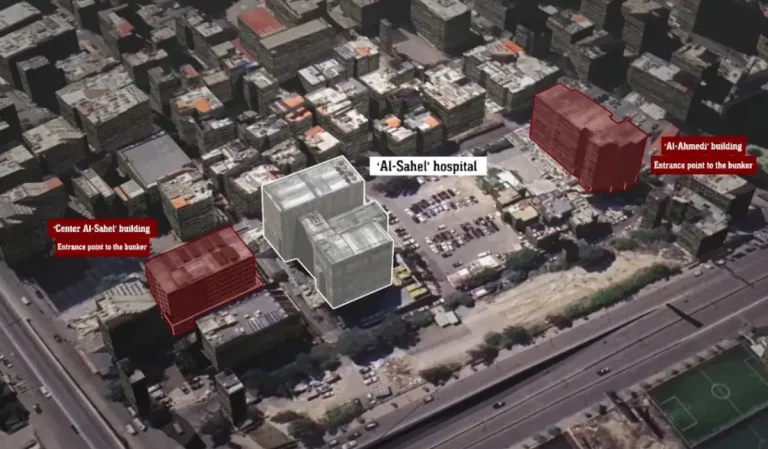
Journalists and activists who rushed to the Al-Sahel General Hospital in Lebanon’s capital Beirut on the 23rd of Oct were greeted by heavily armed Hezbollah fighters terrorists. These Hezbollah fighters terrorists blocked the door to underground bunker at the Al-Sahel Hospital, which, the Israelis alleged, held millions in cash and gold meant to finance Hezbollah’s terror activities. The Beirut hospital’s director had called upon Lebanese media and other eminent personalities to have a peek at the hospital’s bunker hoping to prove that Israelis claims were false. However, heavily armed Hezbollah’s fighters terrorists blocking access to the bunker stood testimony to Israel’s claims.

Several reporters from the LBCI (Lebanese Broadcasting Corporation International) attempted were refused entry inside the bunker of Al-Sahel General Hospital. The journalists even reached out to Hezbollah’s media representative, but their requests were denied. The situation unfolds against a backdrop of escalating tensions, as Israel recently declassified intelligence suggesting the presence of a hidden Hezbollah bunker filled with millions of dollars in cash and gold beneath the hospital.

In a televised briefing shared via X, IDF spokesperson Rear Admiral Daniel Hagari alleged that the IDF had located an underground vault containing substantial cash and gold, purportedly used to fund Hezbollah’s operations against Israel. He emphasized the strategic placement of this vault beneath a residential structure, further complicating the military landscape.

IDF spokesperson Rear Admiral Daniel Hagari explained that Israeli airstrikes targeted Hezbollah’s financial stronghold, Al-Qard Al-Hassan, on Monday. He urged Lebanese citizens to distance themselves from Hezbollah’s facilities, stating, “Our strikes will degrade Hezbollah’s ability to finance its attacks on Israelis.”

Khyber-Pakhtunkhwa: Pashtun Frontier Corps resign, defying Paki regime’s oppression

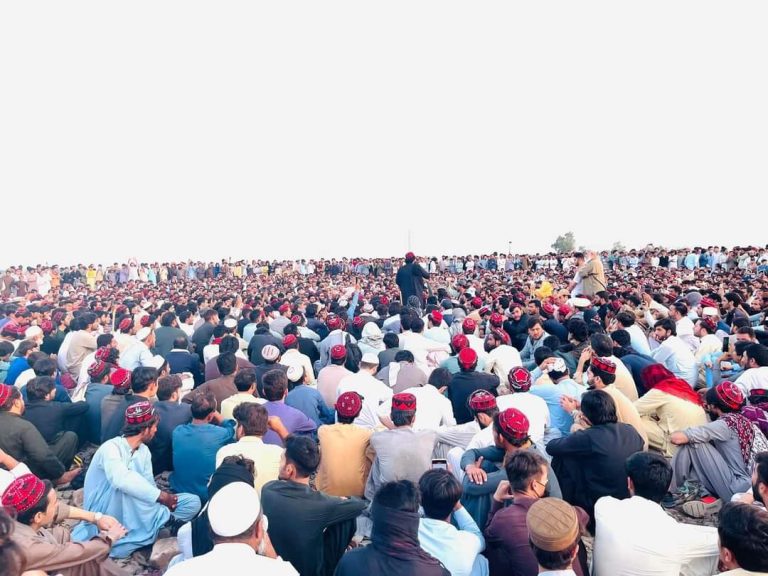
In a bold act of defiance, Pashtun Frontier Corps (FC) officials stationed in Bannu have resigned, rejecting their roles as enforcers of the Paki establishment’s oppressive policies. The resignations follow widespread protests across the Pashtun belt, where citizens have taken to the streets demanding peace, dignity, and justice. This rising wave of resistance reflects growing frustration with the Pak Army’s long-standing exploitation of the region for Punjabi Pakistan’s games.

The officials’ decision comes amidst a broader trend of resignations from police ranks, as security personnel refuse to partake in the “dollar wars” — proxy conflicts funded by foreign aid, which have turned the Pashtun homeland into a battlefield for Pakistan’s military ambitions. The Pashtun belt, long treated as a pawn by Islamabad, has faced years of military operations, arbitrary arrests, enforced disappearances, and airstrikes, under the guise of counterterrorism.

These resignations as a significant turning point, with growing fears within Islamabad that more Pashtun occupied-government employees may abandon their posts and join the struggle for peace and self-determination. “The day is not far when Pashtuns will leave government jobs en masse and stand shoulder to shoulder with their people,” said PTM Chief Manzoor Pashteen, adding that this movement could further fracture Pakistan’s already unstable control over its restive regions.

The Pakistan Army, notorious for its colonial-style governance, has used brutal tactics to suppress Pashtuns in their homeland, including silencing peaceful activists from the Pashtun Tahafuz Movement (PTM). Yet, the resistance only grows stronger. The protesters have vowed to reject military oppression and continue their struggle for peace, dignity, and a future free from war.

Salutations are pouring in for the officials and protesters who have refused to enforce the occupied-state’s oppressive policies. Their courage underscores a deepening solidarity among Pashtuns.

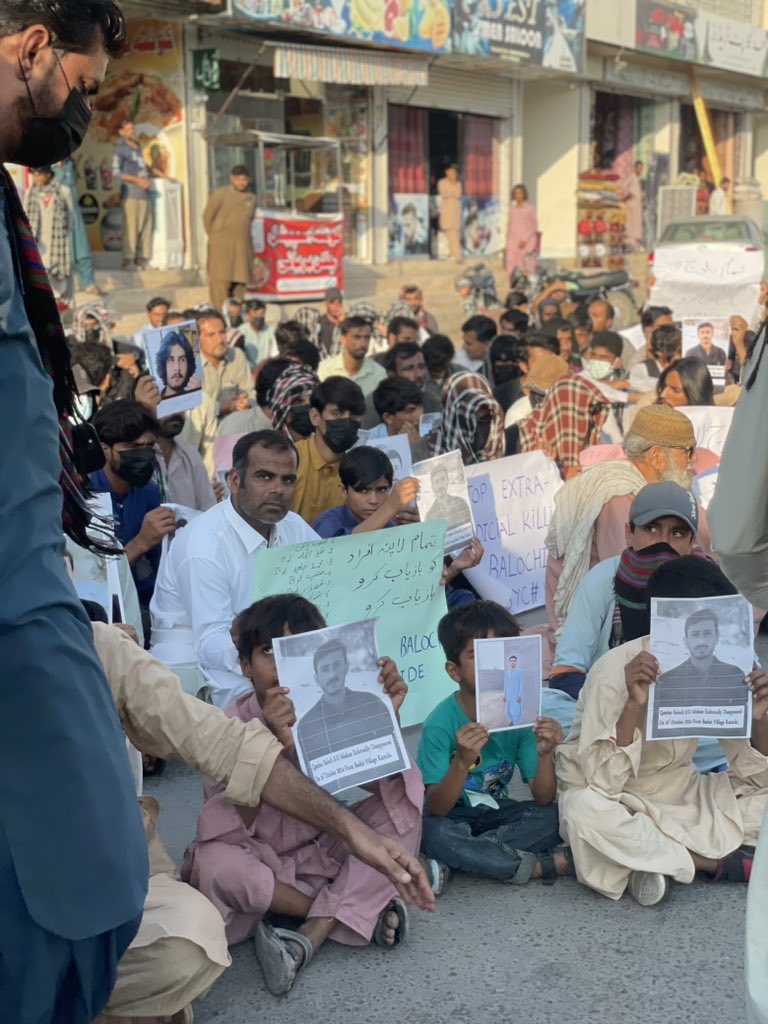
POB: Baloch protest in Khuzdar against Pak Army kidnappings

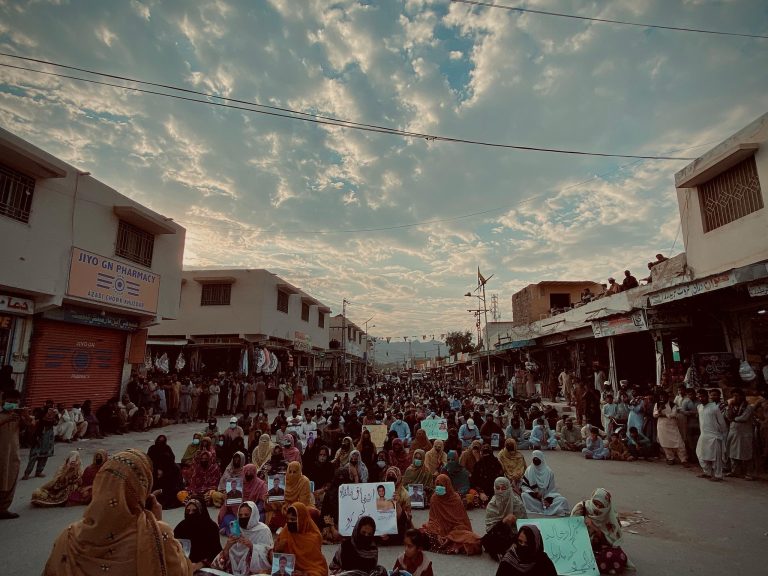
In Khuzdar, the Baloch Yakjehti Committee staged a large protest on Wednesday, condemning enforced disappearances and Pakistan Army repression in Pak-occupied-Balochistan. The demonstration, part of an ongoing campaign titled “Breaking the Silence: Standing Against Enforced Disappearances,” saw participation from the families of missing persons and locals from Nal, Wadh, Surab, and nearby areas.

The protest rally began at Shaheed Razzaq Chowk and marched to Azadi Chowk, where demonstrators staged a sit-in to demand accountability for the forced abductions of Baloch civilians, activists, and students.

Army Intimidation Fails to Stop Protesters

Pakistan’s security forces are trying to sabotage the protest by resorting to familiar oppressive tactics. Deployed hundreds of personnel try to intimidate the protestors, shut down communication networks, and arrested participants. They even used violence to break up the rally. Despite these efforts, the protesters carried on, demonstrating their resistance to the Army’s oppressive policies.

The military establishment has long used enforced disappearances as a tool to crush Baloch population in POB, where the population has resisted Pakistan’s control since its forceful annexation in 1948. Thousands of Baloch activists, students, and intellectuals have vanished over the years, with the Army-backed intelligence agencies and death squads orchestrating these abductions. Many abductees are tortured, killed, and discarded in the Army’s “kill-and-dump” policy.

The rally in Khuzdar follows similar protests in Karachi and Hub Chowki, underscoring the growing discontent with the Army’s unchecked authority in POB. The Baloch Yakjehti Committee’s campaign aims to mobilize the public against these enforced disappearances, which have devastated families across the region.

PM Modi & President Xi to hold first bilateral meeting in five years at BRICS Kazan summit

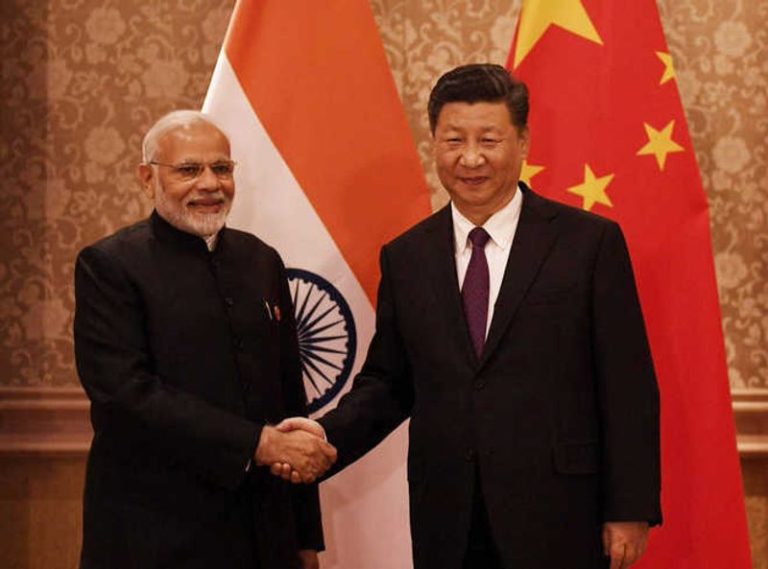
Prime Minister Narendra Modi is poised to meet with Chinese President Xi Jinping for a bilateral discussion in Kazan, Russia, on the sidelines of the BRICS Summit. This marks the first formal interaction between the two leaders in five years, reflecting recent efforts to de-escalate tensions along their shared border.

The meeting comes after India and China reached an agreement to resume regular patrolling along the Line of Actual Control (LAC) in eastern Ladakh, a region that has seen increased friction since 2020.

The last time PM Modi and Xi met was in October 2019 during the Mahabalipuram Informal Summit in Tamil Nadu, just months before the violent clashes in Galwan that resulted in a military standoff. Since then, the leaders have engaged briefly during the G20 meetings in Bali in 2022 and Johannesburg, South Africa, in 2023.

On October 21, the Ministry of External Affairs (MEA) announced that an agreement had been reached regarding patrolling arrangements along the LAC. Misri stated that this resolution was the result of extensive discussions with Chinese counterparts at both diplomatic and military levels. He highlighted the involvement of military commanders in addressing the tensions that have persisted since the Galwan clashes.

Historic Modi-Xi Meeting

China’s Foreign Ministry spokesperson Lin Jian also confirmed the resolution of the border conflict, stating, “We have reached a resolution on the relevant matter and will work with the Indian side to implement the solution. We are in close communication through diplomatic and military channels.”

The anticipated meeting between PM Modi and President Xi in Kazan is expected to be a significant moment for India-China relations. Discussions are likely to include the recent agreement on patrolling along the LAC, trade relations, and regional stability.

In previous meetings, such as the Mahabalipuram summit, PM Modi and Xi discussed international and regional issues, focusing on improving people-to-people contact and enhancing trade while maintaining peace along the extensive 3,500-kilometer India-China border. PM Modi also showcased several iconic monuments to Xi during this visit, which culminated in a lengthy one-on-one dinner discussion.

Kazan Summit

Both leaders met earlier in April 2018 during the Wuhan Informal Summit, which aimed to mend ties following the Doklam standoff in 2017. Discussions at that summit addressed the strategic long-term perspective of India-China relations. The leaders also interacted during the Bali G20 Summit, where they acknowledged the need to stabilize bilateral relations.

In 2023, PM Modi and Xi discussed unresolved issues along the LAC in Johannesburg, agreeing to direct their officials to intensify efforts for disengagement and de-escalation. Former Foreign Secretary Vinay Mohan Kwatra noted that PM Modi stressed the importance of maintaining peace along the border for normalizing ties between the two nations.

The ongoing border tensions between India and China escalated in 2020 following aggressive Chinese military actions in eastern Ladakh. Since then, the two nations have conducted numerous meetings to address the situation.

In September 2023, National Security Advisor Ajit Doval met with Chinese Foreign Minister Wang Yi in St. Petersburg, where they reviewed efforts to resolve remaining issues along the LAC, with both sides agreeing to expedite disengagement efforts.

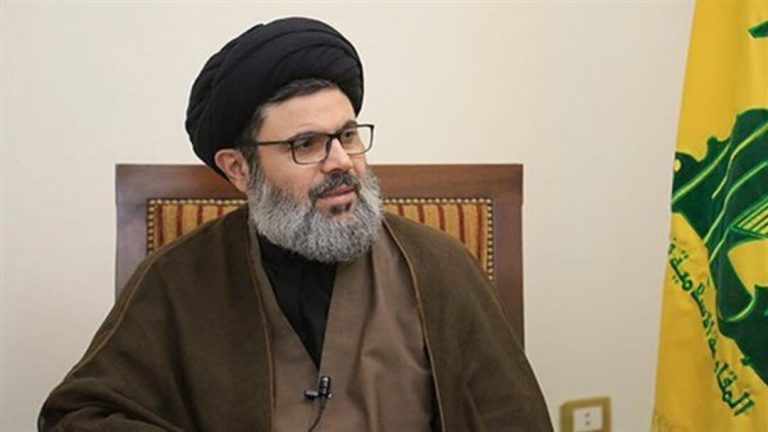
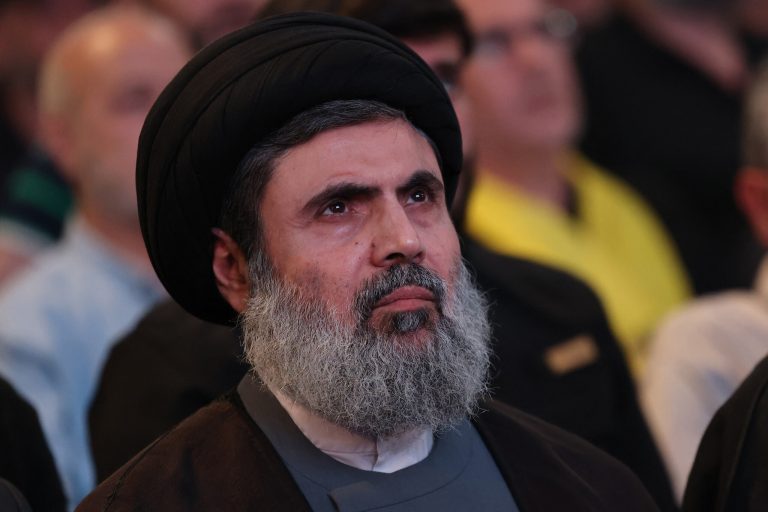
Israel eliminates Hashem Safieddine, successor to Hezbollah Chief Nasrallah

The Israel Defense Forces (IDF) on Wednesday confirmed it had eliminated Hashem Safieddine, who was poised to succeed the late Hezbollah leader Hassan Nasrallah. Nasrallah was reportedly killed last month in an Israeli attack targeting the Iran-backed militant group.

“Hashem Safieddine, Head of the Hezbollah Executive Council, and Ali Hussein Hazima, Commander of Hezbollah’s Intelligence Headquarters, were killed during a strike on Hezbollah’s main intelligence HQ in Dahieh approximately three weeks ago”, the IDF announced in a statement on X (formerly Twitter).

https://twitter.com/IDF/status/1848827621510947040?ref_src=twsrc%5Etfw%7Ctwcamp%5Etweetembed%7Ctwterm%5E1848827621510947040%7Ctwgr%5E4b2ef0dfc88c1c1c89b691184aefac89b48c23c7%7Ctwcon%5Es1_&ref_url=https%3A%2F%2Fwww.indiatvnews.com%2Fnews%2Fworld%2Fhasem-sefieddine-successor-of-hezbollah-leader-hassan-nasrallah-killed-confirms-israel-defence-force-lebanon-2024-10-23-958415

The Rise of Hashem Safieddine

Cousin of Nasrallah, Safieddine was a significant figure within Hezbollah, serving on its Jihad Council, which oversees the group’s military operations. He also held a prominent position on Hezbollah’s Executive Council, managing the organization’s financial and administrative affairs.

Safieddine’s prominence grew in recent years as he took on public roles that Nasrallah had avoided due to security risks. He frequently addressed high-profile events and funerals, becoming a visible face for the militant group during periods of heightened tensions with Israel.

The IDF said that Safieddine was also a member of Hezbollah’s Shura Council, the group’s most senior decision-making body. In Nasrallah’s absence, Safieddine occasionally stepped in as acting Secretary-General, solidifying his influence over the organization’s strategies. Israeli officials accuse him of directing numerous attacks on Israel, contributing to Hezbollah’s military campaigns against the state.

Ali Hussein Hazima, who also died in the airstrike, headed Hezbollah’s intelligence apparatus and had been involved in planning attacks targeting Israeli soldiers.

Hezbollah Silent Amid Intensified Offensive

Hezbollah has not yet issued a response to Israel’s announcement regarding Safieddine’s death. However, the loss marks a significant blow to the group, which has seen several of its senior commanders killed in recent Israeli strikes.

Israeli army chief Lieutenant General Herzi Halevi said, “We have reached Nasrallah, his replacement, and much of Hezbollah’s senior leadership. We will reach anyone who threatens the security of Israel’s civilians.”

The latest escalation comes amid Israel’s intensified military operations in Lebanon following a year of border skirmishes with Hezbollah. The militant group, known as Iran’s most heavily armed proxy in the region, has aligned itself with Palestinian factions in Gaza during recent clashes with Israel. However, Hezbollah is reeling from the elimination of key leaders in recent weeks, weakening its operational capabilities at a critical juncture.

Israel reveals Hezbollah bunker with millions in cash & gold beneath hospital in heart of Beirut

The Israel Defense Forces (IDF) revealed the discovery of a hidden Hezbollah bunker containing millions of dollars in cash and gold. The claims were made during a televised briefing on Monday, where IDF spokesperson Rear Admiral Daniel Hagari declassified intelligence regarding Hezbollah’s financial operations located beneath a hospital in Beirut.

Hagari said that the Israeli Air Force executed a series of precise strikes targeting Hezbollah’s financial stronghold, Al-Qard Al-Hassan, urging Lebanese citizens to avoid areas near Hezbollah facilities. “Our strikes will degrade Hezbollah’s ability to finance its attacks on Israelis,” he said, adding that the significant underground vault was specifically designed to support Hezbollah’s operations against Israel.

According to Hagari, the bunker, believed to be directly beneath Al-Sahel Hospital in Beirut, was intentionally constructed under a residential building, raising concerns about civilian safety. He emphasized that the IDF would refrain from targeting the hospital itself, stating, “We are not at war with the people of Lebanon. We are at war with Hezbollah.”

The IDF’s strikes late Sunday affected at least 15 branches of Al-Qard Al-Hassan across southern Lebanon and the eastern Bekaa Valley. Hagari highlighted that the organization violates international law and is sanctioned by the United States and other Western nations.

He further described Hezbollah’s financial structure, which reportedly relies on funds from the Iranian regime and contributions from the Lebanese people. Intelligence suggested that cash and gold are transferred through Syria and that Hezbollah operates factories in Lebanon and other countries to generate income.

Israel has announced intentions to conduct further strikes against Hezbollah’s infrastructure, with recent airstrikes leading to the displacement of over a million people in Lebanon. In retaliation, Hezbollah has been launching regular rocket attacks into Israel since the onset of renewed conflict following the Hamas raid in October of the previous year.

Khyber: Pak Army airstrike in Tirah valley targets & injures Pashtuns

A devastating airstrike by Pakistan Army targeted the bustling Pir Mela Bazaar in the Zakhakhel area of Tirah Valley, resulting in injuries to dozens of innocent civilians, including young children. The attack, which took place recently, raises serious concerns about the military’s aggressive tactics against Pashtuns.

The airstrike struck during peak hours, inflicted chaos and terror among the local population. Many of the injured were transported to Hayatabad Medical Complex in Peshawar for urgent medical care, with activists urging the community to come forward for blood donations to aid the victims.

This assault on civilians highlights the ongoing military operations in the Pashtun belt, where the Punjabi Pak Army has increasingly resorted to targeting public, in the name of counterinsurgency strategies. The growing confidence in the Pashtun Jirga signals that the end of Pakistan’s military-driven dollar war in the region may be near. Therefore, the Pakistan Army is using airstrikes as a blunt instrument to crack down on the Pashtuns, who have risen to protest against the Punjabi Army elites for the suppression of the Pashtun population in their own land.