Home Blog Page 365

BLF’s second attack this week, kills 6 Pak soldiers in Parom

The Balochistan Liberation Front (BLF) continued its attacks on Pakistani forces in occupied Balochistan on Saturday and killed six army personnel in Parom. This is the second major attack by BLF this week that comes close on the heels of Kech attack in which another six Pakistani soldiers were killed.

Balochistan Liberation Front (BLF) spokesman Major Gwahram Baloch said in a statement that the Baloch freedom fighters (Sarmachaars) attacked a Pakistan Army camp in Kalah Kaur area of ​​Parom in Panjgur district with automatic heavy weapons. “At the same time, the checkpost was also targeted. Six army personnel of the occupying Pakistani forces were killed and three others were injured in the attack,” Major Gwahram Baloch said in his statement.

BLF’s counter-attack are in retaliation to the massive military operations being run by Pakistani forces in occupied Balochistan. It has been more than two months now, but Pakistani security forces and their “death squads” continue to wreak havoc across occupied Balochistan. Pakistani forces and their “death squad” members have unleashed a rein of terror on the hapless Baloch people where they continue to rape women and kill the men. Pakistani forces have been using helicopter gunships and artillery guns to target unarmed Baloch people including women and children.

Ironically, none of the human rights organisations or the UN agencies have said a word of condemnation against Pakistan. World’s silence to the atrocities on innocent Baloch people has only emboldened Rawalpindi and Islamabad to continue their policy of crushing Baloch people through brute force.

BLF spokeperson Major Gwahram Baloch said their attacks will continue until the independence of Balochistan.

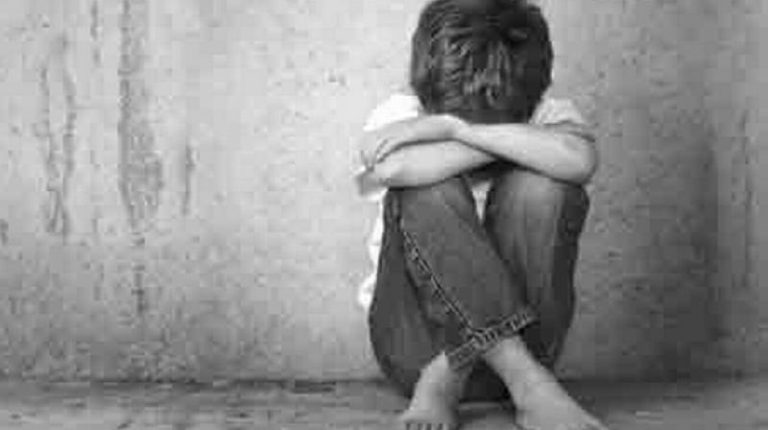
Death squad member rapes 12-year boy at Awaran, occupied Balochistan

A death squad member backed by the Pakistan Army sexually assaulted a twelve year old boy on Wednesday in district Awaran of occupied Balochistan. The rapist was Eid Muhammad alias Pero (son of Karim Dad) who abducted the twelve year old Azhar Ali at gun point and carried him off on his motorbike. Eid Muhammad then raped Azhar Ali, threw him off in an unconscious state and fled.

Azhar Ali (son of Asghar Ali) is a resident of Alangi area in ​​Mashkey Valley, district Awaran of occupied Balochistan.

Local sources in Balochistan told News Intervention that Eid Muhammad alias Peru belongs to Pakistan-backed armed group popularly known as “death squad”, the members of which are involved in various violent crimes. Referring to Wednesday’s incident the local sources said that Azhar Ali was on his way home after his tuition classes when Eid Muhammad kidnapped and raped him.

The family members of Azhar Ali approached local police station to report about the incident but were turned away. After much persuasion the local police reluctantly filed an FIR against Eid Muhammad.

However, the next day Pakistan Army soldiers visited the police station at Mashkey Valley in Awaran and ordered the policemen to withdraw the FIR against rapist Eid Muhammad. “The (Pakistan) Army personnel told the policemen that Eid Muhammad is working under their supervision and that the FIR needs to withdrawn,” a local Baloch national told News Intervention.

It should be noted that it is not the first incident in Mashkey Valley, and such incidents have been happening with a regular frequency in these areas for a long time. Pakistan is utilizing these death squad personnel for such heinous acts in Balochistan. Rape, molestation and violent sexual assaults on women, girls have been very common. In recent times, violent sexual assaults on young boys have also increased. However, due to strict media censorship by Pakistan across occupied Balochistan and lack of communication access these heinous crimes are rarely reported by the mainstream media.

A fresh charter for new breed of political leaders in Jammu and Kashmir

The political structure of Kashmir changed dramatically in mid-2019 (August, 5) due to abrogation of Article 370 and bifurcation of the state into two Union Territories. The local leaders predicted a massive backlash from the people, especially so in Kashmir. There was however, no hostile response. This situation has given credence to a thought process that the people were quite relieved on being rid of their corrupt and unworthy leadership. Prime Minister Narendra Modi had predicted, “end of dynastic rule in Jammu and Kashmir,” as one of the main benefits that would accrue from the change; the prediction has a truthful ring to it. 

That the region is looking for new leadership, or at least a new model of leadership, is now very apparent. If the existing leadership stands for elections on the basis of old postures, the end result could be less voter turnouts ​and a hung verdict; both scenarios will be detrimental for the region. 

Certain trends point towards an evolutionary process for a new leadership having taken roots. Its emergence from the grass roots through the Panchayat elections is being viewed as a possibility. However, a state level leadership from this avenue will take a long time and careful nurturing to evolve and that luxury is not available in the short term. 

A few second rung leaders have made a bid to fill the gap. Shah Feasal, an Indian Administrative Service (IAS) officer hailing from Kashmir left service and launched a political party named Jammu and Kashmir Peoples Movement (JKPM) in March 2019. The party, however, could not take off. Feasal, in desperation, took a posture of soft-separatism, probably to garner funds, and lost out on political goodwill and capital. 

Altaf Bhukhari, earlier a senior member of the Peoples Democratic Party (PDP), floated the Jammu and Kashmir Apni Party (JKAP) that has the tacit support of New Delhi. It has, however, turned out to be an amalgamation of the old, senior political leadership of Kashmir and is, therefore, “old wine in new bottle.” Mir Junaid, a young politician is also jostling for space with his fledgling political outfit Jammu and Kashmir Workers Party (JKWP). He claims that of the 2774 candidates fielded by him in Panchayat polls, 2368 won. He also claims a similar huge success in the Block elections. Junaid is pressing for better monetary compensation for the Panchayat Office bearers as also facilities like internet connection in Panchayat offices etc. 

The Jammu region has remained bereft of any new face or any initiative to set up new leaders. This is a cause for concern, since lack of proper representation is a bane for democracy. 

As the process evolves it becomes imperative to identify the charter that would best suit a new leadership in J&K. The first and foremost requirement is a holistic and coordinated security policy, a sector where successive governments in the past have been found wanting,​ and have always relied upon ​forces without supporting them. Such a system can no longer work since the threat from Pakistan is not diminishing commensurate to the losses that its supported terrorist cadre is suffering. In their latest doctrine as postulated by the Green Book 2020, Pakistan speaks of taking the war into ‘non-kinetic domain’ characterized by misinformation based psychological operations. The new leadership will need to stop bemoaning and reviling the presence of security forces and instead elicit their support in ushering of progress and prosperity. 

The new political leadership will also need to take a firm stand on “vehicles of radicalization”​ like Mosques, Madrasas and fundamentalist groups/outfits that have been spewing venom in the name of “Jihad” f​or a long time. ​In addition, there are several pseudo think-tanks and NGOs that are actively involved in trying to influence the minds of individuals and society. These will need to be identified and contained. So​me forward movement has been made in this direction but the logical conclusion will come only with a very strong political will.

Politically speaking, all notions of self-rule, self-determination, special status etc. will need to be replaced by the existing reality of the region being similar to other union territories/states in the country. If it wishes to survive, the new leadership will have to remain responsive to the total rejection by the people of the separatism or the soft-separatism being pursued by the previous leadership.

The new leadership will need to look at Jammu and Kashmir as a whole by emphatically shedding the age old inhibition that has kept the region divided into two sides of the Pir Panjal mountain range. The political structure would need to have representation in all parts of the region in a  clean break from the Kashmir-centric trend that has been in place so far. Most of the draconian laws that supported such a dispensation have been repealed under the new system. What remains is a leadership intervention for cementing the new spirit. The new leadership will need to respect democratic tenets of discussion, debate and joint decision making which is the very essence of democracy.

In the conduct of public duty the new leadership should hold the highest moral standards at the personal level and generate the capacity to implement the same. Endemic corruption and nepotism will have to be replaced with efficient and transparent functioning of the administrative machinery through a responsive bureaucracy.

All the young boys and girls who have been denied access to education and a secure social environment due to the debilitating circumstances of terrorism and turmoil; all the infrastructural development that has suffered in the last two decades and is crying for attention; all that needs to be done to bring about a feeling of security and rule of law in the psyche of the people should now become the benchmark of the new leadership.

The foregoing definitely constitutes a formidable charter for any emerging leadership to follow, but then, it is also a norm in all enlightened democracies and as such well within the realm of feasibility. The first step would be to acknowledge that mistakes have been committed in the past and there is a reason to bring about change. A lot also depends upon the people who need to ensure that they do not fall into a trap as before. They should select the new leadership with due thought and probity and remain ever vigilant to ensure that it delivers.

BLF strikes again, kills 6 Pak Army personnel in Kech

The Balochistan Liberation Front (BLF) launched a massive offensive on Thursday against Pakistani forces in district Kech, occupied Balochistan and killed six army personnel. BLF’s counter-attacks are in response to massive military operation by the Pakistani forces across occupied Balochistan during which they have been using helicopter gunships and artillery guns to target unarmed Baloch people including women and children. Pakistan’s unprovoked attacks have been going on for more than a month across occupied Balochsitan.

Major Gwahram Baloch, spokesman of the Balochistan Liberation Front (BLF) claimed responsibility for the Thursday’s attack on Pakistani military convoy in Kech district. He said that the Baloch freedom fighters attacked a convoy of three Pakistan Army vehicles in Dandar area of Kech district at 11 AM Thursday. “A vehicle came under heavy attack, killing six Pakistani Army personnel and injuring two others,” Major Gwahram Baloch said in his statement.

Major Gwahram Baloch said that such attacks on the occupying forces of Pakistan would continue till the independence of occupied Balochistan.

LGBTI – International Day Against Homophobia, Transphobia and Biphobia

Homosexuality is a normal sexual orientation among numerous species in the animal kingdom, including in primates with homo sapiens or human beings as one of them. In proportion to the natural and normal, and healthy, sexual orientation of males of the species to other males or females to other females as minority sexual orientations or innate and organically-developed psychophysiological arousals to the same sex, human societies developed the capacity for hatred, prejudice, bigotry, and straight-forward bias against this minority sexual orientation, whether for males or females in the species.

Some of which garner divine mandate. Leviticus 18:22 speaks to a man not sleeping with another man as a woman because it amounts to an abomination in the Hebrew scriptures or the Torah. Reform Judaism and Reconstructionist Judaism take accepting terms on homosexuality, as they, more or less, provide a wider liberalism for people in the community with minority sexual orientations. Within the large number of Christian sects, there can be outright condemnation or disapproval on a number of levels. At the same time, we can see the acceptance of homosexuality. It depends on the grouping.

Mormons consider it morally wrong. The Catholics see it as a violation of the marital sacrament, where this calls upon homosexuals under the doctrine of Catholicism to live a chaste life – to remain virgins or to cease homosexual sexual activity henceforth. All major sects’ teachings of Islam condemn homosexuality as unnatural. Bahá’í limits sexual relations between a man and a woman in marriage, but, more liberally, does not impose its moral standards on those outside of the faith. Buddhism, Hinduism, Jainism, and Sikhism have more mixed views on homosexuality as a sexual orientation and homosexual acts, i.e., a range of liberal to conservative orientations on the matter. Zoroastrianism points to the male homosexual act as something demonic. For Confucianism or Taoism, there’s little or no single position on it. In short, this is the wisdom of the ages. As the brilliant Professor Francesca Stavrakopoulou has noted, many of the contexts, for example, of the Bible represent the tales and stories of men, written by males, who have daddy issues. As a consequence, others suffer.

This ‘wisdom’ has led, by the nature of exclusion and condemnation of individual members of a social species, to untold suffering, humiliation, abuse, ostracism, and relegation to secondary status in societies. More recent incarnations of viewpoints include Satanism, Humanism, Unitarian Universalism, Ethical Culture, and Wicca, with more acceptance of members of the LGBTI communities. We can ignore the cult-bigotry of the Unification Church. The Yogyakarta Principles from November 2006 with supplements from 2017 have been an important advancement for the development of rights and acceptance for LGBTI members of the global community. The United Nations has an LGBTI Core Group now. All for the betterment of the lives of the sexual and gender minorities around the world.

A few days ago was the International Day Against Homophobia, Transphobia and Biphobia. A day garnering international attention, providing insight to the rights and lives of others, and giving a spotlight of individual sub-populations in the world known to endure disproportionate violence against them. If you were homosexual, or if I was a lesbian, what would you, or I, like to see in the international and local scene? One might be awareness. Another might be concrete action in order to reduce the amount of violence against you (or others like you), or me. When we think of abuse, it can mean many things, but it can mean the outcomes of the violence too. In that, those who experience violence or trauma in some manner. They tend to suffer from mental illness more than the baseline.

LGBTI individuals face discrimination and abuse. Mental illness follows from this. The International Day Against Homophobia, Transphobia and Biphobia commemorates this population as well as providing an awareness platform. 70 countries in the world criminalize same-sex relationships with 6 incorporating the death penalty into it. Brunei enacted an Islamic law making the stoning of LGBTI citizens to death legal. Kenya upheld another law criminalizing same-sex relations while Gabon passed one and Indonesia and Uganda are considering the identical matters now. In Hungary under Orban, there are explicit attempts to end the legal recognition of transgender people.

On the pseudoscience flames being fanned, we have the therapy entitled “Conversion Therapy” or a theological or pseudoscientific doctrine to change an individual LGBTI member’s sexual orientation or gender identity, as far as I know from LGBTI to straight or heterosexual. It has failed in most cases and, therefore, shows something closer to the null effect, which makes the therapy non-scientific. Conversion Therapy is practiced in China, Colombia, and the United States, as the major areas. Rights, as grounded in universalistic ethics, deserve universal application. Taiwan became a bright spot as a place legalizing same-sex marriage while Northern Ireland followed suit to do the same.

As with most contexts for rights in times of crisis, authoritarian regimes, self-appointed fundamentalist religious hierarchs, and hate-based groups utilize the chaos to ram through various forms of bigotry and policy intended to not raise people, build them up in a healthy manner, but, rather, to put the pedestal on them, to crush them by law, by social mores, by communal norms, and divine mandate. And it pains me to see it. More could be done, and isn’t, lives could flourish more and aren’t, and bigots, racists, and inconsiderate personalities grasp for power in a time of their dying gasps, of the death of the “Dinosaur Age,” as Robert Anton Wilson, called it.

Within intimate settings, Covid-19 can create a context in which extant domestic violence (DV) situations become more pronounced than before with homelessness and DV as a natural fallout of it, not to mention ordinary healthcare needs of LGBTI peoples that may require more special attention than others of the population not in categories (and, hence, not with these issues). Humanists around the world came together and approved the Reykjavik Declaration on the Family and Human Rights. It is a declaration inclusively incorporating the rights and respect for LGBTI people and all gender identities with an inclusive definition of family.

The fight for equal rights isn’t a day or decade battle. It is a continual process of the development of a vision as to what comprises a just and equitable global society comprised of individual regions, and regional alliances or international organizations including League of Arab States, Organisation of Islamic Cooperation, Gulf Cooperation Council, OPEC, NATIO, ASEAN, PLO, UN, Commonwealth of Independent States, Commonwealth of Nations, Arab Maghreb Union, OECD, WTO, Arctic Council, ANZUS, FAO, SAARC, and the European Union, or the G20, MERCOSUR, Interpol, IMF, and the Colombo Plan. All bound to notions of solidarity, how ever limited at times, with more distinct representations in the individual Member States in the UN. It’s all the same species fighting for plots of land, of resources, of the time of minds, and control over others paths in life at times. Days of commemoration and recognition represent the larger vision, in part a scientific vision, and in many ways a world still in discovery, in ever-continuous transition, based much on human choices. When it comes to the equality and dignity of others, what choice will you make?

*With some sources and information by Humanists International.*

Photo by Harry Quan on Unsplash

Efforts to brand Coronavirus as ‘natural’ falls flat, scientific evidence points to bio-engineering

There is ongoing censorship, even in the scientific literature, to restrict publication of information contrary to the accepted narrative that COVID-19 is naturally-occurring. What follows is not an analysis of motivations or an indictment meant to assign blame, but a history of scientific investigation that eventually led to COVID-19.

A recent news article published in the scientific journal Nature noted, that while it is important to find the origin of COVID-19 to prevent reinfection, it has been difficult pinpointing the source. “It is quite possible we won’t find it. In fact, it would be exceptionally lucky if we land on something,” said Lucy van Dorp, a geneticist from University College London.

It may indeed be impossible to identify a natural source, if COVID-19 was the product of bio-engineering. Although there are hundreds of scientific publications on Coronavirus, a few relevant to the present discussion will be highlighted.

Coronavirus research did not begin with the Severe Acute Respiratory Syndrome Coronavirus (SARS, SARS-CoV or SARS-CoV-1) epidemic of 2002-2004, but it was certainly accelerated by it. Additional impetus for studying Coronaviruses arose after the 2012 outbreak of Middle East Respiratory Syndrome (MERS or MERS-CoV).

Much of the scientific inquiry related to those two diseases has centered on a particular component of Coronaviruses called the spike glycoprotein, which carries the ability for the virus to attach itself to a human cell and gain entry. Obviously, understanding and interfering with the processes initiated by the spike glycoprotein could have prophylactic or therapeutic value.

Most of that research effort focused on the cascade of events regulated by the protein part of the spike glycoprotein, or S-protein, which has two sections, S1, primarily responsible for binding to the human cell and S2, driving fusion with the cell membrane and entry.

The S1 section contains a sequence of amino acids, the building blocks of proteins, called the receptor binding domain (RBD), which defines the Coronavirus’ ability to bind to specific receptors, whether they be human or animal.

Sequence mutations occur frequently in Coronaviruses, which can, gradually over time, produce a new RBD structure capable of transmission between different animals or between animals and humans.

That has been the consensus scientific opinion both for SARS and MERS, that it may have originated in bats, traveled through an intermediate animal host, civets and camels, respectively, and, along the way, acquired the ability to infect humans.

If such a contention is scientifically valid, then it is initially logical to presume that COVID-19 “jumped” from animals to humans in a similar fashion.

That notion was not lost on investigators of the initial SARS epidemic, who focused on the RBD within the S1 section of the spike glycoprotein in order to understand better the origin of the outbreak.

In 2003, the human attachment point for the SARS–RBD was found to be the receptor for angiotensin converting enzyme-2 (ACE2), present in the lungs, kidneys, intestines and blood vessels.

As stated earlier, SARS may have originated in a bat population, but it was not the direct source.

In a 2008 bioengineering study designed to elucidate the origin of SARS, scientists “spliced” the SARS RBD onto a non-human-infecting bat Coronavirus, thereby, producing a new viral entity of bat origin capable of infecting humans.

In a 2014 publication subsequent to the 2012 MERS outbreak “to understand how bat Coronaviruses transmit to humans,” scientists discovered that not only was S1 binding important for human infection, but a “cleavage” or slicing of the S protein at the S1/S2 junction was an important event in the S2-mediated membrane fusion and cell entry process.

That is, the cascade of receptor binding, cleavage and membrane fusion determined by the structure of S protein are important factors regulating human transmissibility and pathogenesis.

It is now known that COVID-19, like SARS, uses ACE2 as its receptor and has a cleavage site at the S1/S2 junction.

According to the present conventional wisdom, a COVID-19 precursor, while circulating in a bat population mutated, acquiring the ability to infect humans, perhaps through an intermediate host, which was then transmitted to people either visiting or working in the Wuhan Seafood Market.

That conclusion is not as scientifically solid as some would like you to believe.

It was already known by the end of January 2020, that the initial patients hospitalized between December 1-10, 2019 had not visited the market and bats were not sold there.

The Nature article, “The proximal origin of SARS-CoV-2,” widely cited to support the theory that COVID-19 is naturally-occurring also raises some not so widely cited doubts: “Given the similarity of SARS-CoV-2 to bat SARS-CoV-like Coronaviruses, it is likely that bats serve as reservoir hosts for its progenitor. Although RaTG13, sampled from a Rhinolophus affinis bat, is about 96% identical overall to SARS-CoV-2, its spike diverges in the RBD, which suggests that it may not bind efficiently to human ACE2.”

In fact, COVID-19’s RBD is nearly identical to that of pangolins (scaly anteater), not bats, but pangolins have been ruled out as the intermediate host for COVID-19.

One could be forgiven for concluding that COVID-19 has a bat structural “backbone,” but a pangolin-like RBD, something so far inexplicable according to the naturally-occurring theory.

Furthermore, COVID-19’s S1/S2 furin polybasic cleavage site, a distinctive feature widely known for its ability to enhance pathogenicity and transmissibility in Coronaviruses, does not appear in any of 45 bat, 5 human SARS, 2 civet, 1 pangolin and 1 racoon dog Coronaviruses, that have S1/S2 junction structures otherwise identical or nearly identical to COVID-19.

That same study noting the absence of the S1/S2 cleavage site in other related Coronaviruses compared to COVID-19 also clearly describes the techniques for inserting cleavage sites artificially.

The fact that no natural source of COVID-19 has been identified, that scientific evidence exists suggesting bioengineering and the clear ability to do so, all demand an expanded investigation as to its origin.

(This article was first published in WION. It is being re-published in News Intervention with Author’s permission)

This is how tea workers gained life, kept Covid out of plantations

Thanks to a silent, unique programme initiated by UNICEF and Indian Tea Association (ITA), plantation workers in Assam and Bengal have successfully managed to keep the dreaded Coronavirus out of gardens which produce some of the world’s most expensive tea. Across Assam and Bengal, not a single tea garden worker has been impacted by the deadly virus because the UNICEF-ITA programme for almost four months has pushed workers to enroll into mandatory hygiene programmes and increase their sanitation levels.

What is interesting is that the UNICEF-ITA combine alerted the tea garden workers way back in February 2020, when information about the then anticipated outbreak of this pandemic was slowly filtering across India, and in the world.

Plantation workers, a closely knit community, were told that their presence in the workplace is a safe option from the point of view of social distancing and protection from Coronavirus. Workers in tea gardens always work with a gap of more than a metre. What is interesting is that the tea bushes are so aligned that the workers can maintain safe distance while plucking leaves.

“We have ensured their rations, and told them to stay put inside the gardens. They live close to the gardens. So they are not coming out, nor anyone is going inside the gardens,” Sandip Ghosh, a senior functionary of ITA, said in an interview.

Ghosh said for convenience of plucking freely without any hindrance and subsequently for weighments, the relative positions and movements of individual workers are sufficiently apart. “Not just in the gardens, workers in the tea factories are sufficiently abreast of the safety and distancing related protocols and they are adhering to these requirements. Hand washing or sanitising before and after work, sanitising of labour lines were initiated well in advance. And it has worked wonders in the tea gardens,” adds Ghosh.

The UNICEF-ITA programme has also pushed the workers to maintain sanitising norms at the time of payment of wages and distribution of concessional ration. “Workers have stopped crowding up for rations long ago. And it is now doing wonders because the workers have become habituated in queuing in marked boxes or circles, spaced a metre to ensure social distancing,” says Ghosh.

The tea garden formula has been noticed by physicians handling Covid-19 victims across India. Some of the doctors have even visited the tea gardens to check for themselves how the workers — who normally live cheek by jowl — were maintaining social distancing.

Due to the COVID-19 pandemic, tea planters in Assam have suffered losses to the tune of Rs 1,218 crore. (Representative photo)

In the Indian Capital, experts told this reporter that efforts of the workers in the tea garden to maintain sanitising norms and social distancing should be implemented in all farm-related work across India. “The fact that UNICEF and ITA warned the workers way back in February 2020 was a unique move,” said a senior government functionary.

The nationwide lockdown induced by COVID-19 which came into force from midnight of 24th March, 2020 had suspended operations in the tea gardens of Assam, West Bengal and Tripura. Subsequently, from the 2nd week of April, the operations have resumed following exemption of the tea industry and plantations by the Home Ministry. Currently, tea estates are functioning with deployment of 100% workforce in Assam and 50% workforce in West Bengal.

Following the COVID-19 pandemic, tea planters in Assam have suffered losses to the tune of Rs 1,218 crore.

North Eastern Tea Association (NETA) said the gardens in Assam, Bengal and Tripura have lost almost the entire crop of March 2020 which is estimated to be about 30 million kgs. As per Tea Board of India figures, the harvesting of tea in Assam in March 2019 was 4.6% of Assam’s annual production in 2019 (Jan to Dec) which was 715.79 million kgs.

“Human lives are more important than anything else,” says Ghosh, adding there has been a general welcome from workers concerned. “In fact a lot of pictures have gone around showing how social distancing has been maintained in the plucking and manufacturing.”

Tea garden workers with no land or other means of survival are dependent on the companies that employed them. Assam and West Bengal account for 80% of the country’s tea production. The lockdown came around the time when the first flush, or the best quality tea leaves, were to be plucked.

The planters are pushing the Central government to initiate measures to increase the auction price of the tea since the crop that fetches the highest price is lost.

That is a separate story. As of now, beating the deadly virus is uppermost on the agenda of UNICEF-ITA combine.

Documentary: The Invisible People of CPEC, Part-1 Gilgit-Baltistan

“The Invisible People of CPEC” is a documentary series which is the labour of three years of research. I embarked on a journey to explore Jammu and Kashmir when I was just 21 years old and did The Abandoned Cranes on exodus of Kashmiri Pandits back in 2013.

After my first documentary, I got to explore Laddakh and its history and during my trip to Laddakh, I decided to venture into research about Gilgit- Baltistan and the CPEC (China-Pakistan Economic Corridor). The history of Gilgit-Baltistan is fascinating and not much of research has happened academically from Indian stand point. We just call it as an integral part of India without understanding the geographic and ethnic complexities of the area.

It took me three years to culminate this project as I did balancing with my Legal career. The film has been shot at Kargil, Kashgar, Dras, Laddakh Skardu and London. I got footage of Skardu from my friend Goba Ali who is featured in this film and recently visited Gilgit. What I have released now is the first part of documentary series and other parts on Xinxiang and Balochistan will be released on upcoming Saturdays. The documentary is an attempt to understand the issues and concerns of people living around the corridor and how Pakistan illegally captured Gilgit-Baltistan which is an integral part of India.

The documentary also depicts human right violations in Gilgit-Baltistan and the demographic transitions due to CPEC in this region. Also, the Diemer Basha Dam which is proposed to be constructed will further increase the demographic transition.

Apart from unfolding various truths and facts, film salutes the bravery of Indian Soldiers who sacrificed their lives to protect the region. The story of Turtuk and Siege of Skardu are the battles which are least talked about. The film is an effort of individuals and not backed by any organization. Mr. Pragnesh podar, who is my mentor is the backbone of the film. Mr. Vivek Bansal helped me with digital strategy and ensured wider circulation so that it reaches out to a large number of people. Mr. Anuj Saini and his company Shutter Stories has handled the camera work, editing and post production to whom I am extremely thankful. Last but not the least Mr. Shailesh Pandey and Vinod Tikoo who were a guiding force. The film is incomplete without the names mentioned above.

Big officialdom, a handful of figures

In Covid-struck India, everyone is discussing cash. More importantly, everyone wants to know if the government has enough cash at its disposal to fund some of the mega projects recently announced by Finance Minister Nirmala Sitharaman.

At the core of this debate is not just cash but also the way the government collected revenue for 2019-20. Hence, it is important to take a realistic look at India’s revenue generation.

In 2019-20, the government’s estimated direct tax revenue was ₹13,35,000 crore. Around 58% of this direct tax revenue was expected to be collected in the form of Corporation Tax or Income Tax that is levied on the income of companies operating in India. In 2018-19, out of the total actual collection of direct tax revenue of ₹11,36,574 crore, an estimated ₹6,63,571.62 crore – approximately 58% – was collected from companies.

The income tax return statistics of CBDT for the year 2018-19 show that 8,41,942 companies filed income tax returns in the year 2018-19. These companies declared a total income of ₹13,34,792 crore. Out of these 800,000 lakh plus companies, only 1,504 companies that were 0.18% of the total number of companies declared taxable income of over Rs.100 crore. These 1,504 companies declared taxable income of ₹9,55,601 crore or approximately 72% of the total collection.

So what are we getting to see? That a handful of companies declared bulk of taxable income. Similarly, 525 companies or only 0.06% of total companies paid 60% of the total corporation tax payable.

An analysis of individual taxpayers showed that 5,52,60,219 returns were filed by individuals declaring income of ₹29,69,745 crore on which tax of ₹3,17,845 crore was payable. A total of 4,44,976 or approximately 0.18% of the total individuals paid tax of over ₹10 lakh each. These 0.18% taxpayers paid approximately 45% of total income tax revenue paid by individuals.

The bottomline for a billion plus nation is that the bulk of income tax revenue is paid by only a handful of income tax assessees.

Now right after the introduction of GST, the nature of indirect tax collections of the government went through a sea change. The indirect tax revenue was collected in the form of Excise Duty on goods manufactured in India, Service Tax on services rendered in India, and Customs Duty on goods imported into India.

The Customs Duties consisted of Basic Duty of Customs, Additional Duty of Customs and Special Additional Duty. Basic Duty was governed by WTO guidelines on tariff, and the government’s fiscal policy had little room for adjustment within the bound tariff rates laid down by WTO. Additional Duty of Customs was commonly known as Countervailing Duty, and was collected at rates equal to those of Excise Duty to equalize imported goods with goods produced locally. Similarly, Special Additional Duty of Customs was imposed to equalize imported goods with VAT imposed on local goods. Now, Additional Duty of Customs and Special Additional Duty have been merged into and replaced with IGST or Integrated Goods and Service Tax.

Similarly, Excise Duty was collected at varying rates on different commodities manufactured or produced in India. Service Tax was collected at a uniform rate on all services. Both Excise Duty and Service Tax have been merged into and replaced with the Goods and Services Tax.

Earlier, the Ministry of Finance played an important role in determination of rate of duty on various commodities. But now, the Finance Ministry has little role, as the power to determine rates of duty lies with the Goods and Services Tax Council chaired by the Hon’ble Minister for Finance of the Government of India, and consisting of Finance Ministers of various states as its members. Therefore, the earlier day to day work of determination of rate of duty has lost its relevance in the Ministry of Finance.

Many say this is a problematic zone and needs to be rectified.

It may also be pointed out that Excise Duty is still collected on petrol and petroleum products that are not under GST regime. The collection of Union Excise Duties on petroleum and petroleum products was estimated to be approximately ₹3,00,000 crore in the Budget Estimates of 2019-20. This was estimated to be approximately 12% of total tax revenue and 23% of indirect tax revenue of the government. This tax on petroleum is paid by a handful of companies.

Now what is little distressing is that there is no analysis of GST taxpayers available in the public domain to show as to which commodities or which taxpayers pay the bulk of the revenue, but the income tax analysis already shows that bulk of the income and profit is declared by a handful of companies.

It is apparent that even GST revenue is paid by these handful of assessees. As already mentioned, 23% of tax revenue is paid by a handful of companies engaged in the petroleum products sector, and most of these companies are public sector companies.

There was a time when the Tax Research Unit of CBEC used to publish excise paid by 312 top Companies. And 84% of excise revenue was paid by these companies.

Now if you exclude petroleum accounting for 23% of revenue, the balance of 312 must be still accounting for 61% of GST.

Enlarging the Field to 5000 assessees in Customs/ GST/ VAT/ Income Tax, the tax paid by them would account for 95% of the revenue. This revenue will come irrespective of an officer being present or absent.

As a result, successive cadre restructuring has led to bloated bureaucracy across India. In 1977, The Class 1 Cadre of CBEC was 700. Today it is over 10,000. And the total staff strength is way over 70,000.

The situation is worse in CBDT.

The expenditure to accommodate and service all these — offices, houses, cars, travel — is more than the salary bill of the Revenue Department. If the government is spending over Rs 35,000 crores to collect equivalent amounts, the resultant gains are not sufficient to warrant such bureaucracy.

Baloch freedom fighters kill 10 Pakistani soldiers in 2 days

Baloch freedom fighters have intensified their fight against the Pakistan Army in occupied Balochistan. During the last 48 hours, Pakistan Army was attacked at least six times and its ten soldiers were killed across different areas of occupied Balochistan. Different pro-independence Baloch combat groups fighting in occupied Balochistan have taken responsibility for these attacks.

On Monday, for instance, the security convoy of an oil and gas exploration company was targeted by IED (improvised explosive device) at Peer-Ghaib area of Bolan. This attack was claimed by the United Baloch Army (UBA). Mureed Baloch, spokesman for the United Baloch Army, said in a statement from an undisclosed location that the UBA’s freedom fighters hit a convoy of Pakistani security forces escorting an oil and gas exploration company with a remote-controlled bomb at Peer-Ghaib in Bolan. “The attack completely destroyed the Pakistani forces’ vehicle, after that our fighters also attacked other vehicles with rockets and automatic weapons,” he added.

Mureed Baloch added that several personnel of the Pakistani security forces were killed in this attack. Later on it was reported that six Pakistani soldiers were killed in this attack. In the statement, Mureed Baloch has also warned foreign companies to stop investing in Balochistan. He added that similar attacks would continue till the independence of Balochistan.

In another attack, the snipers of Balochistan Liberation Front (BLF) attacked Pakistani forces during the last two days in Kech district of occupied Balochistan.

Gwahram Baloch, BLF spokesperson said that two Pakistan Army personnel were killed in a sniper attack on Sunday morning. He said the attack was carried out on a checkpost situated at Sangastan Kandag, in Mand. The second attack, BLF spokesman claimed was carried out in Tump Aziyan area, on Monday. “At around 12 noon on Monday, a Pakistani Army officer was killed by our sniper at the Aziyan military post in Tump area of Kech district,” Gwahram Baloch added.

Similarly, the Baloch Republican Army (BRA) said it had also carried out attacks over the last two days. BRA spokesman, Beebagr Baloch said in a statement that “…on Monday morning, our freedom fighters attacked the Pakistan Army’s checkpost over River Chokap in Mand area of Kech district. The attack was carried out when Pakistan Army personnel were building new pickets… two army personnel were killed and one was injured in this attack.”

According to the residents of Kech in occupied Balochistan, there has been a surge in military operations and “enforced disappearances” by Pakistan in the Kech district after recent attacks by pro-independence Baloch combat forces, especially after the attack on May 8 in which killed six Pakistan Army personnel, including their Major Nadeem was killed. According to sources, more than a dozen people have been abducted by the Pakistan Army in just two weeks from Kech district. A large majority of these abductees are students. 

Also, over the last one month Pakistan Army has intensified its military operations across Balochistan using heavy artillery and helicopter gunships. During April more than 100 military operations were carried out by the Pakistan Army’s death squads that have abducted and tortured innocent Baloch civilians including women and children. These attacks by the Baloch freedom fighters on various Pakistan Army convoys, their bunkers and checkposts is their retaliation to unprovoked military raids on the hapless Baloch people.