Home Blog Page 382

Indian Army to get its new Headquarter ‘Thal Sena Bhawan’ at Delhi Cantonment

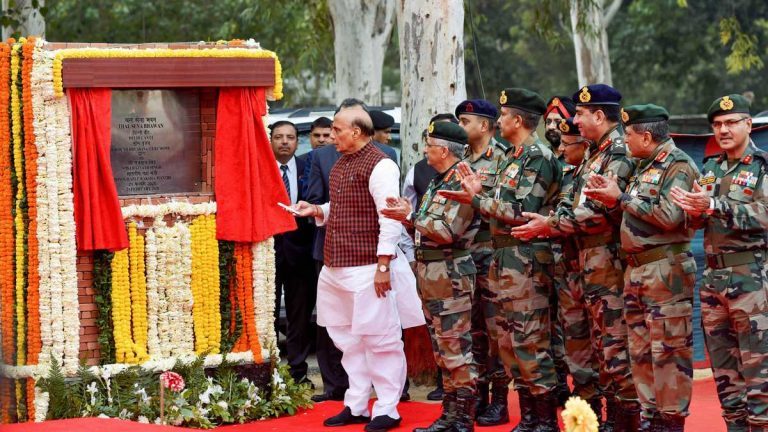
Army Headquarters, which is currently is spread over several pockets i.e. South Block, Sena Bhawan, Hutments Area, RK Puram, Shankar Vihar and other places, will finally get one dedicated space as the foundation stone of the new Army Headquarters ‘Thal Sena Bhawan’ at Delhi Cantt. was recently laid by Raksha Mantri Rajnath Singh. The new building, proposed in an area of 39 acres, has been conceptualised as a multi-storey green building, adopting Green Rating for Integrated Habitat Assessment (GRIHA) norms. Approx. 7.5 lakh square meters of area will be constructed to house the office complex and parking.

Addressing soldiers on the occasion, Singh said, all the departments of the Army as well as the Department of Military Affairs will come under one roof and collectively contribute towards national security, besides effectively dealing with defence-related issues. He added that the new building will play a significant role in saving valuable resources and contribute to administrative efficiency. Raksha Mantri termed the foundation stone of the new building as a ‘source of inspiration that will remind the people of the country about the sacrifices made by our soldiers’.

Rajnath Singh credited the Armed Forces personnel for making an invaluable contribution towards nation building, saying that India has emerged as one of the most powerful nations due to the sacrifices made by the soldiers. He hoped that the new building will not just be an edifice of Army personnel and civilian defence staff, but will inspire the people to achieve new goals with renewed passion and enthusiasm.

Raksha Mantri also underlined the importance of greater jointness and integration among the Armed Forces, noting that the appointment of Chief of the Defence Staff and creation of Department of Military Affairs are some of the important steps in that direction. He expressed confidence that this jointness will help in increasing the military capabilities of the country and bring more synergy in handling defence-related issues.

The building, expected to be constructed in five years, will house offices, residential complex for security personnel with basic amenities. More than 1,700 officers both military & civilian and 1,300 sub staff will be accommodated in the new building.

State of India’s Birds 2020: More Peacocks and Sparrows, fewer Vultures and Eagles

India’s national bird, the Indian Peafowl, has increased dramatically over the past decades. In contrast, 50% of other Indian species of birds have declined over this time period. These are some findings from the State of India’s Birds 2020. This pioneering report assesses the status of 867 Indian birds using a massive database of information contributed by birdwatchers.

The report is remarkable for utilising citizen science data to assess the distribution and trends in abundance of birds that regularly occur in India.

It is the culmination of a collaboration between ten research and conservation organisations within the country, spanning both governmental and non-governmental institutions: Ashoka Trust for Research in Ecology and the Environment (ATREE), Bombay Natural History Society (BNHS), Foundation for Ecological Security (FES), National Biodiversity Authority (NBA), National Centre for Biological Sciences (NCBS-TIFR), Nature Conservation Foundation (NCF), Sálim Ali Centre for Ornithology and Natural History (SACON), Wetlands International South Asia (WI-SA), Wildlife Institute of India (WII) and World Wide Fund for Nature India (WWF-India).

Using data uploaded by birdwatchers to the online platform eBird, the report identifies species that are high in conservation concern, and those that are doing relatively well. The analysis indicates 48% of species have remained stable or increasing in the long term, while 79% show declines in the last five years. In some welcome news, the House Sparrow was found to be roughly stable across the country as a whole, although declining in the major cities. In all, 101 species have been classified as of high conservation concern. “The report highlights common species that are declining sharply; these need conservation attention before their numbers reduce further,” says Dr R Jayapal (SACON).

The groups that show the greatest decline are raptors, migratory shorebirds, and habitat specialists, among others. The overall decline in species demands research into the causes, and action to protect the high concern species. This calls for attention from conservation policy, management and funding. Dr Dhananjai Mohan (WII) says, “Earlier, many conservation decisions pertaining to birds were not based on much evidence; this report helps to bring much-needed data to bear on these issues.”

With their ubiquity and ecological importance, birds are excellent indicators of the state of our natural world and potent cultural symbols of nature. The report is a significant step forward in  our understanding of India’s rich and varied biodiversity and its conservation. It is also a step toward utilising more citizen science with a sound scientific approach in the conservation space. “We hope that this information translates into many voices being raised for bird conservation, both among conservation bodies, and the general public,” says Dr Mousumi Ghosh (NCBS-TIFR), part of the team who worked on the report.

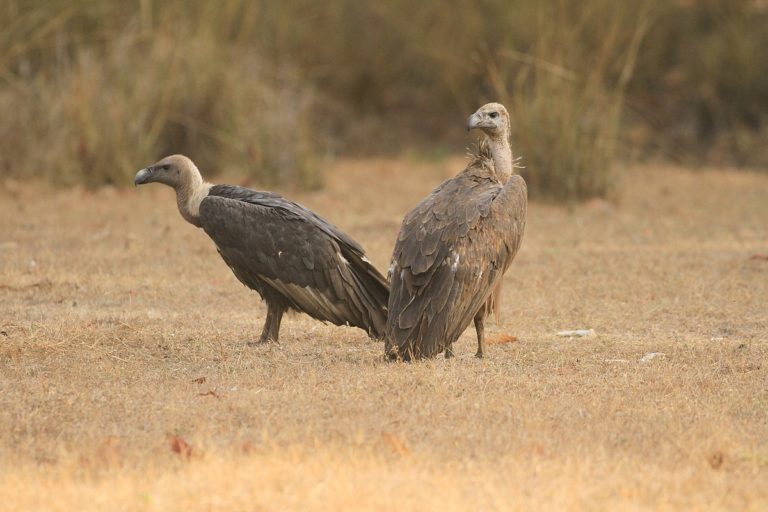
Species that have suffered the highest declines in the past 25+ years:

White-rumped Vulture

Richard’s Pipit

Indian Vulture

Large-billed Leaf Warbler

Pacific Golden Plover

Curlew Sandpiper

Species that have increased the most in the past 25+ years:

Rosy Starling

Feral Pigeon

Glossy Ibis

Plain Prinia

Ashy Prinia

Indian Peafowl

The report relies on more than 10 million observations contributed by over 15,500 birdwatchers, which is a testament to the passion of nature-lovers in the country, and suggests there is massive potential for increased public involvement in conservation monitoring. This is especially important in light of the insufficient data on some species, and the report calls for greater collaboration between researchers and the larger public. Dr Girish Jathar (BNHS) says, “Gathering such information across a huge country like India is impossible without the participation of birdwatchers.”

‘Naya’ Pakistan finds novel ways to accommodate terrorists

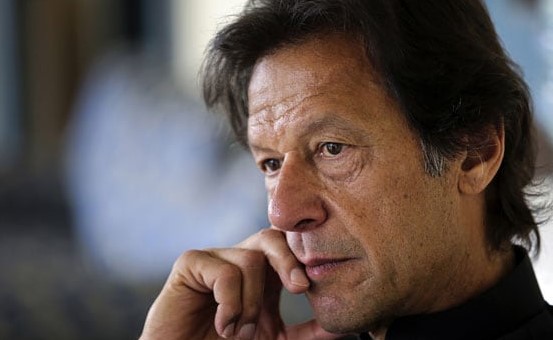
Just the other day Pakistan Prime Minister Imran Khan announced that there are no safe havens for terrorists in his country and on the face of it, his claim sounds convincing because many high-profile terrorists suddenly seem to have fled Pakistan!

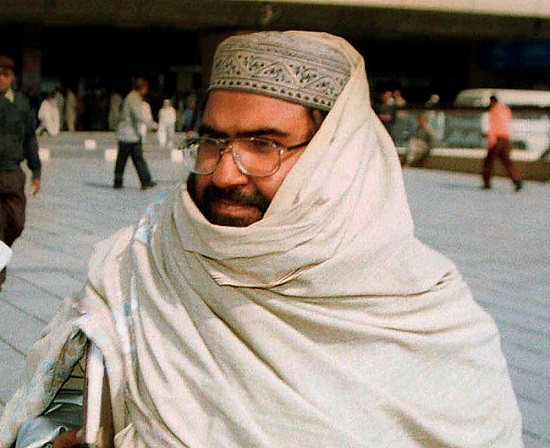
Readers would recall that after last year’s terrorist car bomb attack in Pulwama, Jammu and Kashmir, when CNN asked Pakistan Foreign Minister Shah Mehmood Qureshi about the whereabouts of its mastermind Maulana Masood Azhar, Qureshi confirmed that “He (Masood Azhar) is in Pakistan, according to my information” and then went on to say “He is unwell to the extent that he can’t leave his house, because he’s really unwell.” Masood Azhar is the chief of Jaish-e-Mohammad (JeM).

But a year down the line we find Islamabad telling Financial Action Task Force (FATF) that not only Azhar, (who was supposed to be “unwell to the extent that he can’t leave his house,”) but his entire family is “missing.” Could it be that this UN designated global terrorist has ‘fled’ Pakistan as he feared persecution in Khan’s ‘Naya Pakistan”? The same seems to be the case with former Tehreek-e-Taliban Pakistan (TTP) and Jamaat-ul-Ahrar (JuA) spokesperson Ehsanullah Ehsan whose terrorist outfit was responsible for the Army School Peshawar massacre in which 132 students and eight staff members lost their lives. He was also behind the cowardly and unsuccessful attempt to murder Nobel Prize winner Malala Yousafzai.

Ehsan had apparently ‘surrendered’ to the Pakistan Army three years ago and for reasons unknown, instead of being lodged in a jail as one would have expected, he was accommodated in a ‘safe house’ alongwith his family. The Pakistan Army decided that Ehsan would be tried by a military court but once again for inexplicable reasons, Rawalpindi didn’t even care to file a charge-sheet against this unrepentant murderer. So, could it be that despite enjoying a blissful life with his wife and children without any fear of being brought to justice for his terror related acts, Ehsan still chose to fly the coop alongwith his family because he feared that Khan would make an example out of him?

Speaking of making examples, by convicting Lashkar-e-Taiba (LeT) co-founder and the 2008 Mumbai attack mastermind Hafiz Saeed on whom the US State Department has announced a bounty of $10 million, Pakistan has shown to the world how serious it is when it comes to dealing with those who plan, perpetuate or finance terrorist activities. Having found Saeed and one of his associates guilty on two counts of terror financing and money laundering, a Pakistani court has sentenced both to five and half years in prison on each count. Both have also been fined a sum of Rs 15,000 each. But, since both sentences will run concurrently, the duo will only have to serve for five and a half years each in prison and remission for good behaviour will reduce this period significantly.

Since Pakistan is itself a victim of terrorism, why its courts are still so casual and lenient while dealing with terrorism related cases is difficult to explain. Whereas Khan may boast about Pakistan having a robust and independent judiciary, there is very strong evidence of Rawalpindi’s interference in the judicial process. Then, last year we heard Khan saying that “Until we came into power, the governments did not have the political will (to act against Pakistan-based terrorist groups)” and admitting “we still have about 30,000-40,000 armed people who have been trained and fought in some part of Afghanistan or Kashmir.”

Today, when PM Khan says that there are no more safe havens for terrorists in Pakistan, one is tempted to ask him as to where has this humungous body of “30,000 – 40,000 armed people” gone? Is it that just like the Jaish-e-Mohammad chief and former TTP and JuA spokesperson, these veterans of irregular warfare in Afghanistan and Kashmir too have fled Pakistan out of fear and simply disappeared without any trace? Or is it just that they have been instructed by Rawalpindi to lie low and cool their heels till the FATF meet concludes? Could Khan’s threat that “This government will not allow Pakistan’s land to be used for any kind of outside terrorism” forced those who have “fought in some part of Afghanistan or Kashmir” to leave the country to search for new safe havens?

A supposedly ailing Pakistan-based terrorist leader who could be a source of embarrassment to the government at FATF meeting suddenly goes ‘missing’. Another terrorist who had a hand in the murder of 132 innocent students negotiated his ‘surrender’ with the Pakistan Army and then manages to escape from custody, while a terrorist with $10 million bounty for master-minding the Mumbai attacks that left 166 dead and 293 injured is instead tried only for money laundering and terror financing, and given such a lenient sentence that makes mockery of the law.

Welcome to Imran Khan’s ‘Naya Pakistan’!

It’s time Imran Khan gets realistic about Pakistan and gets his priorities right

Pakistan’s Prime Minister Imran Khan has sent out a warning to the world that his nation is facing an eminent refugee crisis on its eastern borders with India. “We are worried there not only could be a refugee crisis, we are worried it could lead to a conflict between two nuclear-armed countries,” Reuters quoted Khan as saying.  “Our country will not be able to accommodate more refugees,” he added while urging the world to, “step in now.”

This comes across as the most bizarre among all the outlandish statements targeting India that Imran Khan has made during his premiership.

Of late, the frequency of vitriolic statements by him has increased to an extent that he is possibly talking of nothing other than India and spewing the most disgusting and false venom with every word that he utters. It is so because of frustration at the world not taking any cognisance of his words and the fact that he is under terrible stress due to the possibility of his removal and imprisonment by the Pakistan Army. He feels that by targeting India all the time he can deflect the pressure from his own self.

This is not the first time that Imran Khan has made a statement about refugee influx from India. Earlier, in mid-December 2019, he had said in an international forum that millions of Muslims living in India would be forced to leave as a result of the new Citizenship Law enacted by the parliament of the country and the ongoing curfew in Kashmir. He termed the predicted catastrophe as, “a refugee crisis that would dwarf other crises.” At that stage also, he called upon the international community to “step in now.” “We in Pakistan are not just worried that there will be a refugee crisis. We are worried that this could lead to a conflict, a conflict between two nuclear-armed countries,” Khan had said then too.

The constant repetitions make it apparent that Khan considers this line of thought as his best bet for India baiting in the international arena. He actually feels that he can influence the international community into moving against India with such pathetic half truths. In the history of international politics and diplomacy there would be no example of a bigger double-speak no better example of “pot calling the kettle black.”

India has been compelled to bring out the amendments in its Citizenship Laws because the neighbouring Islamic countries have been unable to secure the right of the people of religious minorities residing there. These minorities are coming into India as refugees in large numbers and hence the need to look after their interests through proper legislation which has taken the form of Citizenship (Amendment) Act, 2019 — popularly known as the CAA. The biggest influx of people of minority communities has been from Pakistan and continues to be so. Even as Imran Khan was making his obnoxious statement, Indian newspapers were carrying details of 50 Hindu families that have arrived from Pakistan on Sunday, 16th February and are seeking refuge and citizenship in India. They have temporarily been accommodated in Gurdwara Majnu Ka Tilla in New Delhi.

Imran Khan also seems to have conveniently forgotten that his own uncle, General AAK Niazi, already holds a record so far as engineering of refugees is concerned. It was in his watch that millions were forced to flee East Pakistan (now Bangladesh) to India in 1970-71.

While refugees from Pakistan coming to India is very real problem with hundreds of thousands already settled here, what Imran Khan is trying to sell to the international community is a hypothesis, a supposition that has no precedent whatsoever.

The Kashmiris who went to Pakistan under the lure of so-called Jihad are leading a terrible life of penury there, and at great risk, they are taking the Nepal and Afghanistan route to come back to India along with their families. Under these circumstances who from Kashmir is likely to even think of going to Pakistan? Imran Khan himself says that the people of Kashmir are being suppressed since the last 200 days, surely this was enough time for them to start the exodus to Pakistan should they have felt the need to do so, can he name even one person who has gone there? So far as the other Muslims of India are concerned, well, they will never leave India and never ever think of going to Pakistan. So, Imran Khan can rest easy, he will under no circumstances get an opportunity to show his administrative skills in management of refugees from India.

In fact, it is India that should be worried about an unprecedented refugee influx from Pakistan. There is a distinct possibility of an exodus towards India from Balochistan, Sindh, NWFP (North-West Frontier Province) and Gilgit-Baltistan. That the Ahmedias, Shias, Hazaras, Balochs, Baltis and Pashtuns of Pakistan will also follow their fellow citizens of the Hindus, Sikhs, Christian, Buddhists and Jain communities to India is well within the realm of reality. These hapless citizens of Pakistan are suffering immensely under the yoke of the Punjabi dominant federal government and the Pakistan Army. The reality is that if Imran were to open borders of his country even for an hour, half of Pakistan would get to India. Indian Kashmir, on the other hand, is attaining one progressive milestone after the other after breaking down the shackles of a restrictive Pakistan driven leadership.

If Imran Khan were to give to the people of Balochistan, NWFP, Sindh and Gilgit-Baltistan even a fraction of what he demands for Kashmir from India all the time then his country would not be in the dilapidated state that it is. He is building castles in the air while his country looks towards him for much needed and much promised resurrection as “Naya Pakistan.” Instead of wasting his energy in futile talk Khan should start taking steps to ensure that his country protects its sovereignty and integrity that is severely threatened. #UnreliablePakistan need more than India bashing and India hallucination to come out of the quagmire that it is in presently.

Deepika Padukone’s first look as Kapil Dev’s wife Romi in film on ’83 world cup win

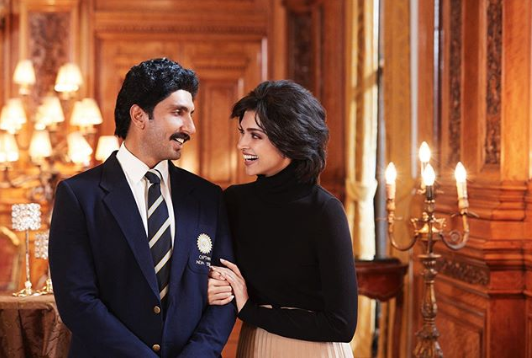
Social media was today abuzz with Deepika Padukone’s first look as Romi Bhatia. Ranveer Singh, who has been routinely introducing the character posters from his upcoming film 83, took to social media to share wife Deepika Padukone’s first look from the Kabir Khan’s sports drama.

A picture of the two has got surfaced online and is going viral. In the pic Ranveer is seen dressed in formal outfit white shirt paired with a tie and the official Indian captain blazer while Deepika is seen clad in a black turtle neck tee paired with a beige coloured skirt.

Touted as the “biggest sports film” of the country, 83 chronicles Indian cricket team’s historic 1983 World Cup triumph against the West Indies team.

Deepika had previously opened up on essaying the role of Romi Bhatia in an interview. Describing Romi Dev as “extremely refreshing, intelligent, knowledgeable, and funny,” Deepika said, “Having a solid support system is important as it allows the person to work without holding back, without any kind of emotional burden. In that sense, Romi ji has played an extremely important part in Kapil Dev’s success.” She added Romi’s presence in Dev’s life has also kept him grounded.

No sooner than the photo was shared on social media, fans started pouring in hearts, likes, awestruck and fire emojis from all quarters.

83 is slated to release on 10 April. Previously, Ranveer Singh introduced the character posters of Dhairya Karwa, Adinath Kothare, Chirag Patil, Tahir Raj Bhasin, Jiiva, Saqib Saleem, Jatin Sarna, Nishant Dahiya, Harrdy Sandhu, Ammy Virk, Sahil Khatter and Dinker Sharma.

Chirag Patil will be seen essaying the role of his father and former Indian cricketer Sandeep Patil. Tahir Raj Bhasin will play Sunil Gavaskar. Jiiva will be seen as the top scorer in the final match of the 1983 world cup against West Indies, K Srikkanth. Saqib Saleem will play Mohinder Amarnath, and Jatin Sarna will portray Yashpal Sharma, whereas Dinker will play Kirti Azad.

BRAS captures key Pak Army outpost, 16 Pak soldiers killed in Balochistan

Freedom fighters battling for an independent Balochistan registered a major victory against occupying Pakistani forces on Tuesday night when they captured several military outposts held by the Pakistan Army in Balochistan.

The office of Baloch Raaji Aajoi-e-Sangar’s (BRAS) spokesperson Baloch Khan in a statement released the details of Tuesday night’s operation against Pakistani occupying forces in Drachko, Tankol Kaor in Dasht, Balochistan. BRAS is an alliance of the Baloch Liberation Army, Balochistan Liberation Front, Baloch Republican Army and the Baloch Republican Guard that is fighting for Balochistan’s independence.

Baloch Khan, the official spokesperson of BRAS, said that after a fierce attack multiple Pakistani military outposts were captured by the BRAS fighters. “At least 16 personnel of Pakistani military were killed in the battle whereas all outposts were completely destroyed. With successful execution of the plan, BRAS fighters attacked the military outposts and forward operating bases of the Pakistani military on Tuesday night from multiple directions. The enemy installations were completely destroyed and at least 16 enemy personnel were killed in the attack. A large cache of ammunition was also seized in the operation,” said Baloch Khan.

Last night’s attack was part of Operation AasRech. The particular military bases and outposts were heavily involved in aiding and abetting death squads and the fanatic Jihadi groups like the Lashkar-e-Taiba. BRAS has made it clear that no leniency will be shown against such elements,” he explained further.

Baloch Khan added that formation of an organised and united national force is progressing extremely well in the form of BRAS. The organisation continues to significantly improve its strength and structure. The Baloch allied forces will continue to target occupying forces of Pakistan and their abettors until the formation of an independent and peaceful Baloch motherland.

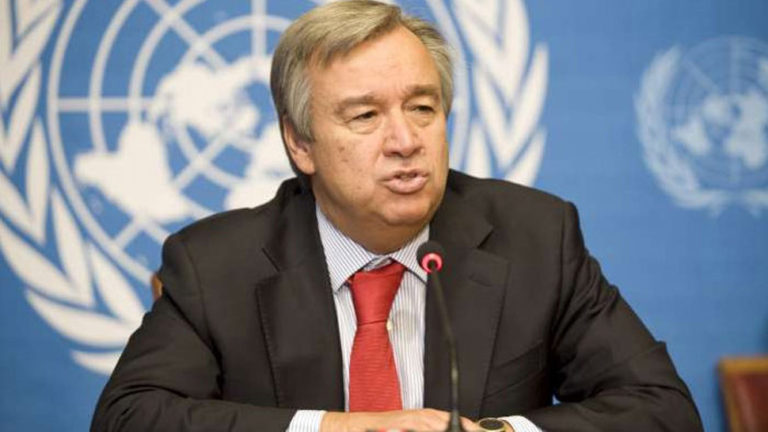
Khalil Baloch writes an Open Letter to UN’s António Guterres

H.E. Mr. António Guterres
Secretary-General
United Nations

Subject: Your Pakistan visit amidst the grave humanitarian crisis in Balochistan

Dear Mr. António Guterres,

After the Second World War, the formation of United Nations brought new hopes for solving world’s problems through this institution. It was at this juncture of history that many colonial powers were weakened and could not maintain control over their colonies. Consequently, many new states came into existence. India was declared free from British colonialism and Balochistan also gained its independence as a free country. But Balochistan’s freedom was short-lived and our new born neighbour Pakistan that had inherited British military power invaded and occupied Balochistan and forced the indigenous people into slavery.

This happened only two years after the establishment of United Nations. The people of Balochistan were not only robbed of their freedom but Pakistan also began the exploitation of marine and land resources of Balochistan, which continues even today. Pakistan also started a systematic genocide of the Baloch people that has increased in the past 20 years as silence of the United Nations on this matter has only encouraged Pakistan.

Today, Pakistan the murderer of oppressed nations and perpetrator of global terrorism, has time and again demonstrated zero regards for being a member state of the UN. It neither meets the historical and cultural requirements of a state nor does it have the legitimacy of a confederation formed with a mutual accord among nations. It is established on the basis of religious fundamentalism and anti-humanitarianism.

Sir, on the occasion of your visit to Pakistan, we the people of Balochistan want to remind you that as an occupied nation we have strong hopes that you will address the ongoing genocide, the war crimes and the horrific crimes against humanity across Balochistan. But so far, it seems your visit was limited to knowing only Islamabad’s narrative and the lies of Pakistani rulers to cover up their crimes. Your Highness, this amounts to a historic injustice to the people of Balochistan.

Your visit is at a time when Pakistani forces and intelligence agencies are committing genocide with impunity and the ground for Baloch political voices has almost been eliminated.

The Working Group on Enforced or Involuntary Disappearances (WGEID) has confirmed requests for thousands of forced disappearances of people from different walks of life in Balochistan. These are cases where families have risked serious danger in filing their cases with the group. The number of disappeared over the years has exceeded 40,000.

Top government officials in the past including Federal Home Minister Aftab Sherpao, former Balochistan Home Minister Sarfaraz Bugti and Secretary Interior Akbar Hussain Durrani have openly acknowledged to the media about the arrest of more than 20,000 people during their tenures. No missing person has been brought out or presented to the court. Similarly, a devastating high number of extrajudicial killings have crossed 5,000 dead, and tortured bodies. According to a BBC report, more than 1,000 Baloch were killed by Pakistani state forces between 2011 to 2016 alone.

In 2014, 169 bodies were discovered from three mass graves in Khuzdar. Only three of the dead were identified as “missing”, among those who were abducted from different areas by the Pakistani Army. The rest of the bodies were neither identified nor sent to have their DNA tests done.

Pashtuns and Sindhis are also suffering from nothing less but a genocide. Like the Baloch, thousands of Pashtuns and hundreds of Sindhis have been killed or imprisoned in Pakistan Army prisons.

Your Excellency, in Mastung, people have setup a cemetery that has been named as the graveyard of “Unknown People”. The fact is that these are the missing persons who were brutally killed by the Pakistan Army. To this day, the state of Pakistan has denied DNA tests of these bodies, because doing so will prove their disappearance and in many cases further validate the witnesses accounts of their abduction by the Pakistan Army and its intelligence agencies.

Things got even worse when China stepped in and became a partner with Pakistan for exploiting Balochistan’s resources and its strategic location. After the China-Pakistan Economic Corridor (CPEC) was announced, Pakistan Army shifted its Jihadi proxies to Balochistan to crush the Baloch national movement. The idea was to contaminate Balochistan’s secular society and its religious tolerance. Many Islamic extremist organizations, including ISIS, have regular training camps and launchpads in Balochistan under the direct supervision of the Pakistan Army.

Recently, Pakistan’s current Prime Minister Imran Khan has said he will sell Balochistan’s resources and pay for Pakistan’s debts.

These so-called development projects are depriving the local Baloch of their rights and are destroying the environment of Balochistan. Pakistan’s apathetic approach could be understood from its nuclear tests conducted in 1998 where the state did not even bother to evacuate locals from the surrounding areas. Balochistan has the highest cancer rate in the world and until today, the state does not allow any research and documentation with regards to cancer caused by these nuclear tests.

Dear Sir, the burning issue at this moment is the danger of turning Baloch population of Gwadar into a minority in their own land. Under CPEC, millions of people from China and Pakistan are planned to be settled in Gwadar. This is to ensure a demographic change to further their drastic plans. In the first phase, the local population on the sides of the CPEC project route have been forcibly displaced. Pakistan has transformed Balochistan into a “No Go” area. Human rights organizations, social workers and the international media have been banned from entering Balochistan for the past twenty years.

We request you to visit Balochistan on the issues of missing persons, extra-judicial killings, exploitation of our national resources and the environmental disaster underway due to the state’s destructive policies.

Sincerely,

Khalil Baloch
Chairman, Baloch National Movement (BNM)

India and Norway strengthen partnership on blue economy

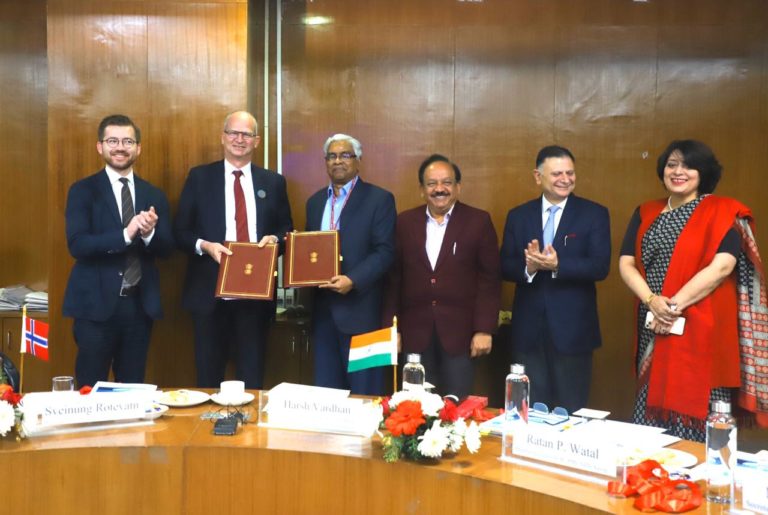
Paving way for exploring new areas of collaboration, India’s Minister for Earth Sciences Dr. Harsh Vardhan, and Norway’s Minister for Climate and Environment, H.E. Sveinung Rotevatn, recently opened the India-Norway Task Force on Blue Economy for Sustainable Development. The two countries also commenced a new collaboration on Integrated Ocean Management & Research.

As a part of the Joint Initiatives, several projects on combating Marine Litter are already being implemented. The two governments signed a Letter of Intent confirming that they will develop a new framework for collaboration on Integrated Ocean Management and Research. The letter of intent was signed in the presence of Ratan P. Watal, Member Secretary, EAC to PM; H.E. Hans Jacob Frydenlund, the Norwegian Ambassador to India; Nina Rør, Deputy Director General, Ministry of Climate and Environment, Norway; M. Rajeevan, Secretary, Ministry of Earth Sciences, Govt. of India and Dr. Sumita Misra, Senior Adviser, EAC to PM.

 “Managing the resources in the oceans in a sustainable manner is a matter of mutual interest and concern for both countries. The fact that Norway and India are commencing a new initiative is a signal that the cooperation between the two countries is growing even stronger, making the Indo-Norwegian Ocean Cooperation a key pillar in the bilateral relationship,” said Dr. Harsh Vardhan at the signing ceremony.

In addition, Minister Rotevatn highlighted that “the Norway-India cooperation in the field of oceans is based on our shared interest in the blue economy and the sustainable use of marine resources, as well as a desire to advance scientific knowledge about our oceans. Norway and India are engaging on ways to ensure integrated ocean management at the government level. At the same time, Norwegian companies and private institutions are increasingly seeking opportunities with Indian counterparts, making India an even more significant partner for Norway.”

The India-Norway Task Force on Blue Economy for Sustainable Development was launched jointly by the Indian Prime Minister Narendra Modi, and the Norwegian Prime Minister Erna Solberg, during her visit to India in January 2019. The purpose of the task force is to develop and follow up joint initiatives between the two countries. The strength and value added of the India-Norway Joint Task Force on Blue Economy is its ability to mobilise relevant stakeholders from both Norway and India at the highest level, and ensure continued commitment and progress across ministries and agencies

Hospitality sector needs to adopt sustainable practices for responsible tourism

The exuberance of Indian culture and the astonishing diversity of people, nature, and cuisine make it a land worth exploring for tourists. Undoubtedly, India’s tourism potential is huge and every passing year there is an increasing influx of tourists in the country. Given the scenario, it’s not surprising that India’s rank in Travel & Tourism Competitiveness Index (TTCI) of World Economic Forum has moved from 65 in 2013 to 34 in 2019. Also, Foreign Tourist Arrivals (FTAs) during the period January- November 2019 were 96,69,633 as compared to 93,66,478 in January- November 2018, registering a growth of 3.2%. It also resulted in a significant increase in Foreign Exchange Earnings (FEEs). During the period January- November 2019 revenue generated from foreign tourists was Rs. 1,88,364 Crore as compared to Rs. 1,75,407 Crore in January- November 2018 registering a growth of 7.4%.

However, with increasing number of tourists, particularly in popular destinations, there has been a tremendous pressure on the natural ecosystem of a place. Be it depleting ground water table, increase in vehicular pollution or waste generation, various tourist destinations across the country are facing  severe ecological crisis, which requires immediate steps to develop and practise sustainable tourism activities.

To explore various facets of sustainable tourism, Banarsidas Chandiwala Institute of Hotel Management and Catering Technology (BCIHMCT) recently organised 10th edition of its India International Hotel Travel and Tourism Research Conference series focusing on the theme “Transforming Hospitality & Tourism: Sustainable Goals & Strategies for Future”.  The organisers were of the view that ‘with the rapid growth of hospitality, travel and tourism business, there is an urgent need to address all aspects of sustainability and to develop and incorporate strategies for achieving sustainable development goals’. “Through this theme, an effort is being made to include constructive deliberations on the issues related economic, social, environmental and technological sustainability in various aspects of hospitality, travel and tourism sectors,” said Prof. Raj Bhandari, Chairman, BCIHMCT.

During the two-day conference organised on February 14 and 15, 2020 several prominent international and Indian speakers participated. This included Prof. Francisco Dias from Portugal, Dr. Ali Afshar from Iran, Dr. Yanki Hartijasti from Indonesia, and Dr. Naira Mkrtchyan from Armenia. The conference included formal presentations, workshops, awards and other industry related activities and was attended by approximately 400 participants. Prof. Francisco Dias in his keynote address shared about the role of cinema and tourism and how it has a great potential to promote a particular destination or industry. Rahul Prabhakar from ITC Hotels shared about various steps taken by ITC group to promote sustainability in their hotels be it recycling of waste, energy conservation or tackling indoor air pollution. The chief guest of the inaugural ceremony was Anil Bhandari, former CMD, India Tourism Development Corporation (ITDC).

“The conference brought together a unique mix of experts, researchers and decision makers both from academia and industry across the globe to exchange their knowledge, experience and research innovations in Hospitality and Tourism Sustainable Practices. The future strategies need to be devised to achieve sustainable development goals aimed at creating definite impact on hospitality, travel and tourism businesses,” said Dr. Arvind Kumar Saraswati, Assistant Professor, BCIHMCT and conference convenor. He also informed that for the first time environment films were also screened as part of the conference, in collaboration with Woodpecker International Film Festival.

Why print ₹1 currency notes when it defies all logic?

Every once in a while, we receive rather unexpected news at the most unexpected times! And often, such news reflects incomprehensible travesty of common sense, let alone macro-finance prudence.

Some years ago, soon after the November 2016 Demonetisation saga, the Indian Government decided to issue currency notes in the unprecedented denomination of Rs 2,000, ousting the then dominant Rs 500 and Rs 1,000 notes, citing three principal  objectives, ostensibly to (1) ‘curb’ black money, (2) ‘deter’ counterfeiting and (3) ‘thwart” terror financing.  

Several official government and RBI reports confirm and the ground realities prove that all three objectives have failed. Also, the exact opposite results have come to be: (1) unaccounted commercial transactions generating black money have risen sharply; (2) the Rs 2,000 currency is the most counterfeited (being the most profitable) Indian currency note; and (3) the exercise has had no impact on deterring terror funding. 

It is therefore fair to surmise that this entire ill-considered, quixotic exercise of introducing this high-value note has proved to be a serious and costly misadventure, holding the prospect of eroding the government’s credibility.

In this context, the attention of readers is drawn to the deeply-researched, constructive article by this Author, published about a year ago on News Intervention which explains the genesis of the misadventure

1. Official Announcement of Issuance

India’s Ministry of Financehas notified ‘Printing of One Rupee Currency Notes Rules, 2020’ vide Gazette Notification G.S.R. 95(E) dated February 7th, 2020. The One Rupee notes shall be printed at the note printing presses for issue under the authority of government of India for circulation.

New One Rupee Currency Note (2020)

The One Rupee currency note would be rectangular (97 x 63 mm) and printed using 90 gsm indigenous rag content security paper, 110 micros thick. It will also have multi-tonal watermarks with Ashoka Pillar in the window. The overall colour of One Rupee Currency note will be predominantly pink green on obverse and reverse in combination with others.

A one rupee currency note carries the signature of the Finance Secretary as it is issued by the Government of India through the Ministry of Finance, while all higher denomination notes are issued by the Reserve Bank of India, bearing the signature of RBI Governor.

2. Rationale

No explanation is available from government sources up to the present time, hence the rationale for its introduction is left to the judgement of readers.

3. Historical Background, Nostalgia

Currency notes were introduced in India in 1861, and the one-rupee note was introduced by the British on November 30, 1917.

According to the Reserve Bank of India, the printing of this note was first stopped in 1926 because its printing was costlier than its value i.e., it lacked seigniorage. After that, its printing was resumed in 1940 but discontinued in 1994. Yet again, it was reintroduced in 2015 after a gap of 22 years. A rather chequered existence!

The image below brings nostalgic memories of a bygone era, when a one rupee note was a prized possession owing to its considerable purchasing power. Few people in modern times would believe that they were issued in the form of perforated notes bound together, as the image below of the century-old version shows!

And now, we have this delightful news that the nostalgic One Rupee currency note is being re-introduced with effect from early February 2020! Is it another imprudent decision, devoid of merit and utility? People are free to draw their own inference.

4. Lifespan of Physical Money, Cost Benefit Analysis

The average lifespan of a currency note in India is about one year. It is less for lower denomination notes and more for higher denomination notes owing to their respective velocity of circulation as well as manner of handling.

Seigniorage is a specialised term which represents the revenue earned by a central bank from the issue of money – the difference between the face value of the coin or banknote and the cost to produce and issue it.

As far back as 1926, the one rupee currency note was discontinued as described in para 3 above owing to lack of seigniorage. It is rather strange that the government has chosen to re-launch this note at the present time, when the cost of producing the note is much higher and its usage inconsequential. As is well known, the lifespan of coins is over twenty years, they avoid frequent re-issue which is the case with banknotes, thus reducing administrative costs to the issuing bank. Issuance of coins generates true seigniorage which is not the case with low denomination currency notes.  Finally, coins can always be recycled at ‘end of life’ and minted again with minimal loss of metal.

5. India’s emerging needs of Physical Money

Owing to the rapid decline in the intrinsic purchasing power of the Indian Rupee, the government decided several years ago to discontinue minting small denominations coins — lower than one rupee in unit value — that were in use historically.  Thus, India is one of the few countries worldwide which does not have sub-units of its currency, unlike for example, the US Dollar or EUR where one euro equals 100 cents.  Euro coins consist of eight denominations: 1, 2, 5, 10, 20 and 50 cents and 1 and 2 Euros. This is an existential reality we must get accustomed to and endure.

Notwithstanding the government’s ambitious thrust to migrate to cashless – or less cash – society, the make-up of commercial transactions across our vast country — especially in rural India — reflect a real, emerging need of physical money comprising currency and coins very different from what is presently offered. The sharply rising volume of currency notes in circulation in India from year to year since 2017 is testimony to this reality.

Thus, cash will undoubtedly continue to dominate, at least for the next 7-10 years, though the share of digital and mobile payment modes will continue to rise. The specific recommendations now put forth are summarised as follows:

1. Coins should continue to be issued in denominations of 1,2,5 and 10, with no currency issuance.

2. In addition, a new coin with denomination of Rs 20 should be issued. 1 and 2 both offer excellent seigniorage value.

3. Currency should be issued in just two standard sizes, one for lower values and the other for higher values, each of them in distinct colours, easily distinguishable even in poor light conditions and by people with poor levels of literacy.

4. Lower values would comprise four denominations: Rs 20, 50, 100 and 200.

5. Higher values would also comprise four denominations: Rs 500, 1,000, 2,000 and 5,000.

The valuable lessons learnt by commissioning Rs 2,000 (~ USD 27) denomination notes since November 2016 confirms that there is no real hazard in issuance of high value currency notes, including the new Rs 5,000 (~ USD 70) denomination now recommended.  However, it is emphatically reiterated that significantly enhanced, technology based security features must be incorporated in all currency notes issued prospectively – far more stringent than the seriously deficient features of the now disfavoured Rs 2,000 notes in which 7 of the 9 security features have been consistently breached by anti-national elements producing and supplying counterfeit supplies of this much vaunted denomination. 

Further, durable polymer based substrates with unique physical properties must be selected. Advanced printing processes and inks incorporating futuristic security elements must be adopted to ensure the authenticity and durability of the currency. These initiatives would significantly preclude counterfeiting even by skilled anti-national agencies – both within and outside our country – claiming expertise in this nefarious art.

On a lighter note, “The new Note will be equipped with several security features” mentioned in the government notification and alluded to at the outset are, in reality, unnecessary since there is no likelihood of counterfeiters wasting their talent and energies on mass producing a valueless denomination such as the one rupee note (~1.50 US cents) now launched. Quite frankly, it offers seriously negative seigniorage — and one would have expected concerned authorities to recognise this truth before announcing the launch of this distractionary ‘novelty’.

Conclusion

Having understood the real issues involved, people can gauge the merits of issuing the new one rupee currency notes vis a vis coins of the same denomination.  Time will show who will use the new notes, where and for what purposes – and equally important, whether its issuance offers any advantage to the issuer.

© CSS Rao 2020 All rights reserved.