Home Blog Page 41

Shehbaz Sharif’s UNGA speech on Islamophobia rings hollow

It’s an established fact that Pakistani speakers at the United Nations General Assembly [UNGA] repeatedly serve the same old wine brewed by infusing the Kashmir issue with the Palestine problem with a generous sprinkling of institutionalised persecution of Muslims in India with Islamophobia every year. Consequently, people with little appetite or patience for listening to a litany of repetitive remonstrations may have skipped the live viewing of Prime Minister Shehbaz Sharif’s speech this year, and I was one of them.
 
However, news carried by Pakistani media that with a whopping 1.37million views, Sharif’s speech ranked topmost among the world leaders’ speeches at UNGA streamed live intrigued me to view the same on YouTube as I presumed it would be something extraordinary.  That there was nothing groundbreaking in what he said did come as a big disappointment, but it was still worth the trouble as what Sharif said and the events that followed exposed the hollowness of Pakistan’s much touted global ‘war’ war against Islamophobia.  
 
In his UNGA address, Pakistan’s prime minister lamented “negative stereotyping of Muslims and acts of discrimination and violence against them,” and these are definitely matters of grave concern. However, who’s actually responsible for this is something that begs serious attention. Sharif would most certainly want the world to believe his unsubstantiated allegation that “the most alarming manifestation of Islamophobia is the Hindu supremacist agenda in India.” 
 
Islamabad takes a lot of pains to project itself as a consummate and uncompromising anti-Islamophobia crusader. However, in what can be accurately cited as a classic example of cutting the nose to spite the face, Pakistan’s congenital animosity towards India blinds both its politicians and Generals so badly that they often end up promoting Islamophobia.  
 
Readers would recall that in 2019, Pakistani politician Farhatullah Babar had posted a video on Twitter in which Gen Pervez Musharraf proudly accepted that “…In 1979, we had introduced religious militancy in Afghanistan to benefit Pakistan and to push [the] Soviet out of the country. We brought Mujahideen from all over the world, we trained them, supplied weapons. They were our heroes. Haqqani was our hero. Osama bin Laden was our hero.” [Emphasis added].

Islamophobia in Pakistan

Now, when a person who served both as Pakistan’s President as well as its army chief himself maligns Islam by directly linking it with unprovoked violence by coining the perverse “religious militancy” phrase, why blame others for spreading Islamophobia? Furthermore, by hailing Haqqani and Laden as Pakistan’s “heroes,” hasn’t he fuelled Islamophobic sentiments by linking these savage products of “religious militancy” responsible for murdering thousands of innocent civilians to jihad and thus maligned Islam?
 
Radical religious interpretation of Islam by the Taliban regime in Afghanistan, especially its poor record as regards human rights and the atrocious treatment of women is responsible for conveying a completely distorted impression of Islam and is promoting Islamophobia. Hence, Sharif rightly declared that Pakistan shares “the international expectation that the Afghan Interim Government would respect human rights, including rights of women.”
 
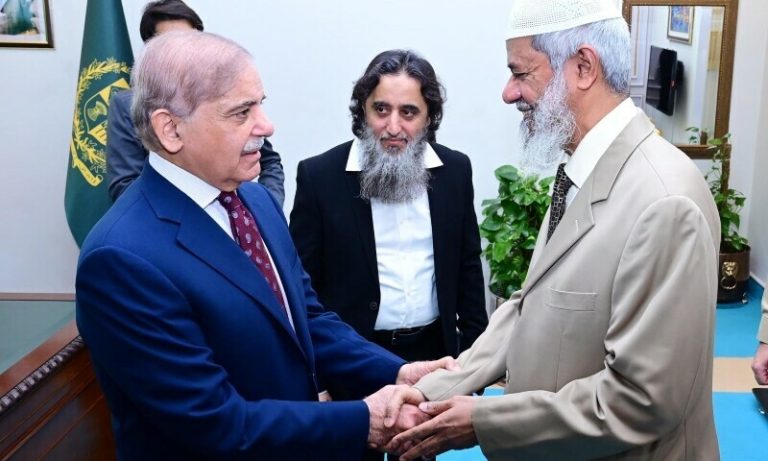
However, by rolling out the red carpet for ultra-orthodox and controversial televangelist Dr Zakir Naik presently on a month-long visit to Pakistan for Islamic preaching , the Sharif government is only encouraging religious fundamentalism. At a time when Pakistan is facing an unending spate of macabre incidents precipitated by radicalised religious ideology, like people accused of blasphemy not only being lynched by mobs but also being subjected to extra-judicial execution by police while lodged in jail or in fake encounters,  members of Ahmadiyya community being murdered solely for following their faith and their place of worship as well as graveyards being desecrated, a controversial preacher like Dr Naik is the last thing that the country needs at this point of time.
 
So, why did Islamabad officially invite Dr Naik? After seeing the extraordinary protocol courtesies extended to him, it’s apparent that since he’s a fugitive wanted by India’s National Investigation Agency [NIA] for his involvement in unlawful activities like funding terror and money laundering as well as promoting communal hatred, Islamabad’s invite was just to cock a snook at New Delhi.

A Political Tool

Its puerile decision to mock New Delhi by according Dr Naik the status of a state guest has backfired and ended up as another incident of cutting the nose to spite the face for Islamabad. When asked to felicitate young orphan girls at an event organised by the Pakistan Sweet Home Foundation, Dr Naik created a scene by objecting to the foundation’s Chairman Zamurrad Khan referring to the small orphan girls as his ‘daughters.” The humiliation that the little orphan girls would have experienced on being treated as untouchables would wrench anyone’s heart, but the visiting preacher remained unfazed!
 
Things didn’t end here. Saying that “You can’t touch them or call them your daughters” because for him these girls were “na-mahrams” [those with whom it’s lawful for a Muslim man to marry] Dr Naik walked off the stage without felicitating or interacting with them. During his meeting with Dr Naik after his arrival, Sharif had said, “Ummah-e-Muslima [community of Muslims] is proud of you.” But after his uncouth behavior during the Pakistan Sweet Home Foundation programme, one wonders how many Muslims would really be proud of him?
 
Doesn’t citing religious edicts by one who claims to be an authority on Islamic teachings to defend his insensitive behavior towards orphan girls of tender age, promote Islamophobia?  To the unversed, doesn’t it also wrongly portray Islam as being a misogynist religion? And with the Government of Pakistan maintaining a stoic silence on this highly objectionable issue, isn’t it apparent that the concern for the rights of Afghan women that Sharif expressed so glibly in his UNGA address was mere theatrics!
  
What Pakistan urgently needs today is not the likes of Dr Naik but someone who has the courage to spearhead a serious de-radicalisation campaign aimed at eradicating the deep rooted scourge of religious extremism that the Pakistan army introduced during the reign of Gen Zia ul Haq. Apologists may outrightly deny that the army and its spy agency ISI sowed seeds of religious extremism in Pakistan, but didn’t Gen Musharraf himself proudly admit that “We poisoned Pakistani civil society for 10 years when we fought the Soviets in Afghanistan in the 1980s”? [Emphasis added].
 
Any form of stereotyping people on the basis of their religious faith is unacceptable as it promotes prejudiced thinking, creates divisions within society and justifies motivated discrimination of the target group. So, while taking up cudgels against Islamophobia is indeed praiseworthy, trying to get even with adversaries by playing the Islamophobia card [à la Pakistan] is not only counterproductive but also downrightly immoral!   


Radical Islamist abducts & converts Hindu girl in Sindh

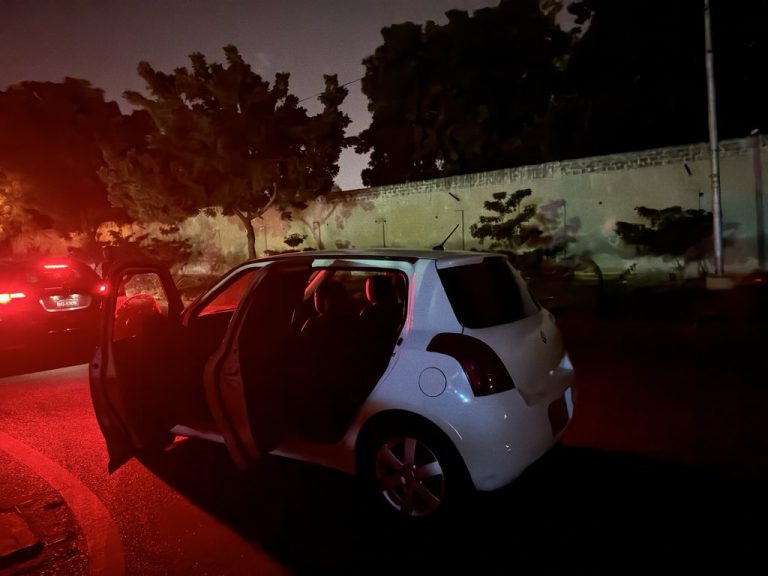
Divya Kumari, a young Hindu girl, was abducted from her home on the night of September 29, marking yet another tragic case in a disturbing pattern of violence against religious minorities in Pakistan. As of now, Divya remains missing, raising grave concerns about her safety.

This incident is particularly alarming as Divya is the third Hindu girl to be kidnapped from the Kalakot police station. Despite the clear evidence of her age—Divya’s birth certificate confirms she is just 16 years old—the police have shown a shocking level of negligence. Rather than promptly registering a First Information Report (FIR) for abduction under the applicable sections of the Man Child Marriage Act of 2013, authorities have relegated their responsibilities to mere formalities, aligning themselves with the oppressive demands of the very people who perpetrate these crimes.

The Deputy Inspector General (DIG) South Sindh has publicly demanded that the Chief Minister take action to ensure Divya Kumari’s safe return and to hold the accused accountable. Yet, this plea rings hollow in a system rife with indifference and complicity, where the lives and rights of Hindus are treated as expendable.

Sindh province, home to Pakistan’s largest Hindu population, has witnessed an alarming increase in cases of forced conversions and abductions. The disturbing trend is indicative of a broader agenda aimed at the systematic Islamization of religious minorities, which has contributed to a steep decline in their population within the Islamic Republic.

The rising tide of atrocities against Hindu women and girls is not merely a consequence of social unrest; it is a deliberate act of oppression that reflects the Paki establishment’s motive to convert its minorities. The ongoing silence and tacit approval from various institutions that should uphold justice only serve to exacerbate the plight of these communities.

It is a national disgrace that while the legal-political system is supposed to safeguard its citizens, it instead stands by as these heinous acts unfold. The forced abduction and conversion of Hindu girls like Divya Kumari underscore the urgent need for accountability and reform within Pakistan’s legal, political and social frameworks. Until decisive action is taken, the precarious condition of Hindus in Pakistan will only continue to worsen, leaving them vulnerable to the brutal realities of intolerance and violence.

Pak Army gunfire injures child in Kech; locals block CPEC Highway in protest

Tensions escalated in the Tujaban area of Kech district, Pak-occupied-Balochistan, as Pak forces once again unleashed their heavy-handed tactics on local communities. Last night, a shell fired by the Pak Army severely injured a young girl, sparking outrage among residents who responded by blocking the CPEC highway in protest.

The incident took place when a shell landed near the home of Chashambe, son of Muskan, gravely wounding his daughter. In critical condition, the child was immediately rushed to Karachi for medical treatment.

Angered by yet another reckless display of force by the Pak military, the local community swiftly mobilized, staging a sit-in on the M8 CPEC highway, effectively halting traffic. Protesters, fed up with the ongoing violence and constant military presence, have vowed to continue their demonstration until all military posts are removed from the area.

The Pakistan Army’s continuous aggression in POB, especially its reckless actions targeting civilian areas, has once again laid bare the brutal reality of life for Baloch residents living under the shadow of military occupation. Despite repeated, the Army persists in using POB as a battleground, leaving innocent civilians, including children, in the crossfire.

As the region struggles with enforced disappearances and arbitrary violence, the protestors’ demand for the removal of military outposts is a clear cry for freedom from the occupied-state’s oppressive grip. The CPEC highway, touted as Pakistan’s prized infrastructure project, has become a symbol of military dominance, rather than development, for the people of POB.

Pak Army’s aggressive military operations in POB leads to mass evacuations

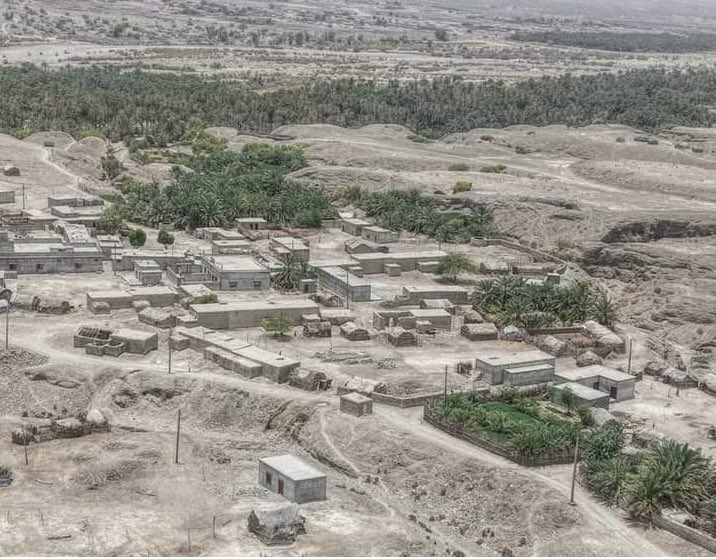
In Dera Bugti’s Sui tehsil, large contingents of Pakistan Army have moved into the area, prompting concerns about the impact on local communities. Pak-occupied Balochistan, long a hotbed of Pak military activity and suppression, is once again witnessing a major operation by Pakistan Army, with reports of mass evacuations and aggressive military manoeuvres.

The areas surrounding Sui, including Rais Tokh, Lanjo, Saghari, and the region stretching from Kashmore Road to Mohan Pat Road near the Kachi Canal, have been entirely sealed off by Pak military. Surveillance drones have been deployed to monitor the region from above, creating a sense of fear and insecurity among the residents.

In a troubling development, farmers and livestock owners in these areas have been ordered to vacate their homes, further highlighting the ongoing displacement of the local Baloch population. The Pak military has frequently been displacing civilians under the guise of “security operations,” with little regard for the long-term humanitarian impact on the region.

Reports from the ground suggest that over forty military trucks have entered the area, and sounds of gunfire and explosions have been heard near Rais Tokh, originating from nearby military outposts. The show of force has added to the growing resentment in the region, where people are already grappling with years of military occupation and exploitation of their natural resources by the Paki establishment.

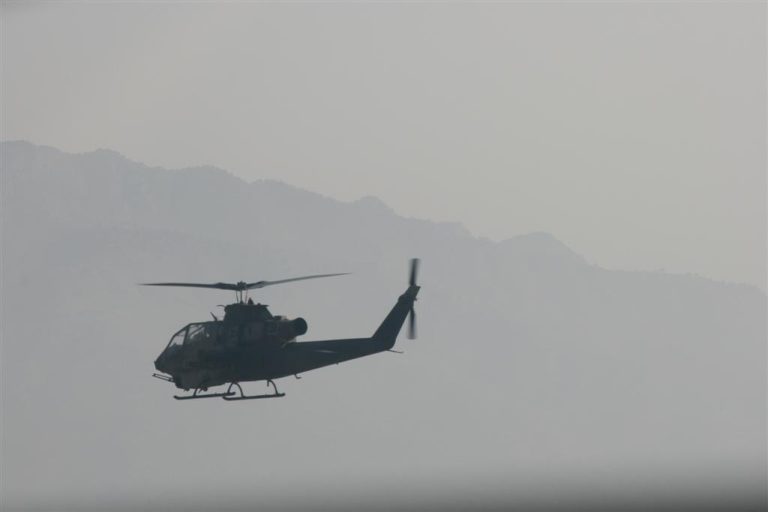
Furthermore, a full-scale military operation has been underway in Mastung district. Reportedly, continuous helicopter flights over the mountainous areas, with gunship helicopters shelling Koh Maran, Kabo, Talka Kawi, and surrounding regions.

The military operation, reportedly launched from the FC camp in Quetta. The Baloch people, already marginalized and oppressed by the Paki establishment, continue to suffer as these operations is another attempt by the Army to tighten its grip over POB.

As these operations unfold, POB’s plight as an occupied territory, exploited for its resources, continues to be a grim reality. The Pak military’s strategy of brute force further solidifies the view that the Baloch people are paying the price for Pak Punjabi elites’s ambitions.

Paki establishment targets Pashtun Tahaffuz Move­ment with a ban

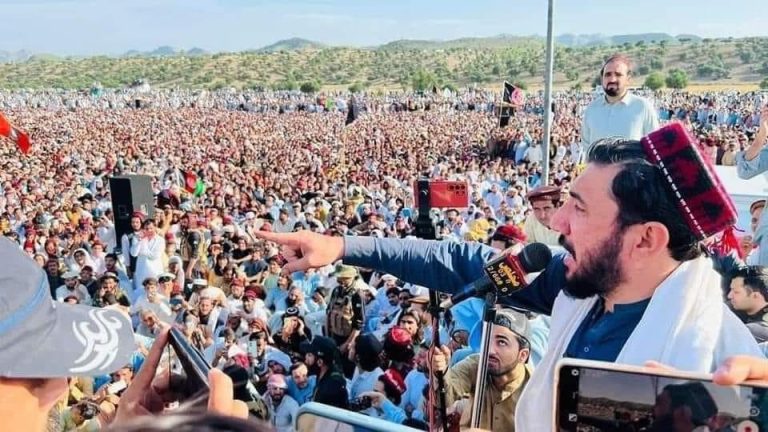
The Pashtun Tahafuz Movement (PTM) has been labeled as an “unlawful” organization under Section 11B of the Anti-Terrorism Act of 1997, according to a notification issued by the Pakistan’s Interior Ministry. The occupied-government claims that the PTM poses a “significant danger” to public order and safety, further entrenching its position as a proscribed entity in the First Schedule of the Anti-Terrorism Act. This latest crackdown on dissent reveals a troubling trend of increasing authoritarianism in Pakistan.

Founded in response to the tragic killing of Naqeebullah Mehsud, a young man from South Waziristan, the PTM and its leader, Manzoor Pashteen, have faced severe criticism from the ruling Punjabi establishment. Malicious accusations of fomenting unrest and acting on behalf of foreign agencies have been levied against the peaceful movement. This repressive action comes just days before the PTM’s planned Pashtoon Qaumi Jirga on October 11, a gathering aimed at advocating for the rights of the Pashtun community.

In light of the upcoming Jirga, an open letter from Pashtuns to provincial and federal authorities, as well as the police department, calls for a respectful acknowledgment of Pashtun traditions and the significance of this event. The letter emphasizes that the Jirga is a vital institution for collective decision-making, bringing together over 30,000 regional elders, tribal leaders, and representatives from various sectors to discuss peace, resource management, and public issues in Pashtun regions. The letter said, “Our only grievance is that you shouldn’t enable Jirga’s disruption. We understand your limitations and authority. We urge you to decline support for those opposing peace.”

The letter warns against the influence of proxy war supporters, generals, and armed groups who seek to sabotage the Jirga and maintain control over resources. It urges the occupied-authorities to allow Pashtun leaders to gather peacefully and assures that they will handle any attempts to disrupt the event. “If you physically confront us, stifling our peaceful Jirga, you’ll be responsible for Pashtun youth’s future reactions to your actions,” it states, emphasizing that the future response from Pashtuns will mirror their treatment today.

PTM Declared Unlawful

However, Pak Army in Khyber Pakhtunkhwa has ramped up their operations against PTM camps, culminating in police burning down a PTM camp established for the upcoming jirga. The violence against peaceful demonstrators and activists highlights the Paki establishment’s fear of dissent, particularly from a movement that has historically sought to address the grievances of the Pashtun people.

As tensions mount, both provincial and federal-occupied governments have engaged in a blame game over the crackdown, with conflicting statements emerging from the officials. KP government spokesperson Barrister Mohammad Saif accused the federal interior ministry of ordering the actions against PTM, while Interior Minister Mohsin Naqvi downplayed the necessity of the police’s heavy-handed response, claiming it was executed independently by KP police.

Human Rights Commission of Pakistan has condemned the ban on PTM, stating that it is “a rights-based movement that has never resorted to violence and always used the framework of the Constitution to advocate its cause.” This extreme decision is neither justified nor transparent, illustrating the Punjabi Pak Army elite’s desperation to quash dissent and maintain its grip on power.

BLA fidayeen attack Chinese engineers in deadly Karachi blast

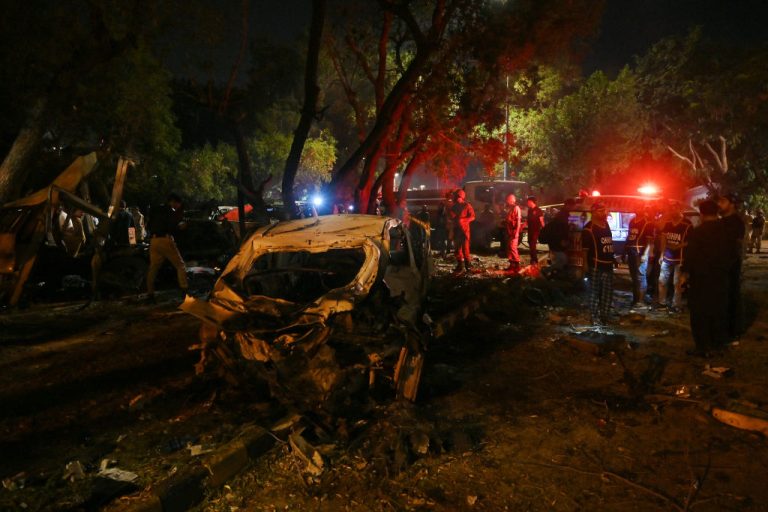
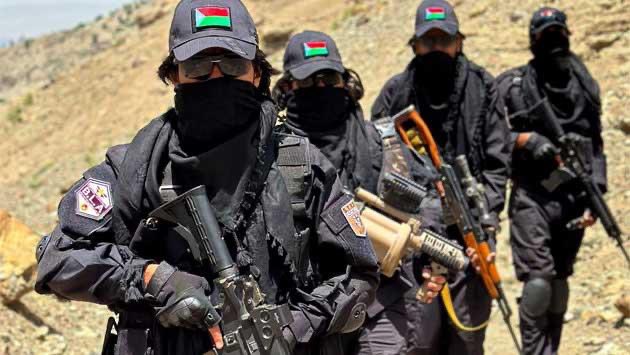
In a major blow to Chinese interests in Pakistan, the Baloch Liberation Army (BLA) launched a devastating attack on a convoy of Chinese engineers and investors near Karachi’s Jinnah International Airport. The BLA, a pro-independence group resisting Pakistan Army occupation, has repeatedly warned against Chinese involvement in the China-Pakistan Economic Corridor (CPEC), which is the exploitation of Pak-occupied-Balochistan’s land and resources.

The attack, which took place late Sunday night, initially killed two Chinese nationals and several Pak Army personnel tasked with their protection. The Chinese embassy in Pakistan later confirmed the deaths of three Chinese citizens: Li Jun, He Chun Xin, and Li Zhaohao. Despite early attempts by the Pakistan Army and ISI to downplay the incident as an “oil tanker blast,” the truth of the attack emerged after the BLA publicly claimed responsibility.

Pakistan broadcaster reported at least 10 people were injured in the blast in addition to some fatalities. The Chinese embassy said a convoy from the Port Qasim Electric Power Company was attacked near the airport.

The BLA’s Majeed Brigade, a unit known for high-profile suicide attacks, specifically targeted the convoy of Chinese engineers involved in CPEC projects. In a statement, the group emphasized that they view the CPEC as a continuation of the Pak Army’s exploitation of POB, selling the region’s resources to foreign powers at the expense of local communities. According to the BLA, these Chinese engineers were complicit in the destruction of Baloch land and had ignored repeated warnings to cease their involvement in these projects.

The Baloch Liberation Army has published the picture of the suicide bomber and identified him as Shah Fahad alias Aftab.

BLA Hits Chinese Convoy

“Balochistan has long been exploited by Pakistan’s military establishment, and now they have handed over our resources to Chinese corporations under the guise of development,” the BLA statement read. “This attack is a message to both Pakistan and China: the Baloch people will not stand by while our land is plundered.”

The BLA has repeatedly issued warnings to Chinese citizens, urging them to oppose their government’s role in CPEC projects and avoid participating in exploitative ventures in POB. Despite these warnings, Paki establishment has continued to facilitate Chinese projects, brushing aside concerns about the impact on local communities.

This latest attack has sparked outrage, with the Chinese embassy issuing a strongly worded condemnation and demanding that Pakistan take stronger measures to protect its citizens and thoroughly investigate the incident. The embassy further criticized Pakistan’s inability to provide sufficient security for Chinese workers, despite its promises to safeguard foreign investments.

The Pakistan Army, which has a long history of suppressing dissent in POB, is using brute force to quash the Baloch liberation movement. For decades, the military has been inflicting human rights abuses, enforced disappearances, and attempts to silence pro-independence voices in the region. Now, with CPEC expanding, the BLA and other groups have intensified their resistance, as these projects are a blatant attempt by the Paki establishment to sell off Balochistan to China.

Pak Army launches full-scale crackdown against Pashtun leaders

In a disturbing escalation of Paki establishment’s repression, occupied-authorities have launched a full-scale crackdown against the Pashtun National Jirga/Court and members of the Pashtun Tahafuz Movement (PTM) over the past three days. This coordinated assault by the Punjabi Pak Army aims to silence voices advocating for justice and peace within the Pashtun community.

The Pak Army has resorted to intimidation and mass arrests, undermining democratic processes and stifling dissent. Among those detained are prominent activists and organizers, including Abdul Waris Spinda, Ali Hassan, Jahangir Khan, and Muhammad Khan, among others—totaling over 50 individuals.

The current actions reflect a series of systemic assault on the Pashtun people by the Pak Army for decades. The Paki establishment’s ultimate goal is to frame the Pashtun community as insurgents, using these incidents to justify their ongoing military operations under the guise of counter-terrorism.

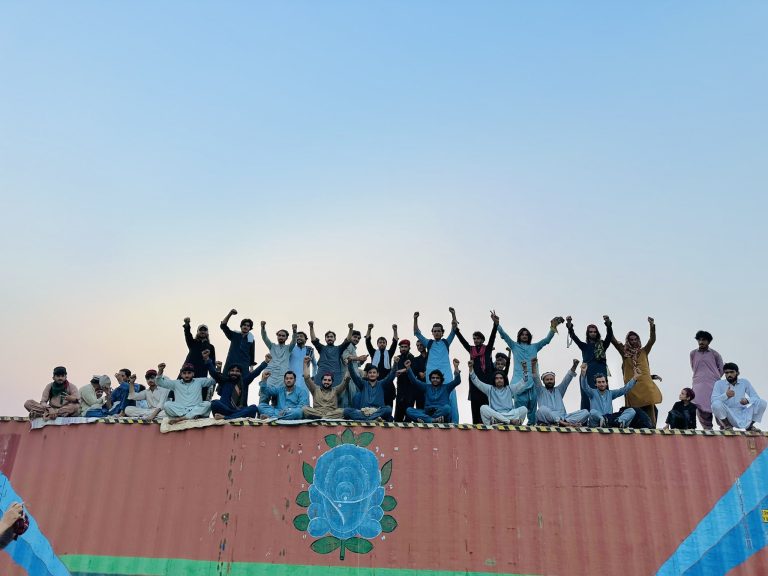
The Pashtun National Court, a significant political event, is set to take place on October 11, yet the occupied-state is already targeting PTM workers to disrupt any organized efforts for Pashtun self-determination.

Radical Islamists threaten Hindus in Umarkot to stay silent or die

In Umarkot, just days after Dr. Shahnawaz Kumbhar’s murder, inflammatory speeches were made, warning Hindus to “remain silent or face destruction.” The Sindh authority and the police, predictably, did nothing to stop these hate-filled calls to violence. No arrests were made, neither of the police officers who allowed the mob to kill Dr. Kumbhar, nor of the religious leaders inciting further hatred. This silence from the authorities is damning — it reveals the deep-seated rot within Pakistan’s institutions, where law enforcement and religious extremists work hand in hand to terrorize vulnerable communities.

Dr. Shahnawaz Kumbhar, a physician falsely accused of blasphemy, met a brutal end while in police custody in Mirpurkhas. The Sindh Police actively facilitated his gruesome murder at the hands of a frenzied mob that later set his body ablaze. This atrocity, while shocking, is emblematic of a much larger problem — Paki’s establishment has not only tolerated but nurtured an environment where fanatics thrive, openly threatening and brutalizing religious minorities with impunity.

Prem Kolhi, a Hindu man, risked his life to recover Dr. Kumbhar’s charred remains, a harrowing act of courage.

The Paki establishment, including the military and political elite, has actively supported and nurtured extremist elements that terrorize minorities. The Hindu community lives under constant fear, warned to keep quiet or suffer the same fate as Dr. Kumbhar. Their businesses, homes, and even their lives are at the mercy of mobs, who burn and destroy with impunity.

It is clear that the Pak Army state has no intention of protecting its religious minorities. Instead, it has created a monstrous system where fanatics rule the streets, and the police enable their terror. The brutal murder of Dr. Shahnawaz Kumbhar is just one more testament to the deadly consequences. And yet, the question remains — how long will the world allow Pakistan to continue this violent, unchecked persecution of its minorities?

Pak Army-backed death squad kills Baloch youth

The Baloch Yakjehti Committee, Panjgur Zone, has issued a stark warning about the escalating violence perpetrated by Pak Army-backed death squads against the Baloch community, highlighting a disturbing pattern of targeted killings and enforced disappearances. The most recent victim, Peer Jan, a Zambad driver from Prom Gaj, was brutally shot dead by operatives of a Army death squad in the New Bazaar area of Panjgur.

This tragic incident is just one of many that illustrate the ongoing campaign of terror aimed at silencing the Baloch youth and stifling their voices in political discourse. These daily attacks are part of a calculated strategy to suppress the Baloch community and keep them under terror.

Families of two missing individuals, Sabir Noor and Abid Noor, have been protesting for four consecutive days along the China-Pakistan Economic Corridor (CPEC) road in Panjgur, demanding justice and accountability from the occupied-authority that has repeatedly engaged in launching violence and brutality against them.

The committee condemned the inaction and complicity of the Panjgur administration, urging the occupied-authorities to arrest the killers of Peer Jan. The atmosphere of fear and oppression created by these Army-sponsored death squads serves only to marginalise the Baloch community.

The Baloch Unity Committee’s statement resonates with the growing frustration and anger within the community, as they demand an end to the brutal “kill and dump” policy that has plagued Pak-occupied-Balochistan for far too long. The Baloch people’s right to life, safety, and political expression must be upheld, as they refuse to be silenced by violence and intimidation.

Sindh: Desperate Hindu farmer commits suicide with his children

In yet another heartbreaking incident, Chaman Kolhi, a poor Hindu farmer in Sindh, took his own life along with his three innocent children. Driven to despair by hunger, unemployment and systemic discrimination, Kolhi’s suicide is emblematic of the unbearable conditions faced by the Hindu minority under Pakistan Army rule.

The rising number of suicides among the Hindu community in Sindh is a glaring reflection of the Paki establishment’s oppression and neglect of its religious minorities. While the Pakistan Army continues to pour resources into maintaining its stranglehold over regions like Khyber, POB and POJK, the plight of impoverished minorities like the Kolhi family remains ignored.

For decades, Hindus and other minorities in Sindh have endured relentless persecution, with targeted violence and crimes against them surging at an alarming rate. Instead of addressing these human rights violations, the Punjabi authority and its institutions, effectively endorses the terror and oppression that minorities are forced to endure.

Hunger, unemployment and fear of persecution have become the norm for Sindh’s Hindu community. While the military tightens its grip over every aspect of the country, the suffering of innocent citizens like Chaman Kolhi and his children remains ignored, unreported, and unresolved. The suicide of Kolhi and his children is not just a tragedy; it is an indictment of a state that prioritises power and control over the welfare of its most marginalized citizens.