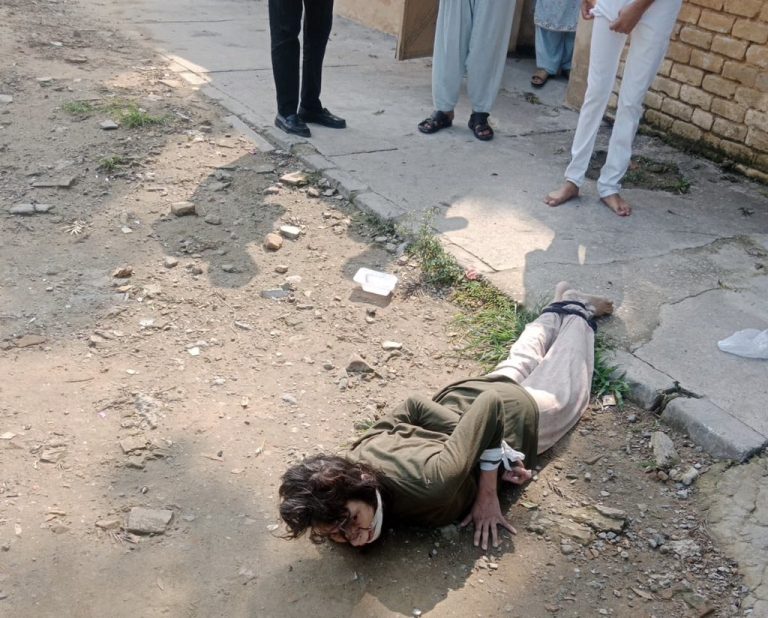
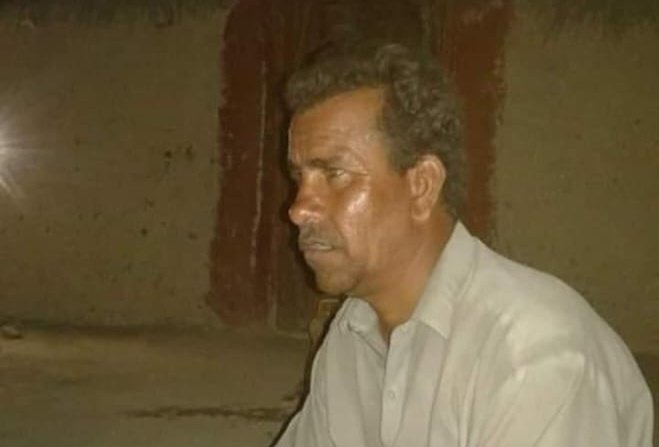
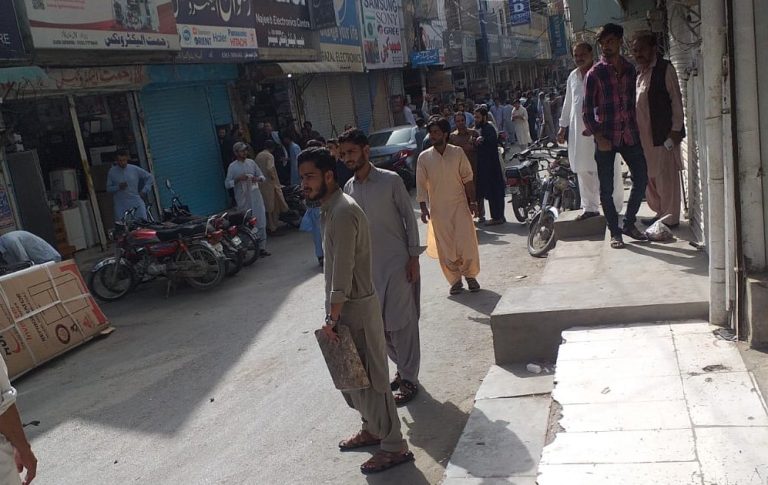
A Belgian woman was discovered tied up and abandoned in Islamabad’s G-6 district after reportedly enduring days of sexual assault. The woman, identified as 28-year-old Silvie Stina, was found with her wrists and legs bound, having been left by unidentified individuals. A local resident spotted her and immediately alerted the police, who rescued her from the scene.
The incident occurred on August 14, the same day Pakistan celebrates its Independence Day.
Stina was rushed to a hospital for a medical examination, where she reported being held and assaulted for over five days by several men. The police have since launched an investigation and arrested one suspect, identified as Tamizuddin, who is currently in police custody.
بیلجیم سے آئی خاتون کو ریپ کرنے کے بعد نامعلوم افراد پھینک کر فرار
سلوا نامی خاتون کو مقامی شہریوں نے گلی نمبر 33، جی سکس ون تھری میں صدر روڈ پر ہاتھ پاؤں بندھے حالت میں دیکھا۔ اور پولیس کو اطلاع دی۔ pic.twitter.com/gUKbeIvoRY
The victim confirmed Tamizuddin’s involvement in the crime. He was apprehended by Aabpara Police at his residence and taken to the same hospital as the victim for further medical evaluation. However, Tamizuddin denied the accusations, claiming the woman was mentally ill. He also alleged that she lacked proper identification and had entered Pakistan without valid documentation.
Authorities have launched a search of Tamizuddin’s apartment to locate any of the victim’s belongings and to uncover further evidence. The police are also exploring how the victim entered Pakistan, as both the Belgian embassy and the Federal Investigation Agency (FIA) reported having no record of a woman by her name traveling to the country. The Netherlands High Commission has also been contacted, as the victim mentioned a region near the Belgian-Dutch border as her place of origin.
There’s a lot of unanswered questions: How did the victim enter Pakistan without official records? Is this a case of illegal entry, or is there a more sinister angle yet to be uncovered? In light of rising Islamic radicalism and economic instability, Pakistan has become an unbearable place to visit.
I missed being a member of the exclusive club that author Salman Rushdie popularised as ‘Midnight Children’ in his novel with the same name by a decade but this had its own advantages. For example, with India having adopted the metric monetary system in 1955, one didn’t have to undergo the agony of memorising the complicated values of three pies making one pice, four pice making one Anna, and 16 Annas being equal to a Rupee.
While many in our age group fondly reminisce about what they jubilantly refer to as the ‘good old days’, I recall that life wasn’t as good as what some our age make it out to be. Though I can’t speak about what adults felt those days but at home and even outside, one often heard snatches of conversation between elders that certainly did not give an impression that those days were exceptionally good ones. I distinctly recall the shortage of essential commodities being a common topic of discussion and marveling at advertisements of electronic gadgets like transistors in foreign magazines like Life and Woman & Home- old copies of which sometimes came our way!
In those days every household had what was commonly referred to as a ration card that allowed you to buy rations from government run shops at subsidised rates, but since the amount of ration one could buy depended upon the number of family members, inflating the number of children and adding grandparents was commonplace.
Then there were permits– letters issued by the local authorities allowing those constructing houses to buy cement and other such commodities at what was referred to as government rates. Needless to say, getting a permit or padding the number of family members in ration cards was only possible through use of influence or the ubiquitous baksheesh [bribe].
The local administration did release an additional quota of sugar during festivals and marriages in the family which could be drawn by showing your ration card but the quantity [despite fudging the numbers of family members] was largely insufficient. However, one could buy any amount of sugar from the black-market. In fact, black marketing was a lucrative and thriving business where you could for a price pick up anything ranging from car tyres to cars itself!
In the summer months, power outages were frequent but didn’t cause us much discomfort because the common Indian household then had neither a fridge nor any coolers. But what upset us kids most was the ban on sale of milk-sourced sweetmeats by the district magistrate due to acute shortage of milk.
When the 1962 Sino-Indian conflict broke out, I was only six years old. Yet I vividly remember the frantic government appeals on radio and advertisements in news reels that preceded movie screening requesting people to donate gold jewellery, money and even woollens to help arm and clothe our soldiers fighting the Chinese.
So much for the good old days!
Things started improving significantly during the seventies and life became much easier and more comfortable. This inference is duly reflected in the World Bank’s data which shows India’s per capita income has risen from a modest $ 82 in 1960, jumped to a whopping $ 2,388 in 2022. This is indeed a remarkable achievement when viewed in isolation, but for accurately determining the precise degree of progress made over the years, a comparative analysis is essential.
As China’s per capita income in 1960 was $ 89 as against India’s $82, comparison between the two countries is fair. In 2022, however, while China’s per capita income swelled to $ 12, 720, India’s per capita income was only $2,388. So, while India has definitely done well over the years, it would not be inappropriate to say that we could have certainly done much better.
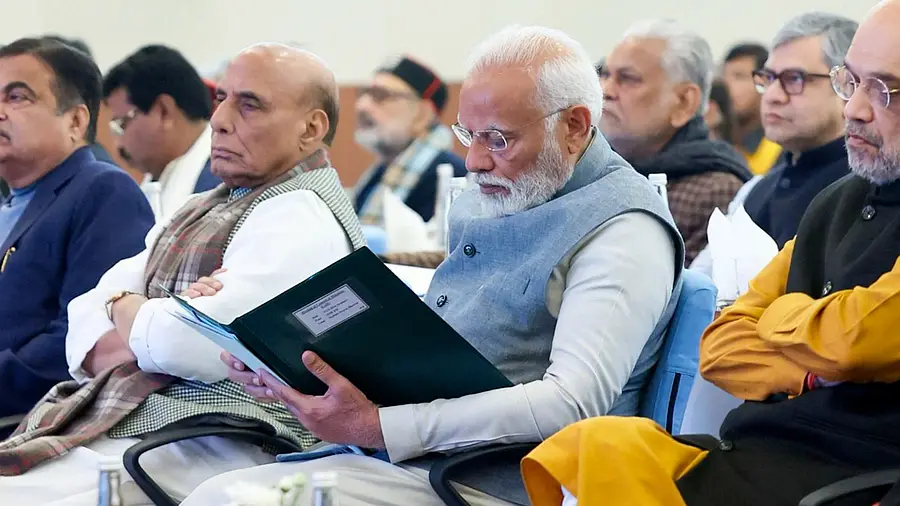
Hence, the centre’s decision to declare ‘Viksit Bharat’[Developing India] as the central theme of India’s 78th Independence Day celebrations is most appropriate as it gives a clarion call for the government’s vision of transforming India into a developed entity by the centenary of Independence in 2017. Thanks to well conceived and dynamically executed infrastructural development projects, adopting a ‘bottom-up’ approach and public participation to improve quality of life of the people through imaginative schemes as well as reducing foreign dependency by facilitating indigenisation through the ‘Make in India’ initiative, much lost ground has been covered.
Though the results achieved thus far are remarkable, there’s no room for complacency or negativity, as in this competitive world there’s no place for laggards. Simultaneously, since India’s continuing progress is bound to upset certain countries and entities whose captive market is under threat from India’s ‘Make in India’ programme, spreading negativity and creating a hostile working environment would only help inimical forces to exploit public emotions and impede progress.
India has all it takes to become a world leader provided we remain united and play our respective roles as its citizens in a responsible manner.
The East Turkistan National Movement (ETNM), a US-based organization dedicated to advocating for the rights of Uyghur Muslims in Xinjiang, has issued a strong statement condemning China for its systematic destruction of Uyghur culture and heritage. The organization is urging the international community, human rights authorities, and activists to take decisive action against Beijing’s oppressive policies.
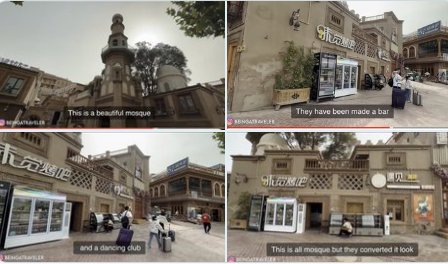
In a statement released on X (formerly Twitter), the ETNM accused the Chinese government of demolishing over 16,000 mosques and converting other religious sites into bars and clubs. “The Chinese government is executing a calculated strategy to annihilate the identity of the East Turkistan nation to ensure its occupation of East Turkistan continues. In a blatant attempt to erase our historical and cultural roots, Beijing has demolished over 16,000 mosques, desecrated religious sites by turning them into bars and clubs, and destroyed countless historic Uyghur neighborhoods,” the ETNM said. “These acts of cultural destruction are designed to break the spirit of our people and erase our Turkic and Islamic heritage from existence.”
Conversion of a Uyghur mosque in Kashgar into a bar & dance club is a stark symbol of CCP’s ruthless assault on Uyghur culture & religion.
This desecration of sacred spaces shows the extent of China's disregard for religious freedom and cultural preservation!#ChinaExposedpic.twitter.com/S1EksiQddP
The ETNM also criticized Muslim-majority countries, the Organisation of Islamic Cooperation (OIC), and Central Asian Republics for their silence in the face of China’s campaign against Uyghur Muslims. The organization accused these entities of turning a blind eye to the atrocities in Xinjiang and, in some cases, even supporting China’s actions.
A 2021 report by the Australian Strategic Policy Institute (ASPI) supported ETNM’s claims, revealing through satellite imagery that significant damage has been done to over 20 percent of the region’s mosques, with many being demolished or repurposed.
Xinjiang has become one of the most heavily monitored regions in the world, with extensive use of facial recognition technology and other surveillance methods. There is substantial evidence, including satellite imagery, of large-scale internment camps in the region. These facilities, described by the Chinese government as “re-education” camps, are considered by international observers and human rights organizations to be detention centers aimed at erasing the identity of East Turkistan and its people.
The ETNM’s call to action is a plea for the world to recognize and confront the ongoing cultural genocide in Xinjiang and to support the Uyghur people in their fight for survival and freedom.
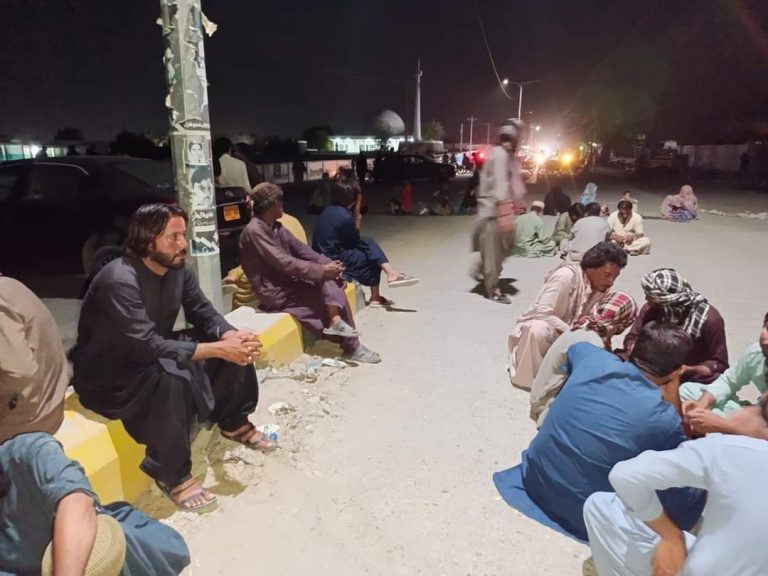
The families of two young men who were forcibly disappeared by Pak forces in Kharan district are continuing their sit-in protest in the Red Zone. The protest, which has brought activity in the area to a standstill, began after the reported abduction of the youths earlier today.
The two men, Lakhmeer, son of Haji Saleh, and Khudadad, son of Musa, were taken into custody by Pakistan Army from Kharan Bazaar and subsequently moved to an undisclosed location. The exact circumstances of their detention remain unclear.
The sit-in has led to the complete closure of Kharan Secretariat Chowk and the surrounding Red Zone. Local authorities have attempted to negotiate with the protestors, but the talks have so far been unsuccessful, and the demonstration shows no signs of abating.
The families of the missing men vowed to continue their protest until their loved ones are safely recovered. “We will not end this sit-in until our loved ones are returned to us,” they said. This is not an isolated incident and has tragically become part of daily Baloch life since the Pak Army forcefully captured the region in 1948.
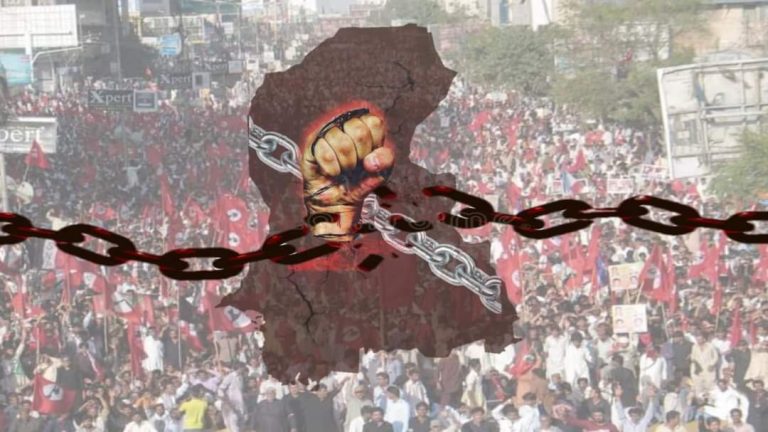
The Jeay Sindh Freedom Movement (JSFM) has announced that it will observe August 14, 2024, as a Black Day across Sindh, marking their protest against decades of oppression and tyranny by the Paki establishment. The movement’s leaders have called for their workers to tie black armbands and wave black flags at intersections throughout the province. On August 14, they also plan to hoist the national flag of Sindh as a symbol of resistance.
According to JSFM Chairman Sohail Abro, and other prominent leaders including Zubair Sindhi, Amar Azadi, Sudhu Sindhi, Hafeez Desi, and Pyare Sindhu, the protest is a response to what they consider to be the unjust creation of Pakistan on August 14, 1947, under the two-nation theory—a theory that failed with the independence of Bangladesh in 1971.
JSFM Observes Black Day
In a statement, the JSFM leaders asserted that Sindh existed as an independent nation thousands of years before Pakistan was formed in 1947. They referred to August 14 as the anniversary of an “unnatural state,” describing the creation of Pakistan as a “mistake of history” and a “dark day for humanity.” According to the JSFM, the formation of Pakistan led to the enslavement of historical nations such as the Sindhi, Baloch, Seraiki, Gilgit, Kashmiri, and Pashtun people, all of whom, they say, have been subjected to economic, political, and geographical oppression by the “Punjabi Military Establishment.”
Sohail Abro and his colleagues said that the Punjabi Army is forcibly occupying Sindh’s lands and resources, stressing that the right to self-determination and freedom is an inalienable right that they intend to achieve. “One day, we will secure our freedom from this rogue state of Pakistan,” they declared.
JSFM leaders reported that occupied-state agencies of the “Punjabi-Pakistan Army” have intensified raids on the homes of pro-independence political activists in Sindh, with abductions and forced disappearances continuing unabated. The JSFM has called on international organizations, including the United Nations, Amnesty International, and other human rights groups, to support their cause for freedom and to intervene against the ongoing human rights abuses in Sindh.
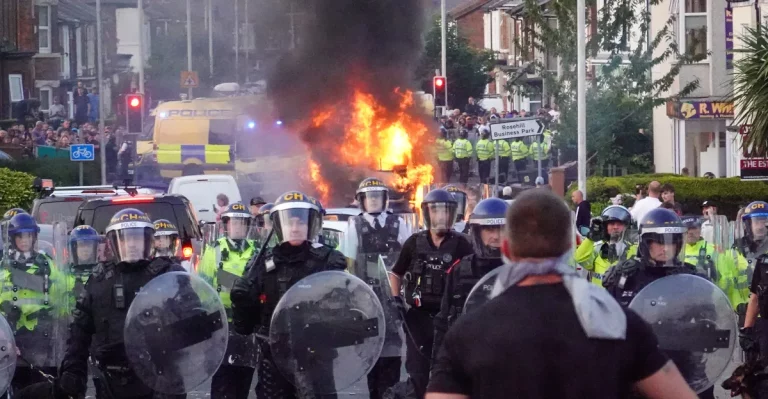
In Britain the police have arrested more than 1,000 people in connection with the riots that took place in England over the past two weeks. In its latest update, the National Police Chiefs’ Council stated that 1,024 people have been arrested in the UK, and 575 have been charged.
Britain, which had been engulfed in the flames of riots for some time, is now beginning to return to normalcy. After several days of violent protests, public order in Britain has improved compared to before.
Last month in Southport, an attacker stabbed and killed three young girls during a dance class. Eight other people were injured during the incident. Violent protests began shortly after this event. It was being circulated online that the attacker was of Rwandan origin and was seeking asylum in Britain. Social media claims suggested that the Southport attacker was an immigrant Muslim who had entered Britain illegally. This led to a wave of protests against immigrants. The police have arrested a 17-year-old named Axel Mugunwa Rudakubana, who was born in Wales, in connection with this case.
Southport Attack
During the riots, protesters caused chaos in several cities and engaged in violent clashes with the police. Bricks and fireworks were thrown in various places, and hotels and shops were attacked. Meanwhile, the government issued a warning that violence would be dealt with strictly.
The last widespread riots in Britain occurred in 2011, when the fatal shooting of a Black man by the police led to several days of street violence. Swift and stringent judicial action was seen as instrumental in calming the unrest in 2011, during which nearly 4,000 people were arrested over the course of several weeks.
Just last month, a new Labour Party government was formed in Britain under the leadership of Prime Minister Keir Starmer. Since then, there have been several incidents of violence on Britain’s streets. Now, strict action is being taken against those inciting violence.
In the Awaran district of Pak-occupied-Balochistan, the Pak Army opened fire on a civilian population, killing a school teacher.
The tragic event took place in the Malar area of Awaran, where the Pak Army opened fire on a civilian area, resulting in the death of Abdul Khaliq, a local school teacher. This marks yet another instance of the military’s oppressive tactics, aimed at silencing dissent and maintaining control over the Baloch people, who have long demanded autonomy and freedom from Paki rule.
Abdul Khaliq Baloch, a school teacher, was brutally killed in Malar Awaran as a result of indiscriminate firing on the civilian population by Pakistani forces. Two days ago, five-year-old Sitara D/o Shabir Baloch was also killed in a similar incident.#StopBalochGenocidepic.twitter.com/T4thc4OEnw
This latest killing comes just days after another incident in the Kolwah region, where Pak soldiers shot and killed a five-year-old girl, Sitara, daughter of Bashir Ahmed. These repeated acts of violence have drawn widespread condemnation, yet the Paki establishment continues to ignore calls for justice.
Since its forcible annexation of Balochistan in 1948, the Pak Army has consistently employed military force to suppress the Baloch people’s struggle for independence. This oppressive occupation has led to decades of human rights abuses, including enforced disappearances, extrajudicial killings, and widespread violence against civilians.
On Tuesday night, Quetta witnessed a series of attacks as three rockets were fired from different directions, targeting the Nawab Akbar Khan Stadium (Ayub Stadium) during ongoing Pakistan Independence Day celebrations. The attacks resulted in no reported casualties.
Reportedly, one of the rockets landed in the stadium’s parking area, while the other two fell in the surrounding vicinity. The rockets were fired from an unknown direction.
This latest attack comes on the heels of four explosions earlier in the day at flag stalls and other locations in Quetta, including the Sariab and China Market areas of Liaquat Bazar. The Baloch Liberation Army (BLA) has claimed responsibility for two of these operations, stating that their freedom fighters specifically targeted the “so-called Independence Day celebrations and flag stalls.”
BREAKING: The Baloch Liberation Army (BLA) takes responsibility for two separate operations ahead of 14 August, saying that BLA freedom fighters bombed the so-called Independence Day celebrations & flag stalls in Sariab & China Market at Liaquat Bazar areas of Quetta today. https://t.co/m6YZGHqbkipic.twitter.com/uKs66BSa4s
In a statement released by BLA spokesperson Jeeyand Baloch, the group reiterated its commitment to targeting events organized under the guise of “Independence Day” celebrations. He said that the Pak Army is using such events to “forcibly portray Balochistan as part of Pakistan,” and he argues that this claim contradicts the “historical and ground realities” of the region.
The BLA’s statement further asserted that their operations against the “occupying Pakistan military and its collaborators” would continue. This declaration underscores the persistent unrest and resistance in Pak-occupied-Balochistan, where the BLA and other groups have long opposed Pak Army’s brutality.
In a series of violent incidents, several Punjabi Pak Army personnel were killed and dozens more injured following a significant attack by the Pakistani Taliban (TTP) on military installations in the Badr area of South Waziristan district, Khyber Pakhtunkhwa (KPK). The assault underscores the escalating conflict in the region.
Moreover, a border clash between Pakistan and Afghan security forces near the Torkham crossing has resulted in the deaths of three Afghan civilians. The altercation, which erupted late on Monday, began when Pak Army reportedly opened fire on Afghan border forces. The clash extended to civilian areas, where a woman and two children were killed by Pak Army.
Tehreek-e-Taliban Pakistan (TTP) seems to be gaining control in #Khyber Pakhtunkhwa Province & rendering Pakistan Army powerless. Here is a video showing #TTP cadres patrolling Mir Ali area & its market in #Waziristan recently. pic.twitter.com/1SCR588DFp
A security official confirmed that three Pak paramilitary troops were wounded in the confrontation.
Pashtuns have faced systematic targeting as ethnic minorities, and are subjected to aggression by the predominantly Punjabi Pakistan military and authorities. There have been numerous reports of extrajudicial killings and ongoing human rights abuses carried out by the occupied- Paki establishment and military, with the Pashtun community being particularly affected.
The Pak Army, which created and supported the terrorist organization TTP, now finds itself the target of this group. In the midst of this turmoil, innocent Pashtuns are caught in the crossfire, suffering from attacks by both the Army and the TTP.
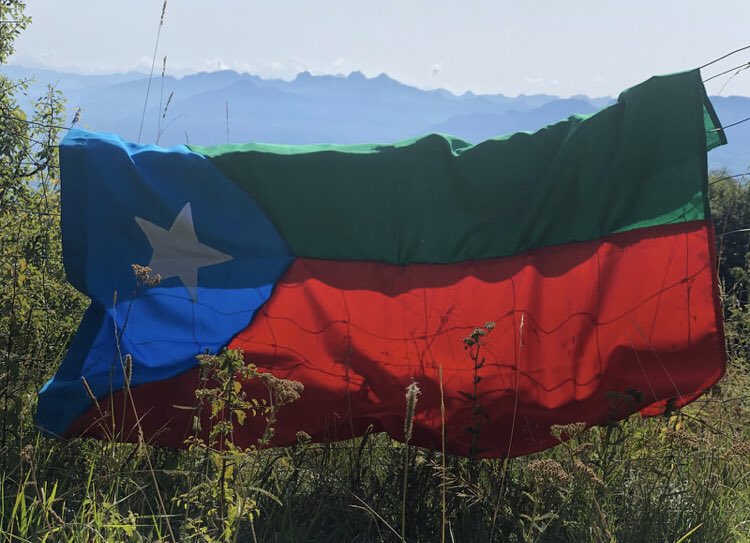
On Monday, unknown individuals carried out anti-Pakistan wall chalkings in various cities and installed Baloch flags.
In observance of August 11, which is celebrated by Baloch independence circles as the day of liberation from British rule, unknown individuals installed flags selected by Baloch freedom groups and conducted wall chalkings in memory of fighters and martyrs.
Flags were displayed at various locations and telephone towers in the Zheri Tehsil of Khuzdar district in Pak-occupied-Balochistan. Additionally, wall chalkings in support of the Baloch Liberation Army (BLA) were seen at different sites.
During the night, unknown individuals also raised the Baloch flag on the graves of BLA martyr Hafiz Zeeshan, who died in the Bolan attack, and BLA commander Zia Zheri.
Reports from Nushki indicate that flags were installed at various locations and telephone towers in the city. Similarly, in Quetta, the central city of occupied-Balochistan, flags were also seen at various sites.
Throughout these events, wall chalkings opposing Pakistan and supporting Baloch fighters and the BLA were carried out in different cities.
We use cookies on our website to give you the most relevant experience by remembering your preferences and repeat visits. By clicking “Accept All”, you consent to the use of ALL the cookies. However, you may visit "Cookie Settings" to provide a controlled consent.
This website uses cookies to improve your experience while you navigate through the website. Out of these, the cookies that are categorized as necessary are stored on your browser as they are essential for the working of basic functionalities of the website. We also use third-party cookies that help us analyze and understand how you use this website. These cookies will be stored in your browser only with your consent. You also have the option to opt-out of these cookies. But opting out of some of these cookies may affect your browsing experience.
Functional cookies help to perform certain functionalities like sharing the content of the website on social media platforms, collect feedbacks, and other third-party features.
Performance cookies are used to understand and analyze the key performance indexes of the website which helps in delivering a better user experience for the visitors.
Analytical cookies are used to understand how visitors interact with the website. These cookies help provide information on metrics the number of visitors, bounce rate, traffic source, etc.
Advertisement cookies are used to provide visitors with relevant ads and marketing campaigns. These cookies track visitors across websites and collect information to provide customized ads.
Necessary cookies are absolutely essential for the website to function properly. These cookies ensure basic functionalities and security features of the website, anonymously.
Cookie
Duration
Description
cookielawinfo-checkbox-analytics
11 months
This cookie is set by GDPR Cookie Consent plugin. The cookie is used to store the user consent for the cookies in the category "Analytics".
cookielawinfo-checkbox-functional
11 months
The cookie is set by GDPR cookie consent to record the user consent for the cookies in the category "Functional".
cookielawinfo-checkbox-necessary
11 months
This cookie is set by GDPR Cookie Consent plugin. The cookies is used to store the user consent for the cookies in the category "Necessary".
cookielawinfo-checkbox-others
11 months
This cookie is set by GDPR Cookie Consent plugin. The cookie is used to store the user consent for the cookies in the category "Other.
cookielawinfo-checkbox-performance
11 months
This cookie is set by GDPR Cookie Consent plugin. The cookie is used to store the user consent for the cookies in the category "Performance".
viewed_cookie_policy
11 months
The cookie is set by the GDPR Cookie Consent plugin and is used to store whether or not user has consented to the use of cookies. It does not store any personal data.