Home Blog Page 65

Pashtun leader calls for end to Afghan persecution in Iran

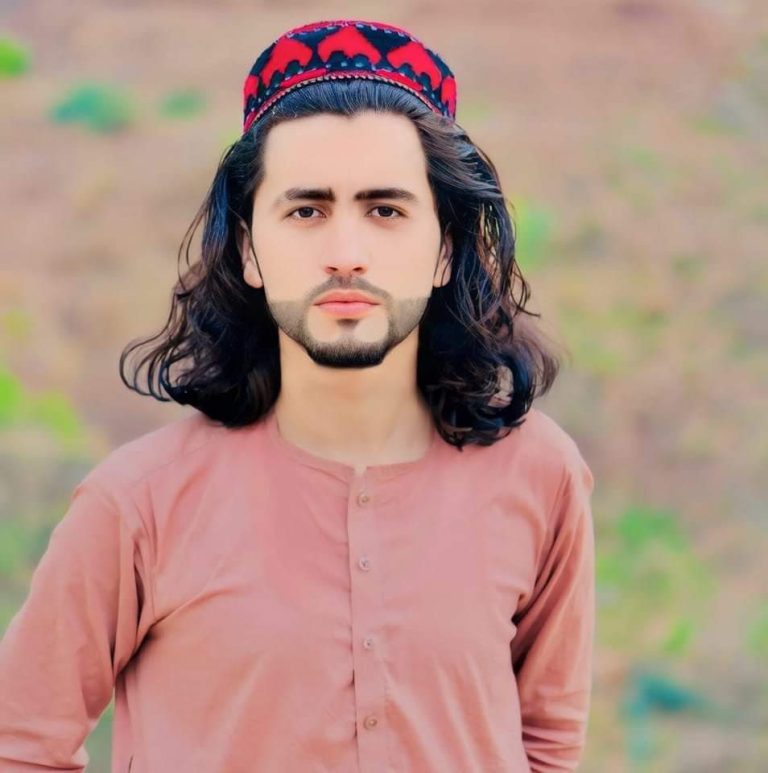
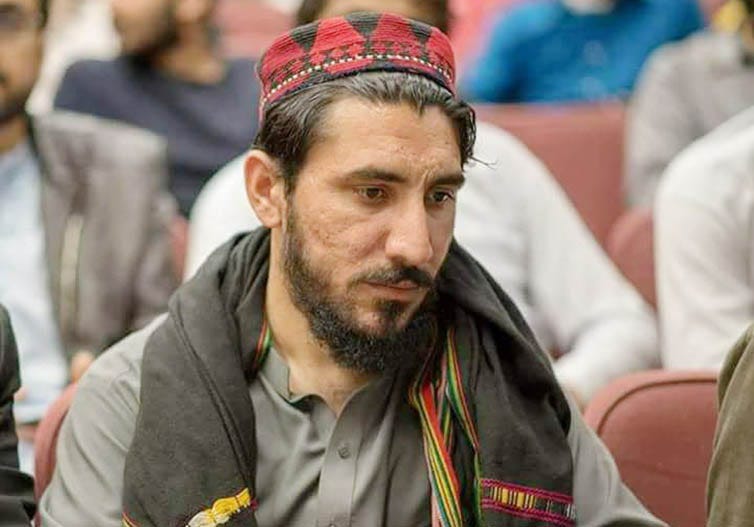
Manzoor Pashteen, leader of the Pashtun Tahafuz Movement, has issued a strong condemnation of the Iranian government over the persecution of Afghan nationals in the country. In an official statement, Pashteen denounced the treatment of Afghans in Iran as “illegal, a violation of human rights, and against human principles.”

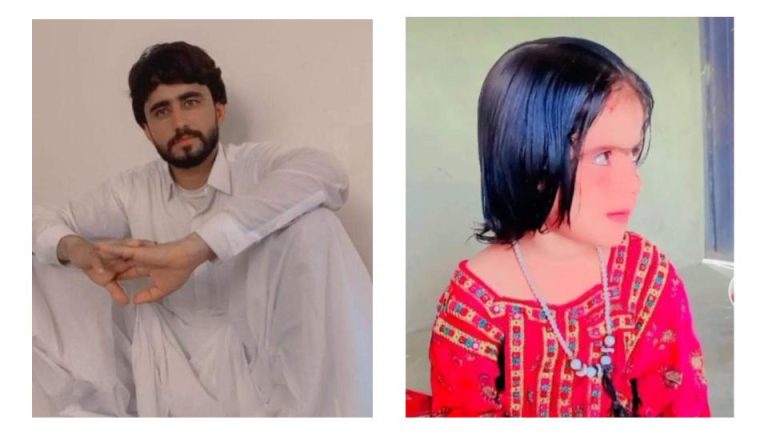
Pashteen’s call for action follows the circulation of a disturbing video on social media showing an Afghan child being tortured by Iranian police. The video has sparked widespread outrage and criticism, prompting Pashteen to demand that the Iranian government address the situation urgently and protect the rights of Afghan refugees and migrants.

This plea comes amid reports that Iranian police have recently intensified their crackdown on Afghan nationals, resulting in numerous arrests and further escalation of tensions.

The current turmoil reflects broader regional grievances, rooted in historical conflicts. For decades, Pashtuns have found themselves caught between the Iranian authority and Pak Army, enduring relentless exploitation. This ongoing strife has compounded the difficulties faced by the Pashtun community, which has been systematically grinded between these two brutal forces.

Baloch Raaji Muchi convoy arrives in Turbat

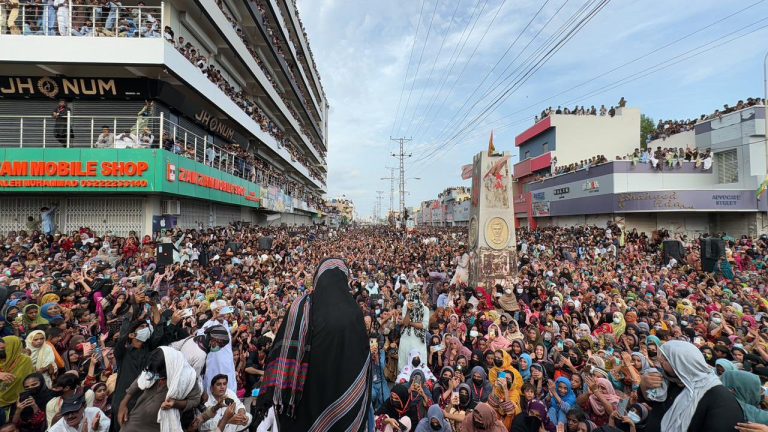
The Baloch Raaji Muchi convoy, organized by the Baloch Yakjehti Committee, has reached Turbat, marking a significant moment in the ongoing Baloch struggle for national recognition and autonomy. The arrival was met with a massive turnout, as thousands of men and women gathered for a major rally at Fida Shaheed Chowk.

At the rally, Dr. Mah Rang Baloch, the central organizer of the BYC, delivered a powerful address. She said that the Baloch people’s courage has rendered all repressive tactics ineffective, asserting that the Gwadar Raaji Muchi has ushered in a new chapter in the Baloch movement.

Dr. Baloch praised the Baloch nation’s resilience, saying that from Koh Suleiman to Sistan Balochistan, the response to the Baloch Raaji Muchi’s call was overwhelming. Despite facing tear gas and shelling, the Baloch maintained their determination, signaling both success and a promising future for their cause.

Dr. Baloch emphasized that the BYC represents the voice of the Baloch and is a crucial step toward national formation. She stressed that the struggle for the right to live and a brighter future for the new generation will not falter. “The Baloch will not retreat from their struggle and movement,” she said. “Kech is a land of love, affection, and martyrs.”

Sibghatullah Shahji, another key speaker, highlighted the intensification of oppression since July 27, which led to the martyrdom of three companions and injuries to many others. He pointed out that the movement, ignited by the extrajudicial killing of Balach, has evolved into a well-organized effort.

Sammi Deen Baloch, addressing the crowd, recalled that eight months ago, a body was placed at Shaheed Fida Chowk. She said that while the Baloch have consistently faced such brutality, each instance has sparked a new revolution. Sammi Deen expressed pride in belonging to a nation that does not fear sacrifice, despite ongoing attempts to suppress the movement.

She criticized the Pak Army’s use of force both in Islamabad and Gwadar, including shutting down networks and markets, cutting off water supplies, and imposing collective punishment. He concluded that the Gwadar Muchi demonstrated that the Baloch struggle cannot be stopped and emphasized the need for unity and organization to ensure the movement’s success.

The rally in Turbat, attended by a diverse group of participants, underscored the enduring spirit and determination of the Baloch people in their quest for justice and self-determination.

Hafiz Gul Bahadur attacks Pak Army Post; kills 7 soldiers & injures 12

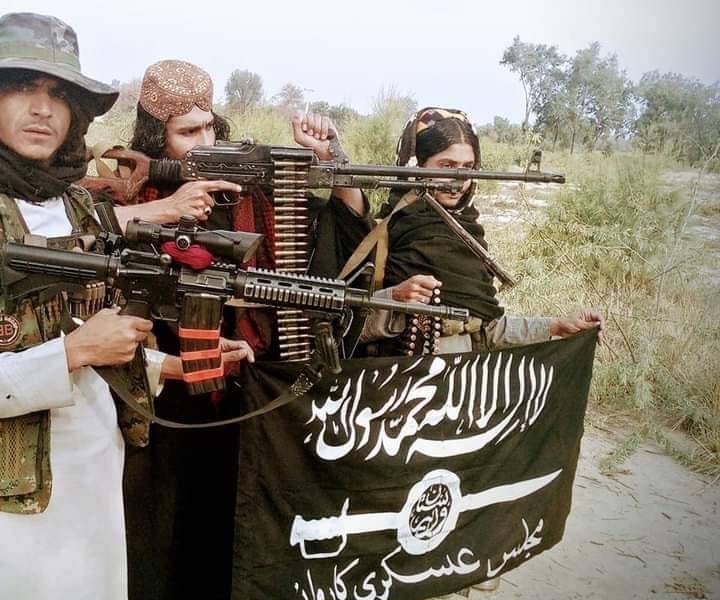
Hafiz Gul Bahadur (HGB), an ally of Tehreek-e-Taliban Pakistan (TTP), has claimed responsibility for an attack on an Orakzai Scouts post in Tirah Valley, resulting in the death of seven soldiers and injuries to twelve others.

This marks the first known attack by HGB in Khyber District, as the group had previously been associated primarily with Waziristan and Bannu. A video released by the militants shows weapons and ammunition confiscated from the military outpost in Tirah Valley.

Local communities have voiced strong criticisms against the security forces, for exacerbating the region’s plight. Decades of exploitation, dating back to 1947 when the area came under the control of the Punjabi Pakistan Army, have left the Pashtuns vulnerable. The local sentiment is that the Army uses Pashtuns for its own agenda, only to label them as terrorists and targets them later.

The situation for civilians has deteriorated as both the TTP and Pak Army are implicated in violence against them. While the Pak Army fails to take effective action against terrorists, it closely monitors and restricts civilians in the region.

The Pashtun rights organization, Pashtun Tahafuz Movement (PTM), argues that these attacks occur under the supervision of the Punjabi Pak Army and its generals. They contend that the terror and fear inflicted on the region come at the expense of the Pashtun population, who bear the brunt of the ongoing conflict.

Arrest of ISIS terrorist Rizwan Ali in Delhi

In a major security operation just days before India’s Independence Day celebrations, Delhi Police’s Special Cell has apprehended Rizwan Ali, a suspected terrorist with links to the ISIS module. The arrest took place on August 8, 2024, at approximately 11 p.m. near Ganga Baksh Marg in Delhi.

Rizwan, a resident of Daryaganj in Delhi, was carrying a bounty of Rs 3 lakh on his head, announced by the National Investigation Agency (NIA) for his involvement in terror activities. He was reportedly part of the Pune Module of ISIS and had been evading authorities.

During the arrest, police recovered a star pistol with .30 bore, three live cartridges, and two mobile phones from Rizwan’s possession. A case has been registered at the Special Cell Police Station in Delhi.

The timing of Rizwan’s presence in the capital, so close to Independence Day, has raised concerns and is being thoroughly investigated by authorities. This arrest comes as part of heightened security measures implemented across Delhi in preparation for the national holiday.

Earlier, Delhi Police had increased vigilance by putting up posters of various terrorists linked with Al Qaeda and Khalistan across the city. The posters, featuring fifteen terrorists including six associated with Al-Qaeda, aim to raise public awareness and encourage citizens to assist in tracking potential threats.

Meanwhile, Punjab police have also intensified security measures, conducting spot searches at bus stands across the state.

Pak Army Chief Asim Munir calls non-Muslims not true Pakistanis

In a recent address at a Muslim cleric conference, Pakistan Army Chief Asim Munir condemned the spread of anarchy through social media and said that the Army is committed to combating chaos. Munir’s remarks came in response to comparisons between Pakistan’s current conditions and those of Bangladesh, where he warned that such scenarios would not be tolerated in Pakistan.

“If someone tries to create chaos in Pakistan, by God, we will stand before him. No power in the world can harm Pakistan because this country is built to last,” Munir was quoted as saying by the Inter-Services Public Relations, the Army’s media wing.

Munir said that the dissemination of false information targeting the Pak Army online and reiterated the military’s resolve to maintain order. He also stated that those who do not adhere to Sharia law are not considered true Pakistanis. While this statement is audacious in nature, the Army Chief’s public endorsement is particularly shameful given the Pakistan Army’s history of brutality and atrocities inflicted on religious and minority groups.

Munir’s comments reflect an audacious and deceptive strategy by Pakistan’s leadership to suppress political dissent and reinforce control over regions like Jammu, Kashmir, Gilgit-Baltistan, and Khyber Pakhtunkhwa. These areas have been subject to political repression, underdevelopment, and corruption since Pakistan’s control began in 1947.

The Paki establishment’s actions, including the use of these regions for proxy wars and terrorism since 1988, have exacerbated issues such as discrimination against religious minorities, forced conversions, and severe human rights abuses. Reports indicate ongoing suffering and attacks against Christians, Hindus, and other minority groups, particularly in Khyber Pakhtunkhwa, Sindh, and Balochistan.

Quetta tragedy: Calls for justice for 2016 bombing grows louder

Today marks the 8th anniversary of the tragic suicide bombing at Quetta’s Civil Hospital, which claimed the lives of 73 individuals, including 56 lawyers and 2 journalists. As families and colleagues mourn the loss of their loved ones, calls for justice grow louder.

The bombing occurred on August 8, 2016, when a suicide bomber targeted the emergency ward where lawyers had gathered to mourn the murder of Balochistan Bar Association President Advocate Bilal Anwar Kasi. The attack, which resulted in 70 deaths and numerous injuries, was carried out by Punjabi Pakistan Army funded the Tehreek-i-Taliban Pakistan (TTP) splinter group, Jamaat-ul-Ahrar (JuA).

The Joint Investigation Team (JIT) report later revealed the involvement of “Paki establishment” in the tragedy. Despite this, justice for the victims remains elusive. Many are questioning who will hold the perpetrators accountable and bring closure to the families of the martyrs.

August 8 Tragedy

The event of August 8, 2016, remains a dark chapter in Pak-occupied-Balochistan’s history. The JIT report’s revelations about the involvement of the Pak Army and intelligence agencies have intensified demands for accountability. Yet, despite these findings, no one has been held responsible for the massacre.

In addition to the ongoing quest for justice for the August 8 martyrs, the region continues to experience violence and targeted attacks. Occupied-Balochistan, Khyber Pakhtunkhwa has seen over 1,400 incidents targeting the Shia and Hazara communities in the past 15 years, by Pak Army sponsored militant groups.

As the anniversary of this tragic event is commemorated, the question remains: who will be held accountable for the August 8 tragedy? The call for justice and accountability echoes, reminding the authorities and the world of the urgent need to address these injustices and bring the perpetrators to justice.

POGB: Pak Army accelerates forceful takeover of Khunjerab national park

The Pak Army has intensified its efforts to seize control of Khunjerab National Park in the Hunza district of Pak-occupied Gilgit-Baltistan. This development follows recent military takeovers of occupied-government rest houses under the pretext of promoting “green tourism.”

The military personnel have been conducting measurements of the national park for the past two days, signaling a potential large-scale takeover.

Located on the border with China, Khunjerab National Park has become a flashpoint for controversy. Nationalist groups from both POGB and Pak-occupied Kashmir, alongside civil society organizations and public action committees, have vocally opposed the military’s actions. Social media platforms are abuzz with campaigns condemning the military’s encroachment into the region.

The Pak Army’s control extends over both POGB and Muzaffarabad, which has fueled growing resentment towards the military presence in the area. These actions undermine local autonomy and contribute to escalating tensions in the region.

Gwadar protesters to travel to Turbat after memorial ceremony

On Thursday evening, a significant rally organized by the Baloch Yakjehti Committee took place on Padi Zer Marine Drive in Gwadar, led by Dr. Mah Rang Baloch. The event saw a large turnout, including many women, demonstrating strong community support.

The rally commenced at Syed Yadgaar Chowk, with the crowd assembling at the designated protest site. Dr. Mah Rang Baloch addressed the gathering, announcing that a Sugandi Deewan, a memorial ceremony, would be held at the protest site at 10 a.m. the following morning. She said that after the ceremony, the ongoing protest in Gwadar would conclude, and participants would proceed in a convoy to Turbat for a 4 p.m. meeting.

In her speech, Dr. Mah Rang Baloch highlighted the significance of the Raaji Muchi event, noting the challenges faced by the Baloch people. Despite severe obstacles and Pak Army repression—including violence, injuries, and the imprisonment of many—Gwadar residents exhibited remarkable bravery and perseverance. She emphasized that the Baloch people’s efforts and sacrifices would be remembered in history.

Dr. Mah Rang Baloch said that Raaji Muchi represents a national movement. She asserted that the Baloch people, regardless of their location—whether in Sistan, Dera Ghazi Khan, or elsewhere—are unified as one nation, transcending borders. She also addressed the hardships endured by Gwadar’s residents during this period, including water shortages, home raids, violence, road blockages, and curfew-like conditions.

BLA attacks Pak Army, targets Independence day event in Quetta

Baloch Liberation Army (BLA) spokesperson Jeeyand Baloch announced that BLA fighters attacked a “so-called” Independence Day celebration organized under the patronage of the “occupying” Pak forces in Quetta. The attack, which occurred around 10 a.m., involved the use of two hand grenades.

An event celebrating Pakistan’s Independence Day in Quetta was struck by a grenade attack on Thursday. The incident occurred at SBK University on Brewery Road, where freedom fighters targeted the ceremony with hand grenades.

Reportedly, at least two explosions were heard. Occupied-authorities have yet to release information regarding the damage or casualties from the attack.

This year, celebrations for Pakistan’s Independence Day in Pak-occupied-Balochistan have been notably subdued compared to previous years. Only a few universities in Quetta are hosting such events under the supervision of the Pak military, with ongoing security concerns.

Meanwhile, the Mach police station in Bolan district was also targeted in a hand grenade attack. Baloch freedom fighters have previously taken responsibility for similar attacks, as the Pak Army organises such events to mislead the world about the conditions in occupied-Balochistan.

Paki Army gains control of 30 kanal of forest land near LoC

The occupied-Pakistan government has officially confirmed the allocation of 30 kanal (approximately 7.5 acres) of forest land in Noori Top, Neelum Valley, to the Pakistan Army under the pretext of defense needs.

The Forest Department issued a formal notification validating the transfer of this land to the military. The Pakistan Army has previously seized control of thousands of kanal of forest land near the Line of Control (LoC), and additional encroachments are ongoing.

This move has sparked criticism from civil society, which has condemned the decision as disgraceful. The military’s continued expansion into forested areas threatens the local environment and undermines the rights of local communities.