Home Blog Page 75

POB: Protesters demand recovery of Mukhtiyar Mengal, criticize inaction by Pak authorities

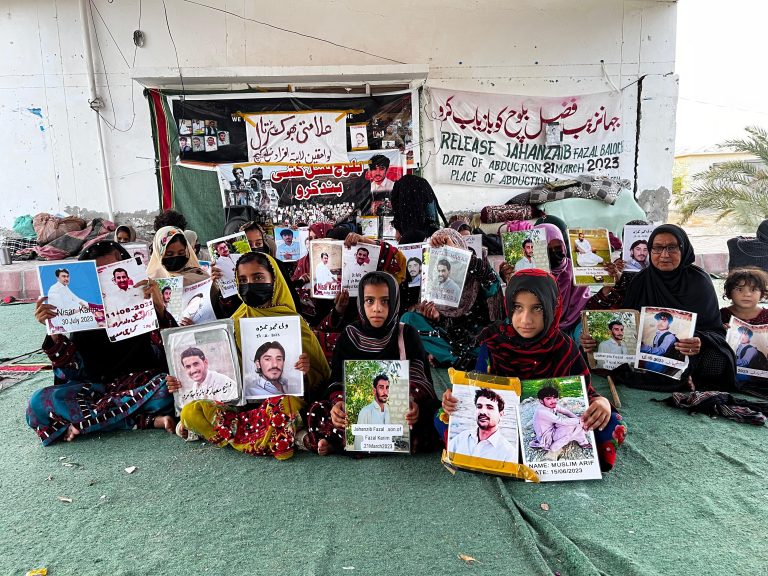
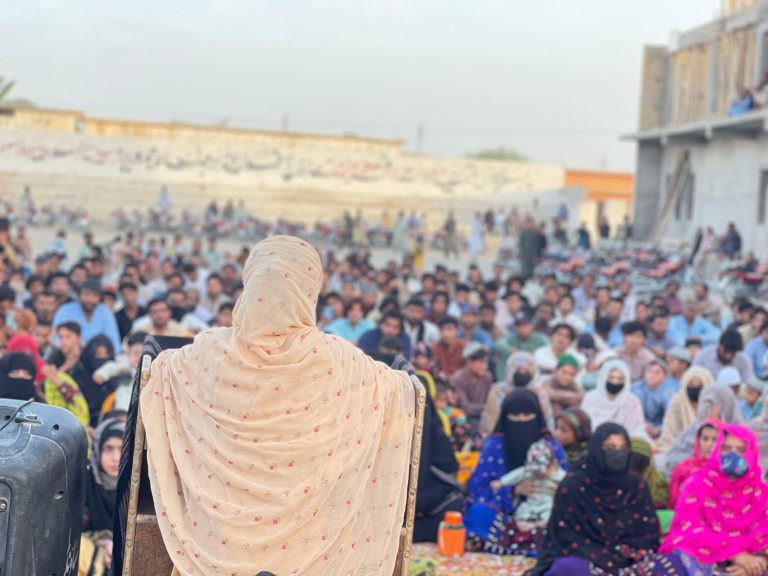
For several days, the citizens of Kharan and relatives of Mukhtiyar Mengal have been staging protests, demanding his immediate recovery.

Protesters have expressed their frustration with the district administration, accusing them of disinterest and negligence in the case. They say that the Mengal has not been recovered due to the authorities’ lack of action. Moreover, no information has been provided to Mengal’s family regarding his recovery.

The protesters escalated their demonstration by ending their shutter-down strike and blocking the main Quetta-Karachi highway from Kharan. They set up a protest camp on the highway, bringing traffic to a standstill.

Deputy Commissioner said that the district administration is utilizing all available resources to recover Mukhtiyar Ahmed Mengal.

Since 1948, POB has been under Pak Army control and enforced disappearances, marginalization, and extrajudicial killings have been used as tools of oppression against the Baloch community.

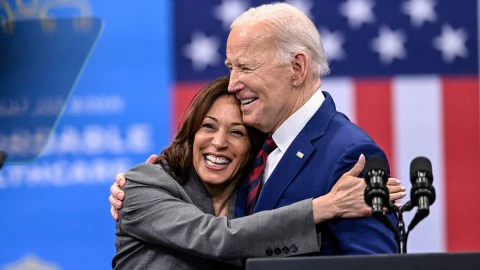
Kamala Harris secures democratic support after Biden’s exit from US presidential election 2024

The hustle and bustle of the presidential election in America continues. The US presidential election is scheduled for November 5 this year, but a big and shocking news has come out that President Joe Biden is withdrawing himself from the presidential race. He has dropped his candidacy himself and said that he has made this decision in the interest of the country and the party. With President Joe Biden stepping out of the race in this manner, the US presidential election has now become even more interesting.

At the end of June, President Biden had a ‘disappointing’ performance in a debate against former President and Republican Party candidate Donald Trump, after which Democratic leaders were pressurising him to withdraw his candidacy. 

After announcing his withdrawal on Sunday, Biden has expressed his support for Vice President Kamala Harris for the presidential position. In his post on X, Joe Biden expressed his support for current Vice President Kamala Harris for the presidential position. He wrote, “My fellow Democrats, I have decided to decline the nomination and focus all my energy on fulfilling my duties during the remainder of my term. In 2020, my very first decision as the party’s candidate was to choose Kamala Harris as Vice President, and it has proven to be an excellent decision.” “Today, I fully support Kamala Harris as the party’s candidate. Democrats, now is the time for us to unite and defeat Trump.”

The past month has been quite eventful in American politics leading up to the U.S. presidential election in November. First, President Joe Biden faced severe criticism for his performance in the first presidential debate. Recently, on July 13, 2024, a shot was fired at Republican presidential candidate Donald Trump during a rally in Pennsylvania. The former president survived the attack but sustained a minor injury to his ear. Another aspect of this election that deserves attention is its connection to India.

AMERICAN POLITICAL SYSTEM

Today, the American political system is dominated by just two parties, so in modern times, every president has belonged to one of them. The Democrats are a liberal political party whose agenda primarily focuses on civil rights, extensive social security, and measures to address climate change. This is the party of current President Joe Biden, who is attempting to secure a second term in office.

The Republicans are a conservative political party in America, also known as the GOP or Grand Old Party. They advocate for a smaller government, the right to bear arms, and strict restrictions on immigration and abortion. Former President Donald Trump is the last remaining Republican in the race and has garnered enough support to be nominated as the Republican candidate.

KAMALA HARRIS’S INDIA CONNECTION 

Kamala Harris is an American of Indian origin. She was born in 1964 in Oakland, California. Her mother, Shyamala Gopalan, was born in Chennai and was a cancer researcher. Her father, Donald Harris, was a Jamaican economist who settled in the United States. Kamala Harris is the first woman, the first Black, and the first Asian American to become Vice President.

Kamala Harris said in her statement on Sunday that she is honored to receive the president’s support. She intends to secure the Democratic presidential nomination and win the election.

BLF’s deadly IED attack on Pak Army convoy in Kech kills 8 Army soldiers

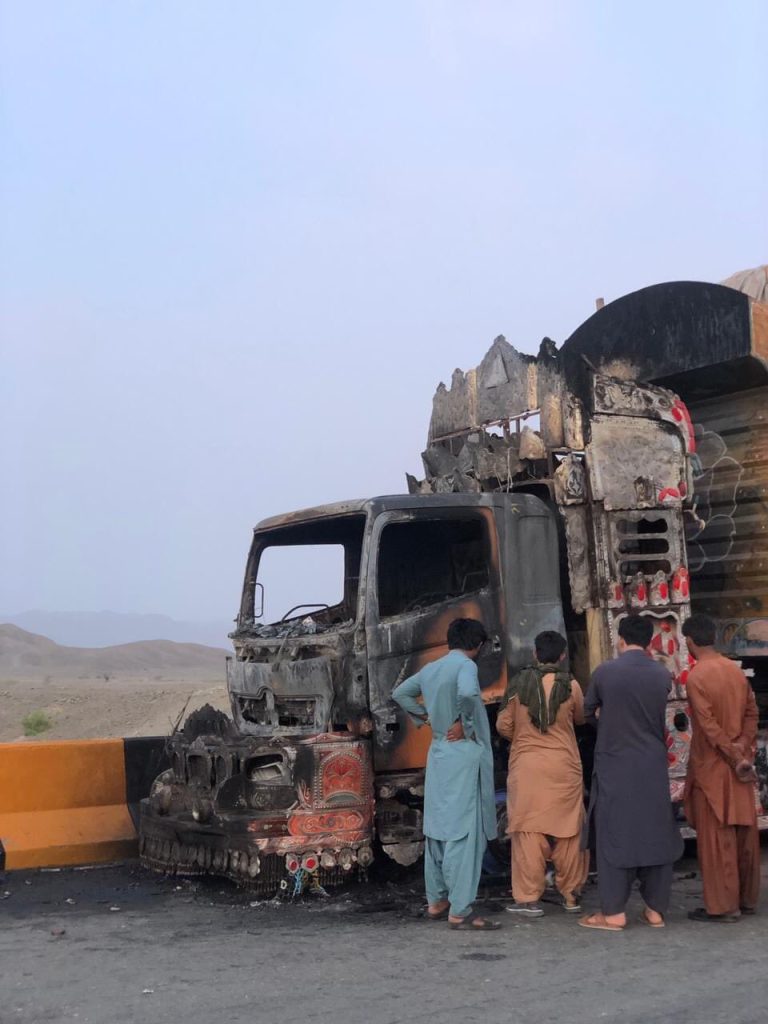
The Balochistan Liberation Front (BLF) has launched a deadly IED attack on a Pakistan Army convoy in the Baledah Gali area of Kech. According to BLF spokesperson Major Gwharam Baloch, the attack resulted in the complete destruction of one vehicle and the death of all personnel on board.

In a statement, Major Gwharam Baloch detailed the incident, stating that at 8:30 a.m, freedom fighters targeted a convoy of forty Pakistan military vehicles heading to Zamran for an operation. The attack resulted in the deaths of a junior military officer and eight soldiers: Junaid, Asif Rashid, Waheed, Usman Ghani, Asim, Nader, and Rahim.

The Balochistan Liberation Front’s fighters are targeting the Pak Army on military and intelligence bases throughout Pak-occupied-Balochistan, causing significant losses. The Pak Army has lost morale and senses due to our persistent attacks,” said Major Gwharam Baloch.

He said that the Pak military is committing raids, forced disappearances, and other crimes in civilian areas as a means to combat the independence movement, calling these actions failed attempts to boost their declining morale.

People’s War

The BLF spokesperson emphasized that the ongoing conflict in Balochistan is a people’s war. “The BLF is advancing this war with the help and cooperation of the Baloch people. We will intensify our attacks on the Army and its allies in the future,” he added.

In a strongly worded statement, the BLF also warned all traders aiding and abetting Pakistan’s projects to stay away or face serious consequences.

The Balochistan Liberation Front has taken full responsibility for the attack and reiterated its commitment to targeting Pakistan’s interests in the region until a free and prosperous Balochistan is achieved.

Since 1948, the Pak Army has brutally occupied the Balochistan region, wreaking havoc on the Baloch community. Tactics such as enforced disappearances, extrajudicial killings, raids, military operations, and the exploitation of mineral resources have been employed to suppress the local population. In response, pro-independence groups like the BLF have resisted the occupation through armed attacks on Pak establishment and continued resistance efforts.

Khyber-Pakhtunkhwa police officials speak up against Pak Army

Police officials from Khyber Pakhtunkhwa has publicly voiced frustration with the Punjabi Pakistan Army’s long-standing policies of violence, discrimination, and marginalization against the Pashtun people. The official said that local law enforcement would no longer comply with the “illegal orders” from the Punjabi military leadership against Pashtun civilians.

The statement highlights decades of exploitation since 1947, when the region came under the control of the Punjabi Pak Army. The Pashtuns are used by the Army for their own agenda, only to later label them as terrorists and target them.

This rare public criticism from within law enforcement circles comes amidst growing awareness and activism among Pashtuns regarding their treatment. The rampant militarization of the region has led to numerous abductions, enforced disappearances and extra judicial killing of innocent Pashtun youths, many reportedly unconnected to any activist activities.

The statement also touched on the dangers faced by journalists and members of the Pashtun Tahafuz Movement (PTM), a civil rights movement, who have reportedly been subjected to violence despite their commitment to peaceful protest.

Of particular concern is the military’s practice of laying landmines in residential areas. This has purportedly resulted in tragic incidents, with children often falling victim to unexploded ordnance and rarely a terrorist.

This bold statement from the local police force underscores the increasing willingness of Police officials to speak out against the long-standing injustices.

Pak-occupied Balochistan: BLA kills ISI operative in Turbat

In a daring attack, the Baloch Liberation Army (BLA) killed a Pak Army’s intelligence operative in Turbat, Pak-occupied-Balochistan.

According to a statement released by BLA spokesperson Jeeyand Baloch, the incident occurred on Saturday in Turbat city. The BLA said that its fighters targeted and killed an operative of Pakistan’s Inter-Services Intelligence (ISI) agency.

The statement identified the deceased as Arshad, son of Gul Muhammad, reportedly a resident of Sindh province. The attack took place in the Gwadar Stop area of Turbat.

Jeeyand Baloch said that the victim was working undercover as an informant for the ISI in Turbat city. The BLA spokesperson asserted that such attacks on Pak forces and their associates would continue.

Since 1948, Pak-occupied-Balochistan province has witnessed decades of unrest and a ruthless crackdown by Pak Army against the Baloch community. Therefore, pro-independence groups like BLA are engaged in armed struggle against the brutal occupation. 

Pak Army fire and kill several during peace rally in Bannu

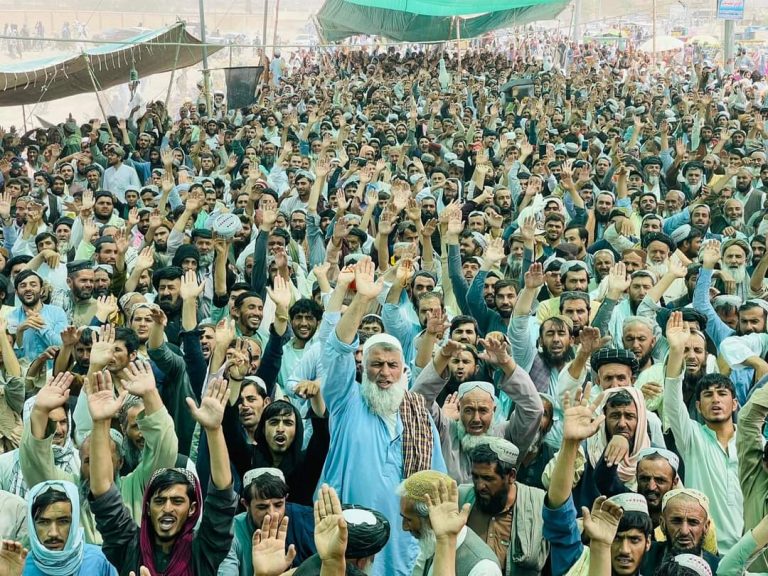
Thousands of protesters gathered in Bannu on Friday to demonstrate against ongoing violence in their region. The rally, dubbed a “Peace March,” turned tragic when Punjabi Pakistan Army reportedly opened fire on the crowd, resulting in multiple casualties.

At least five people were killed and dozens more were injured and the violence erupted when protestors approached a military installation, prompting the forces to open fire.

Provincial Minister of Public Health, Pakhtun Yar, confirmed the fatalities and called out the Pakistan forces of targeting protesters. “During the rally, direct shots were fired at me and the people standing near me. It wasn’t just aerial firing; the intention was to kill us,” he said.

The massive rally was organised by over ten thousands of locals Pashtuns protesting against the terrorism. The demonstrators observed a wheel jam strike, leading to the shutdown of all occupied-authorities offices as part of their protest against terrorism and the potential for a military operation in the area.

https://twitter.com/SaPashtun1/status/1814404297783947634

Manzoor Pashteen, leader of the Pashtun Tahafuz Movement (PTM), posted on social media platform X that Punjabi Pakistan Army had opened fire on the peaceful protest.

Prominent Baloch activist Dr. Mahrang Baloch also condemned the shooting. “The attack on the rally against terrorism in Bannu is a continuation of the Pashtun genocide that has been ongoing for several decades,” she said. “When people take to the streets to demand peace, the Army massacres them.”

This tragedy is a part of a broader pattern of exploitation of Pashtun lands and people by the Punjabi Paki establishment since 1947. This exploitation includes the extraction of mineral resources and the use of terrorism to justify military presence in Pashtun territories, resulting in security checkpoints, military camps, and forced evacuations.

The militarization has led to the abduction, enforced disappearance and extra judicial killings of many innocent youths, often unconnected to any activist activities. Journalists and PTM members face violence and death despite the movement’s peaceful stance. Furthermore, the military’s practice of laying landmines in residential areas has led to tragic incidents, with children frequently being maimed or killed by explosions.

CTD arrests senior Al-Qaeda leader Amin ul Haq in Punjab (Pak)

Pakistan Army’s counter-terrorism officials announced on Friday the arrest of Amin ul Haq, a senior Al-Qaeda leader and close associate of the late Osama bin Laden. Haq, who appears on a U.N. sanctions list, was apprehended in Punjab province, marking Pakistan’s first major Al-Qaeda arrest in several years.

The Counter-Terrorism Department (CTD) of Punjab Police registered a legal case against Haq, for planning to sabotage key installations in the province. Specific details of his plans or the targeted installations have not been disclosed.

The CTD described Haq’s arrest as a crucial development in ongoing counter-terrorism efforts. DIG Counter-Terrorism Department Usman Akram Gonadal said that Haq, designated as a global terrorist by the United Nations, was taken into custody from Sarai Alamgir, a town in the Gujrat district of Punjab province.

Haq was planning a “large-scale terrorism project” in Pakistan, according to the CTD. The department has registered a case against him and moved him to an undisclosed location for interrogation.

Violence in Khyber-Pakhtunkhwa

The United Nations Security Council’s sanctions panel identifies Haq as Amin Muhammad ul Haq Saam Khan, noting his role as a security coordinator for bin Laden. The panel listed him for his association with Al-Qaeda and the Taliban, citing activities such as “supplying, selling or transferring arms and related materiel” to these groups.

Bin Laden, the mastermind behind the 9/11 attacks on the U.S., was killed in 2011 during a U.S. raid on his hideout in Abbottabad, Khyber Pakhtunkhwa province.

Militancy and violence have surged along Khyber Pakhtunkhwa, with the Punjabi Army accusing Kabul of failing to root out groups taking shelter on Afghan soil. The Punjabi Pak Army is accusing the Taliban and its subsidiary, TTP, of violence and the recent attack on the Bannu cantonment.

Under the guise of uprooting extremist elements, the Punjabi Pak Army is conducting a sweeping new military campaign. This violence is inflicting damage on the Pashtuns, innocent youth, and peaceful activists. Pashtuns have been caught in the middle of the terrorism that the Army sowed in the region.

Armed men kill Pak Army personnel, injure 14 in IED attacks

A Pakistan Army soldier was reportedly killed, and fourteen others were injured in two separate explosions targeting Pak forces’ vehicles in Buleda and Pishin towns of Pak-occupied-Balochistan on Friday.

In the Buleda area of Kech district, unidentified individuals targeted a vehicle of Pak Army with an improvised explosive device (IED). The explosion resulted in the death of paramilitary Naik Sher Khan and injured eight others, including Sepoy Junaid, Sepoy Asif Rashid, Sepoy Waheed, Sepoy Usman Ghani, Sepoy Asim, Sepoy Nadir, and Sepoy Rahim. And the condition of two of the injured is critical.

The deceased and injured were shifted to the Teaching Hospital in Turbat, and the Army cordoned off the area following the explosion.

Meanwhile in Pishin, a Pashtun-dominated area of Pak-occupied-Balochistan, a Counter-Terrorism Department (CTD) vehicle was bombed by unidentified individuals. The remote-controlled explosion on Bund Khushdal Khan Road injured six people, including three CTD personnel and three civilians. The injured were transported to Civil Hospital in Pishin for medical treatment.

Police and Frontier Corps (FC) sealed off the area and initiated an investigation following the Pishin explosion. No group has claimed responsibility for either of the bombings at the time of this report.

This attack highlights the ongoing security challenges faced by the Army in the region. Since 1948, the Pakistan Army has forcefully occupied the resource-rich region of Balochistan and, to exploit it indefinitely, has launched scathing attacks on the Baloch community. 

Bangladesh imposes curfew, disables internet amid violent students’ protest

Amid escalating student-led anti-government protests, Bangladesh has imposed a nationwide curfew and disabled mobile internet services to curb disinformation. Following the curfew, authorities have shut down schools and universities indefinitely.

The nationwide protests, sparked by opposition to job quotas, have led to heightened security measures. The Border Security Forces (BSF) conducted security checks at the Indian Immigration check post in Fulbari, Jalpaiguri.

The curfew announcement on Friday evening came after clashes between police and student groups resulted in dozens of deaths, according to The Washington Post.

Violence on Thursday in 47 of Bangladesh’s 64 districts killed 27 and injured 1,500. By Friday night, the total number of those dead from the protests reached 105, AFP separately reported, citing hospitals. Reuters could not immediately verify the reports and police have not issued a casualty toll.

The U.S. Embassy in Dhaka said that reports indicated more than 40 deaths and “hundreds to possibly thousands” injured across Bangladesh. In a security alert, it said protests were spreading, with violent clashes being reported across Dhaka. The situation was “extremely volatile,” it said.

Student Protests

The unrest began with students protesting a new policy that reserves a portion of government jobs for descendants of the nation’s freedom fighters. The protesters attacked the state television headquarters in Dhaka and set fire to police booths on Thursday, calling for a “complete shutdown” of the country.

Street battles between security forces, who are using rubber bullets and tear gas, have brought life in several neighborhoods to a halt, as reported by Bangladeshi media.

Additionally, several leading Bangladeshi newspaper websites have not been updated since Thursday or are inaccessible, and television channels have been taken off the air.

The Indian High Commission in Dhaka is coordinating with local authorities to ensure the safety of students traveling to India. The Indian mission, in collaboration with BSF and the Bureau of Immigration, is facilitating the return of Indian students from Bangladesh. A total of 245 Indian nationals, including 125 Indian students and 13 Nepali students, arrived on Friday through the Gede border crossing in West Bengal.

The protests, initially driven by anger over job quotas, have also been fueled by high unemployment among young people, who make up nearly a fifth of Bangladesh’s 170 million population. Some analysts suggest that the violence is also being driven by wider economic woes, such as high inflation and shrinking foreign exchange reserves.

The protests have opened old and sensitive political fault lines between those who fought for Bangladesh’s independence from Pakistan in 1971 and those accused of collaborating with Islamabad. The former include the Awami League party of Prime Minister Sheikh Hasina, who branded the protesters “razakar,” a term used to describe independence-era collaborators.

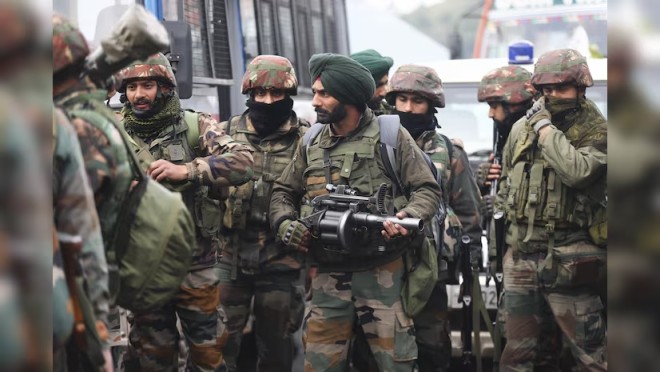
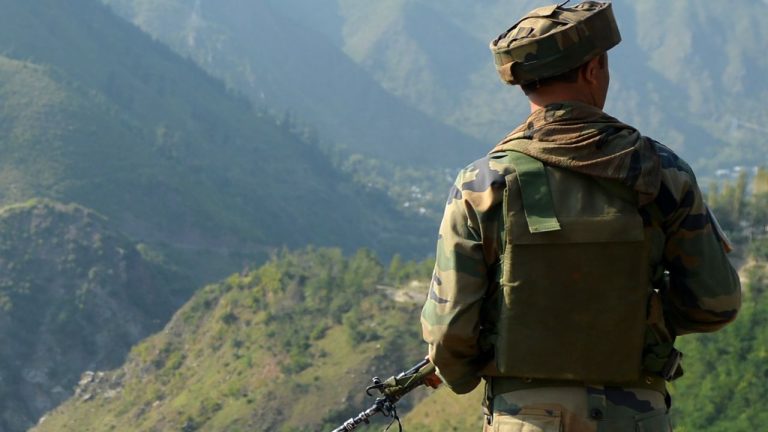
Ending J&K’s ‘Armed Struggle’: A call for change

The Past

When terrorism first raised its ugly head in Kashmir Valley more than three decades ago, it was complemented with a craftily orchestrated campaign that was extraordinarily high in emotional content. Beguiled by promises that “azadi [freedom] was just around the corner”, the people of J&K heartily welcomed the armed Kashmiri youth [calling themselves ‘freedom fighters’] who had been trained and armed by Pakistan Army’s intelligence wing Inter Services Intelligence [ISI] and would ‘liberate’ Kashmir through an ‘armed struggle’.

So strong was the prevailing euphoria then that locals failed to see the ugly underbelly of the so-called ‘armed struggle’ and discern ISI’s sinister game-plan of turning J&K into a battleground for its proxy war against India as well as using its people as ‘cannon-fodder’. What followed was a tragedy of humongous proportions- unquestioningly obeying the diktat of their sponsors terrorists went on a killing spree, assassinating all those opposing Pakistani involvement in Kashmir and even those who questioned J&K’s accession to India and the ‘right to self determination’ supporters weren’t spared.

While ‘azadi’ is as elusive today as it was more than three decades ago, its connotation too has undergone a complete change. After enticing people of J&K with promises of freedom and a glorious future, ISI realised that similar emotions encouraging secessionist ideology could well find a place in the minds of those living in Pakistan occupied Jammu and Kashmir [PoJK], making Pakistan’s illegal occupation of this region difficult. So, without even consulting the people of J&K, the ISI replaced the very idea of ‘azadi’ by the “Kashmir banega Pakistan” [Kashmir will become part of Pakistan] slogan.

When its proxy Jammu and Kashmir Liberation Front [JKLF] refused to give up its demand for ‘freedom’, ISI created the Hizbul Mujahideen [HM] terrorist group to decimate JKLF and propagate Pakistan’s weird interpretation of ‘azadi’ making it synonymous to J&K’s merger with Pakistan. By professing jihadist ideology and indulging in widespread killings, HM shed all pretence of fighting for the people of J&K and instead unashamedly worked as ISI’s proxy in J&K. The fact that HM chief Syed Salahuddin himself admitted that “we are fighting Pakistan’s war in Kashmir,” clearly indicates this group’s absolute subservience to ISI!

The Present

Emotions have cost the people of Kashmir dear, and having been the hapless victims of terrorism for more than three decades, there’s a need for them to dispassionately reflect upon what they have gained and lost from this ongoing cycle of senseless violence. It needs to be remembered that there’s no family in Kashmir that hasn’t suffered directly or indirectly due to the adverse fallouts of terrorism. While thousands of innocents have been killed and maimed, several properties have been destroyed and with tourism and normal life coming to a halt, employment avenues are few.

Thankfully, things have now changed for the better and with locals becoming more discerning, few now believe in Pakistan’s web of lies aimed at surreptitiously furthering its self-serving interests in Kashmir at the cost of its people. With few takers for the hybrid ‘azadi’ promise, terrorist groups in J&K are now increasingly relying on jihadist ideology for recruiting gullible youth. Proudly accepting that “The Kashmiri movement was Islamised from day one,” Salahuddin reasons, “Why do you think an educated young man, who has a bright future otherwise, is willing to die? Is he mad? Azadi is not his objective. What will he do with azadi if he dies during the struggle? [Emphasis added].

The HM chief candidly admits that “He [the terrorist] is into militancy because he knows that if he dies for a noble cause, he would become a martyr, as per Islam. We tell him that he would get into the “real life” after this death and he would get peace. Khuda ussey raazi hoga. [Allah would be pleased with him]. [Emphasis added]. What needs to be noted here is that while Salahuddin is motivating young boys to join terrorist ranks by promising them salvation, he’s not been able to persuade even one out of his five sons to pick up the gun and enjoy “the real life” after death.

Similarly, though Hurriyat leaders too have been talking glibly of how terrorists killed in encounters are assured of a place in paradise, none of their own sons [save one] have availed this promised benefit despite all the worldly pleasures known to mankind that it supposedly provides. Junaid Ashraf Khan, son of former Tehreek-e-Hurriyat chairman Mohammad Ashraf Sehrai did join in 2018 and though appointed ‘Divisional Commander’ of HM, confined himself to Old Srinagar city as its labyrinth of narrow and interconnected alleys afforded natural protection till he ran out of luck two years later when he was tracked down and eliminated in his hideout in the old city’s Nawakadal area.

Statistics clearly indicate that terrorists have extremely short existence. Just two weeks before the Hurriyat leader’s son was killed, HM’s ‘Operational chief’ Riyaz Naikoo met the same fate. Naikoo had replaced Zakir Musa, who turned rogue and joined Al Qaeda affiliate Ansar Ghazwat-ul-Hind in 2017. Musa, who himself was gunned down in 2019, had replaced Burhan Wani after the latter was killed during an encounter in 2016. Burhan Wani’s case is tragic and it exposes how both the Hurriyat and HM used this young boy as the proverbial ‘sacrificial lamb’ for their own self-serving interests.

Burhan Wani was more of a publicity seeker than a terrorist and thoroughly enjoyed the attention his posts evoked on social media. Since security forces monitor social media, one had expected the Hurriyat and HM to advise this young boy against indiscreet use of internet as it could compromise his location and endanger his life. However, instead of doing so, they kept prodding him to continue posting on social media and thus pushed him to his death. After Wani’s death, Hurriyat organised prolonged protests with the generous supply of funds from across the Line of Control [LoC] through the hawala route, and on instructions of ISI organised a vicious campaign of torching educational institutions.

The Future

If we don’t learn from the three decades of Pakistan sponsored terrorism in Kashmir, then we will never be able to improve our lot. Pakistan’s claims on Kashmir have been outrightly rebuffed by the international community as they lack credibility. The UN’s refusal to entertain Islamabad’s request asking New Delhi to reverse its decision of abrogating Article 370 has completely demolished Pakistan’s farcical Kashmir narrative of it being “disputed,” and this reality cannot be wished away by rhetoric. The dividends of peace in J&K are now clearly visible and no one can deny that there’s been a marked improvement in both infrastructural development in this region and quality of life of its people.

Though Pakistan has not been able to realise its Kashmir dream even after using terrorism for more than three decades, Islamabad is not going to restrict, let alone eschew, disruptive activities in J&K. It may be debated that if the majority of the people in J&K are happy with their new found peace and prosperity, then why some local youth are still joining terrorism. The answer is simple-there are a group of people ranging from influencers, facilitators and even some leaders who are benefiting financially from ongoing terrorism in J&K, and they would go to any extent in ensuring the status quo. Then there is the gullible youth that can easily be brainwashed into believing that the killing of innocents has divine sanction and will earn them a place in paradise.

The adage ‘God helps those who help themselves’ has universal acceptability and as such the people of Kashmir need to understand that while support from other agencies is of great assistance, there can be no substitute for the inescapable requirement  of the people of J&K to play their due role in facilitating return of normalcy. Punjab too was once the victim of cross-border terrorism spurred by demands for creation of an independent entity by breaking away from India- just like what J&K is experiencing. But Pakistan’s sinister plan failed due to rejection of this secessionist ideology by the local population and their whole hearted cooperation with the administration and security forces.

It’s time the people of J&K belonging to all sections of society put aside their petty differences and work together for ensuring the return of enduring peace and prosperity to this region, by outrightly rejecting violence in the garb of a futile ‘armed struggle’. In 2007, senior Hurriyat leader Mirwaiz Umar Farook had admitted that military means [to resolve the Kashmir issue] have not achieved any results except creating more graveyards,” and even the most rabid supporters of the supposed ‘armed struggle’ can’t contradict this incisive observation.

So, instead of letting ongoing terrorism in J&K create more graveyards, isn’t it more prudent to bury the so-called ‘armed struggle’ itself?