Home Blog Page 88

Pak Army abducts Pashtun activist’s brother in Chaman

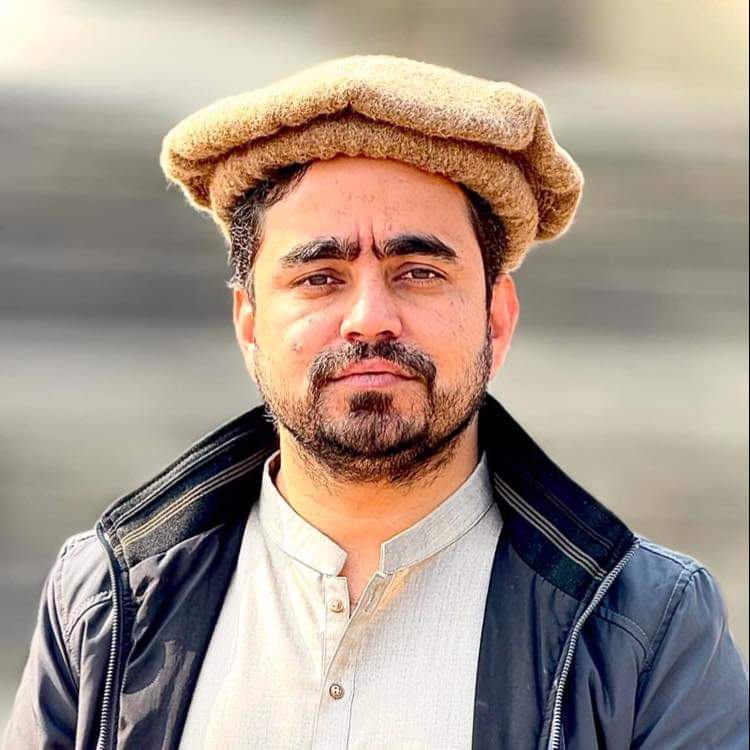
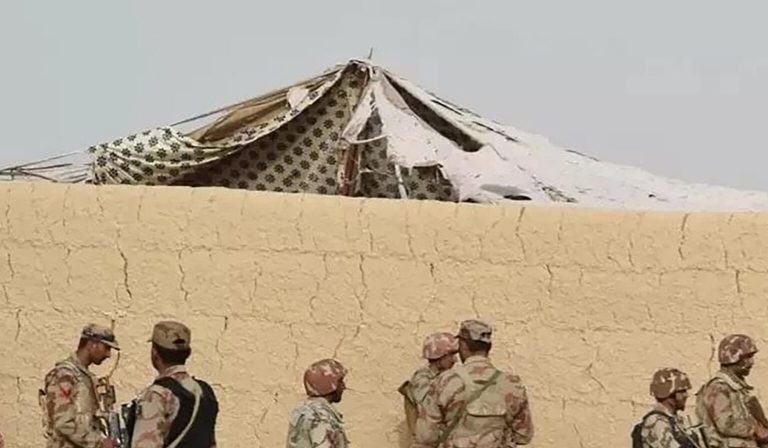
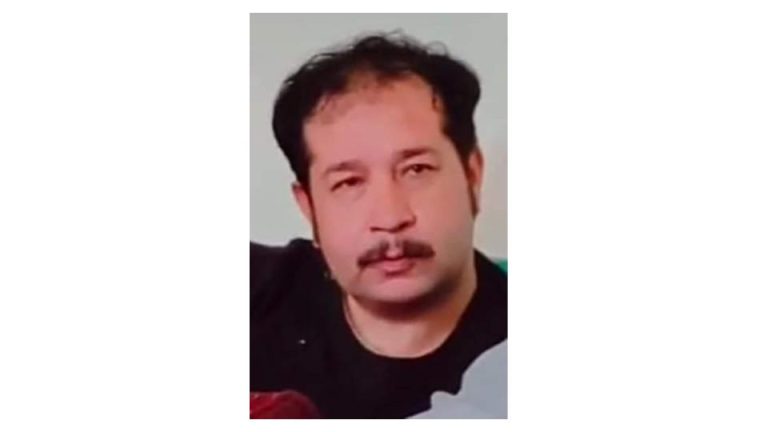
In the latest incident, police reportedly raided the home of PTM frontline member Owais Abdal in Chaman. Although Abdal was not present, authorities took his older brother into custody.

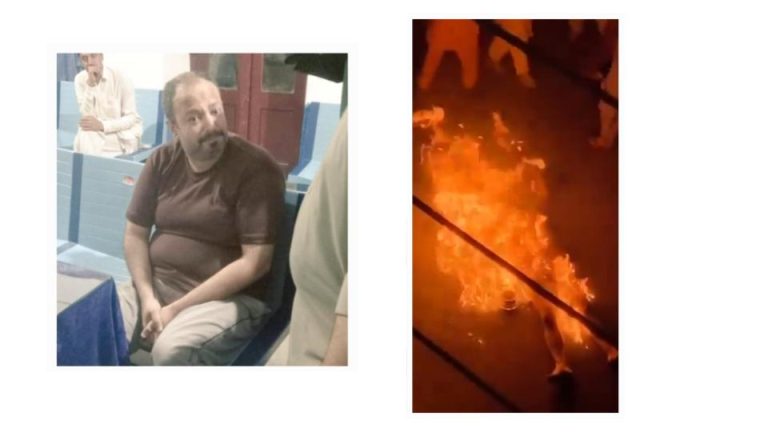
This action follows the reported abduction of Khan Zeb Mahsud, another PTM activist, on June 6 in Karachi. Mahsud was taken by plainclothes personnel and paramilitary Rangers in the Sohrab Goth area. His current whereabouts remain unknown, raising concerns about enforced disappearances.

These incidents represent a form of political repression, and that Pakistan is using “witch hunting tactics” and outdated Frontier Crimes Regulations (FCR) to suppress dissent. The PTM, which advocates for the rights of the Pashtun ethnic minority, has faced increasing pressure from Pak Army.

The PTM’s activism has reportedly drawn the ire of the Paki establishment, and the Army is resorting to abductions and extrajudicial killings to silence dissenting voices.

Over 1,000 hajj pilgrims die due to extreme heat in Mecca

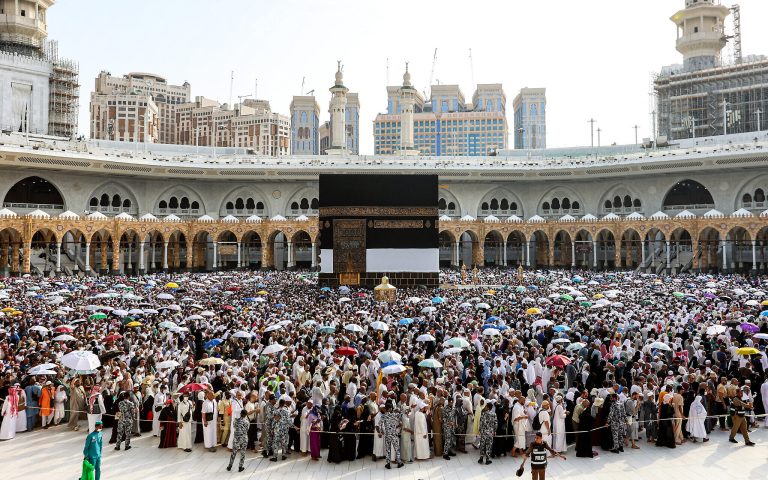
A devastating heatwave has struck Mecca during the annual Hajj pilgrimage, resulting in more than 1000 deaths and thousands of cases of heatstroke among Muslim pilgrims. Temperatures soared to a scorching 52 degrees Celsius (120 degrees Fahrenheit) as over 1.8 million people participated in one of the world’s largest religious gatherings.

The reports on Thursday highlighted that the 658 Egyptians who died, 630 were unregistered pilgrims. About 10 countries have reported 1,081 deaths during the pilgrimage.

The Jordanian Foreign Ministry also reported 22 of its citizens hospitalized and 16 still missing. The Iranian Red Crescent stated that dozens of Iranians have been hospitalized due to heatstroke and other heat-related conditions.

Authorities fear the actual number of casualties may be higher, as Saudi Arabia and Egypt have yet to release official figures. Moreover, the current count only includes registered pilgrims, raising concerns about potential unreported deaths among unregistered participants.

Oven-like Saudi summer

The Saudi government reported that more than 2,700 people have been treated for heatstroke. In response to the extreme conditions, Saudi authorities advised pilgrims to avoid performing the “stoning of the devil” ritual during the hottest hours of the day.

To combat the harsh weather, Hajj officials have urged pilgrims to use umbrellas and stay hydrated. The Saudi army has deployed over 1,600 personnel with specialized medical units for heatstroke treatment, along with 30 rapid response teams and 5,000 health and first aid volunteers.

While deaths during the Hajj are not uncommon, this year’s pilgrimage coincided with one of the hottest months in Saudi Arabia, exacerbating the risks for participants. The extreme weather has cast a shadow over the sacred event, which is not only a religious obligation for Muslims but also a significant source of prestige and revenue for Saudi Arabia.

Safia Baloch calls for global support at German womens’ festival

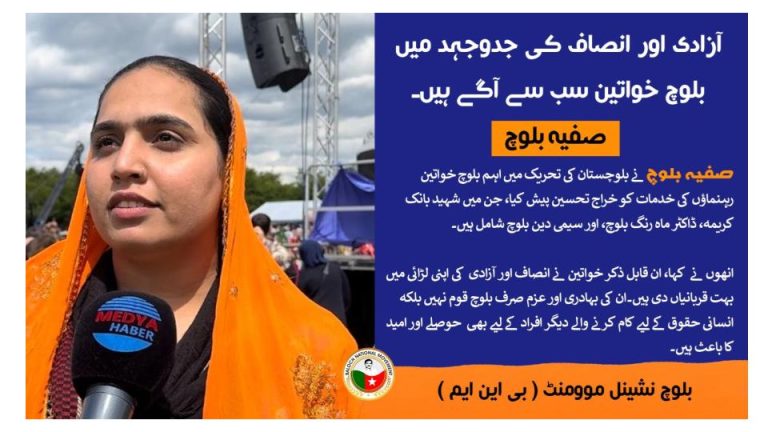
Safia Baloch, Vice President of the Baloch National Movement (BNM) Germany, emphasized the crucial role of Baloch women in the ongoing struggle for freedom, human rights, and justice in Balochistan. Speaking at the Kurdish Women’s Association festival in Duisburg, Germany, Baloch represented both the BNM and the wider Baloch nation.

In her address, Safia Baloch paid homage to prominent Baloch women leaders who have made significant contributions to the Balochistan movement. She specifically mentioned Shaheed Banuk Karima, Dr. Mahrang Baloch, and Sammi Deen Baloch, praising their sacrifices and determination in the fight for justice and freedom.

“These remarkable women have sacrificed immensely in their fight for justice and freedom”, Baloch said. “Their bravery and determination are a source of courage and hope not only for the Baloch nation but also for others advocating for human rights.”

The BNM leader used the platform to appeal for international support for the Baloch national independence movement. She accused Pakistan of occupying Baloch resources and land, thereby denying the Baloch people their right to self-determination. Baloch also highlighted the ongoing issue of forced disappearances, which she attributed to the Pak Army’s actions against those struggling for freedom.

Safia Baloch’s appearance at the Kurdish Women’s Association festival underscores the efforts of Baloch activists to raise awareness about their cause on international platforms. Her call for support reflects the movement’s strategy to garner global attention and solidarity for the Baloch struggle for independence and human rights.

Pak backed terrorist attack on pilgrim bus in J&K proves Pakistan’s unabated treachery

On June 9, Pakistan sponsored terrorists opened indiscriminate fire on a bus carrying pilgrims in the Reasi district of J&K killing nine and injuring 33 passengers. The date and timing of this dastardly attack as well as the target weren’t randomly selected -while the date and timing coincided with the oath taking ceremony of Indian Prime Minister Narendra Modi, the passengers travelling in the bus that was attacked were exclusively Hindu devotees who were on pilgrimage.

Needless to say, this cold blooded massacre that occurred as Modi took oath for his third consecutive term as Prime Minister followed by three other terror attacks within 72 hours was primarily meant to mock New Delhi’s claim of normalcy returning to J&K. Similarly, the obvious objective of targeting a bus exclusively carrying Hindu pilgrims was to incite communal violence as it would buttress Islamabad’s ludicrous narrative that Muslims in India are getting a raw deal.

However, the plan of Pakistan Army’s spy agency Inter Services Intelligence [ISI] which is directing the ongoing proxy war in J&K to create mayhem through this extremely perverse act has failed. This incident has created such intense revulsion that even pro-Pakistan All Parties Hurriyat Conference [APHC] whose tallest leader SAS Geelani had proudly admitted that “we never denied or ignored the role of [the gun] in our struggle,” had to issue a statement condemning the Reasi bus terrorist strike!

Now that it’s brazen provocation has failed to create unrest, the Pakistan Army is visibly rattled by the looming threat of retribution by India which is evident from the otherwise reticent Pakistan Army chief Gen Syed Asif Munir suddenly turning offensively vocal after the Reasi bus terrorist attack. As per The Express Tribune, he has noted “that post-election, India has been attempting to mask its aggression with false propaganda and provocations against Pakistan,” but he hasn’t been able to substantiate these allegations.

By talking about “false flag operations” and threatening that any provocation or violation of Pakistan’s territorial sovereignty will be met with a swift and resolute response,” Gen Munir may be trying to put up a brave face. However, the timing, tone and tenor of his rant leaves no room for any doubt that he’s definitely perturbed by the distinct possibility of New Delhi avenging the cold-blooded murder of innocent Indians, and since such retribution already has a precedent, Rawalpindi’s apprehensions are well founded. It’s also an admission of complicity and guilt!

While New Delhi is under public pressure to take punitive action as the majority feel that there is no other language which Pakistan understands, there are some who despite being aware of Pakistan’s brazen duplicity on the Kashmir issue still believe that talks can normalise the situation. National Conference [NC] president Farook Abdullah is one such person who feels that the present government in Pakistan wants “to have a peaceful atmosphere with us,” and hence suggests “Let’s open the door to them.”

While the NC president’s optimism is praiseworthy, past experience has proven beyond any doubt that expecting any positive move from Islamabad’s side to amicably resolve the Kashmir issue is [to say the least], being acutely delusional. What needs to be clearly understood is that even if Islamabad is keen to normalise relations with India, Rawalpindi will definitely play spoiler and being the last word in Pakistan’s Kashmir policy, the Army will never allow any rapprochement between New Delhi and Islamabad, simply because normalcy would demolish Rawalpindi’s contrived narrative of it being the nation’s ultimate bulwark that’s keeping Indian hegemonistic ambitions at bay!

Those who advocate peaceful resolution of the Kashmir issue through are perhaps not aware of the reality coming right from the proverbial horse’s mouth. In his book ‘The Other Side of The Mountain’, Former Indian External Affairs Minister Salman Khurshid has mentioned the then Indian Prime Minister Manmohan Singh telling his Pakistani counterpart Nawaz Sharif on the sidelines of the UN General Assembly in September 2013 that “Mian Saheb, no Indian Prime Minister can sign away Kashmir, and nor can I…”

Two years later, while addressing the inaugural session of Srinagar Media Summit organised by Lehar NGO, veteran journalist Kuldip Nayyar mentioned that “My friendship with Nawaz Sharif goes back a long way,” and revealed that “I met him in Jeddah [Saudi Arabia] during his wilderness years… He told me ‘Neither we can take Kashmir from you, nor you can give Kashmir [to us]’.” With Nawaz Sharif [who is president of PML-N party which is currently part of Pakistan’s coalition government] expressing helplessness on the issue of Kashmir, how can one expect it to be sorted out through talks?

Lastly, it would be worthwhile for those who still think that the Pakistan sponsored proxy war in J&K can be ended through dialogue to understand the near complete dependence of Islamabad’s feeble Kashmir narrative on terrorism. In an interview given to Der Spiegel in 2010, when asked “Why did you form militant [terrorist] underground groups to fight India in Kashmir,” former president of Pakistan and its ex army chief Gen Pervez Musharraf nonchalantly replied, “They were indeed formed. The government turned a blind eye because they wanted India to discuss Kashmir.”

Eight years later, during an interview with a domestic news channel, Gen Musharraf not only disclosed that “In 1990s the freedom struggle [terrorism] began in Kashmir…At that time Lashkar-e-Taiba [LeT] and 11 or 12 other organisations were formed,” but also went as far as accepting that “We supported them and trained them as they were fighting in Kashmir…” [Emphasis added]. This admission of Rawalpindi using terrorists to wage proxy war in J&K is buttressed by none other than chief of the ISI created United Jihad Council and head of Hizbul Mujahideen Syed Salahuddin who has admitted that “we are fighting Pakistan’s war in Kashmir.” [Emphasis added].

Since it’s giving Rawalpindi the low cost option of bleeding India through a thousand cuts, how can anyone expect Pakistan to give up sponsoring terrorism in J&K?

While the NC president and others who opine that military action will not resolve the Kashmir imbroglio are spot-on, given Rawalpindi’s obdurate stance, parleys not be of any help either. This is exactly what Abdullah has implied by observing that “The terrorists are coming through borders, and they will continue coming. Whichever government will be there tomorrow, will have to face the same thing…” So, while his genuine concern and anguish “that innocent people are getting killed,” is understandable, the NC president’s belief that this tragedy can be overcome through dialogue is unfortunately misplaced.

Accordingly, while military action may not end the incessant tribulations of the Kashmiris caused by terrorism, punitive action against perpetrators would certainly serve as a deterrent, and hence is the only practical option available to New Delhi for ensuring that terrorist violence levels do not spiral out of control!

Kashmir: Hizbul Mujahideen terrorist arrested from Handwara

In a major counter-terror operation, security forces arrested a Hizbul Mujahideen terrorist who was receiving instructions from a handler based in Pakistan to carry out attacks in the Handwara region of North Kashmir.

Acting on specific intelligence inputs, a joint team of the Indian Army’s 30 Rashtriya Rifles and Jammu and Kashmir Police conducted a raid in Kachri village of Handwara. During the operation, the forces apprehended the terrorist identified as Zakir Hamid Mir, a resident of the village.

According to Dawood Ayoub, Senior Superintendent of Police (SSP) Handwara, a Chinese pistol and a hand grenade were recovered from Mir’s possession. Preliminary investigations revealed that the arrested terrorist was tasked with carrying out targeted killings in the Handwara area.

“Mir was in touch with a Pakistan-based handler named Zahoor Ahmad Mir, who was instigating and instructing him to execute terrorist strikes, which could potentially target innocent civilians,” the SSP said.

SSP said that the Pakistani handler had directed Mir to conduct an “easy terrorist attack” in Handwara, hinting at the possibility of civilian casualties. The security forces’ timely operation averted a major tragedy, he added.

An FIR has been registered against the arrested terrorist, and further investigations are currently underway to unravel the broader conspiracy and network, officials informed.

Armed men attack Pak intelligence offices, military camps in Pak-occupied Balochistan

Multiple explosions and intense gunfire rocked the city of Turbat and Kharan in Pak-occupied- Balochistan province as armed men simultaneously attacked the offices of the country’s intelligence agencies.

Reportedly, five to six powerful blasts near the Degree College Road area of Turbat occurred, where the offices of Pakistan’s Inter-Services Intelligence (ISI) and Military Intelligence (MI) are located. The explosions were followed by intense firing.

No group immediately claimed responsibility for the coordinated assaults. Balochistan has experienced a long-running violence and marginalisation by Pak Army and therefore, the demand of independence and autonomy for the resource-rich has increased. These coordinated assaults are a brave act of defiance and resistance against the occupying Pak Army who not only has inflicted havoc on the Baloch community but also has exploited the resources.

Protests erupt over journalist Khalil Jibran’s brutal killing in Khyber-Pakhtunkhwa

Protests have intensified in Khyber Pakhtunkhwa province over the brutal killing of senior journalist Khalil Jibran in the Landi Kotal area.

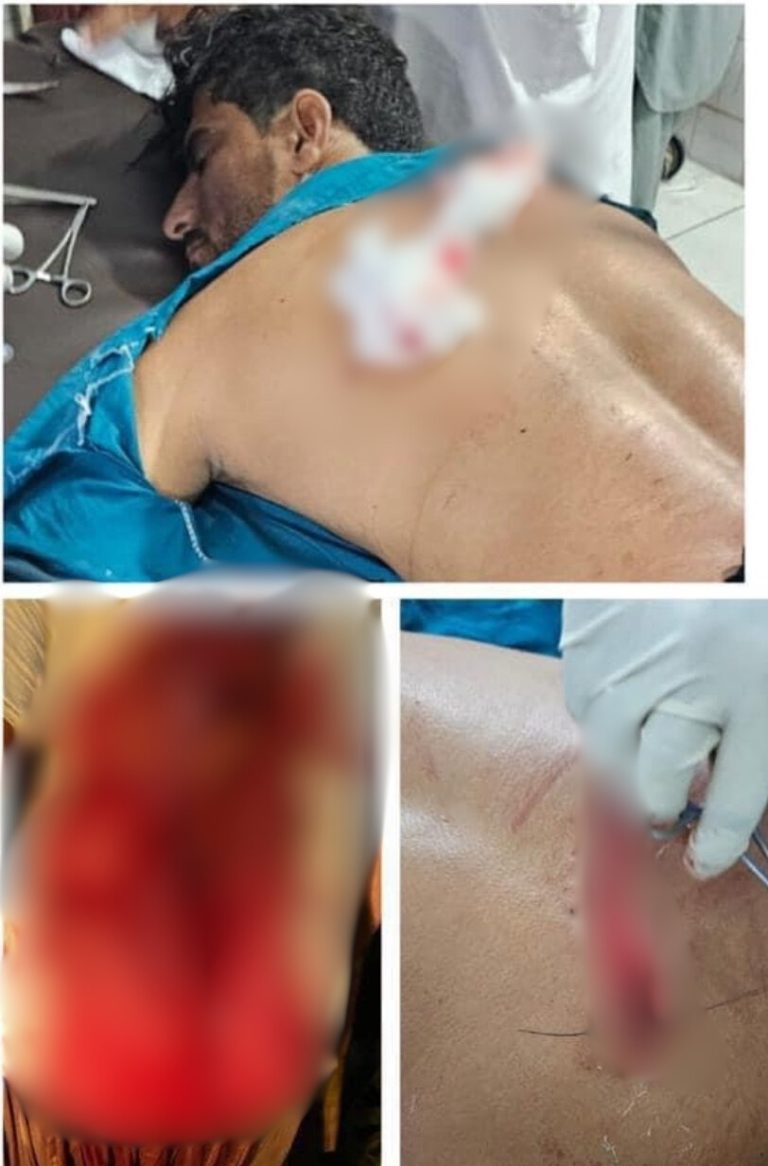
Jibran’s vehicle was ambushed by armed men on Wednesday when he was returning from a dinner party in the Mazreena locality of Sultan Khel with friends, including a local lawyer. Two gunmen dragged Jibran out of the car and opened fire, killing him on the spot, while the other occupants were spared.

Doctors at the District Headquarters Hospital in Landi Kotal said Jibran’s body bore 19 bullet wounds, and his arm was fractured, suggesting a physical scuffle with the attackers. The lawyer, Sajjad Khan, sustained a bullet wound to his hand.

Outraged residents and local journalists staged a protest demonstration in the morning before Jibran’s funeral. They blocked the main highway leading to the Torkham border, accusing law enforcement agencies of failing to launch a timely search operation despite information about the presence of Tehreek-i-Taliban Pakistan terrorists in the area.

The protesters issued a three-day ultimatum for the arrest of the perpetrators and demanded financial assistance of Rs 10 million for Jibran’s family and free education for his children.

Journalist organizations and press clubs across Khyber Pakhtunkhwa have also condemned the brutal murder and staged separate protests, demanding justice and an end to violence against media professionals.

Another protest demonstration is planned for Friday afternoon at Bab-i-Khyber in Jamrud. Last month, another journalist, Nasrullah Gadani of a Sindhi newspaper, was attacked by unknown motorcycle-riding assailants near Korai Goth. He later succumbed to his injuries.

BLA attacks Pak Army in Mashkay, kills three Pak Army soldiers

The spokesperson for the Baloch Liberation Army (BLA), a pro-independence group, claimed responsibility for two separate attacks against Pak Army and their collaborators in the southwestern Pak-occupied-Balochistan province.

In a statement released to media outlets, BLA spokesperson Jeeyand Baloch said their fighters carried out an attack in the area of Mashkay in Awaran and killed two members of the so-called death squad formed by the occupying Pak Army and intelligence agencies.

The men identified as Doulat Mohammad Hasni and Murid Mohammad Hasni, were members of a paramilitary group that conducts raids, enforced disappearances and violence against civilians in Mashkay and surrounding areas under the leadership of an individual named Mir Dino.

The BLA fighters seized weapons from the two men during the operation in the Nokjo Puchr area of Mashkay. He said that the Army-backed militia is forcing poor Baloch into labor and carrying out unjustified violence.

Moreover, Jeeyand Baloch said that BLA fighters attacked a Pak military post in Dukki district using modern weapons and grenade launchers, killing one personnel. He said the attack also inflicted further human and material losses on Pak forces.

The Baloch Liberation Army has waged a protracted resistance seeking independence for the mineral-rich Balochistan province from brutal and oppressive Pak Army rule who conducts human rights abuses, violence, marginalisation and discrimination against the ethnic Baloch community.

Pakistan’s selective tear-shedding on brutalised Muslims

The poignant lead of Dawn’s June 17 editorial calling on Muslims wrapping up Haj rituals and celebrating Eid ul Zuha as well as “all people of conscience” to “remember the brutalised inhabitants of Palestine in these times of festivity” is heartrending and compels one to introspect.

The fact that anyone and everyone who matters in Pakistan has been expressing unconditional solidarity with the people of Gaza and newspapers have been continuously highlighting the piteous condition of Gaza’s unfortunate inhabitants upon whom a bloody war has been thrust is indeed praiseworthy. However, this impassioned display of concern and solidarity has one glaring drawback- it’s extremely selective and the stoic silence of Pakistani  leaders, media, the clergy and civil society members on the plight of brutalised Muslims living elsewhere is deafening!

There is no outrage against the patently blasphemous so-called ‘sinicisation’ of Islam in China and Beijing’s institutionalised religious persecution of Xinjiang’s Uyghur Muslims. Apologists could cite lack of credible information for this omission. However, the truth is that despite being aware of the atrocities being committed on indigenous Muslims of Xinjiang, Islamabad [which tires to project itself as a messiah of downtrodden Muslims the world over], is so dependent on Beijing that it is scared to stand up for securing the religious rights of Uyghur Muslims.

Pakistan waxes eloquent on implicit adherence to Islamic principles and extols the virtues of the ummah, an Islamic concept that binds the whole community of Muslims worldwide together by ties of religion. So, it’s really shocking when not a tear is shed, nor a word of sympathy expressed for the brutalised people of Balochistan and Sindh who have been forced to protest against the enforced disappearance of their near and dear ones on a day when they should have been celebrating Eid. That Pakistani media chose to completely black-out this news is, to say the least, deplorable.

Nevertheless, it would be incorrect to say that no one in Pakistan cares for the marginalised people of Balochistan and Sindh provinces. However, since highlighting their plight would invariably expose the gross wrongdoings and illegal actions of the perpetrators [which is the Pakistan Army and its intelligence agency Inter Services Intelligence or ISI], the media, organisations, groups and individuals tend to avoid running the risk of antagonising the ‘establishment’ by writing or speaking on the issue of enforced disappearances and thereby inviting its menacing wrath!

As they say, “discretion is the better part of valour”!

In occupied-Balochistan, the Eid day protest against enforced disappearances was held by the Voice for Baloch Missing Persons [VBMP], a Quetta based non-governmental organisation formed in 2009 that represents family members of thousands of people who have been subjected to enforced disappearance in Pakistan’s Balochistan province. This NGO has been pressing for a political solution to end the ongoing insurgency in Balochistan rather than using brute military force, but hasn’t met with any success.

VBMP co-founder Mama Qadir Baloch in a touching video statement on the Eid day protest said, “For the past 15 years, the atrocities committed by the Army and intelligence agencies of Pakistan have led the Baloch [people] to boycott Eid celebrations. While Muslims across the world celebrate this occasion, the Baloch [people] mourn. [Emphasis added]. So, while the war ravaged Muslims in Gaza definitely deserve sympathy, don’t the Baloch people [who too are Muslims] too merit compassionate dealing?

Mama Qadir isn’t an opportunist. He is a well-grounded person whose words come straight from his heart since he knows exactly what families of those subjected to enforced disappearances go through since he has himself experienced this agony. His own son was forcibly abducted in broad daylight by intelligence operatives in February 2009, and remained missing for two years and nine months. Qadir also knows what a father feels when the bullet riddled dead body of his son bearing signs of severe torture is found dumped by the roadside. 

Similarly, in Sindh province too, Missing Persons Families, Voice for Missing Persons of Sindh, Sindh Sabha and national workers of Sindudesh Movement organised protests on Eid day against enforced disappearances orchestrated by the Pakistan Army and other intelligence and law enforcement agencies. However, despite the fact that this was for the second consecutive year that such a protest was organised coinciding with Eid celebrations, this event too went mostly unreported.

Pakistan has been unable to arrest the despicable trend of enforced disappearances since these occur on explicit orders of the Army which being law unto itself is answerable to no one. And a two star Pakistan Army General’s candid public admission that We don’t want any person to go missing but where there is a war, you have to do a number of [undesirable] things. It is said that everything is fair in love and war. War occurs to be ruthless” [Emphasis added] provides irrefutable proof of Rawalpindi’s complicity in enforced disappearances.

So, while reading Pakistan Army’s media wing Inter Services Public Relations’ [ISPR] recent statement that Pakistan Army Gen Syed Asim Munir “condemned India’s ongoing oppression and brutalities against Kashmiris,”one is tempted to  ask him to set his own house in order by putting an end to enforced disappearances rather than shedding crocodile tears on imaginary oppression of Kashmiris.

As the wise have said, “charity begins at home!”

Tailpiece: Asian Human Rights Commission [AHRC] August 29, 2014 statement [Document ID ARHC-STM-167-2014] issued to mark the International Day of the Victims of Enforced Disappearances reads, “The government [of Pakistan] as well as the judiciary has today fully realized the prevalence of enforced disappearances – being perpetrated by the military and the intelligence services; that these agencies of the government are abducting hundreds, if not thousands of people from different parts of the country make them disappear, in particular from Balochistan where it is done in staggering numbers.” [Emphasis added].

To remedy this sorry state of affairs AHRC had urged “both the parliament and the judiciary of Pakistan to take charge of the defence forces and make them answerable to the people of Pakistan.” Unfortunately, even though ten years have since elapsed, the menace of enforced disappearances in Pakistan persists, because with Rawalpindi manipulating both the parliament and judiciary expecting them “take charge of the defence forces,” and making Rawalpindi “answerable to the people of Pakistan” is nothing but a perverse joke!

May God give people of Pakistan the power to accept things they cannot change!

Dhaka South City Corporation demolishes hundreds of homes of Hindu minorities in Dhaka

In a marginalised Hindu minority in Bangladesh, more than hundred homes were demolished in Dhaka’s Miranjilla area this week, rendering impoverished Hindu families homeless in an act of blatant persecution.

What began with assurances from city officials that only part of the Harijan Colony would be cleared soon turned into a nightmare for the long-suffering Hindu community. On Monday, authorities from the Dhaka South City Corporation (DSCC), backed by heavy police presence, descended on the area with bulldozers and demolition crews.

https://twitter.com/VoiceofHindu71/status/1800780856199680344?t=f4fmuNqjzWdCJOYO5Paxbg&s=08

Without warning, the bulldozers razed the humble residences of Hindu families who had lived in Miranjilla for generations – some for over 400 years after being brought from India by the British for cleaning work. Belongings were crushed, homes destroyed as helpless residents watched, women wept, and protesters tried in vain to stop the demolition drive by lying on the roads.

https://twitter.com/Im_Z_4747/status/1801447462877728812?t=bsbzsoVZsHgRHBtlIGK8Aw&s=08

The heart-wrenching scenes sparked an outcry, with the Hindu organisation Jatiyo Hindu Mahajote vowing to support the newly displaced families. Some of these homes belonged to Hindu veterans who fought for Bangladesh’s independence in 1971.

The demolitions have reignited long-simmering anger over the repeated persecution of religious minorities by Bangladeshi authorities, with allegations that the land is being cleared to build a market.

https://twitter.com/VoiceofHindu71/status/1800780856199680344?t=f4fmuNqjzWdCJOYO5Paxbg&s=08

In a tragic culmination of the events, one person died of a heart attack while another took his own life, crushed by the loss of their homes and generational roots. The displaced Hindus, speaking Telugu and belonging to the Harijan community, now face an uncertain future of potential statelessness in the nation they have called home for centuries.