Home Blog Page 87

J&K DGP advocates for use of harsher law against terrorist supporters

Those found aiding terrorists in Jammu and Kashmir should be prosecuted under the Enemy Agents Ordinance, which is more severe than the Unlawful Activities (Prevention) Act (UAPA) and carries punishments of either life imprisonment or the death sentence, said J&K DGP R R Swain on Sunday.

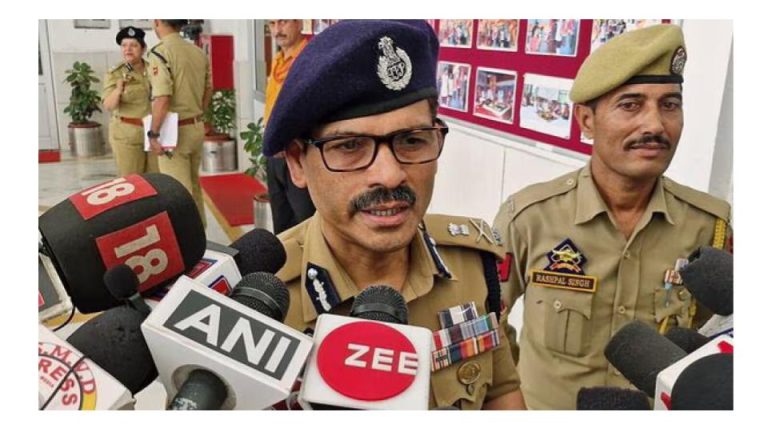
Speaking at the inauguration of a cyber police station building, Swain highlighted the unique legal framework in the region. “In Jammu and Kashmir, we have a special law — the Enemy Agents Ordinance,” he said. This law was established to counter foreign fighters and invaders, particularly from Pakistan, who aim to disrupt and destabilize the government.

“These fighters cannot be brought under regular investigation; they should be dealt with through kinetic action and eliminated. However, those who support them will be treated as enemy agents,” Swain said.

The Enemy Agents Ordinance, he said, prescribes life imprisonment or the death penalty as the minimum punishment. “There is no other option in punishment. It is a harsher law than the UAPA,” Swain added. He expressed confidence that those assisting terrorists would be prosecuted under this stringent law.

The Ordinance, promulgated under Section 5 of the Jammu and Kashmir Constitution Act, 1996, defines an “enemy” as anyone participating or assisting in campaigns by external raiders to subvert the legally established government. An “enemy agent” is described as someone not part of the enemy’s armed forces but working for or receiving instructions from the enemy.

Swain stressed the critical role of local support in combating terrorism, acknowledging that the fight would entail some sacrifices. “The fight against terror will be won with the help of the people, including Village Defence Groups, Special Police Officers (SPOs), local police, and Central armed forces,” he said. “We will try to minimize these losses through training, determination, and practice.”

The DGP’s remarks underline the intensified approach towards dealing with terrorism and its supporters in the region, aiming to ensure greater security and stability in Jammu and Kashmir.

BLF releases captured Pak Army personnel

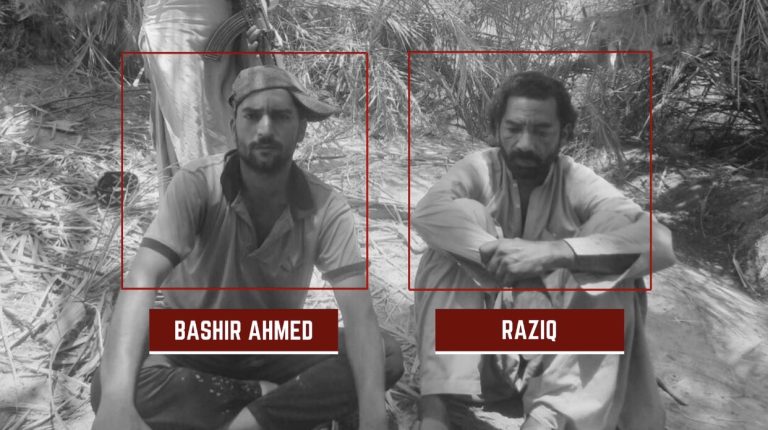
The Balochistan Liberation Front (BLF) has released video footage of two Pak Army personnel captured by BLF fighters on June 10, in Turbat Absar, the main town of Kech. The video, made public on June 24, shows the soldiers admitting their crimes, announcing their resignation from the Army, and vowing to work hard for a better future without any further connection to the military.

In the video, both soldiers, identified as Bashir Ahmed, son of Manzoor, and Raziq, son of Miand Dad, express remorse for their involvement with the Pak Army. They apologize for their participation in the occupation and agree to sever all ties with the military.

The BLF’s spokesperson, Major Gwahram Baloch, confirmed the responsibility for the arrest and subsequent release of the soldiers. Major Baloch said that the decision to release the personnel was made on humanitarian grounds and in the spirit of “Balochism and humanity.”

The BLF’s official statement urges Baloch youth to avoid enlisting in the Army, as it is complicit in war crimes and the genocide of the Baloch people. Instead, the BLF calls on young Balochs to join their ranks to fight for the freedom of Balochistan. The statement emphasizes that such a move would not only fulfill a national duty but also help eradicate social issues like poverty, unemployment, disease, and illiteracy by leveraging Balochistan’s resources for rapid development.

The release of the soldiers is intended as a gesture of goodwill, giving them a second chance. The BLF’s message is clear: the path to a prosperous Balochistan lies in resisting occupation and working towards national independence.

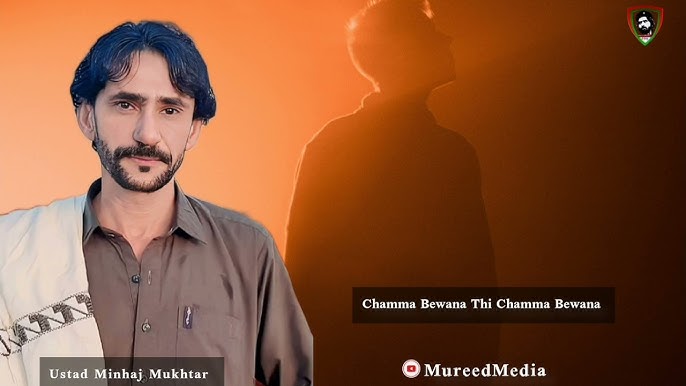
Pak Army targets Ustad Mukhtar’s family in midnight raid

In a troubling incident, the family of renowned Baloch singer Ustad Minhaj Mukhtar fell victim to a violent raid by Pak security forces in the early hours of yesterday morning.

The incident occurred around 1:30 a.m. in the Tump Konshkalat area of Kech district, Pak-occupied-Balochistan. A contingent of security personnel stormed Mukhtar’s family home, subjecting women and children to physical abuse.

The Army vandalized the property and assaulted several family members, including Mukhtar’s elderly father. Following the pattern in such raids, the security personnel looted valuables from the house, confiscating mobile phones and even livestock.

Ustad Minhaj Mukhtar, known for his revolutionary songs and several popular albums, was not present during the raid. This is not an isolated incident, as Mukhtar and his family have faced repeated harassment due to his revolutionary music.

This is just the latest in a series of intimidation tactics. Mukhtar’s home has been targeted multiple times before, with incidents ranging from shootings to arson attacks.

The raid has reignited debates about the treatment of artists and activists in PoB, that needs calling for an immediate investigation into the incident.

Pak Army backed local authorities jail activist Yawar Abbas in POGB

Local authorities in Nagar district have sentenced activist Yawar Abbas to one month in Manawar Jail. The decision, made by the District Magistrate, comes in response to Abbas’s social media activities criticizing the Army.

According to official statements, Abbas is accused of “inciting people” and “trying to sabotage the law and order situation” through his online posts. His most recent Twitter post, which drew particular attention, compared the situation in POGB to that of Palestine.

Abbas has been a vocal critic of the Pak Army’s “green tourism companies”, that are exploiting the region’s resources. His advocacy has focused on issues of land grabbing and the plunder of natural resources in POGB, a region that has long grappled with questions of political status and economic development.

Abbas’s arrest is an attempt to silence legitimate criticism. POGB has seen frequent protests over a lack of basic infrastructure and limited political rights.

Attack by ISKP kills two Jamiat Ulema Islam leaders in Khyber-Pakhtunkhwa

The Islamic State Khurasan Province (ISKP), also known as ISIS-K, has claimed responsibility for two high-profile assassinations of political figures in Pakistan’s Waziristan region, according to their latest AI-generated bulletin.

The extremist group stated that they were behind the killing of Mullah Mirza Jan, a local leader of the Jamiat Ulema Islam (JUI) political party in South Waziristan last week. Additionally, they claimed responsibility for the assassination of another JUI leader, Mullah Noorul Islam Nizami, in North Waziristan a month prior.

The rapid claim of responsibility for these attacks underscores the fierce rivalry between ISIS-K and the Taliban, as both groups vie for control and influence in the region. This conflict has led to increased violence and instability, particularly in areas close to the Afghanistan-Pakistan border.

Security analysts warn that these assassinations could be part of a larger strategy by ISIS-K to destabilize local political structures and create chaos in the region.

The JUI, a religious political party with significant influence in Pakistan’s northwestern regions, is yet to comment on these claims.

PTM long march in north Waziristan protest Pashtun struggle under Paki establishment

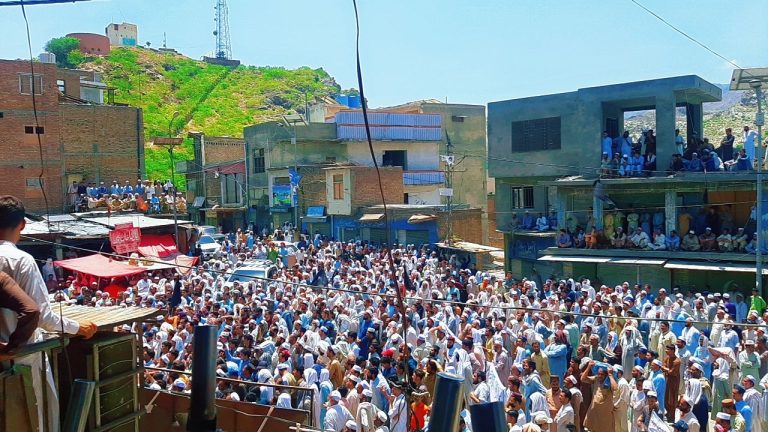
The Pashtun Tahafuz Movement (PTM) is set to hold a major gathering today in Razmak, North Waziristan, drawing participants from across Khyber Pakhtunkhwa. This significant event aims to spotlight a range of issues affecting the Pashtun community, including the ongoing threats of land mines, bombings and dollar wars.

The PTM, known in Pashto as Pashtoon Jarghunay Ghorzang, has been at the forefront of advocating for Pashtun rights since its formation in 2018. The movement emerged in the wake of the extrajudicial killing of Naqeebullah Mehsud, a Pashtun youth, in Karachi by former police officer DSP Rao Anwar. This incident, coupled with allegations of over 400 Pashtuns killed in staged encounters in Karachi, ignited widespread protests and catalyzed the formation of the PTM.

Today’s gathering in Razmak is expected to address several critical issues facing the Pashtun community. PTM plan to protest against the persistent threat of land mines and bombings in Pashtun areas, raise awareness about target killings and forced disappearances, and highlight broader human rights violations by the hands of Pak Army. Additionally, the PTM aims to draw attention to the activities of the “dollar mafia,” which is responsible for ongoing violence and exploitation in the region.

https://twitter.com/Kamrankhan1432/status/1804360220480524368

Reports indicate that people from numerous villages across Khyber Pakhtunkhwa are converging on Razmak to participate in this event, underscoring the widespread support for the movement. This gathering follows in the footsteps of previous large-scale demonstrations organized by the PTM.

Issues such as extrajudicial killings, forced disappearances, and economic exploitation continue to plague the Pashtun-majority areas. The PTM intends to use this gathering as a platform to bring these concerns to national and international attention, hoping to effect change and improve the lives of Pashtuns across Pakistan.

Pak Army-backed drug lords attack family in Pak-occupied Balochistan

In a disturbing incident in Pak-occupied-Balochistan, a poor family in Dasht Kuddan, fell victim to a brutal attack carried out by local drug lords with ties to the Pak military.

Reportedly, three notorious figures in the region’s narcotics trade – identified as Idrees, Siraj, and Wahab – orchestrated the assault on a family.

When the family sought help from local police, their pleas were met with indifference, fueling anger of collusion between criminals and authorities. This incident has reignited long-standing relationship that elements within the Pakistan Army have been supporting and protecting criminal networks in the region, particularly those involved in the lucrative drug trade.

These groups to operate with impunity, targeting the Baloch community, which has historically faced marginalization and human rights abuses. The support from military elements is a key factor in the perpetuation of violence and instability in the region.

Pak Army conducts operation in Kharan, shoots & injures Baloch woman

Reports are emerging of an ongoing military operation in Kharan, Pak-occupied-Balochistan, where Pak forces have been targeting multiple houses for the past four hours. Civilians are facing severe brutality and torture in the hands of the Pak Army.

One confirmed casualty of the operation is Fazila Mastianzai, a Baloch woman who was reportedly shot and injured during the raid.

Despite the scale of the operation, official authorities have yet to release any statement or information regarding its nature or objectives.

The current operation in Kharan is not an isolated incident. Similar military actions have been frequently conducted. Recently, a comparable operation in the Bolan district reportedly resulted in significant violence and upheaval.

Military operations have become frequent in Pak-occupied-Balochistan, innocent Baloch community are living in fear and atrocity since the forceful occupation in 1948.

Vladimir Putin’s visit to North Korea & Vietnam signal strategic alliance

Russian President Vladimir Putin wrapped up a significant diplomatic tour of Asia on Thursday, visiting Vietnam after a landmark trip to North Korea. The visits, seen as a show of defiance against Western isolation, have drawn attention and criticism from the United States and its allies.

In Pyongyang on Wednesday, Putin was greeted with fanfare as he and North Korean leader Kim Jong Un signed an agreement elevating their countries’ relationship to a “comprehensive strategic partnership.” The visit marked Putin’s first to North Korea in 24 years and is expected to reshape decades of Russia-North Korea relations.

Kim expressed “unconditional support” for Russia’s policies, including its war in Ukraine. The two leaders exchanged gifts, with Putin presenting Kim with a Russian-built Aurus limousine, a tea set, and an admiral’s dirk. In return, Putin received various works of art depicting himself.

Russia’s policies

Moving on to Vietnam on Thursday, Putin was welcomed with a 21-gun salute and embraced by Vietnamese leaders. He emphasized Russia’s commitment to deepening ties with Vietnam, signing agreements on energy and security cooperation. Putin expressed interest in building a “reliable security architecture” in the Asia-Pacific region.

The Russian leader’s warm reception in Hanoi has been seen as a diplomatic win, particularly given Vietnam’s efforts to maintain a neutral foreign policy amid major world powers. Vietnam has abstained from condemning Russia’s actions in Ukraine, a stance that has drawn scrutiny from Western nations.

Putin’s Asia tour highlights Russia’s pivot towards Asian partnerships following Western sanctions over the Ukraine conflict. In Vietnam, he discussed potential long-term supplies of liquefied natural gas (LNG) and continued cooperation in the oil and gas sector.

The United States and the European Union have criticized Vietnam’s hosting of Putin. However, analysts suggest that Hanoi may have correctly calculated it will not face significant consequences for the visit.

Mob burns alive tourist in Swat over Quran desecration

A man was killed by a mob in the Madyan area of Khyber Pakhtunkhwa’s Swat district on Thursday night following allegations of desecrating the Holy Quran, according to local police.

Swat District Police Officer (DPO) Dr Zahidullah Khan reported that eight people were injured in the ensuing unrest. The police had initially taken the suspect into custody, but a charged mob attacked the police station and seized him.

“People set fire to the police station and a mobile vehicle”, DPO Khan said, adding that the suspect was subsequently “torched”. An investigation is currently underway, with more details expected to emerge.

https://twitter.com/MeghUpdates/status/1803981798843781508

Social media videos show a mob surrounding a burning body in the middle of a road, as well as large crowds gathered outside a police station.

https://twitter.com/TheTreeni/status/1803843240963248175

This incident adds to a concerning trend of violence related to blasphemy allegations in Pakistan. Statistics show a significant increase in blasphemy accusations since the law was changed to make it punishable by death under Gen Ziaul Haq’s regime. Between 1987 and 2022, at least 2,120 persons were reported to have been accused of blasphemy.

Recent similar incidents include the death of a Christian man in Sargodha last month following allegations of Quran desecration, and a man stoned to death in Khanewal district in 2022 over similar accusations.